


 Claim Ownership
Practical Ethics
Subscribed: 11Played: 36
Subscribe

© Dr. David Perry
Description
This podcast series explores a wide range of practical ethical questions, hosted by Dr. David Perry, Director of the Practical Ethics Institute. Dr. Perry earned a Ph.D. in ethics from the University of Chicago Divinity School, taught ethics in undergraduate and graduate schools for 24 years, and published a book and over 50 articles in the field.
21 Episodes
Reverse

An examination of the conduct of the Israel Defense Forces in the wake of the Hamas attacks of 7 October 2023, and the question of whether it amounts to genocide. A philosophical argument in support of the ethical and legal principle of noncombatant immunity is also provided.
Assuming that people have a basic right not to be killed, is that an absolute right? Or can murderers forfeit that right? If capital punishment can be justified in theory, are there enough significant concerns about it in practice that it ought to be abolished?
Several concerns about Trump's character, actions that would preclude a security clearance, his handling of classified information, his fawning behavior toward Vladimir Putin, and his illegal attempts to overturn the 2020 election, all of which indicate his threat to national security.
An argument supporting the use of IVF and genetic testing by prospective parents seeking to avoid passing on serious genetic diseases to their children.
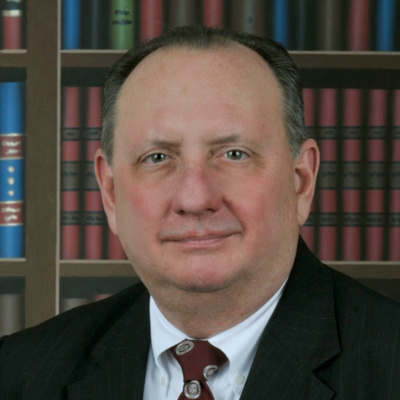
An interview of Dr. Martin L. Cook, one of our country's best experts on military ethics and just-war theory. He taught at the U.S. Army War College, the Naval War College, and the Air Force Academy. His extensive CV and several video recordings of his lectures are available at https://sites.google.com/view/martinlcook.
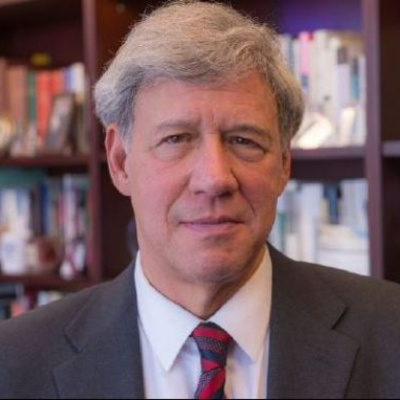
Geoffrey Stone, Distinguished Service Professor of Law at the University of Chicago, comments on the June 2022 decision of the U.S. Supreme Court in Dobbs v. Jackson that overruled Roe v. Wade and declared that the U.S. Constitution does not guarantee women a right to abortion. Stone is the author of Sex and the Constitution: Sex, Religion, and Law from America’s Origins to the Twenty-first Century. See his CV at https://www.law.uchicago.edu/faculty/stone-g. In a postscript, the host Dr. Perry reads portions of the dissenting opinion written by justices Breyer, Sotomayor and Kagan.

An interview of Dr. Daniel Dombrowski, Professor of Philosophy at Seattle University. His views on abortion are also summarized near the end.

An interview of Dr. Charles Schaefer, Professor of History and International Studies at Valparaiso University. (Note that in the podcast I erroneously referred to him as Associate Professor, when he is actually a full professor.)

An interview of Dr. Shannon French, Director of the Inamori International Center for Ethics and Excellence at Case Western Reserve University in Ohio, where she is also a professor of both Philosophy and Law. She previously taught at the Naval Academy in Annapolis, and her publications include a great book entitled The Code of the Warrior: Exploring Warrior Values Past and Present. Dr. French has also done quite a bit of research and writing on ethical issues in AI, especially but not exclusively in military contexts.
Dr. French also recommends the following books that she didn't have time to mention during this episode:
- Cathy O'Neil, Weapons of Math Destruction
- Safiya Noble, Algorithms of Oppression
- Ruja Benjamin, Race Against Technology
- Shannon Vallor, Technology and the Virtues
- Patrick Lin, Robot Ethics 2.0
- and the work of Elsa Kania, Elke Schwartz, and Bruce Schneier.
Near the end of the podcast, Dr. French's dogs Bert and Maple offer a bit of canine commentary....
Interview of Dr. Joel Rosenthal, President of the Carnegie Council for Ethics in International Affairs, based in New York. Topics discussed: the Israeli-Palestinian conflict; withdrawing U.S. troops from Afghanistan; dealing with repressive regimes like Russia, China and Myanmar; root causes of migration from Mexico and Central America; and two of the speakers previously hosted at CCEIA by Dr. Rosenthal whom he recalls as among the most profound.
Several books are recommended in regard to the problems of bigotry and aggressive violence in America and around the world.
Examines an argument typically employed by vigorous opponents of abortion, but shows why it fails, and why a pro-choice view is most reasonable.
Here I critically examine some traditional beliefs about God and the soul, and explain why I now have serious doubts about them.
This is the fourth episode in a four-part series on the historical evolution of ethical perspectives on war in major religious traditions, adapted from my book, Partly Cloudy: Ethics in War, Espionage, Covert Action, and Interrogation, 2nd ed. (Rowman and Littlefield, 2016).
This is the third episode in a four-part series on the historical evolution of ethical perspectives on war in major religious traditions, adapted from my book, Partly Cloudy: Ethics in War, Espionage, Covert Action, and Interrogation, 2nd ed. (Rowman and Littlefield, 2016).
This is the second episode in a four-part series on the historical evolution of ethical perspectives on war in major religious traditions, adapted from my book, Partly Cloudy: Ethics in War, Espionage, Covert Action, and Interrogation, 2nd ed. (Rowman and Littlefield, 2016).
This is the first episode in a four-part series on the historical evolution of ethical perspectives on war in major religious traditions, adapted from my book, Partly Cloudy: Ethics in War, Espionage, Covert Action, and Interrogation, 2nd ed. (Rowman and Littlefield, 2016).
In cases where significant moral principles conflict, one possible way to resolve the conflict is if one of them is absolute and always overrides the others. Are there any such absolutes? Dr. Perry shows why religion is not helpful in that regard, and why it makes more sense to consider a cluster of prima facie moral principles, rather than any absolutes.
Considers several theories that deny objective morality, and why those theories all fail. Outlines some objective ethical principles, and how complex they can become in professional life. Provides some guidelines for ethical deliberation and action.
This podcast focuses on Critical Thinking, a deliberate effort to reason clearly by identifying and avoiding psychological biases, logical pitfalls, and other errors in judgment. The scope of Critical Thinking goes beyond ethics, but it's clearly essential to good ethical decision-making.

Comments

Download from Google Play

Download from App Store
 United States