


 Claim Ownership
Math-Life Balance
Subscribed: 34Played: 307
Subscribe

© Mura Yakerson
Description
The official podcast version of Mura Yakerson's YouTube channel Math-Life Balance. What Mura has to say about the content:
"In this [podcast] I post my non-professional interviews with professional mathematicians. I ask my colleagues about their personal experience in math, their struggles and lifehacks. I hope that this shared experience would be helpful for other people in the math community, especially for young mathematicians!"
"In this [podcast] I post my non-professional interviews with professional mathematicians. I ask my colleagues about their personal experience in math, their struggles and lifehacks. I hope that this shared experience would be helpful for other people in the math community, especially for young mathematicians!"
33 Episodes
Reverse
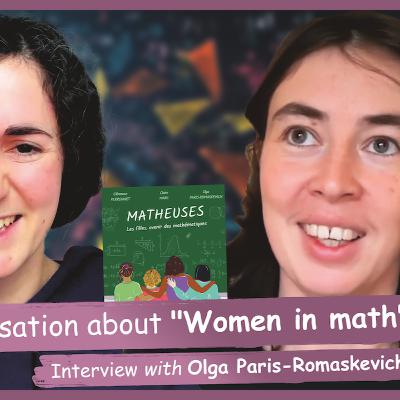
This episode is about women in math, from the perspective of sociology! Many thanks to Olga Paris-Romaskevich for the conversation. Olga's webpage: https://olga.pa-ro.net/The book "Matheuses": https://www.insmi.cnrs.fr/fr/matheusesHere is a link for Olga's talk on gender and mathematics: https://amubox.univ-amu.fr/s/SBRqbTLHSG5PFMFHere is a list of references Olga used when spoke about social psychology:1) Definition of social stereotype : (Leyens, Yzerbut, Schadron, 1994), slide 72) Stereotype threat result : Spencer, Steele, & Quinn (1999). Stereotype Threat and Women’s Math Performance. Journal of Experimental Social Psychology, 35Social psychology : stereotype threat, slides 9 and 10 3) Aronson, J., Lustina, M. J., Good, C., Keough, K., Steele, C. M., & Brown, J. (1999). When White men can't do math: Necessary and sufficient factors in stereotype threat. Journal of Experimental Social Psychology, 35(1), 29–46.4) pp.12-13 : John VS Jennifer study Moss-Racusin, Dovidio, Brescoll, Graham, & Handelsman (2012). PNAS, 109, 16474-164795) Begeny, C. T., Ryan, M. K., Moss-Racusin, C. A., & Ravetz, G. (2020). In some professions, women have become well represented, yet gender bias persists- Perpetuated by those who think it is not happening. Science advances, 6(26), eaba7810:00 teaser1:03 Olya's book about "math girls"5:38 why there are so few women in math9:01 brilliance as social construct14:11 russian tease of women in math18:05 math in the sociology book22:35 why to make women only math events 30:33 and why we definitely need them34:19 how to make a good outreach event38:33 cool gender equity initiatives41:12 Mura's experience in math as a girl46:55 female role models in math51:18 homage to Sophia Kovalevskaya53:34 fun facts everyone should know!58:56 moral support for women in math

Richard is a math professor at Brown University as well as an author of very funny books about math for kids! Enjoy learning about Richard and his adventures in the world of math and art :)Richard's webpage: https://www.math.brown.edu/reschwar/Chapters:0:00 teaser0:33 why math books for kids5:22 crazy cool visualizations vs obsessions8:50 most of math is failure13:23 accessibility vs precision in papers17:55 what about abstract more math23:25 being Thurston's student29:32 advice for those who feel not good enough at math32:42 how Richard almost quit math34:41 story from Mura about Berkeley woods35:45 Richard's famous April 1st prank43:16 and other pranks44:43 and the mask! oh my god the mask

Jordan is a mathematician as well as an author of popular books about mathematics, with great sense of humour. And this interview goes as wild as the picture of the interviewee on his webpage! Jordan's webpage: https://people.math.wisc.edu/~ellenberg/Chapters:0:00 intro0:28 a year of writing fiction4:12 what's hard about writing11:31 finding math everywhere15:19 cool thoughts on writing 22:58 teaching writing to math folks24:55 pain & joy of bad writing 29:15 Jordan's workshop where we met34:30 how to know when the article is ready38:34 how to make interviews?45:51 Mura complaining about interviewees :)51:26 how people really feel about math54:55 how to survive the lack of feedback1:03:32 bringing standup tricks into writing1:09:08 sentimental approach to finishing books1:12:00 Jordan's book recommendation for us

Steven Strogatz, who works at Cornell University, is a well-known math popularizer and the first applied mathematician on Mura's channel. Enjoy their chat about unexpected applications of math, befogged communication amongst mathematicians and what not :)Steven's homepage: https://www.stevenstrogatz.com/Chapters:0:00 teaser0:37 when catholic priests become useful6:35 math, philosophy & couples therapy13:23 Steven's studies on sleep21:27 Steven's insecurities in math24:21 what's wrong with math talks34:13 no carrot, no stick...38:24 opinion on strong opinions41:34 advice about giving up49:24 different approaches to graduate advising52:27 chat about Mura's advisor57:11 Steven Strogatz Prize for Math Communication1:01:40 how to write friendly math outreach

Enjoy the interview with Dennis Gaitsgory, who thinks about questions deeply yet answers lightly! Jokes included :)Dennis webpage: https://people.mpim-bonn.mpg.de/gaitsgde/0:00 teaser0:30 attending a class by Witten5:15 math vs physics: difference?9:20 doing math: happiness and frustration13:10 what changes with age17:10 non-math problems: oh no! ;)23:23 advice for getting back into math26:45 how to prove Langlands correspondence...31:49 when math doesn't work33:25 raising kids: thoughts36:00 book recommendation from Dennis37:38 stories about India40:36 beautiful non-math hobby42:40 hot take on grant system45:06 guess Dennis' favourite animal!47:12 advice to young mathematicians
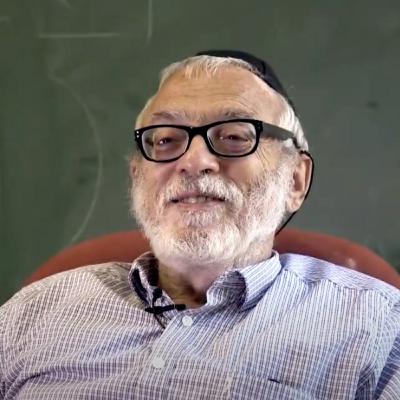
David Kazhdan:https://en.wikipedia.org/wiki/David_Kazhdanhttp://www.ma.huji.ac.il/~kazhdan/Dennis Gaitsgory:https://people.mpim-bonn.mpg.de/gaitsgde/https://en.wikipedia.org/wiki/Dennis_GaitsgoryQuanta article: https://www.quantamagazine.org/monumental-proof-settles-geometric-langlands-conjecture-20240719/Israel Gelfand: https://en.wikipedia.org/wiki/Israel_GelfandGeorge Luszting: https://en.wikipedia.org/wiki/George_LusztigVladimir Voevodsky: https://en.wikipedia.org/wiki/Vladimir_Voevodsky0:00 intro0:25 why math5:35 student of Gelfand11:04 Langlands program & motives & physics14:35 math heroes16:37 main interest in math21:01 how about math puzzles24:34 approaches to hard problems27:30 negative emotions? introspection?31:41 collaboration with Lusztig36:20 thoughts on Voevodsky41:02 impressions from conferences45:23 Harvard in the good old days48:25 family connections

Simon Singh is, according to himself, "an author, journalist and TV producer, specialising in science and mathematics, the only two subjects I have the faintest clue about". In this interview we chat about various projects of Simon, from theatre festivals to math education in schools, and argue about math outreach. Have fun listening!Simon's webpage: simonsingh.netParallel project: parallel.org.ukMath-Life Balance on YouTube: youtube.com/@math-life-balanceChapters:0:00 teaser0:41 math & magic at Fringe9:15 cool math for teenagers16:16 why kids really need it18:52 confidence for various projects20:41 Shakespeare in math class?28:51 what could go wrong30:48 outreach and effectivity34:56 Simon gets annoyed :)37:03 too much outreach?39:50 math in Simpsons and writing44:38 sweet book selling story46:45 how I learned about Simon

Grant Sanderson is the creator of the coolest math youtube channel, "3blue1brown". In this interview, Grant and Mura chat about a bunch of different topics, such as feelings towards abstract math, and even hear Grant read a piece from his poem. Enjoy Grant's beautiful thoughts and exquisite English!Grant's channel: youtube.com/ 3blue1brownGrant's homepage: 3blue1brown.com/aboutGrant's poetry: 3blue1brown.com/blog/poemsThe Math-life balance YouTube channel: youtube.com/@math-life-balanceChapters:0:00 teaser0:45 introducing Grant and his job2:52 struggles of having a popular YouTube channel6:03 sociology of math outreach10:36 why people love 3blue1brown13:22 how to popularize abstract math17:40 making algebraic K-theory popular21:17 how to measure success27:16 did god hand you the definition of a topological space?32:27 who writes wiki pages and and why36:13 which feelings cause abstraction44:39 what if you don't understand math46:49 unpacking genius51:48 how Grant deals with the frustration of not understanding math55:16 Grant's poetry1:01:47 Grant's question to mathematicians1:03:38 advice from Grant

In this interview, Jeremiah Heller and Vesna Stojanoska share their experience of combining math and family life, discuss their ways to get over occasional demotivation in research and speak about social aspects of research. Jokes included!
Jeremiah's homepage: https://faculty.math.illinois.edu/~jbheller/
Vesna's homepage: https://faculty.math.illinois.edu/~vesna/
Mike Hopkins’ talk at Paul Goerss’ birthday conference: youtu.be/Ix4pg87LKVk
Chapters:
0:00 teaser
0:34 their family and other animals
4:04 kids’ curiosity about math
8:30 wishes for kids’ future
11:04 existential chat about adulthood
13:51 research & relationship
16:13 finding friends outside math bubble
19:26 two-body problem
21:59 math talks as storytelling
27:01 approaches to doing math
31:02 getting over demotivation in research
35:23 mathematics is a social endeavour
37:12 jobmarket pressure
43:24 having kids & academia
47:18 solid advice

 1
1Dhruv Ranganathan is a lecturer at Cambridge University, working in algebraic geometry. In this video, Dhruv talks about doing research with undergrads, being tortured by math problems, looking for friends to write math papers, and other cool stuff!
Dhruv's webpage: https://www.dhruvrnathan.net
Photo: from the webpage
0:00 teaser
0:41 from cricket to air planes
2:16 adventure novels childhood
4:46 what do algebraic geometers do
8:39 experience of undergrad research
12:30 how undergrad research really works
15:35 “now I’m a believer”(c)
18:25 why so much pressure in doing math
21:09 how we create pressure for young people
23:44 doing math as a coping mechanism
27:00 math torture vs intense cartoon watching
28:50 speakers love getting any math questions
30:54 math for extroverts
34:25 teaching students who leave academia
37:33 don’t beat yourself up for math mistakes
39:39 how we try and fail to improve inclusivity
43:44 don’t put people from minorities on every committee
45:45 the advice that’s too hard to follow
48:35 fireplace
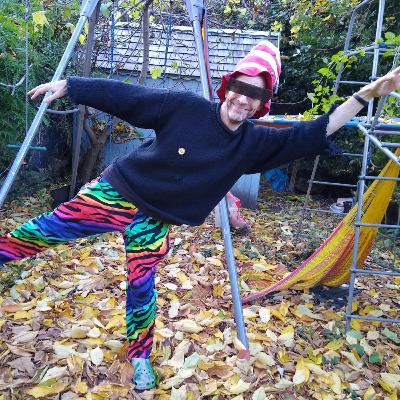
Kevin Buzzard is a professor in Imperial College London working in number theory and formal proof verification. In this interview, Kevin shares his views on the role of computers in doing math, tells about his experience of upbringing 3 kids as a researcher and raises questions about the way we approach math education. Lots of glorious laughter and unforgettable facial expressions are included!
Kevin's homepage: https://www.imperial.ac.uk/people/k.buzzard
Channel podcast: https://anchor.fm/math-life-balance
Chapters:
0:00 teaser
0:48 Kevin’s t-shirt
3:06 imagination in math
5:36 computers vs humans
10:43 computers and infinity
12:35 math as a zen puzzle
15:19 role of fashion in math
20:06 mathematicians detecting mistakes
24:41 imperfections in our math
29:14 when the dust settles
31:56 not caring what people think
36:01 how to entertain kids in the subway
40:26 babies as the way to understand humanity
42:52 doing math when you have 3 kids
46:09 writing papers with non-mathematicians
48:54 why kids are forced to memorize math?
53:29 doing exams vs learning math
57:16 unusual advice for students
59:15 the answer to the ultimate question
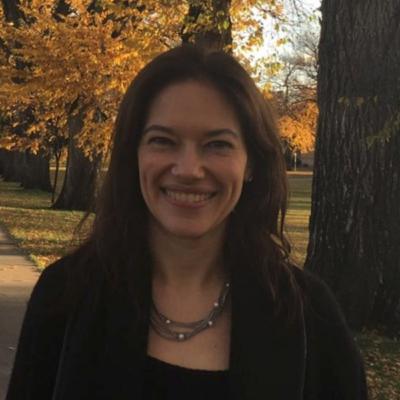
Maria Chudnovsky is a professor at Princeton University, working in graph theory and combinatorics. In this interview, Maria shares her personal experiences: learning Hebrew from math lessons, giving a talk at NASA, using math at her own wedding, and many more!
Maria's homepage: http://web.math.princeton.edu/~mchudnov/
Photo: from Maria's homepage
The essay we mentioned:
W.T. Gowers "The two cultures of mathematics"
https://www.dpmms.cam.ac.uk/~wtg10/2cultures.pdf
0:00 teaser
0:29 respect for math at home
2:43 math helps when you don’t speak the local language
6:42 building a world around a research problem
11:37 explaining math to a broad audience
16:00 giving a talk at NASA
19:42 applying graph theory to your wedding
23:16 problem solving vs learning
27:58 being bad at math olympiads
30:40 working with your own students
33:23 experience of doing a PhD
36:02 memorizing math
37:55 studying physics vs math
43:43 maintaining a work-life balance
49:08 everyone has self-doubts
50:54 first time teaching a class
55:46 final advice

Tomer Schlank is a professor at the Hebrew University of Jerusalem, working in homotopy theory and arithmetic geometry. In this interview, Tomer shares his experience of advising a big group of students, speaks about the importance of embracing the struggle, and explains how to get unstuck in a math problem.
Tomer's homepage: https://mathematics.huji.ac.il/people/tomer-schlank
Photo: from Tomer's homepage
0:00 teaser
0:31 astronaut’s dreams
4:06 enjoying the struggle
8:27 top-down thinking
11:35 seminar with physicists
14:52 math dream with Vesna Stojanoska
19:24 taking breaks in projects
22:32 advising 11 students
26:47 doing math & drinking arak
31:14 being stuck is good for you
34:49 how to get unstuck
38:08 don’t worry about talent
42:33 why people hate math
45:36 run towards the problem
48:25 don’t look down on other parts of math
51:43 final advice

Saul Glasman worked in homotopy theory and K-theory, and now works as a software engineer. In this interview, we discuss the hardships of academic jobmarket, fears around leaving math, and the fundamental problems in academia.
Saul's homepage: http://www-users.math.umn.edu/~sglasman/
Photo: from his website
#mathematician #mathlife #interview
#academiavsindustry #leavingacademia #jobmarketacademia
0:00 teaser
0:44 always loved math
2:04 why left academia
8:55 the fears of leaving
14:02 staying in touch with math
20:33 send greetings to Saul :)
21:55 stigma around leaving academia
25:13 problems in academia
30:11 we aren't taught to teach
35:50 there's freedom in industry
37:36 and you feel productive!
42:44 social interactions: academia vs industry
45:19 learning effective team work
49:15 you can learn to enjoy a job
52:20 why can't we do internships
55:47 what you wish you knew
59:02 advice for those who have doubts
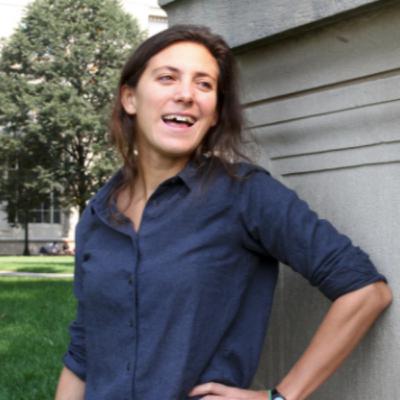
Giulia Saccà is an assistant professor at Columbia University, working in algebraic geometry. In this interview, Giulia gives jobmarket advice for mathematicians, contemplates some of the struggles that minorities in math get to deal with, and tells about books that resemble math research.
Giulia's homepage: http://math.columbia.edu/~giulia/
Photo: Allegra Boverman
Women in Math program at IAS: https://www.ias.edu/math/wam
0:00 teaser
0:27 interests in history in philosophy
6:51 jobmarket advice
11:37 talking about our insecurities helps
16:23 struggles of minorities in math
20:05 what to do with impostor syndrome
27:01 how to find role models
30:48 Women in Math program at IAS is great
35:57 the future of online seminars
41:06 how to keep track of math projects
47:27 which music helps to do math
49:31 alpinism resembles doing research
52:21 Proust writes about math
58:44 the joy of cooking
1:00:40 a wish for young mathematicians
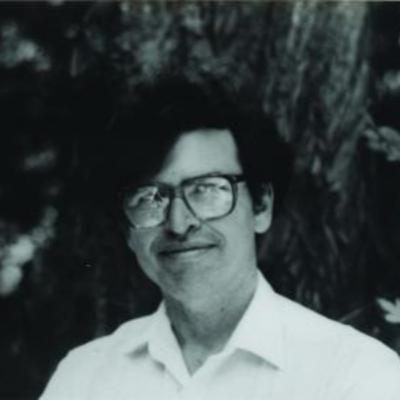
In this [episode], I read a piece from Thurston's essay "On proof and progress in mathematics", where he reflects on the importance of seeing mathematicians' progress and contributions much broader than just in proving new theorems.
William Thurston on Wikipedia: https://en.wikipedia.org/wiki/William_Thurston
Cover photo: from this Wikipedia page
The full essay: https://arxiv.org/pdf/math/9404236.pdf
Thurston's lecture "Knots to Narnia": https://youtu.be/IKSrBt2kFD4
Thurston's answer on MathOverflow about contributions in mathematics: https://mathoverflow.net/questions/43690/whats-a-mathematician-to-do/44213#44213
This sarcastic [episode] is dedicated to my family and all my friends of the last 10 years. They will see why.
A special thanks to Nicole R. for the help with the video(s)! And to my brother for the T-shirt: there’s a tiny cute bug that says "I have giant problems".
0:00 Prologue
0:53 Inclusivity statement
1:24 How to build an abusive relationship with your research
3:00 How to suffer from doing research
5:10 How to be unproductive
7:01 How to compare yourself with others
8:38 How to feel worse from reassurance
9:33 Epilogue
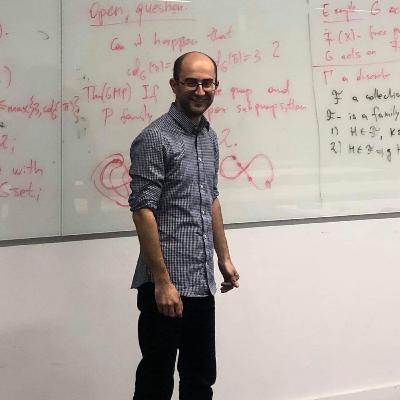
Irakli Patchkoria is a lecturer at the University of Aberdeen, working in homotopy theory. In this interview, he speaks about math-tennis balance, shares his experience of moving from Georgia to Western Europe and admits taking part in illegal actions on university exams.
Irakli's homepage: https://www.abdn.ac.uk/people/irakli.patchkoria
Photo: Irakli's private photo collection
0:00 teaser
1:13 epic story of family math
6:21 father’s advice
10:25 don’t work too much
14:41 experience in collaborations
19:02 Georgians and assimilation
21:47 making new friends (hey, Zurich!)
25:47 cheating on exams
28:38 you will have ideas for papers
33:48 don’t be afraid of stars in math
38:16 partying hard
41:25 drinking with mathematicians
43:41 math and the meaning of life
46:22 please make jokes in talks
48:53 helping young mathematicians
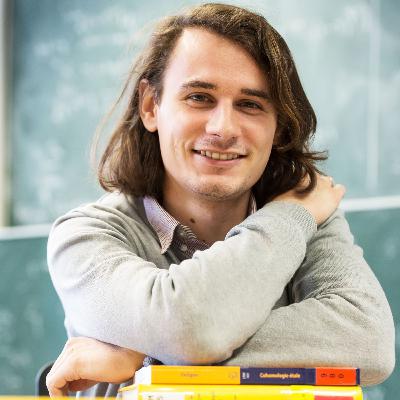
Peter Scholze is a professor in Bonn University, working in number theory and arithmetic geometry. In this interview, we chat about the pressure of the Fields medal, discuss the pain of writing math papers and argue about math.
Peter's homepage: http://www.math.uni-bonn.de/people/scholze/
Photo: Hausdorff Center for Mathematics / Barbara Frommann
Merkurjev's lecture on the proof of Bloch-Kato conjecture: https://youtu.be/bUaWCOtBUHs
0:00 proof or relatability
0:58 influence of the background
2:50 learning math vs solving problems
7:38 Peter is not creative
11:55 math chat (sorry!)
14:23 collaborating with Dustin Clausen
16:29 math gives head ache
18:20 pressure of Fields medal
21:47 representing others is the worst
24:01 interviews with prodigies
26:53 don't waste time on the Riemann hypothesis
29:28 emails from amateur mathematicians
34:01 lockdown time is unproductive
36:52 writing math is pain
40:50 thanks to Germany for sponsoring math
45:09 updating Hilbert’s list of problems
49:07 Oberwolfach AG’s are cool
55:31 advice for young mathematicians
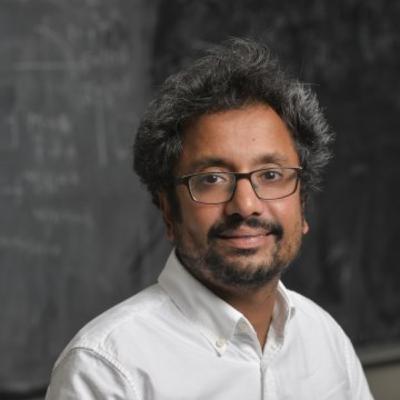
Ravi Vakil is a professor at Stanford University, working in algebraic geometry. In this interview, Ravi talks about the importance of a community for learning math, discusses the ways of learning to be creative at math and shares how considering other career options helped him to be happier as a mathematician.
A clarification for Ravi's comment on the situation with math in USSR:
Due to deep-rooted antisemitism in the Soviet Union, the admission of ethnically Jewish mathematicians into top universities was unofficially “limited” by the state. Faced with these hurdles, Jewish mathematicians opted for institutions specializing in specific technologies, such as the Oil and Gas Institute. Over time, some of these lesser known institutions earned a reputation for producing leading academics in the fundamental sciences.
Ravi's homepage: http://math.stanford.edu/~vakil/
Photo: website of Stanford University
0:00 teaser
0:40 wish to be an embassador
4:36 school teachers are the most important
7:17 coming up with math questions
12:56 don’t write emails with vague questions
19:12 not making students intimidated
25:41 building welcoming communities
29:34 USSR math: fairytale vs antisemitism
32:13 big picture vs details
39:55 learn math by solving problems
41:45 consider other jobs to release pressure
49:00 why look down on applied mathematicians
53:15 how to follow math talks
59:27 the most desired interviewee
59:58 wish for young mathematicians

Comments

Download from Google Play

Download from App Store
 United States