


 Claim Ownership
True Crime Stories
Subscribed: 147Played: 1,298
Subscribe

© Michael Fortune
Description
All Music Radio Podcasting presents True Crimes stories. We will discuss this in detail based on the experience of a trained law enforcement professional with over 20 years of experience in law enforcement. Stay tuned and stayed glued to these real-life stories.
Become a supporter of this podcast: https://www.spreaker.com/podcast/true-crime-stories--4814524/support.
Become a supporter of this podcast: https://www.spreaker.com/podcast/true-crime-stories--4814524/support.
470 Episodes
Reverse

On February 21, 2026, a heartbreaking incident rocked the community of Woodbridge, Virginia. Four lives were lost in what authorities are calling a murder-suicide—Ziyi Lu, her husband Danxiong Gao, his mother Kegang Xie, and their precious two-year-old son, tragically found dead in their home. It’s a devastating reminder of the struggles many face behind closed doors and raises urgent questions about family dynamics, mental health, and domestic violence.Initially, details emerging from the scene were harrowing. All four individuals suffered stab wounds, and the suspected weapon was recovered, giving the investigation a clear path to follow. While investigators assure the public there’s no ongoing threat, the community is left grappling with the shock and sadness of such a profound loss of life. Local organizations are stepping in, offering support services to those affected and initiating discussions about domestic violence and mental health resources in the area.
In the quiet hours of the morning, a horrific event took place on February 23, 2026, in Fairfax County, Virginia. In the peaceful Mantua neighborhood, a man in his early fifties unleashed a wave of violence within his own family. It began with a series of frantic 911 calls at around 5:05 a.m. A concerned neighbor reported hearing a disturbance—something was terribly wrong. The second call came from a son-in-law who had just returned from clearing snow outside, only to discover that his wife and mother-in-law had been stabbed.
On February 10, 2026, a peaceful afternoon turned tragic in Sarasota, Florida, when a shooting spree left four individuals dead inside a gated community. This shocking event occurred around 12:30 p.m. and sent ripples of fear and confusion through a neighborhood that once felt secure. Law enforcement quickly arrived on the scene after multiple 911 calls reported gunfire, only to discover the victims inside a residence, all having lost their lives. Their investigation into the suspect revealed that he was also deceased at the scene, raising immediate questions about what led to this horrifying incident and whether it was part of a larger pattern of violence.Authorities are now looking into a potential link between this shooting and a double homicide that occurred earlier in Fort Lauderdale on the same day. These connections may suggest a cross-state crime spree, prompting a concerted effort among law enforcement agencies to share information and understand the suspect's motivations. This isn't just a tale of a single tragic event—it's part of a broader, complex narrative that highlights the ongoing challenges of gun violence in Florida.
On February 21, 2026, the vibrant streets of Richmond's Shockoe Bottom neighborhood, known for its rich history and lively nightlife, were shaken by a tragic mass shooting. Just after 2:45 a.m., a frantic exchange of gunfire erupted at the intersection of 18th and Main, leaving a community in shock as nine individuals were hit by bullets.This horrific event claimed the lives of two victims, a male and a female, who were pronounced dead at the scene. Three others faced life-threatening injuries, while the remaining four sustained injuries that, thank goodness, were not considered life-threatening. The atmosphere that night, typically filled with laughter and music, turned into chaos and despair. Now, with the Richmond Police Department spearheading the investigation, the question on everyone's mind is, who did this, and why?

Men on Death Row speak freely about that one day they may be executed for the crimes that they have committed. They make the best of the situation knowing that they will never be freed until execution or dying while waiting to be executed.Become a supporter of this podcast: https://www.spreaker.com/podcast/true-crime-stories--4814524/support.

“If you say you’re going to f***ing kill someone, you should f***king kill them.”Last weekend, death row inmate Scott Dozier apparently decided he was done waiting for Nevada to kill him: Prison officials found him hanging from a bedsheet in his cell. In 2018, Dozier was set to become the first person in the U.S. executed with fentanyl. Then his execution was postponed. He inflicted his death sentence on himself.Become a supporter of this podcast: https://www.spreaker.com/podcast/true-crime-stories--4814524/support.

Retired Police Chief from the cities of District Heights and Laurel Maryland, as well as retired Prince Georges County Police Major turns into an arsonist. He committed several arsons from 2011 to 2020 of various people who he had known through his professional career in law enforcement. neighbors, as well as relatives that he had some long lasting beef with in one way or another. In addition to arson, he shot out the windows of several cars during his tenure of terror.Become a supporter of this podcast: https://www.spreaker.com/podcast/true-crime-stories--4814524/support.

Butch killed his wife, called the police confessed, cleaned out the bank account, brought a gun and left town. The investigation revealed that his intent was to head to the Canadian Border. Butch is considered armed and dangerous and he has not been apprehended..

This past week the world has watched an American tragedy unfold. Gabby Petito and her fiancé Brain Laundrie were a young couple who seemed to have it all. An enduring love for each other and a longing for adventure; a road trip in their little van across the United States. Like so many others they also had a desire to show off their idyllic and carefree lives on YouTube and Instagram. But now we know the postcard images and million-dollar smiles were hiding an ugly and murderous truth - and it’s one that raises a difficult question: Could Gabby Petito have been saved?Become a supporter of this podcast: https://www.spreaker.com/podcast/true-crime-stories--4814524/support.

The United States just suffered its 130th mass shooting and its 19th school shooting since the beginning of this year. Inaction will never prevent gun violence, but it seems like the NRA has Congress in a stranglehold when it comes to protecting Americans from the newest number one cause of death for youth: gun violence.Become a supporter of this podcast: https://www.spreaker.com/podcast/true-crime-stories--4814524/support.
Nancy Guthrie, 84, mother of Today host Savannah Guthrie, has been missing since Feb. 1 from her home in the Catalina Foothills near Tucson, Arizona.Authorities believe she was forcibly abducted in her sleep. The case has triggered a massive multi‑agency search involving 400 investigators, drones, helicopters, and forensic teams.
On February 10, 2026, the small community of Tumbler Ridge, British Columbia experienced one of the deadliest school shootings in Canadian history.A total of nine people were killed, including six inside the school, two at a nearby home, and the suspect, who died of a self‑inflicted injury. Initial reports suggested ten deaths, but RCMP later clarified the total as nine including the shooter
Lyft driver arrested for sexually assaulting a passenger at gunpoint in Kentucky
Both killings share the same pattern:The Killing of Renee Nicole Good (January 7, 2026)Alex Pretti — January 24, 2026Contradictions between federal claims and video evidenceRestricted access for state investigatorsPublic outrage and sustained protestsOngoing federal investigations with limited transparency
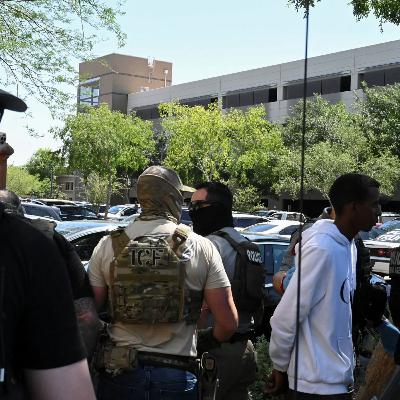
. The Killing of Renee Nicole Good (January 7, 2026)Good, a 37‑year‑old U.S. citizen, was fatally shot by an ICE agent in Minneapolis.Her death triggered the first wave of protests against the federal operation in Minnesota.Federal officials claimed she posed a threat, but eyewitness accounts and video evidence contradicted that narrative.Her case remains under investigation, but state investigators were blocked from accessing the scene, slowing progress.2. The Killing of Alex Pretti (January 24, 2026)This is the case that has drawn the most national attention.What happenedPretti, a 37‑year‑old VA ICU nurse, was filming federal agents during an operation.Multiple videos show agents pepper‑spraying him, tackling him, and pinning him to the ground.Federal officials initially claimed he approached agents with a handgun, but video evidence from Reuters, BBC, AP, NYT, CNN, and The Guardian shows he was holding a phone, not a gun.He was shot multiple times within seconds, even after he was motionless.

The release of the Epstein files didn’t just implicate individuals — it exposed how multiple powerful systems intersected with Epstein’s network, creating a broad institutional shockwave.Major corporations faced reputational crises as executives’ past associations resurfaced.Some leaders resigned or stepped back from roles after being named in documents.Companies launched internal reviews to assess past dealings, donations, or advisory relationships.Effect: Corporate governance and due‑diligence practices came under scrutiny, especially around how wealth and influence shielded Epstein for years.Mentions of political figures across several countries triggered public pressure, parliamentary questions, and renewed calls for transparency.Some political careers were damaged as old connections resurfaced, even without criminal allegations.Effect: Governments faced accountability demands around oversight failures and the proximity of public officials to Epstein’s social and financial networks.Prominent lawyers and law‑firm leaders faced fallout after being named in the files.Human rights experts highlighted systemic failures in how the justice system handled Epstein’s earlier cases.Legal institutions were pressed to explain past plea deals, prosecutorial decisions, and conflicts of interest.Effect: The legal sector confronted questions about unequal justice and how powerful defendants navigate the system.Financial institutions that worked with Epstein faced renewed scrutiny over compliance and risk‑assessment practices.Banks launched internal reviews to understand how Epstein maintained access to financial services despite his criminal record.Effect: The case exposed weaknesses in anti‑money‑laundering oversight and the role of elite networks in bypassing safeguards.Elite universities faced backlash over donations, research funding, and faculty relationships tied to Epstein.Some academic leaders faced reputational consequences for past interactions.Effect: Institutions were forced to re‑evaluate donor‑vetting processes and the ethics of accepting money from controversial figures.1. Business2. Government & Politics 3. Law & Legal Institutions4. Banking & Finance5. Education & Academia

Will Prince Andrew cooperate with investigators to protect himself?
The Trump administration’s immigration agenda drew widespread criticism from human rights organizations for its aggressive enforcement tactics and rollback of protections:Asylum and Refugee Restrictions: Legal pathways for asylum seekers were severely curtailed, including blanket denials and forced returns to unsafe third countries. Refugee admissions were slashed to historic lows.Family Separation and Detention Conditions: Thousands of children were separated from their parents at the border, often without clear reunification plans. Detention centers faced allegations of overcrowding, poor sanitation, and inadequate medical care.Targeting Vulnerable Populations: Pregnant migrant teens were placed in shelters flagged for medical risk, especially in states with abortion bans. LGBTQ+ asylum seekers and victims of trafficking faced heightened barriers.Denaturalization and Citizenship Revocation: The administration expanded efforts to strip citizenship from naturalized Americans, raising concerns about due process and racial targeting.International Condemnation: Bodies like the UN and Inter-American Commission on Human Rights criticized the U.S. for systemic violations, including arbitrary detention and denial of due process.

The Epstein files triggered widespread fallout across elite institutions, not because of new criminal accusations, but because they exposed how deeply Epstein had embedded himself in networks of power. Universities, financial institutions, political figures, and philanthropic circles faced intense scrutiny as the documents revealed long‑standing relationships, donor pipelines, and oversight failures that persisted even after Epstein’s 2008 conviction. The result was a wave of reputational damage, internal investigations, leadership shake‑ups, and public pressure for transparency. The real fallout wasn’t about individual names — it was about the exposure of systems that protected Epstein, enabled his access, and prioritized prestige and money over accountability.

When members of Congress were granted access to the unredacted Epstein files in early 2026, it was later revealed that the Department of Justice was tracking exactly which documents lawmakers viewed inside the DOJ’s secure system. The issue exploded after a photograph from a House Judiciary hearing showed Attorney General Pam Bondi holding a page titled “Jayapal Pramila Search History,” listing the specific Epstein‑related files Rep. Jayapal had opened.The discovery triggered bipartisan outrage, with lawmakers arguing that the DOJ’s monitoring amounted to an invasion of privacy and a direct violation of congressional oversight authority. Members said the executive branch should not be surveilling the legislative branch’s investigative activity, especially during an oversight review of DOJ conduct.

Comments

Download from Google Play

Download from App Store
 United States