


 Claim Ownership
ISTH Podcasts
Subscribed: 22Played: 159
Subscribe

© All rights reserved
Description
ISTH is the leading international professional society on thrombosis and hemostasis. Listen to our podcast for the latest educational resources in our field.
61 Episodes
Reverse
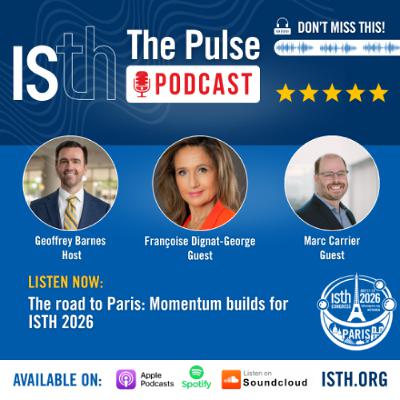
The countdown to the ISTH 2026 Congress is on and in this episode of the ISTH Pulse Podcast, we’re taking you behind the scenes of how one of the world’s leading scientific meetings comes together. Host Geoff Barnes is joined by Annual Congress Planning Committee leaders Marc Carrier and Françoise Dignat-George for an inside look at the planning and vision shaping this year’s program.
With more than 3,000 abstract submissions — the most in over a decade — the 2026 Congress reflects growing excitement across the thrombosis and hemostasis community. Tune in for a preview of the science, strategy and innovation driving ISTH 2026 and hear which sessions our guests are most excited about! Register for the Congress at www.isthcongress.org
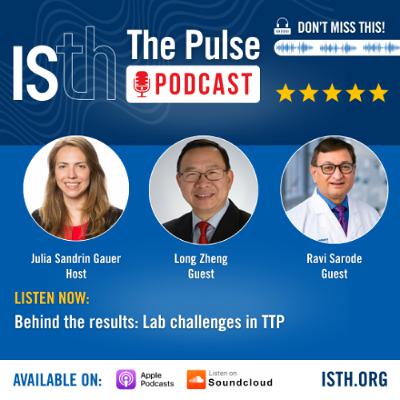
Thrombotic thrombocytopenic purpura (TTP) is one of the most urgent diagnoses in hematology where every minute counts and laboratory data is critical. In this episode, experts Long Zheng and Ravi Sarode discuss the critical role of the laboratory in diagnosing and managing TTP, with a special focus on the complexities of ADAMTS13 testing. Together, they unpack the latest ISTH guideline updates, compare current testing approaches and share practical strategies to improve collaboration between clinicians and laboratory teams. Learn more at www.isth.org/page/ttpguidelines.
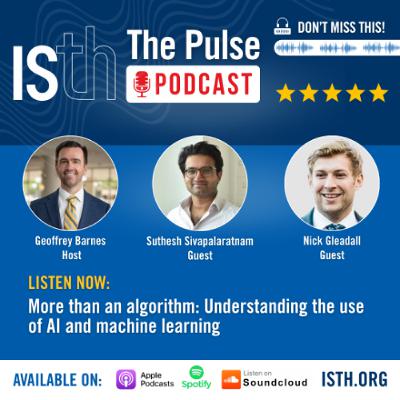
Artificial intelligence is rapidly reshaping medicine, but it’s about more than just algorithms. In this episode of the ISTH Pulse Podcast, host Geoff Barnes speaks with Suthesh Sivapalaratnam and Nick Gleadall about how AI and machine learning are being used to analyze large-scale datasets, identify disease earlier and support better patient care in thrombosis and hemostasis. They also discuss the launch of the ISTH Artificial Intelligence and Machine Learning Standing Committee, the innovative BloodCounts! Consortium, and how clinicians and researchers can begin exploring AI in their own work.
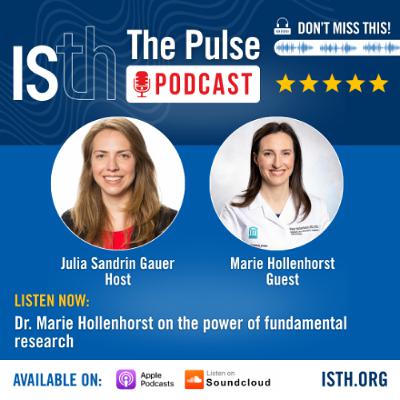
What does it take to turn fundamental science into meaningful advances in patient care? Today, we hear from Marie Hollenhorst, M.D., Ph.D., a physician-scientist working at the intersection of patient care and research. She discusses her early curiosity about blood science and shares some of the latest research from her lab in the U.S., including the 2024 ISTH Fundamental Research Career Development Award–funded project. Dr. Hollenhorst reflects on what the award has meant for her career, the importance of sustained investment in fundamental research and her experience mentoring an ISTH Training Fellow.
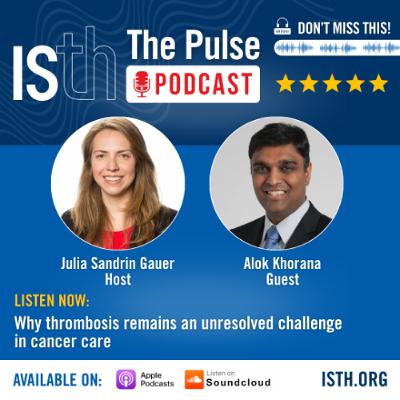
Patients with cancer face a significantly higher risk of venous thromboembolism (VTE), but despite decades of awareness, robust evidence for inpatient thromboprophylaxis in cancer patients is still lacking. Alok Khorana, M.D., an expert on cancer-associated thrombosis, joins the podcast to unpack this critical issue and discuss how we can improve thrombosis prevention and treatment for patients with cancer. Plus, Khorana shares important insights from his recent editorial published in Research and Practice in Thrombosis and Haemostasis (RPTH) on the public health impact of cancer-associated VTE: www.rpthjournal.org/article/S2475-0379(25)00623-5/fulltext
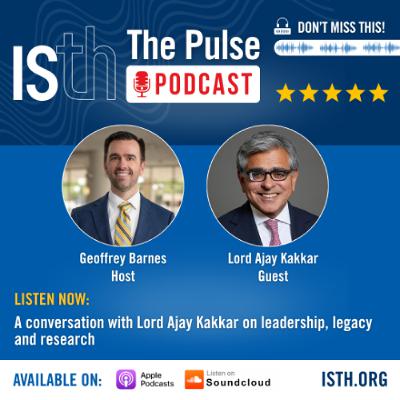
Our host sits down with the Lord Ajay Kakkar, M.D., Ph.D., Director of the Thrombosis Research Institute, as he reflects on his professional journey and the key moments that shaped his career, including his unique experiences working at the intersection of medicine and government with the U.K. Parliament. He also shares the profound influence of his late father, Vijay Kakkar, M.D., and how family legacy has informed his own approach to mentorship and governance. Tune in to this thoughtful conversation on science and service.
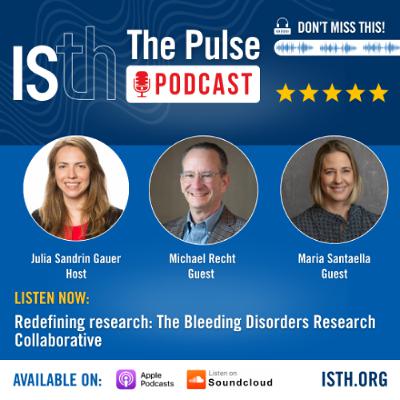
The Bleeding Disorders Research Collaborative (BDRC) is a groundbreaking initiative reshaping how bleeding disorders research is designed, conducted and prioritized. Joining the conversation are Michael Recht and Maria Santaella from the National Bleeding Disorders Foundation. Learn how the BDRC evolved from a national research blueprint, why patients are recognized as lived experience experts and how health equity is being intentionally built into research design and community partnerships. Learn more at www.bleeding.org/research/bleeding-disorders-research-collaborative.
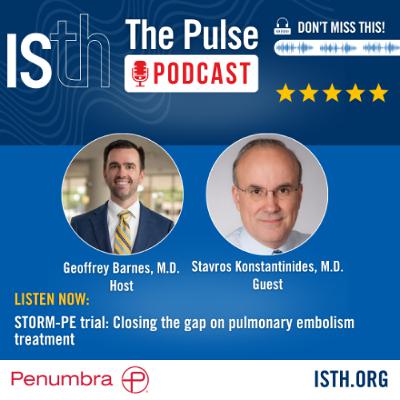
Pulmonary embolism (PE) remains one of the most complex and high-stakes emergencies in medicine. In this episode of the ISTH Pulse Podcast, we’re joined by Stavros Konstantinides, M.D., to explore why gaps in PE treatment persist and how emerging evidence may help close them. Dr. Konstantinides breaks down the current landscape of PE management, the limitations of anticoagulation alone and the real-world impact of variability in care. Plus, listeners will hear results from STORM-PE randomized controlled trial, which could influence frontline clinical practice and patient access to advanced PE therapies. Please note that this episode is supported by Penumbra.
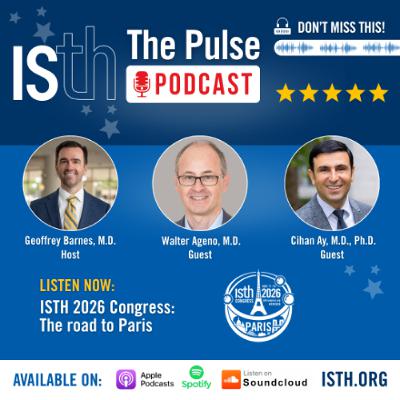
The countdown to the ISTH 2026 Congress in Paris has officially begun and we’re taking you behind the scenes of the planning process! In this episode, we sit down with members of the Congress leadership team to explore what makes the upcoming meeting truly special. Listen as our guests dive into what attendees can expect in Paris, including exciting updates to the scientific program, special sessions and themes designed to highlight innovation across thrombosis and hemostasis. With abstract submissions now open as of December 1, our guests also share valuable tips for researchers preparing their submissions, explain why contributing your science matters, and offer insights into what makes an abstract stand out in a highly competitive review process.
Whether you’re a seasoned ISTH attendee or planning your first Congress, this episode offers an inspiring look at everything happening on the road to Paris. Tune in and get ready for an unforgettable #ISTH2026. Learn more: www.isthcongress.org/
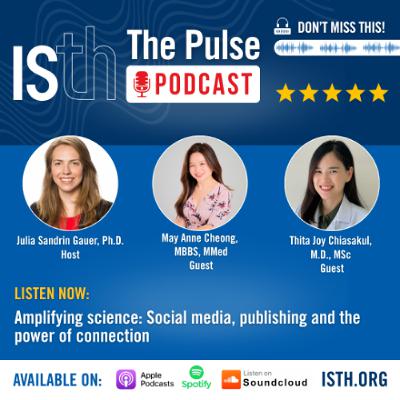
Join guests Dr. May Anne Cheong and Dr. Thita Joy Chiasakul to learn how digital platforms are transforming the way scientific research is communicated and elevated across the global thrombosis and hemostasis community. As Social Media Editors of the Journal of Thrombosis and Haemostasis (JTH), they unpack the strategies that help researchers cut through the noise with clear, impactful messaging that resonates worldwide. The conversation also explores emerging best practices for using AI responsibly in publishing to strengthen the visibility and integrity of scientific work. Learn more about JTH at jthjournal.org.
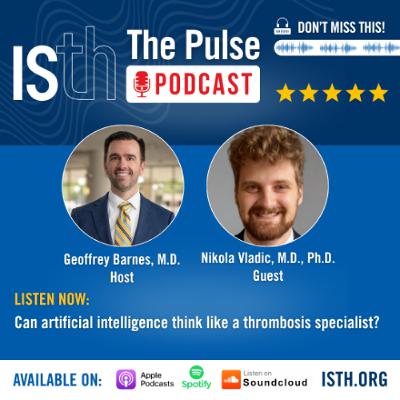
In this episode, we explore the evolving role of artificial intelligence in thrombosis and hemostasis with Nikola Vladic. Drawing from his personal experience with hematological malignancy and his passion for clinical research, Nikola discusses his recent study comparing the performance of AI language models, including ChatGPT, LaMDA Mistral, and DeepSeek, to thrombosis experts in clinical decision-making and patient education. The conversation dives into how these models performed and what this means for the future of medical practice. Listeners will also hear insights on the ethical implications, collaborative nature of AI-driven research and the next steps in advancing responsible innovation within thrombosis care. Read the entire study published in JTH: www.jthjournal.org/article/S1538-7836(25)00592-6/fulltext
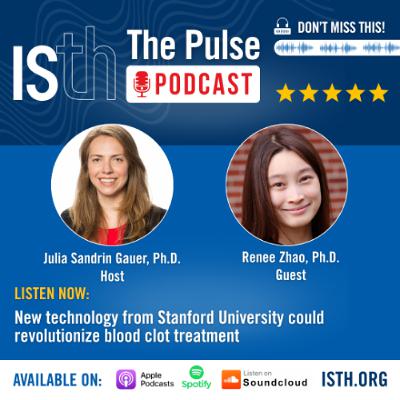
In this episode, we explore groundbreaking new research from Stanford University that could revolutionize the way thrombectomy procedures are performed. Renee Zhao, Ph.D., discusses an innovative “milli-spinner” device, designed to improve precision and success rates in clot removal. Hear how Zhao and her team are using soft robotics to make new breakthroughs that could transform patient outcomes. Read more about this new research here: https://advanced.onlinelibrary.wiley.com/doi/10.1002/adma.202508180 and watch these videos to learn more about the milli-spinner procedure:
Overview video: www.youtube.com/watch?v=8--vxLNgu4Y
Mag milli-spinner swims in blood vessel: www.youtube.com/watch?v=M0V7k2_b3eA
Mag milli-spinner "eats" a clot: www.youtube.com/watch?v=00HUJu_O7SM
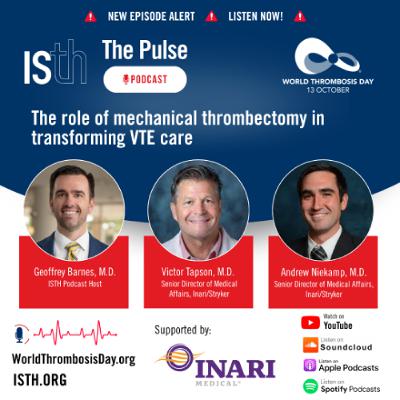
While anticoagulation remains the cornerstone of DVT and PE management, advances in catheter-based therapies are offering new hope for patients who need more than medication alone. Host Geoffrey Barnes, M.D. sits down with Vic Tapson, M.D., professor of medicine at Cedars-Sinai Medical Center and Vice President of Medical Affairs at Inari Medical and Andrew Niekamp, M.D. an interventional radiologist specializing in minimally invasive endovascular treatments and Senior Director of Medical Affairs at Stryker, to discuss when and how these innovative interventions are changing standards of care. Whether you're a clinician managing VTE patients or a researcher interested in the latest advances in thrombosis care, this episode offers practical perspectives on an evolving area of treatment. This episode is supported by Inari Medical, now part of Stryker.
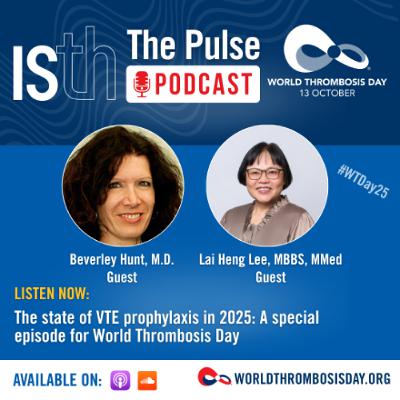
Hospital-associated venous thromboembolism (VTE) remains a leading cause of preventable death for hospitalized patients. In this episode, experts Lai Heng Lee (Singapore) and Beverley Hunt (United Kingdom) share an important update on the state of hospital-associated VTE prevention worldwide, as well as discuss gaps in care and opportunities for improvement. Learn more about hospital-associated VTE at www.worldthrombosisday.org.
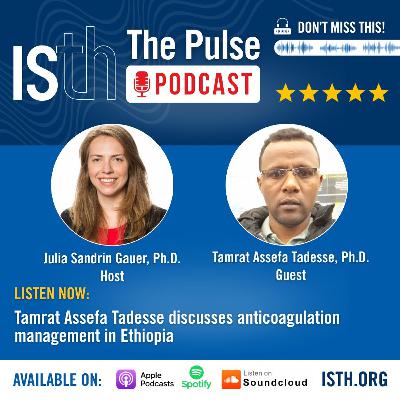
In this episode, Tamrat Assefa Tadesse, Ph.D., shares insights on advancing anticoagulation management in Ethiopia and beyond. Drawing from his experience as an ISTH Reach-the-World Fellow in Canada and Co-Chair of the ISTH SSC Subcommittee on Control of Anticoagulation, he discusses the challenges and opportunities in expanding access to care, building research capacity, and strengthening global collaboration in thrombosis and hemostasis.
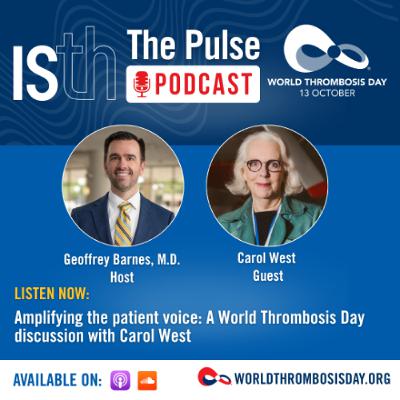
In this special episode of the ISTH Pulse Podcast, we teamed up with the World Thrombosis Day campaign to spotlight the powerful voice of patients in shaping awareness, research and change. Our guest is Carol West, blood clot survivor, advocate and the 2024 World Thrombosis Day Patient Ambassador of the Year. Carol shares her personal journey through her clot story, advocacy efforts and her mission to ensure the patient perspective is heard. From navigating diagnosis to driving global awareness, Carol’s story is one of resilience, advocacy and hope.
Please visit worldthrombosisday.org to get involved.
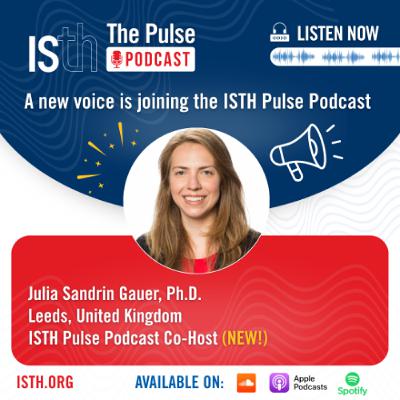
In this episode, the ISTH announces that Julia Sandrin Gauer is joining the Pulse podcast as a host! Julia brings a wealth of expertise in thrombosis and hemostasis research, along with a passion for science communication that will spark fresh, engaging conversations with leading experts worldwide. Tune in to to learn more about Julia and get ready for a new era of the Pulse Podcast—where science, innovation, and voices from around the world come together.
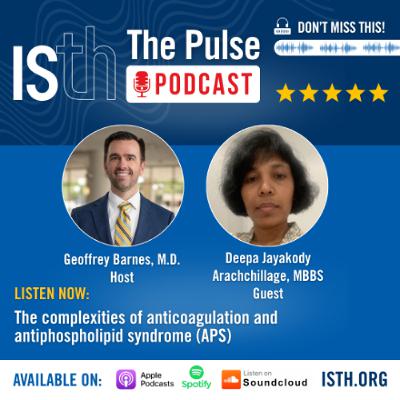
Antiphospholipid syndrome (APS) is a complex autoimmune clotting disorder and its treatment remains one of the most debated topics in hematology. In this episode, host Geoffrey Barnes sits down with Deepa Jayakody Arachchillage, founder of the APS Clinic at Hammersmith Hospital and Chair of the ISTH SSC Subcommittee on Antiphospholipid Syndrome. Together, they explore the evolving landscape of APS management, including whether direct oral anticoagulants (DOACs) have a role to play, the challenges of balancing clotting and bleeding risks, and how clinicians can apply the latest guidance to patient care.
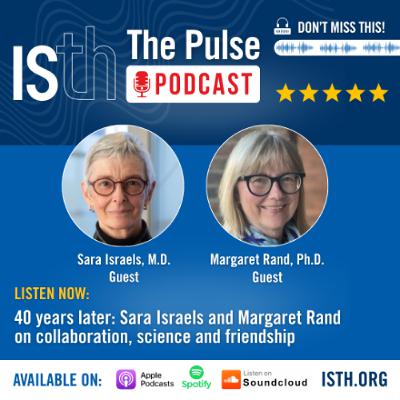
Nearly four decades ago, Dr. Sara Israels and Dr. Margaret Rand met at an ISTH Congress. Today, the two colleagues and friends sit down to share about their research, careers and how the ISTH helped them cultivate a lifelong friendship.
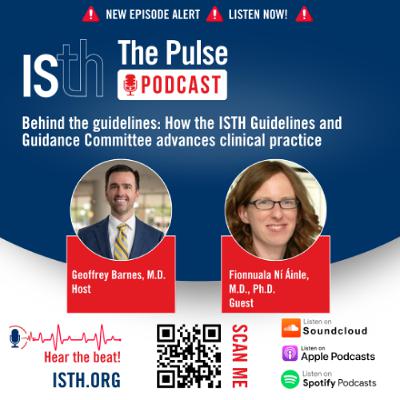
What is the ISTH Guidelines and Guidance Committee and how does it influence global patient care? In this episode, Fionnuala Ní Áinle, M.D., Ph.D., Chair of the ISTH Guidelines and Guidance Committee, reveals the critical role of the committee in shaping clinical practice worldwide, the process behind developing evidence-based guidelines and information about upcoming projects. Listeners will also hear about Ní Áinle’s personal insights from her career as a clinician and researcher in Ireland. Learn more: www.isth.org/page/guidancedocuments
https://www.isth.org/general/custom.asp?page=guidelines

Comments

Download from Google Play

Download from App Store
 United States