


 Claim Ownership
Stream of Subconsciousness
Subscribed: 13Played: 79
Subscribe

© lincoln stoller
Description
Self-hypnotic explorations of physical and mental health, purpose, self-awareness, self-love, lineage, and ancestry. Building on science, psychology, and spirit. Finding balance in the subconscious mind.
mindstrengthbalance.substack.com
mindstrengthbalance.substack.com
200 Episodes
Reverse

JD Tremblay is the director of high performance and mental resilience at Hungry Warrior Academy at hungrywarrioracademy.comJD describes himself as:“As an integrated engineer, military veteran, naturopathic practitioner, and ultra-endurance athlete, I’ve tested human limits in some of the toughest environments on the planet, including the EpicDeca, where I became one of only three people ever to complete 10 Ironman-distance triathlons in 10 consecutive days across six Hawaiian Islands.”His Hungry Warrior Academy:“integrates cutting-edge human performance science with faith-centered principles to help Christian men operate at the highest level in every area of life. Whether it’s chronic stress, burnout, declining energy, loss of physical edge, or misalignment between success and purpose, we equip you with the systems to perform, lead, and live with clarity.”with the goals of * Maintaining clarity, discipline, and control.* Operating at your true physical capacity.* Living fully aligned with your spiritual values.JD is, as I am, both a coach and a therapist. We both aim to move people and culture to a more enlightened and effective level. We both have a strong psycho-physical approach, though his approach is more fitness and physical achievement oriented. We both look at the whole person. On the other hand, JD’s program incorporates religion and encourages structure, while I avoid religion and engage chaos. Other than that, we’re on the same path.In this interview I focus on JD’s program and how he assembles spirit, religion, physiology, psychotherapy, and leadership. His program has a predefined structure and demands adherence to his program. At the same time, he customizes his program to the needs and abilities of each client.If you just want to listen to the audio, you can stream or download it here:Learn more on the Hungry Warrior website at: https://hungrywarrioracademy.com/ This is a public episode. If you'd like to discuss this with other subscribers or get access to bonus episodes, visit mindstrengthbalance.substack.com/subscribe
Michael has hosted 162 episodes of his Brain Shaman podcast at https://www.brainshaman.com, which he describes as a philosophical and scientific journey towards better brain health. "A podcast that teaches you how to reconnect with your primordial nature, reprogram your brain, regain your freedom, and redirect your life." This sounded much like what I'm doing, so he hosted me for another of his podcast episodes and here I have hosted him on mine. The difference is that the host is supposed to do less talking and the guest more.I asked him about his background (Mormon), his interests (philosophy), and his profession (teaching English in Japan). These seemed disconnected to me, so I worked to pry more out of him.Despite our different backgrounds we have similar interests and aims. It is curious to compare these two pictures of ourselves and to notice how similar they are: same eyes, same organic background and asymmetrical smiles. This is a public episode. If you'd like to discuss this with other subscribers or get access to bonus episodes, visit mindstrengthbalance.substack.com/subscribe
This is a free preview of a paid episode. To hear more, visit mindstrengthbalance.substack.com• Moving ForwardMost of us stop learning when we reach the plateau that our environment requires. Personal needs and social forces are satisfied when we resolve a situation. It’s natural to take a break and relax, but in doing so we risk becoming complacent and compliant. The rewards of satisfaction are limited.It’s not enough to be a learner, you must be a skeptic. You must focus on what might be possible, not what others say is there or can’t be done. Learning to be smart takes a sense of direction and a measure of disbelief...• Flying• People Make Their Environment• Love of Things• Love is Not a Noun• Attachment is a Verb
In this episode, we sit down with Lincoln Stoller — physicist, hypnotherapist, psychedelic explorer, and founder of Mind Strength Balance (https://www.mindstrengthbalance.com)— to discuss the transformative power of psychedelics.Lincoln’s work spans the intersection of neuroscience, altered states of consciousness, and deep personal growth, making this a conversation unlike any other. Topics we cover:* The science and spirituality of psychedelic experiences.* How psychedelics can break old mental patterns and open new pathways to healing.* The difference between recreational use and intentional, therapeutic use.Whether you’re curious about microdosing, preparing for a journey, or just exploring the edges of the mind, this episode will challenge what you think you know about self-awareness and human potential.on SpotifyOn the Challenge By Challenge website: https://www.changebychallenge.com/podcast This is a public episode. If you'd like to discuss this with other subscribers or get access to bonus episodes, visit mindstrengthbalance.substack.com/subscribe

“When you blame others, you give up your power to change.” — Robert AnthonyLacking a Sense of VirtueInsecurity, guilt, and shame are powerful personal and political weapons. Once an opponent is accused of these, they are on the defensive. Once a point of view has been tainted as guilty or shameful, it is difficult to defend.The reason these emotional manipulations are powerful is that emotion always overpowers reason. Emotion so overpowers reason that it’s an emotion connection that gives a person persuasive power, not reason or intellect. The general term for being emotionally overpowered is seduction, a combination of satisfying your emotional wants and neutralizing your reasonable powers.A psychological ploy used in political or personal discourse applies these “tools” to defeat an opponent. This involves accusing another person of insecurity, guilt, and shame which, when done skillfully, undermines their certitude and virtue. For those people who are guided by emotion, which is most of us, appeals to emotion overwhelm reason.This is what Trumpian politics has normalized with negative labeling, such as “sleepy Joe,” “half Whitmer,” “Crooked Hillary,” “Crazy Bernie,” “Marjorie Traitor Green,” and many others. By attaching simple epithets of flaw and failure Trump implants these ideas in the minds of simple listeners.This is not charisma, it is emotional seduction. It leads insecure people back to the emotions of their adolescence to accept simple truths. The Pied Piper is the appropriate fable of manipulation and collective failure. According to this fable, the Piper’s retribution of stealing away the children is the result of the town’s reneging on their agreement to pay him for removing the rats. The children are never recovered.The DevilThe ultimate explanation for failure is that the Devil is responsible. If you cannot convince people that your opponent is stupid, then call them evil. There is the odd use of The Devil as an excuse for yourself. By admitting your failure and renouncing your allegiance you can be absolved. Modern absolution provides a full pardon, and only requires a donation and a pledge of subservience.The Devil provides an ever-ready reason to indict an opponent and exonerate yourself. Having these handy rationales is why people are drawn to judgmental religions in the first place. Sanctifying the virtuous while overriding your opponent’s explanations... This is a public episode. If you'd like to discuss this with other subscribers or get access to bonus episodes, visit mindstrengthbalance.substack.com/subscribe

Lincoln Stoller works to coach entrepreneurs to be more effective, and counsel those struggling with life to better navigate issues of anger, shame, and low self-esteem. In fact, he tries to do all of these things with all his clients.With experience in psychotherapy, physics, high-risk sports, and mind-body healing, he provides insights into how these emotions manifest in business and personal life. He emphasizes seeing the role you play in defining your reality, and how changing your understanding can give you new options. By recognize the importance of emotional triggers, managing emotions, connecting with your subconscious mind, and building self-confidence you can develop commitment, improve decision-making, and take on a leadership role for those around you.The full video version of our interview can be streamed at these websites:YouTube:Spotify:Apple: Audible: https://www.audible.co.uk/pd/B0F1N4XHQT?source_code=ASSGB149080119000H&share_location=pdpAmazon: https://music.amazon.co.uk/podcasts/39af5ee4-75f1-4a85-8ce0-60a4a3199985/episodes/94d2653a-ce75-47a4-b7df-03fd25098267/heal-podcast---lily-patrascu-heal-anger-shame-and-low-self-esteem---lincoln-stoller-and-lily-patrascuLinkedIn: https://www.linkedin.com/feed/update/urn:li:activity:7307508165233807363 This is a public episode. If you'd like to discuss this with other subscribers or get access to bonus episodes, visit mindstrengthbalance.substack.com/subscribe
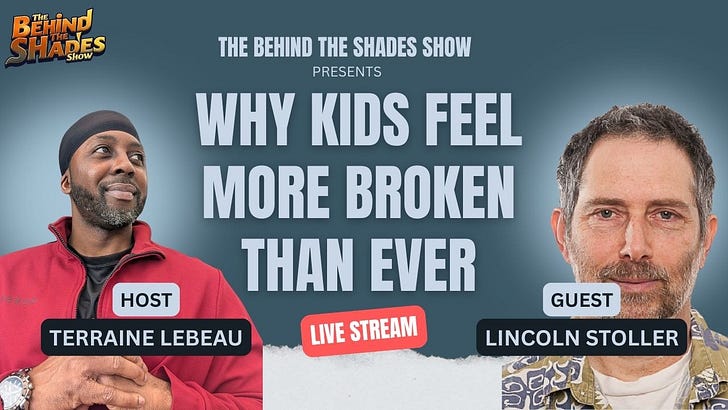
I did a livestream with Terraine Lebeau, a Rasta from Toronto who complements his day job as a bank manager with life coaching and podcasting. This is a public episode. If you'd like to discuss this with other subscribers or get access to bonus episodes, visit mindstrengthbalance.substack.com/subscribe

In this episode of The Healing Side, Donald Dunn sits down with Lincoln Stoller—physicist turned psychotherapist—whose personal journey bridges science, spirit, and psychology into a unified approach to understanding the mind.Lincoln shares how quantum mechanics, mountaineering, cultural immersion, and therapy converge in his work through the hidden language of dreams, the nature of trauma, and why altered states of awareness reveal truths ordinary thinking cannot reach. We talk about PTSD and anger, symbolism and self-actualization, and why “empty space”—not constant productivity—is where true growth begins.This episode is about overcoming adversity at the inner level. The difference between chosen risk and imposed trauma; why anger works in war but fails in civilian life; and how fear and projection become tools for healing. If you’ve ever wondered how science and spirituality truly meet—or how healing actually begins—this conversation invites you to expand how you understand yourself. This is a public episode. If you'd like to discuss this with other subscribers or get access to bonus episodes, visit mindstrengthbalance.substack.com/subscribe

This is a free preview of a paid episode. To hear more, visit mindstrengthbalance.substack.com“Perspective: use it or lose it.” — Richard BachThe expression “use it or lose it” applies to health and skill, but not to other things to which it could be applied, such as emotion, initiative, motivation, empathy, self-respect, and responsibility, just to name a few. Does it also apply to democracy?• Is Doing the Right Thing a Privilege or a Responsibility?• Intellectual Ability and Exercise• Physical Ability and Exercise• Emotional Ability and Exercise• Can We Lose Our Ability to Symbolize?• Use or Lose Democracy?
Dreaming Yourself Into Being and Dream Fragments are my final volumes in a quadrilogy of books on sleep, awareness, and dreams. The first book is The Path to Sleep, the second is Becoming Lucid. Both deal with sleep, dreams, and altered states, while these books specifically focuses on understanding, participating in, and benefiting from their dreams.* Why We Dream* What Dreams Are* What Dreams Do* How Dreams Work* How Our Minds Work* How to Remember Dreams* Becoming Involved in Your Dreams* Dark Dreams* Building Light into Dreams* Using Daydreams* Starting the Process of TransformationDreaming Yourself Into Being includes 6 hypnosis inductions leading into the fundamental symbols of earth, air, fire, water, wood, and body.Dreams remind you that you’re still exploring the conflicts and opportunities in life. In waking life you’re too busy dealing with situations to go off on tangents, but you can in your dreams, to try on new feelings and attitudes.Dreams are workshops that confront confusion, engage emotions, and build different views of reality. In your dreams you can afford to feel as weak, indulge your fears, and assemble a stronger self. They don’t give you instructions, they unearth your feelings.Mental health is not a rational process but it does involve your rational mind. You must feel before you think, and imagine before you see. Dreams are your most powerful tool for growth and understanding.In this Kickstarter campaign I’m offering the book Dreaming Yourself Into Being, and a shorter book of excerpts, Dream Fragments—both at cost and in various forms: digital, print, and audio. To sponsor the campaign, preorder the book, or register for group or private sessions in dreamwork training, go to:As part of the campaign I’m offering my online course on therapeutic dreamwork. Sign up on the Kickstarter page. This is a public episode. If you'd like to discuss this with other subscribers or get access to bonus episodes, visit mindstrengthbalance.substack.com/subscribe

This is a free preview of a paid episode. To hear more, visit mindstrengthbalance.substack.com“Let us consider that we are all partly insane. It will explain us to each other; it will unriddle many riddles; it will make clear and simple many things...” — Mark Twain.— Divergence is Not DysfunctionalThis post is about social and collective thought. I previously made the point that people are uncomfortable talking about insanity, and this underlies the stigma it carries. There is a trend to whitewash insanity and cast it as divergent thinking, but this is a thin euphemism. Insanity is not divergent, it’s dysfunctional ...— Superior PeoplePrejudice always disguises its reasons. Minorities were cast as inferior, women as unintelligent, and the poor as naturally unable. Whether the object of disdain was a race, religion, gender, or class, there was always someone putting forward a logical reason. A psychologist with a psychological assessment often provided the evidence...— Duality Versus DistinctionThere is a spiritual cred of “nondualists” who endorse the unity of all. Despite what these nonthinkers say, duality is the foundation of reasoned behavior. Whether you act rationally, emotionally, or symbolically you must contrast ideas, feelings, and options...— When Madness Develops...— Reaching the Civic Limit...— You Would Not Be So Foolish...

This is a free preview of a paid episode. To hear more, visit mindstrengthbalance.substack.com“I’m a curious person. That, I think, is a quality that’s necessary for education: if you’re not curious then you’re not interested, and if you’re not interested then you’re not going to learn.” — Lynn Hill, extreme athlete and professional rock climberCuriosity or Discomfort?It seems that the more creative I become, the more isolated I become. I don’t …Intellectual or Evasive?Reason employs deductive and inductive logic. These usually lead to what’s true, but they do not guarantee it...Emotions Use Fuzzy LogicInductive reasoning is always fuzzy, as is any reasoning that relies on uncertain truths, vague understanding, and preconceived conclusions...The Conclusion You Must Come ToYour thinking sucks. You must embrace that conclusion if you’re to question the way you think...SymbolsMuch of our world is built on symbols that we accept with little question, except in our dreams...

“Here’s to the crazy ones. The misfits. The rebels. The troublemakers. The round pegs in the square holes. The ones who see things differently.” — Walter IsaacsonAbout ThinkingIf you go to https://www.brainyquote.com/topics/thinking-quotes you’ll find quotes on thinking by famous people. The lack of insight is amazing. Everyone speaks as if thinking was a monolithic act that one either does or does not do. As if all one has to do is snap one’s fingers and thinking starts.Our brains have many areas and functions. Some of these areas must collaborate to function and other are relatively autonomous. For example, our visual cortex handles vision but our central cortex handles the identification of what we see. In rare cases of neural damage it’s possible to recognize what’s in front of you without being able to see it. In contrast, our language areas operate independently so that when they’re damaged you will lose aspects of language.Our left frontal area handles executive function, which means planning, sequencing, and prioritizing. Our right frontal areas handle emotional reactions such as fear and anger. Damage to either of these areas degrades these specific functions. And then there’s an area on the right front side of our brains that handles the emotional content of expression, what’s called prosody. This is the area that enables us to imbue art with emotion so that it is evocative and not just big, bright, and loud.In the statements at the brainyquote.com website, no one seems to recognize these different functions. Everyone refers to thinking as if it was just one thing that everyone either does or does not do. This is obviously ridiculous!Thinking is a mixture of functions. It is the brain’s highest form of organization. We can say that not just for humans but for all species. It’s likely that other species are more “intelligent” with regards to specific functions, but it is humans who have integrated, controlled, and applied thinking in its most comprehensive forms. For example, sharks hunt through their sensing of electric fields, and birds navigate with a magnetic compass built into their brains, but neither of these species think abstractly. And while it’s true that ravens, magpies, and parrots can solve puzzles, these puzzles are child’s play in terms of human intelligence.Halt Your IntellectHumans have also developed particular skills, and particularly our intellect. We might argue that our emotions are not as evolved as it seems we develop strong and enduring bonds with animals. Dogs can be trained to sense our moods even before we demonstrate them with actions. From that, we can conclude that dogs can be more sensitive to our emotions than we are ourselves.Despite the uninspiring range of quotations at brainyquote.com, we can discern the writers distinction between intellect and emotion.“Kindness in words creates confidence. Kindness in thinking creates profoundness. Kindness in giving creates love.” — Lao Tzu“The problem isn’t that Johnny can’t read. The problem isn’t even that Johnny can’t think. The problem is that Johnny doesn’t know what thinking is; he confuses it with feeling.” — Thomas SowellDespite what Thomas Sowell says, emotion is clearly a form of thinking. Would you trust someone who claims you should separate your thoughts from your emotions? Lao Tzu wouldn’t.Between Focus and EngagementWe use the words focus and engagement to describe how we think. Focus means being present, active, and attentive. You have focus when you control your train of thought. This supports exploration and leads to insights and confidence. We focus our intellect and we must focus in order to find solutions.Engagement is a form of interest. This is something emotional, something more than just looking at something. To be engaged is to have a real desire to participate, a sort of emotional attraction to what’s going on. Something must have personal meaning if it is to engage you.When my cat looks at me I don’t think he’s engaged. His thoughts, such as they are, range over food, sleeping, comfort, and relief. The most engagement he shows is in hunting. In terms of companionship, he’s affectionate in a kind of “I own you” sort of way.Human love is an amplified form of affection. I don’t think cats have it, but I know dogs do have it. Monkeys have it, and birds might have it. Lizards don’t have it. Love affects your thinking; you might even say that love can dominate your thinking.There are clearly different kinds of thinking and, while we express various kinds in different circumstances, it’s unclear how much control we have. After all, you cannot just go from love to no love in the way that you can change what you’re thinking about.DysfunctionWhen it comes to intellect and emotion I find people to be dysfunctional. Most people can pass an easy intellectual test whether or not they know many facts. Most people would not pass an emotional test quite so easily, although I’m not sure if there is any agreed definition of what such a test is.I think I know, or I’m starting to know. Intellect is fairly clear as it’s all based on memory and reason. Most people can learn to be intellectual partly because intellect is so widely valued and partly because using one’s intellect is quickly rewarded.Emotion is more difficult to test, and I notice quite a wide range of abilities in my clients and my friends. I know quite a few people whose idea of emotion does not does not go far.I am a psychotherapist so you might think my knowledge of emotion is professionally-based; it’s not, but it has been professionally informed. My understanding of emotion comes from my wide experience in life, across cultures and classes, and what seems to be a good memory for my own feelings.I recall returning from a 6-week expedition to climb Denali, the highest peak in North America. When I climbed out of the bush plane that took us off the mountain, I dropped to my knees on the grass, as it was my first contact with living nature in over 40 days. I was struck both by the strength of my emotion and a feeling that I might not be able to remember how I felt. As I result, I have tried and largely succeeded in remembering my emotions. But what has really blown me away is seeing that other people don’t.Trying to tell someone to remember an emotion they’ve forgotten is like trying to explain to someone a color they cannot see. I have been married twice and there was a third long-term relationship before those. I recall feeling uncertain at the end of the first relationship and resolved to be more clear in the future. Perhaps as a result, I was aware of the disappearance of love in the subsequent two marriages. It didn’t fade away, it suddenly disappeared leaving me awestruck. I have since noticed the inability to manage one’s emotions is widespread.What profoundly affected me was how it seemed impossible to recover love. This is important because most of my psychotherapy clients are suffering from some sort of fracture in their emotional lives. This is not so important with my business coaching clients, but even for them there is an issue of managing alliance and allegiance which has a strong element of affinity, collegiality, and obligation. One can say that business relationships that go bad can be predicted when sharing relationships dissolve.The Missing PieceMuch of therapy and counseling centers on reconnecting thought and emotion. It’s not enough to think rationally, you must also think meaningfully. It’s meaningful progress and engagement that resolves anxiety, depression, fear, and separation. When people are meaningfully aligned, either in themselves or with each other, then they will do everything in their power to further and preserve this alignment.I rely on using intellect and emotion with my clients. I ask them what makes the most sense and what they feel most strongly. This is clarifying, but it’s incomplete. There must also be inspiration, and that’s something that exists outside of ideas and emotions. Change, whether it’s to heal or to evolve, requires creativity.Creativity is an unusual state. It’s both uncommon for any one person to be creative, and it’s uncommon for people to be creative in general. As a result, there is not much intelligent talk about creativity. It’s not taught or celebrated, and among the many quotes you can find on thinking there is little said about being creative.“Sadly, in the highest levels of economic thought in government, questions are not tolerated. It is as if we’re dealing with the binary thinking of a fundamentalist religion.” — Michael BurryIf you don’t ask questions, then you’re accepting what others have thought and done. Questioning and being creative go hand in hand and they are disruptive. They are discouraged when they undermine authority.If you will recall how you were taught to be creative, if you ever were, it was always within the context of what was acceptable. Solutions to math questions were expected to be equations; painting was to be done on the canvas; music was to be audible; and your spoken ideas were to be comprehensible to the audience. The most creative works in each of these fields departed from these expectations.Creativity and DreamsYou are unquestionably your most creative in your dreams. You are so creative, so deviant from expectations, as to be considered psychotic. Because our rational departures are so disturbing, both to us and others if we spoke of them, we learn not to be creative and not to master creativity.Every scene in your dreams is incongruous. You never have a single dream that “makes sense” as we normally understand it. But dreams do make sense in their own way. They make sense as explorations of conflict, uncertainty, and curiosity. They are exactly what you need to do more of if you want to become more creative.In my two new books, Dreaming Yourself Into Being, and Dream Fragments, I talk about this extensively. I make the point that dreams are a third way o
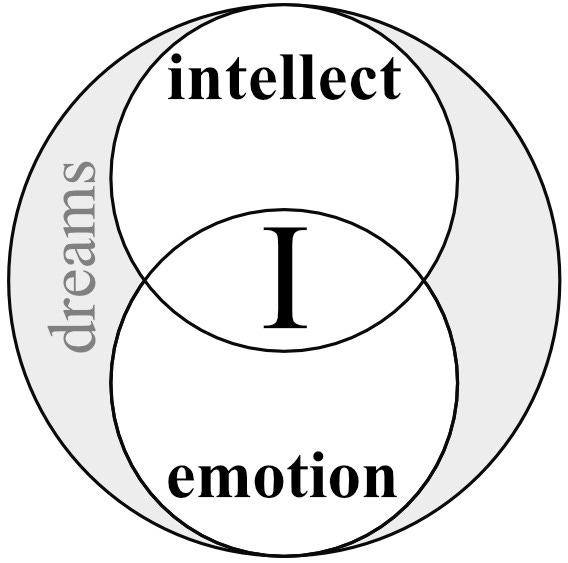
KickstarterCrowdfunding is supposed to be for raising money, but I’m using it to announce my books to a larger audience. The Kickstarter website will promote any campaign that reaches its funding threshold, so I set my reward prices low and my threshold at $50. I’m hoping you’ll sponsor one of the reward tiers so the campaign will quickly exceed its threshold. You can see the campaign at: https://www.kickstarter.com/projects/mindstrengthbalance/dreaming-yourself-into-being-a-guide-to-personal-dreamworkDreaming Yourself Into BeingI’m offering digital, audio, paper, and hardcover versions of my new book Dreaming Yourself Into Being. The book contains 18 chapter and 248 pages in a 6”x9” format.The book reviews dreams, dreaming, dreamwork, and dream therapy. Its chapters span theory, therapy, engagement, incubation, interpretation, and integration. I’ve included several self-hypnosis sessions that you can read and also listen to online as .mp3 audio files.It’s a do-it-yourself guide that takes quite a different approach from all other books on dreaming. I insist dreams are not just jumbled collections of thoughts, but an effective third way of thinking, one that’s more primitive than either intellect or emotion. At the same time, dream thinking is more fundamental.Dreams are a window onto the process by which we organize our reality. Once you stop trying to interpret your dreams and see them as explorations into thoughts you do not understand—either the scenes or the relationships between them—you’ll appreciate your dreams as not presenting answers, but presenting questions. Their confusing nature comes from their being more raw, open, and honest than you intellectually allow yourself to be.Most people don’t remember their dreams because they find no benefit in it. When you develop a deeper relationship with your dreams you begin to understand their language. It’s a largely visual and emotional language of uncertain associations. Your dreams are asking you to consider a kaleidoscope of situations both in themselves and in relationship to each other. These are not symbols or messages, they are questions, conflicts, and fears. Understanding this enables you to engage in the process and be less of a witness.When you follow your dreams into areas of deeper uncertainty they begin to speak to you. At that point your dreams present you with characters who address you and situations in which you have choices. You gain a natural kind of lucidity, one that’s still in the dream but more self-aware. The continuity of your dreams grow and you remember more dreams.Dream Fragments: Collected Ideas on DreamingAs I finished the Kickstarter campaign page I wondered what I could add to further explain these ideas, so I wrote another book. I collected 18 of my previous posts on dreams, edited them, and added 10% more material explaining the connections between each piece.Although these pieces were written separately over the course of three years, I found they kept focusing on the issue of how we think, and how dreams reflect a different way of thinking. The pieces are poetic, pragmatic, and epistemological. I’m really trying to get you to understand “dream think” and to use it in everyday life.This is another aspect that distinguishes these from other dream books. I emphasize that dreams’ wide-open, uncensored, associative, and seemingly nonsensical parade of images is a passive language. It’s not trying to tell you anything, it’s trying to lead you somewhere, but it doesn’t know where. “Nowhere” is exactly the place where we keep all of our troubled, uncertain, and repressed images. Dreams are taking you to the fertile chaos of your uncertainties and giving you a safe place in which to explore them. You certainly couldn’t do this in your waking life!Big DiscountsThe campaign offers both books in their different formats, a signed hardcover edition, and a great 18”x24” poster of the Helen Stoller collage that appears on the cover of Dream Fragments. I’m offering these at cost because I’m not looking for profit, I’m looking for exposure. If I do make a profit—I’ll profit on the posters—then I’ll use it to market the books through Amazon, Goodreads, and BookBub.I’m also reviving my online course on dreaming, which I gave years ago and then set aside to write these books. Enrolling in the course is one of the reward tiers. Please take a look at the campaign and be a sponsor if you’re at all interested in dreamwork or the psychology of dreams. This is a public episode. If you'd like to discuss this with other subscribers or get access to bonus episodes, visit mindstrengthbalance.substack.com/subscribe
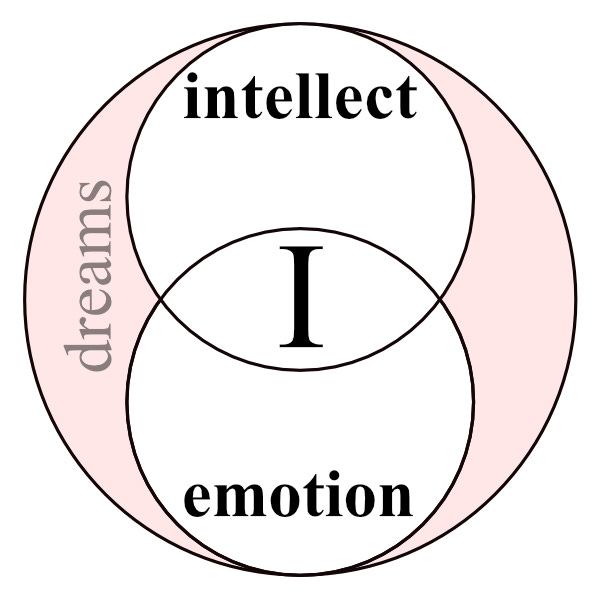
This is a free preview of a paid episode. To hear more, visit mindstrengthbalance.substack.comWe need to expand our notion of thought beyond what we can talk about.• Thinking Generally• General Thinking• Intellect• Emotion• Dreaming• Reconstruction

This is a free preview of a paid episode. To hear more, visit mindstrengthbalance.substack.com“I hope she’ll be a fool—that’s the best thing a girl can be in this world, a beautiful little fool.”— Daisy Buchanan, from The Great Gatsby— What, Me Worry?— An Intellectual Metamorphosis— Immature Personality Disorder— You Can Advance Your Stalled Development

"Insane people are always sure that they're just fine. It's only the sane people who are willing to admit they're crazy." — Nora Ephron, writer and filmmakerOnly on the boundary can you see both sides and distinguish one domain from another. On either side, within each area, you are immersed in the mindset of that area and subject to that domain’s notion of common sense. The world will always make some version of sense from within any domain.—You Must Be Comfortable at the Boundary—There is No Sanity in Staying Still—Value Your Flaws—More Evidence That I'm Losing It—You're Not Crazy, You Just Think You Are—Imbalance is Your Counterweight This is a public episode. If you'd like to discuss this with other subscribers or get access to bonus episodes, visit mindstrengthbalance.substack.com/subscribe
My previous piece titled The Ignorance of Intelligence puts intelligence in aframework that’s larger than what’s intellectual. This is still too limited. The reason this is important is because the opposite of intelligence is not stupidity, it’s insanity.We don’t recognize this, and because we don’t clearly distinguish what’s intelligent from what’s insane we allow, accept, condone, and encourage behaviors that confuse the two.In politics, Donald Trump is both intelligent and insane, at least he was intelligent once. And because we don’t recognize his insanity we debate the intelligence of what he says and does. This is like rearranging the deck chairs on the Titanic.Trump has gone a step further by surrounding himself with people who, while not insane, are not intelligent. Like many of us, these minions do not or cannot distinguish the intelligence from the insanity of their situation. As a result they potentiate the insanity.In this short, 9-minute video I touch on the subjects of intelligence and insanity. I am bringing it to your attention so that you may think about it further. Once we recognize the insanity around us, we can push back against it. Until then, we mistakenly believe insanity is a matter of debate better left to others.As always, if you’d like to talk about this in relation to your life you can book a video call with me on my calendar at: This is a public episode. If you'd like to discuss this with other subscribers or get access to bonus episodes, visit mindstrengthbalance.substack.com/subscribe
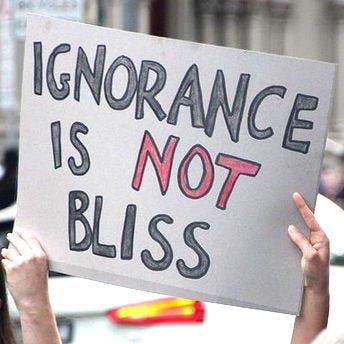
This is a free preview of a paid episode. To hear more, visit mindstrengthbalance.substack.com“Two things are infinite: the universe and human stupidity.”— attributed to Albert EinsteinWe break down intelligence into intellect and emotion and most discussions stop there, but there must be at least two more aspects to it. Memory is certainly one, not just what but how you remember. Memory is presumed to be impersonal and objective, which it is not. It very much depends on your situation. There is still a large fourth part which I'll call intuition.I'm frustrated with all the natural and accepted ignorance around me. I see it in social behavior and I work to address it in my clients and myself. I'm largely successful so I know we can learn to think better.— Memory— Narrow Focus— What Understanding Is— What Emotion Can Be— What We Accept as Normal— Real Intelligence is Different— What We Need To Do

Psychologist John Gartner (2025, Bjornson 2025) points out that no one is talking about Donald Trump’s insanity. Instead, they’re talking about his ineffectuality. This reflects the primary mode by which we deflect our own thin grasp on sanity: we call sanity the process of being logical. So, rather than recognize insanity, we quibble about justifying insane behavior.Part of the reason the obvious issue of Trump’s insanity is avoided is a fear of retribution mixed with cowardice. Politics is the brokering of incremental advantage played as a cowardly game. Dainty uncalloused politics is vulnerable to despots, as we’ve seen so many times before. It will be a courageous person who takes down Donald Trump, most likely a male with battlefield experience.• What People Are Afraid of• The Building is On Fire• When Delusion Is Standing Beside You• What Is Insanity?• Trump Derangement Syndrome This is a public episode. If you'd like to discuss this with other subscribers or get access to bonus episodes, visit mindstrengthbalance.substack.com/subscribe

Comments

Download from Google Play

Download from App Store
 United States