


 Claim Ownership
The History of American Food
Subscribed: 122Played: 4,464
Subscribe

© Copyright Margaret Hardin
Description
Starting with the first English settlements in the 17th Century, this podcasts traces how we went from barrels of salted meat & peas to Korean bbq tacos and the largest grocery store selections ever seen anywhere in the world. We'll go everywhere - and it is full of surprises.
Show Notes: https://thehistoryofamericanfood.blogspot.com/
Email: TheHistoryofAmericanFood@gmail.com
Internets: @THoAFood
Show Notes: https://thehistoryofamericanfood.blogspot.com/
Email: TheHistoryofAmericanFood@gmail.com
Internets: @THoAFood
204 Episodes
Reverse
This week we get to look back at more of why War is Awful - and it's not JUST becasue of the food. We also talk about why war food was predictably awful for everyone everywhere for approximately 5000 years.Biology - and mainly the stupid microfauna of the Earth.Understanding what war food was before the Civil War helps inform how such crazy supply errors and choices were made during the Civil War - and you can start to see how this is going to change war planning - and food system planning going forward.Also also - here's where you can viewThe National Parks: America's Best IdeaLove your Library! Watch it on Kanopy(free with your Library Card)If your Library doesn't have Kanopy - PBS - With SubscriptionOther Options:Amazon - alas with an ad-onYou Tube - but for a priceMusic Credit: Fingerlympics by Doctor TurtleShow Notes: https://thehistoryofamericanfood.blogspot.com/Email: TheHistoryofAmericanFood at gmail dot comThreads: @THoAFoodInstagram: @THoAFood& some other socials... @THoAFood
This week canned food is the main character. And it has the power to change the world, becaseu just like barrels of salted meat and ships biscuit - it's going to change how the fighting man (and the women along side) are fed.Wild to think that Civil War logistical problems were key to sweetened condensed milk becoming part of the whole world.Oh - and if you don't know what Vienetta was - or just want to relive the splendor, check this out.Vienetta AdvertisementMusic Credit: Fingerlympics by Doctor TurtleShow Notes: https://thehistoryofamericanfood.blogspot.com/Email: TheHistoryofAmericanFood at gmail dot comThreads: @THoAFoodInstagram: @THoAFood& some other socials... @THoAFood
Sure people complain about mashed potatoes made from potato flakes now - but dehydrated vegetables in their first iteration were far, far worse.In fact some of the first mass quantities of dried vegetables prepared using forced hot air drying - and hydraulic pressing for more compact storage were produced for the civil war. And boy were they nasty. All the same - they were still better than what happed to you if you didn't eat any vegetables at all.(And no - at this point there were no vitmin or fiber supplaments - you had to get it from the source)Music Credit: Fingerlympics by Doctor TurtleShow Notes: https://thehistoryofamericanfood.blogspot.com/Email: TheHistoryofAmericanFood at gmail dot comThreads: @THoAFoodInstagram: @THoAFood& some other socials... @THoAFood
I'm Back and it's bread.The American Civil War (the War of Rebellion is where suddenly we start really naming American Bread.Sure yeah, hard bread is nothing new, but the Fast Bread of fast moving America starts to become a thing. So in order to talk about the bread of the American Army... we have to do a roll call of American Bread.So come find out how Civil War Bread is the most American Bread so far.Music Credit: Fingerlympics by Doctor TurtleShow Notes: https://thehistoryofamericanfood.blogspot.com/Email: TheHistoryofAmericanFood at gmail dot comThreads: @THoAFoodInstagram: @THoAFood& some other socials... @THoAFood
Welcome back to American Food!Sorry about the big break, and even more sorry to be talking about war food ... during war. BlechBut it is interesting, and my ever growing fascination with American Food and how it keeps embracing emerging technology is not let down.So here we go.Music Credit: Fingerlympics by Doctor TurtleShow Notes: https://thehistoryofamericanfood.blogspot.com/Email: TheHistoryofAmericanFood at gmail dot comThreads: @THoAFoodInstagram: @THoAFood& some other socials... @THoAFood
I'm back and it's been so long.Find out why!Music Credit: Fingerlympics by Doctor TurtleShow Notes: https://thehistoryofamericanfood.blogspot.com/Email: TheHistoryofAmericanFood at gmail dot comThreads: @THoAFoodInstagram: @THoAFood& some other socials... @THoAFood
It's been a little while since I put up this Tukey History Episode!Since Thanksgiving Week is also Episode Week - why not throw this one in for fun?Learn about the wild history of an American bird with a huge travel resume and names that all think it came from somewhere else.Enjoy the name Chaos!Music Credit: Fingerlympics by Doctor TurtleShow Notes: https://thehistoryofamericanfood.blogspot.com/Email: TheHistoryofAmericanFood at gmail dot comThreads: @THoAFoodInstagram: @THoAFood& some other socials... @THoAFood
It's the last Episode of Season 4!And I think I've finally answered one of my opening questions - why did America make our grocery stores the way we did? As soon as Americans could, we ignored the food on the ground (unless it was familiar like deer or duck or pigeon) and instead brought our own provisions. But when you do that, and don't develop local talent - the selection end up terribly limited.So now in modern America - we seem to be attempting to make up for lost time... by making our grocery store selection even larger.Check out this last episode before I go study the terrible food of war.Music Credit: Fingerlympics by Doctor TurtleShow Notes: https://thehistoryofamericanfood.blogspot.com/Email: TheHistoryofAmericanFood at gmail dot comThreads: @THoAFoodInstagram: @THoAFood& some other socials... @THoAFood
So far America is pretty hostile to everyday hunting - but for some reason we keep adding categories.And lets face it, for a country that keeps talking about how we don't need roaylty, we do seem to keep mimicking aritocrats.the early 19th century loves some fox hunting - so much so that we imported foxes (even though there are plenty already here). Hunting keeps happening everyday - but we like to say it's not cool.Unless you are doing it for leisure... or to earn money.Yes - the early 19th century brings the birth of the Market Hunter - which needed the railroad to create itself.The Buffalo may cease to roam - and the Passenger Pigeon darken the skies by the end of the century - but the seeds of their destruction are planted here... at the start of the 19th cenutry.But worry not, it's not all bad news - you can still get a giant game pie.Music Credit: Fingerlympics by Doctor TurtleShow Notes: https://thehistoryofamericanfood.blogspot.com/Email: TheHistoryofAmericanFood at gmail dot comThreads: @THoAFoodInstagram: @THoAFood& some other socials... @THoAFood
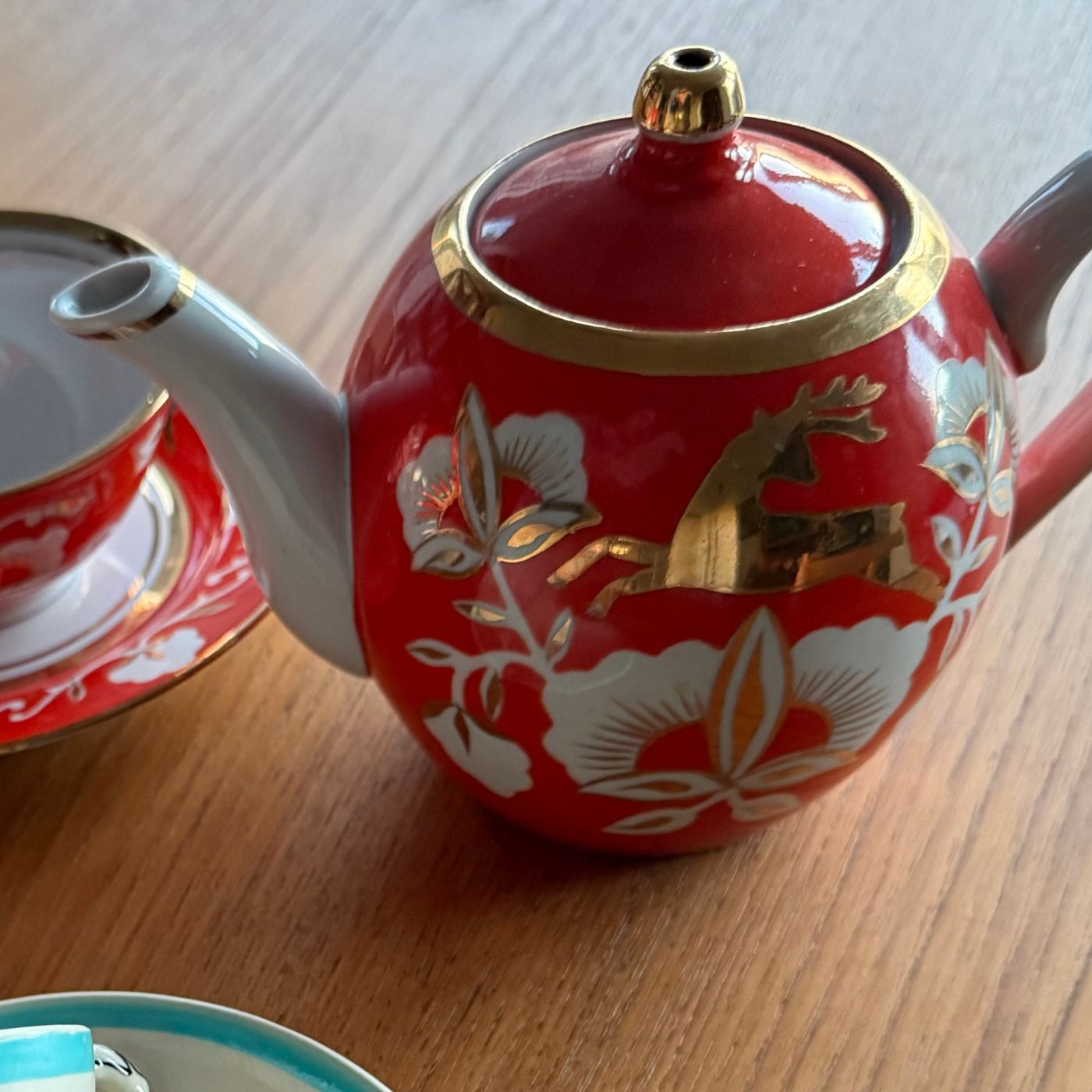
Every wondered how we got into this fix of needing so many plates - or more specifically why you’re supposed to put a set of plates on a registry for a wedding that you are never gonna use? Or at least why did people do that on the regular ,even just 20 years ago? And now it means you have relatives that are trying to push off plates on to you that you never got to eat off as a kid - and now why in the world would you want to lug them around now? For what’s at the bottom of these mysteries, and how we got into this fix - I look at the history of plates from my particular American Food History vantage point.Music Credit: Fingerlympics by Doctor TurtleShow Notes: https://thehistoryofamericanfood.blogspot.com/Email: TheHistoryofAmericanFood at gmail dot comThreads: @THoAFoodInstagram: @THoAFood& some other socials... @THoAFood
Celebrate National Public Lands Day by finding a place to visit and get involved at NEEFAUSA.ogorNPS.govAnd get into what was getting to be popular as vegetables in the early 19th century.How did Avocado Toast become a thing? Well, it would never have gotten the traction it did with out practice runs by spinach or even more glamourously by celery.And those would have never had a chance if not for the propensity for food fads developed by the early 19th century Americans who had lost their food traditions and were now looking for something new.Join me on the journey to see what was cool in plant foods in the early 19th century. We can't all be spring peas after all.Music Credit: Fingerlympics by Doctor TurtleShow Notes: https://thehistoryofamericanfood.blogspot.com/Email: TheHistoryofAmericanFood at gmail dot comThreads: @THoAFoodInstagram: @THoAFood& some other socials... @THoAFood
Wake up America! Coffee is on its way to becoming the drink of the people. Sure Cider and Beer are out there... but coffee is coming up on the outside.But how did one brew coffee in the 19th century?And just how weak was it?To find out, tune in.Music Credit: Fingerlympics by Doctor TurtleShow Notes: https://thehistoryofamericanfood.blogspot.com/Email: TheHistoryofAmericanFood at gmail dot comThreads: @THoAFoodInstagram: @THoAFood& some other socials... @THoAFood
Last show on the substandard mic - but the paper towel as popfilter helped some.Let's talk tea - what tea were people drinking in the early 19th century? The answer was almost uniformly, "bad tea". Ignorance lead to people needing sugar in their tea b/c they were drinking the bad stuff. In fact a whole grade of "export quality" tea was invented to fulfill the growing global/European/American demand. Just in this case - "expot quality" mostly meant the dregs. Or the dust anyway.Understanding that most tea Americans were drinking in this age was somewhere between stale and adulterated, and only became more so as time went on, the swing to coffee starts to make more sense. It had less to do with feelings towards England, and more to do with the tea just not tasting that good. To understand just what tea was then, join in...Music Credit: Fingerlympics by Doctor TurtleShow Notes: https://thehistoryofamericanfood.blogspot.com/Email: TheHistoryofAmericanFood at gmail dot comThreads: @THoAFoodInstagram: @THoAFood& some other socials... @THoAFoodMusic Credit: Fingerlympics by Doctor TurtleShow Notes: https://thehistoryofamericanfood.blogspot.com/Email: TheHistoryofAmericanFood at gmail dot comThreads: @THoAFoodInstagram: @THoAFood& some other socials... @THoAFood
First of all - sorry about the diferent mic. But this way we get the episode. I'll see what I can do to make things better for next ep - and all will be back to normal by the one after that.Anyway - 19th Century Chinese Food?What can I tell you? It would have looked much the same as lots of the food you will find right now around the Pearl RIver Delta, the old district of Canton - now known as Guangzhou.But this episode is not just about the food - it also looks a bit into how the US and China started dealing with each other. How did that stream of labor from China - that would be essential in the gold fileds and then the construction of the US railroads get a foot hold in California.While there is much made of the Chinese presence in New York - and how they influenced east coast culture - there is the less well known story of China and the early west.So grab your dried fish, pickled vegetables, boiled millet and see what's there.Music Credit: Fingerlympics by Doctor TurtleShow Notes: https://thehistoryofamericanfood.blogspot.com/Email: TheHistoryofAmericanFood at gmail dot comThreads: @THoAFoodInstagram: @THoAFood& some other socials... @THoAFoodMusic Credit: Fingerlympics by Doctor TurtleShow Notes: https://thehistoryofamericanfood.blogspot.com/Email: TheHistoryofAmericanFood at gmail dot comThreads: @THoAFoodInstagram: @THoAFood& some other socials... @THoAFood
Think you're fancy with your lobster roll... or did you get it from a Massachusetts McDonalds?All are possible... and much more - including death by lobster poisoning.To get more of the story - tune in to early 19th century lobsterMusic Credit: Fingerlympics by Doctor TurtleShow Notes: https://thehistoryofamericanfood.blogspot.com/Email: TheHistoryofAmericanFood at gmail dot comThreads: @THoAFoodInstagram: @THoAFood& some other socials... @THoAFoodMusic Credit: Fingerlympics by Doctor TurtleShow Notes: https://thehistoryofamericanfood.blogspot.com/Email: TheHistoryofAmericanFood at gmail dot comThreads: @THoAFoodInstagram: @THoAFood& some other socials... @THoAFood
Have you ever thought how we got here - that farm land is all AWAY and houses are all in close?That products come to you... and packaging is often more important than the thing inside?That didn't happen over night. The fact that farms are there, house are here, and manufacturing stuff is a third place altogether is not an accident. Instead it's something that has been developing in America for about 200 year.To see WHY you don't have neighborhood farms - as well as why things like setting up local recycling centers and other things that make stuff is hard - listen in to how the roots of segregated land use ties back to the early railroad.I mean... maybe a local goat and donkey pasture wouldn't be such a bad thing?Anyway - more Pea Patches...!But also understand why modern American Farms Markets will always have food from hundreds of miles away.Music Credit: Fingerlympics by Doctor TurtleShow Notes: https://thehistoryofamericanfood.blogspot.com/Email: TheHistoryofAmericanFood at gmail dot comThreads: @THoAFoodInstagram: @THoAFood& some other socials... @THoAFoodMusic Credit: Fingerlympics by Doctor TurtleShow Notes: https://thehistoryofamericanfood.blogspot.com/Email: TheHistoryofAmericanFood at gmail dot comThreads: @THoAFoodInstagram: @THoAFood& some other socials... @THoAFood
What happens when you grow more cows to make more milk to make more cheese and butter?You end up with more oxen that can't make milk - but are useful as a source of beef.And this works out well when you are living in a society that craves more meat, and are in a place with apparently wide open spaces that are just fine for feeding said cattle.A bonus when you have lots of growing industries that are willing to buy beef from you to feed their growing ambitions - whaling, the railroad, new factories, a military pushing out the borders...And then... you also have new technologies to cook the beef, and have come up with new flavors for seasoning the beef.The result - American is ready to become a beefy country.Music Credit: Fingerlympics by Doctor TurtleShow Notes: https://thehistoryofamericanfood.blogspot.com/Email: TheHistoryofAmericanFood at gmail dot comThreads: @THoAFoodInstagram: @THoAFood& some other socials... @THoAFoodMusic Credit: Fingerlympics by Doctor TurtleShow Notes: https://thehistoryofamericanfood.blogspot.com/Email: TheHistoryofAmericanFood at gmail dot comThreads: @THoAFoodInstagram: @THoAFood& some other socials... @THoAFood
So you are a typical early 19th Century American type... Is there a dairy scene? Yes.But are you drinking milk? Maybe... and probobly only for breakfast.Ok... but is it Raw Milk? Most likely not.In the early 19th century, most milk products were at least heated (cheese) or outright cooked - almost everything else - or downright boiled - your breakfast milk.Funny thing is, Americans have retained their passion for boiled milk at breakfast. We just flavor it with coffee and tea now.For more on this and how the evolution of the American Barn got us ready to have Milk Runs on trains, listen in.Music Credit: Fingerlympics by Doctor TurtleShow Notes: https://thehistoryofamericanfood.blogspot.com/Email: TheHistoryofAmericanFood at gmail dot comThreads: @THoAFoodInstagram: @THoAFood& some other socials... @THoAFoodMusic Credit: Fingerlympics by Doctor TurtleShow Notes: https://thehistoryofamericanfood.blogspot.com/Email: TheHistoryofAmericanFood at gmail dot comThreads: @THoAFoodInstagram: @THoAFood& some other socials... @THoAFood
Check out the NCPTT... while it's still there, and maybe find an unexpectedly cool place to live. Or maybe a cool woodworking job.https://www.nps.gov/subjects/ncptt/index.htmHey - so were early Americans eating mushrooms?Yeah. But not all that much. Just enough for a mushroom industry to spring up in the end of the century - but only in one place, and only for one kind.But in the meantime - mushroom powder is DELICIOUS... and not that hard to make.Recipe for 1 quart/4 cups/1 litre of MushroomsClean your favortie way. Cut or break up.Combine with:1/2 tsp mace (or slightly less nutmeg)5 cloves2 bay leaves1/4 tsp pepper (or more depending on your tastes)1 Tbs salt1 small onion quartered (or half a large one)1 Tbs fat (butter or your favorite oil)1 Tbs vinegar (white/rice/apple cider all good choices)Heat over medium-low heat to sweat the mushrooms. When mushrooms have withered - take off heat. Squeeze out all the liquid using lint free tea-towel.Save liquid, reduce by 1/2 - Mushroom Ketchup!Remove large spices and larger onion pieces. Spread out on drying tray.Dehydrate to crispy. (Dehydrator - or 200F/100C for a few hours)Crush to powder in favorite appliance.Music Credit: Fingerlympics by Doctor TurtleShow Notes: https://thehistoryofamericanfood.blogspot.com/Email: TheHistoryofAmericanFood at gmail dot comThreads: @THoAFoodInstagram: @THoAFood& some other socials... @THoAFoodMusic Credit: Fingerlympics by Doctor TurtleShow Notes: https://thehistoryofamericanfood.blogspot.com/Email: TheHistoryofAmericanFood at gmail dot comThreads: @THoAFoodInstagram: @THoAFood& some other socials... @THoAFood
This week - it’s time to look at the connection between westward American Expansion and the apple. How is the apple all tangled up with our creation of the 19th century tall tales we started to tell on and about ourselves? So get ready for a visit from some of the features/specters of that myth making that inhabited a huge part of the 20th century. Links:Johnny Appleseed Cartoon (1948) Paul Bunyan Cartoon (1958) John Henry Cartoon 1 (1973 – narrated by Roberta Flack)John Henry Cartoon 2 (2000 - Disney)Pecos Bill Cartoon (1948) Davy Crockett Disney TV show Theme Song (1954 – This is… OOoooF rough) Iriana Geogescu's plum dumplings you can use with apples. Or apricots of course. Music Credit: Fingerlympics by Doctor TurtleShow Notes: https://thehistoryofamericanfood.blogspot.com/Email: TheHistoryofAmericanFood at gmail dot comThreads: @THoAFoodInstagram: @THoAFood& some other socials... @THoAFoodMusic Credit: Fingerlympics by Doctor TurtleShow Notes: https://thehistoryofamericanfood.blogspot.com/Email: TheHistoryofAmericanFood at gmail dot comThreads: @THoAFoodInstagram: @THoAFood& some other socials... @THoAFood


Download from Google Play

Download from App Store
 United States
Looking forward to all of the upcoming seasons.
Continue to really enjoy the History of America Food. So interesting and entertaining as well.
I'm finding this series fascinating and extremely interesting.
I'm really enjoying this series. Really like the way she weaves food into all the "regular" history.
Fascinating information. Really like the humor that is often subtly behind what she's saying.
My mom recommended the podcast, and I'm still catching up. I love the intersection of history, culture and food. Mom and I talk about the podcast frequently, and I find myself bringing up interesting things I learned in conversation frequently.
I can understand why you teamed up with Jamie. He's great!