


 Claim Ownership
Industrial Insights
Subscribed: 2Played: 33
Subscribe

© Copyright 2024
Description
Industrial Insights is a podcast that highlights the market dynamics, high level strategies, and in the trenches tactics for tenants and owners of industrial real estate. Each episode is designed to take hard fought wisdom from practitioners and break it down into insights that can drive better commercial real estate decision making. The host, Justin Smith, shares his experiences from 16 years in the business and brings in industry experts to discuss critical aspects of successful industrial projects.
151 Episodes
Reverse
In this episode of the Industrial Insights podcast, Justin Smith interviews Chelsea Tamuk Levane from Cabot Properties. Chelsea shares her journey from intern to overseeing the West Coast operations at Cabot, discussing the company's growth, market focus, and strategic decisions in the industrial real estate sector. The conversation delves into networking, staying informed about market trends, managing acquisitions, and the challenges of the current leasing environment. Chelsea emphasizes the importance of understanding tenant needs, the intricacies of the bidding process, and the significance of in-house property management. The episode concludes with insights on exit strategies and the future outlook for industrial real estate. Key Takeaways Chelsea Tamuk Levane has been with Cabot Properties for 10 years, starting as an intern. Cabot Properties has grown significantly, now operating in multiple international markets. Networking through organizations like NAIOP and ULI has been beneficial for Chelsea. The focus is on core coastal markets for investment opportunities. Staying informed through brokers and market data is crucial for success. Managing acquisitions requires strong organization and communication within the team. The bidding process has become more competitive, especially in a changing market. Underwriting involves both quantitative data and qualitative insights. Building attributes are still important despite current market pressures. Regular tenant communication helps mitigate surprises during the sale process. Chapters 00:00 - Introduction to Cabot Properties and Chelsea Tamuk Levane 02:43 - Chelsea's Journey at Cabot Properties 05:37 - Expanding Cabot's Global Presence 08:15 - Market Focus and Strategic Decisions 11:12 - Staying Informed: Market Trends and Data 13:43 - Managing Acquisitions and Relationships 16:23 - Navigating the Bidding Process 19:08 - Underwriting and Deal Evaluation 21:29 - Understanding Market Dynamics 24:08 - The Art of Due Diligence 27:00 - The Papering Process and Challenges 29:40 - Exit Strategies and Market Considerations 32:19 - Value-Add Strategies in Real Estate 35:00 - The Benefits of In-House Property Management 37:35 - Future Trends and Opportunities in Industrial Real Estate Episode Resources Connect with Chelsea Tamuk Levane https://www.linkedin.com/in/chelseactamuk/ clevane@cabotprop.com Connect with Justin Smith https://smithcre.com/ https://www.lee-associates.com/ jbsmith@leeirvine.com https://www.linkedin.com/in/justinbsmith
Justin welcomes Matt Anderson, Vice President of Development at Cold Summit Development. Matt delves into cold storage and what it takes to get entitlements and a project approved, but also what makes their project better than what's existing. Highlights Matt Anderson's background in construction management & real estate development – 2:00 Joining Cold Summit Development – 5:30 How they decide which markets to target – 8:00 Delivering multi-tenant fully spec refrigerated warehouses – 11:10 Tenant profile: manufacturers, distributors, last mile delivery – 14:00 Sites available for lease in Dallas, Phoenix, Chicago – 17:20 Lease rates for cold storage buildings – 19:55 Integrated a building management system to improve tenant's efficiency – 22:00 Capital markets interest in cold storage – 24:50 Land sites requirements – 27:15 Episode Resources Connect with Matt Anderson https://www.linkedin.com/in/mrandersn21/ https://www.coldsummit.com/ Connect with Justin Smith https://smithcre.com/ https://www.lee-associates.com/ jbsmith@leeirvine.com https://www.linkedin.com/in/justinbsmith
Justin interviews Ben Gordon, founder of Cambridge Capital, Jay Tanjuan of Scannell Properties and Larry Genet of CBRE. They discuss for the demand of industrial real estate and increasing lease rates. Ben Gordon discusses the growth of logistic tech companies in the supply chain and merger & acquisition strategies. Highlights Introduction to Ben, Jay and Larry- 1:00 Ben Gordon: Ukraine Logistics Coalition - 3:50 Supply chain in the Ukraine Logistics Coalition – 6:20 Larry Genet: Supply chain in his space – 9:45 Demand for space – 10:10 Leasing in the pre-development phase – 10:40 Jay Tanjuan: 0.3% vacancy and increasing lease rates in the I.E. – 11:30 High lease rate throughout all Southern California – 13:00 How does tech effect the supply chain? - 14:45 Ben Gordon: How e-commerce growth is creating downstream logistics opportunities – 16:10 Growth of logistic tech companies – 17:00 Merger & acquisition activity – 18:10 Acquisitions to expand a company's market share – 19:00 The impact China has on our supply chain – 23:00 Manufacturing shifting to North America – 24:00 BGSA Conference – 26:00 Episode Resources Connect with Ben Gordon ben@cambridgecapital.com ben@bgsa.com https://www.linkedin.com/in/bengordon18/ https://bgstrategicadvisors.com/ https://cambridgecapital.com/ Connect with Jay Tanjuan Tanjuan@scannellproperties.com https://www.linkedin.com/in/jaytanjuan scannellproperties.com Connect with Larry Genet Genet@cbre.com https://www.linkedin.com/in/larrygenet/ Connect with Justin Smith https://smithcre.com/ https://www.lee-associates.com/ jbsmith@leeirvine.com https://www.linkedin.com/in/justinbsmith

In this episode of the Industrial Insights podcast, Justin Smith interviews Brandon Sedloff, Chief Real Estate Officer at Juniper Square and host of The Distribution podcast. They discuss Brandon's journey in the real estate industry, the evolution of his podcast, and the importance of storytelling and relationships in business. Brandon shares insights on navigating changes in private markets, the role of technology and AI, and the significance of building trust with clients. They also explore the future of real estate and capital flows, emphasizing the need for adaptability and embracing new technologies. Key Takeaways Brandon Sedloff emphasizes the importance of trust and education in private markets. Storytelling is crucial for understanding the people behind businesses. The evolution of The Distribution podcast reflects the changing landscape of private markets. Listening to clients is key to understanding market needs and driving product development. Technology is essential for modern real estate operations and decision-making. Building relationships is fundamental to success in the industry. The future of real estate will be shaped by global capital flows and changing investor needs. AI and technology will transform knowledge work in the industry. Embracing change can lead to new opportunities and growth. The power of relationships remains a constant in an ever-evolving market. Chapters 02:59 - The Journey of Podcasting and Learning from Guests 05:34 - The Importance of Storytelling in Business 08:32 - Podcast Formats and Inspirations 11:42 - Navigating Changes in the Real Estate Market 14:25 - Role of Chief Real Estate Officer at Juniper Square 17:10 - Building Trust and Relationships in Business 20:14 - Listening and Understanding Client Needs 22:58 - Curating Content and Events for Engagement 25:38 - Building Products with Customer Insights 28:44 - The Importance of Saying No 29:41 - Understanding Market Trends 33:22 - Operational Alpha in Real Estate 36:30 - Embracing Technology and AI 41:13 - Looking Ahead to 2026 Episode Resources Connect with Brandon Sedloff https://www.linkedin.com/in/bsedloff/ https://www.linkedin.com/company/juniper-square/ https://www.junipersquare.com/learn-more Connect with Justin Smith https://smithcre.com/ https://www.lee-associates.com/ jbsmith@leeirvine.com https://www.linkedin.com/in/justi
In this episode of the Industrial Insights Podcast, Justin Smith interviews Kevin Natale from SKULabs, discussing the critical role of Warehouse Management Systems (WMS) in e-commerce and logistics. They explore the customer journey from small-scale operations to larger warehouses, the importance of inventory management, and the impact of technology and AI on operational efficiency. The conversation also touches on the challenges of transitioning between systems and the significance of marketing and brand building in the e-commerce space. Key Takeaways WMS is essential for managing inventory and operations in e-commerce. The customer journey varies from small startups to established businesses. Operational efficiency can significantly reduce labor costs. Standardization in processes leads to improved fulfillment. Technology plays a crucial role in optimizing warehouse operations. Transitioning between systems requires careful planning to avoid disruptions. Insights from implementation can reveal inefficiencies in existing processes. AI is set to revolutionize warehousing and fulfillment operations. Marketing and brand building are vital for e-commerce success. Understanding inventory management is key to reducing holding costs. Chapters 00:00 Introduction to Warehouse Management Systems 02:40 The Customer Journey in Warehouse Management 05:13 Understanding Inventory Management and SKUs 07:58 Operational Efficiency and Continuous Improvement 10:46 The Role of Technology in Warehouse Operations 13:45 Navigating the Challenges of Transitioning Systems 15:59 Insights from Implementation and Optimization 18:36 The Future of AI in Warehouse Management 21:07 Marketing and Brand Building in Warehousing Episode Resources Connect with Kevin Natale https://www.linkedin.com/in/knatale2020/ https://www.linkedin.com/company/skulabs/ https://www.skulabs.com/ Connect with Justin Smith https://smithcre.com/ https://www.lee-associates.com/ jbsmith@leeirvine.com https://www.linkedin.com/in/justinbsmith
In this episode, Justin Smith interviews Bart Gadeyne from Optioryx about the integration of AI into warehouse management systems (WMS). They discuss the challenges faced by warehouses, such as inefficiencies in picking routes and shipping air, and how AI can optimize these processes. Bart explains the importance of smart 3D cartonization, mobile dimensioning, and the need for effective change management in implementing new technologies. The conversation also touches on the unique challenges faced by third-party logistics (3PL) providers and the future trends in warehouse technology, including robotics and automation. Key Takeaways AI can significantly optimize warehouse operations. Shipping air is a costly inefficiency in logistics. Smart 3D cartonization can reduce shipping costs. Mobile dimensioning technology is revolutionizing the industry. Warehouse layout impacts picking productivity. 3PLs must adapt to diverse client needs. Change management is crucial for technology adoption. Implementation timelines can be hindered by IT departments. Robotics are emerging but require clear ROI. The future of warehousing will blend technology and human labor. Chapters 02:53 Optimizing Warehouse Operations with AI 05:30 The Complexity of Truck Loading and Shipping Air 08:28 Smart 3D Cartonization and Dimensional Shipping 11:12 Mobile Dimensioning and Its Impact 13:56 Warehouse Layout and Design Optimization 16:52 3PL Challenges and Solutions 19:37 Change Management in Warehouse Operations 22:29 Implementation of AI Solutions 25:20 Future Trends in Warehouse Technology Episode Resources Connect with Bart Gadeyne https://www.linkedin.com/in/bartgadeyne/ https://www.linkedin.com/company/optioryx/ optioryx.com Connect with Justin Smith https://smithcre.com/ https://www.lee-associates.com/ jbsmith@leeirvine.com https://www.linkedin.com/in/justinbsmith
In this episode of the Industrial Insights podcast, Justin Smith interviews Vee Srithayakumar from Tecsys, discussing the evolution of warehouse management systems (WMS) and the impact of software development on the logistics industry. Vee shares his journey from warehouse management to product management, emphasizing the importance of communication and user experience in software design. The conversation explores the transition to SaaS, the significance of AI in warehouse operations, and the collaborative nature of the healthcare and 3PL industries. Vee also addresses implementation challenges and the need for flexibility in software solutions, while highlighting the future of WMS and AI integration. Key Takeaways Vee transitioned from warehouse management to software development by leveraging his network. Product management involves bridging the gap between warehouse operations and software development. Effective communication is crucial in product management to ensure accurate software development. User experience should be prioritized in software design for warehouse management systems. The shift to SaaS has improved feedback cycles for WMS significantly. Greenfield projects allow for innovative warehouse designs without existing constraints. Warehouse managers today must be tech-savvy to utilize modern tools effectively. Implementation processes need to be streamlined to avoid delays and complications. Collaboration in the healthcare industry fosters sharing of best practices among competitors. Integrating with specialized startups can enhance WMS capabilities without reinventing the wheel. Chapters 03:00 - Transitioning from Warehouse Management to Software Development 05:53 - The Role of Product Management in Software Development 09:11 - The Evolution of SaaS in Warehouse Management Systems 11:58 - Understanding Greenfield vs. Brownfield Projects 14:50 - The Impact of AI on Warehouse Management 18:02 - Maturity Stages of Organizations Seeking WMS Solutions 20:31 - Collaboration in the Industry 21:09 - Understanding 3PL Operations 23:14 - Flexible Feature Development 24:47 - Streamlining Implementation Processes 25:20 - Addressing Customer Expectations 27:35 - Leveraging Integrations for Specialized Needs 28:03 - Navigating the Ecosystem of WMS 29:56 - Innovative Solutions for Complex Problems 32:09 - Expanding Product Offerings 34:39 - The Role of AI in Execution 36:43 - The Future of Software Development Episode Resources Connect with Vee Srithayakumar linkedin.com/in/vsrithayakumar https://www.linkedin.com/company/tecsys-inc/ https://www.tecsys.com/ Connect with Justin Smith https://smithcre.com/ https://www.lee-associates.com/ jbsmith@leeirvine.com https://www.linkedin.com/in/justinbsmith
In this episode of the Industrial Insights podcast, Justin Smith interviews Scott Weiss, VP of Technical Sales at Maersk, discussing the evolving landscape of the 3PL industry, the impact of COVID-19 on supply chains, and the importance of understanding global supply chain dynamics. Scott shares insights on the value of a great 3PL provider, the significance of IT in modern warehousing, and the challenges of labor markets. The conversation also touches on the decision-making process between insourcing and outsourcing, the role of automation in warehouses, and future trends in the industry. Key Takeaways Real estate rates only go up over time. Companies must consider the entire global supply chain. A great 3PL adds value beyond order fulfillment. Not every 3PL partnership is a good fit. The 3PL landscape has changed significantly over the years. IT integration is crucial for modern warehousing. There is no one-size-fits-all model for warehousing solutions. Warehouse automation is a growing trend but must be tailored to customer needs. Labor market challenges are significant in the warehousing industry. Continuous improvement is essential for 3PL success. Chapters 01:45 - Post-COVID Supply Chain Adjustments 03:44 - Understanding Global Supply Chain Dynamics 05:12 - The Importance of Real Estate in Logistics 06:42 - Maersk's Unique Position in the Market 09:05 - Best Practices in 3PL Relationships 11:53 - Identifying the Right Fit for 3PL Partnerships 13:34 - Implementation Challenges in 3PL 16:17 - Evolution of the 3PL Landscape 19:07 - The Role of IT in Modern Logistics 22:07 - Insource vs. Outsource: Finding the Right Balance 23:20 - Exploring Outsourcing Models 25:57 - Warehouse Automation Adventures 32:40 - Labor Market Dynamics 40:07 - Future Trends in Warehousing Episode Resources Connect with Scott Weiss https://www.linkedin.com/in/scottweisslogistics/ https://www.maersk.com/ https://www.linkedin.com/company/maersk-group/ Connect with Justin Smith https://smithcre.com/ https://www.lee-associates.com/ jbsmith@leeirvine.com https://www.linkedin.com/in/justinbsmith

In this conversation, Justin Smith and Mohammad Nafisi discuss the evolving landscape of autonomy in logistics, focusing on the importance of pilot programs, the challenges of implementing automation, and the future of robotics in warehousing. They explore how flexibility and adaptability are crucial for success in this field, and the need for businesses to mature their processes before fully embracing automation. The discussion highlights the significance of meeting basic operational metrics and the role of customer success in the deployment of autonomous solutions. Key Takeaways Autonomy should be considered a last resort after exploring other efficiencies. Pilot programs are essential for demonstrating capabilities to customers. Meeting basic operational metrics is crucial for success in automation. Flexibility in automation solutions allows for adaptation to changing workflows. Logistics is inherently complex, requiring tailored solutions for different scenarios. The transition from zero to one in automation presents unique challenges. Robotics technology is rapidly evolving, enabling more effective solutions. Customer success is tied to the long-term viability of automation solutions. Integration with existing systems can be a significant hurdle in automation. The future of robotics in warehousing looks promising with advancements in technology. Chapters 03:01 - Understanding Pilot Programs 06:01 - The Evolution of Forklift Design 09:14 - Transitioning from Zero to One in Automation 12:01 - The Role of Flexibility in Autonomous Solutions 15:09 - Advancements in Navigation Technology 18:00 - The Future of Forklift Automation and Business Models 19:13 - Overcoming Technical Challenges 26:45 - The Future of Robotics in Warehousing Episode Resources Connect with Mohammad Nafisi https://www.linkedin.com/in/mohammadnnafisi/ https://www.linkedin.com/company/cavallainc/ https://cavalla.io/ Connect with Justin Smith https://smithcre.com/ https://www.lee-associates.com/ jbsmith@leeirvine.com https://www.linkedin.com/in/justinbsmith
In this episode of the Industrial Insights podcast, Justin Smith interviews Nikhil Sathe from BGSA, discussing the current state of the supply chain and logistics industry. They explore the economic landscape, the impact of tariffs, the role of technology and AI, and the trends in mergers and acquisitions. Nikhil shares insights on navigating financial challenges, the importance of cash management, and the future outlook for the industry, emphasizing the need for realistic expectations in a changing market. Key Takeaways Nikhil Sathe has over 35 years of experience in supply chain and logistics. The freight industry is currently experiencing a recession with significant challenges. Transportation technology and AI are the only sectors thriving in the current market. M&A activity is expected to rebound in 2026 despite current market conditions. Cash management is crucial for companies facing financial pressures. Identifying high-value customers is essential for profitability. AI is poised to revolutionize the logistics industry. Valuations in the market are adjusting to new economic realities. The impact of tariffs is creating uncertainty in supply chains. The logistics market is highly fragmented, presenting both challenges and opportunities. Episode Resources Connect with Nikhil Sathe linkedin.com/in/nikhilsathe https://bgstrategicadvisors.com/ https://www.linkedin.com/company/bg-strategic-advisors/ Connect with Justin Smith https://smithcre.com/ https://www.lee-associates.com/ jbsmith@leeirvine.com https://www.linkedin.com/in/justinbsmith
In this episode of the Industrial Insights podcast, Justin Smith and Tim Judge discuss the critical need for data unification in supply chains. Tim shares his extensive background in the industry, highlighting the challenges companies face with fragmented data systems. He explains how Agillitics aims to bridge these gaps by providing tailored solutions that meet companies where they are in their data maturity journey. The conversation also touches on the importance of automation, AI, and the need for open systems to enhance visibility and efficiency in warehouse operations. Tim emphasizes the significance of preparing for go-live challenges and the dual nature of AI as both overhyped and underhyped in the current landscape. Key Takeaways Unified data is essential for effective supply chain management. Many companies struggle with fragmented data across multiple systems. AI and technology can significantly enhance supply chain operations. Agillitics aims to provide tailored solutions for data integration. Middle market companies have unique challenges and opportunities. Empowering employees through automation can lead to greater job satisfaction. Visibility in warehouse operations is crucial for efficiency. Digital transformation requires careful planning and execution. Go-live challenges can be mitigated through simulation and preparation. Understanding the maturity level of a company is key to implementing solutions. The future of supply chain will increasingly rely on data-driven decision making. Chapters 01:58 - Tim Judge's Career Journey and Insights 05:46 - The Importance of Data in Supply Chain Management 09:23 - Building Effective Dashboards for Executives 11:18 - Understanding Customer Readiness for Data Solutions 13:11 - Productizing Data Solutions for Faster Implementation 15:01 - Leveraging AI in Data Management 16:57 - Challenges for Mid-Sized Companies in Data Management 18:58 - Empowering Teams to Embrace Automation 23:32 - Embracing Entrepreneurial Mindset in Organizations 25:40 - Transforming Warehouse Operations through Automation 29:13 - Integrating Data Systems for Enhanced Visibility 33:16 - Navigating Digital Transformations and Go-Live Challenges 38:14 - The Dual Nature of AI: Overhyped and Underhyped 42:48 - Preparing for Future Challenges in Supply Chain Management Episode Resources Connect with Tim Judge https://www.linkedin.com/in/timpjudge/ https://www.linkedin.com/company/agillitics/ https://www.agillitics.com/ Connect with Justin Smith https://smithcre.com/ https://www.lee-associates.com/ jbsmith@leeirvine.com https://www.linkedin.com/in/justinbsmith
In this episode of the Industrial Insights podcast, Justin Smith interviews Adrian Betts from Xpandur, who shares his expertise in optimizing warehouse operations. The conversation covers various themes, including managing large teams, simplifying operations through repetition, the importance of training, and understanding client needs. Adrian discusses the challenges of hiring and retaining talent in competitive markets, the significance of cross-training, and the necessity of planning for peak seasons. He emphasizes capacity management and inventory control while also addressing the balance between automation and traditional methods in warehousing. The episode concludes with insights into future trends in the industry. Key Takeaways Xpandur aims to enhance operational capabilities in warehousing. Managing large teams requires effective communication and structure. Repetition in training simplifies complex operations. Understanding client needs is crucial for successful project execution. Hiring strategies must adapt to market dynamics. Retaining talent is essential in competitive job markets. Cross-training enhances operational flexibility and efficiency. Planning for peak seasons is vital for operational success. Capacity management directly impacts inventory control and efficiency. Automation should complement traditional methods, not replace them. Episode Resources Connect with Adrian Betts https://www.linkedin.com/in/adrian-betts/ https://www.linkedin.com/company/xpandur-llc/ Connect with Justin Smith https://smithcre.com/ https://www.lee-associates.com/ jbsmith@leeirvine.com https://www.linkedin.com/in/justinbsmith
In this conversation, Keyan Bazargan discusses the importance of focusing on last mile shipping as a strategic area for brands to reduce costs and improve efficiency. He emphasizes that this area offers significant opportunities for savings without causing major disruptions to the supply chain. By prioritizing last mile shipping, brands can achieve a high return on investment and effectively cut their cost of goods sold. Takeaways There's a lot of different areas I could have chosen to focus on to help companies save money. The reason why I focused on last mile shipping is because I think the majority of brands there have a lot of meat left on the bone. There's a lot of room to save and to actually make a change is not as disruptive to your supply chain. I viewed it as the category like the highest ROI use of your time. If a brand is looking to cut their cost of goods sold, I recommend starting with shipping. Manufacturing changes that you might make are a lot bigger of a project than modifying your last mile shipping. Last mile shipping offers significant opportunities for savings. Strategic focus on last mile shipping can lead to operational efficiency. Cutting costs in last mile shipping can enhance overall brand performance. Effective shipping strategies are crucial for modern brands. Episode Resources Connect with Keyan Bazargan https://www.linkedin.com/in/keyan-bazargan/ https://www.linkedin.com/company/iron-margin/ https://www.ironmargin.com/ Connect with Justin Smith https://smithcre.com/ https://www.lee-associates.com/ jbsmith@leeirvine.com https://www.linkedin.com/in/justinbsmith
In this episode of the Industrial Insights podcast, Justin Smith interviews Paul Lukehart, an experienced project manager in logistics and supply chain. They discuss Paul's journey from the Army to managing projects for major companies like Target and Amazon. The conversation delves into the importance of effective project management, common pitfalls, risk mitigation strategies, and the impact of automation in logistics. Paul shares insights on the insourcing vs outsourcing dilemma, the significance of understanding payback periods, and how to deal with unexpected challenges in projects. The episode concludes with a look at future trends in project management, including the role of AI and prediction markets. Takeaways Project management is a journey that requires trust and collaboration. Effective project management involves understanding both operations and project execution. Automation is becoming increasingly important in logistics projects. Common pitfalls in project management include misalignment of resources and scope. Risk mitigation strategies are essential for project success. Understanding payback periods helps in making informed investment decisions. The insourcing vs outsourcing dilemma is a continuous challenge for companies. Dealing with project wrinkles requires transparency and stakeholder engagement. Future trends in project management include the integration of AI and prediction markets. Continuous learning and adaptation are key to successful project management. Chapters 00:00 - Introduction to Project Management and Logistics 02:41 - Paul's Journey in Logistics and Project Management 05:10 - The Importance of Project Definition and Scope 07:40 - Understanding Project Management Risks 10:24 - When to Seek External Project Management Expertise 13:03 - Case Study: Trucking Automation Project 15:16 - Common Pitfalls in Project Management 20:24 - Understanding Project Value and Risks 23:01 - Contingency Planning and ROI Analysis 25:41 - The Dynamics of 3PL Relationships 27:19 - Navigating Project Challenges and Wrinkles 29:52 - Innovative Tools and Technologies in Project Management 33:06 - Looking Ahead: Future Trends and Insights Episode Resources Connect with Paul Lukehart https://www.linkedin.com/in/paullukehart/ https://www.linkedin.com/company/plprograms/ https://warehouseimprovement.com/ Connect with Justin Smith https://smithcre.com/ https://www.lee-associates.com/ jbsmith@leeirvine.com https://www.linkedin.com/in/justinbsmith
In this episode of the Industrial Insights podcast, Justin Smith interviews Joe Dunlap, founder of BlueJ Advisors, to explore the evolving landscape of supply chain and industrial strategy. They discuss the concept of warehouses as infrastructure, the importance of automation, and the role of real estate in supply chain dynamics. Joe shares insights from his extensive career in supply chain consulting, including turnaround strategies for distressed companies and the growing significance of 3PLs. The conversation emphasizes the need for continuous learning and adaptation in a rapidly changing industry. Key Takeaways Warehouses are increasingly viewed as infrastructure. Real estate plays a crucial role in supply chain dynamics. Automation is essential for improving efficiency and reducing costs. Turnaround strategies are vital for distressed companies. M&A activities often require realignment of supply chain assets. Supply chain network design requires accurate data and modeling. 3PLs are growing in importance within the supply chain. Automation can lead to higher-skilled job opportunities. Cultural perceptions influence outsourcing decisions. Continuous learning is key to staying relevant in supply chain management. Chapters 00:00 - Introduction to Supply Chain and Industrial Strategy 01:10 - Warehouses as Infrastructure 05:51 - Joe Dunlap's Background and Expertise 13:07 - Current Trends in Supply Chain Consulting 15:14 - Challenges in Turnarounds and Transformations 20:05 - Business Imperatives and Supply Chain Changes 21:06 - Tools and Analysis in Supply Chain Network Design 25:08 - The Role of 3PLs in Supply Chain Management 30:51 - Understanding Supply Chain Components 32:18 - The Role of Automation in Supply Chain 39:07 - Outsourcing vs. Insourcing Decisions 41:52 - The Future of Manufacturing and Automation 47:46 - The Value of Continuous Learning and Education Episode Resources Connect with Joe Dunlap https://www.linkedin.com/in/joe-dunlap-bluej https://www.linkedin.com/company/bluejadvisors/ https://bluejadvisors.com/ Connect with Justin Smith https://smithcre.com/ https://www.lee-associates.com/ jbsmith@leeirvine.com https://www.linkedin.com/in/justinbsmith

In this episode of the Industrial Insights podcast, Justin Smith interviews Hillary Drake from Liminal Network about the modernization of logistics through APIs and self-service solutions. They discuss the challenges faced by B2B companies in managing customer expectations, the importance of customer journey mapping, and how integrating technology can enhance the customer experience. Hillary shares insights on the role of data security, the entrepreneurial journey, and future innovations in the logistics industry. Key Takeaways The logistics industry is evolving with the integration of APIs. Self-service solutions are crucial for improving customer experience in B2B. Understanding the customer journey can reveal gaps in service. Integrating new technology into existing systems is essential for efficiency. Real-time data enhances customer trust and satisfaction. APIs can streamline logistics processes and reduce costs. Data security is a top priority for maintaining customer trust. Future innovations in logistics will focus on automation and efficiency. Building relationships in the industry is key to success. The entrepreneurial journey involves navigating challenges and seizing opportunities. Chapters 00:00 - Introduction to Modernizing Logistics 02:37 - The Importance of Self-Service in B2B 05:44 - Identifying Target Customers 08:07 - Understanding Customer Journey Mapping 11:07 - Integrating Technology into Existing Systems 13:58 - Enhancing Customer Experience with Real-Time Data 16:33 - The Role of APIs in Logistics 19:24 - Challenges in Implementing New Technologies 22:12 - Data Security and Customer Trust 25:07 - Future Innovations in Logistics 27:29 - Building Relationships in the Industry 30:27 - The Entrepreneurial Journey 33:15 - Conclusion and Future Outlook Episode Resources Connect with Hillary Drake https://www.linkedin.com/in/hillary-drake/ https://www.linkedin.com/company/liminal-network/ https://liminalnetwork.com/ Connect with Justin Smith https://smithcre.com/ https://www.lee-associates.com/ jbsmith@leeirvine.com https://www.linkedin.com/in/justinbsmith
In this episode of the Industrial Insights Podcast, Justin Smith interviews Jonathan Briggs from ShipMonk, exploring the intersection of industrial real estate and third-party logistics (3PL). They discuss Jonathan's role at ShipMonk, the challenges and strategies in sales, the importance of understanding customer needs, and the impact of technology and automation in warehousing. The conversation also delves into managing peak seasons, regulatory challenges, and common myths in the 3PL industry, concluding with insights on future trends and investment opportunities. Key Takeaways Sales is evolving, and understanding customer needs is crucial. Navigating customer relationships requires a balance of push and pull. The ideal customer profile has shifted towards D2C and omni-channel. Technology and automation are key to optimizing warehouse operations. Labor dynamics and automation present ongoing challenges. Sales cycles have lengthened due to market uncertainties. Managing peak seasons requires proactive planning and communication. Regulatory changes can significantly impact logistics operations. Common myths about 3PLs often stem from outdated perceptions. Investing in global facilities can enhance service capabilities. Chapters 00:00 - Introduction to ShipMonk and Jonathan's Role 02:42 - A Day in the Life at ShipMonk 05:29 - Navigating the 3PL Landscape 08:21 - Understanding ShipMonk's Ideal Customer Profile 11:09 - Warehouse Automation Challenges 13:57 - The Balance of Automation and Manual Processes 16:54 - Sales Environment and Challenges in 2025 19:51 - Success Stories and Future Focus 26:16 - Streamlining Operations and Value-Added Services 29:16 - Navigating Peak Seasons and Managing Expectations 32:42 - Understanding Regulatory Risks and Compliance 35:47 - Contract Lengths and Customer Retention Strategies 38:32 - Vertical Integration and Scaling the Business 41:30 - Dispelling Myths in Fulfillment and Outsourcing 47:41 - Future Investments and Global Expansion Strategies Episode Resources Connect with Jonathan Briggs https://www.linkedin.com/in/jdbriggs/ https://www.shipmonk.com/high-volume-fulfillment https://www.linkedin.com/company/shipmonk/ Connect with Justin Smith https://smithcre.com/ https://www.lee-associates.com/ jbsmith@leeirvine.com https://www.linkedin.com/in/justinbsmith
In this episode of the Industrial Insights podcast, Justin Smith interviews Luca Conner, co-founder and co-CEO of Pack'N, a 3PL company. They discuss Luca's journey from starting in the industry at a young age to bootstrapping a successful logistics business. The conversation covers the importance of communication, client relationships, financial realities, and the challenges of running a 3PL. Luca shares insights on preparing for peak seasons, identifying ideal clients, and the future of the 3PL industry amidst changing e-commerce trends. Key Takeaways Luca started Pack'N at 19 years old, bootstrapping the business. The company has a 100% client retention rate, emphasizing strong relationships. Effective communication is crucial for successful 3PL operations. Cash flow management is a significant challenge for 3PLs. Client expectations must be clearly set and managed. Organized inbounding is essential for smooth warehouse operations. E-commerce trends are shifting, impacting logistics strategies. Preparing for peak seasons requires strategic planning and communication. The future of the 3PL industry is promising, with expected growth. 3PLs should focus on building partnerships rather than transactional relationships. Chapters 00:00 - Introduction to Packin and Luca's Journey 04:33 - Bootstrapping a 3PL: Challenges and Strategies 09:13 - The Importance of Communication in 3PL 14:00 - Financial Realities of Running a 3PL 18:45 - Client Relationships: Dream vs. Nightmare 23:30 - Navigating Volatility in E-commerce 27:48 - Preparing for Q4: The Super Bowl of Logistics 32:06 - The Future of 3PL: Growth and Strategic Partnerships Episode Resources Connect with Luca Conner https://www.linkedin.com/in/luca-conner-96139a253/ https://www.linkedin.com/company/packn/ https://www.gopackn.com/ Connect with Justin Smith https://smithcre.com/ https://www.lee-associates.com/ jbsmith@leeirvine.com https://www.linkedin.com/in/justinbsmith
In this episode of the Industrial Insights podcast, Dr. Noel Hacegaba, COO of the Port of Long Beach, discusses the critical role of the port in the Southern California economy, its operations, and future developments. The conversation covers misconceptions about port ownership, the economic impact of the port, the importance of rail infrastructure, the effects of tariffs, technological advancements, sustainability initiatives, and workforce development. Dr. Hacegaba emphasizes the need for collaboration and innovation to meet future challenges in the supply chain and logistics industry. Key Takeaways The Port of Long Beach is a significant economic engine, handling 40% of U.S. imports. Ports are often invisible until supply chain disruptions occur, as seen during the pandemic. The port is investing heavily in rail infrastructure to improve efficiency. Tariffs create uncertainty but are expected to stabilize in the long term. Technological advancements are crucial for improving port operations and efficiency. Sustainability initiatives are a priority, with a focus on zero emissions. Automation is present but not fully implemented at all terminals. Workforce development is essential for the future of the port and logistics industry. Collaboration between ports can enhance operational efficiency. The supply chain information highway improves visibility and data sharing among partners. Chapters 00:00 - Introduction to the Port of Long Beach 02:45 - Understanding Port Operations and Ownership 05:36 - Economic Impact of the Port 08:20 - Container Volume and Economic Indicators 10:51 - Rail Infrastructure and Future Investments 13:49 - Technological Advancements in Port Operations 16:42 - Transition to Zero Emissions 19:12 - Workforce Development and Future Leaders 22:18 - Automation in Port Operations 24:49 - Global Port Comparisons 27:32 - Long-term Trends and Future Outlook Episode Resources Connect with Dr. Hacegaba https://www.linkedin.com/in/dr-noel-hacegaba-60b7894/ https://www.linkedin.com/company/port-of-long-beach/ https://polb.com/ Connect with Justin Smith https://smithcre.com/ https://www.lee-associates.com/ jbsmith@leeirvine.com https://www.linkedin.com/in/justinbsmith
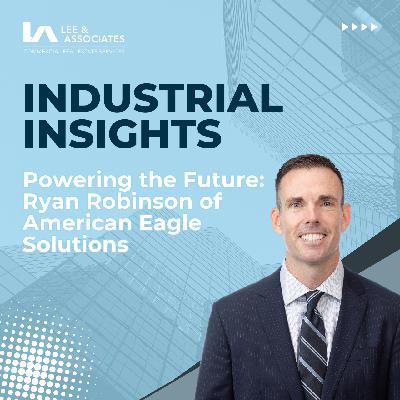
In this episode of the Industrial Insights podcast, Justin Smith interviews Ryan Robinson from American Eagle Solutions (AES). They discuss the evolution of AES from a lighting company to a full electrical services contractor, focusing on the growing demand for electrical infrastructure in industrial warehousing. Key topics include the state of lighting, the lifespan of LEDs, the importance of collaboration in space planning, and the role of landlords and operators in electrical planning. They also explore rules of thumb for lighting and electrical needs, case studies involving 3PLs, and future trends in electrical infrastructure. Key Takeaways AES started as a lighting company and evolved into a full electrical services contractor. The demand for electrical infrastructure is growing rapidly, especially in industrial spaces. LEDs have a lifespan that can lead to significant maintenance needs after 5-10 years. Collaboration between landlords, operators, and electrical contractors is crucial for effective space planning. Understanding the timeline for electrical installations is essential to avoid operational delays. Not all LED fixtures are created equal; quality varies significantly. Rules of thumb for lighting density can help in budgeting and planning. The role of 3PLs in the industry is expanding, necessitating quick electrical setups. Future trends include a focus on heavy electrical equipment and automation. Proactive planning can prevent costly delays in electrical installations. Chapters 00:00 - Introduction to Ryan Robinson and AES 04:47 - The State of Lighting Technology 09:10 - Understanding Electrical Infrastructure Needs 17:55 - Collaboration with Landlords and Operators 22:49 - Growing Demand for Electrical Services 29:32 - The Future of Electrical Infrastructure 34:47 - Vertical Integration in Electrical Services Episode Resources Connect with Ryan Robinson https://www.linkedin.com/in/ryan-robinson-0a63aa35/ https://www.linkedin.com/company/americaneaglesolutionsltd/ https://www.aes-ltd.net/about/ Connect with Justin Smith https://smithcre.com/ https://www.lee-associates.com/ jbsmith@leeirvine.com https://www.linkedin.com/in/justinbsmith


Download from Google Play

Download from App Store
 United States
It's no secret that the most popular investment is the purchase of real estate. Even if you do not have the time and desire to manage it and contact tenants, there are always services such as this one https://utopiamanagement.com/locations/reno-nv to help you