


 Claim Ownership
Discover Something New
Subscribed: 0Played: 0
Subscribe

© David Grunwald
Description
American poetry, history and contemporary thought.
18 Episodes
Reverse
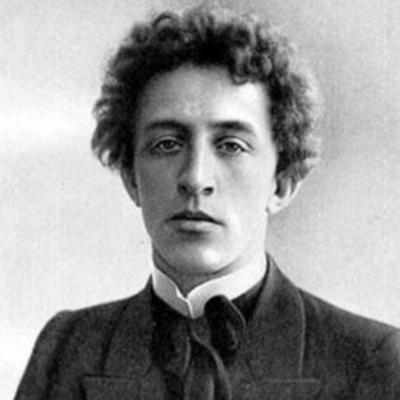
Пушкинскому Дому
Имя Пушкинского Дома
В Академии наук!
Звук понятный и знакомый,
Не пустой для сердца звук!
Это — звоны ледохода
На торжественной реке,
Перекличка парохода
С пароходом вдалеке,
Это — древний Сфинкс, глядящий
Вслед медлительной волне,
Всадник бронзовый, летящий
На недвижном скакуне.
Наши страстные печали
Над таинственной Невой,
Как мы черный день встречали
Белой ночью огневой.
Что за пламенные дали
Открывала нам река!
Но не эти дни мы звали,
А грядущие века.
Пропуская дней гнетущих
Кратковременный обман,
Прозревали дней грядущих
Сине-розовый туман.
Пушкин! Тайную свободу
Пели мы вослед тебе!
Дай нам руку в непогоду,
Помоги в немой борьбе!
Не твоих ли звуков сладость
Вдохновляла в те года?
Не твоя ли, Пушкин, радость
Окрыляла нас тогда?
Вот зачем такой знакомый
И родной для сердца звук
Имя Пушкинского Дома
В Академии наук.
Вот зачем, в часы заката
Уходя в ночную тьму,
С белой площади Сената
Тихо кланяюсь ему.
1921 г.
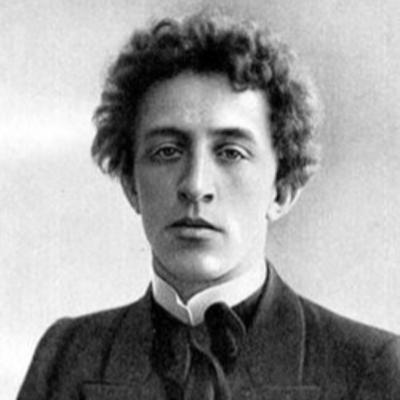
A recording of a newly translated Alexander Blok poem entitled "On Pushkin House" by David Grunwald. This was Blok's last poem and it had special meaning because Blok delivered it on the date of Pushkin's death in 1837.

Марина Ивановна Цветаева (1892–1941 гг.) – знаменитая русская поэтесса, прозаик, переводчик, которая своим творчеством оставила яркий след в литературе XX века. В ее стихотворениях ярко выражена музыкальность, поскольку в детстве Цветаева обучалась игре на фортепиано. Это одно из моих любимых стихотворений.
Подробнее: https://obrazovaka.ru/alpha/t/cvetaeva-marina-ivanovna-tsvetaeva-marina-ivanovna
Когда я гляжу на летящие листья,
Слетающие на булыжный торец,
Сметаемые — как художника кистью,
Картину кончающего наконец,
Я думаю (уж никому не по нраву
Ни стан мой, ни весь мой задумчивый вид),
Что явственно жёлтый, решительно ржавый
Один такой лист на вершине — забыт.
20-е числа октября 1936
Ernst Toller (1 December 1893 – 22 May 1939) was a German author, playwright, left-wing politician and revolutionary, known for his Expressionist plays. He served in 1919 for six days as President of the short-lived Bavarian Soviet Republic, after which he became the head of its army. He was imprisoned for five years for his part in the armed resistance by the Bavarian Soviet Republic to the central government in Berlin. While in prison Toller wrote several plays that gained him international renown. They were performed in London and New York as well as in Berlin.
In 1933 Toller was exiled from Germany after the Nazis came to power. He did a lecture tour in 1936–1937 in the United States and Canada, settling in California for a while before going to New York. He joined other exiles there. He committed suicide in May 1939.
Ernst Toller: The Playwright as Revolutionary (translated by David Grunwald)
MUSIC
Jacqueline du Pre & Daniel Barenboim - Elgar Cello Concerto
Edward Elgar's Cello Concerto in E minor, Op. 85, his last notable work, is a cornerstone of the solo cello repertoire. Elgar composed it in the aftermath of the First World War, when his music had already gone out of fashion with the concert-going public. In contrast with Elgar's earlier Violin Concerto, which is lyrical and passionate, the Cello Concerto is for the most part contemplative and elegiac.
UNSER WEG
Die Klöster sind verdorrt und haben ihren Sinn ver
loren,
Sirenen der Fabriken überschrillten Vesperklang,
Und der Millionen trotziger Befreiungssang
Verstummt nicht mehr vor klösterlichen Toren.
Wo sind die Mönche, die den Pochenden zur Antwort
geben:
„Erlösung ist Askese weltenferner Stille ...“ —
Ein Hungerschrei, ein diamantner Wille
Wird an die Tore branden: „Gebt uns Leben!“
Wir foltern nicht die Leiber auf gezähnten Schragen,
Wir haben andern Weg zur Welt gefunden,
Uns sind nicht stammelndes Gebet die Stunden,
Das Reich des Friedens wollen wir zur Erde tragen,
Den Unterdrückten aller Länder Freiheit bringen —
Wir müssen um das Sakrament der Erde
ringen!
A special reading of the last poem in Robert Bly's "Silence in the Snowy Fields" entitled Snowfall in the Afternoon. Read along with the beautiful song Vieille chanson du jeune temps (Hugo) which speaks to the famous haunting song of the girl in Victor Hugo's "Last Day of a Condemned Man". Please find the previously untranslated song of a human tragedy - a careful mixing of the genius of Bly and Hugo.
The poems of Robert Bly are rooted deep in the earth. Snow and sunshine, barns and cornfields and cars on the empty nighttime roads, abandoned Minnesota lakes and the mood of America now--these are his materials. He sees and talks clearly: he uses no rhetoric nor mannered striving for effect, but instead the simple statement that in nine lines can embody a mood, reveal a profound truth, illuminate in an important way the inward and hidden life. This is a poet of the modern world, thoroughly aware of the complexities of the moment but equally mindful of the great stream of life--all life--of which mankind is only a part.
A reading from Robert Bly's (1926-2021) first book of poetry Silence in the Snowy Fields (1962). The poems of Robert Bly are rooted deep in the earth. Snow and sunshine, barns and cornfields and cars on the empty nighttime roads, abandoned Minnesota lakes and the mood of America now--these are his materials. He sees and talks clearly: he uses no rhetoric nor mannered striving for effect, but instead the simple statement that in nine lines can embody a mood, reveal a profound truth, illuminate in an important way the inward and hidden life. This is a poet of the modern world, thoroughly aware of the complexities of the moment but equally mindful of the great stream of life--all life--of which mankind is only a part.
Bly's "Old Boards" reminds me of the life as a journey described in the "Book of Disquiet" written by Fernando Pessoa (1888–1935). One of the entries reads "I'll disappear in the fog as a foreigner to all life, as a human island detached from the dream of the sea, as a uselessly existing ship that floats on the surface of everything." Bly's unique lamentation is for life and its rejuvenative beauty, but a loss in the bargain.
https://www.poetryfoundation.org/poets/robert-bly
Poem Against the Rich
Each day I live, each day the sea of light
Rises, I seem to see
The tear inside the stone
As if my eyes were gazing beneath the earth.
The rich man in his read hat
Cannot hear
The weeping in the pueblos of the lily,
Or the dark tears in the shacks of the corn.
Each day the sea of light rises
I hear the sad rustle of the darkened armies,
Where each man weeps, and the plaintive
Orisons of the stones.
The stones bow as the saddened armies pass.
Dead Souls is a novel by Nikolai Gogol, first published in 1842, and widely regarded as an exemplar of 19th-century Russian literature. The novel chronicles the travels and adventures of Pavel Ivanovich Chichikov (Russian: Павел Иванович Чичиков) and the people whom he encounters. These people typify the Russian middle-class of the time. Gogol himself saw his work as an "epic poem in prose", and within the book characterised it as a "novel in verse".
The character in today's short reading is having dinner with Chichikov, a middle official, who learns that there are dead souls to be bought. Gogol presents the character Sobakevich, a bear of a man, who had a fiery red complexion.
“It is well-known that there are many faces in the world over the finishing of which nature did not take much trouble, did not employ any fine tools such as files, gimlets, and so on, but simply hacked them out with round strokes: one chop-a nose appears; another chop-lips appear; eyes are scooped out with a big drill; and she lets it go into the world rough-hewn, saying: "It lives.” Sobakevich held his head more down than up, he did not turn his neck at all, and because he could not turn it, he rarely looked at the person he was talking to, but instead at the corner of the stove or at the door." Such detail!
A reading from Robert Bly's first book of poetry Silence in the Snowy Fields (1962). The poems of Robert Bly are rooted deep in the earth. Snow and sunshine, barns and cornfields and cars on the empty nighttime roads, abandoned Minnesota lakes and the mood of America now--these are his materials. He sees and talks clearly: he uses no rhetoric nor mannered striving for effect, but instead the simple statement that in nine lines can embody a mood, reveal a profound truth, illuminate in an important way the inward and hidden life. This is a poet of the modern world, thoroughly aware of the complexities of the moment but equally mindful of the great stream of life--all life--of which mankind is only a part.
Robert Elwood Bly (geb, 1926) ist einer der berühmtesten Dichter Amerikas, der leicht umstrittenste Dichter, der seit über einem halben Jahrhundert die Kulturlandschaft durch Poesie, Übersetzung, Aktivismus und soziale Kommentare durchkreuzt.
Bly schrieb Poesie gegen den Vietnamkrieg, sprach von Ungerechtigkeit und bot Perspektiven auf Männlichkeit, Liebe und Tod. Sein Vermächtnis muss noch geschrieben werden. Der Psychologe Robert Moore glaubt: „Wenn die Kultur- und Geistesgeschichte unserer Zeit geschrieben wird, wird Robert Bly als Katalysator für eine umfassende kulturelle Revolution anerkannt werden.“
This poem was read honoring Robert Bly, a midwestern poet.
"Stille in den verschneiten Feldern" (1962) von Robert Bly Robert Elwood Bly (geb, 1926) ist einer der berühmtesten Dichter Amerikas, der leicht umstrittenste Dichter, der seit über einem halben Jahrhundert die Kulturlandschaft durch Poesie, Übersetzung, Aktivismus und soziale Kommentare durchkreuzt. Bly schrieb Poesie gegen den Vietnamkrieg, sprach von Ungerechtigkeit und bot Perspektiven auf Männlichkeit, Liebe und Tod. Sein Vermächtnis muss noch geschrieben werden. Der Psychologe Robert Moore glaubt: „Wenn die Kultur- und Geistesgeschichte unserer Zeit geschrieben wird, wird Robert Bly als Katalysator für eine umfassende kulturelle Revolution anerkannt werden.“ Bly ist ein amerikanischer Schatz, denn seine Kunst ist ein multidimensionales Gewebe, das für alle Zeiten auf einer Leinwand in Mittelamerika platziert ist. Sein Genie war es, die universellen Themen von Leben und Tod im Prisma der amerikanischen sozialen, historischen und kulturellen Erfahrungen zu zeigen. Seine Ehrlichkeit und Ursprünglichkeit, grenzenlos und erfrischend, macht ihn zu den wahren amerikanischen Größen. Seine Arbeit ist eine wertvolle Verbindung zu Walt Whitman, Robert Frost, Ezra Pound und Wallace Stevens, um nur einige zu nennen. Robert Bly war ein Amerikaner aus dem mittleren Westen, dessen erstes Werk "Silence in the Snowy Fields" (1962) vor nicht allzu langer Zeit die erdige Einfachheit eines Minnesotas heraufbeschwört. Doch der Stil und die Essenz führen den Leser zurück in eine einfache Zeit — vor dem Vietnamkrieg — wann die Elemente und Dimensionen mit der universellen Seele sprechen. Bly war ein Meister der Neuerfindung, Nachforschung und Adaption. Man sieht sein erstes Buch "Schweigen in den verschneiten Feldern" und seine letzte Sammlung "Morgengebete" (1998). Sein soziales Engagement gegen den Vietnamkrieg und seine bahnbrechende Arbeit in der mythopoetischen Männerbewegung mit "Iron John: Ein Buch über Männer" (1990) zeigten, dass Bly genauso revolutionär wie umstritten war. Er war auch ein Übersetzer, dessen Werke die Übersetzung dem Nobelpreis ausgezeichneten schwedischen Dichters Tomas Tranströmer sowie spanische und mittelasiatische Dichter umfassen. Seine Absicht war es, Poesie zu teilen und sich in Reflexion zu finden. Diese Pilgerreise zu einem tieferen Verständnis meiner eigenen Vergangenheit führte mich zu Bly. Ich habe die letzten zwei Jahre damit verbracht, diesen Band als Widmung an unseren amerikanischen Dichter Robert Bly zu übersetzen. Als Midwesterner gibt es viele Bedeutungen, die Bly aufzeichnet, die nur ein Dichter, der mit der Region vertraut ist, wirklich verstehen kann. Die Übersetzung von Robert Bly führte mich in den Jahreszeiten zu den Feldern von Ohio, Michigan und den Great Lakes zurück. Die Lebhaftigkeit einer Farm im mittleren Westen und ein stilles schneebedecktes Feld machten die Reise zu einer süßen Erinnerung. Blys Welt der Züge, der Einsamkeit, des Erwachens und der Tage und Nächte ist voller Wunder und ein Trost für jeden Leser, der die Vergangenheit in einer besonderen Region in Amerika erleben möchte. Als Midwesterner und Dichter, der viele von Blys Leidenschaften und Hintergrund teilte, war es meine Absicht, Blys Arbeit mit einem größeren Publikum zu teilen und eine Übersetzung seiner ersten Arbeit zu machen. Die Übersetzung von Robert Bly ins Deutsche hat mich zu einem tieferen Verständnis meiner eigenen Einwandererfamilie im mittleren Westen und Deutschland, dem Zeitgeist des amerikanischen Mittelwestens und der Einzigartigkeit des Lebens und der Geschichte geführt. Es war diese Essenz in der amerikanischen Erfahrung, die ich im Deutschen teilen wollte, ähnlich wie Robert Bly in seinen Übersetzungen von so vielen anderen Dichtern zum allgemeinen Nutzen für alle. Bly wollte keine persönliche Mythologie schaffen, sondern er versuchte das amerikanische Leben durch kraftvolle Metaphern und intensive Bilder zu beschreiben.
Robert Elwood Bly is one of America's most celebrated poets, easily the most controversial, who has for over a half century crisscrossed the cultural landscape through poetry, translation, activism and social commentary.
He wrote poetry against the Vietnam War, spoke of injustice and offered perspectives on manhood, love and death. His legacy remains to be written. The psychologist Robert Moore believes that "When the cultural and intellectual history of our time is written, Robert Bly will be recognized as the catalyst for a sweeping cultural revolution."
Bly is an American treasure because his artistry is a multidimensional weave placed onto a midwestern canvass for all time. His genius was to display the universal themes of life and death inside the prism of American social, historical and cultural experiences. His honesty and genuiness, boundless and refreshing, places him among the true American greats. His work is a valuable link to Walt Whitman, Robert Frost, Ezra Pound and Wallace Stevens to name a few.
Robert Bly was an American Midwesterner whose first work "Silence in the Snowy Fields" evokes the earthy simplicity of a Minnesota not so long ago. Yet the style and essence takes the reader back to a simple time when the elements and dimensions speak to the universal soul. Bly was a master of reinvention, reexamination and adaption. This can be seen looking at his first free form book and his last collection called "Morning Prayers". His social activism against the Vietnam War and his pioneering work in the mythopoetic men's movement with "Iron John: A Book About Men" showed Bly to be as revolutionary as he was controversial.
He was also a translator whose works include translating Nobel Prize-winning Swedish poet Tomas Tranströmer, as well as Spanish and Mideastern poets. His intent was to share poetry and find oneself in reflection. For me, this pilgrimmage to a deeper understanding of my own past led me to Bly. I spent the last two years translating this volume as a dedication to our American poet Robert Bly. As a midwesterner, there are many meanings that Bly records that only a poet familiar with the region can truly understand. Translating Robert Bly took me back to the fields of Ohio, Michigan and the Great Lakes in the seasons of the year. The vividness of a midwestern farm and a silent snowy field made the journey a sweet remembrance. Bly's world of trains, solitude, awakenings and days and nights are filled with wonder and are a solace to any reader wanting to experience the past in a special region in America.
As a Midwesterner and poet who shared many of Bly's passions and background, my intent was to share Bly's work with a wider audience and perform a translation of his first work. Translating Robert Bly into German has led me to a deeper understanding of my own immigrant family in the midwest and Germany, the Zeitgeist of the American midwest and the uniqueness of the life and history. It was this essence in the American experience that I wanted to share in German much like Robert Bly did in his translations of so many other poets for the general benefit of everyone.
Bly did not wish to create a personal mythology, rather he strove to describe American life through powerful metaphors and intense imagery. In this and so much more he succeeded, creating new forms and crossing many currents.
News of his poor health led me to offer this effort for him. If our German friends read it and gather some inspiration about our American land, I'm sure Robert Bly would smile.
The words belong to Robert Bly, the mistakes are mine.
Inspired by the marketplace in D.H. Lawrence's "Mornings in Mexico" written in the 1920's, the poem seeks to capture an America moving again.

Reading from "Blue Moon Binder Poems 1987-2021" a collection of poems, haikus and writings by David Grunwald.
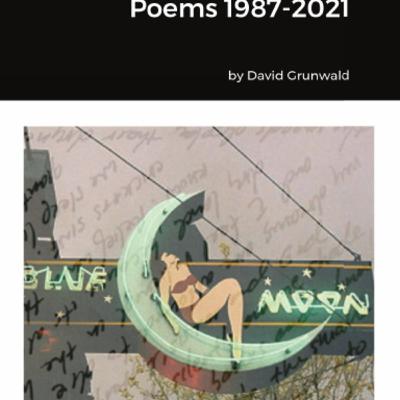
Single reading from recently published book of collected poems.
A short reading of Emily Dikinson's "A light exists in Spring" This episode is also available as a blog post: https://davidgrunwaldblog.wordpress.com/2021/03/20/emily-dickinson-a-light-exists-in-spring/
Comments

Download from Google Play

Download from App Store
 United States