


 Claim Ownership
John Updike: American Writer, American Life
Subscribed: 25Played: 194
Subscribe

© Bob Batchelor
Description
John Updike is one of America's greatest writers and critics. Join cultural historian Bob Batchelor for a deep dive into the author's life, work, complexities, and controversies. This podcast tackles the most urgent questions facing literature and pop culture in contemporary America and where culture goes from here.
7 Episodes
Reverse
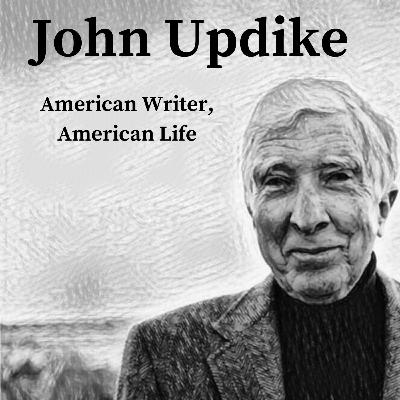
In a 1968 Paris Review interview, John Updike said something that unlocks his entire career: "I am drawn to southeastern Pennsylvania because I know how things happen there, or at least how they used to happen. Once you have in your bones the fundamental feasibilities of a place, you can imagine there freely."In your bones. That's what Shillington, Pennsylvania, was to John Updike.This episode explores the small town where Updike was born in 1932 and lived until he left for Harvard at eighteen—the place he returned to again and again in his fiction for more than 50 years. Not just as setting. As foundation. As the bedrock truth he carried inside him.Shillington sits in southeastern Pennsylvania, about an hour from Philadelphia. Population in 1940: 5,147. The town had everything a Depression-era kid needed to learn how the world worked—the hierarchies, gossip, and textures of ordinary middle-class American life.But here's the paradox Updike lived with: Shillington was both an ideal world for a child to grow up in and the place he had to flee to become the artist he was. The state represented safety, nostalgia, the source of everything. It was also the trap.Updike never really left. Even after moving to Massachusetts, even after decades in Ipswich, his imagination flew back to southeastern Pennsylvania constantly. The Rabbit novels. The Olinger stories. Late-career collections like My Father's Tears. Pennsylvania wasn't just where Updike grew up—it was the "Pennsylvania sensibility" he embodied in his characters.What does that mean? It's not the descriptions of the state itself, though those are beautiful. It's the characters themselves. Coaches like Marty Tothero from Rabbit, Run—types you recognized if you grew up there. Small-town basketball stars like Harry Angstrom. The texture of lives lived in brick row houses with people who knew your business.Updike wrote in a 1995 essay about being "created out of the sticks and mud of my Pennsylvania boyhood." That mud—literal and metaphorical—stuck to everything he wrote. The Depression-era textures. The street names. The 117 Philadelphia Avenue address where his grandparents lived.In his final month, dying of cancer, Updike wrote a poem praising two Shillington classmates. He admitted the thought of Pennsylvania "brings tears less caustic than those the thought of death brings."Shillington made Updike. And Updike, in turn, made Shillington immortal.
This episode of John Updike: American Writer, American Life takes you inside all four Rabbit novels: Rabbit, Run (1960), Rabbit Redux (1971), Rabbit Is Rich (1981), and Rabbit at Rest (1990). One man. Four decades. One country watching its promises wear out.The 1950s - Certainty and Its Discontents: Harry at 26, former basketball glory fading, trapped in a marriage and a job selling worthless kitchen gadgets. The novel ends with him running—desperate motion without destination. Updike's diagnosis of the Eisenhower era: a decade of certainty that turned out to be made of nothing solid at all.The 1960s - The Burning House: Harry at 36, standing his ground as the world detonates around him. Vietnam. Civil rights. The drug culture. A runaway girl named Jill and a militant vet named Skeeter move into his house. The house burns down. Jill dies. The expanded American Dream of the Great Society collides with everything that can't be fixed by ideology. The decade exhausts itself.The 1970s - The Dream Goes Sour: Harry at 46, running a Toyota dealership, afraid of running out of gas. Golf has replaced basketball. Gold coins have replaced transcendence. God has become "a raisin lost under the car seat." Prosperity, hollow at its center. The most devastating insight: to be rich is to be robbed.The 1980s - The Hollow Years: Harry at 56 in Reagan's America. Heart disease. His son's cocaine addiction. Florida condos and cable TV. "Most of American life is driving somewhere and then driving back wondering why the hell you went." The appearance of prosperity. Beneath it, the void. The last word of the final novel: "Enough."Updike never wrote a better sentence than this one from Rabbit at Rest: Harry is "a mundane Jay Gatsby whose daily dissatisfaction cloaks a lifelong spiritual yearning." That's what these four novels track—what America does to its dreamers. Not the triumph version. Not the Thomas Jefferson brochure. The real one. The daily one. The one with the gas lines and bad jobs and slow erosion of the belief that things were supposed to keep getting better.The dream doesn't die in Updike. It diminishes. It gets worn down by decades of promise and disappointment. But it persists—stubborn, irrational, maybe necessary.Four novels. Four decades. One long meditation on the cost of carrying hope across a lifetime in America.Please subscribe wherever you like to listen and leave a review if this episode has entertained you. Bob Batchelor is an Assistant Professor of Communication, Media, & Culture at Coastal Carolina University. He is the author of John Updike: A Critical Biography.
John Updike wrote some of the most precise, unsettling, and prophetic fiction in American literature—and most people under forty have never heard of him. That gap is what this podcast exists to close.John Updike: American Writer, American Life is a literary podcast for readers, thinkers, and anyone who wants to understand the hidden architecture of American culture. Hosted by cultural historian and Updike biographer Bob Batchelor, each episode is focused, sharp, and built for listeners who want to dive into the life and career of one of America's greatest writers.John Updike published more than 20 novels, hundreds of short stories, and volumes of criticism, poetry, and essays across five decades. He won the Pulitzer Prize twice—for Rabbit Is Rich (1982) and Rabbit at Rest (1991)—and became the defining chronicler of middle-class American life in the twentieth century. His four-novel Rabbit tetralogy (Rabbit, Run; Rabbit Redux; Rabbit Is Rich; Rabbit at Rest) follows one ordinary man, Harry “Rabbit” Angstrom, across 40 years of American history. Together, these four books form a masterpiece: a portrait of the nation that is more honest, more painful, and more relevant than almost anything written since.Updike saw the death of American manufacturing. He wrote about economic anxiety before it became a political movement. He diagnosed the collapse of masculine identity before the culture had a vocabulary for it. He saw the 1970s energy crisis, not as a temporary inconvenience, but as a permanent reckoning with American assumptions about prosperity and progress. And he did it all in beautiful, lyrial sentences.He also wrote things that make contemporary readers uncomfortable. His male characters objectify and flee. His perspective is overwhelmingly white and suburban. This podcast doesn’t hide from those tensions. It engages them, because honest conversations about American literature require addressing human complexity, not running from it.Each episode takes one aspect of Updike’s life, work, or world and opens it up: the Pennsylvania mill town that shaped him, the New Yorker years that refined his voice, the feminist critique that shadowed his reputation, the beautiful and brutal sentences that remain his most enduring legacy. From the Rabbit novels to Couples to Terrorist—from Updike’s poetry to his art criticism—no corner of the work is off limits.Whether you’re a longtime reader returning to Updike with fresh eyes, a student encountering his fiction for the first time, or a curious listener who wants to understand why a novelist who died in 2009 still has something urgent to say about the America we’re living in right now—this podcast is for you.Subscribe now and never miss an episode. Leave a review on Apple Podcasts or Spotify to help other readers find the show. Want to dig deeper? Follow Bob Batchelor at bobbatchelor.com for essays, book recommendations, and updates on the podcast.Bob Batchelor is a cultural historian, biographer, and professor at Coastal Carolina University. He is the author of John Updike: A Critical Biography (2013) and has spent more than three decades researching Updike’s life and legacy—including a doctoral dissertation on Updike’s vision of American culture. His books on Jim Morrison and The Doors (Roadhouse Blues), Stan Lee, Bob Dylan, The Great Gatsby, and Prohibition-era bootlegger George Remus (The Bourbon King) have been translated into more than a dozen languages. He is also the host of the podcasts Tales of the Bourbon King and Theories of Celebrity Branding.Batchelor has appeared on PBS NewsHour, NPR, the BBC, and the National Geographic Channel. His writing has been published in Time, the New York Times, the Los Angeles Times, and PopMatters. He brings the same rigor, cultural authority, and narrative drive to this podcast that he brings to his books—designed to bring America's icons and myths to life for a new generation of thinkers!
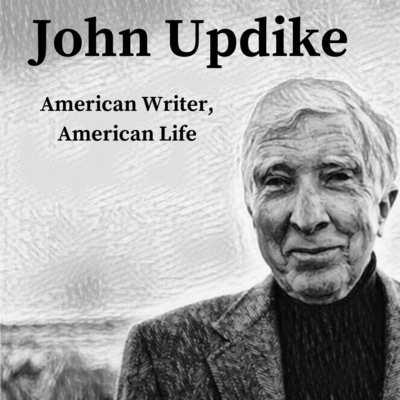
Over the course of his six-decade career stretching from the 1950s to 2000s, great American writer and novelist John Updike received praise from countless critics, including Christopher Hitchens, who called his scope “rather breathtaking,” and from Michiko Kakutani of the New York Times, who said that Updike “established himself as a major and enduring critical voice; indeed, as the preeminent critic of his generation.”
This podcast tackles many of the most urgent questions facing literature and pop culture in contemporary America and where culture goes from here. Some episodes will feature interviews with readers, critics, scholars, academics, and other interested in the life and times of John Updike.
Sometimes the show will be funny, other times, sad, but across the board, it will be informative as we interrogate, examine, and analyze the great American author John Updike. This episode looks at Updike's reaction to the terrorist attacks on New York City on 9/11 and his reaction -- the controversial novel Terrorist.
John Updike wrote about truth as he imagined the idea and engaged with it in his own life. He believed "God already knows everything and cannot be shocked...only truth, however harsh, is holy." The notion of truth fueled his look into the complexities of life, sometimes beautiful, often messy, and always filled with multitudes.
Updike saw poetry "as the exercise of language at its highest pitch." Although he is defined by his novels and short stories, I would argue that to understand Updike as a writer and person, an examination of his poetry is essential. The poetry reveals the person, frequently deeply biographical, and always drawing from his immediate world and ideas that he had developed over a lifetime.
The episode is begun and ended with snippets of "Swing Of The Hip," performed and written by Evan Palazzo of The Hot Sardines. If you love great music, check out Evan and singer Elizabeth Bougerol on social media, YouTube, or on the web. The Hot Sardines are a fantastic jazz band that every music lover will enjoy!
John Updike was born in Pennsylvania in 1932. Much of his early work, including the famed Rabbit novels and many critically acclaimed short stories were set in the state. Examining Updike's PA roots is important in understanding his development as a writer and how that output shaped his "writerly" life.
I share snippets of a 1983 Updike speech in which he discusses many of these Pennsylvania connections and why he chose to dedicate his artistic life to "middles."
On another note...
I am incredibly honored to feature the fantastic piano piece, called "Swing Of The Hip," written and performed by Evan Palazzo. Evan is the band leader and pianist of The Hot Sardines, the group he and front woman, singer extraordinaire Elizabeth Bougerol created to play the great jazz classics of a century ago, as well as their own original recordings. If you love jazz, you should be listening to The Hot Sardines. Or, once live music kicks off again, see them at one of their many global tour stops. I guarantee seeing THS live is a concert experience you will never forget! For my money, The Hot Sardines are simply the best jazz band playing today!
For more information about The Hot Sardines, visit them online at www.hotsardines.com or at Facebook or Instagram where many thousands of followers gather to get the latest news, music, and information about the band.
Before the pandemic turned 2020 into a strange, chaotic mess, I made the decision to read some bit of John Updike's work every single day of the year, whether that turned out to be a few lines or hundreds of pages each day. I can't fully explain why, but the idea primarily came from my need to travel American history with Updike and relish in the beautiful sentences he composed over the course a lifetime.
Long ago, in what seems now like a strange twist of fate, I fell in love with John Updike. Rabbit, Run simply knocked me off my feet at a time when my own life seemed to swirl out of control. The novel didn't fix my problems, but the words gave me insight into how I wanted to live my life. And, perhaps more important, reading about the erstwhile Rabbit Angstrom kicked off a love affair with Updike's work that has nourished me ever since.
In "Falling in Love with John Updike," I want to share that early story with you and -- perhaps -- give you cause to pick up one of Updike's many works and dive in.
On another note...
I am incredibly honored to present the fantastic piano introduction, called "Swing Of The Hip," written and played by Evan Palazzo. Evan is the band leader and pianist of The Hot Sardines, the band he and front woman, singer extraordinaire Elizabeth Bougerol created to play the great jazz classics of a century ago along with their own originals. If you love jazz, you've probably seen The Hot Sardines at one of their many global tour stops or listened to them rip live, which I'll guarantee you, is a concert experience you will never forget! For my money, The Hot Sardines are simply the best jazz band playing today!
For more information about The Hot Sardines, visit them online at www.hotsardines.com or at Facebook or Instagram where thousands of followers gather to get the latest news, music, and information about the band.
Comments

Download from Google Play

Download from App Store
 United States