


Most People Don't... But You Do!
Subscribed: 7Played: 67
Subscribe

© Bart Berkey
Description
A journey into the extraordinary. Stories of individuals who have gone above and beyond in their lives and careers. Those who defined excellence & achieved remarkable success. Join Bart Berkey, former Global Executive for the Ritz-Carlton as he sits down with influential leaders, innovators, and visionaries to uncover the key decisions, early influences, and acts of kindness that have shaped their paths. From hospitality legends like Horst Schulze, Founder of the Ritz-Carlton to entrepreneurial trailblazers like Kara Goldin, these conversations reveal the insights and lessons that inspire.
230 Episodes
Reverse
In this heartfelt episode, Bart sits down with Teresa Rohr, a travel designer with Pink Pineapple Travel, who has transformed her passion for teaching and helping others into a career that creates unforgettable travel memories. Teresa shares her journey from elementary school teacher to becoming a Cancer Aware Travel Advisor, where she helps families touched by cancer experience meaningful travel with compassion, empathy, and specialized care. Her story is one of kindness, resilience, and going beyond what “most people don’t.”Major Takeaways / LearningsHelping at the Core: Teresa’s lifelong passion for serving others comes from her upbringing and continues to guide her work in travel.From Teaching to Travel: After 12 years in education, she shifted careers but carried her gift for guidance, patience, and empathy into her new role.Living with Cancer, Not Stopping for It: As a Cancer Aware Travel Advisor, Teresa ensures that individuals and families touched by cancer can still live fully, travel safely, and make lasting memories.Kindness in Action: Whether writing handwritten thank-you cards or helping a client access mobility resources, Teresa consistently goes above and beyond.Calm in Chaos: Despite struggles with anxiety, Teresa uses mindfulness, yoga, walking, and teaching moments with her children to stay grounded and kind, even in stressful situations.Memorable Quotes“You never know what someone is going through… lead with kindness and give grace.”“People think of cancer as curable or not curable. But there’s a third way: living. You don’t have to stop living just because you’re touched by cancer.”“It’s not about commission. It’s about memories, photos, and the stories families will pass on.”Why It Matters / How to Use ItThis episode reminds us that kindness and empathy aren’t extras—they’re essentials. Teresa shows us how small actions like a smile, a handwritten note, or thoughtful travel planning can transform lives. For those touched by cancer, her message is powerful: life doesn’t stop—keep living, keep traveling, keep creating memories. For all listeners, the lesson is clear: do what most people don’t—go the extra mile to help others feel seen, supported, and celebrated.Resources and Links:Agency Website: www.PinkPineappleTravel.com LinkedIn: https://www.linkedin.com/in/teresa-rohr-ba8b1b383/Facebook Travel Group:https://www.facebook.com/groups/5419554094780424Bart Berkey: MostPeopleDont.com | LinkedInThis podcast episode is brought to you by Wishes.Inc Wishes, Inc. is a transparent giving platform that lets donors see exactly where their money goes.It rewards users with cashback and perks through virtual payment tools.Fast, traceable, and efficient—Wishes makes doing good feel even better.https://www.bartaberkey.com/wishes-inc-landing-page
Today's podcast features Dan Flannery, SVP and Managing Director of EDITION Hotels. He is an active leader, training enthusiast, and inherently built to "help others". During his college years while working at a bar/restaurant, he obtained a copy of the management training manual to learn and embrace how to supervise and lead. Because of his LOVE for the business and the excitement, he would come in on his days off to learn and to "help others". This approach set the foundation for an incredible career of leading others and enhancing service. Flannery was named senior vice president and managing director of EDITION Hotels in 2009. EDITION Hotels is a collection of individualized, customized, one-of-a-kind hotels conceived by Ian Schrager in partnership with Marriott International. Flannery developed the team, culture, platform and systems for this new brand and launched its first hotels. He also spent time with Morgans Hotel Group as their COO and had several senior leadership roles within Ritz-Carlton. A kind, caring gentleman who is always looking to improve processes, learn, and share with others.Most People Don't | ResourcesPlease like & share to help others find these words of wisdom. Find all Podcast episodes here Sign up for the Newsletter here Listen to Bart's TedX talk here Schedule Bart to Speak here www.mostpeopledont.comAny KEYNOTE SPEAKING OR LEADERSHIP TRAINING REQUESTS can be directed to bart@mostpeopledont.com
Bart reconnects with childhood friend John Cline, whose path took him from a small Pennsylvania town to the U.S. Navy and into a 27-year career with the Cleveland Police Department, including years working narcotics during the height of the heroin epidemic.Their conversation moves far beyond resumes and roles. John shares what it was like growing up labeled with a learning disability, only to later realize he simply learned differently. That early challenge became a foundation for resilience, adaptability, and a willingness to keep moving forward when things weren’t clear.His time in the military provided structure, stability, and the first sense of being truly taken care of. It also taught him lessons he wishes he had embraced more fully in the moment - especially the importance of being present and not wasting opportunities.As the conversation shifts into his law enforcement career, John offers an honest look at the realities of working narcotics. He describes the emotional toll of seeing addiction up close, the blurred line between victim and suspect, and the weight of experiences that don’t simply go away when the job ends.Despite the intensity of what he witnessed, John reflects on the importance of empathy, relationships, and doing the job with purpose. He shares moments where small actions made a difference, even when outcomes weren’t always what he hoped for.One of the most powerful themes in the conversation is what John calls the “gray haze” - the uncertainty, pressure, and complexity that can surround life and work. His perspective is simple but impactful: when you can’t see clearly, you keep moving forward anyway, one step at a time.The episode closes with a reminder that aligns perfectly with the spirit of the show:Most people don’t realize one conversation can change someone’s life - but it can.John's book comes out Summer 2026. In the meantime, connect with him: https://www.facebook.com/jaycee5005/about and email him at jcline740@icloud.com to get advance details about the book, "Gray Haze".Most People Don't...But YOU DO!
In this thoughtful and practical conversation, Bart sits down with Matt Marcial, CEO of the Public Relations Society of America (PRSA), to explore leadership, professional growth, and the power of listening. Matt shares his journey from working the front desk in hospitality to leading one of the world’s largest professional organizations for communicators. Along the way, he reflects on lessons learned from both great and difficult leaders, the importance of business acumen, and why servant leadership remains the most effective leadership model. Matt explains how curiosity, discipline, and a commitment to serving others shaped his career and why the best leaders don’t blame the past; they take ownership of the future.Major Takeaways / LearningsLeadership starts with listening. The ability to truly hear stakeholders is one of the most powerful leadership skills.Career growth comes from curiosity. Matt’s path evolved by continually asking questions and exploring new opportunities.Servant leadership builds stronger organizations. Leaders succeed when they focus on supporting their teams and members.Professional development is a personal responsibility. Individuals must own their own growth and skill development.Business acumen matters in every role. Understanding how organizations operate helps professionals earn a seat at the table.Storytelling drives communication. Authentic, emotional stories connect more effectively than facts alone.Relationships fuel leadership success. Strong professional relationships enable progress and collaboration.Great leaders own inherited challenges. Instead of blaming predecessors, effective leaders take responsibility and improve the system.Memorable Quotes“Leadership starts with listening.”“Professional development is something you have to own yourself.”“Authenticity is the foundation of great storytelling.”“Relationships are what move organizations forward.”“As a leader, you have to take ownership of the challenges you inherit.”“It’s not about you — it’s about the people you serve.”Why It Matters / How to Use ItThis episode offers a practical blueprint for professionals navigating leadership and career growth. Matt Marcial’s journey shows that success doesn’t come from titles alone—it comes from curiosity, discipline, and a commitment to serving others. His perspective reminds leaders that growth requires accountability, humility, and strong relationships. Whether you’re leading a team, building a career, or trying to make a meaningful impact in your organization, this conversation highlights a powerful leadership truth: the best leaders listen first, serve others, and take ownership of the challenges they inherit.
Bart sits down with Curt Baney and his son Hayden — the leaders behind Oxford Collection — and what unfolds isn’t just a business story. It’s a story about learning from your dad, building something together, and believing there are no limits.Curt shares how his father started building motels decades ago — and how construction turned into a hospitality brand across the West Coast. Hayden talks about growing up on a ranch, becoming a pilot at a young age, and sitting in his dad’s office every day just listening and learning.They talk about:Why they give away breakfastWhy hospitality still needs human connectionWhy discomfort is part of growthAnd why they’re still doing this… because it’s funIt’s simple. It’s honest. And it’s a reminder that business is really about people.Major Takeaways Growth feels uncomfortable — but it’s worth it.There aren’t real limits… only the ones we believe in.Family businesses work when there’s trust.Hospitality is about care, not just rooms.You can build something big without losing your values.Memorable Quotes “As long as we’re having fun, we’re going to keep doing it.”“There really is no limitation. You can do it.”“Most people don’t think out of the box.”“It was uncomfortable… but it was worth it.”Why It MattersBecause we live in a world that’s becoming more automated and less personal.This episode reminds us that:Relationships still matter.Mentorship matters.Family matters.And doing hard things leads to real growth.It’s not just about hotels.It’s about legacy.
In this sharp and practical episode, Bart sits down with Brenton Nickles, founder of JDS1 Marketing, to break down what actually works in modern marketing — and what doesn’t. Brent shares his journey from traditional marketing roles to building his own agency, helping businesses clarify their message, strengthen their brand, and execute consistently. He explains why most marketing efforts fail (lack of strategy, impatience, inconsistency), how attention is earned through value, and why long‑term positioning always beats short‑term tactics. This conversation cuts through the noise and offers a grounded, disciplined approach to marketing that leaders and entrepreneurs can immediately apply.Major Takeaways / LearningsMarketing is not a one‑time campaign — it’s a system. Sustainable growth requires consistency.Clarity beats creativity. If people don’t understand what you do, clever branding won’t save you.Most businesses quit too early. Results compound over time — not overnight.Strategy must come before tactics. Posting content without direction wastes energy.Attention is currency. You earn it by solving real problems, not by being loud.Brand is built through repetition. Showing up consistently builds trust.Measure what matters. Data should inform decisions, not overwhelm them.Positioning determines growth. When you clearly define who you serve and how, momentum follows.Memorable Quotes“Marketing isn’t magic — it’s discipline.”“Clarity always beats clever.”“If you’re not consistent, you’re invisible.”“Strategy first. Tactics second.”“Attention has to be earned.”“You don’t build trust in a week.” Why It Matters / How to Use ItThis episode is a reality check for entrepreneurs, leaders, and marketers who want results without the hype. Brent Nickles reinforces that growth doesn’t come from chasing trends — it comes from clarity, discipline, and long‑term commitment. If you’re frustrated by inconsistent results or overwhelmed by marketing options, this conversation offers a practical framework: define your strategy, commit to consistency, measure progress, and play the long game. Success in marketing — like success in leadership — is rarely flashy. It’s built through disciplined repetition and clear positioning.Connect with Brenton over LinkedIn here: https://www.linkedin.com/in/brenton-david-nickles/
In this forward‑thinking conversation, Bart sits down with our newest Alliants friends; Tristan Gadsby (CEO/Co-Founder) and Gareth Fraser (VP of Sales & Marketing Operations), to explore how technology is reshaping customer experience — particularly in hospitality and luxury service environments. What began as a frustration with outdated, fragmented service systems evolved into a mission: create seamless, intelligent platforms that remove friction without removing humanity. Tristan and Gareth share how Alliants partners with some of the world’s most respected brands to unify communication, streamline operations, and elevate the guest experience. This episode dives into AI, messaging, service culture, and why the future of customer experience isn’t louder it’s smoother.Major Takeaways / LearningsFriction kills loyalty. Modern customers expect seamless communication across every channel.Technology should amplify humanity, not replace it. The goal isn’t automation — it’s better service.Messaging is the new front desk. Guests increasingly prefer digital communication over traditional calls.Unification beats fragmentation. Disconnected systems create chaos for both customers and employees.AI works best behind the scenes. Invisible intelligence supports staff rather than replacing them.Luxury today means effortlessness. The highest standard of service is making complexity feel simple.Operational clarity drives guest satisfaction. Empowered teams deliver better experiences.Innovation requires courage. Challenging traditional service models isn’t comfortable — but it’s necessary.Memorable Quotes:“Technology should feel human.”“Friction is the enemy of loyalty.”“The best service is invisible.”“AI should empower people, not replace them.”“Luxury is about removing effort.”Why It Matters / How to Use ItThis episode challenges leaders to rethink how technology fits into service. Tristan and Gareth show that innovation isn’t about replacing people — it’s about freeing them to deliver better experiences. Whether you operate in hospitality, lead a customer‑facing team, or are navigating digital transformation, this conversation offers a clear lens: eliminate friction, unify systems, and design experiences that feel effortless. In a world of rising expectations, seamless service isn’t a bonus — it’s the baseline.More about Alliants here: https://www.alliants.com/Connect with Tristan here: Tristan Gadsby | LinkedInConnect with Gareth Fraser here:Gareth Fraser | LinkedIn
In this thoughtful and inspiring episode, Bart sits down with Lisa Burch, founder of YTT Design Solutions, a woman‑owned civil and geotechnical engineering firm headquartered in Cedar Rapids, Iowa. Lisa shares her journey from a technically curious kid fascinated by drafting and problem‑solving, to becoming a civil engineer dedicated to building infrastructure that quietly supports everyday life. She opens up about the personal challenges that led her to start her own company, the meaning behind YTT (“Yesterday, Today, Tomorrow”), and why community, stewardship, and long‑term thinking drive every decision she makes. This conversation reveals the unseen work that keeps communities functioning and the mindset required to build something that lasts. Major Takeaways / LearningsEngineering is problem‑solving at scale. Civil engineers use math and science to make communities safer, healthier, and more functional.Great infrastructure is invisible. If it’s done right, people never notice — until something goes wrong.Careers can start with curiosity. Early interests in drafting, Legos, and building often signal engineering potential.Entrepreneurship isn’t always planned. Lisa started her firm during a period of personal upheaval, choosing action over fear.Speed and adaptability matter. Small, nimble organizations can innovate faster than large, rigid ones.Community creates purpose. Lisa’s work is deeply rooted in serving Cedar Rapids and the people who call it home.Trust beats marketing. Long‑term client relationships and word‑of‑mouth fuel sustainable growth.Design for the future. Stewardship means building infrastructure that serves generations, not just today’s needs.Memorable Quotes“Engineering is solving problems.”“If I do my job right, you’ll never know I was there.”“I bury most of my best work underground.”“You can do anything — you just have to take the first step.”“Yesterday, today, and tomorrow guide every decision we make.”“Community is everything.” Why It Matters / How to Use ItThis episode highlights the quiet leadership behind the systems we rely on every day. Lisa Burch’s story reminds listeners that meaningful impact doesn’t always come with recognition often, it comes from care, discipline, and long‑term thinking. For entrepreneurs, leaders, and anyone facing uncertainty, her journey shows how resilience, service, and commitment to community can turn challenges into purpose. Whether you’re building a business, raising a family, or shaping a city, this conversation offers a powerful reminder: the work that matters most is often the work no one sees.
In this deeply human and inspiring conversation, Bart sits down with Dr. Eric Fishon — author, educator, disability advocate, and nonprofit leader — to explore the lived reality of unseen disabilities and the power of advocacy, empathy, and inclusion. Dr. Eric shares his journey from a successful corporate career in customer experience and organizational culture to discovering his diagnoses of narcolepsy, chronic fatigue, ADHD, anxiety, and depression later in life. What followed was not an ending, but a reinvention. Through his Doctor Disruptor platform, Xtermigator Kids, and his work with the Invisible Disabilities Association, Dr. Eric is helping individuals and families understand that disability is not inabilityand that different is, in fact, beautiful.Major Takeaways / LearningsUnseen disabilities are real — even when others can’t see them. Validation can be life‑changing.Diagnosis brings clarity, not limitation. Knowing what you’re dealing with opens the door to tools, accommodations, and self‑compassion.It’s okay to not be okay. Giving yourself grace is a critical step toward healing and growth.Advocacy often begins with personal struggle. Dr. Eric turned his own challenges into a mission to help others.Accommodations are not special treatment — they’re access. Education and workplaces still have work to do.Helping others creates purpose and fulfillment. Service can be as powerful as medicine.Technology and AI can be equalizers. The right tools help people with limited energy amplify their impact.Disability does not define your ceiling. With support, inclusion, and understanding, potential expands.Memorable Quotes“It’s okay to not be okay.”“Disability is not an inability — it can be your greatest superpower.”“Those letters after your name mean nothing if you’re not helping someone behind you.”“Helping others gives a high no medicine can replace.”“Never forget where you’ve been — and turn around to help someone else get there.” Why It Matters / How to Use ItThis episode is a powerful reminder that many of the struggles people carry are invisible, and that empathy, awareness, and inclusion are leadership skills, not extras. Dr. Eric Fishon’s story offers hope to anyone who has felt misunderstood, dismissed, or alone in their challenges. Whether you’re living with an unseen disability, supporting someone who is, or leading a team, this conversation encourages you to ask for help, give grace, and use your experiences to lift others. It’s a call to redefine success, not by what we overcome alone, but by how we help others rise with us.
In this intellectually rich and surprisingly practical conversation, Bart sits down with Dr. Mike Orkin, distinguished statistician, professor, consultant, and author of The Story of Chance: Beyond the Margin of Error. Dr. Orkin explains how probability, randomness, and risk quietly shape our everyday decisions — from business and investing to gambling, medicine, and life itself. Through accessible examples involving dice, casinos, startups, lotteries, and leadership, he breaks down why luck feels powerful in the short term but fades in the long run, how skill changes outcomes, and why most people misunderstand chance entirely. This episode bridges mathematics, business strategy, and human behavior in a way that’s eye‑opening, grounding, and deeply useful.Major Takeaways / LearningsLuck dominates the short run — skill dominates the long run. Repeated decisions reveal predictable outcomes over time.The Law of Averages explains why randomness eventually stabilizes. Outcomes converge toward probability with repetition.Expected value (EV) matters more than single outcomes. Winning once means nothing if the long‑term math is negative.Positive EV isn’t enough — risk management matters. Over‑betting can destroy even the best strategies.The Kelly System teaches sustainable growth. Betting or investing a fixed fraction prevents catastrophic losses.Most people confuse correlation with causation. We’re wired to see patterns that don’t actually exist.Luck is a group phenomenon. In lotteries and mass events, someone wins — but your odds don’t improve.Better decisions come from understanding uncertainty. Awareness of chance leads to smarter, calmer leadership.Memorable Quotes“Luck disappears in the long run.”“The important probability isn’t that you win — it’s that someone wins.”“Expected value tells you what happens over time, not today.”“Positive odds don’t protect you if you bet everything.”“Most people don’t understand the basic laws of chance.”“Good strategy beats good intentions when uncertainty is involved.”Why It Matters / How to Use ItThis episode helps listeners make better decisions in an unpredictable world. Whether you’re starting a business, investing, leading a team, or navigating life’s uncertainty, Dr. Mike Orkin’s insights reveal how understanding probability reduces fear, improves judgment, and prevents costly mistakes. The conversation reframes luck not as magic or destiny, but as math — and shows how patience, discipline, and sound strategy create sustainable success. If you want to think more clearly, take smarter risks, and stop being fooled by randomness, this episode delivers timeless wisdom you can apply immediately.
In this episode of “Most People Don’t, But YOU DO!”,, Bart sits down with Carlos Silva, President of Anthem Sports & Entertainment, to explore leadership, learning, and the art of creating unforgettable experiences. From his early days as a Division I tennis player at Boston College, to earning a master’s degree in computer science, to leading major sports and media organizations, Carlos shares how curiosity, design thinking, and disciplined decision‑making shaped his career. He offers a behind‑the‑scenes look at growing TNA Wrestling, Invicta MMA, Fight Network, and Game+, while revealing why listening hard, learning fast, and caring deeply about people and experiences are at the heart of sustainable success.Major Takeaways / Learnings"Leadership is learned on the road, not on a straight path. Careers are built through timing, forks in the road, and willingness to adapt.""Athletics build leadership instincts. Coaching, teamwork, resilience, and accountability translate directly into business leadership.""Design drives experience. From tickets to TV graphics to arena energy, the smallest details shape how people feel.""There are two audiences in live events. The in‑venue fan and the at‑home viewer both need intentional, tailored experiences.""Listen hard and learn. Credibility comes from humility, presence, and learning from the people closest to the work.""Make decisions quickly and adjust. Waiting for perfection slows growth — act, measure, refine, repeat.""Strong teams outperform strong ideas. Hiring great people and trusting them creates momentum across organizations.""Consistency builds confidence. Small daily disciplines compound into long‑term success."Memorable Quotes“Listen hard and learn.”“No one likes to go to an empty restaurant — energy matters.”“You don’t need perfection. You need a decision.”“Every experience is built from a thousand small details.”“If it doesn’t work, you change it tomorrow and move forward.”“Consistency is one of the most powerful leadership tools.”Why It Matters / How to Use ItThis episode is a masterclass for leaders, creators, and builders who want to scale impact without losing humanity. Carlos Silva demonstrates that success isn’t about knowing everything — it’s about listening, learning, and continually improving the experience for people on both sides of the product. Whether you lead teams, design customer experiences, or manage complex organizations, the lessons here reinforce the power of curiosity, humility, and disciplined action. If you want to build momentum, stay grounded, and lead with confidence, this conversation offers a clear and practical roadmap.
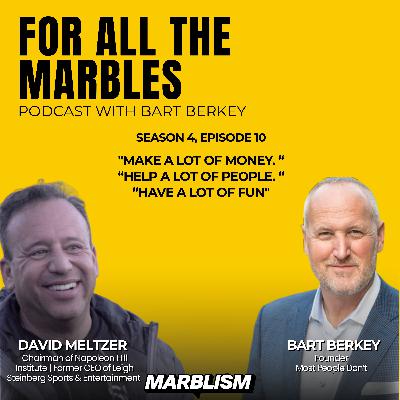
In this deeply moving and powerful conversation, Bart sits down with David Meltzer — globally recognized entrepreneur, chairman of the Napoleon Hill Institute, former CEO of theLee Steinberg Sports & Entertainment Agency, and one of the most authentic voices in leadership today. David opens up about his childhood, his drive to succeed, his rise to massive financial success, and the painful wake‑up calls that forced him to confront ego, fear, and self‑hatred. Through stories of family, faith, bankruptcy, humility, and service, David shares the mindset shift that transformed his life: moving from making money for happiness to making money to help people. This episode is a masterclass in purpose, kindness, asking for help, and living in alignment with who you are meant to be.Major Takeaways / LearningsMoney doesn’t create happiness — purpose does. David learned that financial success without service leaves an unfillable void.Ego is fear in disguise. The ego shows up as the need to be right, superior, offended, or separate — and it interferes with our potential.Stop is a superpower. Pausing, breathing, and choosing intention is how we move from ego to alignment.You live in a universe of more than enough. The real work is identifying what you’re doing to interfere with it.Asking for help is giving. When you ask someone for help, you give them the opportunity to serve and feel purpose.Kindness beats being right. Choosing compassion in everyday moments changes relationships and outcomes.Daily discipline creates lasting change. David lives by consistent practices rooted in faith, gratitude, and devotion.True leadership is service. David defines success as being a “beloved servant” to others.Memorable Quotes“You’re either humble — or you’re about to be.”“I don’t live to get more. I live to interfere less.”“Ego is fear showing up as the need to be right.”“Ask for help — it’s one of the greatest gifts you can give someone.”“Make a lot of money for the sake of helping a lot of people.”“Be kind to your future self.”Why It Matters / How to Use ItThis episode is a blueprint for anyone chasing success but feeling unfulfilled, overwhelmed, or disconnected. David Meltzer’s honesty about ego, fear, loss, and redemption gives listeners permission to pause, reflect, and realign their lives. Whether you’re a leader, entrepreneur, parent, or someone searching for meaning, this conversation offers practical wisdom on how to live with intention, serve others, and build a life rooted in purpose — not performance. The lessons shared here remind us that happiness comes not from accumulation, but from alignment, generosity, and asking for help.
Recorded live in Boston, Bart sits down with Milt Herbert, Executive Director of the Boston Convention & Marketing Center, for a masterclass in leadership, discipline, and humanity. Milt shares his unconventional journey — from flunking out of college, to serving in combat, to becoming a professor, technologist, entrepreneur, and ultimately a long-tenured executive leader. With humility and clarity, Milt explains how military discipline reshaped his life, why treating people like people is the foundation of leadership, and how focusing on customers as humans — not transactions — creates lasting success. This conversation is packed with wisdom on work ethic, family, learning, customer experience, and what most leaders still get wrong.Major Takeaways / LearningsDiscipline can change everything. Milt credits military service with reshaping his mindset, work ethic, and focus.Early failure doesn’t define your ceiling. Flunking out of college didn’t stop him from earning an MBA, teaching, and entering a PhD program.Leadership is about people, not roles. Employees have full lives outside work — great leaders respect and support that reality.Integration beats balance. Milt prioritized family, coaching his kids’ teams and staying present while building a demanding career.Be a lifelong learner. From coding to tennis to leadership, curiosity and self‑teaching fueled every chapter of his life.Customers are humans first. The best way to serve customers is to understand their goals, pressures, and definitions of success.Listening is a leadership superpower. Ask questions, stay quiet, and truly hear people — that’s how trust is built.Strong teams feel like family. When people feel cared for, respected, and seen, they stay — and they perform.Memorable Quotes“People don’t show up for work — work isn’t their whole life.”“You keep your mouth shut, you listen, and you ask questions.”“Customers have jobs to do — our job is to help them succeed.”“It’s always about the people. It’s never just about the business.”“I’m only one person — it’s the team that makes everything happen.”“Family first isn’t a slogan. It’s a responsibility.”Why It Matters / How to Use ItThis episode is a blueprint for leaders who want to build trust, loyalty, and performance without sacrificing humanity. Milt Herbert’s story proves that discipline, empathy, and curiosity can coexist — and that the strongest organizations are built by leaders who listen, care, and understand people beyond their titles. Whether you lead a team, serve customers, raise a family, or are still finding your path, this conversation offers timeless lessons on how to show up, how to lead, and why people first is not optional — it’s essential.
In this powerful and refreshingly honest conversation, Bart sits down with Brittany Shoul, SVP of Revenue Strategy & Ops at MCI USA. Brittany shares her journey from being the first in her family to attend college, to discovering her leadership voice, to becoming a respected leader who champions authenticity, empathy, and integration over “balance.” She reveals how her upbringing, her grandmother’s influence, her early leadership experiences, and her work in sales shaped the leader she is today. Brittany opens up about drive, fulfillment, emotional intelligence, and why showing up like you belong—exactly as you are—is one of the most underrated skills in life and business.💡 Major Takeaways / LearningsAuthenticity isn’t a buzzword — it’s a strategy. Brittany insists that showing up as your true self is not only allowed, but powerful.“You can do anything, but you can’t do everything.” A core message she teaches her daughters, colleagues, and herself.Balance is a myth; integration is real. Your life will never be perfectly even — but you can blend what matters in healthier ways.Fulfillment fuels drive. Brittany isn’t trying to “prove” anything; she’s driven by the impact she can make on her team, her family, and her industry.Leadership means giving people permission. Sometimes people just need to hear “It’s okay” — to leave early, to rest, to take space.Show up like you belong. Even if you’re young, new, nervous, or different — the room is for you, too.Find mentors everywhere. If your company doesn’t offer strong leadership, seek it through networking, LinkedIn, peers, or past relationships.Kindness and connection matter. Whether talking to a housekeeper or meeting someone at an event, presence and authenticity build trust.💬 Memorable Quotes“You can do anything — you just can’t do everything.”“Show up like you belong.”“Fulfillment comes from the impact you make — at home, and at work.”“Balance implies everything is equal. That’s not real. Integration is.”“Be yourself. No one needs a business-professional robot.”“It’s okay to be excited. It’s okay to be nervous. Just show up.”✨ Why It Matters / How to Use ItThis episode is a guide for anyone trying to grow in their career while staying true to themselves. Brittany’s journey shows listeners that success doesn’t come from perfection — it comes from authenticity, connection, and courage. Her practical insights help young professionals, leaders, and parents understand how to integrate ambition with life, how to care for themselves and their teams, and how to build confidence even when the room feels intimidating. Anyone struggling with imposter syndrome, burnout, or self-doubt will find grounding, encouragement, and permission to be human — while still striving for more.
In this heartfelt and candid episode, Bart sits down with Zane Kerby, President & CEO of ASTA (American Society of Travel Advisors). They explore the soul of travel, the evolution from “travel agents” to “travel advisors,” the emotional impact of seeing the world, and how empathy, kindness, slowing down, and meaningful connection shape a life well lived. Zane shares stories from his 30-year anniversary trip to Colombia, childhood influences, leadership philosophies, and why travel advisors are more vital now than ever. This conversation is human, emotional, and a reminder that travel doesn’t just show us the world—it shows us ourselves.Major Takeaways / LearningsTravel Advisors Matter More Than Ever“Travel agent” felt transactional; “travel advisor” reflects guidance, advocacy, and expertise.Travelers want transformation, not transactions.Advisors are the trusted partners who know what most travelers don’t.Travel Makes Us More HumanTravel builds empathy and reduces ego.Seeing how others live widens perspective and deepens understanding.Shared vulnerability while traveling brings people together.The Best Memories Are on the RoadZane’s most meaningful family moments happened during travel.Being away from routine creates space for deeper conversations and connection.Small moments become lifelong memories.Slowing Down Creates KindnessZane’s advice: slow down, listen, and be available to be interrupted.Pausing helps us notice others and step in to help more often.Leadership Rooted in HumilityZane’s parents modeled respect, humility, and kindness.Great leadership is about presence, consistency, and treating people well.Hire smart people, pay them fairly, and share the credit.Stick With What MattersZane believes in endurance and commitment.“Most people don’t stick with it…but you do.”Memorable Quotes“Most of the important memories I have with my wife and family are from travel.”“Travel makes you less ego-centric and more human.”“The more planes of people we send around the world, the fewer bombs we have to send.”“An advisor works for you. Not for a supplier—for you.”“Slow the heck down.”“Some opportunities to help make you feel human.”“All that I am or hope to be, I owe to my angel mother.”“Most people don’t stick with it…but you do.”Why It Matters / How to Use ItFor Travel AdvisorsYour work matters more than ever. You’re not booking trips—you’re shaping how people see the world and each other. You help create life-changing experiences.For LeadersSlow down. Listen deeply. Treat people well. Presence is powerful. Hire smart, kind people and give credit freely.For EveryoneTravel as much as you can. Say yes more often. Go and see the world—it expands your understanding, deepens your empathy, and enriches your life. And when you’re not traveling, practice the same principles: pause, notice, listen, help.Travel is an empathy engine. It makes us better humans. And as Zane reminds us, the world becomes a better place when we choose to go, see, and connect.More about Zane Kerby here: Zane Kerby | LinkedInMore about ASTA here: Home
In this episode, Bart sits down with Sara Murray, founder & CEO of Murmaid International, sales trainer, keynote speaker, and host of Prospecting on Purpose. This conversation explores Sara’s journey from corporate to entrepreneur, her “ABAV” philosophy (Always Be Adding Value), the mindset behind confidence, abundance, and authentic connection, and the simple human behaviors that create massive business impact.Sara shares candid stories about positivity, self-belief, gratitude, and what happens when you consistently show up as someone who notices, connects, and overdelivers.Major Takeaways / Learnings“Always Be Adding Value” (ABAV) is the game-changerSara’s foundational philosophy: every interaction is a chance to make an emotional deposit. Add value before you ask. Add value even when you don’t need anything. Add value when it costs nothing. This is what builds reputation, trust, and opportunity.Confidence isn’t arrogance, it’s earned through actionSara teaches how to “jump up on the pedestal” instead of shrinking in front of high-value clients. Confidence is built by collecting experiences, learning from people, and trusting your strengths.Abundance > ScarcityEven in competitive industries, there’s more than enough success to go around. Sara and Bart connect over the idea that generosity creates momentum. When you give without expectations, the world opens up.Sales isn’t pushing, it’s helpingIf your product or service genuinely improves someone’s business or life, then outreach isn’t “bothering” people. It’s informing them of value they deserve to know about.Listening is the new superpowerPeople miss opportunities because they’re too busy “performing.” Listening deeply to needs, hints, frustrations, vacations, or tiny details, creates connection. It’s rare. And therefore powerful.Personal touchpoints matter more than automationAutomation is fine. Humanity wins. A review. A thoughtful suggestion. A follow-up based on something they said. Most people don’t do these small acts, which is why they stand out.Entrepreneurship requires patience and faithSara emphasizes that the first few years are harder, longer, and more demanding than expected. But with patience, belief, and staying aligned with your “why,” the payoff is life-changing.Your childhood shapes your strengthsSara’s ability to talk to anyone came from sitting next to strangers on flights as a Delta employee’s kid. Every interaction became a data point that built confidence, empathy, and curiosity.Value before ask, every timeOne of Sara’s favorite examples: she once recommended two novels to someone going on vacation. It got her booked a full year earlier than expected. Human > transactional.Helping people first is the business modelWhen you focus on helping, not hustling, you attract the right clients, create impact, and build a career you’re proud of.Memorable Quotes“We’re at your service, we’re not your servants.”“Everyone’s trying to jump on the pedestal. You don’t have to take anyone off… just put yourself up there too.”“Abundance starts when you stop asking and start adding.”“If your service genuinely helps people, they need to know about it. That’s not bothering them, that’s doing your job.”“Patience and trust, that’s the hardest part of entrepreneurship.”“Changing someone’s life wasn’t my why at first… but it became my why.”Why It Matters / How to Use ItModel Sara’s A-BAV approach: Look daily for no-cost, meaningful ways to surpass what “most people don’t” do.Shift from scarcity to service: Helping without keeping score amplifies everything, your brand, referrals, confidence, and results.Lead with humanity: Automation can draft. You deliver the emotion.Be confident by being curious: Ask more. Listen more. Notice more.Build emotional bank accounts before withdrawals: Look for tiny deposits that compound into trust.Resources:LinkedIn: Sara Murray | LinkedInWebsite: Sara Murray
In this powerful and deeply human episode of For All the Marbles, Bart sits down with bestselling author and mental health advocate Dana Johnston. Dana opens up about her journey with bipolar disorder from the terrifying onset of insomnia and fear, to rebuilding her life, career, marriage, and sense of purpose. Her book, Shine Bright: Seeking Daylight in the Darkness, has touched thousands, offering hope, practical tools, and a way forward for anyone facing adversity.This conversation blends vulnerability, wisdom, humor, and heart, making it one of the most inspirational stories shared on the show.Major Takeaways / LearningsYou Must Take Care of Yourself FirstDana emphasizes that wellness is the foundation of everything: happiness, stability, career, and relationships.For her, self-care includes:sleephydrationmovementmusicmeditationjournaling“You can’t be happy if you don’t feel well.”Mental Health Is Not Linear. It’s a Human ExperienceDana reframes anxiety and depression as universal emotional states, not signs of failure.She uses a powerful metaphor:“The blue sky is always there, even when the clouds temporarily cover it.”Healing Requires Discipline, Not PerfectionDana openly shares that even with great habits, she still veers off course sometimes, and that’s okay.“What matters is that you know what helps you feel your best, and you do more of that.” Experience Shapes ChangeMany people don’t adopt healthier habits because they haven’t experienced the consequences or the benefits yet. Dana notes that both hardship and role models shape whether people take action.We Need a More Sustainable Pace of WorkDana is a leading advocate of the four-day workweek, not for convenience but for survival in today’s professional climate.She argues that productivity, happiness, and health all increase when people are rested.Turning Pain Into Purpose Helps Others HealDana didn’t write her book to heal herself; she wrote it for the young woman who feels terrified and lost after a bipolar diagnosis.Her lived experience helps others feel seen, understood, and hopeful.Tiny Steps Lead to Big TransformationsDana reminds us:“You inch along. You get a little better every year. Don’t expect an overnight transformation. Be kind to yourself.”Memorable Quotes“Take care of yourself first; everything else becomes easier when you feel well.”“Emotions are like clouds; they pass. The blue sky behind them never goes away.”“People haven’t changed their habits because they haven’t seen the consequences or the benefits yet.”“The pace of work in 2025 is not sustainable without rest.”“I wrote my book for the 22-year-old girl who just had the rug pulled out from under her.”“Every year, you just get a little bit better. Inch along and be kind to yourself.”Why It Matters / How to Use ItThis episode is a reminder that:Struggles don’t define you. Your response does.Daily habits shape resilience more than motivation ever will.You are responsible for protecting your wellness and your peace.Your story can help others feel less alone.Small, consistent steps create meaningful change.For listeners facing anxiety, burnout, depression, fear, or any life disruption, Dana’s story shines a light forward:You can rebuild. You can improve. You can shine bright again. Resources:LinkedIn: Dana Johnston, MS, CMP | LinkedInBook: daylightanddarkness.com
In this energizing and deeply human conversation, Bart sits down with Carrie Campbell, a longtime Boston Red Sox executive, keynote speaker, culture strategist, and former hotelier. Together they unpack what genuine service looks like, how strong cultures are built, and why creating exceptional experiences isn’t complicated—it’s intentional.Carrie shares her journey from Fairmont Hotels to Fenway Park, how a culture of care shaped her leadership, and why the Red Sox operate with one of the most empowering philosophies in sports and hospitality: “We are in the YES business.” This episode blends personal storytelling, leadership insight, and practical wisdom for anyone seeking to build healthier workplaces or make courageous career moves.Major Takeaways and LearningsCulture Begins With People, Not ProcessesGreat organizations give employees the tools, training, and clarity to deliver great service. Culture thrives when people feel valued—never when the only priority is profit or reporting.Recognition Is a Leadership StrategyCarrie emphasizes that recognition must be intentional. It means understanding how each person prefers to be acknowledged, connecting praise to impact, addressing missteps with clarity, and creating a consistent rhythm of appreciation.You Can Leave Environments That Drain YouWhen someone feels stuck, unseen, or depleted, Bart and Carrie both reinforce a message many need to hear:If you can’t change the culture and leadership isn’t listening, you don’t have to stay.As Bart shares, you can do anything for a year to get back on your feet and rebuild.Everyone Can LeadLeadership isn’t defined by title. It’s defined by behavior. Anyone can model kindness, contribute to culture, mentor a teammate, or take ownership of their environment.The Red Sox “YES Business” PhilosophyCarrie offers an inside look at one of the Red Sox’s most defining cultural principles:“We are in the YES business.”Employees are empowered with resources like discretionary ticket allotments to proactively solve problems and create memorable moments. It is a simple but powerful philosophy that reduces friction, builds trust, and elevates fan experience.Fear Should Protect You, Not Paralyze YouFear is primal, but it becomes harmful when it keeps us small. Awareness is the first step to choosing courage and forward movement—whether that means learning new skills, addressing workplace issues, or making a major career change.Culture Creates SafetyA strong culture is synonymous with psychological safety. It fosters clarity, consistency, trust, and retention. People stay not because of perks, but because the environment feels supportive and human.Memorable Quotes“I fell in love with delivering experiences people remember long after they leave.”“There’s no such thing as being too nice. Kindness is not weakness.”“If you’re going to survey your people, you owe them a conversation afterward.”“Fear is supposed to keep you safe—not stuck.”“Everyone is a leader, title or not.”“We’re in the YES business, and the culture equips us to say yes.”“Most people don’t stop and smell the roses—and be where their feet are.”Why It Matters / How to Apply ItFor LeadersModel the culture you expect. Teach. Recognize. Support. Set clear expectations. Equip your people. Create consistency.For EmployeesYou shape culture too. Speak up. Contribute. Support colleagues. Practice kindness. And if the environment harms your wellbeing, give yourself permission to leave.For Anyone Feeling StuckYou are not redundant. You are remarkable.And you truly can do anything for a year to regain momentum, stability, and hope.
When Andrea Driessen and Bart sat next to each other at IMEX, the conversation didn’t begin with sales, logistics, or “What do you need?” Instead, Andrea asked something rare: “Tell me more about you.” That moment became the spark for this deeply meaningful episode. Andrea is the Founder of Gracenotes, an author, TED/TEDx speaker, longtime entrepreneur, and former ownerof a speakers bureau. Today, she’s leading a global movement to help people experience something precious while they’re still here: a living eulogy.In this powerful conversation, Andrea shares:Why people feel invisible at work and in lifeHow “messages of mattering” transform confidence, culture, and connection her father’s 11-word note that changed everythingThe four roadblocks stopping people from expressing matteringWhat happens when we wait too longThe extraordinary ripple effect of a handwritten Garce NoteYou’ll hear emotional stories, practical tools, and reminders that we simply can’t afford to postpone what matters most.This episode is a masterclass in noticing, appreciating, and expressing the good in others before it’s too late. Major Takeaways / Learnings1. We must not wait.Life changes without warning. A grace note written today can become someone’s anchor tomorrow. Bart shares his “blue screen of death” metaphor and his own heart-attack anniversary to reinforce the message: Don’t wait.2. People feel unseen, more than we realize.A third of employees feel invisible at work. Half feel undervalued. Women especially feel unseen. Grace Notes offer a simple, profound antidote.3. A “living eulogy” shifts how people view their impact.Most people don’t know the good they bring to others until they're gone. Grace Notes allow us to tell them now when they can internalize it, live into it, and be changed by it.4. Four roadblocks stop people from expressing appreciation.Andrea identifies the big four:Lack of timeEmotional bandwidthFear of awkwardnessNot knowing what to sayShe gives tools to overcome each one.5. Handwritten matters.A physical note becomes a keepsake, a reminder, a reassurance. People keep them on walls, drawers, binders—sometimes for decades.6. Brave moves build brave lives.Andrea shares the 11-word note from her father:“I’m in awe of my kid doing such a brave thing.”She still has it on her wall—even now.7. Attention is one of the purest forms of love.When we fully “erase ourselves” and focus on others, we give the rarest human gift: presence without agenda.8. Meaning > Matter.People don’t need more things. They need more meaning. Messages of mattering help create it. Memorable QuotesFrom Andrea:“We shouldn’t have to be dead to hear our eulogy read.”“People feel invisible. A simple note can change their day, their career, their life.”“We overthink what to write and underestimate its impact.”“The attention we give one another is our greatest form of love.”“If we don’t believe in the value of our work, no one else will.”From Bart:“Most people don’t… but you do.”“Don’t wait to say I love you. Don’t wait to send the note.”“The universe is meeting you where you are because your intention is pure.”“You don’t need the applause, you need the impact.”Why It Matters1. Start your own Grace Note practice today.Pick one person. Write 3–4 sentences. Send it. Don’t overthink.2. Create a “Kudos File” or “Brag Box.”Keep the notes others send you. Pull them out on the tough days.3. Use the “habit swap” method.Swap one episode of Netflix, one social scroll, one distraction—for a Grace Note.4. Schedule a monthly “Grace Note Meeting” with yourself.A simple recurring calendar block. 10–20 minutes. It changes relationships.5. Lead with meaning.In leadership, sales, family, and friendships:People remember how you made them feel seen.6. Practice presence.Erase yourself, focus solely on the human in front of you.Resources;Connect to: Andrea Driessen | LinkedInWebsite: Keynote Speaker | Gracenotes
In this unscripted, deeply human episode recorded during a car ride in Cancun, Bart sits down with two extraordinary voices — William Arruda, founder of Reach Personal Branding and global pioneer in the personal branding movement, and Stuart Fedderson, charisma and human-connection expert known for teaching how to have confident, credible, meaningful conversations. What begins as a discussion about Bart’s Trigger–Glimmer–Awe model quickly unfolds into an energetic exchange about identity, connection, confidence, conversation skills, introversion, authenticity, and doing what most people don’t do. Bart shares his three C’s for movingfrom Trigger to Glimmer: Clear your mind. Connect with others. Create a better meaning. Stuart reveals his own three C’s for charisma and personal presence and talks vulnerably about growing up with a stutter, battling social anxiety, and why introverts can become powerful communicators with the right rituals. William adds his three C’s of personal branding clarity, consistency, and constancy and explains why “fine” isthe most dangerous word in a career. If something is only fine, it’s forgettable.The three also explore:Why charisma and positivity go hand in hand.How authenticity is the foundation of every great brand — including Taylor Swift’s.Why visibility matters more now than ever.Why people rarely take action after conferences unless they create a system to remind themselves.How postcards, unexpected conversations, and “Tell me more” moments create real connection.Why the most meaningful conversations happen with the people you don’t expect.And in true Most People Don’t fashion, Bart shares a powerful story from a grocery store a moment when someone judged him, admitted it aloud, and left reminded of what it feels like to be truly seen.This is a warm, funny, vulnerable, deeply humanepisode filled with insights you can use at work, on stage, and in the everyday conversations that shape your life.MAJOR TAKEAWAYS / LEARNINGSYou cannot move from Trigger to Glimmer without energy physical and mental.Positivity fuels charisma; people feel your outlook before they hear your words.Personal branding is a daily practice rooted in visibility and authenticity.“Fine” is the enemy of extraordinary.Introverts can be extraordinary communicators with the right rituals.Curiosity (“Tell me more…”) builds the deepest connections.Meaningful conversations often come from the people we least expect.To make conference learning stick, you must give yourself reminders postcards, notes, and 3-action lists.Complimenting uniquely (“chatter charms”) helps you start real conversation.Every interaction is a chance to create a story someone will never forget.MEMORABLE QUOTES “Most people talk. Few people ask. ‘Tell me more’ transforms everything.”“Fine is the most dangerous word in your career.” — William Arruda“The more positive you are, the more charismatic you’ll be perceived.” — Stuart Fedderson“Authenticity isn’t optional — people feel it.”“You can’t go from Trigger to Glimmer if you don’t first clear, connect, and create.” — Bart“The best conversations are with the people you never expected to connect with.”“You have to wake yourself up before you can wake up the room.” — Stuart on introversionResources;Connect to:William Arruda LinkedIn: William Arruda | LinkedInWebsite: William Arruda – What makes you unique makes you successful.Stuart Fedderson LinkedIn: Stuart Fedderson | LinkedInWebsite: Master your people skills, increase your success

Comments

Download from Google Play

Download from App Store
 United States