


 Claim Ownership
Product for Product Management
Subscribed: 81Played: 1,019
Subscribe

© Copyright Matt Green & Moshe Mikanovsky
Description
Product for Product is a show hosted by Matt Green and Moshe Mikanovsky aimed at helping listeners navigate the growing depth of product management tools while also providing our insights into the categories that make up the PM role. We will take listeners with us on a journey of discovery through areas of product analytics, road mapping, productivity and many others. If you want to keep up with the latest in product management come along for the ride!
Connect with us on LinkedIn:
https://linkedin.com/in/mattgreenproduct
https://linkedin.com/in/mikanovsky
Connect with us on Youtube:
https://www.youtube.com/@productforproduct
Connect with us on LinkedIn:
https://linkedin.com/in/mattgreenproduct
https://linkedin.com/in/mikanovsky
Connect with us on Youtube:
https://www.youtube.com/@productforproduct
152 Episodes
Reverse
We’re joined by Thomas Hartmann, co‑founder of Product Masterclass and co-author of From Project to Product Mode: A Game Plan to Unlock Scalability for B2B Software Products, for a candid look at why so many B2B software companies get stuck in “project mode” and what it really takes to become product‑led.Thomas shares his journey from entrepreneurship and lean startup experiments in San Francisco and Munich and to working with large organizations trying (and often failing) to scale. Over years of coaching and transformation work, he and his co‑founder and co-author, Sebastian Borggrewe, saw the same pattern: teams with a strong product mindset trapped inside companies that still behave like project shops, where sales and single big clients dictate the roadmap and success is measured by project delivery, not product outcomes.Join Matt and Moshe as they explore with Thomas:How to recognize whether your company is truly in project mode or product modeWhy B2B software behaves very differently from B2C when making this shiftThe “egg” analogy: product teams as the yolk, surrounded by an environment (the egg white) that often doesn’t care how things get built, only that they shipThe seven areas that fundamentally differ between project and product companies: segmentation, pricing, discovery, prioritization, engineering, configuration, and product management structuresConcrete signs of project mode: sales defining what to build, time‑and‑materials pricing, no real discovery, prioritization driven by the loudest customer, and PMs blocked from end usersWhy not every company needs to become a product company, and why it’s a strategic choice, not dogmaA step‑by‑step path to move from project to product mode:Step 1: Align leadership and name the current state (you are a project org)Step 2: Find alignment among all product leaders on what to changeStep 3: Prioritize which of the seven areas to tackle first (you can’t fix everything at once)Step 4: Enable the workforce and shift the surrounding “egg white,” not just product team skillsHow AI fits differently in project vs. product organizations: as a delivery accelerator in one, and as a strategic validation and discovery tool in the otherWhy tools like Claude Code can help PMs brainstorm, validate, and visualize, but won’t fix a broken mindset or cultureAnd much more!Want to learn more or work with Thomas?Product Masterclass: https://www.product-masterclass.comFrom Project to Product Mode book: https://www.product-masterclass.com/book-project-to-product LinkedIn: https://www.linkedin.com/in/thomashartmann99/ You can also connect with us and find more episodes:Product for Product Podcast: http://linkedin.com/company/product-for-product-podcastMatt Green: https://www.linkedin.com/in/mattgreenproduct/Moshe Mikanovsky: http://www.linkedin.com/in/mikanovskyNote: Any views mentioned in the podcast are the sole views of our hosts and guests, and do not represent the products mentioned in any way.Please leave us a review and feedback ⭐️⭐️⭐️⭐️⭐️
We’re excited to welcome Lea Khasidi, product management freelancer, founder and CEO of MaPott, and soon‑to‑be author, for a powerful conversation on gender-based data analytics for product managers.Lea shares her journey from intelligence work in the IDF, through product roles in EdTech, cybersecurity, and beyond, to founding a health management app for women with chronic conditions. Along the way, one pivotal discovery while consolidating four cybersecurity platforms, seeing men and women use the same filtering feature in completely different ways, sparked her deep focus on how gender shapes behavior in our products, especially in B2B contexts where it’s often ignored.Join Matt and Moshe as they explore with Lea:How a real-world analytics puzzle revealed stark gender differences in workflow, and changed how she thinks about usage dataThe three pillars of context we can’t change (who users are, how they act, where they work) and the one we can: what we give them in the productHow “hacks” and workarounds used by different genders can hint at your next featuresA practical system for existing products: using analytics to segment by gender, spotting behavioral differences, then following up with observation and interviewsHow to approach gender representation when validating new products, and why balanced samples matter even for seemingly “neutral” toolsWays to lean on existing research about gender patterns in your domain (health, education, finance, etc.) instead of guessing from scratchWhy early-stage startups should ship faster and learn from usage, while mature products might rely more on A/B tests and targeted outreachThe risk of building solely from our own biases and assumptions, and why gender should be on the PM checklist, even if it’s not always the first lensLea’s upcoming book on gender-based analytics for PMsOne piece of advice she has for founders learning to trust their insight while staying open to the dataAnd much more!Want to connect with Lea or learn more?LinkedIn: https://www.linkedin.com/in/lea-khasidi/ Website: https://leakhasidi.comMaPott: https://www.ma-pott.com/ You can also connect with us and find more episodes:Product for Product Podcast: http://linkedin.com/company/product-for-product-podcastMatt Green: https://www.linkedin.com/in/mattgreenproduct/Moshe Mikanovsky: http://www.linkedin.com/in/mikanovskyNote: Any views mentioned in the podcast are the sole views of our hosts and guests, and do not represent the products mentioned in any way.Please leave us a review and feedback ⭐️⭐️⭐️⭐️⭐️
We’re delighted to welcome Radhika Dutt, product leader, founder, and author of Radical Product Thinking, for a deep dive into her newest work: the OHLA (formerly OHL) Toolkit. In this episode, Radhika joins Matt and Moshe to challenge how product teams set goals, measure progress, and use frameworks, proposing a puzzle‑driven alternative to traditional OKRs and “framework-following” culture.Drawing from her journey from electrical engineering and startups at MIT, through painful “product diseases” like Hero Syndrome and Obsessive Sales Disorder, Radhika shares why recipes and templates alone don’t create real progress. Instead, she introduces OHLA as a lightweight but powerful way to cultivate a Jedi mindset, one that keeps teams grounded in first principles, context, and learning rather than chasing vanity metrics and rigid targets.Join Matt, Moshe, and Radhika as they explore:Radhika’s path from engineering and founding to Radical Product Thinking and now the OHLA ToolkitWhy classic goal‑setting and OKRs often backfire, creating “alibi progress,” outdated goals, and incentives to hide bad newsOHLA in practice:Observe – what’s really happening in your product, team, or marketHypothesize – what might explain it and how you’ll test those ideasLearn – what the results actually tell youAdapt – how you’ll change course based on evidence“Puzzle setting” vs goal setting: defining puzzles with Observation, Open Questions, and an Objective summary to stay longer in the problem spaceHow OHLA complements design thinking by forcing teams to remain curious and uncomfortable before jumping into solutionsPractical stories, from maritime platforms to enterprise teams, where puzzle thinking led to very different solutions than OKR‑driven targetsHow managers can shift conversations from “Did we hit the number?” to “How well did it work? What did we learn? What will we try next?”A realistic path to transition: starting with your own puzzle, then introducing OHLA within your immediate sphere of influenceAnd much more!Want to explore the OHLA Toolkit or connect with Radhika?OHLA Toolkit: https://www.radicalproduct.com/toolkit/#OHLToolkitRadical Product site: https://www.radicalproduct.com/LinkedIn: https://www.linkedin.com/in/radhikadutt/You can also connect with us and find more episodes:Product for Product Podcast: http://linkedin.com/company/product-for-product-podcastMatt Green: https://www.linkedin.com/in/mattgreenproduct/Moshe Mikanovsky: http://www.linkedin.com/in/mikanovskyNote: Any views mentioned in the podcast are the sole views of our hosts and guests, and do not represent the products mentioned in any way.Please leave us a review and feedback ⭐️⭐️⭐️⭐️⭐️
We’re wrapping up our AI Tools series with a special episode featuring just the two of us—Matt and Moshe—looking back at what we really learned (and where we’re still confused) about AI in product management.Across this conversation, we revisit the core themes that emerged with our guests and in our own experiments: from “vibe coding” and no‑code builders, to LLM assistants, enterprise privacy, agentic workflows, and the evolving role of the product manager. We share candid stories of using tools like Google Stitch, Figma/Figma Make, FlutterFlow, Base44, and others to design and prototype a real mobile app; what worked, what broke, and why credits, pricing, and model limits matter far more than the glossy demos suggest.Join Matt and Moshe as they explore:How our AI Tools series evolved, from “let’s review tools” to “AI is not one thing, it’s many different problem spaces”Why “vibe coding” is a misleading umbrella term, and how it means something different to devs, PMs, and designersLessons from using AI for design and prototyping: inconsistent outputs, beta‑stage rough edges, and the pain of credit-based modelsBuild vs. buy for AI: integrating foundation models vs. building your own, and what that means for pricing, UX, and reliabilityEnterprise realities: privacy, security, and why tools like Copilot/Gemini have such an advantage where data and IT policies matterHow conversations with our guests (Sani, Eva, Elena, Stav, Yaron, Marcos and Adir) shifted our thinking about workflows, orchestration, and agentsThe future of agent-to-agent interactions: what happens when AIs negotiate purchases and workflows with minimal human promptsWhy first principles and business outcomes still matter more than any single AI toolHow the PM role is changing: less tool‑chasing, more orchestration, strategy, and clarity about what problem we’re actually solvingWhat topics we’d tackle next, like pricing, packaging, and credit models for AI products, and how this series is shaping our own careersAnd much more!You can connect with us and keep following what comes after this AI Tools series:Product for Product Podcast: http://linkedin.com/company/product-for-product-podcastMatt Green: https://www.linkedin.com/in/mattgreenproduct/Moshe Mikanovsky: http://www.linkedin.com/in/mikanovskyNote: Any views mentioned in the podcast are the sole views of our hosts and guests, and do not represent the products mentioned in any way.Please leave us a review and feedback ⭐️⭐️⭐️⭐️⭐️
We’re keeping the AI Tools series rolling with Adir Traitel, entrepreneur, product leader, and early adopter of just about every vibe coding tool out there. Adir joins Matt and Moshe to share hard‑won lessons from building real apps with v0, Bolt, Replit, Figma Make, and more, all while running his own startup and consulting on product builds across industries.From his early days in project management and mobile app startups, through work with companies like Moovit and across FinTech, AgTech, and credit scoring, Adir has consistently been the “try it first” person for new build tools. In this episode, he breaks down what these platforms actually do well, where they fall short, and how product managers can use them responsibly for experiments, prototypes, and beyond.Join Matt, Moshe, and Adir as they explore:Adir’s journey from PM and founder to heavy user of vibe coding tools in his current startupHis 3-layer view of the ecosystem: AI dev assistants (Cursor, Antigravity, Claude Code), front-end mockup tools (v0, Figma Make), and full‑product builders (Lovable, Base44, Bolt, Replit)V0: where it shines for quickly building functional UIs (like his electricity consumption app) and where it starts to crackLovable: great for sites and simple flows, but not ideal for complex SaaS or CRM‑like productsBolt: fun and fast for concepts, but why it never got him close to productionReplit: stronger agents and capabilities, but weaker UI output and surprising backend defaults that can get very expensive very quicklyFigma Make and Google Stitch: when design quality trumps everything else, especially for SaaS interfacesThe real costs of vibe coding: AI token spend, hosting/pricing traps, and why production economics matter as much as build speedWhat his “dream product” would look like, including multi‑agent environments, better security/privacy, and built‑in QA and CI/CDHow all this is reshaping the product management role, and why curiosity and tool fluency are becoming must‑have skillsAnd much more!Want to connect with Adir or learn more?LinkedIn: https://www.linkedin.com/in/adirtraitel/ Website: https://adirtraitel.com/You can also connect with us and find more episodes:Product for Product Podcast: http://linkedin.com/company/product-for-product-podcastMatt Green: https://www.linkedin.com/in/mattgreenproduct/Moshe Mikanovsky: http://www.linkedin.com/in/mikanovskyNote: Any views mentioned in the podcast are the sole views of our hosts and guests, and do not represent the products mentioned in any way.Please leave us a review and feedback ⭐️⭐️⭐️⭐️⭐️
We’re continuing our AI Tools series with Marcos Polanco, engineering leader, founder, and ecosystem builder from the Bay Area, who joins Matt and Moshe to introduce CLEAR, his method for using AI to build real software, not just demos. Drawing on decades in software development and his recent research into how AI is reshaping the way teams ship products, Marcos shares how CLEAR gives both technical and non‑technical builders a production‑oriented way to work with vibe coding tools.Instead of treating AI like a magical black box, Marcos frames it as an “idiot savant”: incredibly capable and eager, but with no judgment. CLEAR wraps that raw power in structure, guardrails, and engineering discipline, so founders and PMs can go from prototype to production while keeping humans in control of the last, hardest 20%.Join Matt, Moshe, and Marcos as they explore:Marcos’s journey through engineering, founding, and AI research, and why he created CLEARWhy AI tools like Bolt, Cursor, Claude, and Gemini are fabulous for prototypes but risky for production without a methodCLEAR in detail:C – Context: onboarding AI like a new hire, using stories and behavior‑driven design (BDD) to articulate requirementsL – Layout: breaking work into focused, scoped pieces and choosing a tech stack so AI isn’t overwhelmedE – Execute: applying test‑driven development (TDD), writing tests first, then having AI write code to pass themA – Assess: using a second, independent LLM as a QA agent, plus a human‑run 5 Whys to fix root causes upstreamR – Run: shipping to users, gathering new data, and feeding it back into the next iteration of contextHow CLEAR lowers cognitive load for both humans and AIs and reduces regressions and hallucinationsWhy Markdown (with diagrams like Mermaid) is becoming Marcos’s standard format for shared human–AI documentationHow CLEAR changes the coordination layer of software development while keeping engineers central to quality and judgmentPractical advice for PMs and founders who want to move from “just vibes” to predictable, production‑grade AI developmentAnd much more!Want to go deeper on CLEAR or connect with Marcos?CLEAR on GitHub: https://github.com/marcospolanco/ai-native-organizations/blob/main/CLEAR.mdCLEAR slides: https://docs.google.com/presentation/d/1mwwDtr7cCP5jLUyNVgGR5Aj-MBq8xsMlhSc0pvSQDks/edit?usp=sharingLinkedIn: https://www.linkedin.com/in/marcospolancoYou can also connect with us and find more episodes:Product for Product Podcast: http://linkedin.com/company/product-for-product-podcastMatt Green: https://www.linkedin.com/in/mattgreenproduct/Moshe Mikanovsky: http://www.linkedin.com/in/mikanovskyNote: Any views mentioned in the podcast are the sole views of our hosts and guests, and do not represent the products mentioned in any way.Please leave us a review and feedback ⭐️⭐️⭐️⭐️⭐️
We’re excited to continue our AI Tools series with Yaron Lavie, a veteran product leader with over 25 years of experience in FinTech, InsurTech, and now retail tech at Nexite, where he helps fashion retailers unlock unique in-store data. In this episode, Yaron joins Matt and Moshe to share how he used Base44, an AI-powered, full‑stack vibe coding platform, to take a completely new product idea from concept to a deployed prototype without touching his R&D team.Yaron walks through why traditional approaches like Figma mockups and static visuals weren’t enough for the kind of validation he needed, and how he experimented with tools like Gemini, Claude, and ChatGPT before landing on Base44 for an end‑to‑end, fully hosted solution. He explains how Base44’s conversational, chat-based builder let him model user personas, flows, and entities, then iteratively refine an interactive analytics dashboard with real (anonymized) data, all inside a time‑boxed, low‑risk experiment that still respected security constraints.Join Matt, Moshe, and Yaron as they explore:Why Yaron needed to validate a new product idea without pulling scarce R&D resources off other prioritiesHow he moved from static mockups to interactive prototypes with real data, and where Gemini helped and fell shortWhat made Base44 stand out versus other vibe coding tools like Lovable: full-stack, hosted, and truly end-to-endThe importance of “context engineering” over simple prompt engineering when building with LLM-based buildersUsing Base44’s discussion mode, live preview, and QA test generation to shape the product before committing to codeReal-world limits: hitting a ceiling on UX depth, inflated code, and friction with design systems and engineering standardsHow he transitioned from a Base44 prototype to a ground-up rebuild with the core dev team, using the prototype to generate user storiesPractical pros and cons: integrations, multi-currency support, database control, and when full-stack vibe coding is “good enough”Where Yaron sees vibe coding going next, and how PMs can use it responsibly for experimentation and usability testingAnd much more!Want to connect with Yaron or learn more?LinkedIn: https://il.linkedin.com/in/yaronlavieYou can also connect with us and find more episodes:Product for Product Podcast: http://linkedin.com/company/product-for-product-podcastMatt Green: https://www.linkedin.com/in/mattgreenproduct/Moshe Mikanovsky: http://www.linkedin.com/in/mikanovskyNote: Any views mentioned in the podcast are the sole views of our hosts and guests, and do not represent the products mentioned in any way.Please leave us a review and feedback ⭐️⭐️⭐️⭐️⭐️
We’re excited to welcome Stav Charkham, Business Product Builder at Voyantis, former Product Manager and founder in EdTech, and seasoned automation expert, for a standout episode on using n8n and agentic AI to empower product managers and teams.Stav takes us through his journey from building products with no-code tools like Bubble and iPaaS tools like Make, to his current work scaling business workflows with AI, n8n, and internal systems at Voyantis. Learn how Stav helps teams go from research to business value in days, sometimes even hours, by combining open-source automation, hands-on user insight, and a bias for action.Join Matt, Moshe, and Stav as they explore: - What makes n8n different: open source, secure, and ready for power users, or anyone who wants to build without a developer - The basics of agentic AI: moving beyond IF/THEN logic, with “agents” that make real decisions using LLMs, memory, and a toolset - Practical use cases: how to save hours on manual work, analyze massive amounts of meeting data, and surface business opportunities using AI-powered automations - How Product Managers can independently build tools for their needs, deploying automations without writing code - n8n’s interface and workflow, and where technical skill might still required - Open source advantages and trade-offs: privacy, flexibility, cost, and the challenge of building and maintaining integrations - Why automation costs matter, and Stav’s real-world tips for measuring and optimizing LLM call expenses - Agentic vs. traditional workflows: when to use an AI agent, and when it’s not worth the extra cost or unpredictability - Cautionary tales and improvement wishes for n8n: integration gaps, edge cases, technical hurdles, and the ongoing quest for less technical UX - Kadabra, another tool Stav loves, combining automation frameworks with front-end flexibility - And much more! Want to connect with Stav or learn more? - LinkedIn:https://www.linkedin.com/in/st... You can also connect with us and find more episodes: - Product for Product Podcast:http://linkedin.com/company/pr... - Matt Green:https://www.linkedin.com/in/ma... - Moshe Mikanovsky:http://www.linkedin.com/in/mik... Note: Any views mentioned in the podcast are the sole views of our hosts and guests, and do not represent the products mentioned in any way. Please leave us a review and feedback ⭐️⭐️⭐️⭐️⭐️
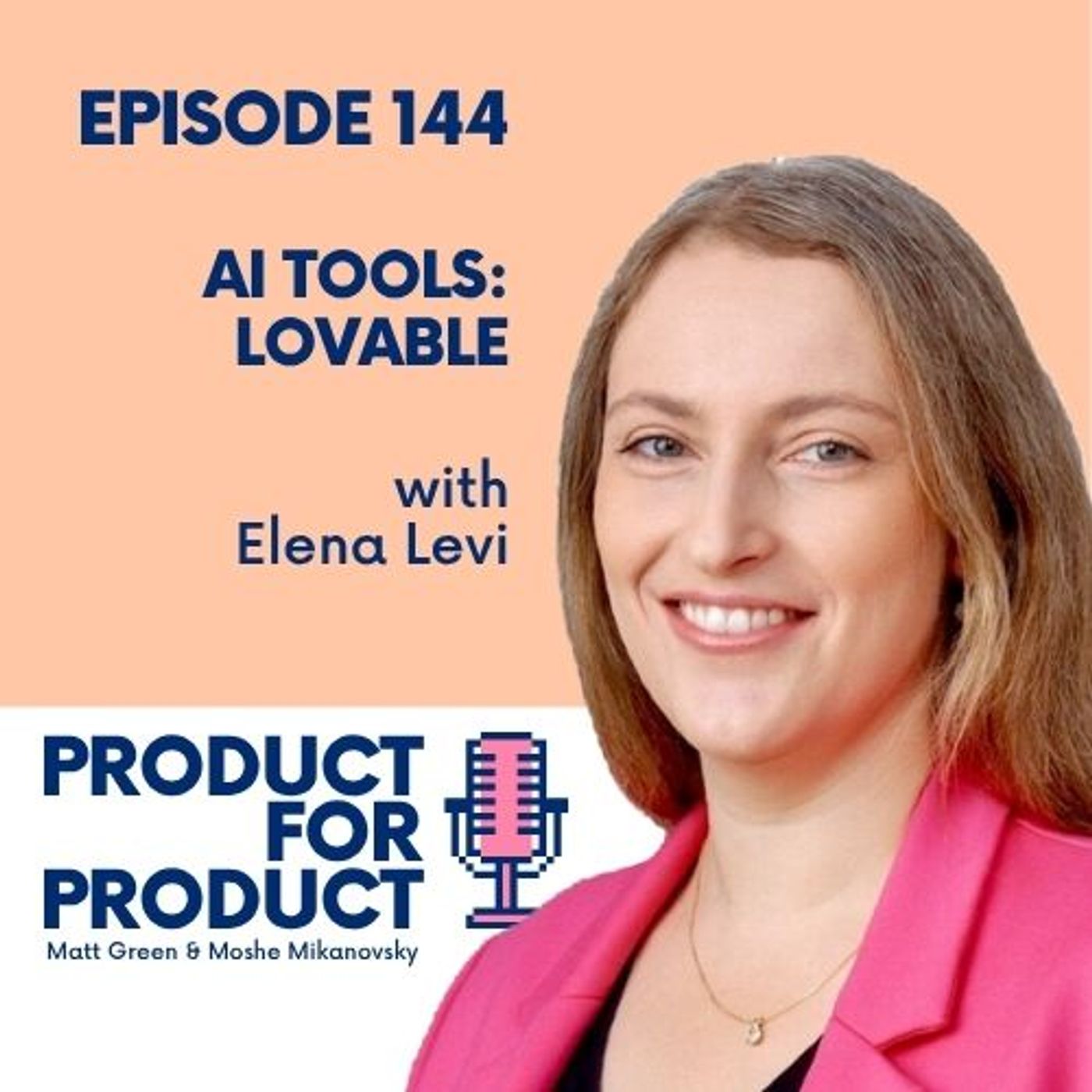
We’re excited to bring on Elena Levi, Director of Product Management at Payoneer, data analytics veteran, and passionate advocate for product-driven teams, for a special episode exploring what it’s really like to use Lovable and other AI-powered vibe coding tools in product development.Elena shares insights from 15 years in data analytics and product, with the journey from data analyst to product leadership fueling her curiosity about how AI can reshape prototyping, design, and collaboration. Drawing from hands-on experience building predictive analytics solutions, Elena reveals why she chose Lovable for fast prototyping, user testing, product sense interviews, and collaborating with both developers and designers.Join Matt, Moshe, and Elena as they explore:The strengths and limitations of Lovable for prototyping: rapid iteration, easy sharing, changing flows on the fly, user testing, and developer handoffWhen vibe coding works, and where you still need engineering and design expertiseThe realities of code generation, versioning, Supabase integration, and why Lovable stood out from the competition at the time she chose itUsing Lovable for product sense interviewsPractical tips: breaking tasks into smaller prompts, saving tokens with up-front documents, and why the first prompt is the most importantThe trade-offs of using AI tools for MVPs, B2B vs. B2C products, and where privacy and maintainability concerns come inResponses from engineers and designers, what these tools mean for their work, learning curves, and whether they help or hinder junior team membersExpectations vs. reality: how close AI tools get you to the finish line, and why “the last mile” is the toughestConundrums, gotchas, frustrations, and how to keep flexibility in your workflowWhy do PMs must always ask “Why?”, and why AI alone can't replace a critical data mindsetAnd much more!Want to connect with Elena or learn more?LinkedIn: https://www.linkedin.com/in/elena-levi-dataYou can also connect with us and find more episodes:Product for Product Podcast: http://linkedin.com/company/product-for-product-podcastMatt Green: https://www.linkedin.com/in/mattgreenproductMoshe Mikanovsky: http://www.linkedin.com/in/mikanovskyNote: Any views mentioned in the podcast are the sole views of our hosts and guests, and do not represent the products mentioned in any way.Please leave us a review and feedback ⭐️⭐️⭐️⭐️⭐️

We’re thrilled to welcome back Eva Hongyan Gao, Head of Product ESG at AMCS Group, a returning guest (episode 102) and a product leader in B2B SaaS, circular economy, and ESG, for a special episode on using LLMs securely inside the enterprise. Eva joins Matt and Moshe to offer a candid, hands-on look at how AI fits into enterprise toolkits, the challenges of data compliance, and the realities of integrating tools like Microsoft Copilot Studio within strict security frameworks.Eva brings deep experience building for demanding enterprise customers, where success is measured not just by innovation, but by strict ISO, SOC 2, and GDPR compliance. She shares what happens behind the scenes as product leaders and IT teams try to balance innovation, cost, and data protection, sometimes losing sleep over responsible tool usage and ever-climbing AI integration costs.Join Matt, Moshe, and Eva as they explore:Using AI tools in highly regulated, security-conscious B2B enterprise settingsThe compliance process: from ISO and SOC2 to GDPR and internal AI guidelinesWhy Microsoft Copilot is becoming the default LLM in enterprises, and what you still need to watch out forBuilding internal agents and chat interfaces to answer roadmap questions and handle stakeholder requestsLessons learned moving from over-engineered platforms to simpler, compliant AI toolsCreative AI workflows, including removing branded assets between Copilot and Figma and orchestrating information for various departmentsThe ongoing struggle: data redaction, internal transparency, and the limits of controlling generative modelsLLM orchestration: mixing old-school logic with new AI capabilities, and knowing when not to use AISecurity best practices and the importance of a trust-based compliance mindset across the organizationWhat happens when stakeholders use AI tools in ways product never expectedOpportunities for Copilot and DevOps to streamline maintenance, documentation, and stakeholder requestsThe future of AI in sustainability, product management, and business decision-makingAnd much more!Want to connect with Eva or learn more?LinkedIn https://www.linkedin.com/in/evagaodeYou can also connect with us and find more episodes:Product for Product Podcast: http://linkedin.com/company/product-for-product-podcastMatt Green: https://www.linkedin.com/in/mattgreenproductMoshe Mikanovsky: http://www.linkedin.com/in/mikanovskyNote: Any views mentioned in the podcast are the sole views of our hosts and guests, and do not represent the products mentioned in any way.Please leave us a review and feedback ⭐️⭐️⭐️⭐️⭐️
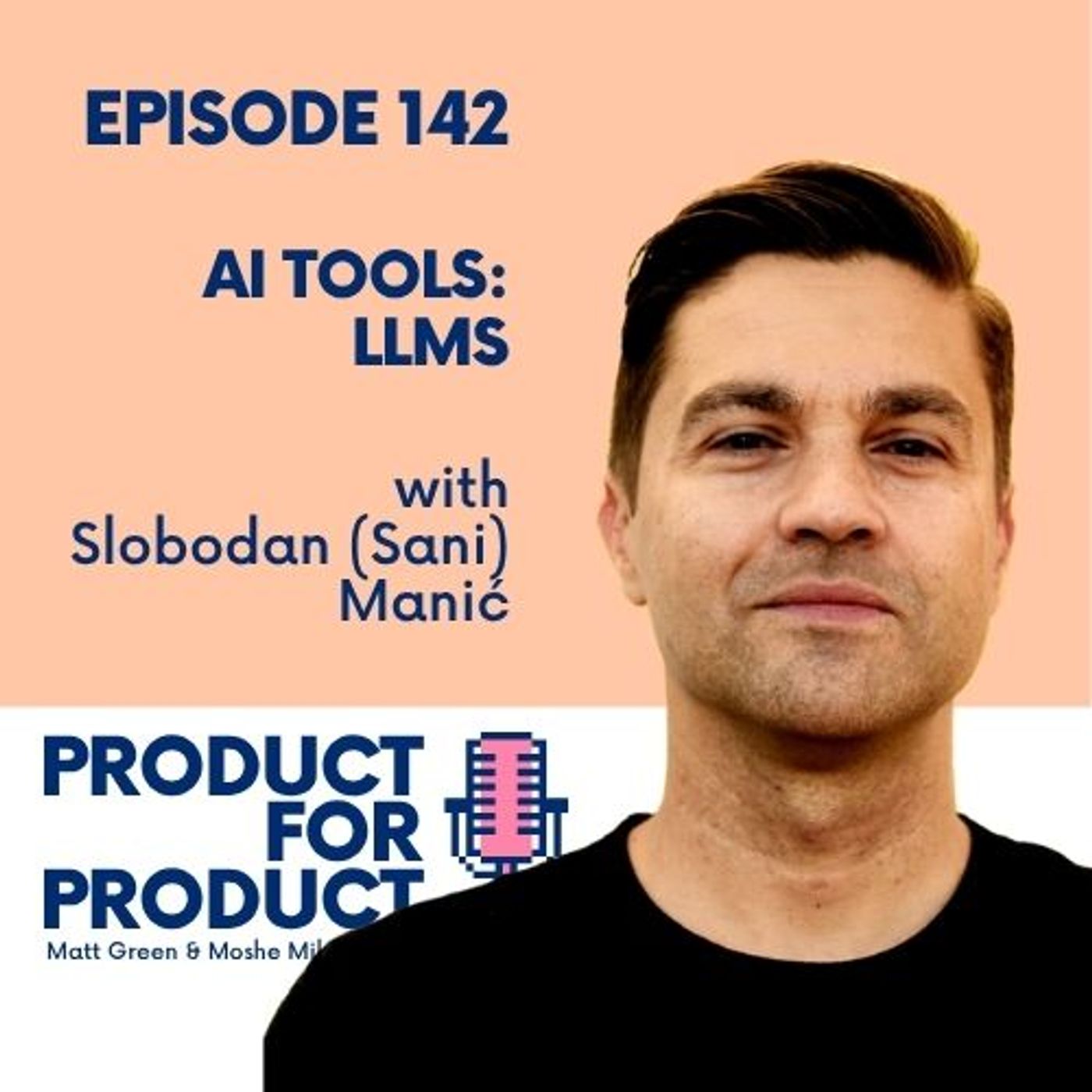
We continue our AI Tools series with a deep dive into using Large Language Models (LLMs) for research, featuring Slobodan (Sani) Manić, AI skeptic, podcaster, and founder of the AI Fluency Club. Sani joins Matt and Moshe to share why context, careful prompting, and critical thinking are essential for getting real value out of today’s LLMs in product work. Drawing on his work as a product builder, educator, and host of No Hacks Podcast, Sani challenges common myths about AI’s capabilities and underscores both its practical uses and its risks for product managers. The conversation ranges from practical workflows to future visions of invisible AI, open-source models, and the real state of the “wrapper economy” built on major LLM providers. Join Matt, Moshe, and Sani as they explore: - Why most LLM workflows boil down to two mindsets: understanding your work, or avoiding understanding it - The crucial role of context and authority, why careless prompting leads to hallucinations, and how to break questions into smaller steps for better results - How LLMs fit as accelerators for deep research, surfacing insights faster than classic search engines, but always requiring fact-checking - Why Sani uses Google’s Gemini and NotebookLM, and the value of integration with your company’s existing tools - The open-source LLM alternative: privacy, flexibility, and why some see this as the future for secure enterprise AI - Pitfalls of the “wrapper economy,” vendor lock-in, and shaky business models based on reselling tokens - Starting out: how to include LLMs in PM research without reinventing your workflow, and why you must be careful with company data - The risks and limitations of AI today, especially in enterprise and sensitive environments - How internal AI context in tools like Atlassian makes those LLM features uniquely powerful - Future predictions: AI that fades into the background, plus the big unanswered questions about interface and humanoid robots - Sani’s approach to AI education, success stories from AI Fluency Club, and what executives need to learn to stay ahead - And much more! Want to learn more or join Sani’s community? - LinkedIn: Slobodan (Sani) Manić https://www.linkedin.com/in/sl... - No Hacks Podcast http://nohackspod.com/ - AI Fluency Club https://aifluencyclub.com/ You can also connect with us and find more episodes: - Product for Product Podcast http://linkedin.com/company/pr... - Matt Green https://www.linkedin.com/in/ma... - Moshe Mikanovsky http://www.linkedin.com/in/mik... Note: Any views mentioned in the podcast are the sole views of our hosts and guests, and do not represent the products mentioned in any way. Please leave us a review and feedback ⭐️⭐️⭐️⭐️⭐️
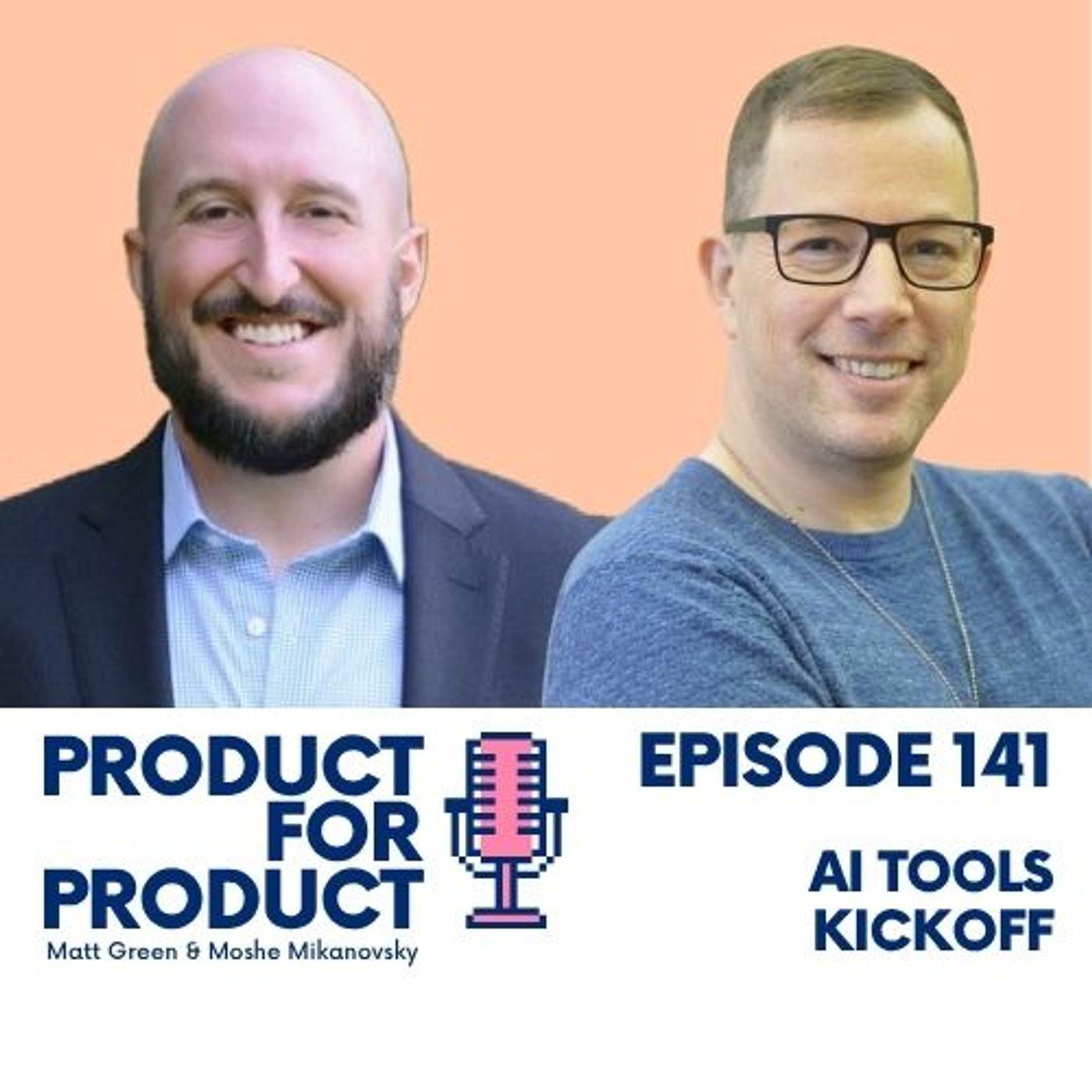
We’re excited to launch a brand-new series on the Product for Product Podcast, with Matt and Moshe diving deep into the world of AI tools for product managers. In this special episode, we set the stage for upcoming conversations by exploring how AI is becoming an indispensable partner in every stage of the product management journey. Join us as Matt and Moshe discuss: - The rapidly evolving role of AI throughout the product management workflow, from idea generation and discovery to strategy, prioritization, delivery, launch, and ongoing monitoring - The importance of using AI as a tool for knowledge and insight, rather than replacing critical thinking and understanding - How product managers can leverage Large Language Models (LLMs) for research, writing, and scenario planning - The realities and limitations of today’s AI tools, including the challenges of ensuring accuracy and context in product work - Exploring the promise of AI platforms for rapid prototyping and MVP testing - How AI can help bridge the gap between prototyping and actually building production-ready products - Using AI to inform strategic decisions, pricing, packaging, prioritization, and risk assessment - Integrating AI into your board and backlog systems for smarter feedback synthesis and decision-making - Enhancing sprint-based development with AI-generated user stories, acceptance criteria, and more - Upcoming content around data consolidation, go-to-market strategies, and ways AI is changing the PM discipline - And much more! Whether you’re just starting to experiment with AI or looking to deepen how you use it in your product practice, this series is for you. Stay tuned for practical examples, case studies, and discussions that will help you harness the latest AI tools, while remembering that the best PMs know how to balance tech innovation with human judgment.Connect with us and follow the rest of the series: - Product for Product Podcast http://linkedin.com/company/pr... - Matt Greenhttps://www.linkedin.com/in/ma...https://www.linkedin.com/in/ma... - Moshe Mikanovsky http://www.linkedin.com/in/mik... Note: Any views mentioned in the podcast are the sole views of our hosts and guests, and do not represent the products mentioned in any way. Please leave us a review and feedback ⭐️⭐️⭐️⭐️⭐️
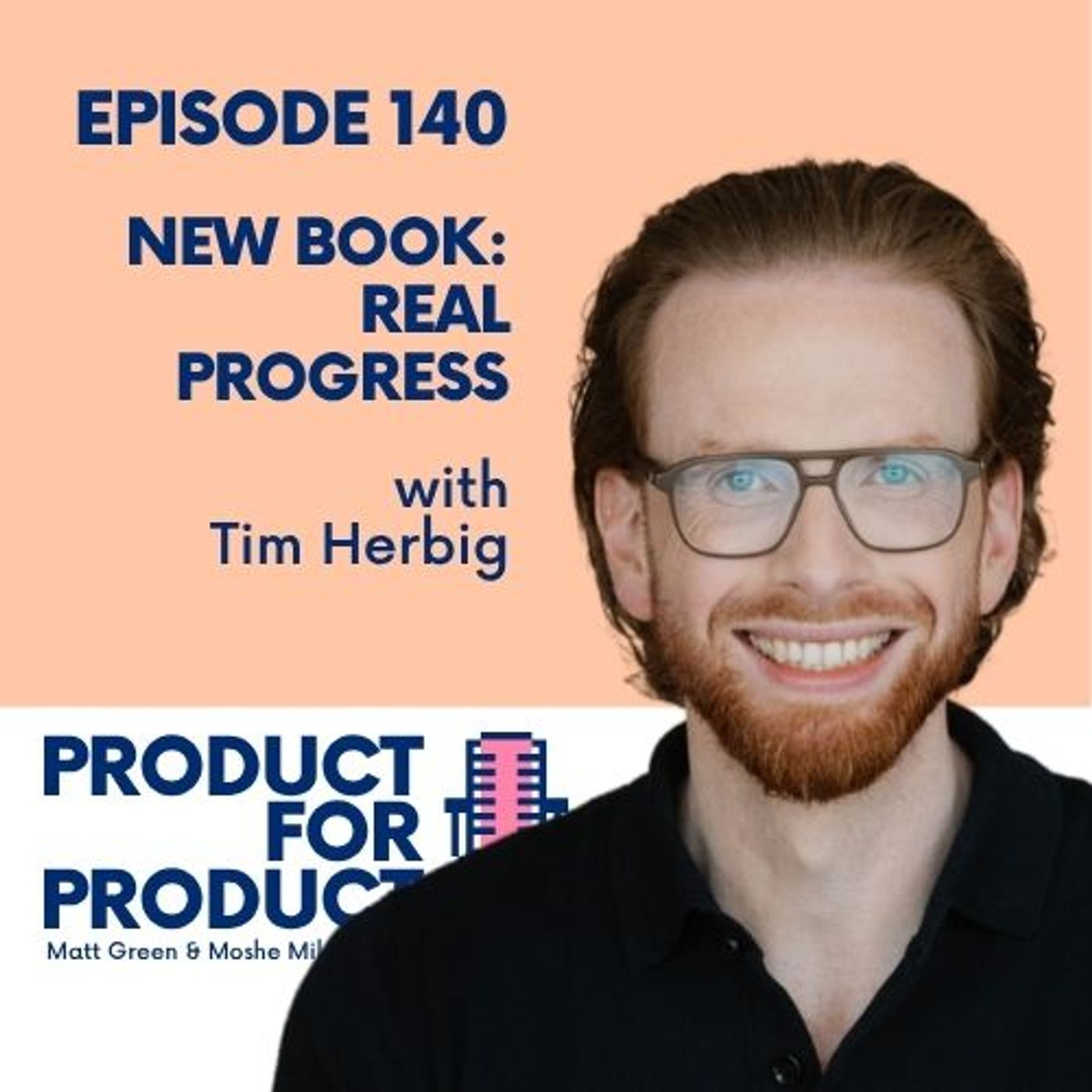
We’re excited to feature another visionary builder in product management: Tim Herbig, Product Coach and author of the newly released book “Real Progress: How to Connect the Dots of Product Strategy, OKRs and Discovery”.In this episode, Tim joins Matt and Moshe to share how his journey, from being handed a Product Owner role out of the blue, to leading teams and coaching organizations, shaped his mission to help product managers connect strategy, OKRs, and discovery into a framework for real impact.Tim draws on his years of experience across diverse industries and organizations to address a challenge he’s seen again and again: teams invite him to solve one issue but quickly discover there are deeper, often interlinked problems between strategic planning, measuring progress, and enabling effective discovery. That’s the gap he set out to fill with his book, a hands-on resource designed specifically for PMs and teams looking to go beyond process and frameworks, and start making progress that matters.Join Matt and Moshe as they explore with Tim:The story behind writing “Real Progress” and connecting the dots between strategy, OKRs, and discoveryWhy so many teams appear busy but are stuck making “alibi progress” instead of real impactThe Progress Wheel: a visual tool for mapping how strategic, measurable change drives product successHow to think critically about frameworks, challenging readers to adapt tools for their own context, rather than following them blindlyThe book’s practical structure: workbook-like prompts and non-linear sections for self-assessment and targeted improvementKey building blocks of strategy and how they relate to various templates and organizational maturityLinking company strategy to product strategy, and the strategic thinking required for product leadersUsing OKRs to measure if your strategy is working, and spotting when OKRs reveal deeper strategic problemsRole of discovery in reducing strategic risk and building conviction, including how Tim’s Evidence Strength Matrix helps teams evaluate signalsFirst steps for teams looking to connect their frameworks and drive improvementAnd much more!Thinking about making progress in your product work? Check out Tim’s book at realprogressbook.com and connect with him on LinkedIn or herbig.co.You can find the podcast’s page, and connect with Matt and Moshe on LinkedIn:Product for Product Podcast - http://linkedin.com/company/product-for-product-podcast Matt Green - https://www.linkedin.com/in/mattgreenproduct/ Moshe Mikanovsky - http://www.linkedin.com/in/mikanovsky Note: Any views mentioned in the podcast are the sole views of our hosts and guests, and do not represent the products mentioned in any way.Please leave us a review and feedback ⭐️⭐️⭐️⭐️⭐️
As part of our ongoing effort to equip product professionals with the best frameworks and resources, this episode takes a different turn. Moshe steps up as the main speaker to introduce the Product Manager Toolkit, a comprehensive framework he created to help product managers select and implement tools more efficiently and strategically.On the show, Moshe walks Matt through the toolkit live using Miro, highlighting how it’s designed around the very principles they’ve discussed with guests throughout the history of the podcast. Now published as a template in Miroverse (with nearly 1,000 views and 44 copies!), the toolkit is freely available for product people everywhere. Moshe shares its origin, core components, and how it’s become a valuable resource for teams mapping out their needs in today’s dynamic product landscape. Join Matt and Moshe as they explore:The end-to-end workflow for product tool selection, from identifying needs and prioritizing requirements to shortlisting, testing, and implementing solutionsA visual ecosystem diagram capturing the full product management cycle, including ideation, strategy, delivery, and ongoing monitoringThe Product Manager Tool Mapping Template, guiding PMs to connect needs with tool options, while considering organization size, culture, maturity, and budgetInsights on the interconnectedness of modern product tools and prioritizing tasks by urgency and importanceThe ever-evolving list of 150+ product management tools on Airtable and the challenge of keeping resource lists up-to-datePractical product selection criteria, including wide vs. deep tools, entry-level vs. advanced features, integration requirements, AI support, vendor reliability, and customer supportThe importance of defining success criteria, creating rigorous test cases, and assessing support and long-term costs before making a commitmentWhy it’s crucial to evaluate not just features and price, but factors like company culture, scalability, and support processesMoshe’s vision for a book focused on tool selection frameworks - if you think it’s a good idea, let him know!And much more!Ready to streamline your approach to tool selection? Access the Miroverse Product Manager Toolkit template, share your feedback, and join the conversation!You can find the toolkit and connect with Moshe at:Product Manager Toolkit Miroverse Template Products for Good: productsforgood.co LinkedIn: Moshe MikanovskyAnd don’t forget to connect with Matt and the podcast:Product for Product PodcastMatt GreenNote: Any views mentioned in the podcast are the sole views of our hosts and guests, and do not represent the products mentioned in any way.Please leave us a review and feedback ⭐️⭐️⭐️⭐️⭐️
As we continue our tradition of highlighting innovative startups building for product professionals, we’re excited to introduce Matan Kleyman, CEO and Co-Founder of Hunch, on this week’s episode.On the show, Matan shares his journey from technical engineering and data science roles to leading product teams and hosting a podcast focused on AI and product management. Now with Hunch, he’s set out to solve a problem many product managers know well: after all the investment in collecting and aggregating data, only a handful of senior data engineers truly know how to use it.With that problem in mind, Hunch is on a mission to democratize data access, giving product people rapid, autonomous, and approachable ways to get insights, act on their hunches, and unlock value from their company’s data.Join Matt and Moshe as they explore with Matan:The founding story of Hunch and why product managers are at the center of their visionHow Hunch enables any team member to query data using a ChatGPT-like interface and ready-made templatesTurning raw insights into dashboards and customizable data apps with no technical background requiredHunch’s two big differentiators: optimizing for speed and for true autonomyReal-world use cases, from engineers and PMs, to data-driven decision-making in actionHow Hunch supports both quantitative (what happened in the product) and qualitative (what should happen next) analysis, including transcript integrationsMatan’s philosophy on building trust: prioritizing transparency over rigid accuracy and giving users control over contextBest practices for onboarding, context management, and building knowledge sets in HunchLessons from building their public roadmap and belief in open, user-driven product developmentThe future of product management as a hybrid of visionary leadership and orchestrationAnd much more!Curious to try Hunch or learn more? Connect with Matan:LinkedIn: https://www.linkedin.com/in/matankleyman/ Hunch: https://www.hunch.dev/ You can find the podcast’s page, and connect with Matt and Moshe on LinkedIn:Product for Product PodcastMatt GreenMoshe MikanovskyNote: Any views mentioned in the podcast are the sole views of our hosts and guests, and do not represent the products mentioned in any way.Please leave us a review and feedback ⭐️⭐️⭐️⭐️⭐️
As we traditionally have done in previous years, we’re excited to feature innovative founders who are building exciting tools for product professionals. Continuing our Startups of 2025 series, we welcome Nathan Ngai, CEO and founder of Arkhet.On the show, we explore with Nathan his journey—from over a decade in product design, running countless discovery workshops and design sprints, to becoming a founder aiming to rethink how AI can work for product people. Frustrated by the boom of AI tools that overpromised yet underdelivered, Nathan set out to build Arkhet—an AI-powered wireframing and prototyping platform designed to give product managers and teams more control, speed, and clarity.With Arkhet, instead of relying solely on the back-and-forth of prompt engineering (and getting results you didn’t ask for), users start visually—building wireframes and layering prompts on top of them. It’s a purposeful approach: if you know what you want to build, Arkhet lets you highlight and describe specific sections, apply your style guide, and collaborate more effectively with designers. The short-term goal: empower PMs to create prototypes faster and more collaboratively, with future possibilities that could extend into full product builds.Join Matt and Moshe as they explore with Nathan:The founding story of Arkhet and why visual prompting solves a major gap in today’s AI toolsHow Arkhet integrates the best of traditional wireframing with generative AI to speed up prototypingThe differences between Arkhet and other AI design/prototyping productsHow it streamlines the collaboration between product managers and designersBeta success stories and why Product Managers are choosing Arkhet over other AI toolsPivoting from a designer-first ICP to focusing on Product Managers—and why both roles will remain crucialWhy AI won’t replace Product Managers or designers, but can help them work better and fasterThe roadmap for style guide personalization, Figma integration, and beyondAnd much more!You can connect with Nathan at:LinkedIn: https://www.linkedin.com/in/ngainathan/ArkhetYou can find the podcast’s page, and connect with Matt and Moshe on Linkedin: Product for Product Podcast - linkedin.com/company/product-for-product-podcastMatt Green - linkedin.com/in/mattgreenproduct/Moshe Mikanovsky - linkedin.com/in/mikanovsky/Note: Any views mentioned in the podcast are the sole views of our hosts and guests, and do not represent the products mentioned in any way.Please leave us a review and feedback ⭐️⭐️⭐️⭐️⭐️
As we traditionally have done in previous years, we got to feature some exciting startups this year too. Featuring visionary founders who are building exciting tools for product people, we are starting Startups of 2025 with Sahil Jain, cofounder and CEO of Samepage.ai.On the show we explore with Sahil his journey—from gaming enthusiast and QA tester at Yahoo to serial entrepreneur building products that solve the toughest challenges for product teams. Sahil shares how experiences at AOL, Trigger.io, AdStage (which he ran for 8 years and sold to TapClicks), and weekly conversations with VCs and startups led him to an important insight: most product teams struggle to stay truly aligned. That challenge became the spark for Samepage.ai, where the mission is to solve information asymmetry and help product managers focus more on communicating what matters.Join Matt and Moshe as they explore with Sahil:The founding story of Samepage.ai and why alignment is the central challenge for product managersHow product teams lose context and fall out of sync—with communication making up to 80% of a PM’s roleThe evolution of Samepage.ai from a “blank slate” approach beyond traditional tools like email and SlackLeveraging GenAI to surface relevant, daily insights from scattered sources (Slack, Linear, Github, and more)AI copilots for product managers: creating streams for weekly status updates, release notes, and trend analysis while keeping humans in the loopThe real challenges of transmitting vs. interpreting information, and supporting teams with diverse learning styles and cultural backgroundsEarly success stories from beta usersSahil’s process for validating and iterating Samepage, building in stages, and focusing on solving the right problemsThe future vision for Samepage.ai and how context-aware AI tools will enable better information retrieval, synthesis, and distributionAnd much more!Want to try Samepage.ai? Sahil will expedite your access to the beta program, so do connect with Sahil directly for access!You can connect with Sahil at:LinkedIn: https://www.linkedin.com/in/sahilio/ Email: Sahil@samepage.aiSamepage.ai You can find the podcast’s page, and connect with Matt and Moshe on Linkedin: Product for Product Podcast - linkedin.com/company/product-for-product-podcast Matt Green - linkedin.com/in/mattgreenproduct/Moshe Mikanovsky - linkedin.com/in/mikanovsky/Note: any views mentioned in the podcast are the sole views of our hosts and guests, and do not represent the products mentioned in any way.Please leave us a review and feedback ⭐️⭐️⭐️⭐️⭐️
What really aligns product teams and stakeholders to not only understand each other, but also create successful products together?In this episode, we’re joined by Randy Silver, Product & Leadership Coach Consultant and Community Builder at Out of Owls, Founder at CPO Circles , and co-host of The Product Experience podcast by Mind the Product. Randy shares his journey from music journalism to Amazon Music editor, and how his passion for collaborating with designers, developers, and content creators led him into the world of product management. With years of experience delivering value across organizations and hosting weekly product conversations since 2018, Randy brings a unique perspective on what it takes to build successful teams and products.We dive into Randy’s Product Environment Canvas—a practical model designed to help product teams diagnose challenges and align on what really matters. Born from a tough professional experience where misalignment derailed a project, Randy’s framework brings together four critical components: strategy, people, process, and perception. He explains how to use the canvas, the order in which to fill it out, and why it’s as much about internal discovery as it is about stakeholder alignment.We cover topics including:The story behind the Product Environment Canvas and why Randy created itThe four key components: prioritization, people, process, and perception—and how they interactHow to use the canvas to identify root causes of team challenges and misalignmentMotivation mapping and understanding different perspectives within your organizationWhen and how to implement the canvas: retrospectives, quarterly planning, or diagnosing stakeholder frictionWho can use the canvas—whether you’re a team member or in a leadership roleThe impact using the canvas had on organizationsHow the canvas can even help you assess fit when considering a new jobTips for managing perception, communicating context, and surfacing hidden blockersResources and next steps for exploring the Product Environment Canvas furtherAnd much more!You can connect with Randy at:LinkedIn: linkedin.com/in/randysilver/ The Product Environment Canvas: https://outofowls.com/blog/the-product-environment-canvas Out of Owls: outofowls.com CPO Circles: https://www.cpo.social/ Product in the (A)Ether: https://www.pita.social/ Bluesky: bsky.app/profile/randysilver.outofowls.com You can find the podcast’s page, and connect with Matt and Moshe on Linkedin:Product for Product Podcast - linkedin.com/company/product-for-product-podcastMatt Green - linkedin.com/in/mattgreenproduct/Moshe Mikanovsky - linkedin.com/in/mikanovsky/Note: any views mentioned in the podcast are the sole views of our hosts and guests, and do not represent the products mentioned in any way.Please leave us a review and feedback ⭐️⭐️⭐️⭐️⭐️
Do you have a method to reach Product Market Fit (PMF) with your product?In this episode, we’re joined by Giacomo Poggiali, a Sparring Partner for bold partners at Sparring Startups, to learn about his “Product Engine” framework for reaching PMF. Giacomo is a product coach and repeat founding product leader who has helped over 150 startups navigate the challenging path to product-market fit (PMF). Giacomo shares how his journey began with the lean startup methodology as his thesis, and how he’s since applied those principles across design, product, and marketing in early-stage companies. After experiencing the transformation that comes with reaching PMF firsthand, Giacomo became passionate about helping other teams replicate that journey—again and again.We dive into Giacomo’s perspective on what PMF really means, moving beyond textbook definitions to describe how it actually feels for a team: the shift from pushing a boulder uphill to racing after it as momentum takes hold. Drawing from years of hands-on experience, Giacomo introduces his “Product Engine” framework—a practical playbook for identifying your most valuable users, uncovering what truly drives value, and systematically removing blockers to adoption.Join Matt and Moshe as they explored with Giacomo:The difference between pre- and post-PMF challenges for product teamsWhat the Product Engine is, and how it helps startups identify their lighthouse users and core valueHow to use behavioral data and qualitative insights to uncover value blockersThe 80/20 approach: why doubling down on core value matters more than fixing every blockerWhen and how to off-board users who aren’t a good fitReal-world examples of the Product Engine in action, including pivots and surprising discoveriesApplying the Product Engine to B2B, B2C, and API productsPractical steps for product managers to start implementing the frameworkWhere AI can support the process of finding PMFAdvice for teams and PMs on building something truly valuable—and knowing when you’ve reached PMFAnd much more!You can connect with Giacomo at:LinkedIn: https://www.linkedin.com/in/giacomopoggiali/ Sparing Startups: https://www.sparringstartups.com/ You can find the podcast’s page, and connect with Matt and Moshe on Linkedin: - Product for Product Podcast - linkedin.com/company/product-for-product-podcastMatt Green - linkedin.com/in/mattgreenproduct/Moshe Mikanovsky - linkedin.com/in/mikanovsky/Note: any views mentioned in the podcast are the sole views of our hosts and guests, and do not represent the products mentioned in any way.Please leave us a review and feedback ⭐️⭐️⭐️⭐️⭐️
APIs are products but they don’t always get the same focus they deserve to be successful.In this episode of the Product for Product Podcast, we sit down with Deepa Goyal, Product Strategy Leader at Postman and author of API Analytics for Product Managers: Understand key API metrics that can help you grow your business, to explore what it takes to manage APIs as products.Deepa shares her journey from PayPal and Twilio to her current role at Postman, and discusses the rise of the API Product Manager and how APIs are shaping modern organizations.We explore why Deepa wrote her book, who it’s for, and what product managers—whether or not they work directly with APIs—can learn from it. Deepa explains how analytics are critical for measuring API success, the unique challenges of building API products, and why developers are often the primary customers. In addition, she shares insights from her research for the book and the writing process, including how she validated her ideas and what she learned about the API lifecycle, onboarding, and product-market fit. Join Matt and Moshe as they explore with Deepa:The rise of the API Product Manager and how APIs are transforming businessesDifferent types of APIs—internal, external, and partner—and their strategic impactWhy analytics are essential for measuring API product successUnique challenges of building API products Insights from writing and validating her book, API Analytics for PMsThe impact of AI on product management and the future of APIsStrategies for API pricing and revenue modelsKey metrics and leading indicators for API adoption and activationAdvice for product managers looking to build technical skills and drive impactAnd much moreYou can connect with Deepa at:LinkedIn: https://www.linkedin.com/in/deepag/ X: @1sprintatatimeAPI Analytics for Product Managers book: https://www.amazon.com/API-Analytics-Product-Managers-Understand/dp/1803247657 You can find the podcast’s page, and connect with Matt and Moshe on Linkedin: - Product for Product Podcast - linkedin.com/company/product-for-product-podcast Matt Green - linkedin.com/in/mattgreenproduct/Moshe Mikanovsky - linkedin.com/in/mikanovsky/Note: any views mentioned in the podcast are the sole views of our hosts and guests, and do not represent the products mentioned in any way.Please leave us a review and feedback ⭐️⭐️⭐️⭐️⭐️

Comments

Download from Google Play

Download from App Store
 United States