


 Claim Ownership
Constructive Voices
Subscribed: 8Played: 152
Subscribe

© 2023 Constructive Voices
Description
Constructive Voices is an award-winning global platform that aims to break down silos in the built environment to accelerate positive change.
Through global conversations with change-makers, we inform our audience about some of the most important concepts and solutions of today.
The Constructive Voices team investigates topics such as green building, biodiversity, renewable energy, nature-positive solutions, AI, resilient building and more.
Hosts to date have included Jackie De Burca, Henry McDonald, Peter Finn, Steve Randall, Emma Nicholson and Sarah Austin.
Our vision is to partner with as many companies and individuals as possible to feature the positive work that they are doing. Making Constructive Voices the Go-To resource for global information and ideas on positive methods for a more sustainable built environment and world.
Our team is dedicated to exploring and promoting sustainability, biodiversity and innovation.
We talk to world-renowned experts, local people, businesses and students in our quest to document and inspire positive, historic changes required for these challenging times.
Through global conversations with change-makers, we inform our audience about some of the most important concepts and solutions of today.
The Constructive Voices team investigates topics such as green building, biodiversity, renewable energy, nature-positive solutions, AI, resilient building and more.
Hosts to date have included Jackie De Burca, Henry McDonald, Peter Finn, Steve Randall, Emma Nicholson and Sarah Austin.
Our vision is to partner with as many companies and individuals as possible to feature the positive work that they are doing. Making Constructive Voices the Go-To resource for global information and ideas on positive methods for a more sustainable built environment and world.
Our team is dedicated to exploring and promoting sustainability, biodiversity and innovation.
We talk to world-renowned experts, local people, businesses and students in our quest to document and inspire positive, historic changes required for these challenging times.
131 Episodes
Reverse
What if “healthy ageing” isn’t just about genes, diet, or healthcare — but also about the streets you navigate, the air you breathe, the noise you sleep through, and the buildings you spend 90% of your life inside?
“This conversation makes the case for a shift: from sustainability as a materials-and-energy conversation, to neurosustainability — designing environments that protect sleep, reduce stress load, support movement, and build cognitive resilience across the lifespan.” Jackie De Burca
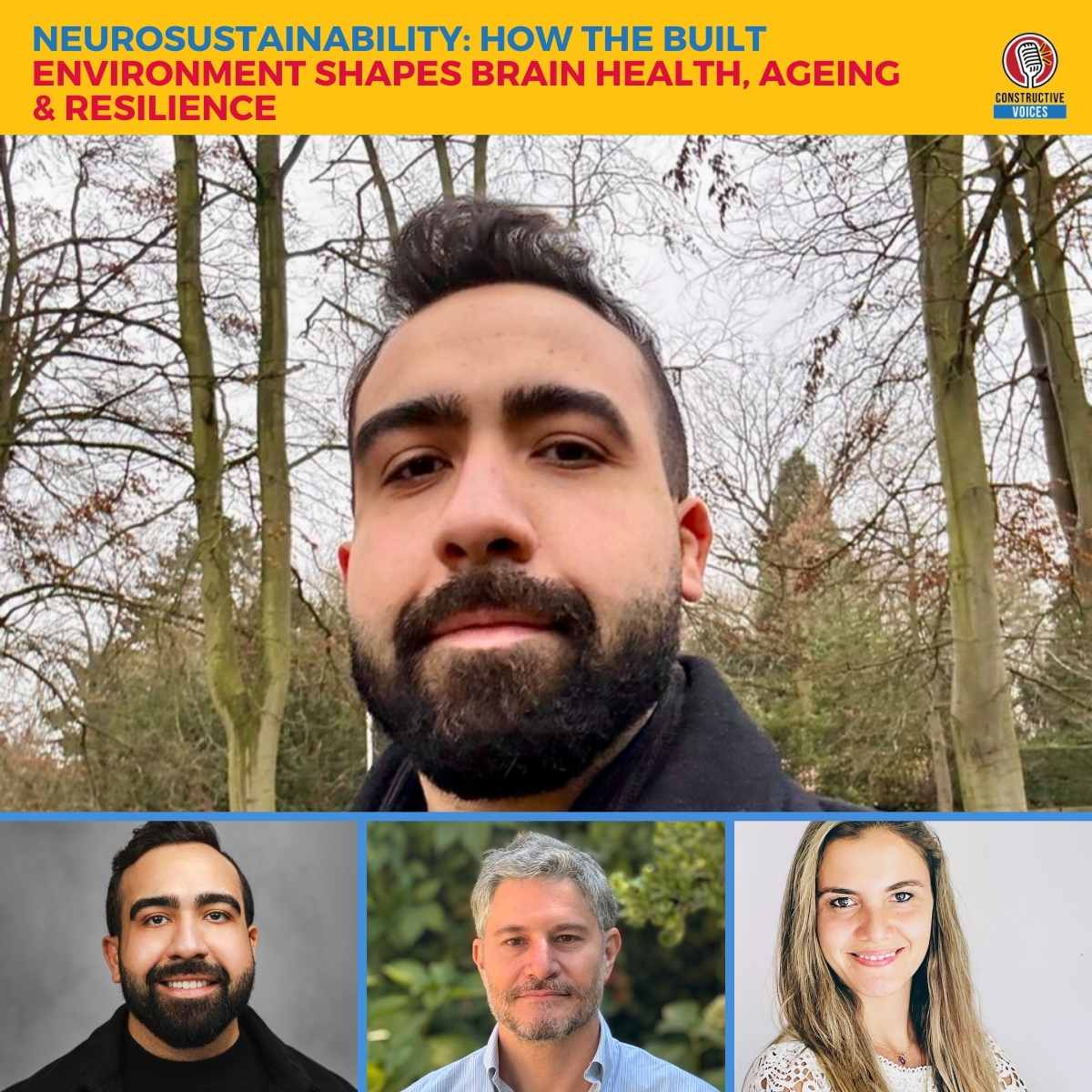
Host: Mohamed Hesham Khalil – Creator of the Neurosustainability theory, architect and neuroscience researcher, and a PhD candidate at the University of Cambridge.
Guest: Professor Agustín Ibáñez — Director of Global Research Networks at the Global Brain Health Institute (Trinity College Dublin) and Scientific Director of the Latin American Brain Health Institute
Guest: Burcin Ikiz — Neuroscientist and brain health advocate working at the intersection of climate, equity, and brain outcomes
Podcast cover
Brain health isn’t only personal. It’s environmental. And the places we live, move, and work in can either build resilience — or quietly chip away at it.
“The built environment… is the space where we most of the time live, move, think and also thrive or become sick.” — Professor Agustín Ibáñez
In the third part of this mini-series about neurosustainability, Cambridge scholarship student, Mohamed Hesham Khalil sits down with Professor Agustín Ibáñez and Burcin Ikiz to connect the dots between climate, inequality, urban design, and the ageing brain.
They unpack the exposome and zoom into the built environment as the missing middle layer we can actually change.
“Scientists sometimes we use strange words for simple things.” — Professor Agustín Ibáñez
What is the exposome?
The exposome is the full set of environmental influences (physical, social, and economic) that shape our health and behaviour over time — and why the built environment is the missing “mesoscale” link between global forces (like climate change and inequality) and individual brain outcomes (like cognition, dementia risk, and mental health).
“I always see that the built environment itself maybe hasn’t been given the same attention… because… people spend around 90 percent of time indoors.” Mohamed Hesham Khalil
Th...
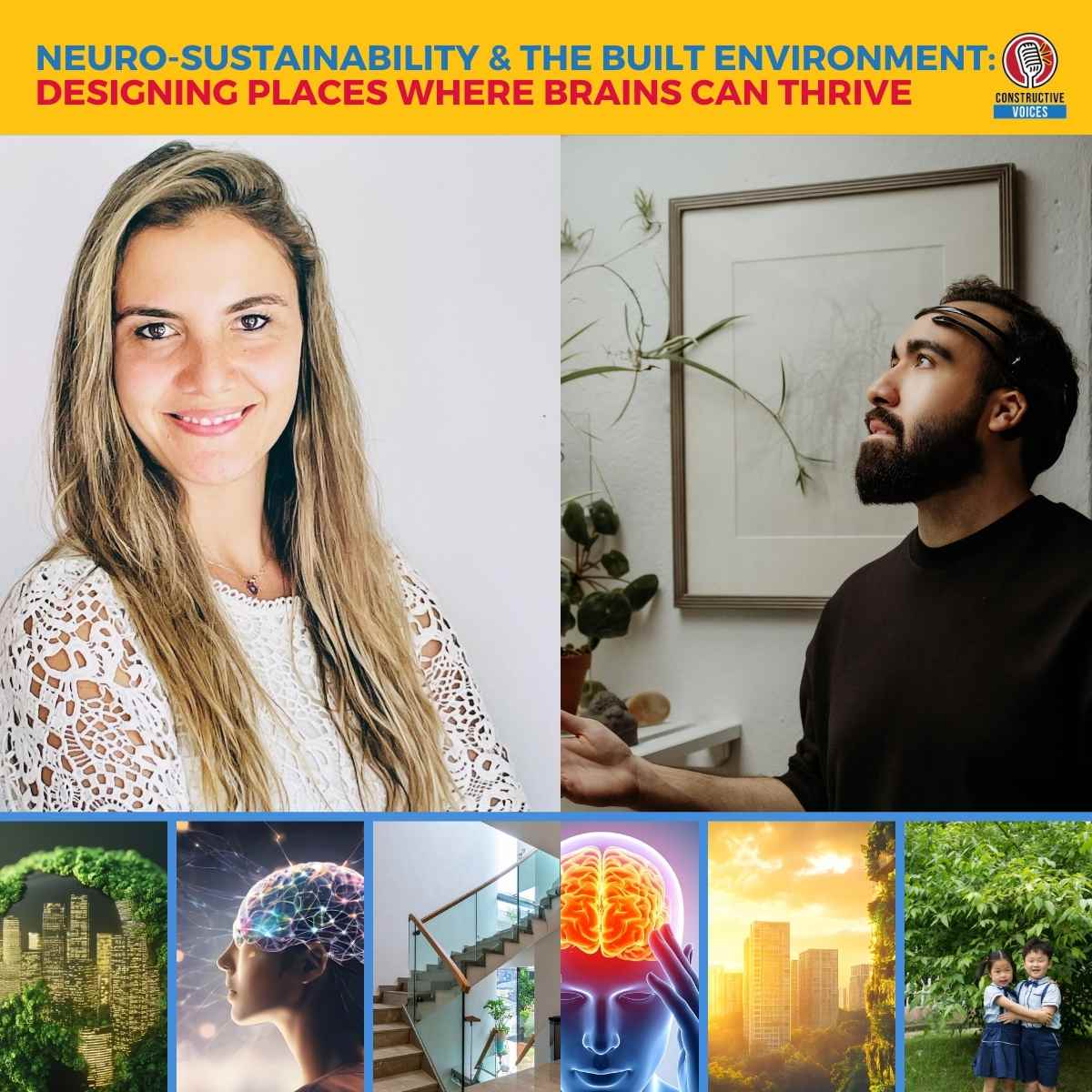
Neuro-Sustainability: Designing Places Where Brains Can Thrive
What if sustainability wasn’t only about carbon, materials, and energy — but also about the human brain?
In this second episode of the mini-series about neuro-sustainability, neuroscience and architecture meet in a conversation that feels both urgent and surprisingly practical.
We investigate the work of Cambridge scholarship student, Mohamed Hesham Khalil, which we believe should be integrated into planning and architecture around the world.
“We can change diet, can change habits, but we cannot change a built environment. It’s built once and it lasts for tens of years.” Mohamed Hesham Khalil
In this episode, he is joined by Burçin Ikiz, who brings a climate-and-health lens to brain wellbeing across the lifespan.
Mohamed Hesham Khalil brings a design-and-research lens focused on environmental enrichment — and what our homes, streets, workplaces, and neighbourhoods are doing to us every day, whether we notice it or not.
This is not a theoretical chat. It’s about how we design environments that help brains thrive — especially as heat, pollution, and chronic stress become part of daily life for millions.
Why this episode about neuro-sustainability matters
We like to think of brain health as something personal: sleep, diet, exercise, mindset. But the built environment is a long-term exposure — and it’s stubbornly permanent.
If your surroundings make movement hard, keep you indoors, overwhelm your senses, trap heat, or load the air with pollution — you don’t just “feel it.” Your brain does too.
What you’ll learn
1) What “environmental enrichment” means in the real world
This conversation translates neuroscience into design language: environments that support movement, stimulation, connection, and recovery.
“Don’t use it, you lose it. Just kind of like our muscles in our bodies.” Burçin Ikiz
2) The indoor reality we rarely talk about
If buildings are designed mainly for convenience and comfort, what happens to stimulation, mobility, and everyday brain engagement?
“When we spend like around 90 percent of time indoors… almost no chance for cognitive stimulation or physical activity through the building…” Mohamed Hesham Khalil
3) Heat, buildings, and brain function
As the climate warms, poorly adapted buildings become neurological stressors — not just uncomfortable boxes.
“If most of our buildings… have not been created for this increasingly warming world, it can be very, very hot indoors and that can really affect our brains.” Burçin Iki...
Welcome to the Constructive Voices’ mini-series that dives into neuro-sustainability and the built environment.
“The brain is not concrete… it is always changing.” Mohamed Hesham Khalil
We investigate the work of Cambridge scholarship student, Mohamed Hesham Khalil, which we believe should be integrated into planning and architecture around the world.
Mohamed also brings other top global experts to your ears during this short series of podcasts.
Neurosustainability and the built environment
What if sustainability isn’t complete unless it includes the brain?
In this opening episode, architect and Cambridge PhD candidate Mohammed Hesham Khalil introduces neurosustainability—a way of thinking about buildings and cities that asks how everyday environments shape mental health, cognition, stress levels, and long-term brain resilience.
“Sustainability… has to be inclusive and include the brain as well.” Mohammed Hesham Khalil
Jackie and Mohammed explore how the built environment influences us in ways we often overlook: the presence (or absence) of nature, whether our days include movement, how much variety and “spatial complexity” we experience, and how factors like air pollution can undermine health—even in places that look green on the surface.
This episode sets the foundation for the series: a practical, research-informed conversation about designing places that support the brain—not just the building.
Neurosustainability and the built environment
This episode is for anyone who makes decisions that shape how people live inside places—and anyone who’s felt, personally, that certain environments lift you up or drag you down.
“It’s not only about architecture… it’s about the way we live.” Mohamed Hesham Khalil
People who really need to listen
Architects & designers (especially if you care about wellbeing beyond “light and air” checklists)
Urban planners & transport planners working on walkability, density, public realm, and mobility
Developers & project managers making trade-offs between cost, space, green features,...
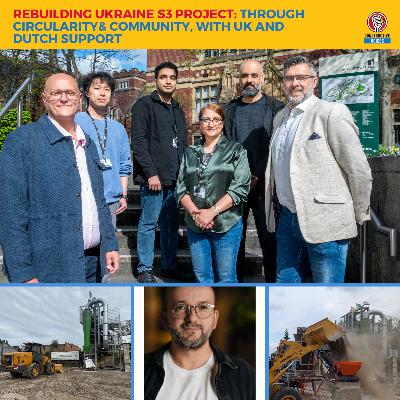
Rebuilding Ukraine through circularity, community with British and Dutch support, is a good news podcast episode.
This positive news story has been inspired by one of the world’s most tragic situations: the war in Ukraine.
“We in Ukraine are becoming a pilot site for diverse sustainable pilots, experiments and innovations. We have to leapfrog and build a society, buildings and processes that are inclusive, that are beautiful and that are sustainable. That’s our vision.” Roman Pushko
Rebuilding Ukraine safely, sustainably and swiftly – courtesy of S3RoU
A consortium of individuals, universities and entities in Ukraine, the United Kingdom and the Netherlands has come together to create a solution that will not only help rebuild Ukraine but could be used in other places that have been affected by wars or extreme weather events.
In layperson’s terms, rubble from the war in Ukraine will go through processes so it can be used to rebuild Ukraine swiftly, safely and sustainably. Discover more about the consortium who are involved in this rebuilding Ukraine project.
Rebuilding Uktraine S3 University of Leeds team
The conversation explores the innovative S3 project, which aims at sustainable reconstruction in Ukraine, focusing on the circular economy, community involvement, and the importance of decentralisation.
Experts discuss the challenges and opportunities presented by the project, emphasising the need for collaboration and inclusivity in rebuilding efforts. The discussion highlights the potential legacy of the project in shaping future construction practices and addressing the impacts of conflict and disaster.
“Concrete is made up of cement, sand, gravel and water – and we can theoretically get them all back. My vision is to decentralise it, prove it can work, and show people – through real demonstrations – that this is doable.” Professor Theodore Hanein
Rebuilding Ukraine S3RoU consortium
Who Should Listen?
This episode is for you if:
You’re a civil engineer, architect, urban planner or contractor interested in circular materials and real-world pilots.
You’re working on post-conflict or post-disaster reconstruction and want scalable, community-centred models.
You’re engaged in climate, energy or development policy and want to understand how embodied carbon and ci...
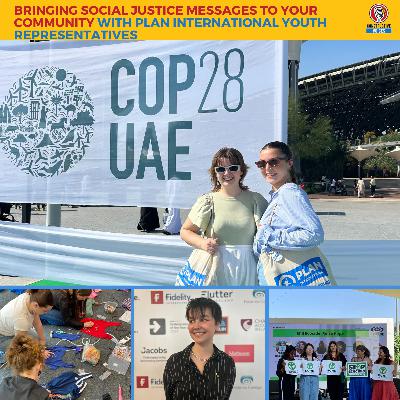
In this episode, Ciara sits down with Jessica Gill and Aoibhínn Nevin-Ginnetty, two passionate youth advocates from Plan International Ireland’s Youth Advisory Panel who took their COP28 experience and turned it into local action.
Fresh from representing youth voices at COP28 in Dubai, Jessica and Aoibhínn came home determined not to let the momentum fade. Together, they designed and delivered “Feminist Voices for Climate Justice” – a youth-led Dublin event that combined a powerful panel discussion on gender and climate justice with a hands-on upcycling workshop, where attendees turned donated t-shirts into tote bags.
The result? A hopeful, practical space where young people could explore climate justice through a feminist lens, pick up real advocacy skills, and literally make something together. In this conversation, Jessica and Aoibhínn open up about what it really takes to organise a community-level climate event – the nerves, the logistics, the safeguarding, the storm on the day – and the joy of seeing people leave more confident and fired up than when they arrived.
In this episode about bringing Social Justice Messages to Your Community, we talk about:
From COP28 to community action
How attending COP28 as youth delegates with Plan International Ireland inspired Jessica and Aoibhínn to bring their learnings back to Irish communities – with a focus on the intersection of gender equality and the climate crisis.
Designing “Feminist Voices for Climate Justice”
Why they chose a gendered lens on climate justice, how they selected speakers, and what it was like to host the event at the Carmelite Community Centre in Dublin on 6 April 2024. Panelists included:
Vanessa Conroy – National Women’s Council, Feminist Communities for Climate Justice
Jennifer (Jenny) Salmon – Ireland’s climate youth delegate 2023–2024
Kiera Carney – host of The Book of Leaves podcast, bringing the arts and storytelling into climate conversations.
Making climate justice feel accessible
The importance of talking about everyday issues like rubbish on the beach, public transport or fast fashion, instead of always framing everything as “climate change” – and how that simple shift can invite more people into the conversation instead of scaring them off.
The tote bag workshop: climate action with scissors and stringHow donated t-shirts from Change Clothes Crumlin became upcycled tote bags – and why a creative, hands-on activity helped break the ice, build connection, and give attendees a skill they could take home and repeat.
Behind the scenes of youth-led events
The very real challenges of organising a social justice event when you’re also studying, working and volunteering:
Safeguarding and risk assessm...
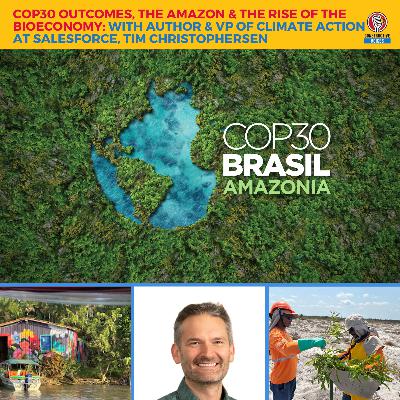
In this episode of Constructive Voices, Jackie is joined again by Tim Christophersen, Vice President of Climate Action at Salesforce and author of Generation Restoration. Fresh back from COP30 in Belém, Tim shares why – out of roughly 15 COPs he has attended – this one felt like a genuine turning point for climate, nature, and the emerging bioeconomy.
"The Blue Zone in Belem: A long way to go, but the direction is clear!" Photo by Tim Christophersen
Drawing on decades of experience inside the UN system and now in the private sector, Tim takes us behind the headlines – beyond disappointment over the lack of fossil fuel phase-out language – into the real energy that’s building around solutions, especially in and around the Amazon.
He talks about dawn boat rides past parrots and agroforestry plots, industrial-scale ecosystem restoration on degraded pastureland, and the quiet revolution happening in food, finance, and cities. At the heart of it all is one simple shift: treating nature as core infrastructure, not decoration.
“For the first time at a COP, I had the feeling that the excitement about building something new is bigger than the anxiety about dismantling the old, extractive, unsustainable economy.” Tim Christophersen
Photo credit: Deposit Photos
COP30 Outcomes – Listen To The Podcast To Fully Understand
Why COP30 in Belém, Brazil, felt different from previous climate summits – and why Tim sees it as a pivot point rather than just “another COP”.
How Brazil used the location – right in the Amazon – to showcase a new kind of bioeconomy, from deforestation-free cattle to forest-based products and restoration concessions.
What the new long-term forest finance facilities, including the Tropical Forests Forever concept, could mean for paying countries to keep forests standing.
The rise of ecopreneurs and large-scale restoration projects turning degraded pasture into thriving forests – powered by carbon markets and better tech.
Why Tim believes the real story now is building something new, not just fighting the old fossil-fuel system.
How cities like Paris and Singapore are quietly proving that climate action can make daily life better – cleaner air, more green space, healthier people.
What it means to see food and regenerative agriculture as the frontline of the bioeconomy, from Amazonian superfoods to local, seasonal diets in Europ...
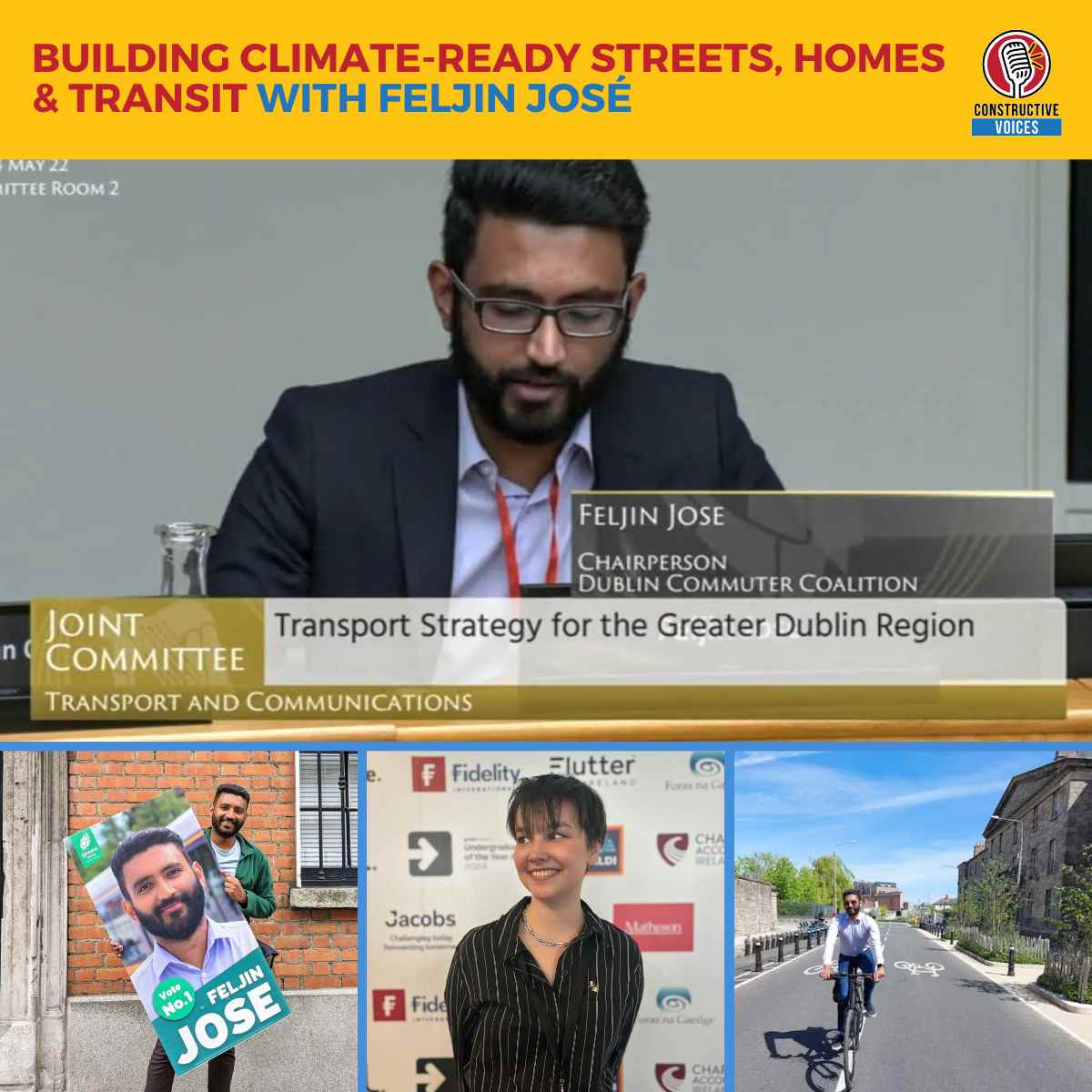
Public transport advocate and Dublin City Councillor Feljin Jose joins interviewer Ciara to unpack how streets, housing and rail policy shape daily life—and climate action.
We connect DART+, MetroLink and better buses to the built environment: denser homes near stations, safer walking and cycling, revived main streets, and public spaces that welcome everyone.
Feljin also reflects on Irish climate advocacy—what’s working, what isn’t—and how these lessons scale into global city solutions.
“Housing policy is transport policy.”
Why listen
A clear, human explainer of how infrastructure + planning drive emissions down and quality of life up.
Concrete links between transit corridors and housing supply, vacancy fixes, and public realm design.
First-hand insights from Irish climate advocacy with takeaways for other
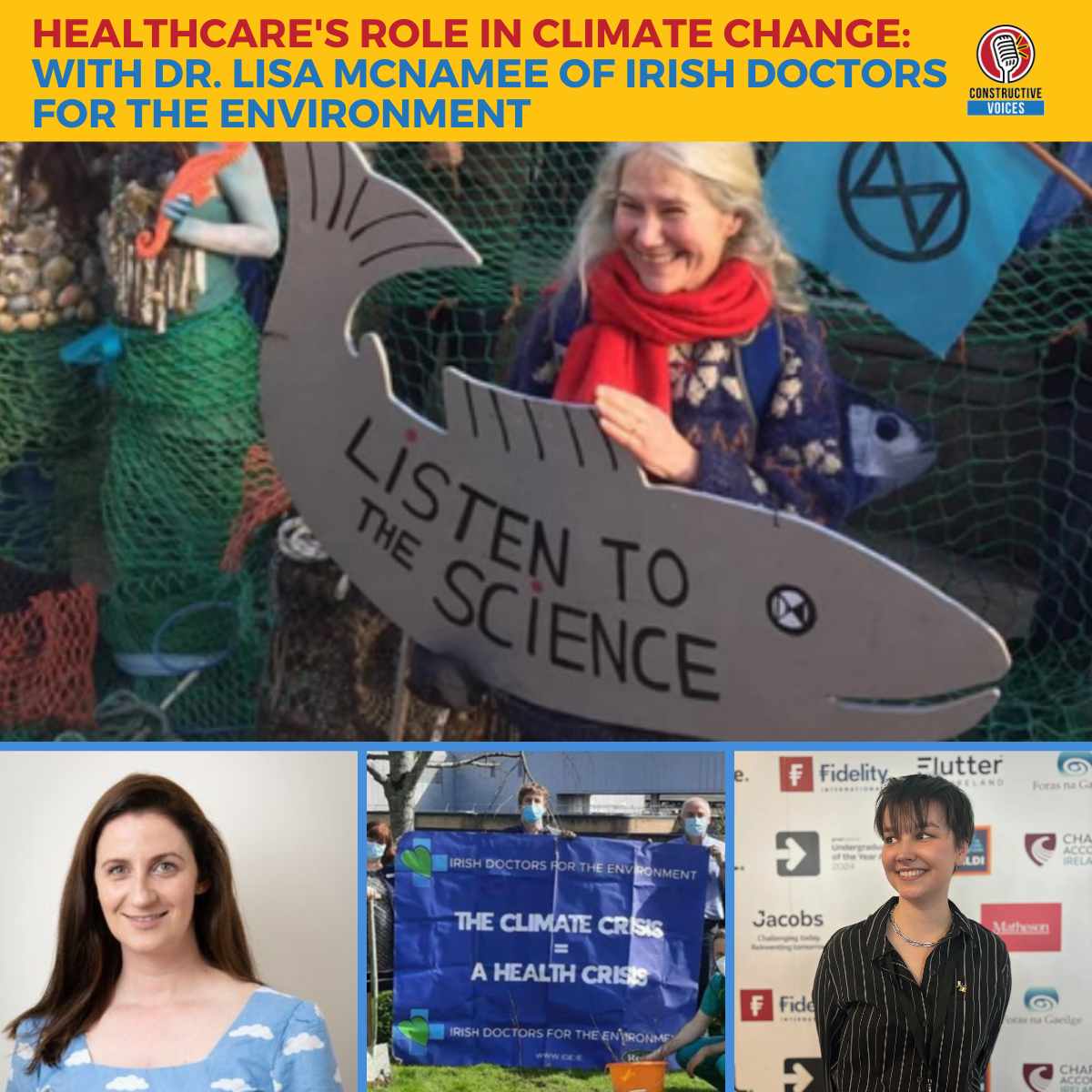
The built environment and of course, the environment in general, are inextricably linked to our health and well-being. With so much media coverage on climate change and biodiversity loss, it is hard to ignore these facts.
Places and people are also connected in various ways. The people who live in nature-blessed places have a higher chance of good health than those whose homes are in concrete jungles with little or no nature. We have investigated these topics in earlier episodes with guests such as Dr. Nadina Galle and Jane Findlay.
But did it ever occur to you that when a health issue affects you, your treatment may be bad for the environment?
This is the topic that Ciara O’Brien investigates in their interview with Dr. Lisa McNamee of Irish Doctors for the Environment.
“Healthcare is the fifth largest greenhouse gas emitter.”
Irish Doctors for the Environment Spreading Awareness to the Public
Tune into this episode, to hear GP and sustainability lead Dr. Lisa McNamee unpack the true footprint of healthcare—and how smarter choices in clinics, hospitals, and our communities can cut emissions while improving patient outcomes.
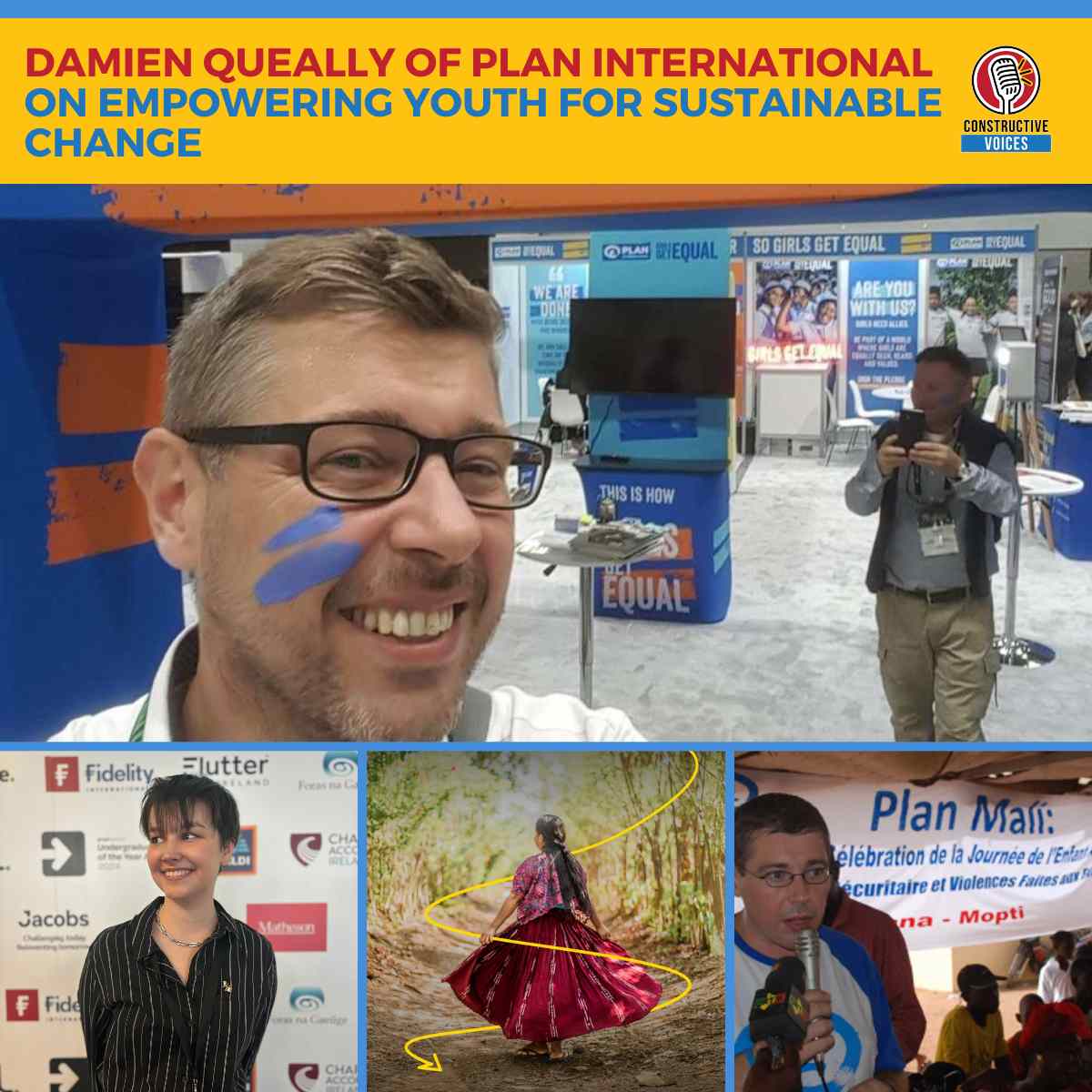
In this Youth Month special, Plan International’s Chief Programme Officer Damien Queally joins youth host Ciara O’Brien to unpack what truly locally led, gender-responsive programming looks like—especially where climate shocks meet the built environment.
“If you’re not bringing young voices in, you’re making decisions with your eyes closed.”
From safe, climate-resilient schools and health centres to inclusive streets, water systems, and shelters that protect girls, Damien makes the case for community-owned solutions that put young people—particularly girls—at the centre of how we design, govern, and maintain the places we live.
Tune into Plan International Chief Programmes Officer, Damien Queally, and Plan International Global Young Influencer, Ciara O’Brien, as they discuss their work with Plan International, a global organisation focused on improving the lives of girls and women in the developing world in a sustainable and equitable way. Their conversation focuses around their approach to this work, youth leadership within the organisation, and current affairs.
Damien Queally Plan International
“We shouldn’t be in a community for 30 or 40 years—our job is to help build self-reliance and shift ownership locally.”
As Plan International focuses on International Day of the Girl 2025, we dive into the campaign in more detail. The launch of the 2025 State of the World Girls Report has caused a stir in the international community. Damien and Ciara explore the specifics of the research and the gl...
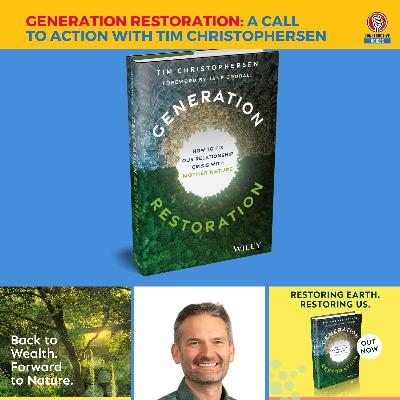
"Generation Restoration wonderfully weaves together the most important ingredients of how we can heal ourselves and the planet. The book is the culmination of Tim’s last twenty-nine years of work and life experience.
Experience that has included leading parts of the United Nations’ Environment Programmes to his current role as VP of Climate Action at Salesforce.
It is hard to imagine anyone better placed to illustrate to the human race how restoration is the key to health, wealth and happiness. We are nature. When we restore nature, we restore ourselves.
Read Generation Restoration to find out how.” Jackie De Burca
Tim Christophersen podcast Constructive Voices
Tim Christophersen Podcast Available From Tuesday 14th October
A gripping, hopeful roadmap to repair our relationship with nature—within a single generation.
What if the next step in human evolution is learning to restore rather than extract?
In this episode, Jackie de Burca speaks with first-time author and renowned nature leader Tim Christophersen to explore his new book, Generation Restoration (launching 14 October 2025).
From East Africa’s shrinking migrations to a small Danish farm buzzing back to life, Tim makes the case that restoration at planetary scale is not only possible—it’s already underway.
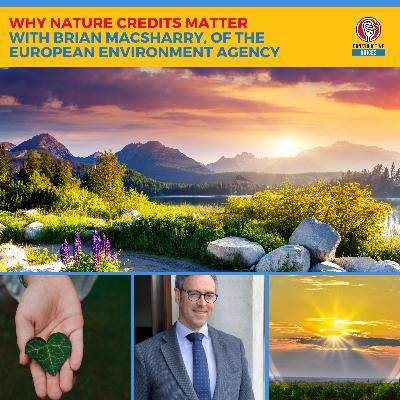
Unpacking how nature credits could reshape the way we value biodiversity and fund its restoration with Dr. Brian MacSharry of the European Environment Agency
In this episode of Constructive Voices, Jackie De Burca interviews Dr. Brian MacSharry from the European Environment Agency to discuss the concept of nature credits, their significance in the context of biodiversity, and how they differ from carbon credits.
Brian shares insights from his extensive career in environmental policy, emphasising the importance of recognising the role of biodiversity in our economy and society.
The conversation explores the challenges of measuring biodiversity, the roadmap for implementing nature credits, and the potential for incentivising private sector involvement in conservation efforts. Brian concludes with actionable steps for individuals and businesses to support biodiversity.
What You’ll Learn in This Episode With Dr. Brian MacSharry:
The difference between carbon credits and nature credits, and why biodiversity is harder to measure.
How businesses and economies are far more dependent on nature than most people realise.
Why the European Union’s roadmap for nature credits is both ambitious and full of open questions.
How pilot projects across Europe are already testing new models of valuing biodiversity.
Practical ways individuals, businesses, and policymakers can support biodiversity today.

How Ireland is making homes warmer, cheaper to run, and lower-carbon—at real scale—and what you should actually do first.
Ireland’s Retrofit Race
Ireland set out to decarbonise its housing by upgrading existing homes—insulation first, fossil heating out, heat pumps and other renewables in.
Dr. Ciarán Byrne from the Sustainable Energy Authority of Ireland explains what “retrofit” really means, where the numbers stand, what’s working, and how to start your own upgrade without getting overwhelmed.
Ireland’s Retrofit Race with Dr. Ciarán Byrne
“Anything you do in this space is no-regrets work.” Dr. Ciarán Byrne C Dir
Why listen to Ireland’s Retrofit Race
Plain-English retrofit 101: What counts, what doesn’t, and why external wall insulation can make a whole street look brand new.
Real progress, real targets: Thousands of upgrades each year, with a growing share of homes reaching a strong BER rating.
Money + logistics, demystified: Grants that can be netted off your bill, low-cost green loans, and why using registered contractors matters.
Old buildings, smart fixes: How “breathable” materials and traditional-home know-how avoid moisture traps in heritage fabric.
Myths busted: You usually don’t need to move out for a deep retrofit; confusion often comes from bundling retrofits with kitchen or bathroom refits.
Ireland’s Retrofit Race Pilot Projects Under 1 Minute Snippet
Chapters
(00:00:00) - What is retrofitting? A home-energy upgrade: insulate the fabric (walls, roof, doors, windows), then swap fossil heat for renewable systems like heat pumps.(00:03:00) - Targets & the clock: Carbon budgets arrive in five-year blocks; scaling now matters because the decade is “back-end loaded.”(00:04:30) - Scorecard: Applications and completions climbing, more homes hitting BER B2, and solid momentum behind insulation-first pathways.(00:09:30) - Scorecard: Applications and completions climbing, more homes hitting BER B2, and solid momentum behind insulation-first pathways.(00:16:00) - The homeowner journey: Make action easy; reduce clicks and complexity; balance demand with trained, inspected, registered contractors.(00:20:00) - Grants that actually move: Faster approvals, one-stop shops that can net off aid, and quality assurance through inspections.(00:30:00) - “Isn’t this only for the wealthy?” Attic insulation is often the cheapest, best first step; green finance covers the rest.(00:33:00) - Deep retrofit myths: Staying put vs. moving out—and why people conflate retrofits with other renovations.(00:34:00) - Heritage & physics: Permeable vs. impermeable materials and a growing evidence base for doing old buildings right(00:37:00) - What’s next: Optimised construction, off-site panels, digital twins—promising, but still at early stage locally.(00:40:00) - SEAI’s role: “The meat in the sandwich”—bridging policy and delivery while simplifying, standardising, consolidating.(00:41:00) - 2026 success looks like… Bigger numbers, smoother customer journeys, and a confident supply chain.(00:42:00) - Final advice: Check your BER and advisory report, explore grants/finance, pick registered contractors, and start now.
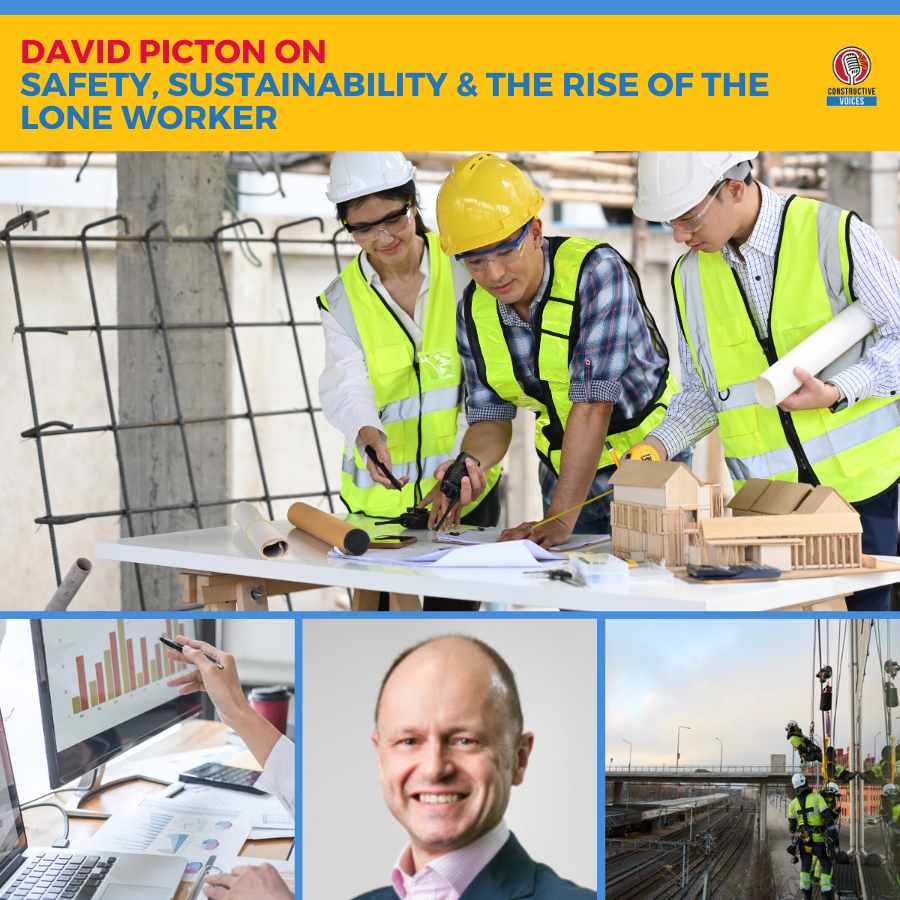
Safety isn’t a box-tick—it’s a living culture. David Picton shares hard-won lessons from military logistics to boardrooms and major infrastructure projects.
We dig into why lone workers are growing fast, how extreme weather is reshaping site risks, and how connecting culture with smart tech turns “compliance” into prevention. You’ll hear real examples—from JLL to Costain—and a pragmatic playbook any firm can use.
“Safety works when everyone has permission to call it out—from apprentices to execs.” David Picton
What we cover with David Picton
1. Lone workers: why they’re on the rise, the unique risks they face, and how to protect them.
2. Climate disruption on site: heat, storms, floods—and the simple factors (shade, hydration, acclimatisation, permission to speak up) that change outcomes.
3. Culture that speaks up: the “permission” moment that proves safety works when everyone can challenge—even a junior apprentice.
4. Data into decisions: how visibility lifts reporting and drives action.
5. SME playbook: low-cost, high-impact moves for smaller firms to handle extreme weather and continuity.
Courtesy of Ecoonline
“Technology plus culture is the shift—from basic compliance to predicting issues before they happen.” David Picton
Practical takeaways for daily use
Start with risk assessments on your highest-exposure tasks and locations. Keep them live as conditions change.
Plan for weather: set clear comms trees, cross-training, and alternative task lists for
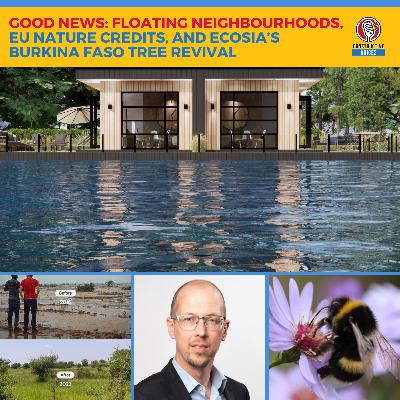
A short, sharp burst of optimism from the built environment. This episode: how floating neighbourhoods can power and protect themselves; why the EU wants to put nature on the balance sheet; and a hopeful update from Burkina Faso where smart water-harvesting is helping 29,000+ new trees thrive.
LISTEN IN LESS THAN 6 MINUTES HERE
What This Under 6 Minute Episode Covers
Floating neighbourhoods: Modern floating platforms are typically hollow, creating space for decentralised systems—wastewater and drinking-water treatment, on-board electricity storage, floating solar, even algae/seaweed biofuels. That off-grid setup boosts resilience and, placed offshore, these structures can also reduce wave energy to help protect coasts during storms.
“Floating structures… offer opportunities to become more self-supporting and off-grid—more resilient.” Rutger de Graaf, Blue21
Tune into the full episode – Floating Futures here
Courtesy Rutger de Graaf Floating-Pavilion
EU
At Constructive Voices, we’re not only about the place and the things that happen within the built environment, we’re also about how the places are directly connected with us as people. Along with the creatures around us and how that actually plays out in various ways within our lives.
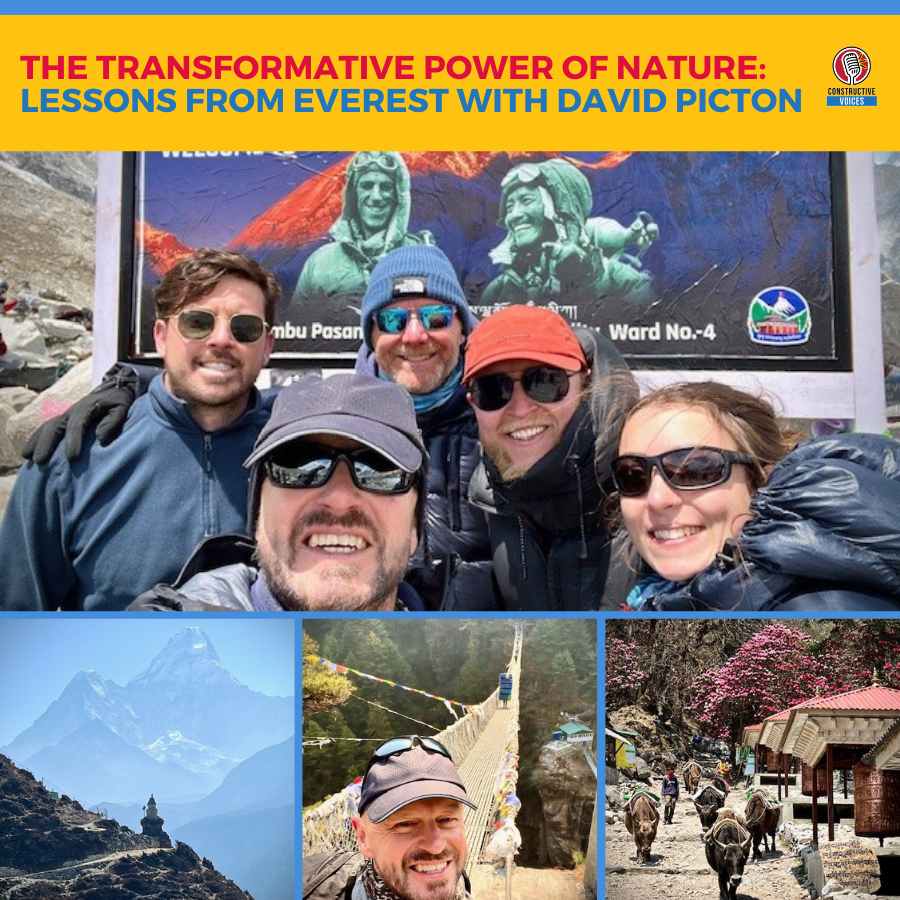
Today we’re with David Picton. Now David will also be visiting you again in another episode, but in this particular episode, David, who’s the Senior Vice President of Safety and Sustainability at EcoOnline, is going to speak to you about his visit to the Everest Base Camp and how this is a mirror for his life as it has been to other people also.
In this conversation, David Picton shares his transformative journey to Everest Base Camp, discussing the profound connection he felt with nature, the communities along the trail, and the importance of teamwork and collaboration.
He reflects on the physical and mental challenges faced during the trek, the sustainability efforts observed in the region, and the life lessons learned from this extraordinary experience.
Courtesy of David Picton
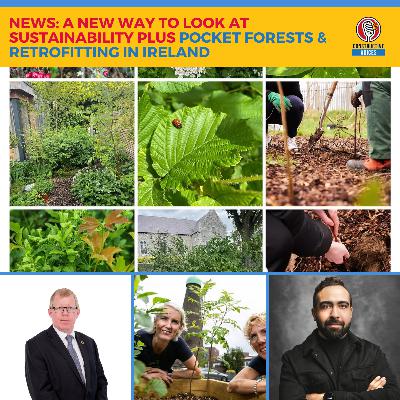
In this uplifting edition of the Constructive Voices Good News podcast in less than six minutes, we bring you a short, sharp burst of positive stories from the built environment — with a dash of conservation inspiration.
A New Way To Look at Sustainability: Neurosustainability
We open with a fascinating concept that’s as much about protecting our minds as it is about protecting the planet — neurosustainability. Host Jackie De Burca speaks with Mohamed Hesham Khalil, whose pioneering research at the University of Cambridge explores how the built environment affects our brain health, mental wellbeing, and cognitive performance.
“That shift… from experiencing the built environment in a specific way and then going back was an alert to start seeing this relationship between the built environment and the human brain.” — Mohamed Hesham Khalil
Discover how architecture, neuroscience, and nature intersect — and why this matters more than ever post-lockdown.
Greening Ireland: Pocket Forests
Next, volunteer reporter Sarah Austin speaks with Catherine Cleary, co-founder of Pocket Forests, about transforming small urban spaces into thriving native woodlands. With over 125 sites planted — from car-parking-space-sized micro-forests to half–tennis-court plots — these dense plantings are changing soil health, biodiversity, and community connections.
“We’re planting much younger trees… much more closely together… the result is that they create this microclimate very quickly.” — Catherine Cleary
For the full deep dive, check out our special episode Greening Ireland from Pocket Forests to Native Woodlands on our website.
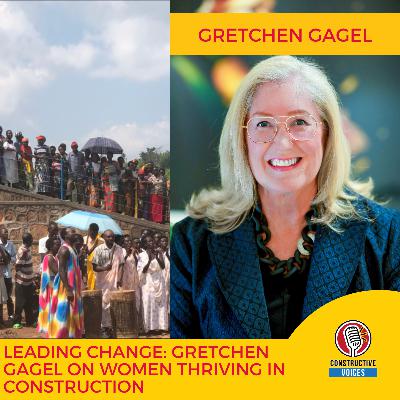
Whether you’re a construction professional, a leader in a male-dominated field, or simply passionate about driving meaningful change, this episode offers practical strategies and an abundance of inspiration.
In this energising and deeply insightful episode of Constructive Voices, Jackie De Burca sits down with Dr. Gretchen Gagel — a trailblazing leader who has spent over 40 years shaping the global construction industry.
From turning down Harvard to study engineering against her father’s wishes, to running manufacturing plants in her twenties, Gretchen’s career is a testament to courage, adaptability, and a refusal to accept the status quo.
Today, she is an international author, speaker, and founder of the Women Thriving in Construction Institute, a global non-profit driving data-led change to attract and retain more women in construction.
If you care about leadership, diversity, or the future of the construction industry, this conversation delivers both inspiration and actionable insight. Gretchen doesn’t just talk about change — she’s building the structures, connections, and data that will make it happen.
Here’s what you’ll learn from Gretchen Gagel:
The “grounded self-leadership” approach – why leadership starts with personal values and purpose
How male allyship can transform workplace culture and open doors for women
Why inclusivity fuels innovation in construction, energy, and engineering
Four agile leadership routines every leader needs in high-stakes industries
The systemic barriers holding women back — and practical steps to dismantle them
Gretchen’s vision for scaling what works globally through the Women Thriving in Construction Institute
About Dr. Gretchen Gagel
Dr. Gretchen Gagel is a distinguished executive in the construction industry, bringing 40 years of management consulting expertise.
She holds a degree in Mechanical Engineering, an MBA focused on finance, and a Ph.D. in Leadership, Organization Culture, and Change/Agility.
She has served as Chair of Brinkman Construction and is the founder of Women Thriving in Construction, a Global Institute dedicated to fueling global collaboration and funding strategies to accelerate the success of women in construction, mining, and energy inspired by her 2021 induction into the National Academy of Construction, Dr. Gagel is committed to fostering the success of women leaders.
Her book, Building Women Leaders: A Blueprint for Women Thriving in Construction, published by Wiley in April 2025, provides invaluable guidance and strategies for women to excel in construction, engineering, and related fields.
Mary K. Rhinehart, Chair, Johns Manville Corporation, wrote,
“In the decades I’ve known Gretchen, I have watched her grow and excel as a mother, a civic and business leader, and an influencer in the construction industry. We are so fortunate that Gretchen carved out the time to write this seminal book on women’s leadership and I am confident that all will benefit from the knowledge she shares. Gretchen is a remarkable leader and role model who cares deeply for the construction industry, and her passion for helping women thrive helps us build a more inclusive in...
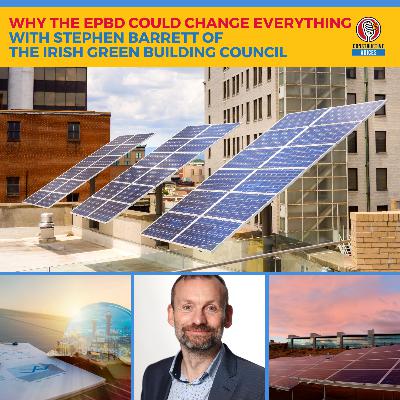
Is Europe on the cusp of a green building revolution? Find out in this podcast episode.
In this episode of Constructive Voices, we’re joined by Stephen Barrett, the driving force behind Ireland’s transition to whole-life carbon assessment in construction. (Bookmark this page for the release date of 29th July)
As Programme Manager at the Irish Green Building Council (IGBC), Stephen is at the heart of implementing the updated Energy Performance of Buildings Directive (EPBD)—a policy shift that’s set to transform how we design, construct, and assess buildings across Europe.
Whether you’re a building designer, material supplier, or policy watcher, this is the insight you need to prepare for what’s coming.
"Don’t worry about the result—just begin assessing. It’s the act of questioning your design that starts to change behaviour." — Stephen Barrett, IGBC
Who Should Listen?
Architects, engineers & building designers
Construction managers & BIM specialists
Sustainability officers & ESG consultants
Policy makers & local authorities
Students and educators in built environment studies
Key Topics Covered
What the updated EPBD really means—and why it’s a "starting gun" for industry change.
Why lifecycle carbon is overtaking energy as the key metric in building performance.
The vital role of BIM (Building Information Modelling) in meeting new EU carbon targets.
Open source vs proprietary BIM platforms: How to start now, without breaking the bank.
Lessons from the Nordics, and how Ireland’s ahead of the curve with its prototype methodology.
What the construction industry must do before 2030 to stay compliant—and competitive.
Why your old tools won’t cut it anymore—and how new platforms like One Click LCA are changing the game.
Simple advice for professionals: Start assessing now—don’t fear the results.
"If we design with carbon in mind from the beginning, we won’t just build better—we’ll change the entire supply chain behind construction." — Stephen Barrett, IGBC
About Stephen Barrett
Stephen joined the Irish Green Building Council (IGBC) in 2020 and is currently Programme Manager for Whole Life Carbon initiatives.
He has contributed to several key European and national projects, including Level(s) – the EU framework for measuring the environmental performance of buildings – and the #BuildingLife campaign, aimed at aligning public policy and industry practices with Whole Life Carbon (WLC) goals.
Stephen led the UPFRONTCO2 and INDICATE projects and is currently managing IMPLEMENT, which focuses on mainstreaming WLC approaches.
He holds an MSc in Sustainability and Adaptation in the Built Environment and brings a strong background in d...
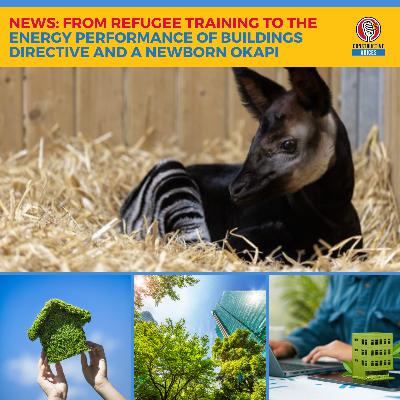
Welcome to the very first edition of the Constructive Voices News — a short, sharp burst of uplifting stories from the built environment, with a side of conservation.
Hosted by Jackie De Burca, this six minute episode showcases inspiring developments in construction, sustainability, and social integration. Here’s what’s in the spotlight:
Refugee Training: Empowering Refugees Through Construction Training
In Amersfoort, Netherlands, the Arcadis Future Academy is changing lives. A powerful collaboration between Arcadis Refugee Talent Hub, New Dutch Connections, and De Taaltrainer is helping refugees build careers in construction and architecture.
One standout story is Ayoub Choban, who arrived in the Netherlands from Iraq in 2014 and has now secured a contract with Arcadis. The programme combines technical training with soft skills and mentorship, paving the way for a more inclusive future in the sector.
Bouygues Construction Commits to a Net Zero Future
French firm Bouygues Construction is leading the charge towards a low-carbon future. With a bold goal to cut carbon emissions by 40% by 2030, they’re investing in eco-design, bio-based materials, reuse strategies, and life cycle analysis (LCA) at every stage of construction.
Digital tools and staff training are central to their approach — and they’re calling on the industry to join in the transformation.
Related episode plug: If this topic piques your interest, don’t miss our newly released episode on the Energy Performance of Buildings Directive with Stephen Barrett of the Irish Green Building Council.
Conservation Win: Rare Okapi Calf Born at Dublin Zoo
In a moment of joy for wildlife enthusiasts, Dublin Zoo has welcomed its first okapi calf in over a decade. This elusive and endangered species — often called the “forest giraffe” — is native to the Democratic Republic of Congo.
Courtesy of Dublin Zoo
Born to Lumara and Kitabu, the new calf represents hope for the future of the species and a proud achievement for the zoo’s conservation team. Although born on Good Friday, the news was only released officially in late July.
Helen Clarke, the Team Leader at Dublin Zoo said,
“The calf is thriving, and visitors exploring the African Plains area may be lucky enough to catch a glimpse of her in the coming days – and see just h...
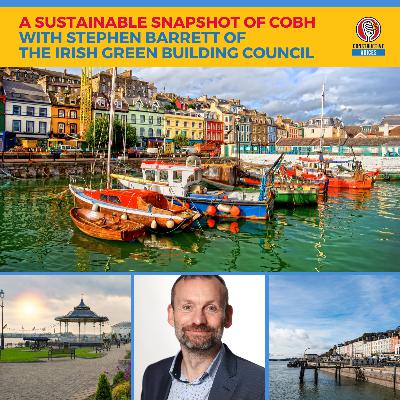
Where better than your own home country to start exploring something that is very close to one’s heart? And I believe to lots of people’s hearts when they start to think about it. At Constructive Voices, we’re not only exploring the obvious parts of the built environment.
“In fact, we’re digging a bit deeper. And connecting the people and their places together, because this is what it’s all about.” Jackie De Burca
How the environment affects us every single day with our health in mind, with how our daily activities are able to be conducted. There’s just a whole host of things that our environment brings to us or perhaps makes more difficult for us.
So tune in to Jackie De Burca as she speaks with Stephen Barrett. He’s the program manager for the Whole Life Carbon Programme at the Irish Green Building Council, and he is going to talk to us about Cobh, which is a picturesque Irish town just outside Cork.
Stephen has planted his roots there for the moment, and now he questions some aspects of the area, such as development.
Biodiversity transport and community pride and how this area Cobh and Cork in general can shape a more sustainable way forward. This episode touches on subjects such as underused train lines to cruise ship impacts, and the local lens that Stephen sees on global challenges.
“What struck me moving from the UK to Ireland is how undervalued Tidy Towns is—those people know their place better than anyone.” – Stephen Barrett on the untapped expertise within community-led groups
About Stephen Barrett, Programme Manager for Whole Life Carbon initiatives, Irish Green Building Council
Stephen joined the

Comments

Download from Google Play

Download from App Store
 United States