


 Claim Ownership
The American Idea
Subscribed: 45Played: 1,361
Subscribe

© Ashbrook 2021
Description
The American Idea explores America's Founding principles and their effect on American history and government. Through thoughtful conversations with renowned academics and public figures from across the country, we examine the history and political thought behind our country’s greatest documents and debates, as well as contemporary issues, American popular culture, and political statesmanship. The podcast is a production of the Ashbrook Center and hosted by Jeff Sikkenga.
225 Episodes
Reverse
What are natural rights, and why, without them, are the ideas in the Declaration of Independence empty without them?Americans talk a lot about rights, but natural rights are the foundation of them all, and all the Declaration’s assertions and ideals flow from them. Jeff discusses what they are, how they relate to government, and why the are at the core of what Jefferson called ‘the American mind.”Download the 50 Core Documents book mentioned in the episode for free: https://tinyurl.com/yckez9c3Host: Jeff SikkengaExecutive Producer: Jeremy GyptonSubscribe: https://linktr.ee/theamericanideaHomepage: https://ashbrook.org/the-american-idea-podcast/
What is a financial bubble, and what are its causes? What are the political, as well as economic, impacts of these events? Jeff welcomes investment capital expert Aman Verjee to discuss these events, and the role they’ve played throughout history. You’ll learn not only a great deal more about what really caused the stock market crash of 1929, but how it compares to a tulip sales bubble (yes, tulips) in the Netherlands in the 1600s.Read Aman’s new book about the topic: https://www.amanverjee.com/the-bookHost: Jeff SikkengaExecutive Producer: Jeremy GyptonSubscribe: https://linktr.ee/theamericanideaHomepage: https://ashbrook.org/the-american-idea-podcast/
Historian David Beito joins Jeff this week to discuss the dark side of FDR: a seeming disregard for constitutional process and a lack of respect for the fundamental freedoms protected by the Bill of Rights. Long lauded as a great president, is there more to his story and impact on America?Host: Jeff SikkengaExecutive Producer: Jeremy GyptonSubscribe: https://linktr.ee/theamericanideaHomepage: https://ashbrook.org/the-american-idea-podcast/
When we think of the American Revolution, we usually consider the ideas and animated the patriots and those leaders who organized and directed the war. Largely forgotten in all of this is a simple question: how was it all financed? And who did it?Thomas Willing, one of the most prominent merchants of the Middle Colonies, was at the forefront of solving the logistical and financial problems that plagued the American cause from the outset. Why, then, is he overlooked in all mainstream histories?Jeff meets with author Richard Vague to discuss Willing’s place in American Founding. You can get his book about Willing here: https://a.co/d/05py4B72Host: Jeff SikkengaExecutive Producer: Jeremy GyptonSubscribe: https://linktr.ee/theamericanideaHomepage: https://ashbrook.org/the-american-idea-podcast/
The Anti-Federalists are often overlooked in the story of America's founding, but their arguments helped shape the Constitution we live under today. In this episode of The American Idea, host Jeff Sikkenga sits down with Professor Adam Carrington of Ashland University to explore what the Anti-Federalists actually stood for, why they opposed ratification of the Constitution, and why their warnings still resonate in American political life. From fears of consolidation and judicial overreach to the "fetus of monarchy" critique of the presidency, the Anti-Federalists raised serious constitutional questions that the Federalists could not simply dismiss.Together, Jeff and Adam trace the Anti-Federalists' most lasting contribution — the Bill of Rights — and examine how their concerns about government size, the Necessary and Proper Clause, standing armies, and the gap between constitutional text and political reality continue to echo today. Whether you're a student, teacher, or engaged citizen, this conversation offers an essential and often missing perspective on the American founding.Host: Jeff SikkengaExecutive Producer: Jeremy GyptonSubscribe: https://linktr.ee/theamericanideaHomepage: https://ashbrook.org/the-american-idea-podcast/
James Madison was one of the two primary authors of The Federalist. What ideas did he promote through his essays? Where did he disagree with the points he argued? As we consider the American Founding and try to understand how the Founders turned goals into ideas in systems, we examine Madison’s contributions to The Federalist and what they meant over 200 years ago, and what we can learn from them now.Host: Jeff SikkengaExecutive Producer: Jeremy GyptonSubscribe: https://linktr.ee/theamericanideaHomepage: https://ashbrook.org/the-american-idea-podcast/
The Federalist, or more broadly known as the Federalist Papers, is looked on as the definitive defense of the Constitution as written in 1787, and by that, a clear explanation of its contents and rationale. Whether it’s those things or not, how should you study them? Should you at all? If so, what do you need to know before turning to Hamilton’s Federalist 1?Chris Burkett, Professor of Political Science, joins Jeff to explain the historical and political context around this collection of essays when they were written, and how best we can read and understand them today.Read Chris's outline of The Federalist - this is a great way to conceptualize how the essays are grouped and what topics they address: https://tinyurl.com/ax3p4h5xHost: Jeff SikkengaExecutive Producer: Jeremy GyptonSubscribe: https://linktr.ee/theamericanideaHomepage: https://ashbrook.org/the-american-idea-podcast/
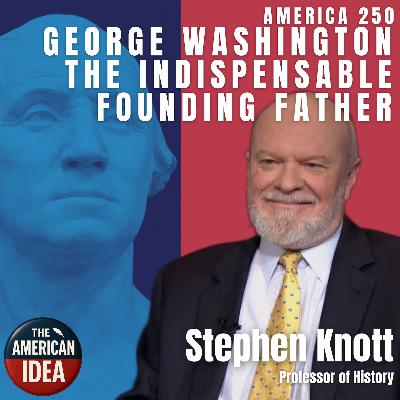
George Washington has been referred to as the “indispensable man,” and was looked to during and after the Revolution as the one person who could be trusted to lead the country. Why? What made him such a trusted figure then and for generations after his death? What can we learn from him today?Read his Farewell Address: https://teachingamericanhistory.org/document/farewell-address-5/Read “Washington’s Crossing”: https://a.co/d/16aXe2pRead: “Washington & Hamilton”: https://a.co/d/cnPC6xbHost: Jeff SikkengaExecutive Producer: Jeremy GyptonSubscribe: https://linktr.ee/theamericanideaHomepage: https://ashbrook.org/the-american-idea-podcast/
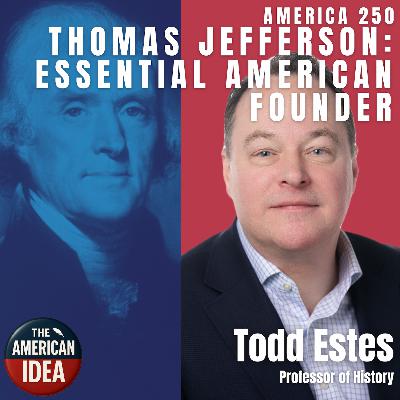
Thomas Jefferson: “Author of the Declaration of American Independence [and] of the Statute of Virginia for religious freedom & Father of the University of Virginia.”So says his tombstone, as he requested. Who was Jefferson, beyond the Declaration’s author? What were his beliefs and hopes? What else did he write and how can we better understand this essential American Founder today?Join Jeff as he discusses Jefferson with Todd Estes, Professor of History.Read “A Summary View of the Rights of British America”: https://teachingamericanhistory.org/document/a-summary-view-of-the-rights-of-british-america-2/Read the Rockfish Gap Report: https://founders.archives.gov/documents/Jefferson/03-13-02-0197-0006Read this excerpt from the Notes on the State of Virginia: https://tjrs.monticello.org/letter/2260Host: Jeff SikkengaExecutive Producer: Jeremy GyptonSubscribe: https://linktr.ee/theamericanideaHomepage: https://ashbrook.org/the-american-idea-podcast/
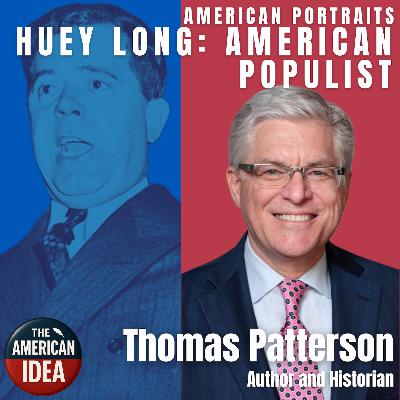
Huey Long of Louisiana casts a long shadow over American populist politics. Often cast as a villain or troublemaker, author Thomas Patterson offers a nuanced look at the politics and impact of this important figure in 20th Century history.Find his book on Amazon: https://a.co/d/0sS3bazHost: Jeff SikkengaExecutive Producer: Jeremy GyptonSubscribe: https://linktr.ee/theamericanideaHomepage: https://ashbrook.org/the-american-idea-podcast/
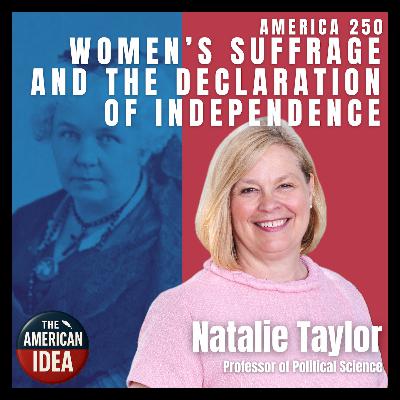
Who was Elizabeth Cady Stanton, and why is she largely forgotten in popular history? How did she show that the Declaration of Independence promised women’s rights, too? Dr. Natalie Taylor, Professor Political Science at Skidmore College, discusses this fascinating American, who formed much of the intellectual foundation of the Suffrage Movement in the 19th Century.Read her Declaration of Sentiments and see how it parallels the form and substance of the Declaration of Independence: https://teachingamericanhistory.org/document/declaration-of-sentiments/Host: Jeff SikkengaExecutive Producer: Jeremy GyptonSubscribe: https://linktr.ee/theamericanideaHomepage: https://ashbrook.org/the-american-idea-podcast/
The Declaration of Independence is not, properly understood, a historical document. It is a statement of beliefs and principles describing the proper relationship between the individual and the state, and how the individual should view others in political matters. As such, it is not tied to a moment in time - 1776 - but should serve as the foundation of the American Idea for all time.What does that mean, and what can it mean for you? Join Jeff and Dr. Adam Seagrave as they discuss our Declaration, and how “faith, hope, and love” informed the American founding, and can guide us today.Host: Jeff SikkengaExecutive Producer: Jeremy GyptonSubscribe: https://linktr.ee/theamericanidea
Was the American Revolution just a regional rebellion on the eastern seaboard, or something far larger? Professor Richard Bell, author of The American Revolution and the Fate of the World, argues it was a geopolitical earthquake that reshaped the global order. In this episode, Bell explores how France, Spain, and the Netherlands entered the conflict for their own strategic reasons, why Jamaica mattered more to Britain than Virginia, and how foreign intervention proved decisive at battles like Yorktown. Along the way, he shares remarkable stories: Benjamin Franklin organizing his own privateering fleet from Paris, 50,000 ordinary Americans taking to the seas as state-sponsored pirates, and Harry Washington, a man enslaved at Mount Vernon who escaped to British lines and eventually led his own anti-colonial revolution in Sierra Leone. A fresh perspective on America's founding as a truly global event.Timestamps00:54 The American Revolution as a Global Conflict04:55 The British Empire and the Value of Jamaica07:27 Expanding the Patriot Coalition Beyond 13 Colonies09:44 Why France Joined the War13:21 Spain's Strategic Goals: Gibraltar and the Caribbean17:16 Dutch Financial Support and the St. Eustatius Arms Trade19:34 How Foreign Intervention Boosted British Morale24:06 From Philadelphia to Yorktown: Foreign Aid on the Battlefield27:11 Patriot Privateers and the War on British Commerce38:28 Harry Washington: From Mount Vernon to Sierra LeoneHost: Jeff SikkengaExecutive Producer: Jeremy GyptonSubscribe: https://linktr.ee/theamericanideaHomepage: https://ashbrook.org/the-american-idea-podcast/
Jeff Sikkenga, Professor of Political Science and Executive Director of the Ashbrook Center, shares a brief message about the reasons behind and goals of The American Idea, as well as Ashbrook’s plans to celebrate 250 years of America’s independence.Learn more at Ashbrook.org, or about our celebratory plans for 2026 at AshbrookFreedom250.orgHost: Jeff SikkengaExecutive Producer: Jeremy GyptonSubscribe: https://linktr.ee/theamericanideaHomepage: https://ashbrook.org/the-american-idea-podcast/
What does it mean to be American? How does one become an American? Join us for this special episode as Peter Schramm, past Executive Director of the Ashbrook Center and Professor of Political Science, discusses his family's flight from Communist Hungary, move to California, and growing up in his adopted home, learning the answers to those questions and, in his career, teaching native-born Americans about their homeland and the legacy they had been gifted by past generations.In this season of reflection and the impending start of a new year, take some time to consider what being American means for you, and how you fit into our great story as we approach our 250th birthday.Host: Jeff SikkengaExecutive Producer: Jeremy GyptonSubscribe: https://linktr.ee/theamericanideaHomepage: https://ashbrook.org/the-american-idea-podcast/
The Declaration of Independence summarizes and defends the most fundamental ideas about America - about our government, the relationship between it and individuals, and how its proper place in public life. If the Constitution is a set of rules and processes, with a 'mission statement' in the Preamble, the Declaration of Independence presents the ideas that call for those rules and processes, and make sense of that mission statement.As we prepare for America's 250th birthday, let's understand the connection between these two fundamental documents and how the relate to our ongoing experiment in self-government.Host: Jeff Sikkenga Executive Producer: Jeremy Gypton
Summer, 1776: the war for independence is over a year old and the leaders of the 13 colonies have finally decided that independence is their goal. How shall they explain America’s aims and reasons to her own people and to the world?A committee of five was selected to draft the document; the Second Continental Congress debated, revised, and voted on the document; and the world was never the same again.Read the document: https://teachingamericanhistory.org/document/declaration-of-independence/Read the original draft: https://teachingamericanhistory.org/document/draft-of-the-declaration-of-independence/Host: Jeff SikkengaExecutive Producer: Jeremy GyptonSubscribe: https://linktr.ee/theamericanidea
The American Revolution, born in the hearts and minds of Americans in response to British tyranny, is one of the most pivotal moments in human political and national history. But what caused it? It’s a lot deeper than taxes or tea, and as we prepare for America’s 250th birthday, it’s a good time to look back, and look deeply at the roots of the revolution, and what our Founders thought about the relationship between individuals and the state, and the appropriate limits of government - enduring ideas for all times.Host: Jeff SikkengaExecutive Producer: Jeremy GyptonSubscribe: https://linktr.ee/theamericanidea
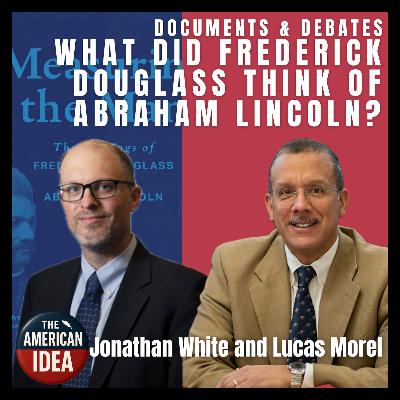
What Did Frederick Douglass Really Think of Abraham Lincoln?Discover the complex relationship between two of America's most influential figures in this revealing conversation about a groundbreaking new book. Historians John White and Lucas Morel unveil previously unknown letters and documents that transform our understanding of how Frederick Douglass viewed Abraham Lincoln—from harsh critic to reluctant admirer.Featured Guests:Dr. John White, Professor of American Studies at Christopher Newport University and co-winner of the 2023 Gilder Lehrman Lincoln PrizeDr. Lucas Morel, Professor of Politics at Washington and Lee University and trustee of the Supreme Court Historical SocietyWhat You'll Learn:Why Douglass initially called Lincoln "the South's greatest slave hound" and "abolitionism's worst enemy"The surprising letters revealing Douglass believed Andrew Johnson would be a better Reconstruction president than LincolnHow three private meetings between Douglass and Lincoln changed the abolitionist's perspectiveDouglass's "rail-splitting" philosophy explaining Lincoln's strategic approach to black voting rightsWhy Douglass spent the rest of his life honoring Lincoln's legacy despite early criticismsThe newly discovered correspondence with British abolitionists that historians hadn't seen in over 150 yearsWhite and Morel's book "Measuring the Man: The Writings of Frederick Douglass on Abraham Lincoln" compiles every known statement Douglass made about Lincoln, including a dozen previously unknown documents uncovered through digital archives and London newspaper microfilm.This episode explores themes of emancipation, political strategy, black suffrage, Civil War leadership, and the tension between radical abolitionism and practical statesmanship during America's most defining era.Get the book: https://a.co/d/1axh4FLHost: Jeff SikkengaExecutive Producer: Jeremy GyptonSubscribe: https://linktr.ee/theamericanidea
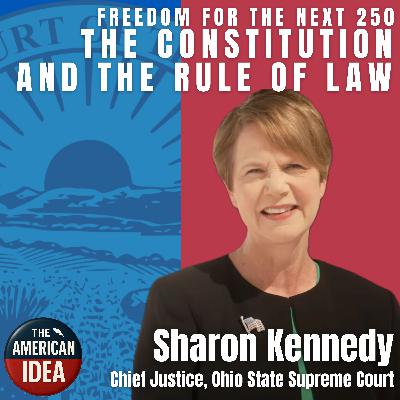
Jeff is joined by Justice Sharon Kennedy, Chief Justice of the Ohio State Supreme Court to discuss the Rule of Law - what is it? Why is it so essential to limited, fair government? How is it promoted, protected, and how can we understand it better so as to pass on its value to future generations?Join us as we look at some of the most foundational, essential ideas, moments, and events in our history as we look forward to America's 250th birthday.Host: Jeff SikkengaExecutive Producer: Jeremy GyptonSubscribe: https://linktr.ee/theamericanidea

Comments

Download from Google Play

Download from App Store
 United States