


 Claim Ownership
A Rumor of Empathy with Lou Agosta
Subscribed: 0Played: 9
Subscribe

© Lou Agosta, PhD
Description
Dedicated to expanding empathy in the individual and the community. The empathy lessons extend from a light-hearted look to a deep dive into critical issues and controversies on empathy in authentic human relations. This podcast dedicated to the commitment that empathy be less of a rumor and more of a reality in the community!
42 Episodes
Reverse
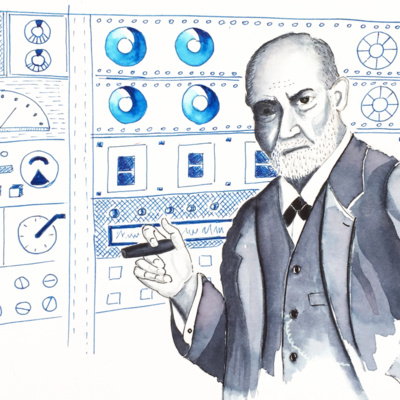
It a useful and powerful oversimplification that in transference people relate inauthentically whereas in empathy people relate authentically. (Here “authentically” means “without distortion (in so far as that is humanly possible),” “in integrity,” not in a moralizing sense, but in the sense of “with workability in the matter of not fooling oneself.”)
The point is to radicalize the relationship between transference and empathy even to the point of emphasizing divergences and tensions in order subsequently to identify methods of reconciliation and harmonization. That is going to be tough to do because there is a transference dimension (and so also a potential countertransference aspect) to most empathy breakdowns, misfirings or failures.
See Blog Post Version [not a transcript!] https://louagosta.com/2022/06/12/where-transference-was-empathy-shall-be/
![Empathy: The one-minute training [no kidding!]](https://s3.castbox.fm/93/06/de/ea5d0b5d0ed34d742d3ce497c637e010b7_scaled_v1_400.jpg "Empathy: The one-minute training [no kidding!]")
Expand your empathy here-and-now. Empathy training consists in overcoming the obstacles to empathy that people have unwittingly acquired in being taught to conform and survive the day. When the barriers are overcome, then empathy spontaneously develops, grows, comes forth, and expands. There is no catch, no “gotcha.” That is the one-minute empathy training, pure-and-simple. The devil is in the details and the deep work and tips and techniques around eliminating, overcoming, defeating the obstacles, resistance, and blocks to empathy. Find out what are the Big Four empathy breakdowns. It turns out that break downs in empathy, when handled carefully (and with empathy), result in breakthroughs in expanding empathy in the individual and in the community.
This episode is also available as a blog post: http://louagosta.com/2019/10/27/empathy-the-one-minute-training-no-kidding/

Empathy has been criticized as not "evidence-based" or lacking in scientific rigor. This is incorrect. Extensive scientific and peer-reviewed research supports the position that empathy is good for you health and well-being. This podcast covers the research in a brainy but breezy way. The podcast discusses the relevance and the cytokine theory of depression, how this relates to inflammation and inflammation-reducing practices. It also takes a light-hearted and personal look at how the practice of empathy as well as a set of related practices such as mindfulness (meditation), yoga, and Tai Chi contribution to stress reduction (and what the heck is "stress" anyway).
Empathy is good for your health and well-being: Empathy is on a short list of stress reduction practices including meditation (mindfulness), Tai Chi, and Yoga. Receiving empathy in the form of a gracious and generous listening is like getting a spa treatment for the soul.
This episode is also available as a blog post: http://louagosta.com/2021/04/18/empathy-is-good-for-your-health-and-well-being-the-evidence/
(c) Lou Agosta, PhD and the Chicago Empathy Project

The idea is that what people really want more than anything else is to be gotten for who they are – i.e., people want empathy. You know how in the world of high fashion grey is the new black? Well, empathy is the new love.
My proposal is that love contains an empathic core in its stimulating and exciting aspects and that which is the “love sickness” part is due, well, to the struggle to unite affection and desire. In particular, that which is the “love sickness” is due to a breakdown in empathy.
The goal in love is to erase, at least temporarily, the boundary between the self and other. Merger of both mind and body with the other mind and body is the result. In contrast to love, empathy navigates or transgresses the boundary between self and other such that the integrity of the self and other are maintained. One has a vicarious experience of the other—but the difference and integrity of the self and other are maintained. So love emerges as a breakdown in empathy—from the perspective of too much or too little engagement with the other. It is love versus empathy. Yet in love, empathy,
This episode is a selection plus bonus material available as a blog post: http://louagosta.com/2021/02/13/empathy-is-the-new-love/
Art work credit: The Ecstacy of Saint Teresa: Sculpture in marble by Gian Lorenzo Bernini
(c) Lou Agosta, PhD and the Chicago Empathy Project

This is a live talk / presentation at the Illinois School of Professional Psychology at Argosy University on May 6, 2013 by Lou Agosta discussing his book Empathy in the Context of Philosophy, including an approach to empathy based on Martin Heidegger's challenge of producing "a special hermeneutic of empathy."
The talk takes the listener through Heidegger's design distinctions for human existence [Dasein] and these distinction apply to empathy and generate a Heideggerian definition of empathy including: affectivity, understanding, interpretation, and talk (speech) - as authentic forms of human relatedness. Lou tells a story about empathy based on a famous folk tale and concludes that empathy is the foundation of our humanity. Those interested in empathy and the philosophy of Martin Heidegger will want to make it a priority to listen to this one.
(c) Lou Agosta, PhD and the Chicago Empathy Project

You do not need a philosopher to tell you what empathy is. What then do you need? How about a folktale, a narrative, a fairy tale?
Rather than start with a definition of empathy, my proposal is to start by telling a couple of stories, in which empathy (and its breakdown) plays a crucial role.
Both stories are anonymous folktales from the collection edited by the Brothers Jacob and Wilhelm Grimm. The first story (Dr Know-it-all) features top down, cognitive empathy; the second story (The Youth Who Went For to Learn Fear) features bottom up, affective empathy.
Along the way, the listener encounters spirited hijinks, the neurology of [not] experiencing fear, empathy training, rich empathy lessons, and how empathy gives us our humanity. Not to be missed!
[View the original post: https://louagosta.com/2021/04/10/the-case-of-dr-know-it-all-empathy-gives-us-our-humanity/(opens in a new tab)]
(c) Lou Agosta, PhD and the Chicago Empathy Project
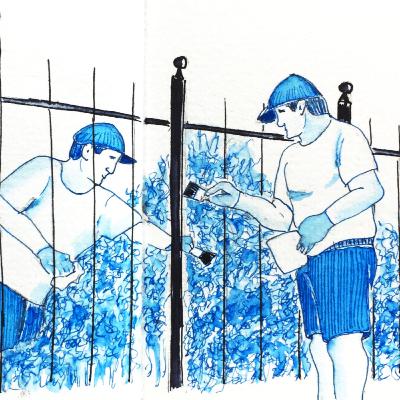
Three books on empathy that you will want to check out - after getting the short version here. I had some fun with this one - and, you, the listener, will too, in addition to expanding your empathy. This podcast contains additional bonus material not in the original blog post about how I came to write a book length review of The Routledge Handbook of the Philosophy of Empathy, one of three books reviewed here along with William Miller's Listening Well: The Art of Empathic Understanding and Cris Beam's I Feel You: The Surprising Power of Extreme Empathy. The complete review of the Handbook is itself a book length work (A Critical Review of a Philosophy of Empathy by Lou Agosta), separately published.
This concise version of this episode is also available as a blog post: http://louagosta.com/2019/04/28/three-books-on-empathy-reviewed-the-good-the-bad-and-the-ugly/.
(c) Lou Agosta, PhD, and the Chicago Empathy Project
Start with the one minute empathy trainin:g Drive out aggression, hostility, bullying, prejudice of all kinds, dignity violations, hypocrisy, making excuses, finger pointing, cynicism, resignation, bad language, manipulation, injuries to self-esteem, competing to be the biggest victim, and politics in the pejorative sense of the term, and empathy naturally comes forth. Most people are naturally empathic and, if given half a chance, they will spontaneously and willingly speak and act empathically. The training can be spoken in one minute. However, actually implementing it is going to take some work. Engage here with the top twelve (12) tips and techniques for training and expanding your empathy.
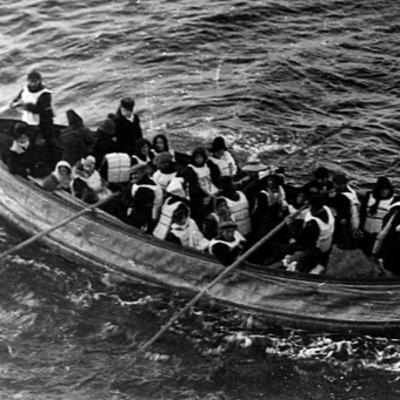
Does empathy make you so kind that you do suicidally foolish things? From the perspective of empathy, one has to advance from standard empathy to radical empathy to deal with the thought experiment of lifeboat ethics and suicidal empathy.The short version of suicidal empathy is as follows. We are in a lifeboat which is filled to the maximum after our ship sank. In the water, treading water, surrounding the lifeboat are additional survivors and other leaky lifeboats about to sink, leaving the survivors treading water. If the survivors in the lifeboat are empathic and take in the other survivors, then the lifeboat still afloat will be swamped and we will all drown. The conclusion is that in such extreme situations, which are more common than one might imagine, then empathy needs to be turned off – or at least dialed down significantly – lest we all perish. This podcast engages with a strong version of the lifeboat dilemma - not a straw man.It debates and shows the weakness of the argument for lifeboat ethics - even while being fair to what it is trying to say. This is relevant as someone named Elon Musk has asserted (Q2 2025) that "empathy is a weakness of western civilization." Find out who is talking out of their hat in this engaging podcast!

Standard empathy gets stretched to its LIMIT in the face of confronting physical and moral trauma, succumbing to compassion fatigue, burn out, and empathic distress. Standard empathy is challenged to deal with empathic distress, and standard empathy sometimes does not succeed in getting across the abyss of empathic distress to reestablish wholeness, emotional equilibrium, and integriy. To get across this abyss, Radical Empathy is required. Radical empathy deploys the same four aspects of receptivity, understanding, interpretation, and responsiveness that standard empathy uses but with this difference: radical empathy has the additional feature that it is committed to empathizing in the face of empathic distress. This commitment of radical emapthy shows up as empathic responsiveness - finding a form of words that recognizes the survivor's humanity. This encounter between radical empathy and the survivor enables the survivor to gain back her or his power form the overwhelming circumstances that have diminished the survivor's agencu. Radical empathy enables agency, choice, and decision making in the face of overwhelming circumstances. The chances of success are expanded by telling a story, providing a powerful narrative, that expresses the humanity of the other person. Find out how radical empathy makes a profound difference in building a bridge across the abyss of empathic distress in this engaging episode![image art credit: Prometheus by Gustave Moreau (wikimedia commons)]
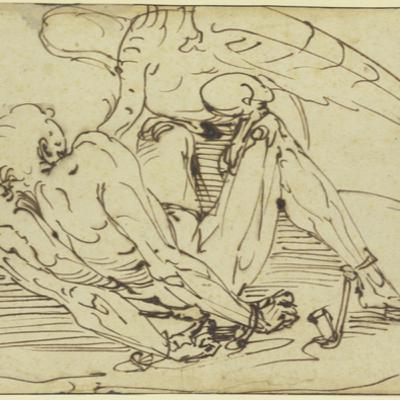
What the heck is the Trolley Car Dilemma (TCD) - and how does it relate to Radical Empathy? The TCD is a thought experiment - an intuition pump (to use Daniel Dennet's incisive term) - to generate insights about agency and empathy. You are the agent on a runaway Trolley Car faced with a couple of bad choices - faced with choosing between the devil and the deep blue sea - in a double-bind - now choose! The short version of the TCD: You are the ticket agent on a runaway trolley car with broken brakes, which will run over five people unless you throw the switch to change the track, which, however, will result in running over one person. So far, everyone, including you, is innocent, but not for long. Standard empathy breaks down in empathy distress. Find out how standard empathy gives way to radical empathy to get across the abyss of empathic distress in this engaging podcast!art image: ink drawing Luca Cambiaso (1527–1585) - promethesus chained to the rock - note the eagle gnawing on his liver - ouch!

When standard empathy breaks down in the face of extreme situations such as trauma, conformity to the faceless unempathic bureaucracy, compassion fatigue, burnout, or empathic distress, then radical empathy comes forth as the commitment to continue empathizing int he face of the breakdown of empathy. Radical emapthy navigates the rupture, the abyss, of empathic distress, restoring empathy as radical empathy. This talk provides an example of how radical empathy comes forth from empathic distress in the face of trauma. Don't miss this engaging talk on how to expand your power over trauma with radical empathy.

This podcast engages with radical empathy in extreme situations. Extreme situations are traumatic ones. Radical empathy challenges standard empathy to take empathizing to the next level in confronting experiences that cause empathic distress. Radical empathy comes forth when standard empathy honors the commitment to empathize in the fact of empathy distress. This is empathy "the hard way." However, no other way exists of getting to radical empathy than through starting with empathy pure-and-simple. The repairing of the breakdowns of standard emapthy lead the way to radical empathy. Don't miss this engaging episode: Find out how to get across the abyss of empathic distress from standard to radical empathy.

The podcast engages the difference between standard empathy and radical empathy. When standard empathy breaks down, fails, goes off the rails, in the face of confronting experiences such as trauma, compassion fatigue, soul murder, and empathic distress, then radical empathy is born and comes forth. Radical empathy bridges the abyss of empathic distress to commitment to empathizing even in the face of empathic distress. The first in a series - find out how to take your standard empathy to the next level with radical empathy.
Lou Agosta in conversation with Rob Volpe, CEO and Chief Catalyst, Ignite 360, about Rob's book on empathy: Tell Me More About That: Solving the Empathy Crisis One Conversation at a Time - in this conversation Rob shares what he had to survive and what he learned in the college of hard knocks when the intolerant kids in 5th grade decided to make Rob's sexual orientation a matter of bullying; how he survived these challenges; and brought what he learned to become an empathic story teller, calling forth insights about business, consumer products and services and, most importantly, human nature, the empathic ties that bind us together as fellow travelers in business and life. This is more - much more - than a business book, though its relevant to empathy in the context of business is powerful - as I like to say "empathy: capitalist tool"! Not to be missed!
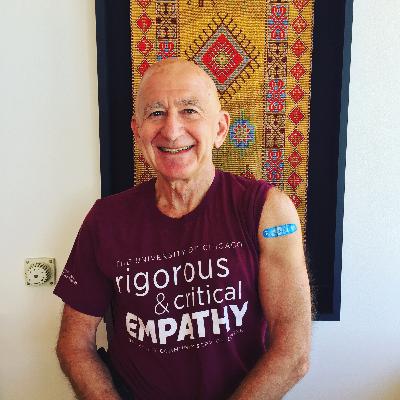
A new year and a new virus variant? Being cynical and resigned is easy, and the empathy training is to drive out cynicism and resignation – then empathy naturally comes forth. If given half a chance, people want to be empathic. The prediction is that with a rigorous and critical empathy (and getting a very high percent of the population vaccinated), we are equal to the challenge.
This podcast contains my choices and predictions for the top ten trends in empathy for the year 2022.
This episode is also available as a blog post: http://louagosta.com/2022/01/06/empathy-top-ten-trends-for-2022/

I have been known to say: "We don't need more data; we need expanded empathy!" But, in truth, we need both. The numbers support the conclusion that there is an empathy deficit in the corporate world; but there is also hope that the factors and forces are trending that make possible overcoming this deficit and expanding empathy.
Business leaders lose contact with what clients and consumers are experiencing as the leaders get entangled in solving legal issues, reacting to the competition, or implementing the technologies required to sustain operations. Yet empathy is never needed more than when it seems there is no time or place for it. This is a challenge to be engaged and overcome.
What to do about it? Practice expanded empathy. Empathy is on the critical path to serving customers, segmenting markets, positioning products (and substitutes), psyching out the competition—not exactly empathy but close enough?—building teams and being a leader who actually has followers. Empathy makes the difference for contributors to the enterprise at all levels between banging on a rock with a hammer in the hot sun and building a cathedral. The motions are the same. tExactly the same. But the one person has hard labor and the other person is participating in greatness - building a cathedral. When the application of empathy exposes and strengthens the foundation of community, then expanding empathy becomes synonymous with expanding the business. Find out more in this engaging podcast about how empathy works - and sometimes doesn't - in the dynamic and challenging world of business relations.
(c) Lou Agosta, PhD and the Chicago Empathy Project
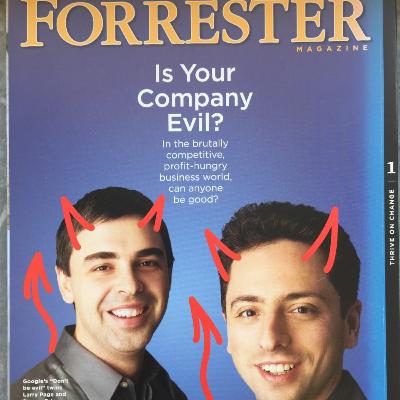
“CEO” no longer means “Chief Executive Officer,” but “Chief Empathy Officer.” One can hear the groans—this time, from the executive suite, not the cubicles.
Empathy is one of those things that are hard to delegate. This role shows up like another job responsibility with which the CEO of the organization is tasked—along with everything else that she already has to do. As if she did not already have enough alligators snapping at various parts of her anatomy, one has to be nice about it, too? But of course empathy is not niceness, though it is not about being un-nice. It is about knowing what others are experiencing, because one has a vicarious experience and then processing that further to expand boundaries and exercise leadership. Find out how to expand your empathy individually and in terms of organizational teamwork in this engaging podcast.
(c) Lou Agosta, PhD and the Chicago Empathy Project

When I ask business leaders what is their budget for empathy training, the response is often a blank stare. Zero. However, when I ask the person what is the budget for expanded teamwork, reduced conflict, enhanced productivity, commitment to organizational goals, taking ownership of outcomes, product and service innovations, then it turns out that budget exists after all. Empathy makes a difference in connecting the dots between business skills and performance. In this engaging and dynamic podcast, find out how empathy contributes to getting breakthrough results in business in a powerful way by engaging the energies and commitments of executives, management, individual contributors, customers, and stake-holders at a fundamental level. Not to be missed!
(c) Lou Agosta, PhD, and the Chicago Empathy Project

Most people think that empathy is compassion. And while the world needs more compassion, empathy is distinct from compassion. Empathy tells me what the other individual is experiencing; compassion tells me what to do about it. Engages with examples from world literature, including Thomas Mann's Buddenbrooks and Tennessee Williams, The Glass Menagerie. The scenes include empathic receptivity in Hanno's trip to the dentist and empathic understanding in Thomas' encounter with Hanno during the long silence as Gerda makes music with The Lieutenant. Empathic responsiveness is powerfully illustrated in William's work with Blue Roses. Not to be missed!
Watch the corresponding video on Youtube: https://youtu.be/sYJvplP5cKo
(c) Lou Agosta, PhD, and the Chicago Empathy Project

Comments

Download from Google Play

Download from App Store
 United States