


 Claim Ownership
 So Long, Suckers
So Long, SuckersSubscribed: 2Played: 20
Subscribe

© So Long, Suckers
Description
Love long films? Hate yourself? Then welcome, friend, and come waste your life with your new best buddies.
solongsuckers.substack.com
solongsuckers.substack.com
18 Episodes
Reverse
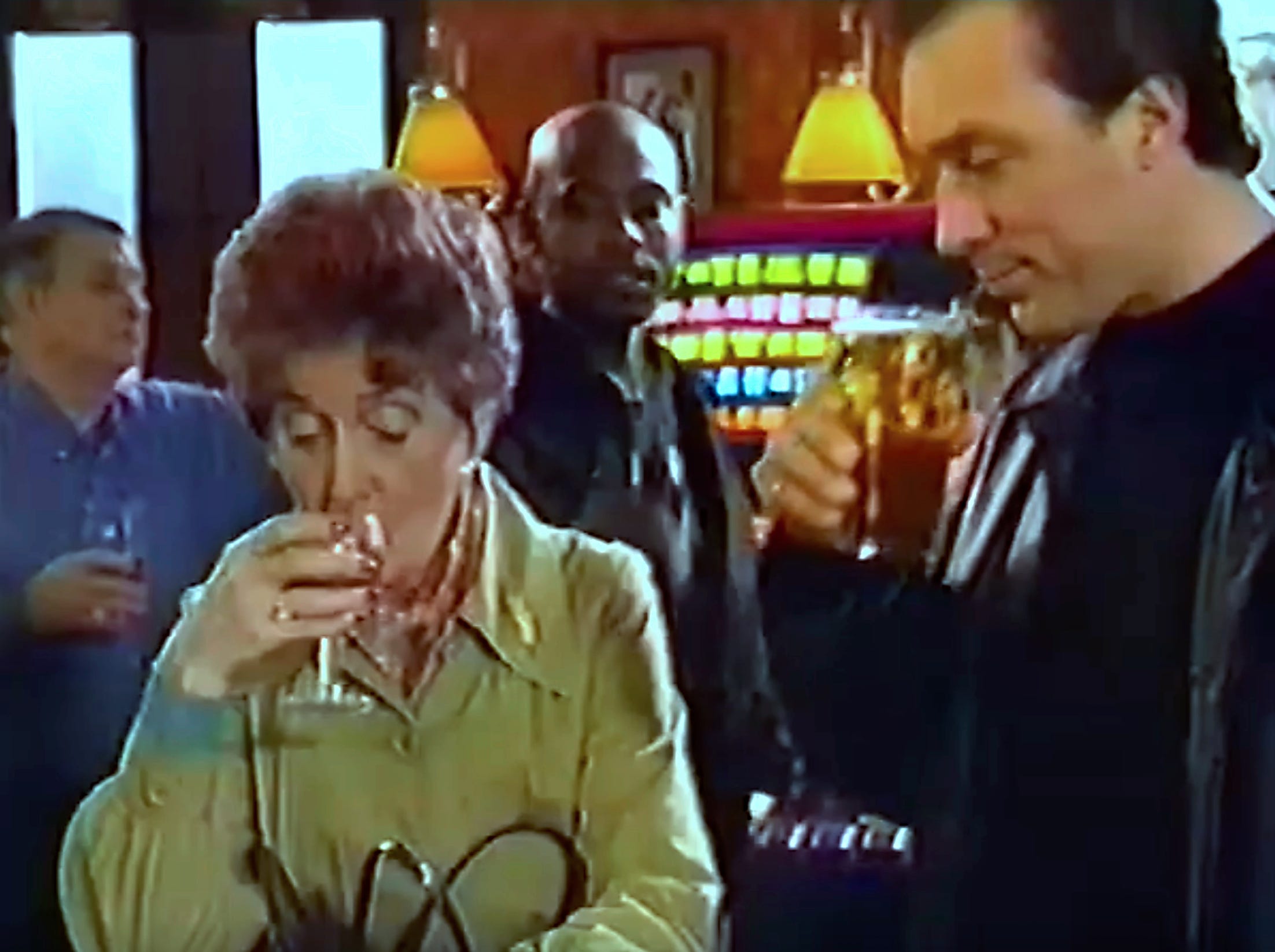
Stanley Schtinter's 450-minute edit of the British TV soap opera EastEnders is a magical and strange thing that confines us, for over seven hours, inside a fake pub in the year 1999. Time, culture, nostalgia and alcohol are just four of the major themes of this unique odyssey, which Calum explores at length in a solo essay. This is a public episode. If you would like to discuss this with other subscribers or get access to bonus episodes, visit solongsuckers.substack.com
Fellow conspirators, There are few “reads” in modern history more trite than the “end of innocence” narrative that surrounds the assassination of John F Kennedy in November, 1963. The death of Camelot; the bursting floodgate heralding a decade of American unrest and a half-century of swelling ambient paranoia. Hey, we ain’t gonna deny it’s compelling. And it’s precisely this grand reading that undergirds Oliver Stone’s epic 1991 dramatic treatment of the assassination’s aftermath. If it’s a surprisingly naïve reading for a filmmaker who had, by that point, established himself as a fairly robust critic of his country’s recent evils, that’s basically because JFK proceeds from the perspective of its protagonist, Jim Garrison—a respectable attorney whose journey through the story is one of credulous patriotism souring into a painful enlightenment. Believe his conclusions or not, the core of his wisdom is undeniable: the government can lie, and it will lie; it can kill, and it will kill. This journey is presented with clarity but not irony: we follow Garrison’s journey as it goes along, hearing the case as it’s put together.But, as we discuss on mic, there’s an extent to which Stone—a classic Boomer, born in the mid-40s and evidently influenced by the perspective of his respectable, patrician American father—fails to escape his own credulity towards the myth of his country’s essential greatness. His screenplay, co-written with Kennedy expert Zachary Sklar, hinges on the dual notions that the US citizenry can fight for the truth and set an example, and the Government can aspire to open, democratic goodness. These truths the writers apparently hold to be self-evident. The screenplay uses strong terms indeed in its accusation of the CIA, the Secret Service and even Lyndon Johnson—but its plea is ultimately for a return to innocence: implying that there was an innocence, an essential morality, to begin with.Because of course, what does this grand exercise in paranoia build up to? A shot of the upright American family walking hand-in-hand towards the light. In real life, Garrison and his wife divorced not long after his epic court case against Clay Shaw. (She was not on board with his project.) Stone and Sklar pointedly ignore this, as their closing text—entreating the audience to continue the battle for truth and justice on behalf of “the young”—materialises over an image that, in its courthouse setting, deliberately combines the institutions of family and government.It’s interesting that much of the film treats Garrison’s investigation with a paranoiac aesthetic which privileges not only the information involved, but its proliferation. This is a carefully chaotic movie, one where every other sequence—masterfully—feels like it’s going to collapse, as if the film reel itself could snap through sheer exertion. But its frequent swerves into a kind of postmodernist inquiry always come back to the reassurance of generic structures—for instance, the investigative mode, resolving in a grand summation—before that ultimate closure on the reunited family. The big word invoked within the film, the one that describes the essence of the situation, is “fascism”. JFK pleads that its audience notices, investigates and roots out the fascism of the American deep state, on behalf of children, family and nation. The problem is: the appeal made by fascism is often precisely in terms of protecting children, family and nation. So again, we return to contradiction—which is, itself, crucial to the embedded paranoia. At its heart, this is a biopic not of its title character or of its protagonist, Jim Garrison, but of a situation: a country confronted first with a moment of major horror played out in unprecedented real time (the USA’s last presidential assassination had been in 1901—spiritually, a millennium removed in terms of mass communication media); subsequently, the existential confusion conjured by the Garrison investigation, which commanded real mass attention for a conspiracy theory that directly implicated elements of the country’s government in some particularly grim shenanigans at home. So, if the film’s conclusions grow somewhat confused—being as it is a radical leftwing screed ultimately in favour of the American family—that very confusion is, at the very least, appropriate to the situation. Fundamentally, JFK is a film named after an absent figure—a narrative lacking its centre. And that narrative, in turn, is about a man—one who thinks of himself as ordinary, homely, traditional—searching for a centre; an answer; an explanation, and a retribution. And the film ultimately finds its creator searching for the same. No such answer or centre is forthcoming. Perhaps that’s the real meaning of the closing shot: in a film defined by an editorial approach that places re-creation, fiction and documentary, as well as evidenced fact, supposition and imagination, onto precisely the same experiential plane, Garrison’s walk through the courthouse with wife and son (played by Stone’s own son, Sean) is just one more unattainable dream. We’re through the looking-glass; there’s no going back.Thanks, as ever, for listening.Calum & Eddie This is a public episode. If you would like to discuss this with other subscribers or get access to bonus episodes, visit solongsuckers.substack.com
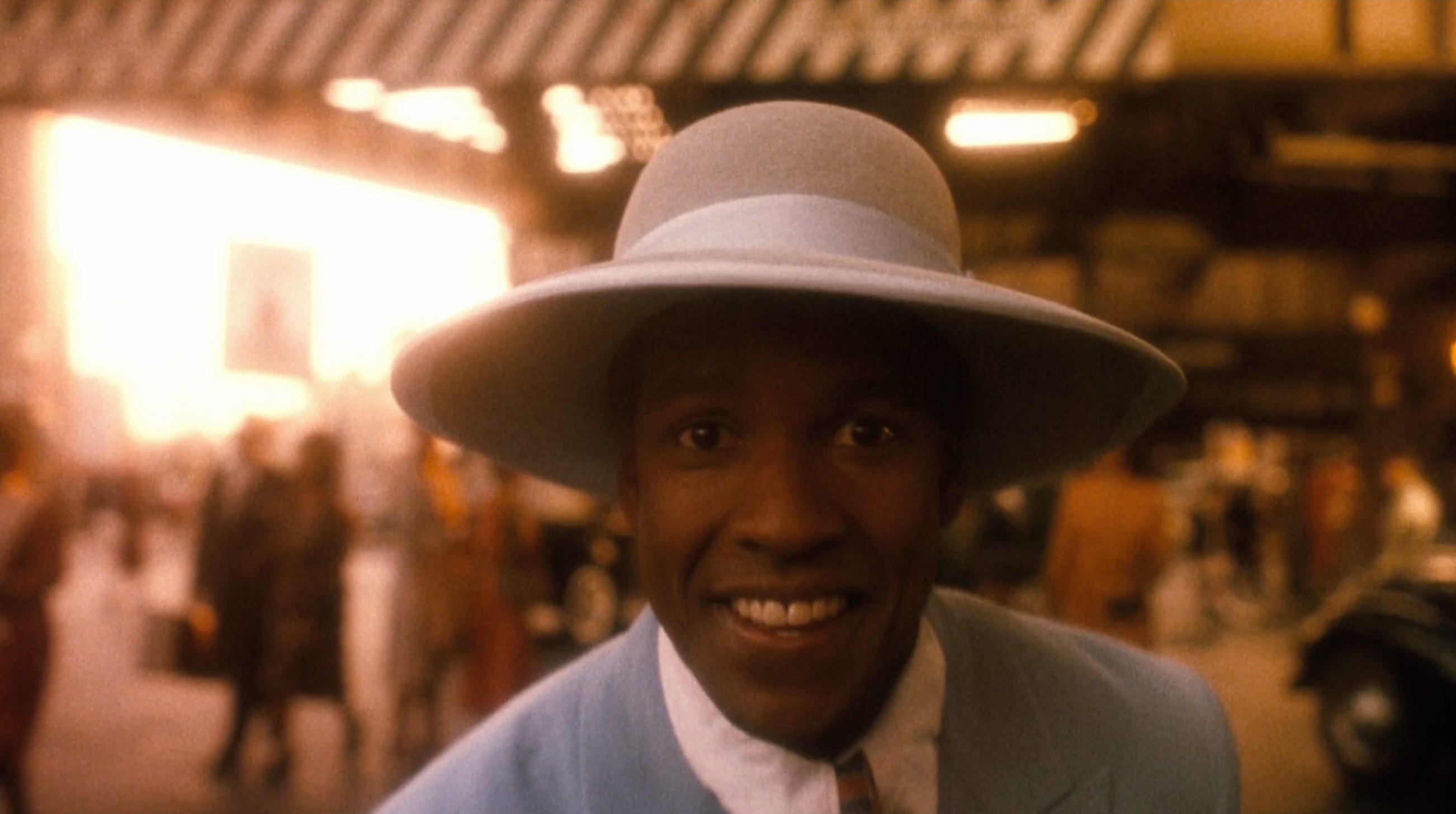
Dear friends,If there’s one thing, just one thing, guaranteed to feature in a Spike Lee joint, it’s the phrase “By Any Means Necessary”. The words, followed up by the printed call-and-response “Ya dig | Sho nuff”, adorn the closing credits of each of Lee’s films, forming the two-pronged slogan for his production company, 40 Acres and a Mule Filmworks—and, in turn, a kind of mission statement. No matter the film, its themes, its message, we will be asked at the end to carry away that simple, vital phrasing: “by any means necessary.”Though decontextualised, the basic meaning of these four words should be clear to most viewers. Used and popularised by Malcolm X during the last year or so of his life, it refers, quite simply, to the potential, adaptable “means” that may be necessary to achieve social, racial justice and change. It’s been often interpreted, somewhat facetiously, as an incitement to violence; really, it conveys the fluidity of such “means”, the goalposts ever moving in a system set up to prevent any such justice from being easily, if ever, achieved. Per Lee’s Do the Right Thing (1989), which specifically quotes both Malcolm X and Martin Luther King, the “means necessary” may be as low-key as, say, arguing for wider representation on the walls of a neighbourhood pizzeria; they may be as active as throwing a trashcan through that pizzeria’s window in reaction to an instance of murderous police brutality. Lee himself, of course, plays the character who throws the trashcan, and who then expresses regret over the greater ensuing destruction; in turn, his film (including those closing quotations) works through and weighs up various “means necessary” from incendiary protest to community cooperation, with a galaxy of ideas dotted betwixt.When taken, however, sans context and appended to the final moments of each of these motion pictures, the phrase “By any means necessary” becomes less a broad social rallying call and more an exercise in personal branding. This need not be a criticism: the mantra serves as a floating reminder of the struggle for equality and justice; a framework of engagement to which Lee, whether in Bamboozled (2001), BlacKkKlansman (2018) or even his OldBoy remake (2013), intends always to strive. Lee’s 1992 biopic of Malcolm X himself is, for better and worse, probably the key to the filmmaker’s career. It famously transformed the assassinated activist into a branding exercise long before release, in an attempt to drum up anticipation for this unprecedented epic of Black American history. Upon its release, critic Armond White wrote two (very good!) withering pieces on the film that took umbrage with Lee’s design of a towering “X” on posters, hats and T-shirts; as well, indeed, with Lee’s bombastic methods of self-promotion in TV and print interviews, which had drawn their own share of ire from other Black commentators and public figures. (Some of whom, admittedly, were members of the Nation of Islam, an organisation that obviously had an interest in discrediting Malcolm X.) In any case, before the first scene begins, this film remains defined by the paratextual status that its director worked so hard to cultivate. On the one hand, Lee presented this as a work of great import in terms of Hollywood subject matter, American film semiotics more generally and as a space of sociocultural resistance that the white-dominated studio system worked as much to sabotage as to help in producing. On the other, it was an opportunity for Black-made art to compete as a mainstream, capitalist object—no longer in the independent-cinema mode that Lee had come up through, but a full-fat “quality blockbuster”.In the end, Malcolm X works on both levels. It is, certainly, a towering work of biography crafted by a young and idiosyncratic writer-director who knows his craft inside and out; who possesses such a potent voice as to expertly draw out a slew of startling sequences, moments and details that can inform, evoke and rouse in equal measure. Lee’s approach distils facts, conjectures and “ecstatic truths” into (a) a clear and direct celebration of his subject’s life, words and iconographic status as an activist-thinker and (b) a few-holds-barred attack on the specific machinations that tore Malcolm back down and murdered him. (And in 1992, the film’s direct implication of the Nation of Islam in the assassination was still a controversial statement to make.) Yet, for all its multifaceted brilliance, Malcolm X is also successful as a product, a marketing exercise tethered so clearly to the unique perspective of Spike Lee as to render it strangely compromised. This is evidently inherent to all biographical writing; but from those baseball caps on down, Malcolm X bears its own type of strangeness in the way it rather repackages its radical title figure into an historical context that he never lived to see: the early 1990s. Lee makes his stamp clear from the film’s first moments. Malcolm X opens by cross-cutting between a full-screen, Patton-style Stars-and-Stripes, on which are overlaid the credits, and footage of the LAPD assault on Rodney King, which had occurred a short 20 months before the movie’s release. Towards the end of the credits, the flag begins to burn from its edges, leaving that gigantic “X” standing in the centre, as high as the cinema screen. The meaning of this montage is clear enough: Malcolm and his words may now be considered “history” but the problems he addressed linger. All at once, the viewer must deal with an urgent call-to-arms (the King beating, juxtaposed with the flag) and that reclaimed baseball-cap logo (the X branding); we are then swooped down into 1940s Boston where, moments after his name hovers on screen, we see Spike Lee sauntering confidently into the space. After a few minutes, we are introduced to Denzel Washington’s young and cheery Malcolm, who is “conked” by Lee’s Shorty. The dressing of a teenaged Malcolm’s hair is something of a mythic scene in his autobiography: his entryway to manhood, modernity, the city. It represents the birth of one of the many Malcolms who evolve throughout his story. Lee’s decision to cast himself as the mookish sidekick Shorty is really just of a piece with his prior supporting roles, not least as the mookish sidekick to Washington’s trumpeter in Mo’ Better Blues (1990). But it is nevertheless significant that in Malcolm X the Lee character is essentially the protagonist’s guide into the whole tale. Shorty confers on Malcolm an entire way of being, one that defines the first act but is also, in its rejection, key to the rest of Malcolm’s profound evolution throughout. This is a fun metatextual element that underscores the clear directorial identity that Lee uses to steer the whole film. His canvas makes generally judicious use of both classical and more modernist styles, animated throughout by the radicalism of its deceptively simple semiotics. As the film’s producer, Monty Ross, wrote in the 40 Acres and a Mule book on the production of Malcolm X, “All media, including film […] has been one of the slowest outlets in allowing Blacks to control the reflected image of their culture, to control the expressions of themselves.” Certainly, the grammar of this film is such an expression; while much of Lee’s focus in the second half is on Malcolm’s speeches, which he treats with respect and awe, his own editorial approach is designed as its own discursive contribution, an evocation of the same fiery rhetoric.What’s interesting is the way the form of the rhetoric is clearly of interest to Lee as much as its content. As he makes clear in that accompanying book, Lee respects Malcolm’s well-documented ability to “market” his ideas—initially, as the Nation of Islam’s number-one door-knocker (Malcolm even merited some mention in EU Essien-Udom’s early-60s book Black Nationalism, not because he was yet a public figure in his own right but because he accounted for so much of the Nation’s growth in membership) and later as an internationally-known champion of Afro-American advancement. And of himself, in his own capacity as both filmmaker and a promoter of his films, Lee wrote, “the only person who does marketing better than me, as far as artists go, is Madonna.” This does little to contradict Armond White’s note that “Lee treats Malcolm X as a pop star whose achievement was fame rather than enlightenment.” Agree with this or not, the director clearly appreciated not just the message but the manner in which Malcolm could convey his ideas, and that fascination underscores much of the film. This is essentially what makes Malcolm X a knottier biopic than it is often given credit for. Lee’s brilliance is in pushing his medium to match his subject in its communicative directness, clarity, intelligence and ambition. But, per the curse of any biography, Lee also swaddles the film in himself: his propensity to hawk his personal “brand” as much as his work and its messages. During the making of this film, Lee—discussing his marketing, his hustling production process and his attitude to cinema viewership—cheerfully described himself as a capitalist. It doesn’t take a scholar of Black history to tell you what Malcolm X thought of that word: “You show me a capitalist, I’ll show you a bloodsucker.”Lee ends his film with a bravura and very moving extended montage of sound and image, plundering archive material and setting it to Terence Blanchard’s rather stately score and the voices of Martin Luther King Jr, Ossie Davis, Nelson Mandela and, finally, Malcolm X himself—with those four words, “by any means necessary.” In addition to the social and historical meaning this ending works through, it also has textual purchase as a kind of transcendence of the biopic form. Is it, even, an admission of defeat? Why continue this costume-and-makeup pageantry when the reality is already so powerful? (To this point: compare it to the similarly heady ending of our last podcast subject, O
Dear fellow travellers, Christopher Nolan is no stranger to imagining disaster. His Dark Knight trilogy, adapted from various Batman comic-book stories, toys with various visions of urban destruction, both physical—those involving guns and explosions—and psychological, with each of the films’ major villains threatening no less than full-scale urban breakdowns. The cycle even concludes with the detonation of a nuclear bomb: here, symbolically the ultimate threat and one that even, shock horror, appears to kill our hero. Following these, the director’s sci-fi epic Interstellar explored the aftermath of what would, in the real world, mean effective apocalypse—irreversible climate change; global crop scarcity—but in this tale is heroically mitigated with an interplanetary expedition and, indeed, an actual, quantum alteration of history. Tenet, another film that fantasises the pliability of time, follows the attempt to avert another disastrous detonation, this time of a weapon that could destroy not just a single metropolitan area but the whole world. (“Including my son,” intones Elizabeth Debicki, insightfully.) Such imaginings, of course, are ten-a-penny in Hollywood and have been for decades. Susan Sontag, in her influential 1965 essay ‘The Imagination of Disaster’, aptly summarised the links between the looming nuclear threat and the then-recent cycle of speculative science-fiction films; her observations have remained relevant through the subsequent years and countless cultural trends. Much of Nolan’s work certainly sits within this space of allegory and speculation. With Oppenheimer, however, he pushes further and does something fascinating: he swings his lens right to the source of modern pop cinema’s apocalyptic fixation. His film, in so doing, explores and to an extent explains this very fixation.As discussed on the podcast, many of Oppenheimer’s roots are in the Hollywood of the 1950s—a milieu, incidentally, that’s ambient in the film’s red-scare subplot. This is a large-format, star-studded historical epic released into the midst of a global downturn in popular cinema-going, itself partly fomented on the one hand by sweeping structural changes within the film industry and, on the other, by a revolution in home-viewing options. So far, so Film History 101. But in its subject matter the movie also, unavoidably, refers to that aforementioned sci-fi cycle. In a sense, then, it uses its prestige trappings to outline the psychological conditions for the modern disaster imaginary, described by Sontag asthe trauma suffered by everyone in the middle of the 20th century when it became clear that, from now on to the end of human history, every person would spend his individual life under the threat not only of individual death, which is certain, but of something almost insupportable psychologically—collective incineration and extinction which would come at any time, virtually without warning.This film is a biopic not just of J Robert Oppenheimer, the so-called “father of the atomic bomb”, but of the bomb itself: its design; its birth in the New Mexico desert; its role in the murder of thousands of Japanese citizens; and the profound long shadow it would soon start to cast on the psyche of the global body politic. Nolan, after Sontag, clearly argues that the atom bomb’s legacy is basically existential, serving an omnipresent ambient threat. Meanwhile, the film’s smartly jumbled narrative structure serves at least three purposes: one, it aptly represents a quantum-level interpretation of time and space; two, it evokes Oppenheimer’s guilt-ridden psychology as he works through his own memories of the Manhattan Project and its aftermath; and three, it reflects that broader state of existential panic that comes with contemplating this whole, sorry issue—that is, the “trauma” as outlined above. The terrifying hallucinations experienced throughout the film by our protagonist are often, pointedly, part of the general narrative flow engineered by editor Jennifer Lame; existing on the same experiential plane as both the film’s factual and subjective material. In this way, the movie formally maps the basic thought process of, surely, any viewer afeared of global annihilation. It’s something like a prestige history picture crafted as an extended nightmare. Oppenheimer, then, seeks to explain something inherent to various strains of visual art and popular culture these last several decades. It also, clearly, seeks to explain Christopher Nolan’s cinema more specifically. As outlined above, Nolan’s films (at least post The Dark Knight, the billion-dollar hit that initially brought him industrial carte blanche and pop-auteur purchase) are marked by their working-through of disaster, violent threats to loved ones and outright Armageddon, and with Oppenheimer he steers his usual obsession with clever-clever chronology towards something quite direct and personal.Through this, could the film serve, secondarily, as an allegory for large-scale filmmaking? Of course. Just look at Oppenheimer’s meticulous visualisations of the Los Alamos team’s process; those small details, right down to things like white labelling-tape and blast-radius calculations, that Nolan focuses on as he follows the gestation and explosive birth/death of the first test bomb, bespeak an interest in, if not obsession with, the mundane work that builds such a monumental end product. This is, for its first two hours, essentially a movie about project management. But after the first test explosion, Oppenheimer’s underlying linear structure pushes instead into a drama that explores guilt, culpability and the bureaucratic banality of evil: the moral rot that attends project-managing the end of the world. At this point, we can return to Sontag. Her notes on the imagination of disaster conclude rather more complexly, as she thinks through the ways that genre movies have simultaneously spoken to her generation’s Cold War fears and neutralised them, confining them to the realm of fantastical fiction. She allows that this “is no more, perhaps, than the way all art draws its audience into a circle of complicity with the thing represented.” But the films nevertheless “inculcate a strange apathy concerning the processes of radiation, contamination and destruction” or, in other words, an “inadequate response” to the nightmare of reality. One can therefore spiral further through Oppenheimer’s various layers: to what extent is Nolan, who wrote much of his screenplay in the first person and at one point casts his own daughter as the hallucinated victim of an atomic blast, aligning himself not only with his protagonist’s genius for project management (I know: riveting) and his anxiety over a nuclear reality, but also with his deep guilt over his own product? Is the film as much a rejoinder to Nolan’s own prior imaginations of disaster as it is an explanation for them? (As an extreme, and far less abstract, example of this: one wonders how often he reflects on the unfortunate and doubtless unsettling fact that a screening of the third entry in his techno-militant Batman vigilante series was the setting chosen by a schizoid loner to carry out a gun massacre.)It is this underlying uncertainty toward its own existence, its own need to be, that aligns Oppenheimer with what is perhaps its most peculiar context: the 100-minute Mattel company stock-jacker that comprises the other half of the global “Barbenheimer” phenomenon. Greta Gerwig’s effervescent comic fantasy, released to cinemas on the same day as Nolan’s nervy, middlebrow epic, takes its titular doll out of the plastic, fantastic Barbieland and into the world of humans, where she undergoes education in biology, patriarchal oppression and—far more awkwardly—the cultural legacy of the Barbie brand. If Oppenheimer is a spectacular, whorled biopic of the atomic bomb and the origins of an entire global mindset, so too is Barbie a loose biopic of a product and its influence on the popular psyche. Of course, where Nolan’s film is pretty clear in wishing its central product had never been made, Gerwig’s mission is marked by an ambiguous and perhaps inherently doomed blend of critical comment, corporate compromise and deep personal connection between filmmaker and subject. Barbie succeeds when it articulates the role of the doll in Gerwig’s own childhood, and the emotional importance of toy to human; more often, though, its screenplay is a confused apologia, constantly mounting the beginnings of necessary critique before shortly neutering itself, its ingenious satire on unearned masculine dominance quickly ceding to a far less-than-radical statement of corporate, self-serving, ultimately very Hollywood quasi-feminism.The point of this brief comparison is simple: to highlight the way that Oppenheimer, as with its unlikely blockbusting sibling, reflects through its fractured, personal presentation of an unsettling totem of recent history the ethical confusion forced upon all of us in a post-nuclear, post-plastic, decidedly terminal-capitalist globalised world. Like Gerwig, Nolan bakes both a fascination, scepticism and even disgust with his subject into his film and finds a way to articulate the fact of its cultural centrality. (And in a vague sense, the outsize financial success of both releases rather prove that centrality.) As that perfect adolescent complaint goes, none of us asked to be born; and Nolan captures, within and without his film, something of the compromise that attends simply existing in the years since that severe atomic irruption and the American empire’s plasticky postwar industrial growth-spurt: the evils one may be complicit in while going out of our way to do good in other areas. Rather uncomfortably, it’s possible that the real summation of all this came with the director’s acceptance speech at the Academy Awards, where Oppenheimer triumphed: despite his film’s attention to the USA’s bloodthirsty willingness to use the l
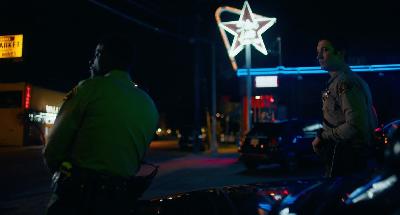
Dear neon demons,In July 2018, some 10 months before premiering his Amazon Prime Video series Too Old to Die Young at Cannes, Nicolas Winding Refn wrote an op-ed in the Guardian with the headline, “our times need sex, horror and melodrama”. His straightforward and, we think, perfectly admirable argument can be boiled down to the following:We need to be pushed out of our comfort zones – of complacency, and, for most of us in the west, an easeful life. I’m not advocating physical pain, but I do believe mental pain can be a way to stimulate and reset the brain.What’s needed is art: good, challenging art, not good-taste art, which is the chief enemy of creativity. Problem is, most of our culture comes to us via a small number of conglomerates whose sole purpose is the bottom line.Refn wrote this piece as promotion for his independent and esoteric streaming service, byNWR, and—significantly—while in America shooting his own debut streaming production for Amazon, then ranked by Forbes as the world’s second most valuable company. The column has its broad socio-cultural-political angle, of course; a wider application for the “use”, if you will, of art—at any point in time, in any place on the globe. But one may also take it specifically as a guidebook for Too Old to Die Young itself. Too Old to Die Young was written by Refn in collaboration with the veteran comics writer Ed Brubaker, whose own work represents a fascinating and consistent ongoing project that tinkers around with crime genre conventions. For the series’ latter portion, which evolves to focus more clearly on the female leads, the men were joined by Brubaker’s one-time Westworld colleague Halley Gross, a TV and videogame writer whose expertise lies in sci-fi and dystopian narratives. Refn shoots largely in chronological order, cultivating a loose and fluid approach to the story as it goes along (Brubaker has described the director’s approach as involving “a zillion daily rewrites”) which renders it difficult to judge the specific contributions of his co-writers. But the broad generic elements that interest this trio are all brought to bear on a visionary series that is, perversely, just as muddled as it is coherent.Much of our podcast episode on this series-cum-long film focuses on its contradictions and complications, so we’ll focus in this short companion essay on its successes as a stylistic exercise. Many of the work’s key dynamics and ideas rely on duality, contradiction and hypocrisy—so it’s probably appropriate that any serious criticism of it should proceed from a point of schizophrenia.Refn’s Guardian column specifically highlights the role of Donald Trump—then, of course, President of the USA—in engendering an “apocalyptic” sensation across the country and the world. It is to this condition that the director chooses to respond in Too Old to Die Young. But of course, the show itself never names the President, or any of his cohorts, or America’s Republican party, or political conservatism, or the far right. It instead—rather more smartly—chooses to broadly evoke… well, not so much America as it exists but a poetic idea of America, “Late” America, as the bloated corpus of contemporary screen media presents it. The Los Angeles, Las Vegas and Mexico of Too Old to Die Young bear only the most bizarro relations to the real deals; by comparison, the LA of Refn’s Drive (2011) is a model of careful realism.In turning away from direct, 1:1 political commentary and instead throwing a mélange of abrasive social ideas, nightmare motifs and weird jokes into this Boschian melting-pot, Refn does find something genuinely compelling: a deadpan parody of America, or perhaps the myriad, prismatic cultural images that make America up. His Guardian column may be framed, like so many late-2010s liberal acts of cultural criticism and marketing—the two sometimes indistinguishable—in the over-familiar terms of “the show/film/song/book/Twitter account/standup act we need now”, but the series itself refuses to quite bear this out. It is, despite its glacial pacing, an hysterical scream.To an extent, the 2017-20 Trump presidential term will be forever associated with two peculiar new conditions of consumption: social media, of course, on the one hand; but also the so-called Peak TV moment, a coincidental development no doubt but one that has a broad epiphenomenal relevance. As alluded to above, many of the television and streaming series vying for views during a moment of, well, peak worldwide attention engaged in a kind of displaced cultural battleground—nothing new to that—but come the late 2010s surely exacerbated by a concurrent proliferation of both “official” critical sites and blogs and “unofficial” social-media commentators all of which could, would and continue to hold any creator’s feet to the fire in terms of social or political outlook, even demanding and often enjoying “course correction” for future editions of a given work. Hopefully it’s obvious, given what we do here, that this is no screed against the concept of criticism, or indeed against using art for tacit, obvious or direct political comment. But the particular, outsized relationship between the cultural economy of Trumpism and both the cultural and literal economy of Peak TV “content” making and its exegesis is itself something that needs interrogating. We’ll settle here for merely flagging it, and moving on… The point is, Too Old to Die Young occupies a fascinating and, perhaps, truly subversive place in its landscape not by being discomfiting or extreme in its content, as Refn’s words on the matter imply, but by turning, in its very approach, so puckishly away from its Peak TV peers. It is deeply, obviously political—and about its very specific moment in time, no less—yet refuses to commit to much beyond ambient notes of commentary. When it does go on-the-nose, whether in dialogue or image, it is extravagant and cartoonish, as if to mock the very idea of making a concrete political statement in something as startling and fluvial as the Trump era. But forget the politics: at a “content” making level this is, fundamentally, not something that the vast majority of viewers could possibly bother with past the first half-an-episode. It is far slower, surely, than any other Peak TV series (even Twin Peaks: the Return, to which it owes a lot), and operates through a digressive dream logic that often leads to contradiction and, intriguingly, a kind of self-aware self-problematising—an unwillingness to definitely say the right thing. This style is designed not to allow for the clarity and catharsis of serious statement; it’s also designed to be almost provocatively boring. Refn wanted to push his Amazon Prime audience out of their comfort zones; it’s safe to say he ticked all the boxes. And, goshdarnit, that’s why Too Old to Die Young somehow, remarkably, works.And when Refn complains, “most of our culture comes to us via a small number of conglomerates whose sole purpose is the bottom line,” then takes a stash of money from a company that exerts an absolutely dreadful overall pull on culture, society, economics and the overall global psyche, in order to create a pseudo-commercial, totally abstruse and anticommercial product that’ll make back precisely zilch in terms of whatever number-fudging counts as “revenue” in this context—that’s punk, baby, and it’s also cynical to the point of nihilism. In other words, stop looking for meaning in Refn’s images and Brubaker and Gross’s words; the medium, in this case, is the message. What could more aptly convey the apocalyptic, terminal-capitalist, postposteverything cultural abyss presented by Too Old to Die Young than the very existence of Too Old to Die Young? As ever, thanks for listening—please share us around, recommend us, rate/review the pod on your podcasting app of choice, etc. etc. etc.Finally, Calum briefly refers on-mic to an Atlantic article about Better Call Saul and its “slow” approach to television. Here’s yer link.—Calum & Eddie This is a public episode. If you would like to discuss this with other subscribers or get access to bonus episodes, visit solongsuckers.substack.com
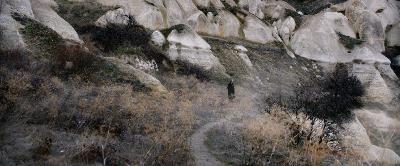
Dear friends, Perhaps what really marks out Nuri Bilge Ceylan’s seventh feature film, Winter Sleep (Kış Uykusu), against his prior work is the different method by which it encodes time. It’s not necessarily inaccurate to taxonomise this in terms of “cinematic” drama versus the distinctly “theatrical”—but of course, things are never that simple. At the very least, Ceylan’s talky, Chekhov-inspired tragicomedy uses its stagey sense of conversation in a manner that remains specially and intrinsically filmic. The nuts and bolts of the film’s form are simple: the drama consists of lengthy dialogues, each held within one of relatively few settings. Ceylan cuts more frequently than in his earlier, so-called “slow” films—Uzak (2002) being the exemplar—but the cutting he deploys here, during those lengthy conversations, deliberately implies continuous time rather than elision and other filmic trickery. From the off, Winter Sleep—a film about the travails and the considerable ego of a former stage actor, turned landlord and hotelier—seems to be consciously aping the temporality of a stageplay. Ceylan's use of style, though, creates real tensions between the stage and the screen, and so actively interrogates those differences in medium. Whatever its storytelling approach, this is obviously conceived as a film, and much of its atmosphere comes from the director’s characteristic use of uniquely beautiful establishing shots; his awareness and understanding of landscape and its poetic opportunities. The exacting rhythms of these conversations are key, too: Ceylan and his co-writer (and wife), Ebru Ceylan, would often bring rewrites to successive rehearsals and even shoots, working with the actors to craft material that ultimately lies at some precise stylistic intersection between the philosophic, the mundane, the comic, the serious, the contemporary, the timeless. One can certainly use similar techniques in honing a play, but with film the simple act of selecting the best take of a scene—or threading together different takes—creates something totally different: a meta controlling presence that immediately redefines the moment in which that take was filmed. So it is that, like many good films adapted from plays, the typical feeling of stage-time throughout these long dialogue scenes is instead displaced; made something else. In that sense, though Winter Sleep is not—as we remark on the podcast—strictly ”slow cinema”, its primary concern is still adjacent to that mode, in that it explores how the cinematic object exists within the flow of time. And this film, unlike many good films adapted from plays, reflexively reminds us that there is such a thing as “real time”—but in a different medium, one where the performers are unmediated by the screen. Ceylan then practises a judicious editing style that simultaneously clings to the “real” time of the stage (and the “stagey” film) and takes full advantage of film’s fluidity as a means of encoding this time. It is significant that the source for the Ceylans’ screenplay is not, in fact, a play; the writers instead use their lead character Aydin, a retired thespian (played ingeniously by Haluk Bilginer), as a means to create and explore staginess, in a manner seemingly incidental to the key themes of the stories from which they draw. The temporal tension, then, is less an end in itself and more a brush with which to paint the film’s more specific socio-political musings. Winter Sleep’s unending eristic, its constant combative chatter that seems to emanate from the very consciousness of its belligerent, entitled, pathetic protagonist, is undergirded by the film’s palpably constructed, almost fussy dramatic cadences. As a final thought: this multi-pronged link between duration, pace, structure and meaning (as well as between “the theatrical” and “the cinematic”) is subtly reinforced by Ceylan’s use of action. Punctuating the lengthy conversation scenes are illustrative physical moments—a rock thrown at a car; the capturing of a horse—that stand out for their directness. The majority of Winter Sleep’s runtime is dialogue, defined in the Ceylans’ writing by its disputation, evasion and obfuscation; these less wordy punctuations, however, allow the plotting to aim for the apparent; the indisputable. In so doing, the writers allow us to re-situate the characters and their endless chatter, and so puncture their justifications, self-definitions and, ultimately, agency. In other words: whatever they may say about themselves, and even whatever the filmmakers seem to be saying, it is we, with our lengthy opportunity to observe the characters, who get the final say. (Ceylan has spoken often of his desire to avoid providing his own outright interpretation.) This is explored in a rather playful manner during the movie’s fiery dramatic climax, for which Ceylan and co-editor Bora Göksingöl break from their prior editorial approach and create extended parallel action, cross-cutting between scenes that respectively focus on Aydin and his wife, Nihal (Melisa Sözen). It’s a whole new sense of time that creates a whole new sense of drama, and it finds the film’s makers thinking through the characters in a whole new way. It demonstrates ultimately that despite the confessed literary and theatrical influences of Winter Sleep, Ceylan’s practice here relies on a type of rigid control, not just of theme and character, but time itself, that only comes with the cinema. The final grace note? That, for all this, our protagonist learns absolutely zilch. Now, that’s how you steer a long drama.Thanks as ever for listening!—Calum & Eddie This is a public episode. If you would like to discuss this with other subscribers or get access to bonus episodes, visit solongsuckers.substack.com
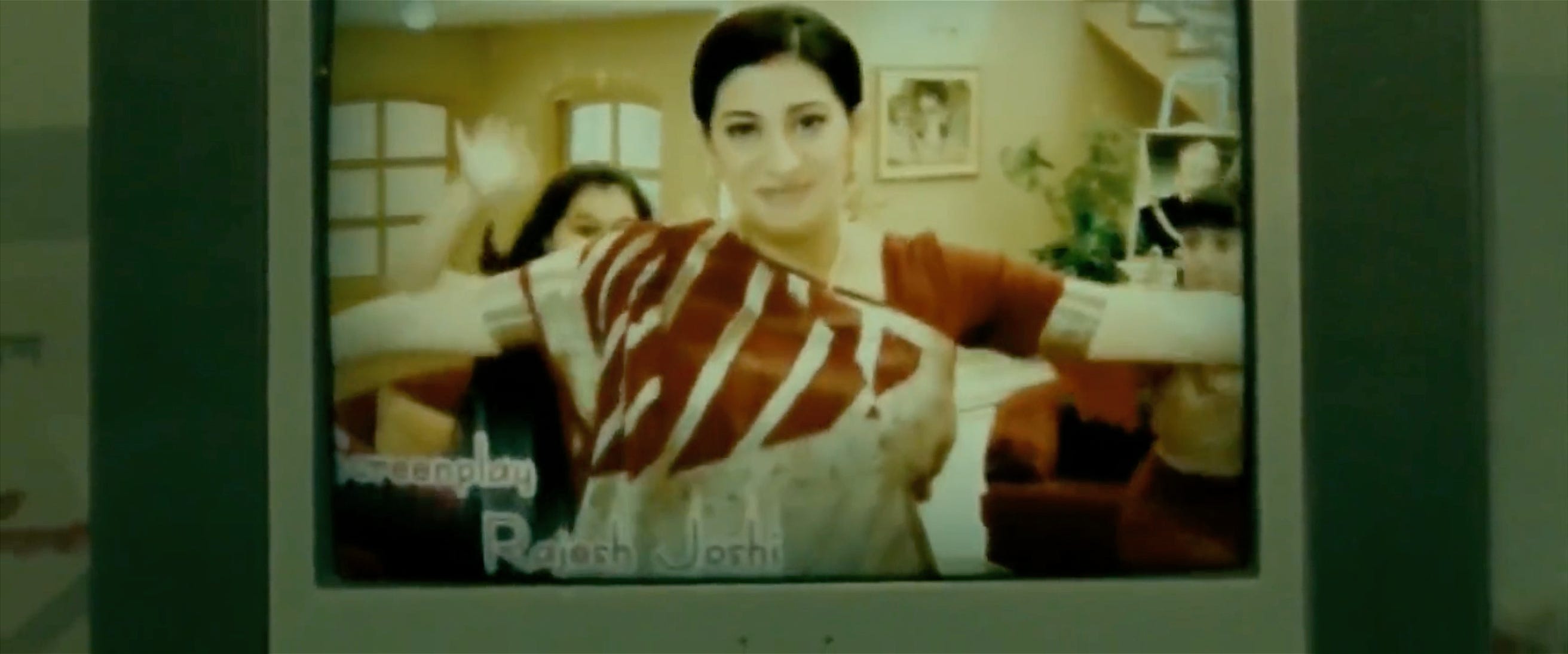
Quick note: this has been a while between recording and release. You’ll notice almost immediately, when we say David Warner died, er, “last week”. Dear friends,Dramatic payoff is one thing, but there’s an immense and specific satisfaction to the climaxes of the very best crime films. This is, to be sure, a pretty nebulous generic designation that can centre gangsters, professional thieves or small-town crooks; or indeed lawmakers, enforcers or civilians caught up in the middle. But it seems axiomatic that all such films have in common an appeal inherently absent from, say, a romcom or a family drama: whether the film’s payoff lies in the success or the defeat of its criminal element, and no matter the film’s overarching perspective or alignment, its buildup rests on the audience’s willingness to play around in the margins of society and morality. Even an unambiguously pro-law flick such as Richard Fleischer’s US Treasury-supported semi-doc Trapped (1949) rests entirely on the thrill of spending time with slimy, nasty counterfeiter Lloyd Bridges, and realising at the end a simultaneous moral gratification (the narrative parts fit together; the government operation succeeds and Bridges gets what’s coming to him) and, if only to a very minor extent, sympathy with the outlaw who can’t get away. The two-part epic Gangs of Wasseypur takes this to still more extreme lengths over its near five-and-a-half hours, focusing on two successive protagonists as well as myriad supporting players and subplots, using digressions and digressions from digressions as it spins the fictionalised tale of 60-plus years in India’s Dhanbad region. We are aligned with various members of the Khan family, organised criminals who are driven simultaneously by prosaic ambition and a highly dramatic thirst for vengeance against the kingpin who had patriarch Shahid killed back in 1947. (It’s a foundational part of the film’s symbology that this occurs at the time that the Indian subcontinent was declared officially independent from the British Empire and blithely left to sort out its own complex social and geographic divisions.) When vengeance does come, in Wasseypur’s final minutes, it is prolonged and operatic: a practically never-ending stream of bullets, bursting squibs and hardcore techno music. With admirable self-consciousness, director Anurag Kashyap seems to say to us: here you go; this is what we all wanted; we’re finally there; enjoy it. In other words, if the text is the story of pay-back, the metatext is all about pay-off. Much of the movie’s subplot-heavy structure, and therefore its unusual length, is redolent of India’s masala movie tradition, though Kashyap is one of a number of fairly recent innovators who have found ways to blend this heightened approach with something more consistently naturalistic. It’s a stylistic binary that comes to undergird the many binaries littering the (again, bipartite) narrative—and one summed up deliberately during the final act by “big bad” Ramadhir (the marvellous Tigmanshu Dhulia), who attributes his long-term success in the real criminal world to not preoccupying himself with the fictive realm of Bollywood movies. It’s a puckish detail from a screenwriting team determined to have their generic cake and eat it. Perhaps the single sequence that most resembles our idea of aesthetic “long-ness” is one that also explicitly works through the stylistic binary. Four hours and 20 minutes in, the prologue (Oh yeah, you think, I remember that) is revisited, and then extended (or answered). The sequence in its initial form is pure spectacle within a grand mainstream tradition: a bunch of gangsters come and shoot up their enemy’s sanctum. It is loud, flashy, quickly edited. When Kashyap and team return to it, however, the second part of this event—the one that shows what, exactly, happened to the attack’s target—is an almost total stylistic reversal. Here, Khan family leader Faizal (Nawazuddin Siddiqui) escapes across the rooftops… but slowly, cautiously, quiet as a mouse. Kashyap stays up there with him. Cinematographer Rajeev Ravi draws focus not to the technical brio of the apparent eight-minute unbroken take, but to the expressive physicality of Siddiqui’s performance. The soundtrack consists of Faizal’s heavy breathing, his footsteps, and, more quietly, the flashes of gunfire below him that signify this moment’s ostensible rejection of spectacle. At one point, Faizal lands badly on his ankle and sits there for a minute, in pain, before getting up and escaping underground to reunite with his family. All the generic action of this shoot-out is absented, and concentrated through the image of a single person trying to avoid that action. It rocks!The sequence not only speaks back to its own prologue, it also has obvious parallels with other moments across the film—perhaps most obviously the murder of Faizal’s father, Sardar (Manoj Bajpayee), which closes Part 1. Each moment sees these men, who are successive leaders of the family enterprise and successive protagonists of the movie, targeted in a hail of bullets that they deal with in lengthy detail. Of course, where Sardar is shot to death, Faizal escapes entirely, but both attacks are presented as much through the balletic movements of the leading men as through the usual motifs of bullets and squibs. A further parallel then arrives at the very end when Faizal does meet his maker. Having survived his big hail-of-bullets scene, he is ultimately despatched while in a car, the same as his father. All this is to say that Gangs of Wasseypur, as a grand structure, possesses the same knotty, fractal scaffolding as several films previously discussed on this podcast. It points, therefore, to one of the more fascinating “uses” of lengthy filmmaking: it provides the space for artists to really open up a given genre, poke around within and explore in great detail its variations, complexities and contradictions.In this film, the tight payoff of the crime genre and the subplot-heavy tradition of the masala movie are stretched, multiplied and elevated to an almost unwieldy superstructure that contains the flow and repetition of history in all its horror. The project encodes a postcolonial critique as well as a Marxist reading of criminality, via a genre-focused discussion of popular culture—and so much more besides. It has a lot on its mind! And is four minutes longer than the first two Godfathers combined! As ever, thanks very much for listening. Please do go and rate/review us on Apple/Spotify/wherever else you find us. And tell your friends, so we can continue to expand our criminal empire! —Calum & Eddie This is a public episode. If you would like to discuss this with other subscribers or get access to bonus episodes, visit solongsuckers.substack.com
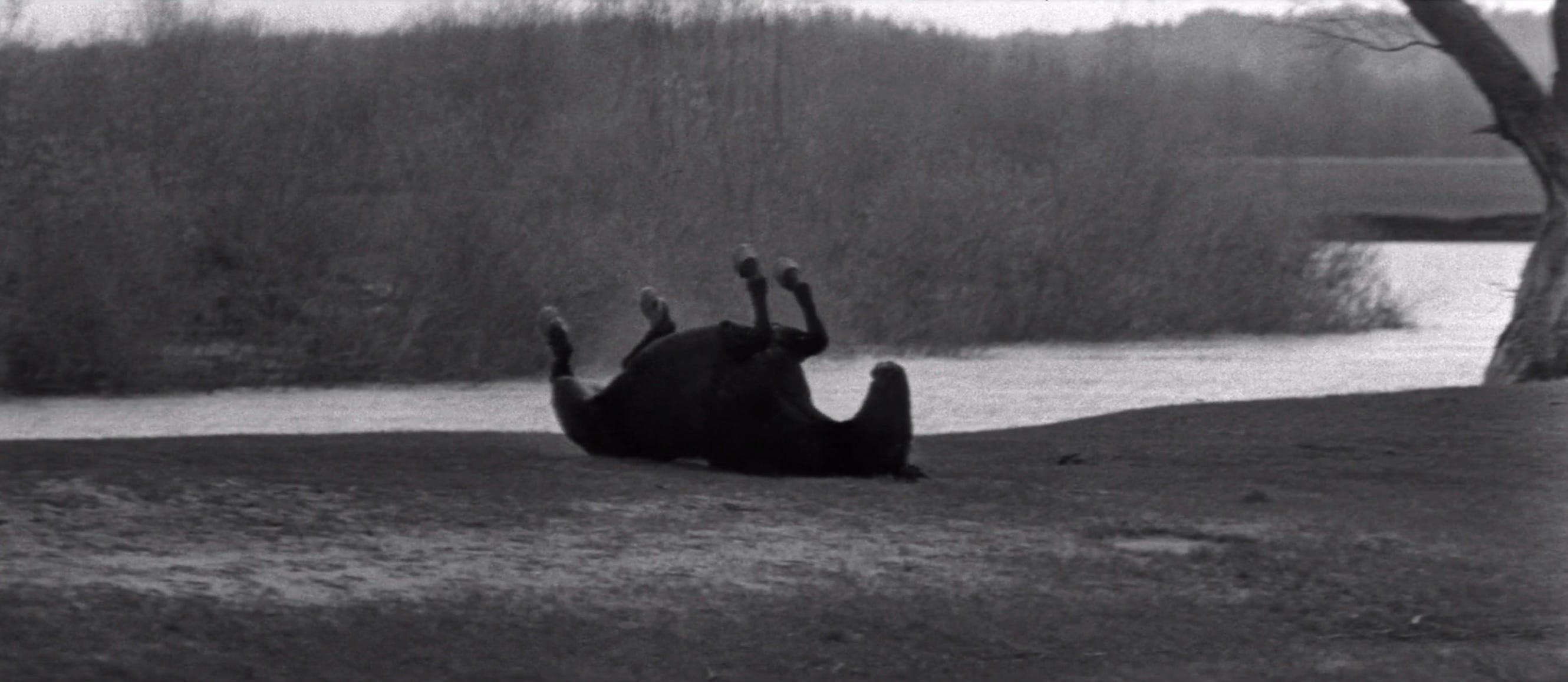
Fellow travellers,In the late 1960s, Soviet students and lecturers held a debate on the merits of Andrei Tarkovsky’s second feature, which had premiered to controversy in December ‘66 and would not be passed for release—slightly cut down—until 1971. Tarkovsky quotes from the debate’s transcript in his diary of September 1, 1970, and this speech from one of the film’s defenders sounds eerily familiar to us Suckers:Almost every speaker has asked why they have to be made to suffer all through the three hours of the film. […] It is because the twentieth century has seen the rise of a kind of emotional inflation. When we read in a newspaper that two million people have been butchered in Indonesia, it makes as much impression on us as an account of a hockey team winning a match. The same degree of impression! We fail to notice the monstrous discrepancy between these two events. The channels of our perception have been smoothed out to the point where we are no longer aware. However, I don’t want to preach about this. […] Only the point is that there are some artists who do make us feel the true measure of things.That closing description—attributed to a Maths professor—could either be of Tarkovsky himself or of Tarkovsky’s subject, the medieval monk and icon painter Andrei Rublev. This duality is, to say the least, appropriate for the film, being as it is about art and art-making—or, more precisely to its oblique, elliptical presentation, around art and art-making. How does one begin, or end, with something this fluid, that takes the complexities of the historical film (whereby it is about the era on screen and its era of production; about the figures on screen and the figures presenting them; and so on) to such esoteric, instinctual extremes? This is, to put it modestly, a biography of a Great Man—although it only rarely decides to analyse that man, and sometimes declines to involve him in the narrative at all. And, of course, much of this biography is completely made up.Though ultimately named, simply, Andrei Rublev, this epic is better thought in terms of its original title, The Passion of Andrei, which would refer more generally to the events and hardships that surrounded its subject (played by Anatoly Solonitsyn). Tarkovsky and his co-writer, Andrei Konchalovsky, understand their biopic not as that of a Great Man in the classic sense, nor even its cousin, the wannabe “complex” picture of a Tortured Genius. Their Rublev is, rather, part of the landscape, something of a Great Conduit for a higher calling, a possibly divine talent—that which we call art. In other words, their subject is not presented necessarily as some special genius in and of himself. He is little more (yet no less) than a spiritual vessel who channelled his historical moment (and, to follow the mindset of both Andrei the monk and Andrei the filmmaker, his access to God) into something creative. Historically Great, yes, but the provenance of that greatness is here profoundly diffused. This complex view of creative sensitivity—where the artist is at once passive, reactive and active, an onlooker and an agent, a face in the crowd and the story’s protagonist—infuses every part of the film and adds up less to another workaday hagiography than a living, breathing manifesto on the nature and meaning of artistic creation. It continues to demonstrate how cinematic biography can be used fully as cinema rather than the prosaic, over-plotted, essentially unimaginative point-and-shoot televisual garbage that comes around like clockwork every so-called awards season. (Tarkovsky once commented on filmmakers who rely on adaptation: “they have no ideas of their own. … If you stand for the truth, then you have to speak the truth. And if you do that it’s not always going to please everyone. So directors turn to adaptations.”)This thoughtfulness is manifest in the film’s loopy structure, which sees the whole break down not just into its 11 given chapters (including prologue and epilogue) but into a galaxy of small details that reflect larger moments elsewhere across the running time. One of its governing “Russian doll” type motifs (credit to Eddie for that comparison) is to comment upon its own structure in various microcosms within that structure. (An example of this is the prologue, which climaxes with an instance of the film before us “becoming” the result of its ballooning protagonist’s innovation and struggle by literally giving us an airborne panorama; so too the whole film climaxes with the film simply exhibiting Rublev’s paintings to us and thereby “becoming” the result of Rublev’s struggle.) This is all something of a foreshadow to the film’s striking and satisfying final minutes—but again, this nonpareil quasi-biopic is not working towards such straightforward, cause-and-effect narrative teleologies as one would expect. Here’s, perhaps, a better framework: Andrei Rublev is a work of art, made up of small details, all about the small details that make a work of art. The real key to understanding Rublev’s rhythms, dualities and contradictions comes with a short essay Tarkovsky wrote at the end of his life that constitutes the conclusion of his book, Sculpting in Time (completed and published in 1986). Here, the filmmaker posits that the most fulfilling approach to life rejects established social systems—including, necessarily, socialism, or at least the democratic socialisms that had been practised up to that point—but renounces, too, a rejection of society. One must instead be “responsible for [one]self,” to accept “the objective value and significance of the ‘I’ at the centre of [one’s] life on earth […] advancing towards the perfection in which there can be no egocentricity.” Having done this, one can participate more thoroughly, more responsibly, in the society, the community, surrounding them. In short, one must accept “society” as a collection of more-or-less altruistic individuals rather than something administrated by systemic governance, in order to start building a way forwards.This naturally says a lot about Tarkovsky’s work in general, but Rublev seems to enact his particular politics the most directly, not least in the way the film’s lead undertakes a vow of silence that essentially walls him up from his fellow man before a crucial revelation about the role of the creative that drives him to speak again and reconnect with the people. The means by which Rublev presents “what we feel about the age of Rublyov” (per a later line from the director’s diaries) is so defined by rumination, ellipsis, digression and unresolved debate as to come perhaps closer to “life”—that oblique, unresolvable entity—than any of his later, still more experimental films. It is this lived-in-ness, this sense of unfurling ideas straining against the ostensibly strict, “literary” structure, that sustains the film’s three unhurried hours. The rigorous use of unobtrusive editing, long takes and fluid, apparently observational camera movements bolster that thoughtful screenplay in a way that allows the work’s fractal nature to work as a sensory, lively—rather than purely intellectual—experience. Why, then, are viewers made to “suffer” throughout this long film? Well, the simple answer is that, alongside the suffering, there is beauty, contemplation, bravery and even humour. Rublev is rugged and lyrical; an earnest attempt at a work of Russian nationalist art that also expresses its director’s singular perspective. It is, in many senses, extraordinarily difficult for anything positive to emerge from any point in history, be that the 1400s, the 1960s or the 2020s, but the film is keen to stress that something positive can still emerge. That Maths professor quoted above concludes his thought on the role of artists, and this film’s particular focus on suffering, thus:… there are some artists who do make us feel the true measure of things. It is a burden which they carry throughout their lives, and we must be thankful to them.Thanks, as ever, for listening. Please do go for a wander into the muddy wilderness and tell whomever you encounter. —Calum & Eddie This is a public episode. If you would like to discuss this with other subscribers or get access to bonus episodes, visit solongsuckers.substack.com
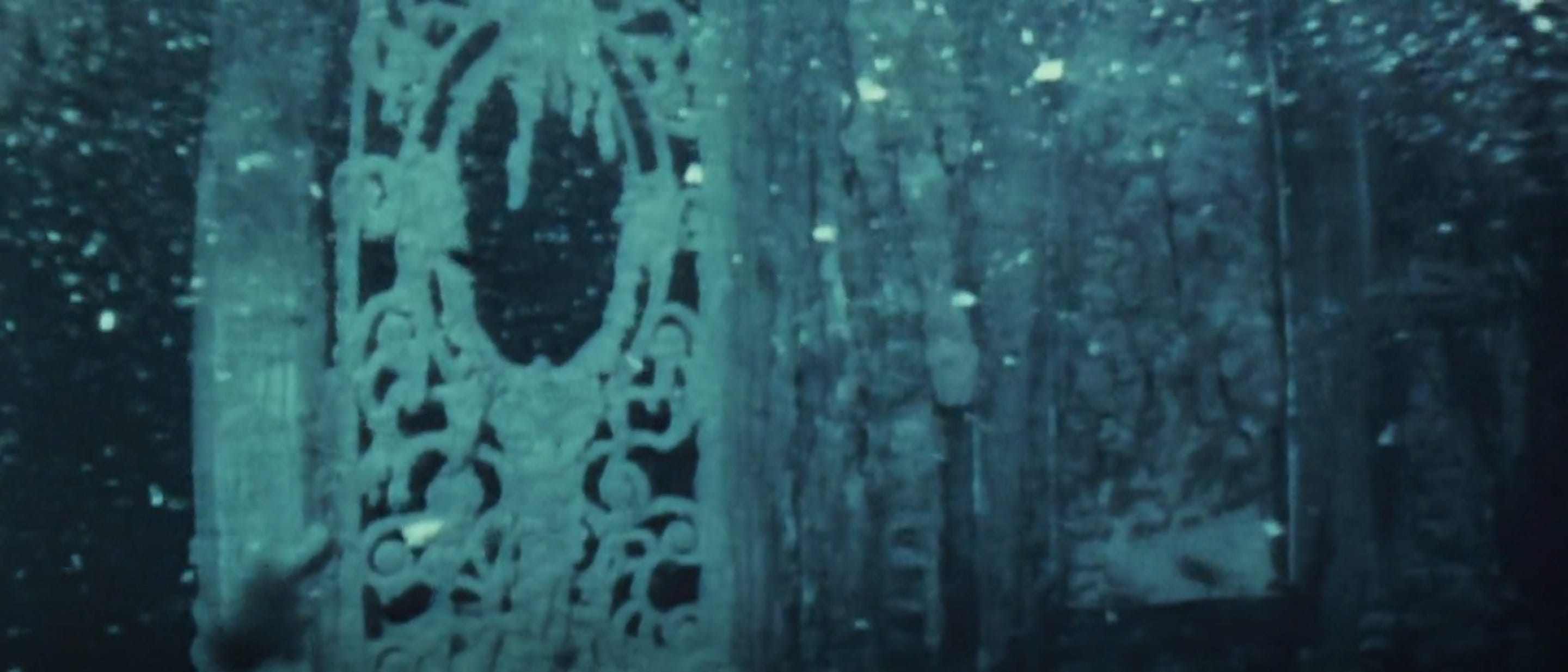
Fellow passengers, James Cameron’s films have a lot going on, but they are not thematically complex. Yet, there is something to the drawn-out ruination of his grandest vision, the three-hour Titanic (1997), that transcends his rollicking blockbuster style and its classical roots. As we observe (if hardly originally) on our latest podcast, the film is smartly cleaved into two halves, the former of which serving to intensify the latter. But, despite the way this highlights the narrative’s obvious point-of-no-return moment—the titular ship’s fateful iceberg collision—Cameron actually seems to stretch and weave his story’s various revelations across the whole run-time. During the film’s first half, Cameron tells two stories in parallel: primarily, that of Rose DeWitt Bukater (Kate Winslet), the betrothed New York aristocrat who begins to chafe against her social surroundings; and meanwhile, the dubious choices made by the Titanic’s men in charge that would lead, swiftly, to her sinking in the Atlantic ocean. Each narrative is presented with, frankly, the subtlety of a collapsing smokestack, but they do each rest on an involving sense of accumulation, as multiple major turns are made until everything, eventually, coalesces into the sustained chaos of the second half. Of course, Rose’s discoveries and decisions throughout are directed towards her ultimate survival and, more to the point, her thriving via the quasi-bohemian lessons learnt from her itinerant lover, Jack (Leonardo DiCaprio). The decisions made by ship captain Edward Smith (Bernard Hill) and managing director J Bruce Ismay (Jonathan Hyde), on the other hand, those that led to the deaths of over 1500 people, are each irreversible parts of the historical puzzle that Cameron, as both a storyteller and a literal deep-sea researcher, is attempting to reconstruct.This epic-novel structure, balancing the personal/fictive against the universal/historical, using one to reflect the other, immediately makes the film of a piece with a particular strand of Hollywood’s prestige products over the decades. It also sets the pace for Cameron’s particular approach to history: one inextricable from his showmanship, which takes form not just in technical spectacle but in the film’s constant stream of rhetorical flourishes. The tale-as-old-as-time tragic love story becomes a clotheshorse for all manner of ostentatious metaphors, all of which build a vision of the Titanic and its fate as a critical nexus for class, capitalism, Empire, misogyny, etc. etc. The film’s action-packed second half responds to several of the propositions of its rather more polite first half while taking the narrational reins from the Rose character—whose specific, personal reminiscences are our entry point to the aristocrat class—and passing them to the unseen director for his omniscient tour de force. In other words, Cameron uses his clear genre shift to delineate also his two theories of storytelling. As discussed on the podcast, he puts great effort into highlighting the importance of a personal oral narrative, while self-reflexively “justifying” this within a mode—the flash-bang stuff, essentially—that seems to say, at every turn, “See? You can’t look away!” Riffs on this split are also present in Terminator 2: Judgment Day (1991), True Lies (1994) and his co-authored screenplay for Kathryn Bigelow’s Strange Days (1995), all of which vary their modes of narration within the very specific context of thinking through the end of the world. Titanic’s particular, terrifying depiction of apocalypse in microcosm may bear a tonne of problematic baggage with its attempts at reconciling its various ideas and approaches, but the basic proposition with its converging thematic and narrative strands is an essential part of its overall effect.But, again: that big, mid-film shift is just the clearest, not the sole, mark of its balancing of modes. The oft maximalist treatment of this event, characterised by a conveyor belt of punchy, digestible scenes, allows for Cameron’s ideas to spread leisurely across the three hours. It creates a sense of illustrative rather than sequential plotting, despite being so defined by its obvious forward momentum. Think of the time and effort put into scenes such as Rose’s breakfast with Cal (Billy Zane), or Rose and Jack’s spitting over the side of the ship—or, more famously, of incidental details like the string quartet playing, giving up, then playing again for good. This is long filmmaking as grand over-stuffing, and it’s precisely that over-stuffing that makes this gaudy, middlebrow magnum opus so genuinely devastating. However questionable the aesthetics and ethics of Cameron’s presentation of a nasty historical tragedy, he sure makes you feel its full weight. As ever: thanks for listening. —Calum & Eddie This is a public episode. If you would like to discuss this with other subscribers or get access to bonus episodes, visit solongsuckers.substack.com

Dear friends,Towards the start of Chantal Akerman’s documentary Hotel Monterey (1972), Babette Mangolte’s camera captures three women waiting in the lobby of the titular building. One of them gets up and stands frame left; another stubs out her cigarette and leaves; our first subject then walks out of frame. The third remains on the lobby sofa, chewing on something and seeming a mite self-conscious as she glances back towards the camera a few times. This shot only lasts for 67 seconds, but with its fixed position (and only imperceptible movements) it carries a sense of obstinacy; it continues to roll, unabated, through its subjects’ visible indifference or discomfort.We are asked throughout Hotel Monterey—and so many of Akerman’s films—to consider the unique relationship of the motion picture camera to the real world: at once, a world that contains the camera, and a world contained and re-encoded by the camera. Following this lobby shot, Akerman and Mangolte get into an elevator; we see, from their own and their camera’s perspective, the door open onto a hallway of waiting guests, who then hesitate and ultimately decline to join them. Here, the camera literally becomes an intruder, physically obstructing a “normal” course of life. The obstinacy represented throughout by this almost entirely immobile apparatus is closely linked with one of the film’s other major motifs: that of the boundaries between public and private spheres. Hotel Monterey builds this using its space, moving cleverly over the course of the hour between lobby, elevators, corridors, rooms, rooftop and cityscape, each of which implying their own ways of thinking, moving and being. And, for the viewer, a question arises whenever another human appears on screen: why should we have the right to stare at people in the first place—is it just because they are in public? Jeanne Dielman, 23 quai du Commerce, 1080 Bruxelles (1975) is built around the spectator’s feeling of intrusion, which is closely linked with intimacy—that is, in order to intrude, one must be, or become, close to their subject. Akerman and Mangolte mine the discomfiture of this peculiar binary through a careful, analytic visual style that flattens Delphine Seyrig’s housewife protagonist into her surroundings. Even when she leaves her apartment, the visual grammar remains the same. Jeanne is constantly treated as if the subject of surveillance while we, of course, are the voyeurs. But then, this has tended to be precisely how the housewife archetype is seen on film, no matter their status. It can be considered something of a structuring joke that this is a deconstructed “woman’s film”: a domestic narrative that toys with melodrama conventions; one that could be sold, not quite dishonestly, with the lurid tagline, “Sex! Food prep! Murder!” And, as discussed at some length on the podcast, Akerman builds her film around a blackly comic use of the “female hysteria” trope, with Jeanne’s unexpected petit mort precipitating her apparent downfall. But the film, obviously, is not really a melodrama—and one of its distinguishing stylistic features is the way it demands and builds its own unexpected conditions and patterns of observation. A simple, common description of Jeanne Dielman is “slow”. Well, sure, but it also has quite the variety of slownesses, which use the intimacy afforded us—the very idea of being given this window into a life—to create a unique emotional knottiness. What are we bored by? What do we sympathise with? What are we critical of? Akerman’s assertions that her lengthy experiment is designed to leave in the “mundane” domestic actions usually excised from dramatic films, to become something of a tribute to her own mother and women like her mother, can be taken as both accusatory and knowing: we should perhaps feel guilty whenever we tire of Jeanne Dielman’s rhythms, though of course this tiredness—this deliberate attempt on the part of the filmmaker to frustrate our spectating experience—is fully intended. The film cannot work if we are bored, yet it can only work by endeavouring to bore us. But “boredom” is only one lens through which to examine the film’s methods. It remains, equally, a very exciting and startling experience and, indeed, almost celebratory. And its particular voyeuristic feel is what weaves together its many spiralling complexities—obstinacy is intrusion is intimacy and so on—via sheer stylistic clarity. This is a deep film, but not necessarily a difficult one. As we continue to watch, to sink in to the careful and oft repetitious actions, to make our attempts to read Seyrig’s ingenious, closed performance, we gain the distinct impression of being first admitted, then eventually invited in, to a space so personal as to not—if only at first glance—actually contain any semblance of “action” or “performance”. Again, it is both comforting and disorienting; a calmly hypnotic work that wants to keep us distant. And by giving the viewer a space so apparently devoid of cinema’s expected contents and stylistic flourishes, Akerman makes it quite clear that how we watch is intrinsically tied to what we watch.A key question being asked, ultimately, is not just why certain actions and images are left out of so much art, and so much mainstream and “accepted” art, but why, more broadly, certain things should be considered “private” in the first place. One thinks of the sex scene in Akerman’s Je tu il elle (1974), that so disrupts what one thinks of as a sex scene. This nonpareil artist’s exploration of social boundaries is far more productive (and, indeed, more deeply moving) than your paradigmatic “equal opportunities offender” so intent on simply pushing or breaking those boundaries; Akerman wants to explore what the “line” means in the first place, how it works, why it is, what it can do. Whether she’s directly confronting us over the role of the camera in a midst of a real, quotidian life or playing with a character’s relationship to their artificial settings, Akerman is always worth watching and rewatching for the way she has so thoroughly remoulded what watching is. As ever, thanks for listening—and we apologise for the lengthy delay since our last episode and post. Stay tuned for a blockbuster episode #8 in the coming weeks; in the meantime, please do leave us those sweet, sweet five-star ratings on Apple and Spotify and, of course, share us around with your awesome art-loving pals!—Calum & Eddie This is a public episode. If you would like to discuss this with other subscribers or get access to bonus episodes, visit solongsuckers.substack.com
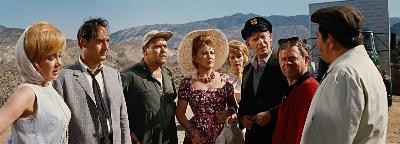
Dear friends,Around a third of the way through Stanley Kramer’s “ultimate comedy”, enraged everyman Jonathan Winters—amply aided by supporting comics Marvin Kaplan and Arnold Stang—completely destroys a desert gas station. The walls collapse, roofing and awnings come down and, in a final, hysterical grace note, Winters backs his truck into a water tower and sends it buckling to the ground, flooding the demolished set. Except that wasn’t quite what happened.On the day, with Winters preparing to reverse, the tower collapsed a few seconds earlier than intended, throwing the timing off. What the editors—Gene Fowler Jr, Robert C Jones and Frederic Knudtson—and legendary photographic effects specialist Linwood G Dunn did to save this expensive mistake was to splice the frame itself in two and slightly slow down the half with the tower on. Et voilà, a classic slapstick moment. Many would have it that comedy’s all about the timing, but here we have a strange example of timing gone completely wrong then fixed in post production. In many ways, this is emblematic of Kramer’s film as a whole: a wildly inventive and unwieldy blend of old ideas and new approaches that uses most every available film technology of the time in a convoluted effort to make ‘em laugh.Key to this sense of reaching through American film history is It’s a Mad Mad Mad Mad World’s nominal star, Spencer Tracy. As Chief of Detectives TG Culpeper, Tracy’s presence speaks less to obvious traditions in comedy and more to a wider corpus of all-American heroes from throughout Hollywood’s golden age. For a film defined by its relationship to the industry’s evolving blockbuster just as much as the wacky world of screen comedy, this central, authoritative link with the cinema’s popular dreams of yore is a crucial one. Tracy allows the rest of the picture—not least its main ensemble, almost all of whom were television and radio, rather than cinematic, comics—to run wild.Yet, Culpeper himself is arguably the strangest, wildest and most complex character of the entire piece. Both a relatable, ordinary friendly face and an untouchable star figure; both the moral centre of the film and its dead-eyed villain; both an accomplished professional and an abject schmo—the story’s biggest loser. It’s all there in his simple costume: having spent much of the film in the shirtsleeves, tie and suspenders characteristic of some mid-level worker suffering in the office heat, when Tracy makes his fateful decision to go after the money himself he dons a dark jacket and fedora, his bearing as he closes in on his hapless stooges becoming suddenly cagey. Perhaps worst of all, he uses his avuncular, paternal charm to warmly tell the others not to worry—the law will go easy on them if they turn themselves in. The moment in question seems to parody some pat, moralising children’s drama (“No matter what you’ve all done today, you’re not really criminals… ”), the dark twist being that here, the kindly hero is manipulating a group of fools into letting him run to Mexico with $350,000 in stolen cash.If, as we discuss fairly extensively on mic, the film as a whole never truly finalises its “take” on Culpeper or its own definition of “greed”, at the very least this thematic distension speaks to the sheer range of ideas on display, and the complicated and relatable contradictions at the heart of its desperate protagonist. James L Brooks—something of a spiritual descendent of Kramer—has often described Mike Nichols’s The Graduate (1967) as containing “every kind of joke”, but this may be better applied to It’s a Mad Mad Mad Mad World. By the time Kramer stages his grand and now completely cartoonish finale in front of an actual audience assembled on the Universal backlot, it feels like the world itself has indeed crumbled into madness. The story and its own exhibition have been blended together within the film, a concept that only gets crazier when considered alongside the “police radios” actually broadcast into the lobbies and toilets of real-life theatres during intermission. And such ambitious use of cinematic space is possibly the defining characteristic of this dazzling, widescreen beauty.Throughout the film, our bickering buffoons enjoy some basic physical agency over the pliable, constructed world around them. We’re treated variously to Winters destroying the gas station (a set that, as Eddie points out in the podcast, is literally designed to be destroyed); Sid Caesar and Edie Adams doing the same to a hardware store basement; Dick Shawn arriving to smash up two cars simultaneously; and Mickey Rooney and Buddy Hackett flying their hired plane first through a billboard then straight into an airport restaurant. But at the end of it all, the characters themselves become literal puppets, subject to the whims of a stop motion firetruck ladder and flung randomly through the air. It’s as if they’ve been fused with the production itself, finally made a part of the all-encompassing comic mise-en-scène just as much as any other prop. In short, whatever “failings” we associate with this famously unwieldy and not entirely profitable paean to American comedy, it would be folly to equate that same lumpen effect with a lack of due care and attention. Whether the film truly “works” is, of course, up to the individual viewer, but it seems undeniable that in his attempt to make the “ultimate” comedy—so grand and ambitious that it may as well be the last comedy ever made—Stanley Kramer, along with writers William and Tania Rose, his extraordinarily gifted ensemble of kvetching ad-libbers, and a small army of Hollywood’s best craftspeople, actually pulled it off. For goodness’ sake, this is a film that brings in and foregrounds the Three Stooges then dares to completely withhold them. In that sense alone, it may not be the “best” comedy but it’s damn sure among the most confident. As ever, thanks for listening—and please give us a quick rate/review on your favourite podcasting app! —Calum & Eddie This is a public episode. If you would like to discuss this with other subscribers or get access to bonus episodes, visit solongsuckers.substack.com
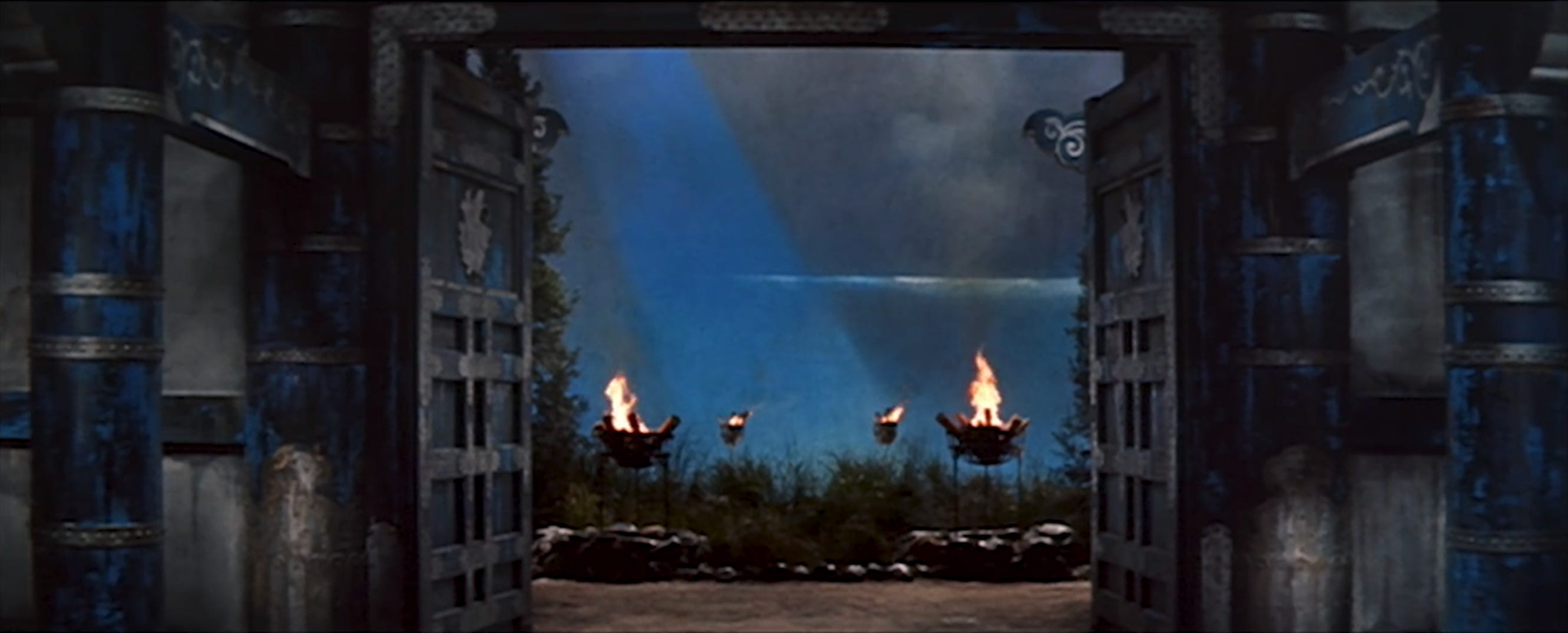
Dear friends,In his 1993 book Spectres of Marx, Jacques Derrida argued that though the USSR had recently collapsed and Francis Fukuyama’s neoliberal “end of history” pronounced, the key ideas and approaches of Marxism not only survived but were, in effect, indelible. To explain this he used the titular metaphor of the spectre, itself taken from the opening line of The Communist Manifesto, and coined the word “hauntology” as playful reference to the way the past is always intrinsic to the present. He also threw in a bunch of Hamlet references for good measure, because of course he did. In our latest podcast episode, Eddie mentions the “hauntological quality” of Masaki Kobayashi’s 1964 film Kwaidan, which presents an artful anthology of ghost stories set throughout Japan’s distant past. We’re hardly the first to observe that if its main text depicts quite literal hauntings, its deep and fascinating subtext is obsessed with the more abstract hauntings of history. In Kwaidan, humans meet with spirits that prove variously demanding, accusatory or violent. The titular onryō of ‘The Black Hair’, our first encounter with the otherworldly, is arguably the only one of the film’s demons with any clear motivation for her bloodthirst. Beyond this, we are introduced to types from throughout folklore that seem simply malevolent (‘A Cup of Tea’’s Heinai Shikibu), manipulative (the complexly characterised yuki-onna of ‘The Woman of the Snow’) or both, as in the spectral samurai that torments Hoichi in the feature’s third segment. That these ghouls are shown to spring so physically from the very fabric of the characters’ worlds—earth, snow, wind, fire and water all figure—is, in Kobayashi’s logic, no accident. As in the military motif that hangs over here from his previous films, it seems that in his figuring, Japanese culture and society on the whole are inescapably haunted by these barely concealed nasties. It’s quite the radical approach to folk tale narration.The very structure of the film, despite its languid pace, seems to crash each of the four stories into one another with relatively abrupt transitions: freeze frames, quick fades to black, silence. Moreover, the action within these stories seems to intensify and, arguably, grow ever stranger. Aside from the obvious comparison—Kobayashi’s Hara-kiri—Kwaidan bears reading alongside Kaneto Shindo’s Onibaba, released just weeks earlier, in November 1964. Here, too, the occult logic of the folk tale is played out in a medieval setting, with war and the military again serving as a key part of the text. But most intriguing is the way it also smashes together spaces and temporalities, shifting fluidly between night, day and various interstitial gloamings while blending its apparently 14th-century backdrop with a perfectly clear 20th-century framework—that is, not only does it symbolically allude to the atomic bomb, it even uses its sometimes evasive dialogue to create the implication that its events could actually be occurring in the wake of just such an event. (It’s folly to lean too hard on this, especially with the samurai presence, but the hermetic seal of its rural setting and limited cast draw us away from an ultra specific historical context and instead into something malleable enough that a reference to Kyoto having “burned to the ground” takes on a broad dystopic quality.) Ultimately, both of these films offer glimpses into a spirit world whose morals align only obliquely with those of our physical realm. The intensified erotics of Onibaba become reified in the demonic mask that causes havoc in the final reel, but in a way that only offers ellipsis, right down to its ambiguous closing shot: what, specifically, is this spirit punishing and what, if indeed anything, is it sanctioning? So, too, is Kwaidan marked by its presentation of its culture’s spiritual world and folkloric tradition as sites of ethical ambivalence. Derrida wrote in Spectres of Marx, “[a]ll national rootedness […] is rooted first of all in the memory or the anxiety of a displaced—or displaceable—population,” and this certainly speaks to the way in which Kobayashi’s human subjects (as well as Shindo’s) fit into a landscape marked by civil wars, as well as restrictive ways of being that have been forced upon them by greater forces. This is where Kwaidan’s length comes in. The luxurious three hours allow for a quietly insistent repetition and variation on its most horrifying overarching theme: whatever the reason, whatever the period, whoever you are, history’s always waiting somewhere, ready to pop up and haunt you. As ever, thanks for listening.—Calum & Eddie This is a public episode. If you would like to discuss this with other subscribers or get access to bonus episodes, visit solongsuckers.substack.com
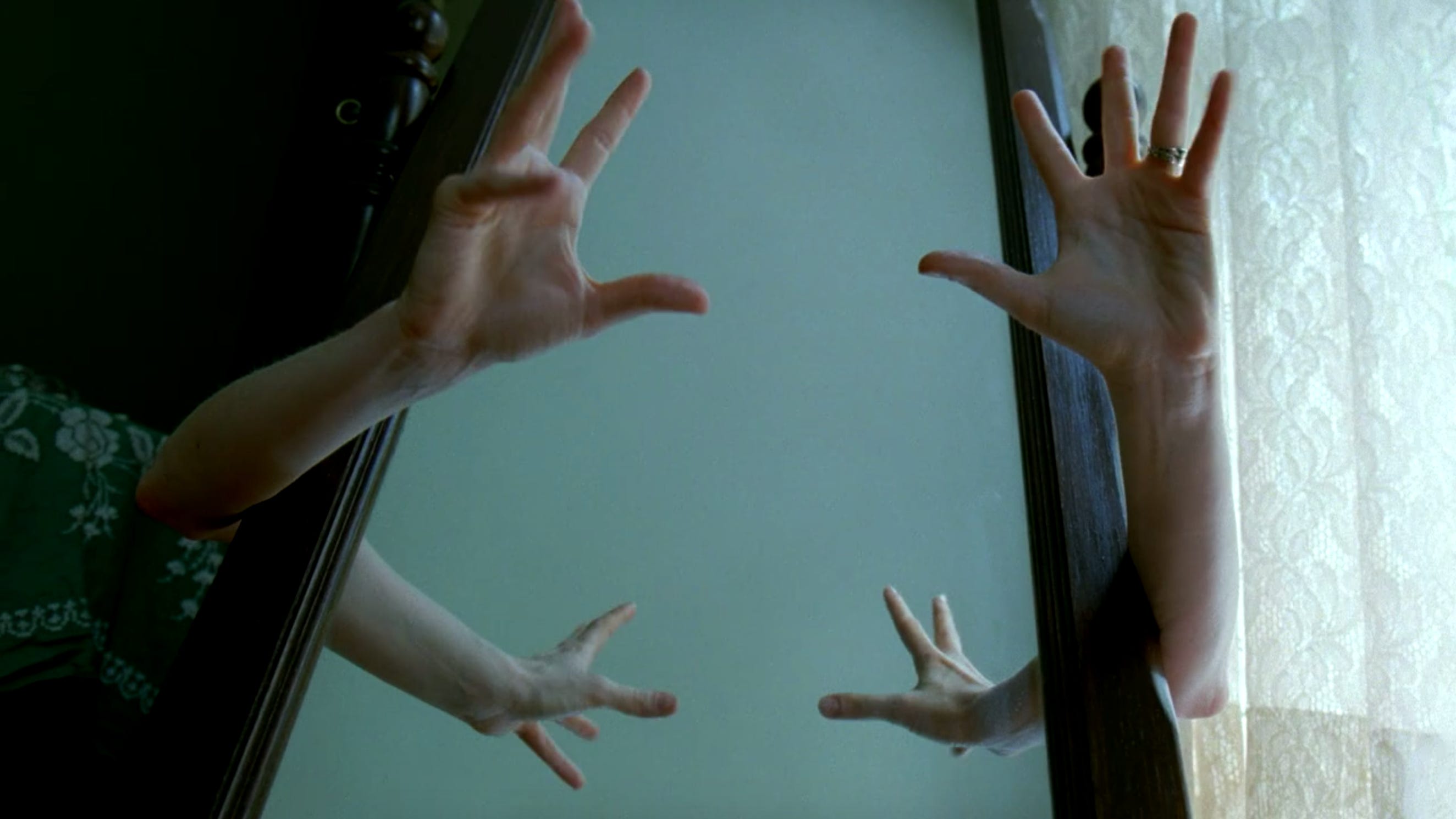
Dear friends,In his 1978 period drama Days of Heaven, Terrence Malick chooses to stage a key plot development as a shadow play. During a night of entertainments, Sam Shepard’s landowning patsy (“the Farmer”) observes in blown-up silhouette his wife Abby (Brooke Adams) and her supposed brother Bill (Richard Gere) having a moment of apparently more-than-sibling intimacy. The softened liminality of the visual—shadows on a lightly fluttering sheet, viewed from the character’s POV in mid-long shot—is one that defines Malick’s cinema. In this director’s stylistic logic, the shot represents a journey from ignorance to enlightenment through a moment of obscure, personal interpretation. The Farmer’s observation doesn’t contain anything inherently suspicious; rather, it seems to crown a series of signals that have been accumulating for some time. Malick often uses cloth, curtains and a variety of physical structures to visually represent passage, in a manner reflective of certain conventions in Japanese art and film, and this image of literal projection playfully takes us into his drama’s final act. But in Malick’s ironic Eden, the Farmer’s revelation begets progression for some and regression for others. Indeed, in this scene, behind the veil, Bill purrs to Abby, “I don’t know if I’m coming or going.”In Malick’s fifth feature, The Tree of Life (2011), boundaries become yet more permeable, with most every shot in motion and each cut creating an almost tangible passage between states—spaces and periods, certainly, but also states of mind; snippets of thought and memory. Joining these other tools of the cinema on this higher plane of perception is the soundtrack, which similarly liquidises the diegesis into a dynamic whirlpool of ideas and emotions.Malick’s style here is a clear progression from approaches he’d developed with The New World (2005), and, before that, his first “comeback” movie The Thin Red Line (1998), which represented a major breakthrough after a two-decade dormancy. This in turn, however, still bears close stylistic and formal resemblances to Days of Heaven and to his debut, 1973’s Badlands. In other words, The Tree of Life is itself another node in a fluid and evolving project: the Malick filmography as a whole. To be sure, the oeuvre of many a filmmaker possesses plenty of coherence and even deliberate reflexion and self-reference; what Malick’s 10 features represent goes deeper than this. Indeed, the trio of films he released after Tree of Life (To the Wonder; Knight of Cups; Song to Song) seem impossible to view separately from one another and from his preceding work, to an almost daring degree. And with his latest, A Hidden Life (2019), Malick reconciles his recent temporal experiments with the more accessible linearity that marked his films prior to Tree of Life. Though the film, which is essentially a biopic treatment of WWII-era conscientious objector Franz Jägerstätter, is organised around a clear chronology, the voiceover epistolary narration that marks much of its duration manages once again to collapse distinctions in space and time and, movingly, keeps its separated protagonist-couple together, if only spiritually.This is not to suggest anything as prosaic (or dunderheaded) as an overarching, pre-plotted blueprint to Malick’s filmography. He is, of course, working as he goes along and so much of the fascination to his evolutions is the sensation of watching his many philosophical concerns being worked out in real time—both meta-textually (as a stream of individual but related releases), and within the films themselves, which almost bear the scars and records of their time upon the editing table. The Tree of Life is something of a mission statement, in that case: Malick’s only film to dip into autobiography (though any literal meaning here should be taken with a pinch of salt) also, crucially, locates its examination of mid 20th century boyhood as part of a grand flow of time that is marked by not finitude but by its endless tendrils of experience, sensuality and interpretation. In other words, the specific project of The Tree of Life—presenting a singular subjectivity as set within the cosmos—reflects the film’s own position as part of Malick’s oeuvre and within traditions in cinema, in narrative art more broadly and even in human and pre-human consciousness. Pretty heavy, but that’s exactly what the film invites.All this is what makes the very concept of an “extended edition” for this film utterly tantalising. If we can call Malick’s existing cinema one of “permeability” then this recut—released in the same year as his similar Voyage of Time, which itself has two very different cuts—deliberately invites questions about finality and authority, and shows that any “completed” work is only so by intuition, a kind of happenstance. (The exemplar “final brushstroke” comes to mind.) Malick’s art often rests (to an extent) on instinct, but this admission that the original Tree of Life, while functionally “final”, can in fact still be altered and developed is a fascinating meta-cinematic adjunct. It raises not only interesting academic questions of semantics and epistemology as they relate to filmmaking and narrative practices, it also speaks to the very notion of time as a governing concept in our lives. In other words, if we use stories partially as a way of passing time, what does it mean for a creator to then dissolve their story even further into the logic of our “real” time—to transform the film from something “separate”, with its own ostensibly unalterable duration, into something that instead reflects the genuine malleability of our thoughts and experiences? In many ways, the film—released at the start of the 2010s—predicted much of what technology has since done to concepts of time, memory, record and the screen, and the extended edition—released towards the end of the same decade—takes active control of the oft disquieting questions that have thus arisen. We don’t need to list all those questions here. But it’s amazing to revisit The Tree of Life, and Malick as a whole, in view of the hours we now waste staring at screens, keeping engaged, hobbling our concentration, smothering our minds. Central to his project is the give-and-take between viewer and film, and now this process is looser than ever, and to what ends we can only guess at. In short, we’ve come a long way from live shadow performances.—Calum & Eddie This is a public episode. If you would like to discuss this with other subscribers or get access to bonus episodes, visit solongsuckers.substack.com
Dear pals, If you listen to the friends of OJ Simpson for long enough, you get the impression that the football superstar, suspected murderer and convicted armed robber has never told the truth in his life. Oral evidence of this abounds throughout the seven-plus hours that make up Ezra Edelman’s multifaceted portrait of “the Juice”, Made in America, all from the mouths of people who claim to have known Simpson well. From denying wrongdoing and selling his friends out during his school days to openly using “spare” golf balls as a full-grown man, the first 45 years of Simpson’s life seems essentially to have geared up to denying, in a court of law and on internationally-broadcast television—and with all the evidence stacked against him—that he had brutally murdered two people.Edelman’s 2016 film is, among many other things, about truth itself. Though that sounds painfully trite, the way the theme is approached in this case remains subtle and fascinating. The film—more popularly known for its broadcast format as a five-part “event” miniseries—is Edelman’s third as director and takes on the familiar style of his chosen genre, the sports documentary. New talking head interviews are interspersed with archive footage to construct an accessible picture of the figure under discussion and, in keeping with genre trends of its decade, voiceover narration is eschewed entirely—lending a flavour of horse’s-mouth authenticity. But the way Edelman uses his ever-expanding run time to twist and interrogate his own authority as a journalist makes Made in America a cut above even the very best of his fellow ESPN 30 for 30 series instalments. Edelman, as we mention in the podcast, reportedly began this project with the same opinion that he—along with much of America’s Black population—had reportedly held in the mid 1990s: that OJ was somehow set up and persecuted for his rarefied status as a powerful and influential Black man. As Edelman proves by the end of his own film, this notion of innocence was almost certainly wishful thinking. So it is that he uses the sometimes brilliant, sometimes troubling, sometimes clearly and deliberately false testimony of his interviewees not only to both justify and interrogate his original position but also to demonstrate that the systematic revision of that position comes with a hefty load of caveats. (That Edelman’s tight central focus on Simpson’s trial as a nexus for America’s problems with race swallows up a significant detail—namely, two people were murdered and this has never officially been solved—is a problem we spend some time working through.) When Made in America points to and deconstructs Simpson’s careful manipulation of his own image, as a strong but friendly and, significantly, “race-less” all-American hero, it pointedly does so at the same time as it ironically appropriates conventions of the hagiographic documentary film—a film like, for instance, Edelman’s own HBO doc Magic & Bird: A Courtship of Rivals (2010). Sometimes Made in America asks merely for observational study. Indeed, due to sheer run time, we spend more time with various characters than we ever would in a standard single film. Edelman’s camera often lingers on his speakers during pauses and silences, giving the viewer generous time to consider whether they believe this person, whether they trust them and even if and how they would respond were they in the interviewer’s position. This is perhaps at its most potent whenever any of Simpson’s cartoonishly smug, slimy defence team appear on screen; but then, such is the film’s potent and articulate scepticism of institutions, class ideals and even the relationship between itself and its own imagery that, frankly, the bullshit meter already feels off the charts for most every speaker. But that scepticism is a direct result of the film’s knowing construction, and speaks to a gap between its encouragement of observation and its clear manipulation. An aesthetic question arises whenever we see news footage: that is, shot sequences that have been appropriated, but not originally edited by, Edelman and his team. (Or, indeed, when we note that the funniest part of the film is simply an unaltered sequence from The Naked Gun.) It speaks to how the documentarian has great power over their material but only to a point: much of the archive footage is simply what it is, of course; meanwhile, the film’s original footage is defined by its interviewees, who bring their own agendas and their own canny methods of communicating. All this to say that for all its expanse and rigour this is still a subjective and quite personal critical study. Edelman’s coup is in using the inherent populism of his chosen form to mount an interrogation of himself and the viewer—of our own shared complicity in the questions raised about race, stardom, class and society. In examining Made in America for its structural lengthiness as much as the trenchant and cogently expressed ideas it contains, one can argue that the “punishment” implicit in asking a viewer to sit with something (and something so relentlessly dark) for this long is in fact linked to the directness with which Edelman editorially assails us, and which is in turn reflected more obviously in the way his voice occasionally steps in to gently interrogate his subjects. (This whole point, of course, is predicated on treating the film as a film rather than a series of episodes.) This is a palpably painful piece of work made all the more so by the fact that its unwieldiness still can’t bridge the morass between creator—who rarely appears to involve himself in the film—and its actual subject, who exists only in the archives and becomes, for all the centrality of his iconic face, a tantalising structuring absence. Made in America, a forensic study of tragedy, builds up only to yet another omission: the recorded words of OJ Simpson himself, entreating us to remember him as the Juice—a memory so tarnished as to be functionally non-existent.Please note we’re returning to content warnings with this episode—the film, and our discussion, entails: physical and psychological domestic abuse; racist violence and white supremacist institutional behaviours; and graphic images of double murder that Edelman shows on screen. As ever, thanks for listening—please do share us around if you can, and please rate & review us on Apple Podcasts!—Calum & Eddie This is a public episode. If you would like to discuss this with other subscribers or get access to bonus episodes, visit solongsuckers.substack.com
Dear friends, A century after production started, and 94 years since its first public screening, Abel Gance’s silent historical epic Napoléon is still being completed. The mere thought could no doubt give most working filmmakers (and a goodly number of critics) deep pause, if not shuddering anxiety. Yet, for a film so defined—in its very form, its voice—by its maker’s grand ambitions, surely there is no more fitting state for it than one of constant flux? Gance wished this work to transform the cinema. In an immediate sense, history was against him, with unapproved and inferior cuts shipped to various markets that would help doom the film’s chances as a budding blockbuster and prevent Gance from working on his planned sequels. But with so many versions out in the world—none of which as long as the second cut, Gance’s seven-hour, yet still incomplete “version définitive” of May ‘27—Napoléon has weirdly succeeded in transcending the usual, tangible conditions of its form. Forget what we know of “director’s cuts” and even the re-discoveries of lost footage that continue to define our relationship with early cinema. This is a work with upwards of 20 different extant structures—and those are just the versions of note. Gance himself would constantly tinker with his Napoléon throughout the following half-century. He attempted to secure funding for the remaining acts, but of course never succeeded. Instead, he turned to updates for the original footage, as a way of keeping up with the times: adding synchronised sound, new tinting and coloration and even shooting new scenes, including his own return to the role of Saint-Just in the 1950s. (Saint-Just was executed at the age of 26; Gance had already been nearing 40 when he played him in the mid 1920s.) His Austerlitz of 1960 was a star-studded attempt to recapture relevance for the ongoing Bonaparte project, but its fundamental failure, certainly when compared to the 1927 build-up, was its more conventional, commercial styling. In his own subsequent cuts, Gance’s friend and Napoléon acolyte Kevin Brownlow would essentially ignore these strange alterations so as to reclaim a kind of purity. So it is that, although the current BFI cut may count functionally as the most complete and most faithful restoration of Gance and editor Marguerite Beaugé’s original work, it is still one that bears these fascinating fundamental disconnects from the apparent (and often movingly ill-advised) intentions of the director over the intervening years. All this to say that, a century on, the present Napoléon vu par Abel Gance works so well despite its rather precarious relationship to its own original form. There is still much missing material (though the version définitive is said to be soon getting a major Netflix-backed restoration from the Cinémathèque Française—historically, not the greatest Gance supporters), but at the same time footage is included that was not exactly in either of the original two cuts. So we’ll never just see the Gance Napoléon. It’s a shadow. What continues to shine through is the vibrance of the cinematic ideas being thrown at the screen. We feel Beaugé’s steady hand during the more audacious montage sequences (what it must have been to construct the finale’s tripartite blizzard of imageries using the equipment of 1927!) and in other parts, variously, the seminal presences of contributors including cameramen Jules Kruger, Joseph-Louis Mundviller, Georges Lucas, Paul Briquet and Léonce-Henry Burel; assistant directors Henri Andréani, Mario Nalpas, Pierre Danis, Viacheslav Tourjansky, Henry Krauss and Alexander Volkoff; and the “chief technical director” Simon Feldman, whose role was, as we understand it, self-created. And—though it can be hard to parse on a first viewing—we feel the incredible commitment of Albert Dieudonné, channeling his title role and giving this creative whirlwind its iconic centre.Napoléon was intended as an ecstatic evocation of greatness, seen through one singular national figure. What remains of this is only really an elliptical sketch, overtaken instead by the brilliance of those doing the sketching. Napoléon Bonaparte is long dead, but Napoléon vu par Abel Gance could well live forever. —Calum & Eddie This is a public episode. If you would like to discuss this with other subscribers or get access to bonus episodes, visit solongsuckers.substack.com
Hello friends, Here’s the first of our occasional sidebars—in this case an essay on duration in For a Few Dollars More, as a general companion to our episode on Once Upon a Time in America. If you prefer, you can choose instead to listen to this essay as a podcast, both above and on Spotify. Thanks for your support! —CalumWe’ve mentioned on mic the idea of “dick swinging” (or, indeed, dick measuring) in relation to long films, but with very few exceptions this is more a case of public perception than of actual authorial intent. So conditioned is the general public to spurious notions of “pretentious” and “overreaching” artists—neither of which have any real definition and are, along with “political correctness” et al., essentially propagandist coinages to better subsume free (indeed progressive) thought and practice to an avaricious machine—that a lengthy run-time in and of itself will often be looked upon with automatic suspicion. This of course applies not just to lengthy or epic work but to anything with a particular level of creative single-mindedness or distance from the conventional; that so many lengthy films will also work within a somewhat more esoteric, harder-to-grasp style, of course, only exacerbates their various reputations. In other words, it’s not that the artist has disappeared up their own arse; it’s that we can’t be arsed to engage.At the same time, though, if a filmmaker is to dare push ahead with such an anticommercial prospect as a three-plus-hour piece (anticommercial in terms of assumed audience engagement and more literally in terms of potential screenings/ticket numbers per day), a certain level of self-belief (or, indeed, what we call “egotism”) is clearly necessary. This brings us around to our first episode’s subject, il maestro Sergio Leone, and his own experiments in what some lazy criticasters will still persist in calling “self-indulgence”—as if art isn’t by its definition an indulgence for the self. One of my favourite sequences in all Leone comes nearly an hour into his third feature, For a Few Dollars More. The two bounty-hunting protagonists, Clint Eastwood’s taciturn Man with No Name (herein referred to as “Manco”) and Lee Van Cleef’s more dudeish, sometimes affable Col. Mortimer, finally meet, after dark in the centre of El Paso. The moment is framed, as with so many great Leone showdowns, with a reflexive sense of spectatorship: here, three young boys crawl under a building to watch proceedings and offer their own commentary. Right away, therefore, we’re conditioned to feel as if these rivals are performing something (which they are), but more deeply that the filmmakers are showing something off. Indeed, this feeling remains throughout the scene, beautifully shot by Massimo Dallamano: the ever-luxurious sense of space and composition is amped up with careful lighting, giving the heretofore diurnal film a new luminescent quality that will return later when these same characters make a tense robbery attempt. And, of course, this is one of those great scenes in which Leone shows off his ability to use silence—as important a feature of his cinema as his maverick musical collaborator Morricone. If showmanship is ever present in Leone’s style, it’s of particular interest to this single brief sequence because the on-screen action is so uniquely tied to precisely that urge. The men size each other up in a manner familiar to fans of predecessor A Fistful of Dollars, with its climactic stand-off. But rather than working towards a gun duel—with its clear life-or-death stakes—here, the characters just peacock about for a few minutes. Eastwood scuffs Van Cleef’s shoe. Van Cleef returns the gesture. Eastwood punches him to the ground. Van Cleef stands up, dusts himself off and bends to pick up his hat—but Eastwood whips his gun out and fires, knocking the hat several metres away. Van Cleef walks patiently over to pick it up. As he bends down, Eastwood shoots the hat again, propelling it further backwards. This repeats, with its careful pacing, for three more bullets—until finally, the hat is too far away for Eastwood to hit. Van Cleef, retaining his incredible calm, now finds his moment, raising his custom-built pistol with its distinctive lengthy barrel and firing—blasting Eastwood’s hat right off his head. Before we dive into the formal stuff, let’s just make one thing clear: this is all fucking hilarious. The biggest laff of the piece? Eastwood’s face after Van Cleef scuffs his boot:The sequence on paper has a clear immediate narrative justification: it gets the two lead characters together for the alliance that will drive the rest of the film. But as Leone will increasingly dare to do in his films, the scene’s length with its near absurd pacing marks it out well beyond any conventional expectation. As we’ve noted with the heavy stylisation of Once Upon a Time in America, those sequences in which are explored a kind of formalised “pointlessness” seem to bear the hand of their director. They draw out simple ideas—here, two evenly-matched gunslingers finding a begrudging mutual respect—into expansive spaces of action that, were it not for the clearly rigorous visual sense, almost bear the mark of the ad lib. It is in this sense that the hat sequence becomes a true stand-out in Leone’s brief filmography. Literally speaking, this film—the first of his westerns to exceed two hours in run time—begins the director’s increasing tendency to expansive pacing. But I love the way Manco and Mortimer’s cocksure display itself acts as a microcosm of Leone’s confident approach. Previous Leonean gunplay, as well as much subsequent Leonean gunplay, rests on the recognisable, classical drama of the duel. Opening the film is the introduction of Mortimer and his customised shooter; the aim of that scene is no more complex than a hired hand bringing in his target. Here, however, these two men, with their guns, their aim and their poise, are simply taking the time to show off to one another. Of course, as ever with Leone matters are as much mythical as macho and this sequence is arguably one of the director’s clearest evocations of the fable mode. Its cheerfully repetitive structure reflects that adopted by countless traditional folk tales from across Europe, including those compiled from around Italy in Italian the previous decade by Italo Calvino. And, indeed, so it is that the repetition of action not only works as a character-building peacock act but also a specific process with a defined function: to bring the two characters together in a respectful alliance. It is a classic fabulist side quest. One reason, though, that this remains arguably less straightforward than even Once Upon a Time in America is that the protagonist here—Leone’s original and archetypal “folk hero” the Man with No Name—possesses, works in and represents such a fluid moral framework. It is correct to refer to him as an “antihero”, but compare him to America’s antihero Noodles, who is our sympathetic way into the text and often a grotesque villain. This is much easier to understand, hermeneutically. But Manco, with his clearer set of foundational morals but primarily self-serving motivations, poses I think a greater set of problems in terms of identification. Here, the character’s raison d’être keeps him largely aloof from the squabbles of the more righteous, vengeful Mortimer and the weirdly soulful, perennially stoned, villain El Indio—though all three are of course decidedly profane in their manners and goals. Manco’s status as a wandering folk hero is defined not by any specific acts of heroism or a clearly defined and constantly restated code of principles, but instead his louche libertarianism. His occasional sops to Manichean moralising swing between a kind of “bare minimum”—such as the Fistful of Dollars subplot that sees him help a perfectly innocent local family—and something more complexly personalised and arguably almost folklorist, as in his final scenes in The Good, the Bad and the Ugly where he creates an ironical and blackly comic contrivance in which shiftless rival Tuco is left with hands tied and neck noosed, balancing with increasing panic on a grave marker next to his share of the buried gold waiting to be let down. This is only reflective, though, of how Leone portrays the growth of America into an ever more gluttonous concept far beyond its origins. Compared to its predecessor, For a Few Dollars More further foregrounds the idea of money (and the pursuit therefor), and specifically its relation to human life and the body. In A Fistful of Dollars, lives are taken as necessary or collateral damage in the pursuit of a larger and more general reward; here, there is a specific bounty directly placed on El Indio and each of his men, meaning that Manco’s goal—the full cash sum, or close to it—is one directly calculated against human lives. The very final moments of this film? Manco counting those dead men on his cart in terms of thousands. Leone naturally doesn’t feel the need to pronounce on Manco’s motivations, even as they are ultimately balanced against Mortimer’s more personal quest to avenge his sister. The point of this complex quasi-hero is his freedom and cool—his ability to ride around as he pleases. But the amplified monetary element is an important part of the American vision that Leone conjures, and this finds its surprising echo in the hat sequence. Fancy free these awesome fellas may be, the Wild West still sits in the world of men and is still a site of greed and gain. And in its comical way the stand-off makes very clear just how much of the rough-riding bounty-hunting lifestyle is just so much business. This sequence directly echoes a previous scene in which Mortimer—watched by an amused Manco, just as the two are later watched by those three boys—faces off against Klaus Kinski’s character Wild in a saloon. Mortimer, unlit pipe in his mouth, begins the interaction by striking his match on an
Hello friends, Il maestro Sergio Leone famously wisecracked, “When I was young, I believed in three things: Marxism; the redemptive power of cinema; and dynamite. Now, I just believe in dynamite.” Once Upon a Time in America, the film that would consume well over a quarter of his working career and ultimately prove to be his swansong, would seem to demonstrate his point. In this rather crushing epic, Leone rips apart the American dream, political action and even his own cinema and leaves us with the impression that for those of us in the gutter there may—despite endless hopeful illusions, including those on the screen—be no way out.On the other hand, so what if the cultural image is yet another lie? Whether he wants to or not, Leone proves here that a personal (and, indeed, persuasively proletarian) creative vision can remain vital—alive, ever in motion and burning with passion and empathy for the substantial sins and contradictions of humanity. As a young man, Leone had nearly joined the antifascist resistance; instead, he found the cinema. Make of all this what you will.Our first episode delves into a popular favourite that, in its steady refusal to move quickly, to moralise or to simplify, somehow seems to naturally grow into its extreme length. It just becomes long. (And so happens to breach Leone’s commercial contract agreements!) Join us as we delve into the various meanings and feelings of this most dreamlike of gangster epics and try to figure out just what we’re left with after nearly four hours of melancholic mayhem. On that note, a content warning: the film has a conspicuously grim sequence of sexual assault which we do discuss on mic, and which we do forewarn of when it comes up. For those watching along in advance, it comes about 2h33 into the film and lasts about five minutes. Thanks for listening! —Calum & Eddie This is a public episode. If you would like to discuss this with other subscribers or get access to bonus episodes, visit solongsuckers.substack.com
Welcome, friends, to our introductory episode in which we discuss duration, pace, medium and more—using examples from Béla Tarr to filthy hobbitses, Kelly Reichardt to Fiddly Ridley and Small Axe to Avengers: Endgame. If you like what you hear, please stick around for our first episode proper, on Once Upon a Time in America (1984), coming very soon, and do sign up to receive our emails so you can stay on top of our accompanying blogposts. And, of course, please share us around so we can spread our so-very-long and so-very-slow word!—So long, suckers. Closing music courtesy of Tom Chadwick. This is a public episode. If you would like to discuss this with other subscribers or get access to bonus episodes, visit solongsuckers.substack.com
Comments

Download from Google Play

Download from App Store
 United States