


 Claim Ownership
Skip The Line
Subscribed: 0Played: 0
Subscribe

© 2021
Description
Welcome to Skip The Line, a podcast about the technologies and tactics that are transforming retail, food service, and fan experiences across the world.
9 Episodes
Reverse
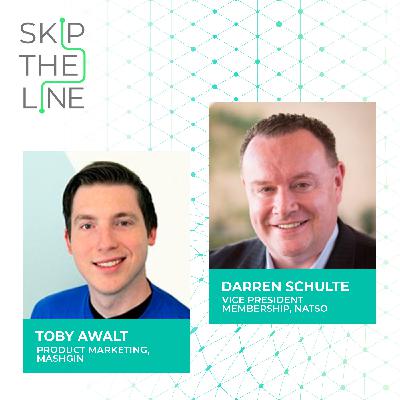
According to the latest figures, nearly 10 million Americans were unemployed and looking for work in June. That’s just the latest statistic reinforcing the current labor shortage touching many an industry, as skilled professionals become harder and harder to come by for open positions.On this episode of Skip the Line, a Mashgin podcast, host Hilary Kennedy was joined by Mashgin’s Toby Awalt, Director of Product Marketing, and Darren Schulte, Vice President of Membership for NATSO, to discuss this critical topic.This is the first conversation in an upcoming series of episodes centering on different industry perspectives on the labor shortage – and what thought leaders and experts are doing to address it.NATSO “is the only national trade association representing the travel plaza and truck stop industry, [representing] more than 2,000 travel plazas and truck stops nationwide owned by over 220 corporate entities.”“Our industry has always, like a lot of service industries, been challenged with the labor piece,” Schulte said. “But COVID has certainly pushed that further. … Members that were already innovative have become more innovative.”Because individual owners often don’t have the capital to simply increase wages, they look elsewhere to entice talent, such as discounts on gas or other benefits.
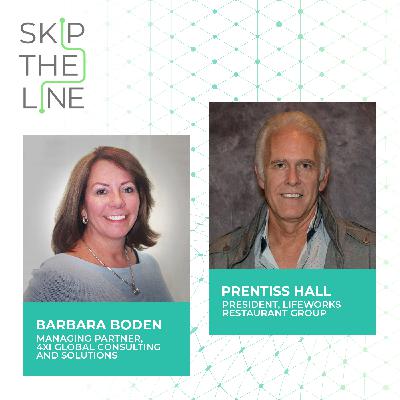
Welcome to Skip the Line, a podcast from Mashgin that will look at the various ways technology impacts how people purchase from start to finish.Host Daniel Litwin spoke to two guests regarding workplace structures and amenities post-COVID.First is Prentiss Hall, President and Co-founder of LifeWorks Restaurant Group, a provider of immersive culinary experiences for companies. Second is Barbara Boden, Managing Partner at 4xi Global Consulting. Boden consults with businesses about the future of work.Prentiss spoke about how experiences through amenities are critical to a thriving workplace. With businesses now bringing people back on-site, a hybrid approach is expected.“People want to go back to the office, but not every day. The delivery of experience will be different, and innovation and creativity will be important,” he said. “Working from home was easier in some ways, so companies need to create places that make employees want to come to work,” Boden said.“We were never good at work-life balance, and there was a lot of stress just getting to work before. Now, we have to look at work-life integration, and technology will play a big role,” Prentiss added.Regarding amenities, both guests agree that they have to be functional, experiential and technology-backed, with the biggest amenity being food. “Food is the glue and gives people the right to take a break, but it has to be accessible with mobile and contactless options,” Boden explained. Prentiss talked about the changes to food amenities, as well, noting that sending food to employees at home is one way to keep them connected. Boden remarked that companies need to make shifts because the “war for talent will come back.” “Companies that listen to employees and get it right will win. That means making life easier in their actual workspace and amenities offered.”
Comments

Download from Google Play

Download from App Store
 United States