


 Claim Ownership
mindFly Katha, From cockpit to culture — one podcast, many flight paths.
Subscribed: 1Played: 2
Subscribe

© Capt. Amit Singh
Description
Where Aviation, Safety, and Forgotten History Intersect
Explore the minds behind the machines — and the legacy behind the lives.
mindFully Human is a podcast about Human Factors, aviation decision-making, and the untold stories that shape our skies and our culture.
Presented by mindFly, an Indian non-governmental initiative founded by Capt. Amit Singh FRAeS, dedicated to enhancing aviation safety, cognitive performance, and preserving ignored Indian legacies.
✈️ From pilot errors to cognitive traps...
🛕 From cockpit checklists to erased dynasties...
This podcast travels where others don’t.
Explore the minds behind the machines — and the legacy behind the lives.
mindFully Human is a podcast about Human Factors, aviation decision-making, and the untold stories that shape our skies and our culture.
Presented by mindFly, an Indian non-governmental initiative founded by Capt. Amit Singh FRAeS, dedicated to enhancing aviation safety, cognitive performance, and preserving ignored Indian legacies.
✈️ From pilot errors to cognitive traps...
🛕 From cockpit checklists to erased dynasties...
This podcast travels where others don’t.
55 Episodes
Reverse

Seat belts save lives; however, their purpose differs between aeroplanes and cars. Seat belts on aeroplanes are primarily designed to prevent injuries arising from in-flight turbulence, not sudden deceleration in the event of an accident.

🕯️ Buried by time. Erased from memory. But not from truth.They ruled the hills. They fought empires. They left behind temples, coins, and stories… but no one remembers their name.Who were the Varaha Rajputs?Why were they written out of history?In this opening episode, we peel back the layers of forgotten chronicles and uncover a warrior clan whose legacy was deliberately silenced. Before the Mughals, before the British, before even the Rajputs of Rajasthan — there was Varaha.This isn’t just history.It’s a resurrection.📜 Forgotten by design.🩸 Remembered in blood.🔥 The rediscovery begins now.
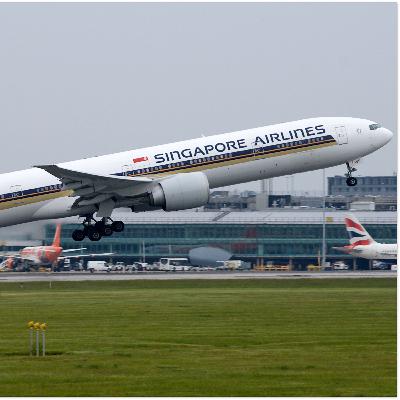
I am a true believer that society and culture cannot be separated from work and training. However best the training may be, it is under a controlled environment and the performance indicators needed to be achieved are briefed before hand. The crew undergoing training works together to achieve their objective and they are driven by performance indicators required to be achieved to declare them competent. In the real world, the motivation, drive and targets are not briefed as well as they are in a training environment. There are a lot many distractions and personal cultures and behavioral influences are lot more active as compared to a training environment.
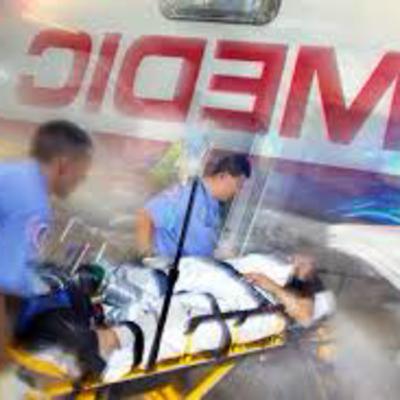
Air India Express IX1344 accident at Calicut airport where the aircraft plunged 35 meters killing 21 people including the pilots. The victims were transported to various hospitals in ambulances and private vehicles. While ambulances are equipped with life saving medical equipment, the Co-Pilot was rushed to a hospital 25km away an hours drive on the backseat of a private car thereby depriving him of the critical life saving equipment.
Read the blog here
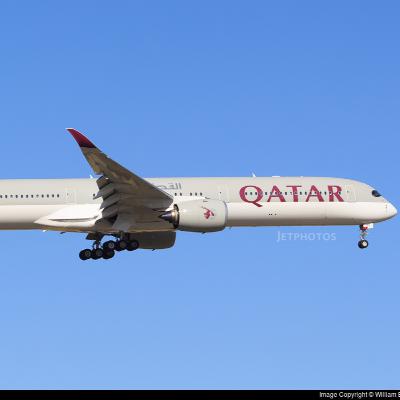
A Qatar Airways newly acquired Airbus A350-1000 series aircraft had a close call over Iran on 12th April when it came into close proximity with another crossing aircraft. The airliner equipped with the state of art technology and traffic collision avoidance system was seen climbing by about 500ft while cruising at 34000ft on a flight from Doha, Qatar to Los Angles, USA.

When does fear set in and the different categories of near misses.
McCurdy observed during the bombing of London in the World War that there were 3 categories.
1. Those who dies and those who were injured
2. Those who missed narrowly
3. The remote misses
The behavior varied and so was their definition of fear.
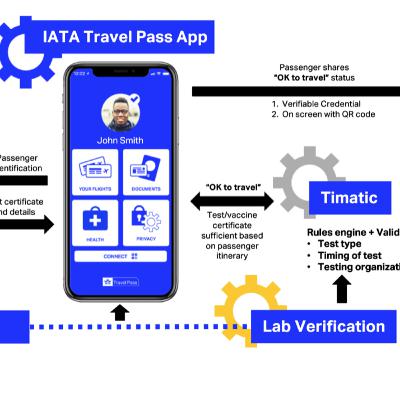
The IATA Travel Pass is a solution for both. It is built it in modules as an industry solution based on open-source standards. It can be used in combination with other providers or as an end-to-end solution. The most important thing is that it is responsive to industry needs while enabling a competitive market.
Be skeptical about claims for effectiveness of training methods. Always ask questions and on implementation of these techniques.

COVID19 crisis has crippled the aviation sector which has witnessed salary cuts and job losses to stay afloat. In this time of crisis the civil aviation ministry has managed to overlook utilization of budgetary allocation of a staggering INR1450 Cr FY 2020-21.
The Committee felt that the administrative jurisdiction of AAIB under the Ministry of Civil Aviation go against the tenets of impartiality and equality, since it may raise the genuine question of conflict of interest.
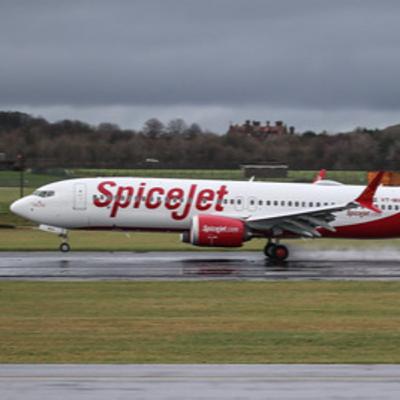
The DGCA has issued an AIC dated 20th April 2021 which states that The operation of B737 Max aircraft will not take place from/to Indian airports & transit or enter Indian airspace effective 13th March 2019 till further notice.
The Watchdog Faults FAA For 'Significant Misunderstanding' Of Flight System
RASE is a repository of safety experiences. The USP of this mobile application is that experiences can be shared globally through an easy to fill form and experiences can be sorted through a searchable database in various formats.
The application is for all X borders, uniting personnel using similar fleet, airports or just for information sake.
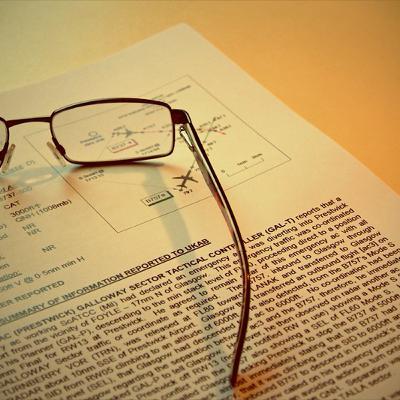
A high reliability organization (HRO) is an organization that has succeeded in avoiding catastrophes in an environment where normal accidents can be expected due to risk factors and complexity.
Important case studies in HRO research include both studies of disasters (e.g., Three Mile Island nuclear incident, the Challenger Disaster and Columbia Disaster, the Bhopal chemical leak, the Tenerife air crash, the Mann Gulch forest fire, the Black Hawk friendly fire incident in Iraq) and HROs like the air traffic control system, naval aircraft carriers, and nuclear power operations.
This episode is also available as a blog post: https://safetymatters.co.in/2020/10/15/mindfulness-in-aviation-the-essence-that-west-is-slowly-adopting/

This episode is also available as a blog post: https://safetymatters.co.in/2021/01/04/trust-your-autopilot-under-high-stress-learnings-from-vistara-mayday-fuel/
This episode is also available as a blog post: https://safetymatters.co.in/2021/01/07/psychology-of-surprise-air-india-tail-strike-at-pune/
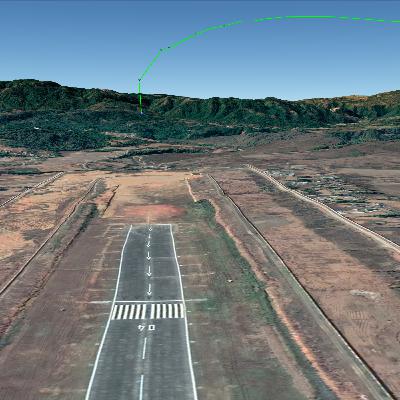
This episode is also available as a blog post: https://safetymatters.co.in/2021/04/11/seconds-away-from-disaster-crew-use-superior-training-skills-to-prevent-a-cfit/
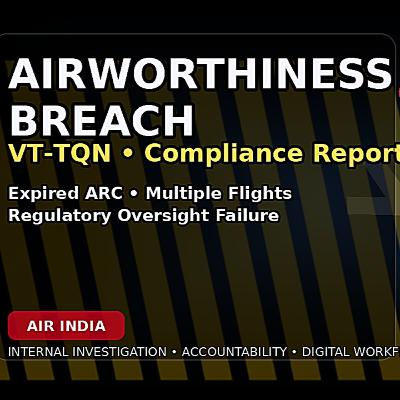
In this episode, we expose a serious safety violation at Air India involving the operation of an Airbus A320 (VT-TQN) without a valid Airworthiness Review Certificate (ARC). Based on leaked internal investigation reports, we break down how an aircraft flew eight revenue flights carrying passengers while illegally undocumented.In this episode:• The Incident: How VT-TQN operated a test flight and 8 passenger flights in November 2025 despite its safety certificate expiring days earlier.• The Failure: Why the Engineering team incorrectly informed Flight Ops that the "ARC is valid" and how pilots failed to perform mandatory document checks.• The Root Cause: A "Swiss Cheese" failure of communication between the ARC Cell, Continuing Airworthiness Manager (CAM), and Engineering Planning.• The Fallout: The internal scramble to fix "systemic failures" and the disciplinary actions recommended against staff.#AirIndia #AviationSafety #Whistleblower #AviationNews #AirbusA320
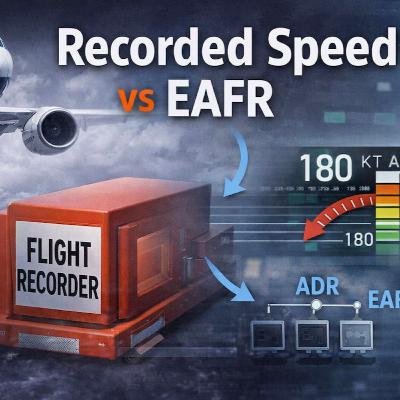
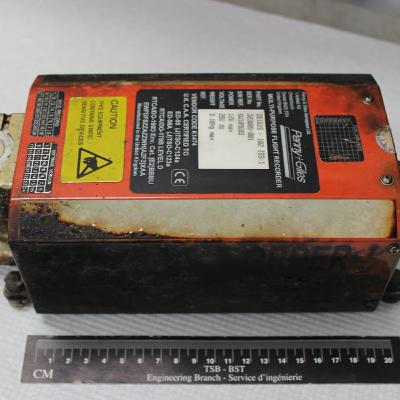
Why do preliminary aviation reports sometimes distinguish between milestones occurring "as per EAFR" and specific statistics like "maximum recorded airspeed"? In this episode, we analyze the technical nuance behind these terms, using the example of a 180 KIAS peak to illustrate the difference between procedural events (like V1 or Vr) and peak values captured in a data trace. We also dive into the architecture of the 787's Enhanced Airborne Flight Recorder (EAFR) and the Recorder Independent Power Supply (RIPS), explaining how a recorder can continue operating even if specific inputs—like air data from the ADR—stop updating or become invalid

In this episode, we deconstruct the preliminary acoustic evidence surrounding the infamous cockpit exchange: “Why did you cut off?” — “I didn’t do it.”.While media reports suggest the CVR audio needed to be "cleaned up" to identify these voices, this necessity for heavy post-processing reveals a critical forensic clue. It suggests investigators were forced to rely on the Cockpit Area Microphone (CAM) rather than the typically clear individual headset channels.Key Analysis Points:• The Acoustic Deduction: Heavy background noise and the need for "cleanup" points to a recording dominated by the Area Mic (CAM).• The Electrical Implication: A CAM-only recording signature is consistent with the aircraft operating on backup power or in an abnormal electrical configuration, such as the deployment of the Ram Air Turbine (RAT). Technical schematics of the Recorder Independent Power Supply (RIPS) confirm that in the event of usual power failure, the RIPS sends battery power specifically to the Flight Deck Area Mic and the Forward Flight Recorder.• The Timeline Conflict: The simplistic timeline suggests a Flight Control System (FCS) cutoff led to power loss and subsequent RAT deployment. However, if the audio recording of the voices already exhibits the "heavy noise" signature of backup power, the aircraft may have been in the RAT/backup configuration before the verbal exchange occurred.This evidence challenges the linear sequence of events and raises physics-based questions about the latency between control inputs and hydraulic pressure changes.Sources:• Acoustic Evidence and the RAT Deployment Timeline• Acoustic_Forensics_Timeline_Revision• Flight Recorder System Schematics (RIPS/EAFR)

Comments

Download from Google Play

Download from App Store
 United States