


 Claim Ownership
Echoes of the Vietnam War
Subscribed: 239Played: 9,457
Subscribe

© Vietnam Veterans Memorial Fund, 2021
Description
Even after 50 years, the impact of the Vietnam War echoes across generations. Hear the stories of service and sacrifice from people who are affected — veterans, their families, and others who add perspective to those experiences. Brought to you by the nonprofit that built the Vietnam Veterans Memorial, “The Wall,” in Washington, D.C.
128 Episodes
Reverse

In the second installment of our three-part series inspired by Wil Haygood's book The War Within a War: The Black Struggle in Vietnam and at Home, we examine the complex realities of race, brotherhood, and survival during the Vietnam War.The Battle of Ia Drang and Landing Zone AlbanyCaptain George Forrest was among the relatively few Black officers entrusted with combat command during the Vietnam War. In November 1965, he fought in the Battle of Ia Drang, including the devastating ambush at Landing Zone Albany. Forrest recalls his desperate efforts to reach his company, the loss of his radio operators, and the extraordinary courage of medic Daniel Torres, who volunteered to remain overnight with wounded soldiers in enemy-held territory.Dottie Harris: Nursing in a War ZoneStationed at Củ Chi in 1967, Army nurse Dottie Harris witnessed the devastating human cost of war while caring for severely wounded American soldiers. One of only a handful of Black nurses serving in Vietnam, Harris also encountered a complicated sense of kinship with Vietnamese civilians, who recognized something familiar in her experience as a Black American.Soul Alley and the DAPBlack service members faced discrimination even while fighting for their country. Near Saigon, they established Soul Alley, a gathering place where familiar food, music, and culture offered a sense of belonging. The DAP, a distinctive handshake representing dignity and pride, became another expression of solidarity, though military leadership sometimes viewed it with suspicion.Fred Cherry and Porter Halyburton: Brotherhood in CaptivityIn a North Vietnamese prison, Black pilot Fred Cherry and white naval officer Porter Halyburton were placed together in an attempt to exploit America's racial divisions. Instead, the two men cared for one another through torture and captivity, forging a bond that challenged the expectations of their captors.Long Bình Jail and Racial UnrestDiscriminatory discipline and harsh conditions at Long Bình Jail revealed another side of the American military experience. Following the assassination of Dr. Martin Luther King Jr. in April 1968, racial tensions intensified, culminating in a violent uprising at the military stockade that August.Leroy Pitts: The Ultimate SacrificeDottie Harris also remembers her friend Captain Riley Leroy Pitts, a Black officer who voluntarily left a comparatively safe assignment to lead soldiers in combat. On October 31, 1967, Pitts was killed during an engagement near Ap Dong. His extraordinary bravery earned him a posthumous Medal of Honor, making him the first Black commissioned officer to receive the nation's highest military decoration.Throughout these stories, a central contradiction emerges: on the battlefield, soldiers often transcended racial divisions to protect one another, even as discrimination persisted within the institution they served.The series concludes in Part 3, examining the difficult homecoming of Black Vietnam veterans and the continuing struggle for recognition and remembrance.Learn more:Explore the Vietnam Veterans Memorial Fund: https://www.vvmf.orgListen to more episodes of Echoes of the Vietnam War: https://www.vvmf.org/echoesLearn about The Wall That Heals: https://www.vvmf.org/The-Wall-That-Heals/
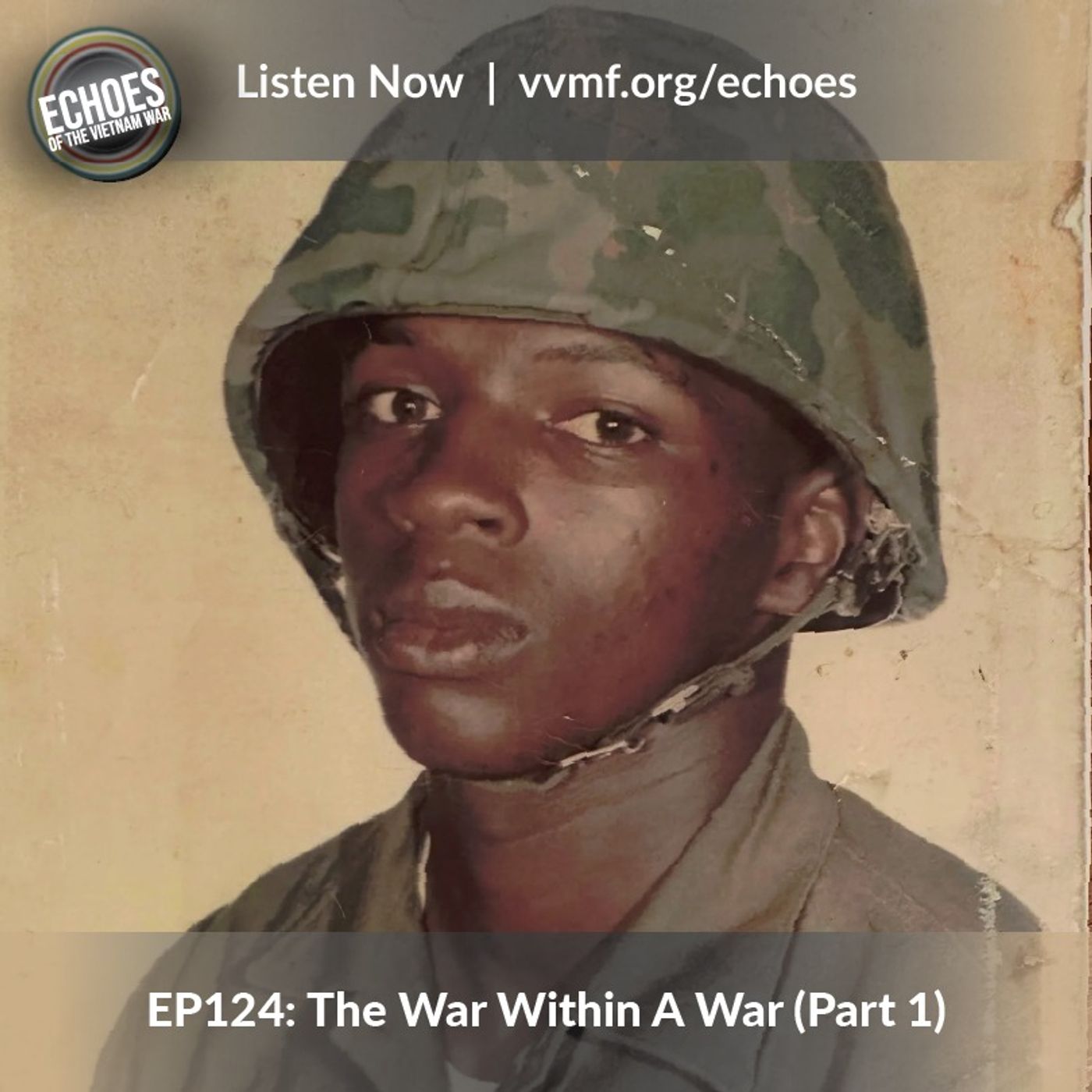
In the 1960s, America was fighting two wars at once: one in Vietnam and another at home over civil rights.Acclaimed journalist and author Wil Haygood grew up watching both unfold. Young men from his Columbus, Ohio, neighborhood disappeared into the war in Vietnam while, at home, the assassination of Dr. Martin Luther King Jr. and the unrest that followed brought the struggle for racial equality directly to his streets.In Part 1 of this three-part series, Wil joins us to explore the story behind his book, The War Within a War: The Black Struggle in Vietnam and at Home — and why the histories of the Vietnam War and the civil rights movement cannot truly be understood separately.We also meet two Black veterans whose lives illustrate that intersection.George Forrest grew up in segregated Maryland, attended Morgan State University and became an Army officer at a time when Black officers were still routinely confronted with discrimination. In 1963, while stationed with the Old Guard at Fort Myer, he found himself on alert for possible civil unrest during the March on Washington — unaware that his own parents were among the marchers.Dorothy “Dottie” Harris knew from childhood that she wanted to become a nurse. After serving in the Navy and completing nursing school, she joined the Army and volunteered for Vietnam, where she would eventually care for some of the war’s most severely wounded.Their stories reveal the complicated meaning of military service for Black Americans during this era — a source of opportunity, responsibility and belonging, but also an institution that reflected many of the inequalities of the country they were serving.Wil also examines the draft, Project 100,000, and the disproportionate burden placed on Black and poor Americans as the United States searched for more men to send to Vietnam.This is Part 1 of The War Within a War. In Part 2, George Forrest goes into combat in one of the war’s deadliest battles, Dottie Harris confronts the human cost of the war from a field hospital, and Wil Haygood explores how Black and white service members depended on one another for survival in Vietnam.Featured in this episode:Wil Haygood — journalist and author of The War Within a War: The Black Struggle in Vietnam and at HomeGeorge Forrest — U.S. Army veteranDorothy “Dottie” Harris — U.S. Army nurse and Vietnam veteranLearn more:Visit the Vietnam Veterans Memorial Fund at vvmf.orgConnect with VVMF:Facebook: facebook.com/VietnamVeteransMemorialFundInstagram: instagram.com/vnveteransmemorialYouTube: youtube.com/@VietnamVeteransMemorialFund

For five days, nine Americans waited inside a house in Huế for a rescue that never came.Then the enemy came through the door.In the second and final part of Taking Requests, Taking Fire, John Bagwell’s story moves from siege to survival as the position occupied by AFVN Detachment 5 is finally overrun during the Tet Offensive.Three men would be killed.Five would be captured and spend years as prisoners of war.John Bagwell escaped alone.Shot through the foot and separated from friendly forces, John found himself moving through enemy-held Huế with no clear path back to American lines. The Army had already reported him dead.But “The Scrawny Thing” was still alive.John recounts the chaos of the attack, the men he was forced to leave behind, and his desperate attempt to survive while wounded and alone in a city consumed by fighting.His escape would take him through the streets and rice paddies around Huế as he searched for a way back to American forces.Taking Requests, Taking Fire, Part 2 is the conclusion of John Bagwell’s remarkable story — from radio disc jockey to survivor of one of the most dramatic episodes of the Tet Offensive.It is also the story of the men of AFVN Detachment 5: those who died, those who were captured, and the one man who made it out.Featured in this episode:John Bagwell — Armed Forces Vietnam Network disc jockey and Vietnam veteranLearn more:Visit the Vietnam Veterans Memorial Fund at vvmf.orgConnect with VVMF:Facebook: facebook.com/VietnamVeteransMemorialFundInstagram: instagram.com/vnveteransmemorialYouTube: youtube.com/@VietnamVeteransMemorialFund

Before Vietnam became a fight for survival, John Bagwell had what he considered one of the best jobs in the Army: playing music on the radio.Bagwell was a disc jockey with the Armed Forces Vietnam Network, broadcasting for the First Cavalry Division in An Khê. Known on the air as “The Scrawny Thing,” he played records, took requests and helped give American troops a connection to home.Then, on January 29, 1968, John was sent to Huế.The next night, the Tet Offensive began.In Part 1 of Taking Requests, Taking Fire, John recounts the unlikely path that took him from radio broadcasting to one of the most dangerous places in Vietnam. What initially seemed like another AFVN assignment quickly changed as fighting erupted across Huế and the city became one of the major battlegrounds of Tet.John and eight other Americans at AFVN Detachment 5 found themselves cut off and trapped inside a rented house as enemy forces moved through the city.For five days, they waited.They stayed in contact when they could, listened for signs that help was coming and watched the war move steadily closer to their position.But the rescue they were hoping for never arrived.This is the story of Armed Forces Radio in Vietnam, the men who brought music and a piece of home to American troops, and the moment when one young disc jockey’s war changed forever.Featured in this episode:John Bagwell — Armed Forces Vietnam Network disc jockey and Vietnam veteranJohn Bagwell returned home from Vietnam with a Purple Heart and a Bronze Star with “V” for valor.Learn more:Visit the Vietnam Veterans Memorial Fund at vvmf.orgConnect with VVMF:Facebook: facebook.com/VietnamVeteransMemorialFundInstagram: instagram.com/vnveteransmemorialYouTube: youtube.com/@VietnamVeteransMemorialFund

Sixty-five years ago today, a test aircraft sprayed herbicide over Bien Hoa province. The operation that grew from that test lasted a decade and dumped roughly 20 million gallons of herbicide on South Vietnam. In this episode we’ll explore how Operation Ranch Hand affected the people who served in Vietnam — and their descendants — and how the U.S. government has responded since.

Comments

Download from Google Play

Download from App Store
 United States