


 Claim Ownership
Radiant Church Podcast
Subscribed: 4Played: 74
Subscribe

© none
Description
Messages by Caden Metcalf, lead pastor of Radiant Church, Surprise, AZ — New episodes every Monday.
Radiant is All About Changed Lives! Worship God | Build Family | Reach People - To learn more, visit us online at radiantchurch.com
Radiant is All About Changed Lives! Worship God | Build Family | Reach People - To learn more, visit us online at radiantchurch.com
261 Episodes
Reverse
What does great faith actually look like—and how do we make room for it in our lives? In this message from Matthew 15, Jesus highlights a faith that refuses to quit, worships while waiting, and believes God can do the impossible. Through the powerful story of the Canaanite woman, we see that great faith isn't about background, perfection, or religious status—it's about humility, persistence, and trust in Jesus. As part of the REACH series, this message connects personal faith with God's heart to reach people. Jesus uses this encounter not only to heal a daughter, but to shape His disciples, revealing that sincerity of heart matters more than tradition, and that God's mercy extends far beyond boundaries people create. You'll discover five marks of great faith: bringing every need to Jesus, speaking words of faith, refusing to give up, worshiping in the waiting, and believing in a miracle-working God. Even when heaven seems silent, Jesus is still working—drawing out the faith He knows is already in you. If you've been praying, waiting, or wrestling with doubt, this message is an invitation to stretch your faith, trust God's timing, and make room for the kind of faith that captures Jesus' attention. His delay is not denial. Make room for great faith.
What would happen if we truly made room for what God wants to do? In this message, we launch the REACH series with a prophetic call for our church and our lives: Make Room. Drawing from Isaiah 54, we're reminded that growth, revival, and impact require preparation—enlarging the tent, stretching the cords, and strengthening the stakes. This message unpacks the vision and mission of the church—Changed Lives through Worship, Family, and Reach—and invites every believer to take part in God's story of reaching people locally and globally. From stories of faith and generosity to the history of building churches and investing in the next generation, we see how obedience and faith create space for miracles. You'll hear why generosity fuels mission, why community strengthens faith, and why open hearts are essential for what God wants to do next. God is drawing people to Himself in confusing and weary times—and He invites us to prepare for the harvest. Whether through faith, generosity, discipleship, or simply saying yes to God, this message challenges us to grow, to stretch, and to make room for the miracles, salvation, and renewal God is bringing. Enlarge the tent. Strengthen the stakes. Get ready—God isn't done with your story.
Most of us live with urgency—but that urgency is usually tied to what's temporary. In this message, we're invited to lift our eyes beyond today and rediscover the power of living with eternity in view. Scripture reminds us that God has set eternity in the human heart, and when we forget that truth, we risk missing what God wants to do in and through our lives. Drawing from Scripture, church history, and the teachings of Jesus, this message explores why renewal and revival often fade when eternity becomes blurry. While salvation is a free gift of grace, our lives still carry eternal weight. Faithfulness, obedience, and stewardship matter—not to earn salvation, but because our choices echo forever. You'll hear why grace empowers obedience, why God values faithfulness over visibility, and how even unseen acts of obedience are remembered and rewarded by God. Jesus doesn't measure success the way the world does—He asks one question: What did you do with what I entrusted to you? This message isn't meant to produce fear, guilt, or pressure—it's meant to bring clarity. When eternity becomes clear, life becomes focused. If you've felt distracted, weary, or unsure of your purpose, this message will help realign your heart with what truly lasts and inspire you to live today in light of forever. What we do in this life echoes into eternity.
In a world overflowing with information, opinions, and "my truth," we've never been more confused about what truth actually is. In this message, we wrestle with the same question Pilate asked Jesus: "What is truth?"—and discover that the answer is not an idea, a feeling, or a social construct, but a Person. Drawing from Scripture, cultural observation, and the writings of C.S. Lewis, this teaching explores why truth matters, how modern culture has drifted from reality, and how abandoning truth always leads to confusion, fracture, and despair. Truth is not simply words that match reality—it is Jesus Himself, the One through whom all things were made and in whom life and freedom are found. We examine how lies distort not only the world but our own souls, why freedom without truth always collapses, and how humility, repentance, community, and love anchor us in what is real. In a post-truth age, revival begins when hearts hunger for truth, encounter truth, and are moved to live and proclaim it. If you've wrestled with doubt, felt overwhelmed by competing voices, or wondered whether Christianity can still make sense of the world, this message invites you to seek truth honestly—and discover the God who is not afraid of your questions. If you seek the truth, you may find comfort in the end. If you seek comfort, you'll lose them both.
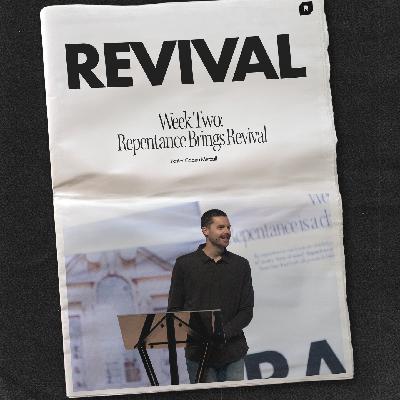
Revival doesn't begin with hype, emotion, or strategy—it begins with repentance. In this message, we explore how a humble, honest turning back to God has always been the spark that ignites spiritual renewal. From the lives of John Wesley and Charles Spurgeon to the prayers of God's people in Psalm 85, Scripture shows us that repentance isn't harsh or condemning—it's hopeful and life-giving. Biblical repentance is more than feeling bad about sin. It's a decisive change of direction—a return to God that realigns our hearts, restores joy, and opens the door to renewal. In a culture that replaces repentance with blame, self-help, or cancellation, God invites us to something better: transformation. This message walks through four powerful results of repentance seen throughout Scripture—joy restored, mercy released, refreshing received, and relationship renewed. Repentance clears the ground so revival can grow. It doesn't push God away; it draws us closer to Him. If your faith feels dry, your joy feels distant, or your love feels faint, this message is an invitation to turn again to the God who revives His people. Repentance isn't the end of the story—it's the doorway to what God wants to do next. When people repent, God revives.
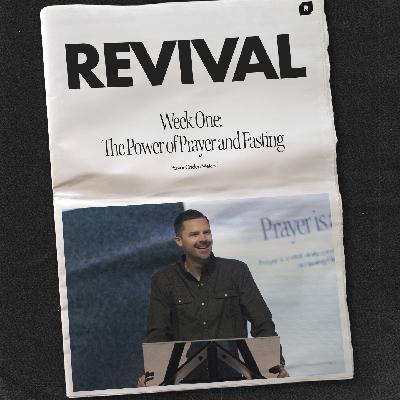
Why not believe God can do something extraordinary in 2026? Why not seek Him with all your heart? In this message, we launch into 10 days of prayer and fasting with a bold faith-filled question: Why not God? Throughout Scripture and church history, renewal and revival have always been preceded by a passion for God expressed through prayer and fasting. From Jesus, Moses, Daniel, and the early church to modern testimonies of provision, healing, restoration, and breakthrough—fasting aligns our hearts with God's will and positions us to hear His voice clearly. This teaching unpacks what biblical fasting really is (and what it isn't), why Jesus expects His followers to fast, and how fasting disciplines the flesh, sharpens spiritual discernment, releases God's power, and brings divine favor. We're reminded that fasting doesn't change God—it changes us. As a church family, we're called to step into a new year believing God for new things: revival, direction, freedom, and favor. If you're facing a situation that feels impossible, stalled, or "not the way it's supposed to be," this message is an invitation to pick up that burden again—and this time, pray and fast. When God's people humble themselves, heaven hears. From the first day you set your heart to seek Him, God begins to move. So the question remains: why not?
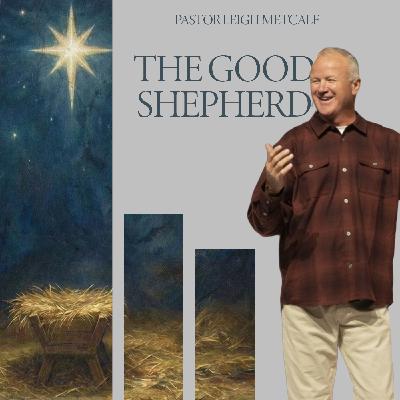
Psalm 23 is more than a familiar passage—it's a promise for every season of life. In this message, we learn how God reveals Himself as our Good Shepherd, the One who guides us into the future, knows what we need, and walks with us through every valley. Drawing from David's experience as both a shepherd and a king, we uncover powerful lessons about God's care: we never walk alone, He is our provider, He gives us rest, He restores our souls, and He comforts us in the darkest moments. Even in the presence of enemies, failure, and uncertainty, God prepares a table, pours out His anointing, and surrounds us with goodness and mercy. This message is an invitation to stop striving and start dwelling—to remain in God's presence and trust the Shepherd who leads, protects, restores, and provides. As we step into a new season, the call is simple: keep showing up in His presence and watch what only God can do. God is good all the time—and all the time, God is good.
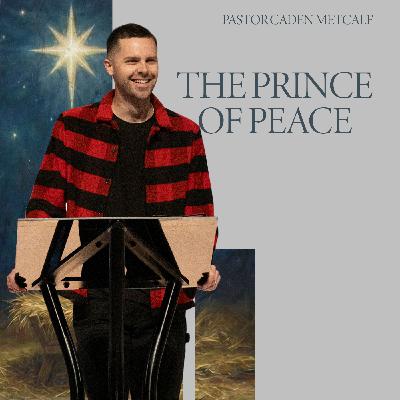
Peace can disappear in a moment—through chaos, loss, fear, or circumstances beyond our control. In this Christmas message, we look at Jesus as the Prince of Peace, prophesied in Isaiah 9 and revealed in full through His life, authority, and presence. Biblical peace isn't the absence of problems—it's the presence of a Person. Jesus isn't just a gentle idea of peace; He is Sar Shalom—the Commander, Governor, and Authority of peace. He doesn't negotiate with chaos; He commands it. Whether the storm is raging around you or within you, Jesus guards hearts and minds with a peace that surpasses understanding. Through Scripture and story, this message explores peace on every level—externally, internally, and eternally. Sometimes Jesus calms the storm. Other times, He calms us in the storm. Either way, the Prince of Peace is with us, steadying our souls, speaking truth over fear, and inviting us to surrender control and rest in Him. Peace didn't come as a policy. It came as a Person. And His name is Jesus.
Immanuel isn't just a Christmas name—it's the story of the entire Bible in one word: God with us. From Genesis to Revelation, Scripture tells a single, beautiful story of God's desire to dwell with His people. What sin broke, God promised to restore. What was lost in Eden, Jesus fulfills in the incarnation. In this message, we explore the meaning and significance of the name Immanuel, first promised in Isaiah and fully revealed in Jesus. God doesn't offer distance, strategy, or escape—He offers His presence. In our fear, uncertainty, and brokenness, God's answer has always been Himself. You'll see how Immanuel unfolds across redemptive history: God with us intended, lost, promised, near, threatened, arrived, within, and forever. Jesus is not God watching from heaven—He is God who stepped into our pain, our weakness, and our world to be with us and save us. This message reminds us that we were created for God's presence, sustained by it now, and destined to dwell with Him forever. Immanuel is not seasonal—it's eternal.
Most of life happens "in the middle"—between the starting point and the breakthrough, between the promise and the fulfillment. In Matthew 14, Jesus meets His disciples in the middle of the lake, in the middle of the night, in the middle of a storm… and teaches them what faith really looks like. In this message, we learn how to stay faithful when the wind is against us. Jesus sends the disciples into a storm—not because they disobeyed, but because they obeyed. We see that some storms are allowed by God, that resistance doesn't mean you're off course, and that Jesus often reveals Himself most clearly in the waves, not the calm. You'll discover five powerful truths: learn to rest, some storms are from God, keep rowing when resistance comes, look for Jesus in the storm—not just the exit, and walk on His Word, not your circumstances. Like Peter, we step out because Jesus says "Come," and even when we sink, His hand is already reaching toward us. The storm becomes the classroom. The waves become the revelation. And the moment Jesus climbs into the boat, everything changes. If you're in a season of pressure, uncertainty, waiting, or fatigue—this message will help you see Jesus in the middle and find courage to keep going.
Jesus doesn't just see the crowd—He has compassion for them. And in Matthew 14:13–21, that compassion becomes a calling for His disciples. In this message, we explore the miracle of the feeding of the 5,000 and discover what happens when ordinary people bring their small offering to an extraordinary God. We learn three powerful truths: the crowd reveals Christ's compassion, Christ's compassion becomes our calling, and our calling requires our contribution. God isn't asking you to have it all—He's asking you to bring what you do have. Even when it feels small, insufficient, or insignificant, Jesus multiplies what's surrendered to Him. If you've ever felt unqualified, under-resourced, or unsure of how God could use you, this message is an invitation to step out in bold faith. Bring your "five loaves and two fish," trust Him with the outcome, and watch Him do more than you could ask, think, or imagine.
Truth always costs something—and in Matthew 14:1–13, we see that cost on full display. In this message, we look at the story of John the Baptist's imprisonment and execution, a moment that reveals what happens when truth confronts corrupt power. John wasn't killed for preaching to crowds—he was killed for challenging a ruler's sin. We explore four themes: how truth confronts power, why faithfulness will cost you, how sin seeks to silence the prophetic voice, and why grief—though real—is never the final word. From the courage of William Tyndale to the boldness of John the Baptist, we are reminded that the kingdom of God advances not in comfort but in conviction. This message calls believers to stand firm in a culture that prefers silence over righteousness and compromise over holiness. Faithful discipleship requires courage, conviction, and a willingness to confront deception with love and truth. The question isn't whether truth is costly—it's whether we're willing to pay the price.
The kingdom of God doesn't look like what most people expect—and Jesus makes that clear through seven powerful parables in Matthew 13. In this message, we uncover the "secrets" of how God's kingdom really works: it starts small like a mustard seed, grows quietly like hidden yeast, demands full surrender like a priceless treasure, and advances even when the world seems messy and mixed. Jesus shows us that the kingdom is hidden but unstoppable, quiet but powerful, and worth everything we have. God is working in ways we can't always see, calling us to trust Him, treasure Him, share His truth, and guard our hearts against familiarity that blinds us to His presence. Never despise small beginnings. The King is at work—and His kingdom is breaking in, one life at a time.
Not everything that grows in the field comes from the same seed. In Matthew 13, Jesus teaches that the kingdom of God is both hidden and growing—real faith develops quietly, even in the middle of confusion, counterfeits, and chaos. In this message, we discover what it means to truly see God's kingdom, grow faithfully among the weeds, and trust the Sower's timing. The seed is still good. The harvest is still coming. God isn't panicked—He's patient, and His kingdom is advancing even when it's hidden beneath the surface. Keep listening. Keep growing. Keep trusting. The weeds won't last forever, but the wheat will.
Spiritual growth doesn't happen by accident—it happens in the soil of your heart. In this message from Matthew 13:1–23, Jesus tells the Parable of the Sower, revealing how the same seed—the Word of God—produces different results depending on the condition of the soil. We dig into what it means to prepare your heart for God's Word, to grow deep roots that endure life's storms, and to cultivate a faith that bears lasting fruit. Whether you're in a season of planting, pruning, or perseverance, God is doing "dirt work" in you—turning hard ground into good soil that produces a harvest of faith, hope, and love. Don't just hear the Word. Let it take root.
We live in a world obsessed with proof—always looking for another sign, another piece of evidence before we'll believe. But in Matthew 12:38–50, Jesus confronts that mindset head-on: "A wicked and adulterous generation asks for a sign, but none will be given except the sign of Jonah." In this message, we discover that Jesus doesn't offer us a sign to prove Himself—He offers His resurrection to transform us. What we need isn't more evidence; it's more surrender. Learn how faith begins not with "prove it," but with "lead me." See why moral reform without spiritual renewal always falls short, and how true belonging comes from doing the Father's will. The resurrection is the ultimate sign—and it's more than enough.
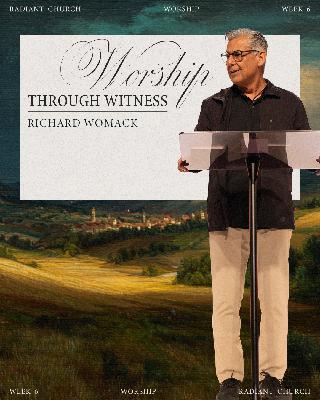
Worship doesn't stop at singing—it continues through our witness. In this message from Matthew 28:16–20, we explore how the Great Commission calls every believer to worship God by sharing their story and making disciples. Jesus has all authority, and He promises to be with us as we go. Discover how to overcome doubt, find courage, and share your testimony with boldness. Your story is powerful—it reveals God's glory and can change someone's eternity. Worship through your words, your work, and your willingness to GO and tell what the Lord has done for you. No worship, no glory. But when you witness, heaven rejoices.
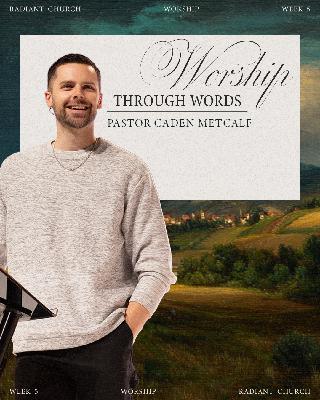
Our words aren't empty—they carry spiritual power. In Matthew 12, Jesus reminds us that every word reveals the heart and aligns with one of two kingdoms. Words can build up or tear down, heal or harm, bless or blaspheme. They shape the spiritual climate of our homes, relationships, and churches. In this message, we learn that our speech is worship—a reflection of who rules our heart. From the Pharisees' accusations to Jesus' truth-filled responses, we see that what comes from our mouths exposes our alignment, our faith, and our fruit. Let your words become an act of worship that points people to Jesus, brings life to others, and declares that He is Lord.
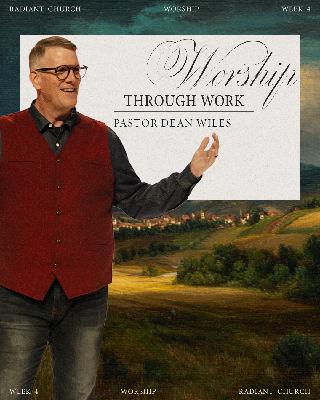
Work isn't just what we do to get by—it's one of the ways we worship God. In this message, we explore how faith transforms our nine-to-five into something sacred. From Genesis to Ephesians, Scripture reveals that work was God's idea long before the fall. It's a gift, a calling, and a way to display His glory in everyday life. Learn how to work with sincerity, purpose, surrender, and integrity—turning every task, meeting, and conversation into an act of worship. Whether you're managing a team, cleaning a house, or studying for exams, your work can preach Jesus to the world. When we show up with faith and excellence, even the ordinary becomes holy ground.
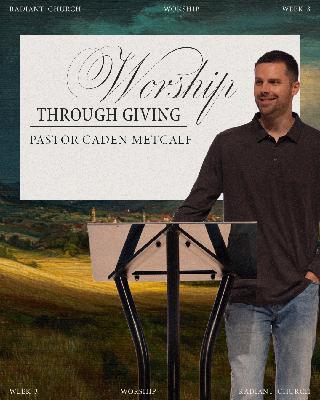
Generosity isn't about guilt, pressure, or manipulation—it's about grace. In this message, we explore how worship through giving flows from a revelation of God's extravagant love for us. From the early church in Acts to Jesus' teaching on stewardship, Scripture shows that true generosity comes when we recognize that everything we have belongs to God. We'll unpack four key questions every believer should ask about money: Who owns it? Am I content? Have I confronted fear? Is giving a priority in my life? Worship through giving is more than a financial transaction—it's an act of faith, gratitude, and obedience that changes hearts, builds God's kingdom, and leads to joy.

Comments

Download from Google Play

Download from App Store
 United States