


 Claim Ownership
Real Clear Values
Subscribed: 5Played: 75
Subscribe

© Tom English
Description
Values are at the heart of everything we do. Our values are our why. And they are central to our wellbeing and success in a world full of distractions, temptations and challenges. Join Tom English, Founder of 3 Stewardships, for an exploration into how our values affect our individual lives, our organisations and the world we live in. This podcast will uncover which values help, and which values hinder, in the pursuit of success that’s both meaningful and sustainable.
69 Episodes
Reverse

Sobiya Jawaid is the first hijab-wearing, female British Muslim Kickboxer to have represented England at European level, where she won silver medal. She's also a Leadership Coach, Diversity and Belonging Consultant, Coach and Speaker. In this episode we discuss values in relation to identity and connecting with others, as well as the value of good coaches and mentors, the case for diversity and the true meaning of belonging, and how to make the most out of your uniqueness in serving others.
(Episode recorded on 21st February 2023.)
What does abundance mean to you? Is it found without or within? What do you really want?
Sometimes we’re presented with opportunities that look good in the moment. But when we look at them closer, we see that they will prevent us from getting what we really want in the long-term.
Creating a life you’re happy to call your own requires owning your values.
In this episode, Abundance Coach Claudia Noriega-Bernstein visits the Real Clear Values podcast to discuss the above and more.
(Episode recorded on 16th January 2023.)
The role of Aleksandr Dugin as an advisor to Vladimir Putin and influencer in Russian society has long been shrouded in mystery. Over time, this has earned him the moniker of “Putin’s Rasputin”. But despite Dugin’s widely acknowledged influence relating to Russia’s invasion of Ukraine, his role and identity remain stubbornly difficult to pin down. Who is this agent of chaos, pulling at the fringes of western society? What does he want? And should the west be worried about its philosophical enemies like Aleksandr Dugin? Benjamin Teitelbaum visits the Real Clear Values podcast for the third time to discuss these questions and more.
Repentance isn't about external control; it's about internal change.
I was asked to give a talk at church on the topic, "Repentance is a mighty change of heart and mind", which I gave on Sunday 29th January 2023.
It isn't usual to record a talk that you give in a church meeting, but I felt prompted to do so beforehand. From the feedback I received from members of the congregation afterwards, I felt to share the recording on this podcast for others to listen to.
Repentance is something that I think about a lot, particularly as a means of personal transformation in so many different contexts, spiritual and secular. Yet, unfortunately, the word repentance has a branding problem, conjuring up all manner of images of social control and externally induced guilt and shame. (Shame can be a valuable internal stimulus for change, however, as I discuss in the talk.)
Repentance is driven by three fundamentals:
1. Identity – who you are and who you want to become;
2. Vision – where you want to go and what you want to obtain;
3. Love – there is nothing more transformational than the power of love.
For many listening who come from a non-religious background some of the terminology and concepts in the talk may seem strange, but the principle that underpins repentance is universal and isn't limited to a single denomination or belief-system. As a principle of transformation, repentance is like a key that will never rust.
I hope you gain something from listening to the talk.
Please feel free to contact me with any questions or comments: tom@3stewardships.com.
Professor Malcolm Gaskill’s recently published book, The Ruin of all Witches: Life and Death in the New World, has received high praise from many quarters. It is a tragic tale of the struggles of life in Springfield, Massachusetts in 1651, speaking to neighbourhood rivalries, social and political power structures, early modern gender roles, and what it meant to be accused of witchcraft in the New World.
In this episode we discuss all of these themes and more, exploring how Malcolm adeptly explains the past without explaining it away and finding a simple but powerful moral to the story that can be applied in any era.
(Episode recorded on 16th November 2022.)
If you’re a CEO and you’re hoarding power then chances are that you’re limiting your organisation’s performance.
But don’t just take my word for it; take it from someone who’s done it both ways…
In this episode I had the pleasure of speaking with Kevin Hancock, CEO of Hancock Lumber Company, to talk about sustainable success.
Hancock Lumber was founded in 1848, so they know a thing or two about sustainability!
The foundation of their business’s sustainability doesn’t only depend on the sustainability of their supplies (i.e. trees), though that is critical, it also rests on people-oriented sustainability.
And this is where Kevin thrives in his stewardship as CEO of the company.
✅ Creating meaningful work for staff
✅ Creating a working environment in which staff are engaged and happy in their work, making it safe for them to speak up about necessary changes and improvements
✅ Empowering staff throughout the company to make their very best contributions through the dispersal of power
But before you start thinking that this is some sort of fluffy, emotional idealism, you need to pay attention to the cold, hard numbers that Hancock Lumber’s put up since Kevin started to disperse power throughout the organisation.
There’s a very stark before and after here – it’s staggering!
Why the change in approach?
In 2010, Kevin lost his voice and was forced to change his approach; which is when the magic started to happen.
Tune in to learn more about Kevin’s story, his approach and his enviable results.
Benito Mussolini’s Fascist regime brought about one million premature deaths.
But what led to Mussolini’s rise to power?
What was Italian Fascism like and how did it compare to Adolf Hitler’s Nazism?
What drove Mussolini the man?
And what led to Mussolini’s demise?
In this episode, which was recorded in advance of a forthcoming Italian election in which the far-right are expected to do well, Professor Richard Bosworth of Oxford University addresses these questions and more.
This episode also arrives near the centenary of the Fascists’ march on Rome, which took place on 28th October 1922.
(Episode recorded on 26th August 2022.)
Why did America, whose riches and military might dwarfed those of North Vietnam, fail to win the Vietnam War with its allies in the south?
In this episode, Dr. Tom Tunstall Allcock from University of Manchester gives some answers to that question, as well as exploring the war more broadly from an American perspective.
We discuss the pitfalls of the failure of American leadership to properly understand the values of its enemy in the war, its lack of clear purpose and goals through military intervention, its loss of moral authority through backfiring military operations, and unprecedented press coverage of the war which illustrated the horrors of war like never before.
The Vietnam War had a seismic impact on America, undermining trust in American leadership at home and abroad, bringing about unprecedented social unrest, contributing to the demise of President Lyndon B. Johnson’s power and presidency, and costing the lives of tens of thousands of American soldiers.
Whilst it was a staggeringly expensive tragedy, the Vietnam War offers a wealth of learning opportunities for leaders in almost any context.
(Episode recorded on 7th June 2022.)
Think you know all about the Vietnam War?
This interview with Dr. Sean Fear from the University of Leeds may make you think again.
Sean has researched Vietnamese-language archival materials, memoirs, and print media extensively, enabling him to present valuable perspectives that are often absent in western documentaries and movies about the war.
In this episode, we start by discussing the beginning of the Vietnam War (from the Vietnamese perspective) before getting into the South Vietnamese state's failure to win legitimacy in the eyes of its constituents, and the role that that played in the denouement of the war.
This episode is longer than usual to ensure that the nuances and complexities discussed can be properly represented.
Sean’s voice is authentic and insightful on this topic, challenging (western) conventional wisdom about the war, highlighting its intractable complexities, and giving valuable insight to western audiences.
(Episode recorded on 1st June 2022.)

Growing up in Denver, Colorado, Benjamin Teitelbaum had a yearning to connect with deeper ancestral roots.
This yearning led Teitelbaum to explore his Swedish heritage and Swedish patriotism.
As he experienced it, however, celebrations of Swedish patriotism were largely confined to groups of Swedish nationalists, including the far-right, as mainstream Swedish society had jettisoned patriotism in favour of multiculturalism.
This led Teitelbaum into a complex and nuanced relationship with Swedish nationalism, and more particularly with those who call themselves Swedish nationalists, as an academic researcher.
This episode digs into some of the key issues facing the liberal west today, including the prominence of money, materialism and rationality as western values, the existential malaise faced by many young people growing up without a sense of roots or a connection to place, the ubiquity and dangers of cancel culture, and more.
Having already appeared on the Real Clear Values podcast to talk about the values that unite disparate nationalist thinkers such as Steve Bannon and Alexandr Dugin, in this episode Benjamin Teitelbaum gives further insight into his own values journey.
Tune in to learn more about some of the biggest values-related challenges facing western liberal societies today.
(Episode recorded on 29th April 2022.)
“That’s just rhetoric” is a common phrase used to dismiss the seriousness of what someone (usually an untrusted leader) has said.
But rhetoric is much more than “just rhetoric”.
As David Erland Isaksen, Associate Professor of Communication at USN School of Business, talks about in this episode of the Real Clear Values podcast, the art of rhetoric played an integral role in the foundations of democracy.
Suffice it to say that its reputation has fallen a long way since it was known as the Queen of the Humanities.
Far from serving the purposes of manipulation and demagoguery, however, Isaksen illustrates how a sound understanding of rhetoric, and strong rhetorical skills, can help individuals to guard against the deceitful manipulations of demagogues.
What’s more is that strong rhetorical skills are essential in communicating our values clearly and persuasively to others.
Tune in to learn more about why the art of rhetoric is so relevant to what’s happening in the world today (think: Zelensky versus Putin's Russia) and how you can develop your own rhetorical skills.
(Episode recorded on 22nd March 2022.)
Zoë Cross is a Coach and TEDx Speaker who works to empower professionals with a unique appearance to claim their confidence and create the career or business of their dreams.
Zoë was born with moebius syndrome – congenital facial paralysis – and has a powerful story to tell.
Throughout her journey, Zoë has developed deep resilience, overcome resentment, learned to be guided by the still small voice of conscience within, as well as a strong sense of honour, and, perhaps more than anything, learned to embrace her uniqueness.
Tune in to learn more about how to embrace your uniqueness and then use it to serve others.
Keep in touch with Zoë through the following platforms:
Instagram: https://www.instagram.com/zoe.cross3
LinkedIn: https://linkedin.com/in/zoe-anthea-cross
Facebook: https://www.facebook.com/zoe.cross3
Join Zoë's Facebook group: Claim your self-esteem and confidence with your host Zoë Cross https://www.facebook.com/groups/317717242175055/?ref=share
Check out Zoë's TEDx Talk, Overcome rejection – by smiling with your heart: https://youtu.be/eWJ9X9gPiUk
(Episode recorded on 01/03/22.)
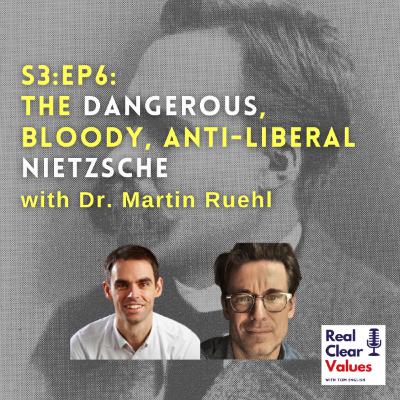
No serious consideration of values can ignore the ideas and philosophy of Friedrich Nietzsche, whose writing in the late nineteenth century had a seismic impact on the twentieth century, and continues its enduring influence today.
Dr. Martin Ruehl of Cambridge University grew up with the influence of Nietzsche’s Thus Spoke Zarathustra, finding himself bewitched by a copy of the war edition of the book (kriegsausgabe) that was taken into WWI by his grandfather and then into WWII by his father.
But Ruehl didn’t recognise the version of Nietzsche that was presented to him in academia and has since made it his mission to bring the bloody, dangerous, anti-liberal Nietzsche back into consciousness.
Tune in for a masterclass on the philosophy and significance of Friedrich Nietzsche.
(Episode recorded on 16th February 2022.)
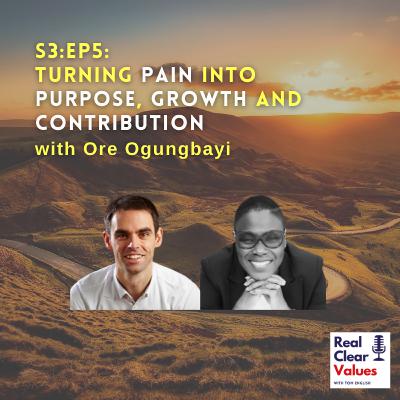
“If you are tired of being a doormat, get off the floor.”
Ore Ogungbayi is one of the best trainers I’ve ever learned from.
She also has one of the most extraordinary and empowering stories I’ve ever heard.
Being kidnapped as a child could have crushed Ore, made her resentful and suffocated her aspirations.
Instead, through her shift in mindset and application of timeless principles, she used her trials and challenges as fuel to learn, grow and contribute for the benefit of others.
I loved this conversation with Ore – what she has overcome and *how* she’s overcome is so relevant to the challenges that many of us face in our lives today.
My favourite piece of wisdom from the episode: "People need love more than culture."
Tune in, take note, and enjoy!
What Ore has to share is gold.
(Episode recorded on 16th February 2022.)
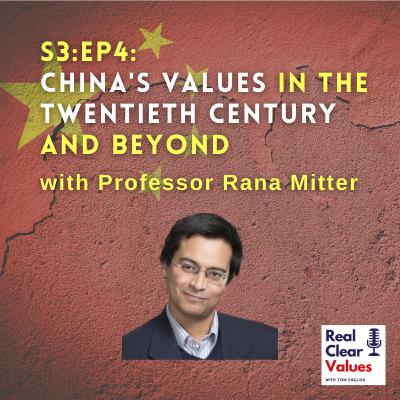
How did China become a communist nation?
Why did it open its doors to the west for trade?
How has its relationship changed with the rest of the world in recent decades?
Will there be a decoupling between China and the west?
What are China’s values? And how do those values compete with each other?
These are some of the issues that I recently discussed with Rana Mitter, Professor of the History and Politics of Modern China at Oxford University.
Rana is one of the most respected voices on modern Chinese history and politics in the west.
If you have any interest in China’s past, present and future then this episode is a must-listen. (Episode recorded on 5th January 2022.)
Chinese medicine has some powerful principles and perspectives to offer on healing, many of which aren't known or understood in contemporary western culture.
I recently had a lot of fun, and intellectual stimulation, talking with Tim Sullivan who is an experienced Chinese Medicine practitioner based in Totnes, Devon, UK.
We dig into several aspects of health and healing, including the role of meditation, the significance of expectations as a cause of despair, types of healing and healers from a Chinese perspective, how to get on your path to find purpose in your life, and the power of choice and change in the healing process.
As Tim's teacher and mentor, Daoist Priest Jeffrey Yuen, puts it:
“The same person that gets the disease can’t be the same person that cures the disease.”
You have to change your mind to change the disease.
Anyone can be enlightened at any moment.
I hope that you find some enlightenment in this episode for your own journey.
Tim teaches and mentors those interested in learning Classical Chinese Medicine.
For more information on Tim's practice, visit www.incarnations.info.
To contact Tim, you can email him directly: tim@incarnations.info. (Episode recorded on 4th January 2022.)
According to the CDC, a record 100,000 people in the US died from overdoses in 12 months of the pandemic. Opioids played a big part in those deaths, as did despair.
These deaths have lowered American life expectancy and are indicative of serious social issues in the country.
In this episode, I speak with Dr. Mark Gold, a world renowned expert on drugs of abuse, about the changing trends in drug abuse and drug-related deaths over time.
We also get into what’s driving increases in drug addiction and deaths of despair, how to avoid falling into addiction’s enslavement and how to help loved ones who have.
If you have any interest in the opioid crisis and the epidemic of deaths of despair then this episode is a must.
(Episode recorded on 15th November 2021.)
Addictive behaviours have increased across the board since the beginning of the pandemic.
The unintended consequences of lockdowns have had a significantly negative impact on those already struggling with addictions, and many more have fallen into addiction’s clutches.
In this episode, Dr Nicole Avena, Associate Professor of Neuroscience at Icahn School of Medicine at Mount Sinai in New York, talks to me about addiction in the context of covid-19.
We cover everything from defining addiction (in a practical way), the factors that lead people into addictive behaviours, how to overcome addiction, how to guard against it in the first place, and how to support loved ones who are struggling within its grasp.
(Episode recorded on 27th September 2021.)
What's the problem with pursuing pleasure as an end in itself?
That's the question that I set about answering in my TEDx Talk, Escaping the Hedonism Trap, at TEDxMCPHS in 2020.
The story of how I sleepwalked my way into the hedonism trap, and escaped, has resonated with many who have heard it.
The world is simply too full of distractions, temptations and challenges, and our brains too malleable, to leave the governance of our lives to chance.
If what you hear in the talk resonates with you and you'd like more information on how to escape the ennui, or even misery, of the slavish pursuit of pleasure then drop me a line: tom@3stewardships.com.
Here's to creating a life of purpose, meaning and fulfilment in pursuing your unique version of sustainable success.
(This is a wee bonus episode between seasons 2 & 3...)
As a photojournalist, Massoud Hossaini became the first Afghan to win the Pulitzer Prize for a photo he took in the immediate aftermath of a brutal terrorist attack in Kabul in 2011.
The story behind the photo and the sense of responsibility Massoud felt in telling Afghanistan’s story from an Afghan perspective is both heartrending and inspiring.
In this episode, Massoud talks about the perils of photojournalism in Afghanistan, why Afghanistan’s sudden fall into the hands of the Taliban was both preventable and unsurprising, and what the future might look like for him and the country he loves.
This is an insider’s take on both the fall and future of Afghanistan.
(Episode recorded on 30/10/21.)


Download from Google Play

Download from App Store
 United States
His problem starts where he thinks washing his dirty dishes is out of being nice!!! He believes washing the dishes is a woman's responsibility. And if an adult man washes the dishes, or does his laundry, or cleans after himself, these are not him being a mere human, but a NICE MAN! No sir. It's not your niceness but your egoistic manner that needed to be reconsidered!