


 Claim Ownership
Talking With Tech AAC Podcast
Subscribed: 575Played: 14,363
Subscribe

© Copyright 2020 All rights reserved.
Description
How do people with complex communication needs learn to use augmentative and alternative communication (AAC)? Join speech-language pathologists (SLPs) Rachel and Chris as they answer your questions, discuss relevant research and give you updates on the latest and greatest developments in the field of AAC! Interviews with industry thought-leaders, clinicians, parents, researchers, users, and app developers help you stay up-to-date on the latest devices and apps, best practices for device selection and implementation, ideas for working with communication partners, and more!
358 Episodes
Reverse
In this episode, Chris talks with Dr. Lesley Sylvan, author of the second edition of Multi-Tiered Systems of Support: Implementation Tools for Speech-Language Pathologists in Education. Lesley shares how the book evolved following the pandemic and why the new edition expands its focus on AAC, implementation science, universal screening, collaboration, and practical tools for school-based speech-language pathologists.
Lesley and Chris explore what MTSS really means and several common misconceptions about it. They discuss why MTSS is not a pre-referral process, why students should not be labeled by tiers, and how SLPs can extend their impact beyond individual services through universal screening, consultation, collaboration, and schoolwide supports. They also examine the growing connection between AAC and MTSS, including how visual and multimodal communication supports can become part of a broader culture of access rather than something reserved only for individual students.

Rachel and Chris reconnect to share a candid update on what’s been happening behind the scenes with Talking With Tech including changes to the production team, why episodes have been less frequent, and what listeners can expect moving forward.
They also share personal and professional updates, including how life has shaped their schedules, what Rachel is building next in her AAC training work, and what Chris has been creating with the Inclusive 365 team including new “Inclusive 52” books focused on reading and executive functioning.

In this episode, Rachel Madel interviews Jesse and Holly Erickson, parents of Bedford, a young child with Schwartz-Jampel syndrome. They share their journey to diagnosis, what it’s like navigating a rare condition with limited research and few clear answers, and the day-to-day realities families face such as unexpected barriers in common environments.
They also describe how posts on social media gained momentum and sparked an extraordinary community response which fueled the effort to create an inclusive playground so Bedford (and other children) can play with access, dignity, and joy.
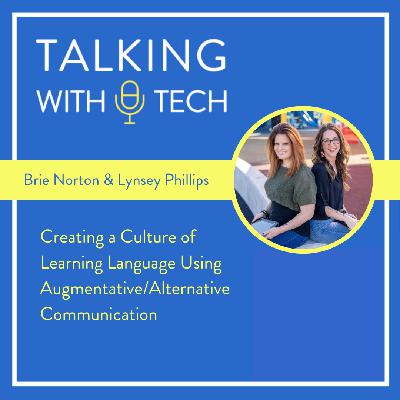
Chris talks with Lynsey Phillips and Brie Norton, two AAC leaders in Northwest Arkansas who have built a powerful, practical framework for AAC implementation across settings. They share how their partnership, spanning private practice and public schools, helped move AAC from isolated “expert-driven” work to a shared responsibility model that includes educators, peers, families, and community partners.
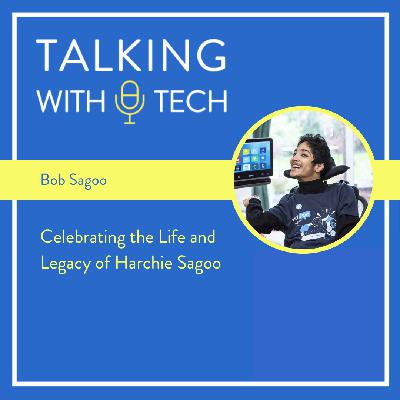
In this episode, Chris & Rachel talk with Bob Sagoo a longtime assistive technology professional and parent advocate. Bob shares the story of his son Harchie, his path from low-tech communication supports to high-tech eye gaze and the Grid ecosystem. Bob shares how Harchie’s drive for speed, independence, and participation (including accessible gaming) shaped the way he thought about AAC. Bob also introduces The Harchie Way, a foundation being developed to carry forward Harchie’s legacy by connecting AAC users and the assistive technology industry, promoting education (including healthcare communication access), and pushing for innovation that is truly user-informed.
Key Ideas This Week:
Innovation Works Best When AAC Users Help Design It
Harchie was deeply interested in how AAC could evolve beyond static grid sets. Bob shares Harchie’s ideas about AI-enabled AAC supports (like context-aware vocabulary that changes based on location, predictive communication supports, and using a device camera to recognize emotion/health cues and prompt for support). The underlying message is that AAC users should be involved at the concept stage, not just asked to test a finished product.
The Harchie Way: Building a “Conduit” Between Users, Industry, and Systems That Must Be Accessible
Bob outlines early goals for The Harchie Way: creating pathways for AAC users to share priorities directly with developers, promoting education and awareness (especially for healthcare providers supporting people who don’t communicate in conventional ways), and advocating for access in real-life systems (medical tech, banking, and beyond). Bob also shares Harchie’s future-facing vision of helping AAC users attend and present at conferences such mirroring the strong user-centered culture seen at Communication Matters in the UK.
Contact Information:
Visit talkingwithtech.org for weekly episodes, transcripts, and resources to help speech-language pathologists, caregivers, and communication partners tailor technology for people with complex communication needs!
Join the Talking With Tech Patreon to get exclusive benefits like bonus guest‐interview episodes, behind-the-scenes videos, giveaways, and priority answers to your AAC questions to help you sharpen your skills and confidence in AAC!

Comments

Download from Google Play

Download from App Store
 United States