


 Claim Ownership
Thanks for Sharing
Subscribed: 122Played: 22,400
Subscribe

© Copyright 2017 . All rights reserved.
Description
This is the place for all things recovery, healing, and relationships. We explore a variety of topics with people in recovery and the professionals who help them through personal stories. This podcast will give you a broad look at the aspects of recovery that make a difference.
352 Episodes
Reverse
Sometimes relationships fall into a confusing pattern. Things feel connected for a while. Conversations are easier. You feel hopeful. And then emotions show up: hurt, stress, vulnerability, and suddenly the other person shuts down.
Many partners assume this means the person doesn’t care.
But often what’s happening is something different.
In this episode, Jackie talks about a pattern she sees frequently in couples called emotional cycling — when someone can access connection for a time but struggles to sustain it when emotional intensity increases.
The good news is that emotional capacity can be learned. Real intimacy doesn’t happen when emotions are avoided. It happens when two people learn how to face them together.
Listen wherever you get your podcasts.
https://www.speakpipe.com/ThanksForSharing
Have a question or something you’d like me to talk about in a future episode?
You can call the show and leave a voicemail or send me an email — I love hearing from you, and your feedback helps shape these conversations.
https://thanksforsharingpodcast.my.canva.site/thanks-for-sharing-links
#relationshiphealth
#emotionalintelligence
#couplestherapy
#attachmenthealing
#mentalhealthpodcast
#emotionalgrowth
#relationships
#healingrelationships

Recovery isn’t dramatic most of the time. It isn’t big breakthroughs. It isn’t intense motivation. It isn’t one powerful decision that fixes everything.
It’s steady. It’s going to bed when you’d rather “steal time.” It’s feeling shame without escaping it. It’s waking up at 3 a.m. and choosing not to spiral. It’s resisting the urge to future-trip and instead staying in this hour. It’s calling your spouse when you want to isolate. It’s saying, “I need to go through this,” instead of numbing it.
Steady isn’t exciting. But steady builds resilience.
And over time, what once felt haunting begins to quiet, not because life is perfect, but because you’re no longer running from yourself.
Episode 357 is live.
If you’re in the middle of the long game… this one is for you.
Have a question or something you’d like me to talk about in a future episode?
You can call the show and leave a voicemail or send me an email — I love hearing from you, and your feedback helps shape these conversations.
https://thanksforsharingpodcast.my.canva.site/thanks-for-sharing-links
What actually happens after sobriety begins?
Many couples believe that once porn or addictive behaviors stop, the relationship should feel better right away. But for many people, that’s when a deeper layer of healing starts — emotional awareness, reconnecting with the authentic self, and learning how to rebuild safety, security, and trust.
In this episode, I talk about what rebuilding really looks like — both individually and relationally.
Sobriety removes secrecy — but reconnection grows through emotional presence, consistency, and learning how to show up differently with each other over time.
If you’re in the stage where recovery has begun but the relationship still feels fragile, this conversation is for you.
Have a question or something you’d like me to talk about in a future episode?
You can call the show and leave a voicemail or send me an email — I love hearing from you, and your feedback helps shape these conversations.
https://thanksforsharingpodcast.my.canva.site/thanks-for-sharing-links
What happens to the self when parts of life begin living in secrecy?
In this episode of the Thanks for Sharing podcast, we move beyond behavior and beyond relationship impact to explore how porn can shape identity, emotional development, and connection.
We talk about:
• how compartmentalization forms in the brain and nervous system
• why dopamine can reinforce a “secret self”
• what young men need to understand about relational risk and resilience
• how partners often sense misalignment long before discovery
• the difference between shame and responsibility
• and how healing begins through development of the authentic self
This episode is part of an ongoing series:
Episode 1 — Regulation & the brain
Episode 2 — Relational impact & betrayal
Episode 3 — Development of the self (this episode)
Have a question or thought? I’ve added a place in my Linktree where you can send a message or leave a voicemail for a future episode. (you can stay anonymous)
Listen now — link in bio.
#ThanksForSharingPodcast #AuthenticSelf #AttachmentHealing #PornRecovery #BetrayalTrauma #TherapyPodcast #MentalHealthEducation #HealingJourney
In this episode, we explore how porn reshapes relationships, not just behavior.
We talk about how porn:
quietly reorganizes relationships around absence
impacts the partner’s nervous system and sense of safety
often feels like cheating, even when there’s no physical affair
contributes to loneliness, emotional withdrawal, and loss of self in partners
shapes expectations of intimacy and attitudes toward women
creates predictability that looks like safety—but isn’t
We also explore why time alone doesn’t build security in relationships and why repair, not perfection, actually creates safety.
This conversation isn’t about blame or shame. It’s about understanding why things feel the way they do and what helps people rebuild capacity for intimacy, presence, and connection.
Whether you’re navigating porn use, supporting a partner, or trying to make sense of distance in your relationship, this episode offers language for experiences that are often difficult to name.

In this episode, we explore why porn is so compelling, why willpower usually fails, and why intelligent, caring people struggle with it even when it conflicts with their values or relationships. This conversation moves beyond shame and into understanding how novelty, dopamine, attachment, and emotional regulation intersect, and why real change starts with compassion, not control.
We recorded this episode planning to talk about current events, and the conversation didn't go exactly where we planned, and that's why it matters. Instead, we found ourselves talking about how people are actually living inside all of this, the personal experiences and stories that impact us.
Politics. Gender. Fear. Fatigue. Misunderstanding.
This wasn’t a debate. It was a conversation about what it costs us to stay polarized — and what it might take to repair.
What part of this conversation stayed with you the most?
Where do you feel the divide showing up in your own life — relationships, family, friendships?
It sounds reasonable.
It sounds like:
• “This makes sense.”
• “This is normal.”
• “I already know why I do this.”
In this episode, I explore how rationalization and minimization quietly protect comfort, certainty, and the need to feel right — especially for smart, thoughtful people.
Defensiveness doesn’t always look like anger.
Sometimes it looks like minimizing, mocking, dismissing, or explaining things away.
In this episode, I talk about:
• why people get defensive
• how avoidance can be loud or quiet
• how to respond without escalating
• and the red flags that mean a boundary has been crossed
If you’ve ever felt shut down for asking a real question, this one’s for you.
Rachel and I talk about why so many of us feel pressure to know what comes next, and how real change tends to happen without announcements. We explore how moves, family dynamics, and internal shifts quietly reorient us long before we name them.
If you’re entering this year without goals or certainty, this conversation offers permission to slow down.
Listen now.

As this year comes to a close, there’s pressure to reflect, resolve, and reset. But not everything we live through gets neatly wrapped up. In this episode, I talk about what it means to move forward without closure, why waiting for it can keep us stuck, and how grief, loss, and complicated family dynamics shape what we carry and what we lay down.
This isn’t an episode about resolutions. It’s about honesty. About integration. About letting a year end without forcing meaning too soon.
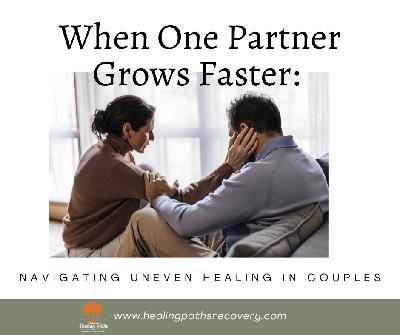
When one partner grows faster, it doesn’t mean the relationship is failing.
Uneven healing is one of the most painful dynamics couples face.
One partner finds language, boundaries, and insight.
The other is still trying to feel safe.
This episode isn’t about who’s “ahead.”
It’s about how healing actually unfolds, and how couples stay connected when growth isn’t synchronized.
Because growth isn’t a competition, and pressure isn’t intimacy.
If this feels familiar, this episode is for you.
Listen, reflect, and notice what lands.

In this episode, we go into the identity shifts that happen in relational recovery, for betrayed partners, for CPTSD survivors, and for the partners who are healing from addiction or avoidance.
When recovery is real, identity shifts happen beneath the surface. And they can feel terrifying, confusing, and unfamiliar, even when they’re healthy
If you’ve ever felt your body tense even when your partner is doing everything right… This episode explains why.
If you’ve ever felt scared by something that was actually good… this is for you.
Save & share.
Full episode in bio.

Have you ever made a decision or taken a step in your healing that terrified you, only to realize later it was the best thing you've ever done? Today we’re talking about why healing so often feels uncomfortable, why your brain resists the exact things that help you grow, and how to tell the difference between the discomfort that sets you free and the discomfort that keeps you stuck.
In this episode, Jackie unpacks The Discomfort Paradox—the surprising truth that the hardest, scariest parts of healing are often the ones that finally move us forward.
If this episode stirred something in you—an old story, a new awareness, or a pattern you’re finally ready to shift—take a moment to ask yourself:
Is this discomfort healing or harmful?
That single question can change your trajectory.
If this episode resonated with you, share the episode with someone who might need it today.
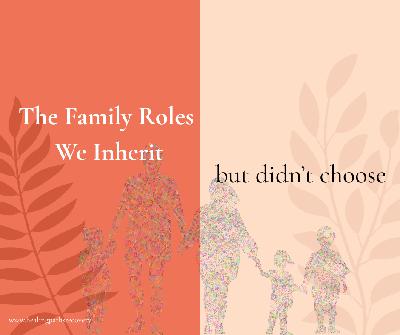
Family roles aren't personality traits. They are survival strategies. In this episode, Jackie talks about how these roles form within the Child Self, the Adaptive Child Self, and the Functional Adult Self framework. And how healthy families do it differently.
If you grew up in a role you’re trying to outgrow, if you lose your Adult Self around family, and if you’re trying to break generational patterns, this episode is for you. This episode will help you understand why you became who you had to be, and how to become who you want to be now.
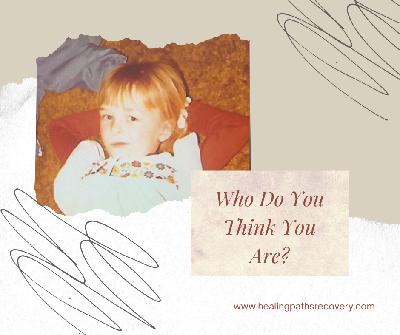
In this week’s episode, I explore how identity is built: the parts we inherit, the roles we perform to survive, the stories we are never allowed to tell, and the parts of us that only come alive when we finally feel safe.
If you’ve ever wondered why you feel the way you do… or why it’s so hard to change old patterns…this episode will help you understand your story with more compassion and clarity.
Tune in wherever you listen to podcasts.
Reflect on the stories that shaped you.
And ask yourself with curiosity — not shame — “Who am I becoming?”
Emotional pain isn’t random. It’s inherited, absorbed, reenacted, and carried on. n this episode, we trace heartbreak, betrayal, childhood trauma, and addiction back to their emotional roots… and explore what it actually takes to heal the younger self still holding the pain.
Emotional pain is never “just emotional.” Your brain responds to heartbreak, betrayal, childhood wounds, and even addiction with the same neural alarm system it uses for physical injury.
This episode is an invitation to understand your pain instead of judging it — and to reclaim the younger parts of you that still need your voice, protection, and compassion.
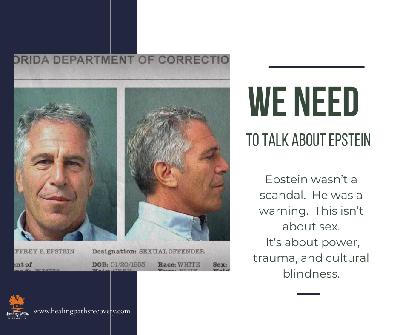
Not as a headline or scandal, but as a blueprint of how power preys on vulnerability… and how society lets it happen.
This episode is not about conspiracy theories or sensational stories. It’s about trauma. It’s about power. Epstein wasn’t a scandal. He was a warning. This episode explores why society protects powerful men, why victims don’t “run,” and why girls were the currency of elite dominance — not partners. This isn’t about sex. It’s about power, trauma, and cultural blindness.

Accountability is one of the strongest predictors of emotional safety. In this episode, I reveal 8 evidence-based green flags that show someone is capable of healthy love — not just interested in it. These are the relational patterns that build safety → security → trust → love → shared meaning.
You’ll also learn why saying “I love you” every night isn’t a sign of security—but respecting your pace and boundaries is.
🎧 Listen now and recalibrate your relationship radar. Whether you’re dating, healing, or 20 years into marriage, this episode will give you the roadmap to building love that’s safe, stable, and transformative.
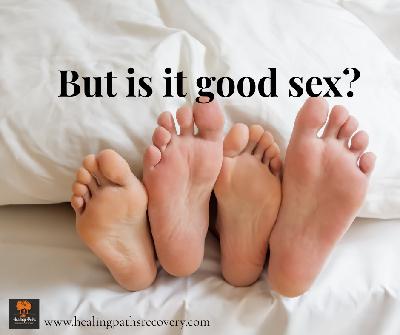
We love to say “We have good sex.” But what if what we’re calling good is actually trauma, anxiety, emotional distance, or porn conditioning disguised as intimacy? In this episode, I’m asking the uncomfortable question most couples avoid: “Is it really good sex—or just intense sex?”
Great orgasms don’t equal great intimacy. The real question isn’t “how often are you having sex?” but “do you feel safe, seen, and connected afterward?” If sex is the only time you feel close in your relationship—this episode is for you.
Hit play now and reclaim your sexual truth.
Follow, review, or message me your takeaways—this conversation is just getting started.

Comments

Download from Google Play

Download from App Store
 United States