


 Claim Ownership
Internet of Nature Podcast
Subscribed: 26Played: 481
Subscribe

© 298772
Description
How can we make our communities wilder, greener, healthier, and happier—and which technologies can help us along the way?
Ecological engineer and National Geographic Explorer Dr. Nadina Galle—best-selling author of THE NATURE OF OUR CITIES and pioneer of the Internet of Nature®—shares stories of people using tech to bring the wild back into streets, schools, and homes. This is where the wild meets the wired.
Ecological engineer and National Geographic Explorer Dr. Nadina Galle—best-selling author of THE NATURE OF OUR CITIES and pioneer of the Internet of Nature®—shares stories of people using tech to bring the wild back into streets, schools, and homes. This is where the wild meets the wired.
66 Episodes
Reverse
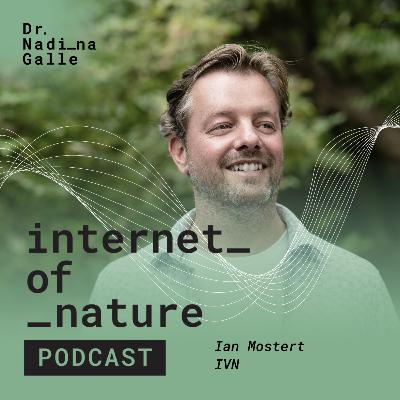
A free-range chicken has more space than a child on a Dutch school playground. Ian Mostert has spent 12 years doing something about that.In this episode, I talk with Ian Mostert — youth health worker turned urban greening practitioner, and Project Manager for Child and Nature at IVN Nature Education — about what actually changes when you transform a paved, fenced schoolyard into a green community space. We get into why the hardest part of greening a schoolyard has nothing to do with plants, why he starts every stakeholder conversation with childhood memories instead of data, and what happens to bullying, concentration, and teacher burnout when children finally get the outdoor environment they're built for.We also talk about the boy who couldn't function inside a classroom but lay on his stomach for half an hour watching ants — and became calm. About the teenagers who had been dealing drugs on a schoolyard and agreed to clean it up every morning because someone finally included them in the community. About why Ian insists every greened schoolyard must be open to the neighborhood 365 days a year, and why that single condition transforms a school amenity into a third space that struggling families desperately need.The conversation ends where I think the whole urban greening movement needs to go: the bureaucratic silo problem that makes holistic investment nearly impossible, why storytelling will get us further than data ever has, and Ian's dream of one million green schoolyards worldwide.Find Ian and IVN Nature Education at ivn.nl.
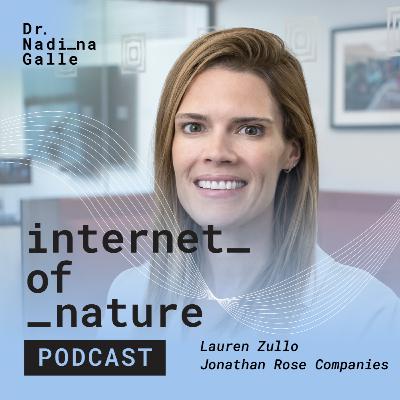
Just because someone lives in an apartment doesn't mean they don't want to go outside and be in nature.In this episode, I sit down with Lauren Zullo, Managing Director of Impact at Jonathan Rose Companies, at their Midtown Manhattan headquarters to talk about what happens when you design affordable housing around health — and how nature fits into that equation. Lauren's work sits at the intersection of housing, sustainability, and the social determinants of health, and she makes the case that housing touches every single one of them: air quality, food access, social connection, financial stress, and the immediate environment in which people live.We talk about how Jonathan Rose Companies brings nature into 19,000 units of affordable housing across the US — from trees for shade in the Bronx to green roofs that make rooftop solar more efficient in DC — and why the business case for green space isn't about ecosystem services but about building places people actually want to stay. Lauren also shares the story behind Sendero Verde in East Harlem, one of the largest affordable Passive House buildings in the world, where the courtyard follows a Lenape walking trail and the plantings were chosen based on the indigenous species that once grew on the site.Find Lauren Zullo and Jonathan Rose Companies at rosecompanies.com.
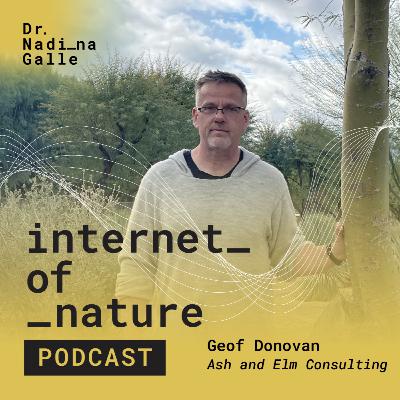
There's a reason people write poetry about trees and not speed bumps.In this episode, I talk with Dr. Geoffrey Donovan — forest economist, 23-year USDA Forest Service researcher, and founder of Ash and Elm Consulting — about why the health benefits of urban trees dwarf every other benefit we talk about, and why most people still don't believe it. We get into the emerald ash borer study that produced the headline "when trees die, people die," the Portland research showing the inverse — tree planting linked to decreased cardiovascular mortality — and why the strongest evidence sits at both ends of life: babies born heavier when mothers live near tree canopy, and people living longer in greener neighborhoods.We also talk about biodiversity and immune development, including Geof's studies linking genus-level plant diversity to lower rates of childhood asthma and leukemia, why peak exposure to grayness may be a risk factor for ADHD, and what a pregnant woman can actually do with all of this research. The conversation ends where I think the field needs to go: science-based storytelling, why Geof reads Seamus Heaney to audiences after the graphs, and why trees don't make cities more livable — they make them survivable.Find Geof and Ash and Elm Consulting at ashelmconsulting.com.
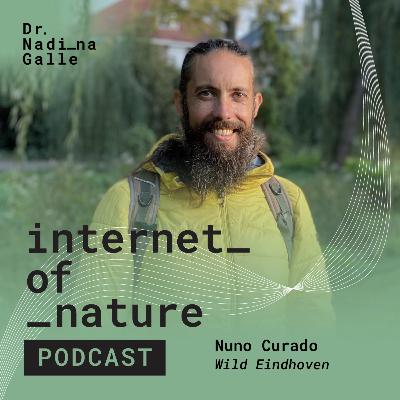
Most people walk through their city every day and never notice the nature around them.In this episode — the Season 7 premiere — I talk with Nuno Curado, founder of Wild Eindhoven, from a bench along the river Dommel in the center of Eindhoven. We walked from the High Tech Campus into the city along the river, barely touching a road, talking about beavers, birdsong, mushrooms, and what happens when people start paying attention to the wildlife that's been around them all along.We discuss how Nuno, a newcomer from Portugal, turned his own process of discovering Eindhoven's nature into guided walks that help residents connect with the living city beneath the asphalt. We talk about the beaver that appeared five meters from a walking group and why he calls it "a very marking moment," and why finding your first mushroom changes the way you see everything after it.The conversation also explores Nuno's work at Trefpunt Groen Eindhoven, a 25-year-old organization that acts as the voice of nature in Eindhoven's urban development — and a model I think more cities need.This episode will resonate with urban ecologists, nature educators, municipal planners, and anyone who's ever jogged through a park without once looking up.Find Nuno on his website, Wild Eindhoven, and on LinkedIn.
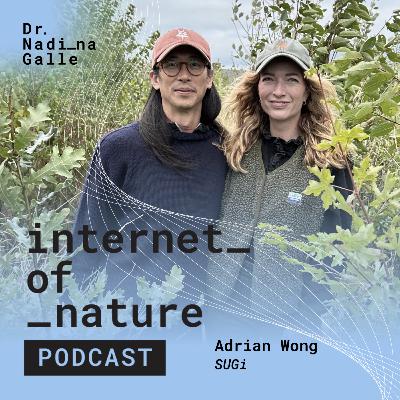
What happens when you plant a forest where nothing should grow?In this bonus, end-of-season episode, I’m joined by Adrian Wong of SUGi inside a dense pocket forest tucked into London’s Southbank Centre—surrounded by brutalist concrete, cultural landmarks, and constant city noise.Just two years ago, this space was solid concrete. Today, it’s six metres tall, alive with insects, birds, bats, and its own cooling microclimate.Recorded entirely on location, we talk about:how a 130 m² pocket forest transformed one of London’s hardest urban landscapesurban acupuncture and why small interventions can have outsized ecological impactthe Miyawaki method and forest succession at speedecoacoustics and what sound can tell us about biodiversity returningwhat this forest proves about nature’s ability to rebound when given space—above and below groundYou’ll hear drilling, footsteps, and the city all around us—because this forest doesn’t exist outside the city, but right in the middle of it.A reflective bonus episode to close out a beautiful Season 6 of the Internet of Nature Podcast.Follow SUGi’s work at @sugiproject on Instagram.
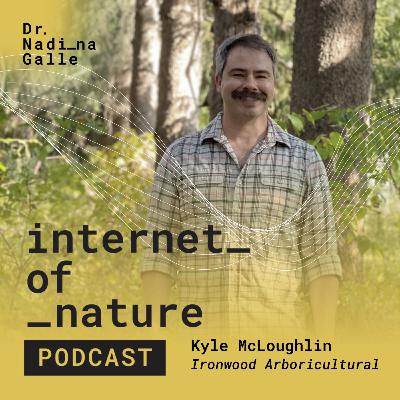
A mushroom on a tree isn’t a verdict — but in arboriculture, it’s often treated like one.In this episode, Nadina Galle talks with Kyle McLoughlin, a Board Certified Master Arborist and founder of Ironwood Arboricultural, from his two-acre, tree-filled property in St. George, Ontario. Together, they unpack why fungi should be foundational knowledge for anyone caring for trees — and why “there’s a mushroom, cut it down” is more often fear than good practice.They explore Armillaria and other misunderstood fungi, how decay actually affects tree risk and failure probability, and why arborists should think more like physicians: diagnosing before treating. The conversation also examines how many urban fungal problems are created not by nature, but by how we design, dig, drain, and pave our cities.Nadina and Kyle discuss the tools that could help shift tree care from reactive removals to proactive preservation — including pneumatic excavation, sonic tomography, and ground-penetrating radar — while returning to a core insight: better growing conditions matter more than any technology.This episode will resonate with arborists, urban foresters, city managers, and anyone involved in tree risk, urban tree preservation, or the future of urban nature. By the end, you’ll never look at a mushroom on a tree the same way again.Find Kyle and Ironwood Arboricultural at ironwoodarboricultural.ca and @ironwoodarboricultural on Instagram.
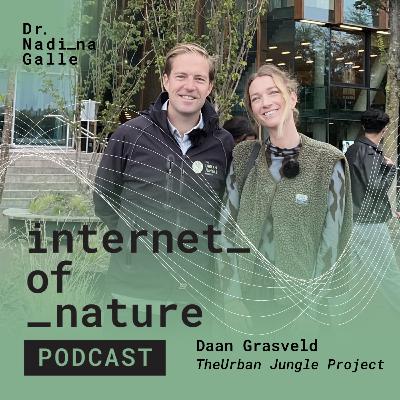
On a rooftop disguised as a public square outside Amsterdam’s public library, Nadina sits down with Daan Grasveld, co-founder of Urban Jungle Project, to explore how trees can thrive in the most unlikely urban places. What looks like a normal city square is actually the top of a parking garage—once barren, hot, and lifeless. Today, thanks to modular “jungle blocks,” it’s a cool, shaded micro-jungle alive with bees, birds, and people.Daan breaks down his “three S’s” — stress tests, substrate, and sensors — and explains how Urban Jungle Project lifts fully grown trees onto roofs, squares, balconies, and other “impossible” sites where traditional planting can’t go. We talk about green-as-a-service and why maintaining living systems is as important as installing them, the role of citizen science through QR-coded monitoring, and why the long-term goal is actually less technology through passive, resilient systems that let nature do the work.Together, we explore how modular forests cool cities, create instant biodiversity, and turn overlooked spaces into places people want to be. If you’ve ever looked at a roof, garage, or forgotten corner and wondered what it could become, this episode opens a new window into the future of urban nature.
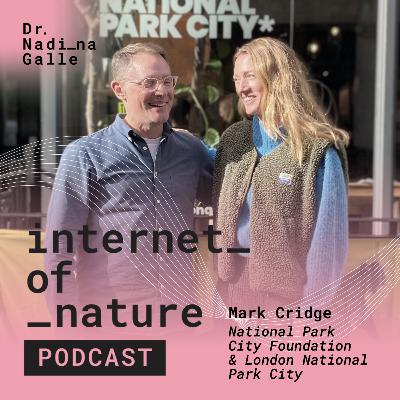
In this episode, Nadina meets Mark Cridge just off Oxford Circus, inside a quiet, plant-filled HQ that serves as the visitor centre for something radical: a city that calls itself a park. London was the first place in the world to become a National Park City—but what does that actually mean when you’re standing in the middle of one of the busiest urban intersections on Earth?Mark shares the story behind the National Park City idea, from the map that rewired how London sees itself to the moment the city formally embraced a new identity as a living landscape. We talk about how over 50% of London is already green and blue space, why perception matters as much as policy, and how reframing a city can unlock entirely new conversations about health, belonging, biodiversity, and the future of urban life.At the heart of the movement are the community Rangers—ordinary people running extraordinary local projects, from tracing hidden fruit trees across neighbourhoods to turning allotments into spaces of healing, mental health support, and connection. Together, we explore how these small, human-scale interventions quietly reshape entire neighbourhoods from the ground up.We also dig into the deeper questions beneath the movement: the global collapse of human connection to nature, why teenagers so often lose that bond, what it means to raise nature-connected children in dense cities, and whether cities—rather than rainforests or remote wilderness—may now be the most important battleground for reconnection.This is an episode about maps, movements, rights to grow and swim, and what happens when a city stops treating nature as decoration and starts treating it as its backbone.
In this episode, Nadina sits down with Adrian Wong, SUGi’s UK Forest Lead, in the middle of the Forest of Thanks—a 10,000 m² Miyawaki forest planted in one of London’s most under-resourced boroughs. What was once a simple lawn is now a thriving woodland of oaks, elders, cherry trees, brambles, birds, and even resident foxes.Adrian explains the Miyawaki method, a powerful approach to creating fast-growing, self-sustaining native forests in urban areas by planting densely, rebuilding living soils, and embracing the natural “messiness” of ecological succession. With 31 SUGi forests across London, most no bigger than a tennis court, Adrian shares how tiny forests can improve biodiversity, clean the air, soften noise, cool neighborhoods, and help stitch ecological corridors back into the city.We also explore the human side of this work—from greening schoolyards next to airport runways, to kids planting their first-ever trees, to how daily access to nature boosts mental health and builds community resilience. Along the way, we discuss bioacoustics, iNaturalist, parakeets, fox dens, community gardening, and why messy forests may be the future of urban greening.This is an episode about what happens when you loosen your grip on a piece of land—and watch life flood back in.
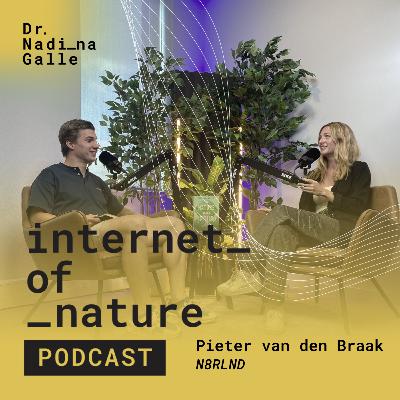
Filmmaker and N8RLND founder Pieter van den Braak joins the Internet of Nature Podcast for a walk through Eindhoven’s Philips de Jonghpark—a city park dense enough to feel like a pocket forest. Pieter shares how, during a period of feeling unmoored in his early twenties, nature became the one place that offered clarity, calm, and a sense of belonging he couldn’t find anywhere else.We talk about the quiet drift into burnout, why awe can reset an overwhelmed mind, and how “microdosing nature” for five minutes a day can shift the tone of an entire morning. Pieter explains how this personal turning point led him to build N8RLND, a media platform designed to counter doomscroll culture with films and stories that reconnect people to the living world.Along the way, we explore why solitude in nature feels different from loneliness, how simple outdoor rituals can anchor mental health, and why, as Pieter puts it, “you don’t need to know anything about nature to feel part of it.”
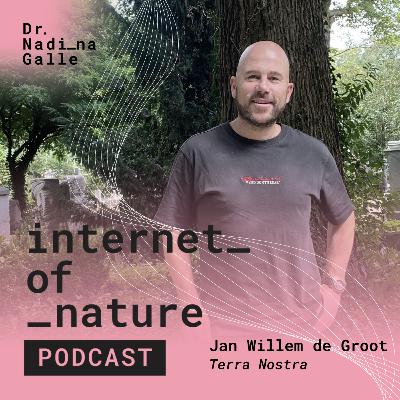
Amsterdam’s trees haven’t “stopped growing” — they’ve stopped growing the way they should. Arborist-turned-CEO Jan Willem de Groot explains why maturity matters more than planting counts, why crown volume is the metric that actually reflects ecological function, and what happens when cities focus on keeping the trees they already rely on.We explore why large trees provide exponentially more shade, cooling, habitat, and carbon storage than saplings; how risk-averse maintenance has erased vital hollows and “imperfections” that wildlife depends on; and why the real frontier of the urban forest is private land, where most canopy sits and most removals happen. Jan Willem shares how Terra Nostra and greehill are using LiDAR-based smart inventories to create accurate, city-wide digital twins — not to replace arborists, but to free them to focus where their expertise matters most.We also talk about Ukraine’s lanes of heroes — memorial trees that carry names, grief, and continuity — and what they teach us about trees as living memory, not just infrastructure. Technology can help us see what is worth keeping. But meaning is what keeps it standing.
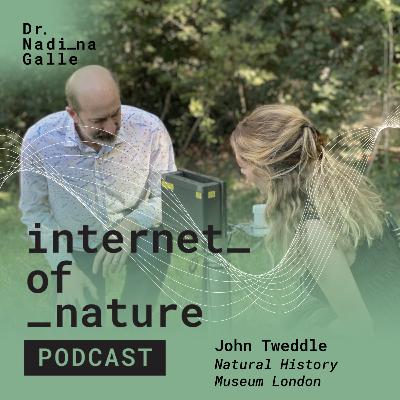
John Tweddle joins the Internet of Nature Podcast to share how the Natural History Museum in London turned five acres of ornamental lawn into a living laboratory for the future of urban nature.From eDNA that uncovers invisible life to bioacoustic microphones that map the city’s soundscape, John and his team are reimagining what a museum can be: not just a keeper of fossils, but a sensor-rich, public-facing experiment in coexistence. We talk about the 2,000 species found in a single acre of soil, why “data alone will not help nature recover,” and how machine learning and citizen science can work hand in hand to monitor—and mend—the living city.Along the way, we explore what it means to listen to landscapes, how five million visitors a year unknowingly become research participants, and why, as John says, “the Internet of Nature isn’t about more data, but connected data that works for nature.”
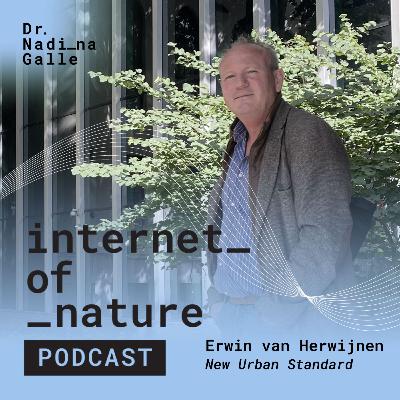
Recorded in the heart of Tilburg—a Dutch city that has transformed from one of Europe’s hottest urban heat islands into a showcase of regreening—this episode explores the hidden worlds that decide whether city trees live or die. Arborist and Senior Advisor Erwin van Herwijnen of New Urban Standard joins the Internet of Nature Podcast to talk about why soils matter more than species, and how climate-adaptive growing places can turn trees into the new sewer system.We discuss why most city trees never make it past adolescence, why climate-ready trees won’t save us without climate-ready soils, and how stormwater makes or breaks survival. Erwin explains why tree professionals can’t afford to be “softies,” why spreadsheets might be the Lorax’s greatest ally, and how making civil engineers happy is the secret to long-lived urban forests.Plus: the tragedy of cutting down trees before they reach maturity, what it takes to plant for 80 years instead of election cycles, and why, for Erwin, the city only truly comes alive when its people can sit in the shade of a tree.
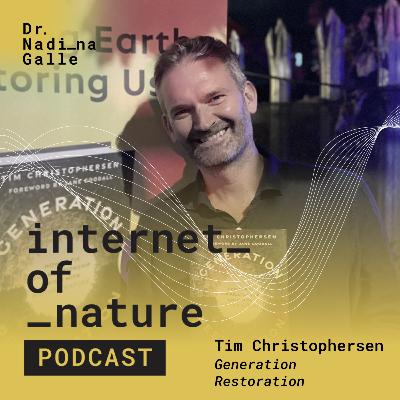
Tim Christophersen joins the Internet of Nature Podcast to talk about his new book, Generation Restoration, and why nature isn’t a luxury—it’s our only home. From his first steps in the forest with his forester grandfather to leading the UN Decade on Ecosystem Restoration, and now as VP of Climate Action at Salesforce, Tim shares why waiting for perfection paralyzes companies, what greenwashing gets wrong, and how corporate pledges can move from CSR to true business resilience.We explore why our ecological crisis is rooted in a 300-year-old worldview, how oyster reefs once filtered New York Harbor daily (and could again), and why AI might help “make us all ecologists,” from smallholder farmers in Colombia to city dwellers identifying birdsong. Plus: the role of imagination in rewriting our relationship with nature, the personal challenge of writing a book with Jane Goodall’s final foreword, and why, as Tim says, “Nature is waiting. It’s time to come home.”
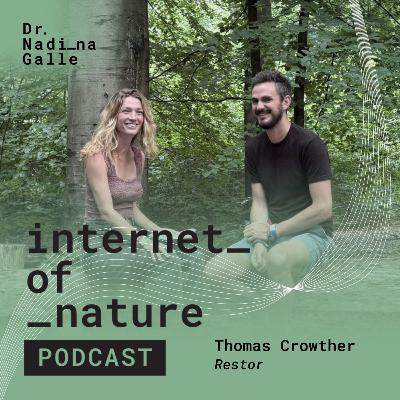
Thomas Crowther returns to the Internet of Nature Podcast to open Season 6 with a simple provocation: don’t maximize carbon—maximize life. We revisit the whirlwind after the “trillion trees” paper, the shift from monoculture planting to restoring Indigenous-led, locally stewarded ecosystems, and why climate action should feel joyful, not joyless. Tom shows how Restor lets anyone map a garden, pocket park, or farm—and why tens of thousands of urban projects already do. Plus: Costa Rica’s national bioacoustics study (soundscapes ~86% back toward intact forest), music that echoes nature, health links, policy lessons, and an update on his new Branch Foundation.
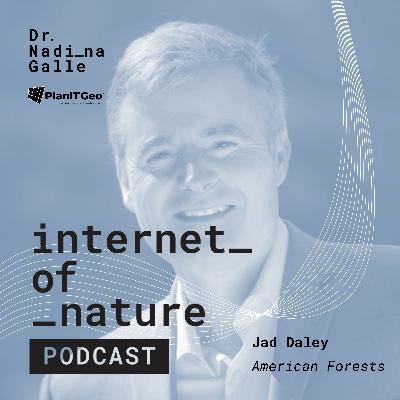
Dr. Nadina Galle is joined by Jad Daley, the 40th president and CEO of American Forests, the oldest forest conservation organization in the states, to discuss the unprecedented $1.5 billion federal investment for the U.S. Forest Service’s Urban and Community Forestry Program, how the investment will give priority to projects that benefit underserved communities, address extreme heat, and low-canopy populations, and how Jad and the team at American Forests have estimated that the cash influx, combined with matching contributions from funding recipients, could create thousands of jobs and help plant and protect 40 to 50 million trees nationwide. At the end of the episode, we wrap up with Ian Hanou, the founder and CEO of PlanIT Geo, to reflect on what Season 5 has taught us and to discuss what it means for the future of urban forestry.
This podcast episode is brought to you by PlanIT Geo.
Follow Nadina and the Internet of Nature Podcast on all social platforms:
Instagram: https://www.instagram.com/internetofnature_
LinkedIn: https://www.linkedin.com/in/nadinagalle
Twitter: https://twitter.com/earthtonadina
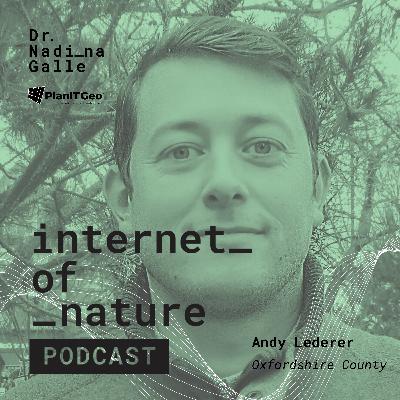
Dr. Nadina Galle is joined by Andy Lederer, Principal Arboriculture Officer for Oxfordshire County Council, to discuss how he got involved with trees despite growing up in North London, how data-driven decision-making is revolutionizing urban forestry, how his perspective on data has changed over his nearly two-decade-long career, how Andy has harnessed PlanIT Geo's tree inventory and asset management software in Oxfordshire County (UK), the surprising way his team of tree officers reacted to a new, data-driven approach, and what he hopes the future of data-driven urban forestry might look like.
This podcast episode is brought to you by PlanIT Geo.
Follow Nadina and the Internet of Nature Podcast on all social platforms: Instagram: https://www.instagram.com/internetofnature_LinkedIn: https://www.linkedin.com/in/nadinagalleTwitter: https://twitter.com/earthtonadina
Dr. Nadina Galle is joined by Tom Ebeling, Community Arborist at Openlands, to discuss how we can ensure the trees that are planted today will still be there in 10, 20, 50, and 100 years' time, why urban tree mortality statistics are all over the map, and how Openlands' highly successful TreePlanters Grant and TreeKeeprs program may hold the secret to transforming tree-planting campaigns into tree-growing campaigns.
This podcast episode is brought to you by PlanIT Geo.
Follow Nadina and the Internet of Nature Podcast on all social platforms:
Instagram: https://www.instagram.com/internetofnature_/
LinkedIn: https://www.linkedin.com/in/nadinagalle/
Twitter: https://twitter.com/earthtonadina
Dr. Nadina Galle is joined by Brett KenCairn, the City of Boulder’s Senior Policy Advisor for Climate Action and the city’s Natural Climate Solutions team lead, to discuss the vital link between municipal climate change policy and urban forestry policy, how they complement each other to achieve sustainable urban forest planning, and why most city governments haven’t yet connected the dots – at least not all the way.
This podcast episode is brought to you by PlanIT Geo.
Follow Nadina and the Internet of Nature Podcast on all social platforms:
Instagram: https://www.instagram.com/internetofnature_
LinkedIn: https://www.linkedin.com/in/nadinagalle/
Twitter: https://twitter.com/earthtonadina
This week, Dr. Nadina Galle is joined by Leslie Berckes, Executive Director of the Society of Municipal Arborists (SMA), to discuss the skilled labor shortage in arboriculture and urban forestry, her experience igniting passion in young minds to participate in tree planting and tree care at Trees Forever, her groundbreaking vision to build a sustainable urban forestry workforce, and practical career tips for entering the field of tree care.
This podcast episode is brought to you by PlanIT Geo.
Follow Nadina and the Internet of Nature Podcast on all social platforms:
Instagram: https://www.instagram.com/internetofnature
LinkedIn: https://www.linkedin.com/in/nadinagalle
Twitter: https://twitter.com/earthtonadina

Comments

Download from Google Play

Download from App Store
 United States