


 Claim Ownership
We Measure The World
Subscribed: 8Played: 75
Subscribe

© 2021
Description
Meet scientists who are changing the world—by measuring it.
50 Episodes
Reverse
Sustainable irrigation starts with understanding how water moves through the entire system. Every interaction—from where it originates to where it’s taken off, stored, or lost—influences a crop’s ability to survive, especially in arid regions like Utah, USA and Punjab, India, where every drop matters.
In this episode, PhD candidate Tejinder Singh joins us to discuss his research in soil hydraulics, evapotranspiration modeling, and sustainable irrigation.
Scientific advancements only matter if they reach the people and places they’re meant to benefit. That’s why Dr. Jake Mowrer and other Extension Professors in Texas A&M’s AgriLife program work to bring the university’s research on soil nutrients and water management directly to the Texas community who can use it. Join Jake as he discusses new insights on effectively implementing biochar, understanding phosphatase activity, and the vital role extension plays in bridging the gap between academic research and the real-world application.
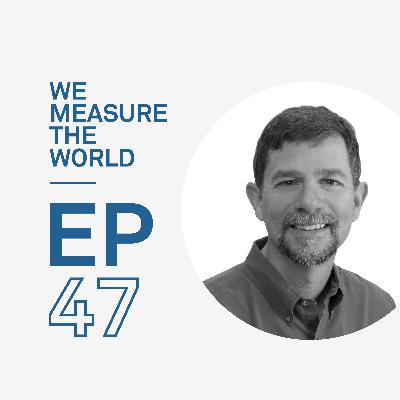
The story of the energy transition is told in many languages: meter-scale satellite imagery, hyperlocal atmospheric data, ecological sustainability studies, infrastructure sustainability studies and more. Understanding the full story requires researchers to harmonize data collected across political lines and scientific disciplines at different scales, on varying platforms, and by organizations with varying assumptions and methodologies. In this episode, Dr. Michael Young talks about his approach to bringing all these elements together into collaborative systems that serve all stakeholders.
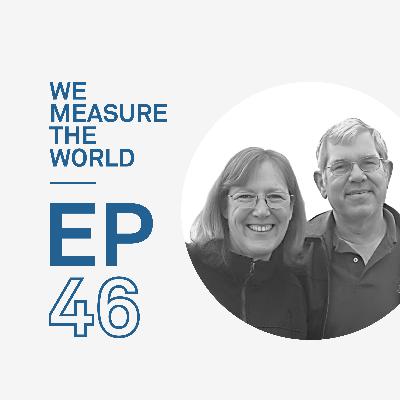
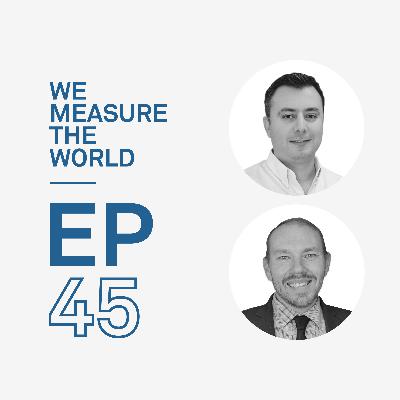
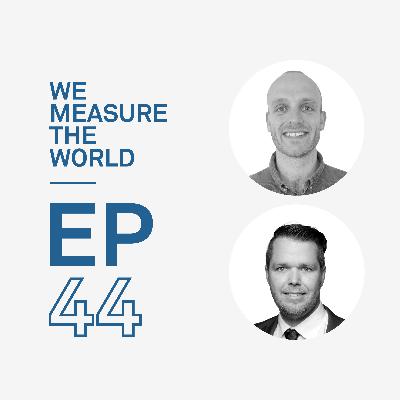
Kai-Julian Hendler is a geotechnical consulting engineer at Boley Geotechnik in Munich, Germany. He holds a master’s degree in Civil Engineering, with a specialization in geotechnical engineering from the University of Lisbon. Over the past 8 years working at Boley Geotechnik, he has been a site engineer on port construction projects in South Africa, Guinea, and Australia. In his current role, he focuses on the geotechnical challenges of infrastructure projects for railways, metros, and roads.Christoph Verschaffel-Drefke is a Geotechnical Engineering and Hydrology Coordinator for Transnet BW, a transmission systems operator in Germany. After getting his degree in Geoscience Engineering, he worked on several research projects based around the heat dissipation of underground cables. During his 6 years working at TransnetBW, he has overseen projects relating to thermal soil investigation, thermal dimensioning, bedding materials of cables, and heat emissions.
As a third-generation builder, Bryce Wuori has always been passionate about construction. To further this passion, he studied Construction Engineering at North Dakota State University and earned a Master of Project Management from the University of Mary. As the CEO and co-founder of Pavewise, Bryce believes that technology is key to the future success of the pavement and construction industry.
Lauren is a PhD candidate at Idaho State University focusing on plant physiological ecology. She received her bachelor’s and master’s in biological sciences from Cal Poly Pomona. She was a 2022, recipient of meters G.A. Harris Award. Her research has focused on long-term water storage in trees and its importance for whole tree water relations at both tree and ecosystem scales.
Dr. Matt Yost is an associate professor, associate department head, and agroclimate extension specialist at Utah State University. He obtained his PhD in applied Plant Science at the University of Minnesota, after which he spent several years doing post-doctoral research in Minnesota and Missouri. His research and extension efforts focus on water optimization in agriculture, soil health, precision agriculture, and adaptive nutrient management. Matt is also currently serving as director of USU crops and presiding Chair of the agronomic production systems section of the American Society of Agronomy.
Alex received his bachelors in Mathematics & Astrophysics from Oberlin College in 2018. He is currently a Hydrologic Science PhD candidate in the University of Wyoming Plant Physiological Ecology Laboratory. Alex’s research focuses on modeling and measuring the relationship between ecosystem-scale processes and plant physiology, especially as they relate to land management and disturbance. Alex was a 2021 G.A. Harris Fellowship recipient.
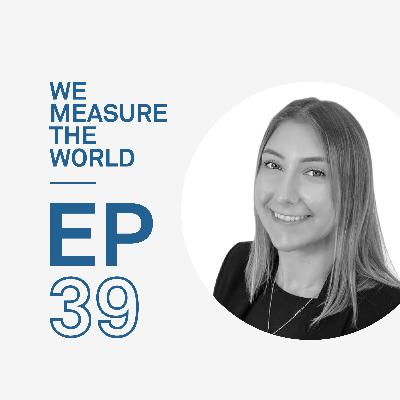
Cecilia earned her bachelor’s degree in agronomic engineering from the University of Passo Fundo in Brazil. Cecilia was a recipient of the 2022 G.A. Harris Fellowship sponsored by METER Group. She is currently a PhD candidate in horticultural sciences at the University of Florida, where her focus is on grafted blueberry physiology and production. Her research centers on developing production systems that enhance climate resilience in blueberry crops to address critical global agricultural challenges.
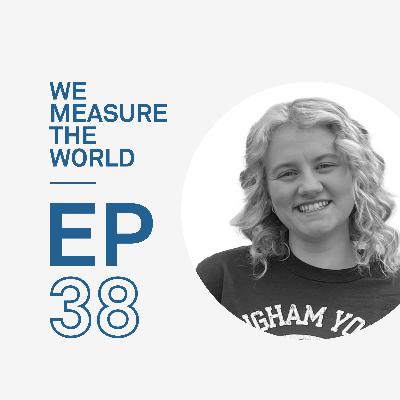
Katie completed her bachelor’s degree in Environmental Science and Technology at Colorado Mesa University, where she focused her studies on water quality and conservation. She is currently pursuing her master’s degree in Environmental Science at Brigham Young University. After that, she hopes to work in the industry for a few years before continuing to her PhD.
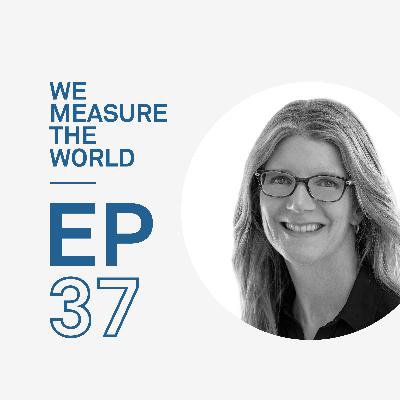
Dr. Kathleen (Kate) Smits is a professor at Southern Methodist University’s Lyles School of Engineering and the Solomon Professor for global development. Prior to SMU, she was a professor at the University of Texas at Arlington and associate professor at the Colorado School of Mines and the US Air Force Academy. She earned a bachelor’s degree in environmental engineering from the US Air Force Academy, master’s in Civil Engineering from the University at Texas Austin, and a doctorate in Environmental Science and Engineering from the Colorado School of Mines. She served as a civil and environmental engineering project manager and officer in the US Air Force.
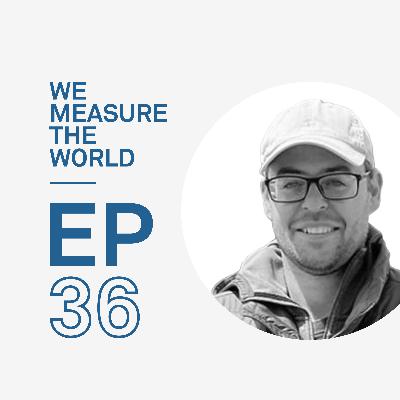
Stephen is a professor in the department of geology at the University of Puerto Rico-Mayagüez. He obtained his bachelors in geology and earth science from the University of North Carolina at Chapel Hill and his PhD in geology from North Carolina State University. He teaches classes in structural geology, geomorphology, and field geology, and his research projects have focused mostly on tropical landslides and landscape evolution, with the funding of such organizations as the NSF, USGS, USDA-NRCS, and NOAA.
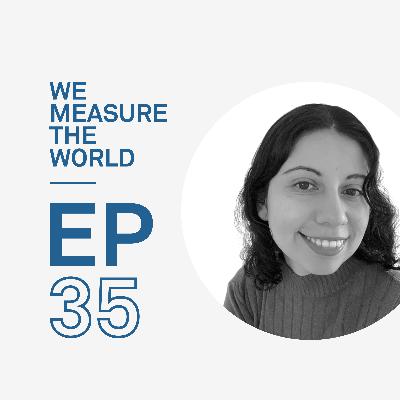
Sara received her masters in soils and geochemistry from UC Davis, and her doctorate in engineering sciences from La Pontifícia Universidad Católica de Chile. She is currently assistant professor at that same university, where she teaches courses in environmental biophysics and statistical methods, and soon, geology and soil sciences and soil conservation. Her research centers around lab and field studies related to soil science and environmental studies, with specific focus on soil physics. Her recent interest has been to understand urban soil ecosystem services.
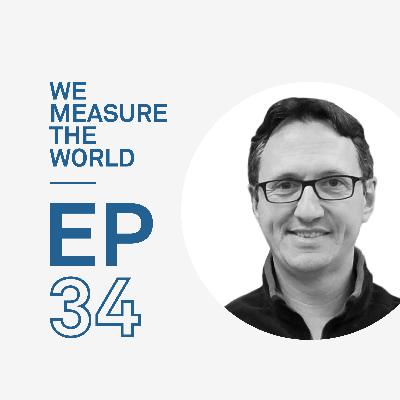
Michael is a senior adjunct research fellow at Griffith University in Queensland, Australia, Founder of Implexx Sense, and Director at Edaphic Scientific, an exclusive distributor of METER Group instruments. He obtained his doctorate in ecology and evolutionary biology from the University of New South Wales. He previously worked as an ecohydrologist at the University of Western Sydney and was a plant physiology senior adjunct research fellow at the University of Queensland. His research interests include plant-water relations and biomass allocation patterns at a macro physiological scale, and experiments with sap flow.
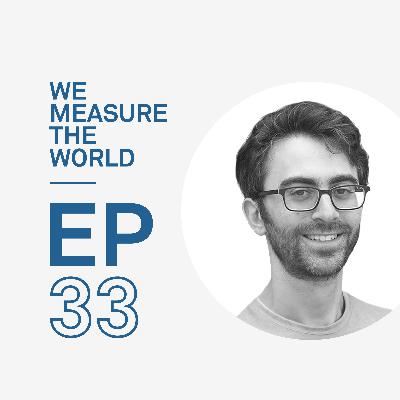
Mason Stahl is the James M. Kenney Assistant Professor of Environmental Engineering in the Department of Geosciences and Environmental Science, Policy and Engineering program. His research spans the fields of hydrogeology, geochemistry and water resources. I study how perturbations to the environment influence elemental cycling and the quality of our water resources. A main focus of my research has been on improving our understanding of the hydrologic and biogeochemical factors that result in the mobilization of naturally occurring arsenic from sediments into groundwater, which is a problem that threatens the health of millions of people around the world. One of the primary goals of my research is to help answer questions about how groundwater and surface water quality will change in response to natural and anthropogenic changes to the environment and what this means for the health of people and the environment.
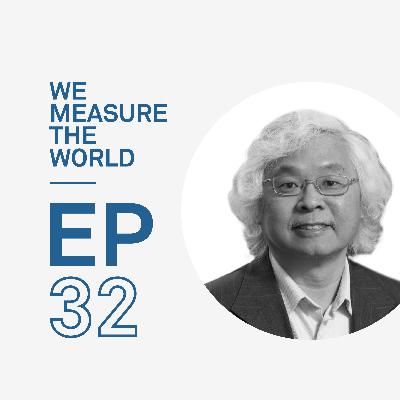
Ning is a professor of Civil and Environmental Engineering at the Colorado School of Mines. He obtained his bachelor’s in Geotechnical Engineering at Wuhan University of Technology, and both his master’s and doctorate in Civil Engineering at John Hopkins University. He is well-known internationally for his work on stresses in variably saturated porous media, with his primary research interest in seeking common threads among basic soil physical phenomena, including fluid flow, chemical transport, heat transfer, stress, and deformation.
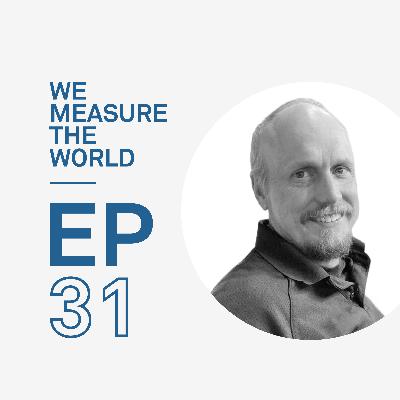
Erin is an Agricultural Engineer and Professor in the Department of Soil and Water Systems at the University of Idaho. He obtained his bachelors in Agricultural Engineering with a Soil and Water Engineering emphasis at Washington State University, and then went on to get his master’s from the University of Minnesota and doctorate from the University of Idaho, both specializing in Hydrologic Measurement and Modeling. Erin’s current research focuses on the management of ecosystems through the combination of field experiments and modeling.

Comments

Download from Google Play

Download from App Store
 United States