


 Claim Ownership
The Future of Insurance
Subscribed: 31Played: 831
Subscribe

© Insurance Evolution Partners
Description
For over a century, the Insurance industry has stood by people at the worst moments of their lives, and kept the risk of these moments from standing in the way of people pursuing their dreams.
But the industry, and the demands of the people we serve, are changing. The Future of Insurance podcast brings you thoughts from leaders from across the industry to help inspire and inform how we can all help evolve into the future.
Brought to you by Bryan Falchuk, industry veteran and author of the best-selling series, "The Future of Insurance: From Disruption to Evolution"
But the industry, and the demands of the people we serve, are changing. The Future of Insurance podcast brings you thoughts from leaders from across the industry to help inspire and inform how we can all help evolve into the future.
Brought to you by Bryan Falchuk, industry veteran and author of the best-selling series, "The Future of Insurance: From Disruption to Evolution"
200 Episodes
Reverse
Episode Info Kyle Nakatsuji is the Founder and CEO of Dearborn Labs and Clearcover. He joined the show during Season 1 to talk about Clearcover (which is the subject of one of the case studies in The Future of Insurance – Volume II. The Startups). He rejoins the show to share about their latest venture, Dearborn Labs. Here is the detail on the launch of Dearborn Labs from their press release: Clearcover, Inc. Launches Dearborn Labs to Deploy Production AI Inside Carriers and MGAs Backed by nearly a decade of proven results, the firm's AI concierge model designs, builds and deploys customized AI infrastructure into insurers' existing operations to eliminate fragmented pilots CHICAGO, March 5, 2026 — Clearcover, an AI-native auto insurance carrier, today announces the launch of Dearborn Labs, a forward-deployed AI practice that builds and operates AI systems inside property and casualty insurance carriers and MGAs. "Most carriers have already invested in AI. The problem isn't the tools," said Dearborn Labs Founder Kyle Nakatsuji. "It's that the landscape changes faster than any single solution can keep up with, and nobody's connecting the data and context across operations to make those tools compound. That's not a software problem. It's an operating problem." Unlike traditional SaaS, Dearborn Labs adds an operational layer to customize AI within a company's unique model, driving measurable business outcomes. "We don't hand over a strategy deck. We deploy into your operation and ship production systems in weeks," said Nakatsuji, adding that modern insurers need to turn isolated AI capabilities into a growth engine. "Your claims data should make your underwriting smarter. Your underwriting context should shape your distribution. We build the infrastructure that makes that happen." While the insurance industry has invested heavily in AI, most carriers and MGAs have not yet seen system-level returns. Nakatsuji's team at Clearcover integrated AI into nearly every core function of daily production across multiple states and significantly improved results: Over 90% of claims intake runs through AI agents, 93% of policies are bound digitally and claims handling operates at three times the efficiency of traditional carriers. Episode Overview: Clearcover's Tech Foundation: Built on a decade of tech innovation for better customer experiences and efficiency in insurance. Dearborn Labs' Mission: A new venture focused on helping insurers adopt AI, offering a hybrid service and technology approach. Urgency of AI Adoption: The current AI advancements necessitate immediate action; waiting means falling behind. Beyond Off-the-Shelf Solutions: Dearborn Labs focuses on tailored AI strategies and team deployment, not just software sales. The Critical Data Layer: Effective AI requires a unified data foundation to provide context across all business functions. Incremental Steps, Exponential Gains: While the industry is incremental, AI allows for rapid progress and significant results. AI as "Employees": AI agents can act as specialized "staff," drastically changing operational efficiency and economics. Future Uncertainty, Present Action: The pace of AI change is unprecedented, making immediate engagement crucial for future relevance. This episode is brought to you by The Future of Insurance book series (future-of-insurance.com) from Bryan Falchuk. Follow the podcast at future-of-insurance.com/podcast for more details and other episodes. Music courtesy of Hyperbeat Music, available to stream or download on Spotify, Apple Music, and Amazon Music and more.
Episode Info Dr. Megan Linkin is the Head of Parametric Nat Cat Americas for Swiss Re Corporate Solutions, based in New York City. She has extensive expertise in parametric and structured insurance and reinsurance solutions. Megan's primary responsibility is the origination, development, structuring and underwriting of parametric insurance solutions that protect corporates and governments against losses incurred due to natural catastrophes or other disruptive events. Before joining CorSo in 2019, Megan worked for Swiss Re's Public Sector Solutions team, focusing on the development of insurance products to address the unique financial needs of public sector entities, from federal governments to municipal service providers. Prior to re-joining Swiss Re in 2012, she worked as a weather derivative underwriter and catastrophe bond analyst at Allianz Risk Transfer, structuring weather solutions for the energy, agricultural and tourism industries. Between 2008 and 2011, she was an atmospheric perils specialist for the Swiss Re Cat Perils team; her responsibilities included assessing the insurance risk posed by hurricanes, tornadoes, hail and winter storms globally and developing pricing tools and techniques for underwriters, actuaries and insurance-linked security traders. Megan has designed several award-winning parametric insurance solutions, such as Swiss Re STORM, awarded the Business Insurance Insurtech Initiative of the Year in 2020, and Swiss Re HAIL, awarded the Business Insurance Innovation Award in 2021, and Inside P&C's Underwriting Initiative of the Year in 2022. She is one of Swiss Re's experts on climate change science, natural catastrophes and the innovative insurance solutions that exist to address them. Megan has given invited presentations to the state of New Jersey, the New York Academy of Science, Rutgers University, and the University of Maryland. Her manuscripts have been published in Climatic Change, the Journal of Climate and Weatherwise magazine; she has also authored publications that assess the present-day financial impacts of the 1821 Norfolk-Long Island hurricane and Hurricane Andrew. Megan was profiled by the New York Times in 2010 and NJ Biz in 2013, and has been interviewed by NBC News, the New York Times, the Washington Post, the Wall Street Journal and Huffington Post. She has testified before the United States Senate regarding the impacts of climate change on the insurance industry, and has appeared on The Weather Channel. Megan was named one of Reactions Rising Stars of the insurance industry in 2014. Megan received her Ph.D. and Masters of Science in atmospheric and oceanic science from the University of Maryland and graduated magna cum laude from Rutgers University with a Bachelor of Science in meteorology and a minor in mathematics. She received her Certified Consulting Meteorologist Seal from the American Meteorological Society in February 2013. She is an active member of the American Meteorological Society, the American Geophysical Union and the New Jersey Climate Adaptation Alliance. Episode Overview: Introduction to Parametric Insurance Parametric insurance is a type of index-based insurance where payouts are determined by the intensity of an event rather than the actual incurred loss. This pre-agreed value policy uses specific event metrics to trigger claims. Background and Evolution The concept of parametric insurance has roots in weather derivatives from the late 1990s. Initially focused on natural catastrophe risks like hurricanes, tornadoes, and hail, it has evolved significantly. Swiss Re, with its deep involvement in this space for over 15 years, has seen a shift towards insurance contracts rather than purely derivatives. Parametric Insurance for Governments and Corporations Parametric insurance has resonated with government buyers due to their role as first responders and insurers of last resort after natural disasters. It provides a mechanism to cover immediate costs like infrastructure repair and emergency responder salaries, which traditional policies often don't address. In the late 2010s, after significant hurricane activity, there was a surge in interest from the corporate sector, particularly in hospitality and heavy industry, highlighting the value of parametric solutions for business continuity. How Parametric Insurance Works as an Insurance Policy While distinct from traditional insurance, parametric policies function as insurance contracts. They require a proof of loss and include a broad definition of "ultimate net loss" to encompass direct or indirect, physical or financial losses traceable to the event. Clients attest that their incurred losses exceed the parametric payout, ensuring there's no windfall. The triggers are set to cover catastrophic and disruptive events, aligning with the core purpose of natural catastrophe insurance. Addressing Skepticism Initial skepticism often labels parametric insurance as gambling. However, modern parametric policies, developed with dedicated underwriters and product designers, work closely with clients to understand their historical losses and pain points. This ensures that triggers are set at intensities that allow clients to recover funds for actual losses, including business interruption and pre-event expenditures made for resilience. Expanding Perils and Future Growth While hurricanes and earthquakes are the most recognized perils for parametric insurance, the market is expanding: Severe Convective Storms: Parametric coverage is now available for hail and tornadoes, supported by data providers offering hail footprints and tornado track information. Flood: Addressing flood risk parametrically has been a challenge due to its various causes (nor'easters, hurricanes, rainfall, river flooding). However, advancements in satellite technology and data analytics are enabling parametric flood solutions. Emerging Areas: Concepts are being explored for other event types, potentially leveraging data on flight traffic, restaurant foot traffic, and hotel bookings to assess disruption. Key Requirements for Parametric Insurability For an event to be insurable on a parametric basis, it must meet three key criteria: Randomness: The event must be a random, external shock. Independent Data Provider: A reliable, independent entity must provide consistent data on event intensity or monitoring. Modelability: The probability of a given event intensity must be determinable, either through stochastic catastrophe models or long historical time series. Future Outlook and Holistic Risk Management Parametric insurance is seen as a vital tool for managing increasingly complex and interconnected global risks. It can complement traditional insurance to provide solutions for supply chain disruptions and contingent business interruption. The industry is encouraged to embrace innovation and develop new solutions to address evolving exposures. Parametric insurance is not an "either/or" solution but a valuable component of a holistic risk management strategy, enhancing client resilience when paired with traditional coverage. This episode is brought to you by The Future of Insurance book series (future-of-insurance.com) from Bryan Falchuk. Follow the podcast at future-of-insurance.com/podcast for more details and other episodes. Music courtesy of Hyperbeat Music, available to stream or download on Spotify, Apple Music, and Amazon Music and more.
Episode Info On the back of getting some less-than-great sales outreach on LinkedIn, I thought it would be a great moment to share some more sales advice for startup founders and service or solution providers out there looking to sell into or partner with insurers. This is a follow up the episode I did in Season 7 on the subject, which you can check out at https://future-of-insurance.com/podcast/vendoradvice/. I'll also be taking a few weeks off from posting new episodes of the show, which makes a great chance for you to catch up on the back catalogue of episodes from all 7.5 seasons (there are 190 episodes of this show so far!). Also, if you're interested in claims or the complexities of coverage discussed in a really entertaining and educational format, check out What's The Scenario from PLRB, available on PLRB's website (membership required), or free for anyone on all the top podcasting platforms and in video format on YouTube. Episode Overview: Key Principles: Industry Foundation: Insurance is a caring, people-driven industry. Genuine intent to help is crucial. Clarity Over Buzzwords: Avoid vague language and jargon ("next generation solutions," "AI"). Be specific about the problem you solve and your solution. Respect Time: Generic, time-wasting outreach is detrimental. Be upfront, honest, and clear. Authenticity Wins: Genuine, dedicated individuals who focus on solving real problems build impactful businesses. Relationship Driven: Success in insurance relies on trust and authentic connections. Actionable Advice for Sellers: Clearly state the problem you solve and your solution. Be direct and avoid unnecessary buzzwords. Communicate genuinely and respectfully. Understand your audience's needs. This episode is brought to you by The Future of Insurance book series (future-of-insurance.com) from Bryan Falchuk. Follow the podcast at future-of-insurance.com/podcast for more details and other episodes. Music courtesy of Hyperbeat Music, available to stream or download on Spotify, Apple Music, and Amazon Music and more.
Episode Info Wayne Slavin is the CEO and Co-Founder of Sure, a VC backed insurtech startup. Prior to Sure he was the VP of Product Management at Tapingo, TechCrunch's Most Innovative Company of 2013. His other past projects and companies include NetStumbler, a consumer app with more than 1.5 billion downloads, the Barnes & Noble Nook eBook reader, Buddy Media (now part of salesforce), and BackupRight the enterprise SaaS company he sold in 2012. He has a Masters Degree from Columbia University. You can see Wayne from his appearance on the show in April of 2024 in the final episode of Season 5. Episode Overview: SURE's Role: SURE provides the technology infrastructure and services that enable large brands, including Fortune 500 companies and major auto manufacturers, to launch and manage their own digital insurance businesses. This allows these brands to control the customer experience and build long-term, durable insurance operations. Embedded Insurance: The trend of "embedded insurance" is driven by the fact that insurance is often a necessary component of a core product (like cars or homes) or can be a friction point in a sale. Companies are recognizing the value of offering insurance directly to their customers to enhance the overall experience and capture economic benefits. The "One-Stop-Shop" Vision: Many large consumer brands aim to be a comprehensive provider for their customers, whether it's for car ownership, homeownership, or financial well-being. Insurance is a natural extension of this strategy, allowing them to create a complete ecosystem around their core offerings. Structural Advantage: Brands that already have a customer base have a significant advantage. Acquiring these customers for insurance purposes costs them next to nothing, giving them better economics than external insurance providers. Evolution of SURE: Over the past year, SURE has focused on helping its partners achieve "permanence" in their insurance offerings. This means enabling them to build stable, long-term insurance programs that are not subject to the fluctuating appetites or market conditions of traditional insurers. Challenges for Traditional Insurers: The existing insurance industry has had ample opportunity to improve its technology and customer experience but has largely failed to do so. This has created an opening for new models. The "Build vs. Buy" Dilemma: While some companies attempt to build their own insurance carriers, this is capital-intensive and distracts from their core business. Partnering with a third-party carrier often results in a loss of control over customer experience and technology, leading to suboptimal outcomes. SURE's Sweet Spot: SURE offers a middle ground, enabling brands to have their own differentiated insurance programs with control and economic upside without the need to become full-fledged insurers or rely on inadequate partnerships with traditional carriers. Speed to Market: SURE can bring partners to market with approved insurance products in as little as 90 days, or even faster for simpler offerings, demonstrating a significant advantage over the lengthy internal development times typical for such initiatives. Industry Inertia: The insurance industry often suffers from a lack of incentive for long-term growth and innovation. Decisions are often based on avoiding blame (omission vs. commission) rather than proactively pursuing new opportunities. This makes it difficult for established players to adapt to new models. The Future of Insurance Distribution: The future will likely involve insurance being more deeply integrated into the customer journey, moving away from discrete purchases and towards seamless, embedded solutions. The current models of comparison engines and traditional carrier partnerships are becoming less relevant. Investor Appetite: There is a significant appetite from investors like private equity and sovereign wealth funds for insurance-like returns, especially for well-defined, scalable programs that leverage existing customer bases. This episode is brought to you by The Future of Insurance book series (future-of-insurance.com) from Bryan Falchuk. Follow the podcast at future-of-insurance.com/podcast for more details and other episodes. Music courtesy of Hyperbeat Music, available to stream or download on Spotify, Apple Music, and Amazon Music and more.

Episode Info Juan García is one of the Co-founders of Tuio, a next-generation insurer built from the ground up with artificial intelligence at its core. Tuio's ecosystem of AI agents — including Leia, Watson, Lisbeth, Sonia, and George — now automate over 80% of customer interactions and 85% of simple claims, showing how AI can rebuild trust in financial services through transparency and efficiency. Juan oversees Tuio's brand, growth, and product strategy, blending design thinking with operational rigor to create a customer experience that feels more like modern software than traditional insurance. Before founding Tuio, he spent 20 years helping companies scale at the intersection of technology and finance — including leadership roles at Monitor Deloitte and global experience in affinity insurance distribution (e.g., Orange Seguros). A telecommunications engineer and La Caixa Fellow, Juan holds an MBA from London Business School and CEIBS. Juan García is co-founder and Co-CEO of Tuio, Spain's 100% digital, AI-native insurer creating next-generation insurance solutions for a customer-centric, tech-driven world. Under his leadership, Tuio has rapidly scaled from a garage startup into a multi-million euro fintech-insurtech raising major backing and redefining what "insurance" means for the digital generation. Juan García brings a unique blend of telecommunications engineering, strategic consulting and startup leadership to his role at Tuio. With a passion for transforming legacy industries through technology, he embarked on the mission of reinventing insurance in an age of artificial intelligence, mobile-first expectations and subscription business models. In early 2021, alongside fellow co-founders José María Lucas and Asís Pardo, Juan helped launch Tuio from its earliest phase — from conception in a garage to its market launch just months later. The vision: build an insurer designed for the digital era, not a legacy insurer digitized. Tuio's model under Juan's leadership is built on three pillars: 1) products designed for digital-native customers (clear policies, subscription-style terms, self-service); 2) technology and automation as core operations, where AI handles everything from underwriting to chats and claims; and 3) a socially-aware business model, with transparency, accessible language and customer alignment built into the value proposition. Under Juan's aegis, Tuio closed a significant €15 million financing round (in 2024) led by major investors including BlackRock and MassMutual Ventures, signaling strong investor confidence in the business model. He has repeatedly spoken about achieving unit-economics advantaged positions: Tuio is approaching profitability by keeping customer acquisition costs low and lifetime-value comparably high. Episode Overview: Company Snapshot: Founded mid-2020, launched November 2021. Serves ~100,000 customers with ~€15 million in premiums. Focuses on personal lines: household, term life, auto, pet, health, travel. Operates as the MGA for all products. Tuio's InsurTech Differentiator: Beyond Process Fixes: Moves beyond early InsurTech's focus on efficiency to fundamentally re-engineering insurance. Targeting Underserved Segment (25-55): Addresses this demographic's demand for digital-first, self-service experiences. Sustainable Growth Model: Rejects "grow at all costs"; prioritizes healthy margins and controlled loss ratios over rapid, unprofitable expansion. Challenging Traditional Playbooks: Proves that a focus on profitability and underwriting is key, even for newer entrants. Key Innovations & Strategies: Proprietary Customer DNA: Collects 100+ non-traditional data points continuously. Example 1 (Device Type): iPhone/MacBook users have ~10% higher claims for stolen goods; this insight influences pricing. Example 2 (Onboarding Behavior): Customers who scrutinize specific coverages during sign-up are flagged for closer review during claims, detecting potential fraud. AI-Powered Claims Management ("Watson"): Handles non-deterministic claims processes effectively. Analyzes customer DNA, policy data, claim history, and more. Performs severity, urgency, and duplication analysis. Assigns confidence levels and escalates high-risk decisions to human adjusters. Transforms claims from a cost center to a "data flywheel." Direct-to-Consumer Model: Operates largely as a direct writer (~60% in the US, ~98% in Spain for new sales). Believes in the value of direct customer relationships for data insights. Acknowledges the role of mediation but focuses on a segment that appreciates their model. Direct model exposes unique challenges like immediate claim filing post-policy purchase, which their data analysis helps mitigate. Claims Processing Excellence: Superior Loss Ratios: Household insurance loss ratio is 55% (vs. 15-115% market average in Spain), aiming for 19% by year-end. Human-Centric Automation: Automation supports, but does not replace, human adjusters for critical decisions. Next Best Action System: Guides adjusters through complex claims processes. Claims as a Data Source: Leverages claims data to refine underwriting and fraud detection. Focus on Non-Deterministic Nature: Recognizes that claims are not linear and requires flexible AI, not rigid rule-based systems. Future Vision: Southern European Champion: Expanding from Spain into Portugal, France, Italy, and Greece. Leveraging Tech Stack: Utilizing their efficient operational model to enter and scale in less competitive markets. Proving Profitability: Demonstrating that Southern European markets can be highly profitable for InsurTech This episode is brought to you by The Future of Insurance book series (future-of-insurance.com) from Bryan Falchuk. Follow the podcast at future-of-insurance.com/podcast for more details and other episodes. Music courtesy of Hyperbeat Music, available to stream or download on Spotify, Apple Music, and Amazon Music and more.

Episode Info Neil Harrison joined Willis in April 2024. He is Global Head of Claims, and a member of the company's Global Executive Team. Neil is based in New York. At Willis, Neil oversees all aspects of the company's claims propositions, services and solutions and participates in client, carrier management and innovation activities. Neil leads a group of 1400 claims professionals across all geographies, all lines of business and all client segments. The breadth and depth of Neil's role illustrate the importance Willis places on claims within the company's client and market facing propositions. Prior to joining Willis, Neil spent over 30 years at Aon and predecessor companies, serving in a series of global leadership roles across many aspects of the business. Neil was Global Chief Claims Officer at Aon from 2018 until joining Willis in 2024. His previous Aon roles included senior roles in client leadership, broking, risk consulting and risk technology activities. Neil started his career in London, and has at various times been based in Rotterdam, Chicago and New York. He has worked with clients and insurers around the world and has spoken at numerous industry events and conferences in, amongst other locations, US, UK, Australia, Canada, China, Colombia, Guatemala, India, Japan, Panama, Belgium, France, Germany, Netherlands, Spain, Singapore, South Korea, Sweden, Hong Kong, Philippines, Italy, Turkey, Argentina, Brazil and South Africa. Episode Overview: Claims as a Client-Facing Function: Willis views claims not as an operational back-office function, but as a crucial client-facing element that drives market propositions. This client-centric approach emphasizes achieving positive client outcomes. The Broker's Role in Placement: The claims organization plays a vital role in placement strategy by assessing carrier performance and ensuring the efficacy of policy wordings. This proactive approach helps avoid disputes and ensures clarity for clients. Navigating Complex Risks: The discussion highlights the increasing complexity of risks, driven by factors like climate change, cyber threats, and geopolitical instability. Harrison emphasizes the need for specialized expertise and a holistic view to manage interconnected risks. The Art and Science of Claims: Effective claims handling requires a blend of technical knowledge and "art," including empathy, relationship management, and clear communication. This human element remains critical, even with the advent of AI. AI's Evolving Role: While AI offers potential for efficiency and automation, its application in complex claims needs careful consideration. The focus remains on how AI can augment human expertise and improve client outcomes, rather than replacing them entirely. Client Lens and Outcomes: The overarching principle for Willis's claims team is the "client lens," ensuring all actions directly impact client outcomes, both financially and through superior service standards. Future Horizons: Looking ahead, the conversation touches upon the interconnectedness of global risks, the challenges of scaling specialization, and the evolving nature of insurance in response to technological advancements and geopolitical shifts. The Importance of Collaboration: A key theme is the need for collaboration between brokers, insurers, and clients, particularly in understanding how various policy wordings interact and ensuring comprehensive coverage for complex, multi-layered risks. This episode is brought to you by The Future of Insurance book series (future-of-insurance.com) from Bryan Falchuk. Follow the podcast at future-of-insurance.com/podcast for more details and other episodes. Music courtesy of Hyperbeat Music, available to stream or download on Spotify, Apple Music, and Amazon Music and more.
Episode InfoJeff Radke is CEO and Co-Founder of Accelerant, a technology-fueled insurance platform that empowers MGUs to more effectively and confidently serve small and medium enterprises. He has spent his career working across all areas of the insurance value chain, from underwriting to reinsurance in global markets. Prior to Accelerant, Jeff spent a decade at Argo Group International Holdings, but he became frustrated with thelegacy system's antiquated technology and emphasis on maintaining their position in the value chain over doing right by the customer. This inspired him to co-found Accelerant to enable data-driven innovation and collaboration that puts customers first. Accelerant rebuilds the way that underwriters share and exchange risk to improve outcomes for everyone, with a focus on the SMBs that power our global economy and their niche insurance needs. Jeff was previously a guest on the show, and you can catch that episode here. Episode Overview: Accelerant's IPO Journey: Successful Public Offering: Accelerant completed its Initial Public Offering (IPO) in July 2025. Timing Was Right: Radke believes the IPO occurred at the opportune moment, as the business model had become clearly defined and demonstrable to investors. He suggests it couldn't have happened much sooner. Market Conditions: The market timing for the IPO was favorable. Long-Term Vision: The IPO supports a long-term strategy, with the company prioritizing a 5-10-15 year horizon rather than short-term quarterly results. This contrasts with some other tech IPOs that focus on immediate performance. Investor Communication: Transparency with investors about expectations is crucial, and the company runs the business for the benefit of its customers and platform participants. Learning Experience: The post-IPO period, including initial market reactions and earnings announcements, served as a valuable, albeit challenging, reminder to focus on running the business exceptionally well and managing investor expectations. Accelerant's Mission & Problem Solved: Addresses a gap in the market for specialized underwriting talent moving to MGAs without adequate support. Recognizes the shift of risk retention to larger insurance companies, leaving a need for capacity. The Accelerant Platform: Aims to be the "rails" for specialty insurance. Focuses on: Smooth, transparent data flow. Efficiently connecting MGAs to risk capital. Leveraging technology and AI for data analytics and portfolio management. Growth & Key Initiatives: Serves 265 MGA members and partners with 17 insurance companies and 90+ capital providers. Mission: An Accelerant-owned entity providing a safety net and support for underwriters transitioning to MGAs. Risk Exchange: Facilitates capital matching for underwriters, with a focus on long-term network effects and data growth. The Evolving MGA Landscape: MGAs are growing significantly faster than the broader industry. Technology is enabling specialization and a "handoff" model across the value chain. This disaggregation is a natural progression, mirroring trends in other industries. Specialized coverage is increasingly in demand due to the complexity of modern businesses. Addressing Industry Inefficiencies: Identifies high expenses in areas like claims, underwriting, and actuarial functions as a key challenge. Advocates for mutualizing these expenses through centralized, technology-driven platforms like the Risk Exchange. Contrasts this with the traditional model where many companies perform the same functions sub-optimally. Differentiating Accelerant: Focuses on long-term viability and underwriting expertise, not just hype. Prioritizes serving members and capital partners with a service-minded approach. Offers a more efficient and effective alternative to traditional and some other insurtech models. This episode is brought to you by The Future of Insurance book series (future-of-insurance.com) from Bryan Falchuk. Follow the podcast at future-of-insurance.com/podcast for more details and other episodes. Music courtesy of Hyperbeat Music, available to stream or download on Spotify, Apple Music, and Amazon Music and more.
Episode InfoDavid Chavern is President and CEO of the American Council of Life Insurers (ACLI) whose mission is to help Americans build financial security through every stage of life. ACLI's 275 member companies represent 93 percent of industry assets and provide financial protection products and services to 90 million families. In his first year in the position, Chavern led the charge in a major tax fight — delivering a win that positioned the industry for long-term success and growth. Now, amid rising costs and longer lives, he is elevating the industry's unique role in providing financial guarantees to Americans that can last for decades. Before joining ACLI, Chavern has built a career spanning 30 years in executive, strategic, operational and legal roles, including serving as the President and CEO of Consumer Brands Association, the trade association for America's $2.1 trillion food, beverage and consumer products industry. Chavern is a founding investor in several new companies and has been named in The Hill's "Top Lobbyists" and was one of the Washingtonian's "250 Most Influential People." He holds an undergraduate degree from the University of Pittsburgh, an MBA from Georgetown University and is a graduate of Villanova University's School of Law. He lives in Falls Church, Virginia with his wife and has adult children. Episode Overview: Role of ACLI ACLI serves as the primary trade association for life insurance carriers in the U.S., representing over 200 members and about 95% of the industry. The organization focuses on advocacy, lobbying, and telling the industry's story. Industry Challenges A significant challenge is the low level of understanding about the life insurance industry among the public and policymakers. The industry faces difficulties in conveying the breadth of its products beyond just term life insurance. Opportunities in the Industry The aging society presents opportunities, with many people transitioning from planning for retirement to entering retirement. Life insurance is uniquely positioned to offer long-term promises, which are increasingly valued. Future Outlook ACLI is investing in projects to better communicate the industry's role and contributions. The organization is also focusing on regulatory issues and new sources of capital. Importance of Insurance Insurance is crucial for enabling various life activities by mitigating risk. Without insurance, the cost of risk would be too high for individuals to bear, affecting their ability to start families, retire, or buy homes. Policy and Regulation The life insurance industry is state-regulated but also significantly impacted by federal policies, especially tax policy. ACLI works to ensure that both state and federal policymakers understand the industry's perspective. Conclusion David Chavern emphasizes the need for the industry to improve its communication strategies and adapt to evolving market conditions. The podcast concludes with a discussion on the importance of providing tools that give people a sense of safety and optimism about their future. Policy and Regulation The life insurance industry is state-regulated but also significantly impacted by federal policies, especially tax policy. ACLI works to ensure that both state and federal policymakers understand the industry's perspective. Conclusion David Chavern emphasizes the need for the industry to improve its communication strategies and adapt to evolving market conditions. The podcast concludes with a discussion on the importance of providing tools that give people a sense of safety and optimism about their future. This episode is brought to you by The Future of Insurance book series (future-of-insurance.com) from Bryan Falchuk. Follow the podcast at future-of-insurance.com/podcast for more details and other episodes. Music courtesy of Hyperbeat Music, available to stream or download on Spotify, Apple Music, and Amazon Music and more.
Episode InfoAdam Masarek is a lawyer, epidemiologist (MPH), and the Legal Marketing Manager for Lex Machina®, the LexisNexis® Legal Analytics® platform. He is dedicated to empowering legal and insurance professionals with data-informed strategies to enhance business development, litigation outcomes, and the rule of law. Episode Overview: In this episode, we sit down with Adam Masarek, leader of content marketing and thought leadership at Lex Machina, to delve into the evolving landscape of litigation within the insurance industry. Masarek, whose background in epidemiology and extensive experience with legal data analysis provides a unique perspective, discusses how Lex Machina leverages data to understand litigation trends and inform decision-making. Lex Machina's Role in Litigation Analysis: Masarek explains his role at Lex Machina, emphasizing their unique approach of combining legal data with deep analysis of recent trends. This includes their popular litigation report series, which explores trends in areas like insurance coverage and sports litigation. Epidemiology and Legal Data: The conversation draws an intriguing parallel between epidemiology and legal data analysis. Masarek highlights how understanding patterns and trends in litigation is akin to understanding disease outbreaks, requiring a data-driven approach to identify causes and potential solutions. The Impact of Legal Data on Practice: The discussion explores how legal analytics are transforming legal practice. While predicting specific outcomes remains challenging due to variables like jury composition and human elements, data-driven insights allow for more precise and confident decision-making. This includes strategic choices about filing locations, potential case values, and overall legal strategy. "Social Inflation" and Its Drivers: A significant portion of the conversation focuses on "social inflation," the phenomenon of awards and settlements outpacing general economic inflation. Masarek and the interviewer discuss potential culprits, including increased attorney advertising, the rise of litigation funding, and a more adversarial stance by insurers leading to more trial-bound cases. Historical Context of Litigation Concerns: The episode touches upon the long-standing nature of concerns about a "lawsuit crisis," noting that such discussions have occurred for centuries. However, recent data from platforms like Lex Machina are providing empirical evidence for some of these trends, particularly concerning jury verdicts. Specific Litigation Trends: "Reptile Theory": The discussion touches on the "reptile theory," a plaintiff tactic emphasizing jurors as community protectors who should punish defendants. Practice Area Variations: It's noted that surges in litigation costs and complexity vary by practice area. Patent litigation and trade secret disputes have seen significant increases, while environmental claims and commercial contracts have not shown the same growth. Increased Filings: There's a noted increase in filings for tort claims, slip-and-falls, and automobile collisions in both federal and state courts. Insurance Coverage Lawsuits: A sharp rise in coverage disputes related to commercial liability policies is highlighted, with record numbers of lawsuits filed in recent years. This trend is also observed in homeowners' coverage cases, particularly those related to hurricanes. Workers' Compensation: The increasing representation in workers' compensation claims is discussed, with a significant portion of claims now coming in with an attorney already attached, making early, non-adversarial resolution more challenging. The Role of Attorney Advertising and Litigation Funding: The pervasive nature of attorney advertising across various platforms (billboards, social media) is examined, with the observation that it's a uniquely American phenomenon. Litigation funding is also identified as a growing factor influencing the legal landscape. The Future of Litigation: Masarek expresses that the current trajectory suggests that increased litigation filings are likely here to stay, indicating a "new normal." Factors like shifting labor markets, economic inflationary pressures, ubiquitous attorney advertising, and the continued growth of litigation funding contribute to this outlook. While acknowledging the potential for policy responses, the current data points towards a sustained trend. Lex Machina's Goal: The ultimate aim of Lex Machina is to empower lawyers, adjusters, and other legal professionals with data for informed decision-making, leveling the playing field for smaller entities against larger corporations. They aim to reduce the "waste of resources" often associated with trials by facilitating more efficient and data-informed negotiations. Emerging Challenges: New complexities, such as the use of artificial intelligence by insureds and cybersecurity risks, are presenting novel situations with limited precedent, potentially leading to increased litigation. This episode is brought to you by The Future of Insurance book series (future-of-insurance.com) from Bryan Falchuk. Follow the podcast at future-of-insurance.com/podcast for more details and other episodes. Music courtesy of Hyperbeat Music, available to stream or download on Spotify, Apple Music, and Amazon Music and more.
Episode Info With nearly 15 years of insurance industry experience, Joe Ziolkowski has navigated both US and non-US regulatory environments in the establishment of Property & Casualty and Life insurance company infrastructure. In 2019, Joe founded Relm Insurance, Ltd. the first insurer licensed under the Bermuda Monetary Authority's new "innovation" framework. Under his leadership, Relm has become the leading insurer to companies operating in the digital asset/Web3 space and has provided insurance to companies in more than 35 countries around the world. Relm has pioneered the development of innovative insurance products including coverage for staking/slashing events, property exposures for Bitcoin miners, directors and officers liability insurance for token issuers and smart contract failure. In 2024, Joseph spearheaded Relm's expansion into the MENA region through a strategic partnership with Liva Group, enabling the launch of tailored insurance products for businesses in the Web3, AI, and space economy sectors across the UAE, Bahrain, Oman, Saudi Arabia, and beyond. Relm now operates through its Dubai-based affiliate with a Category 4 license from the Dubai Financial Services Authority (DFSA), and approval by the Central Bank, marking a pivotal step in the company's global growth strategy. This move reinforces Relm's position as a go-to insurer for emerging industries underserved by traditional insurance markets. Joseph holds a BS in Management & Business from Skidmore College and carries the CPCU (Chartered Property Casualty Underwriter) and Associate in Underwriting Management designations from The Institutes. Episode Overview: Foundation and Vision of Relm Insurance: Relm Insurance was founded to address the gap in the insurance industry for innovative sectors. Joe emphasizes the company's vision of making innovation resilient. Challenges in the Insurance Industry: The episode discusses the slow pace of innovation in the traditional insurance market and the need for companies like Relm to support emerging sectors. Joe highlights the challenges of underwriting for new and innovative sectors, which require a unique approach. Relm's Approach and Strategy: Relm's strategy involves deep engagement with clients to understand their needs and tailor insurance products accordingly. The company uses its differentiated risk appetite to support sectors like digital assets and advanced technologies. Cultural Insights: Joe discusses the importance of a learning culture at Relm, where employees are encouraged to continuously learn and adapt. Industry Evolution: The conversation touches on the need for the insurance industry to evolve and respond to new economic challenges and innovations. Conclusion: Joe expresses hope that Relm's efforts will push the insurance industry to better respond to innovation, ensuring that insurance remains a key enabler of progress. The episode concludes with Joe's optimistic outlook on the future of the insurance industry and the role of companies like Relm in leading the charge. This episode is brought to you by The Future of Insurance book series (future-of-insurance.com) from Bryan Falchuk. Follow the podcast at future-of-insurance.com/podcast for more details and other episodes. Music courtesy of Hyperbeat Music, available to stream or download on Spotify, Apple Music, and Amazon Music and more.
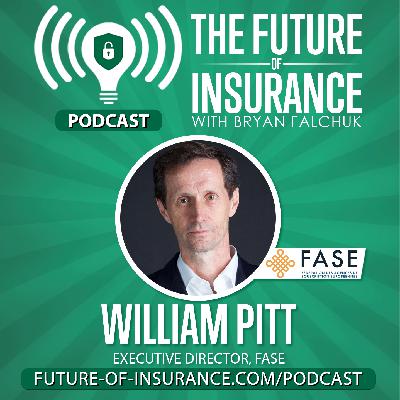
Episode Info William Pitt is the executive director of FASE (Fédération des Agences de Souscription Européennes), an association founded to address a widely recognized need for a pan-European body to represent Europe's fast-growing, but little understood, MGA sector. Prior to establishing FASE in 2025, William led research and consulting projects at Lexicon Associates and Conning. He is the author of The MGA Revolution: How MGAs are reshaping the insurance value chain, published by Lexicon Associates in November 2024. He previously led consulting initiatives for Conning in the United States and was the author of Conning's annual MGA studies. Prior to joining Conning in 2021, he served for twelve years as global chief marketing officer at Beazley. Earlier in his career, he held senior marketing and business development roles at Marsh & McLennan Companies and Lloyd's. William has written extensively on insurance for publications including the Wall Street Journal, Harvard Business Review, Institutional Investor, the Insurer, and Corriere della Sera. He is the author of More Equal than Others: A Director's Guide to EU Competition Policy, published by Director Books. Episode Overview: Background and Career William Pitt shares his journey in the insurance industry, emphasizing his involvement in the delegated authority market and the MGA sector. He discusses his roles at Conning and Lexicon Associates, where he focused on research and consulting. FASE and Its Mission Pitt explains FASE as a federation of MGAs, capacity providers, and service providers, aiming to support the entire delegated authority ecosystem. He compares it to the successful Target Markets organization in the US. The Role of Technology and Talent The discussion highlights the importance of technology and talent in the MGA space. Pitt notes the migration of talent to MGAs and the role of technology in enabling these businesses to operate more efficiently. Challenges and Opportunities in the MGA Market Pitt addresses the challenges of integrating new technologies into established carriers and the opportunities for MGAs to be more adaptable and nimble. He also discusses the evolving landscape in Europe and the potential for growth. The Future of MGAs in Europe The conversation turns to the future of MGAs in Europe, with Pitt expressing optimism about the growth and internationalization of MGAs. He emphasizes the need for MGAs to navigate regulations and access capacity providers. Conclusion The interview concludes with Pitt's insights on the unique moment for the MGA space in Europe and the exciting opportunities ahead. Key Takeaways FASE aims to support the MGA ecosystem by fostering collaboration and innovation. Technology and talent are crucial drivers of success in the MGA market. The MGA sector is poised for significant growth, particularly in Europe, as it adapts to new challenges and opportunities. This episode is brought to you by The Future of Insurance book series (future-of-insurance.com) from Bryan Falchuk. Follow the podcast at future-of-insurance.com/podcast for more details and other episodes. Music courtesy of Hyperbeat Music, available to stream or download on Spotify, Apple Music, and Amazon Music and more.
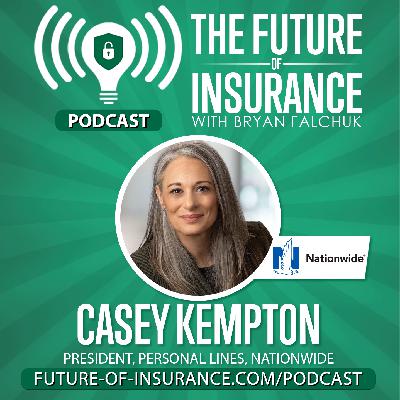
Episode Info As the president of Personal Lines at Nationwide, Casey Kempton is responsible for all aspects of the business including product, underwriting, sales and distribution, claims and services. Her organization focuses on delivering effortless, personal and reassuring experiences for distribution professionals and customers who value protection and service. Casey previously served as the executive vice president, digital business officer at Chubb where she was responsible for small business revenue generation, agency experience and the build of digital acquisition channels via direct-to-consumer affinity partnerships, eBrokers and agent-carrier connectivity. Prior to Chubb, she led the personal lines agency channel at The Hartford including oversight of field sales performance, distribution strategy, marketing and product portfolio management. She also spent time with the ACE Group accountable for global personal and commercial lines as well as leading the operations and information technology for the Latin America region. Casey's early career included working on P&C strategic initiatives across the insurance value chain at The Hartford. A graduate of the University of Connecticut, Casey holds Bachelor of Arts degrees in Cognitive Anthropology and English. She also has two patents in her name relating to homeowners insurance rating. Episode Overview: Casey shares her expertise and vision for the future of personal insurance lines, discussing the evolving landscape of the industry and the innovative strategies Nationwide is implementing to stay ahead. Key Topics Discussed: Introduction to Casey Kempton: Casey introduces herself and her role at Nationwide, where she oversees Auto, Home, Umbrella, and other personal lines. She shares her journey and experiences since taking on the role in February 2024. Customer-Centric Approach: Nationwide's strong focus on customer satisfaction and building robust relationships with distribution partners. The importance of understanding customer needs and providing tailored insurance solutions. Predict and Prevent Strategy: Discussion on the "Predict and Prevent" initiative, which aims to mitigate risks before they occur. How this strategy is reshaping the insurance landscape by focusing on prevention rather than just compensation. Technological Advancements: The role of AI and data in enhancing pricing sophistication and service delivery. The impact of telematics and connected technologies in personal lines insurance. Industry Challenges and Opportunities: Navigating the complexities of personal lines insurance, including risk management and loss prevention. The evolving consumer mindset towards insurance as a necessary investment rather than a mere obligation. Future Outlook: Casey's vision for the future of insurance, emphasizing the need for continuous innovation and adaptation. The potential for growth in embedded insurance and partnerships with OEMs. Conclusion: Casey Kempton provides a comprehensive overview of the current state and future direction of personal lines insurance. Her insights into Nationwide's strategies and the industry's evolution offer valuable perspectives for anyone interested in the future of insurance. This episode is brought to you by The Future of Insurance book series (future-of-insurance.com) from Bryan Falchuk. Follow the podcast at future-of-insurance.com/podcast for more details and other episodes. Music courtesy of Hyperbeat Music, available to stream or download on Spotify, Apple Music, and Amazon Music and more.
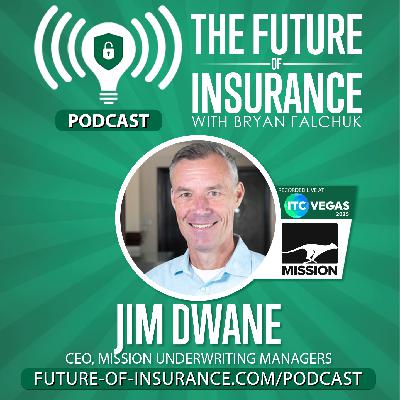
Episode Info Jim has over thirty years of experience in the insurance and insurtech industries, with a proven track record of success in leading and growing companies. In Jim's previous role as CEO of bolt Solutions Inc, he grew the company's revenue and oversaw the transformation of its business model, enabling the company to grow and scale quickly and efficiently. He has extensive experience creating unparalleled business success in the insurance and insurtech space, administering pragmatic and analytical decisions in high-pressure environments. His enthusiasm for embracing cutting-edge technologies and fostering a culture of innovation aligns perfectly with MISSON's transformative and forward-thinking core values. Episode Overview: In this engaging episode of The Future of Insurance, we sit down with Jim Dwane, CEO of Mission, recorded live at ITC Vegas 2025. Jim shares his insights on the evolving landscape of the insurance industry and how Mission is at the forefront of this transformation. Key Discussion Points: Jim Dwane's Background: Jim discusses his extensive career in the insurance industry, having spent two-thirds of it with major carriers like Travelers and AIG before venturing into the insuretech space in 2017. Mission's Role and Vision: Mission is described as a program administrator that builds de novo programs, focusing on finding exceptional underwriters and providing them with the opportunity to become entrepreneurs. The company acts as an incubator and accelerator for MGUs (Managing General Underwriters), emphasizing a technology-first approach. Strategic Advisory and Support: Mission provides strategic advisory services, helping underwriters manage aspects beyond underwriting, such as capital management, marketing, and compliance. The company supports its partners with administrative, operational, and technological infrastructure. Industry Trends and Future Outlook: Jim highlights the rapid growth of the program space within the insurance industry and the importance of speed and innovation. The discussion touches on the strategic use of technology to accelerate industry transformation. Mission's Partnerships: Mission collaborates with multiple capacity partners, including its parent company, Accelerant, to ensure a robust support system for its MGUs. Conclusion: Join us for this insightful conversation with Jim Dwane as we explore the future of insurance and how Mission is paving the way for innovation and growth in the industry. Whether you're an industry veteran or new to the field, this episode offers valuable perspectives on the dynamic changes shaping the insurance landscape. This episode is brought to you by The Future of Insurance book series (future-of-insurance.com) from Bryan Falchuk. Follow the podcast at future-of-insurance.com/podcast for more details and other episodes. Music courtesy of Hyperbeat Music, available to stream or download on Spotify, Apple Music, and Amazon Music and more.

Episode Info As Senior Vice President, Laurna leads the company's Western State Product and Club Experience teams, which are responsible for the performance of personal lines insurance products across CSAA Insurance Group's Western markets. She also oversees the Club & Agency Experience teams, which are responsible for the operations and experience of CSAA's largest distribution channel, AAA clubs. Laurna started her insurance career at CSAA Insurance Group as an Actuarial Analyst and rose rapidly through the company's ranks. Subsequent roles of increased responsibility include Actuarial Supervisor and State Product Manager/Executive, before being promoted to VP in 2020. She has a degree in Applied Mathematics with a focus on Actuarial Science from UC Berkeley. She also is an Associate of the Casualty Actuarial Society and sits on the board of the California FAIR Plan and the Advisory Board for the Wildfire Interdisciplinary Research Center (WIRC) at San Jose State University. Born in Liverpool, UK, Laurna has lived in California since 2001. In her spare time, she enjoys playing games with her children and traveling with friends and family. Episode Overview: Laurna Castillo, SVP at CSAA Insurance Group, discusses the evolving landscape of the insurance industry, particularly in California. Recorded live at ITC Vegas 2025, the conversation delves into the challenges and opportunities facing insurers today. Key Topics Discussed: Commitment to California: Laurna discusses CSAA's longstanding commitment to the California market, emphasizing the importance of staying engaged despite the challenges posed by natural disasters like wildfires. The conversation highlights CSAA's strategic approach to maintaining viability in a tough market, focusing on careful rate management and community engagement. Wildfire Mitigation and Community Engagement: The episode explores CSAA's proactive measures in wildfire mitigation, including collaboration with the Insurance Institute for Business & Home Safety (IBHS). Laurna shares insights on the societal and educational aspects of encouraging property owners to adopt fire-safe practices. Regulatory Changes and Industry Adaptation: Discussion on the new sustainable insurance strategy introduced by the Department of Insurance and its implications for the industry. Laurna explains how these regulatory changes allow insurers to incorporate catastrophe models and reinsurance costs into their rates, a significant shift from past practices. Future Outlook: The episode concludes with a forward-looking discussion on the potential paths out of the current insurance availability crisis in California. Laurna emphasizes the need for a long-term commitment to market stability and resilience, highlighting the generational nature of these efforts. Conclusion: Join us for this engaging episode as Laurna Castillo provides a comprehensive view of the insurance industry's future, focusing on innovation, resilience, and community involvement. Whether you're an industry professional or simply interested in the future of insurance, this episode offers valuable insights and practical strategies for navigating the challenges ahead. This episode is brought to you by The Future of Insurance book series (future-of-insurance.com) from Bryan Falchuk. Follow the podcast at future-of-insurance.com/podcast for more details and other episodes. Music courtesy of Hyperbeat Music, available to stream or download on Spotify, Apple Music, and Amazon Music and more.
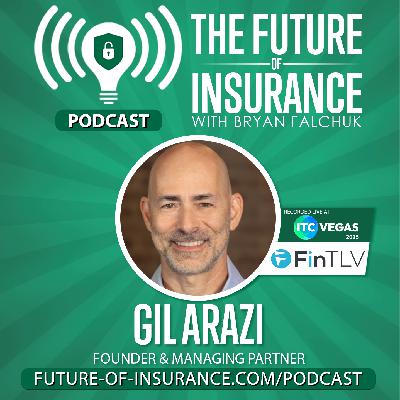
Episode Info Gil Arazi is the Founder and Managing Partner of FinTLV Venture Capital – a leading global late stage Insurtech VC (Hippo, Next Insurance, Unqork, Corvus, wefox and many more). FinTLV works very closely with dozens of the leading global insurers and re-insurers – to provide real value to its' portfolio companies. Therefore, Gil is a board member/observer in Hippo, Next Insurance, Pattern, iFeel, Assured Allies, Lovys, and more. Gil has 20 Years' experience as a senior executive and board member at the largest insurance companies in Israel and is a seasonal entrepreneur in the insurtech startup ecosystem. Episode Overview: Gil Arazi is a seasoned expert in the insurance industry and the visionary behind FinTLV Ventures. Recorded live at ITC Vegas 2025, this conversation delves into the transformative trends shaping the insurance landscape, with a focus on innovation, prevention, and the integration of technology. Key Discussion Points: Background and Experience: Gil Arazi shares his journey from Tel Aviv to becoming a prominent figure in the global insurance industry, highlighting his 30 years of experience and leadership roles in companies like Generali. The Birth of FinTLV Ventures: After leaving corporate life due to internal politics, Arazi founded FinTLV Ventures, which has grown into a leading insurtech venture capital firm. The firm has successfully invested in companies like Hippo and Corvus. Investment Focus and Industry Trends: Arazi discusses FinTLV's strategic focus on cyber insurance and the shift towards profitable growth in the insurance sector. He emphasizes the importance of understanding industry trends to guide investment decisions. The Role of Prevention in Insurance: A significant portion of the conversation centers around the need for the insurance industry to focus on prevention. Arazi argues that prevention can lead to substantial savings on future claims and improve societal well-being. The Spark Consortium: Arazi introduces "The Spark," a consortium aimed at integrating proven technologies from various sectors into insurance products. This initiative seeks to drive prevention and innovation within the industry. Challenges and Opportunities: The discussion also touches on the challenges of implementing innovative solutions in a traditionally conservative industry. Arazi highlights the potential of quantum computing and other emerging technologies to revolutionize insurance practices. Conclusion: This episode offers a deep dive into the future of insurance through the lens of innovation and technology. Gil Arazi's insights provide a roadmap for industry leaders looking to embrace change and drive growth in a rapidly evolving market. This episode is brought to you by The Future of Insurance book series (future-of-insurance.com) from Bryan Falchuk. Follow the podcast at future-of-insurance.com/podcast for more details and other episodes. Music courtesy of Hyperbeat Music, available to stream or download on Spotify, Apple Music, and Amazon Music and more.
Episode Info Amy Antczak, COO of GreenieRE, brings nearly two decades of experience working in the legal and insurance industries to her role as Chief Operating Officer for GreenieRE. In her previous leadership positions at Energetic Capital, CNA, and AIG, Amy leveraged her law degree to manage complex financial lines claims, professional liability cases, and corporate litigation. Episode Background: Amy Antczak is the Co-Founder and COO of GreenieRe, a pioneering reinsurance company focused on supporting the renewable energy sector. Recorded live at ITC Vegas 2025, this conversation delves into the challenges and opportunities within the insurance industry as it adapts to the growing demand for renewable energy solutions. Key Discussion Points: Introduction to GreenieRe: Amy shares her journey from a legal background and extensive experience in the insurance industry to co-founding GreenieRe. GreenieRe's mission is to remove bottleneck risks that hinder the deployment of decarbonization infrastructure. Challenges in Renewable Energy Insurance: The episode explores the lack of capacity in the insurance market for renewable energy projects and how GreenieRe is addressing this gap. Amy discusses the importance of making renewable energy projects more bankable and financeable. Innovative Solutions: GreenieRe's approach to providing surety bonds for renewable energy projects and the launch of their own surety bond program. The role of reinsurance in supporting primary insurers and enabling them to cover renewable energy risks. Future Outlook: Amy emphasizes the potential of insurance as a force for good in combating climate change and the need for collaboration across the industry. The episode concludes with a call to action for the insurance industry to embrace innovative solutions and work together to support the transition to renewable energy. Conclusion: This episode provides a compelling look at how the insurance industry can play a pivotal role in the transition to renewable energy. Amy Antczak's insights highlight the importance of innovation and collaboration in overcoming the challenges faced by the sector. Whether you're an insurance professional or interested in the future of renewable energy, this episode offers valuable perspectives on the evolving landscape of insurance. This episode is brought to you by The Future of Insurance book series (future-of-insurance.com) from Bryan Falchuk. Follow the podcast at future-of-insurance.com/podcast for more details and other episodes. Music courtesy of Hyperbeat Music, available to stream or download on Spotify, Apple Music, and Amazon Music and more.

Episode Info Peter Settel, CEO of Bold Penguin, is a business and technology leader with a proven track record of leading technology-led growth companies across the insurance sector. Prior to Bold Penguin, Settel was the Enterprise Chief Strategy Officer and Information Officer at American Family Insurance. Before that, Peter spent 17 years as a senior executive leading capability development at Homesite Insurance. Peter spent his early career at Cambridge Technology Partners and as a leader at MediaLink Interactive. Settel holds a Bachelor of Science degree in Finance and Investments from Babson College. Introduction and Background: Recorded live at ITC Vegas 2025, Peter shares his extensive experience in the insurance technology sector, spanning over 25 years, and discusses the transformative journey of Bold Penguin from a startup to a leading enterprise technology provider in the insurance industry. Key Discussion Points: Introduction to Peter Settel and Bold Penguin: Peter Settel introduces himself and provides a brief overview of his career in insurance technology, starting with his role at Homesite Insurance and his journey through various leadership positions. An introduction to Bold Penguin, highlighting its evolution from a venture-backed startup to a significant player in the insurance technology space. Bold Penguin's Strategic Growth: Discussion on the acquisition of Bold Penguin by American Family Insurance in 2021 and Peter's transition to CEO . Insights into Bold Penguin's strategy to maintain its independence while serving the broader insurance market . Technology and Market Impact: Exploration of how Bold Penguin leverages digital technologies to enhance distribution platforms for small commercial insurance . The role of AI and digital transformation in reshaping the insurance landscape, with a focus on competitive positioning . Future of Insurance Distribution: Peter discusses the importance of maintaining a robust distribution network that includes agents, brokers, and carriers . The challenges and opportunities in balancing traditional insurance practices with innovative digital solutions . Audience Engagement: The episode encourages listeners to think about the future of insurance distribution and the role of technology in driving industry change. Conclusion: Peter Settel provides a compelling vision for the future of insurance, emphasizing the critical role of technology in driving efficiency and growth in the industry. This episode is a must-listen for anyone interested in the intersection of insurance and technology. This episode is brought to you by The Future of Insurance book series (future-of-insurance.com) from Bryan Falchuk. Follow the podcast at future-of-insurance.com/podcast for more details and other episodes. Music courtesy of Hyperbeat Music, available to stream or download on Spotify, Apple Music, and Amazon Music and more.
Episode Info With a vision of completely transforming the car insurance industry, Alex founded Root in 2015 on the principle that rates should be based primarily on driving behaviors, not demographics. As Founder and Chief Executive Officer, Alex leads the company in revolutionizing this outdated industry using mobile technology and data science to offer personalized car insurance rates to good drivers. Today, Root Insurance is the largest Property & Casualty InsurTech in the country. Throughout his insurance career, Alex has built expertise in pricing and reserving, finance, and mergers and acquisitions. Before founding Root, Alex worked at Nationwide Insurance as a senior strategy consultant for the Property & Casualty lines of the business. Alex is a Fellow of the Casualty Actuarial Society, a Henry Crown Fellow of the Aspen Institute, and a member of the American Academy of Actuaries. Episode Highlights Alex Timm, leveraging his actuarial background and experience in corporate strategy, co-founded Root Insurance to revolutionize the insurance industry by focusing on customer-centric experiences and technological innovation. Root Insurance integrates big data and machine learning to enhance pricing models and customer experiences, notably through partnerships like the one with Carvana. The company prides itself on controlling its technology stack, enabling a seamless insurance purchase process. Alex highlights the importance of diversity and continuous technological investment to address industry challenges and drive innovation. Root Insurance remains committed to transforming the insurance landscape by embedding insurance solutions and refining its technological capabilities. Introduction and Background: Alex Timm, an actuary by training, co-founded Root Insurance on March 14, 2015. His background in the insurance industry is deeply rooted, with his father being an insurance entrepreneur. Timm's passion for math and his experience in corporate strategy at a large insurance carrier led him to identify gaps in customer expectations and technological advancements within the industry. Vision and Innovation: Root Insurance was founded to address the lack of customer-centric experiences in the insurance industry. Timm was driven by the advent of big data and machine learning, aiming to leverage these technologies to match price to risk more effectively . The company has developed a seamless customer experience by embedding insurance directly into the vehicle purchase process, exemplified by their partnership with Carvana. Technological Advancements: Root Insurance controls its technology stack, allowing for seamless integration and a three-click purchase experience. This technological control is a significant advantage, enabling the company to refine pricing models and algorithms continuously. The use of telematics and other data sources is central to Root's strategy, but the company also emphasizes that telematics is just one aspect of their broader technological and pricing strategy. Challenges and Industry Insights: Timm acknowledges the challenges of underwriting profitably and the need for innovation in the insurance industry. He emphasizes the importance of diversity in thought and background to drive innovation. The interview touches on the broader industry context, including the challenges of going public and the need for continuous investment in technology to deploy advanced algorithms. Conclusion: Alex Timm's leadership at Root Insurance is characterized by a commitment to innovation, customer experience, and leveraging technology to transform the insurance industry. The company continues to evolve, focusing on embedding insurance solutions and refining their technological capabilities. This episode is brought to you by The Future of Insurance book series (future-of-insurance.com) from Bryan Falchuk. Follow the podcast at future-of-insurance.com/podcast for more details and other episodes. Music courtesy of Hyperbeat Music, available to stream or download on Spotify, Apple Music, and Amazon Music and more.
Episode Info I provide insights from InsureTech Connect Vegas 2025, focusing on the significant impact of artificial intelligence (AI) in the industry. I saw the power of the democratization and proliferation of AI models, which are enabling new solutions in the market. The emphasis was on empowerment rather than replacing staff, recognizing the need for more workforce due to overwork and burnout. I also got to be a judge at Guidewire's InsurePitch event, which featured pitches from five insurtechs, four of which focus on claims. This reflects a renewed interest in claims within the industry. Networking was a significant aspect of the conference as always, and it seemed like you never had enough time given how many great conversations can be had in this very unique coming together of so many forward thinking people and companies in Insurance. Episode Highlights This is my recap of the ITC Vegas 2025 conference, highlighting several key insights: Impact of Artificial Intelligence: A major theme was the transformative role of AI in the industry. The conference emphasized the democratization and widespread adoption of AI models, which are creating new market solutions. The focus is on using AI to empower the workforce rather than replace it, addressing issues like overwork and burnout. Claims Back in the Spotlight: There was a renewed focus on Claims-specific solutions, with 80% of the companies competing for the Guidewire InsurPitch prize being Claims solutions. Networking and Collaboration: Networking was a crucial part of the conference, with attendees engaging to drive industry progress. Despite time constraints, the speaker valued the opportunity to connect with peers and share ideas, which is vital for industry advancement. Overall, the conference had a strong focus on AI's pivotal role in industry transformation, the centrality of claims in insurance, and the importance of networking and collaboration for future growth. This episode is brought to you by The Future of Insurance book series (future-of-insurance.com) from Bryan Falchuk. Follow the podcast at future-of-insurance.com/podcast for more details and other episodes. Music courtesy of Hyperbeat Music, available to stream or download on Spotify, Apple Music, and Amazon Music and more.
Episode Info Rob Galbraith is the founder and CEO of Forestview Insights and is the author of the international bestselling book, The End of Insurance As We Know It. Rob is an award-winning speaker who has shared his unique insights at numerous events around the globe on the topics of innovation, insurtech, and the future of insurance. Rob has over 25 years of experience in the financial services industry in a variety of innovation and leadership positions at AF Group, USAA, and the Federal Reserve Board. Episode Highlights The interview with Rob Galbraith at the 2025 PLRB Innovation Summit covers several key topics related to innovation in the insurance industry. Rob Galbraith, the founder and CEO of Forestview Insights, discusses his role in consulting and training traditional companies, particularly in the insurance sector, to foster a culture of innovation. Key points from the interview include: Building a Culture of Innovation: Rob emphasizes the importance of creating a sustainable culture of innovation within companies, which goes beyond the efforts of a single leader or project. He highlights that innovation should be treated as a discipline similar to underwriting or actuarial science. Challenges in Innovation: He acknowledges the difficulties companies face in maintaining innovation, particularly in aligning IT projects with business needs. Rob shares his experiences with core system projects and the challenges of implementing new systems that meet business requirements. Role of AI: The discussion touches on the potential of AI to address technical debt and streamline processes in the insurance industry. Rob shares insights on how AI can help in summarizing regulatory documents and customizing systems without extensive manual programming. Long-term Perspective in Insurance: Rob discusses the long-term nature of the insurance business and how this perspective can be advantageous for innovation. He suggests that the industry's focus on long-term outcomes could support a more thoughtful approach to innovation. Overall, the interview provides valuable insights into the strategies and challenges of fostering innovation in the insurance industry, with a focus on the role of leadership, culture, and technology. This episode is brought to you by The Future of Insurance book series (future-of-insurance.com) from Bryan Falchuk. Follow the podcast at future-of-insurance.com/podcast for more details and other episodes. Music courtesy of Hyperbeat Music, available to stream or download on Spotify, Apple Music, and Amazon Music and more.


Download from Google Play

Download from App Store
 United States
This coverage ensures that if your car is totaled or stolen within a specified time , you’ll receive the full purchase price of the vehicle rather than its depreciated value by https://www.marathoninsurance.ca/ . This is ideal for those who buy new or leased vehicles, offering significant financial protection against rapid depreciation.