


 Claim Ownership
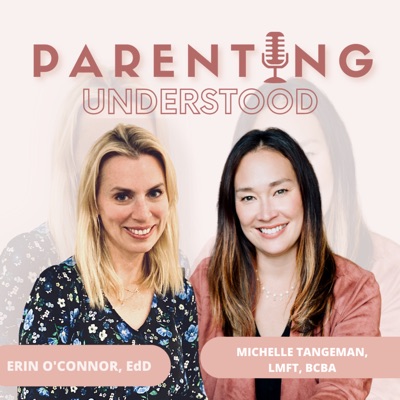
Parenting Understood
Subscribed: 58Played: 1,405
Subscribe

© Copyright 2021 Parenting Understood All rights reserved.
Description
Parenting Understood is a podcast aimed at helping parents become more confident and relaxed in their parenting. We explore the current research on different parenting and child development topics and break it down into an easy to understand, relatable content. We know there is an abundance of information out there which can make it feel overwhelming. Maybe trying to determine what's fact vs opinion makes you want to bury your head in the sand. Let us help you find and understand the evidence based resources you need, to feel more confident in the choices you make as parents. Join us each week to get a breakdown of the current research and let us guide you to becoming a more confident and relaxed parent, able to provide the sensitive and responsive care your child needs.
201 Episodes
Reverse
In this episode of Parenting Understood, we are joined by Dr. Debbie Raphael, a child and adult psychiatrist, to discuss how her personal experiences as a parent intertwine with her professional insights. Dr. Raphael shares how becoming a mother during her child psychiatry fellowship deepened her understanding of validation, attunement, and mentalization—skills that foster healthy emotional development in children. She explains how parents' ability to validate their child's feelings builds self-trust and resilience from early childhood through adolescence. The conversation also explores the importance of community support, self-care, and maintaining balance between empathy and boundaries. Dr. Raphael introduces her forthcoming book, which integrates clinical research and lived experience to guide parents in creating positive childhood experiences that buffer against stress and adversity. We reflect on how nurturing connection—both within families and communities—supports mental health across generations.
In this episode, we speak with early childhood educator, Lucy Chen, about the challenges of separation anxiety during the start of school. We explore how separation begins as early as infancy with object permanence and continues to evolve as children enter preschool and beyond. Lucy emphasizes that separation is not "one and done" but an ongoing process tied to trust, attachment, and new environments. Teachers play a key role in creating safe, predictable routines, building relationships, and honoring the wide range of ways children express their emotions—whether outwardly through tears and tantrums or inwardly through silence and withdrawal. The conversation also highlights the dual experience of parents navigating their own feelings of letting go, balancing expectations, and supporting their children while giving themselves grace. With strategies like modeling confidence, slowing down schedules, and fostering consistent routines, the episode underscores that separation is developmental, relational, and best approached with patience and compassion.
In this episode, we sit down with Naaz Nichols of Care.com to discuss the growing pressures on working parents, especially those in the "sandwich generation" caring for both children and aging parents. Nichols highlights alarming trends, including a sharp decline in mothers' workforce participation driven by return-to-office mandates, high childcare costs, and limited flexibility. She underscores the urgent need for affordable childcare and senior care, workplace equity policies, and cultural shifts that normalize flexibility and caregiving support. The conversation explores the financial and emotional toll of caregiving, from families patching together multiple care arrangements to the staggering stress levels that leave many parents feeling isolated. Nichols shares personal stories, Care.com's new senior care offerings, and advice for caregivers: prioritize self-care, build support systems, and advocate openly for help. The episode closes with sobering insights on declining interest in parenthood, shaped by the high costs of caregiving
In this last episode of our back to school series, we speak about starting a new school from the perspectives of parent and child. We draw on our own personal experiences, as well as research in this conversation. We pay special attention to the role of social capital in the transition to a new school year. We also speak on best practices for speaking with our children about how their day went and what they have learned beyond just asking "How was school today?".
In this episode, we speak with Dr. Damour about the emotional lives of teenagers. We pay especial attention to the pressures that both genders feel yet how those may be manifested differently across genders, at times. Dr. Damour unpacks parent-child relationships, especially the mother-daughter relationship, and the role of identification in that relationship as girls mature. We also discuss how research methods may not always allow for the identification of areas of concern for boys. Dr. Lisa Damour is the author of three New York Times best sellers: Untangled, Under Pressure, and The Emotional Lives of Teenagers. She co-hosts the Ask Lisa podcast, works in collaboration with UNICEF, and is recognized as a thought leader by the American Psychological Association. Dr. Damour is also a regular contributor to The New York Times and CBS News. Dr. Damour serves as a Senior Advisor to the Schubert Center for Child Studies at Case Western Reserve University and has written numerous academic papers, chapters, and books related to education and child development. She maintains a clinical practice and also speaks to schools, professional organizations, and corporate groups around the world on the topics of child and adolescent development, family mental health, and adult well-being. Dr. Damour graduated with honors from Yale University and worked for the Yale Child Study Center before earning her doctorate in Clinical Psychology at the University of Michigan. She has been a fellow at Yale's Edward Zigler Center in Child Development and Social Policy and the University of Michigan's Power Foundation. She and her husband are the proud parents of two daughters. To learn more about Dr. Damour and her work please visit https://drlisadamour.com/ and follow her on instagram @lisa.damour
In this episode, we welcome author Lauren Tetenbaum to discuss her new book, "Millennial Menopause: Preparing for Perimenopause, Menopause, and Life's Next Period." Lauren, a perinatal mental health specialist, shares her motivation for writing the book: a shocking realization of how little she, and many women, knew about this significant life stage. We delve into common misunderstandings surrounding perimenopause and menopause, emphasizing that symptoms like mood changes, irritability, and brain fog can begin as early as the late 30s and are often dismissed. The conversation highlights the critical need for better education, trusted healthcare providers, and open communication with partners, even dedicating a chapter in the book for men. Lauren stresses the importance of community and destigmatizing menopause, advocating for it to be discussed as openly as pregnancy and motherhood.
In this episode, Dr. Andrew Koepp discusses his research on children's self-regulation and behavioral changes throughout the day and week. He explains how children's self-control, particularly in terms of restlessness and inhibition, tends to wear out across the school day and week. Andrew suggests that understanding these natural ebbs and flows can help parents and teachers plan activities, emphasizing the importance of restorative experiences like sleep, physical activity (recess), and unstructured playtime. He also offers three key pieces of advice: meet kids where they are by understanding their varying self-control, anticipate difficult moments and plan accordingly, and use anticipatory guidance to clearly communicate behavioral expectations to children. To learn more about Dr. Koepp's work please visit: Dr. Andrew Koepp
In this episode, we discuss the significant impact of the Supreme Court's Dobbs v. Jackson Women's Health Organization decision on individuals' mental health, particularly concerning perinatal mood and anxiety disorders. Shana DeVlieger, a developmental psychologist, elaborates on how this landmark ruling, which overturned Roe v. Wade, has not only reshaped abortion laws but has also created a pervasive climate of uncertainty affecting caregivers across the United States. The conversation highlights the necessity of understanding perinatal mental health within a broader socio-political and ecological systems context. The episode underscores the importance of acknowledging systemic factors and advocates for structural changes to better support caregivers and their families, urging a shift in policy to address mental health as a public good. To reach Shana please email her at: sed485@nyu.edu
In this episode we speak with author Sarah Gallucci about her book, "Laid: A Memoir of Love, Intimacy, and Marriage." Sarah opens up about her personal motherhood journey, revealing the stark contrast between societal expectations and her own struggles with anxiety, anger, and the overwhelming mental load of raising two young children. She discusses hitting rock bottom, seeking therapy, and the controversial decision to explore an open marriage as a means of self-preservation. This raw and honest conversation delves into the importance of trusting your intuition, the power of journaling, and the critical role of emotional regulation in navigating the complexities of modern motherhood. To read more about Sarah and her work please visit her on instagram (@_sarah_gallucci_), TikTok (sarah gallucci) and view her recent Tedx Talk .
In this episode of Parenting Understood we are joined by Joan Nguyen, founder of Bumo, to discuss the evolving landscape of childcare. Joan highlights how the pandemic exposed critical childcare gaps, transitioning it from a personal issue to an economic one. She explains how Bumo addresses these challenges by offering an online platform for instantly bookable childcare, including unique options like summer camps and school holiday programs. She emphasizes Bumo's commitment to equitable access, providing affordable options alongside premium services. The conversation also covers technology's role in improving parent-provider communication and the future vision of Bumo as a global solution for flexible, accessible childcare.
In this episode, we are thrilled to be joined by Dr. Lauren Girouard-Hallam, an expert in children's development and technology, to discuss the impact of AI on children aged three to twelve. Lauren discusses her current research focusing on how children trust technology over human sources. Her studies reveal an "inverse U" pattern: young children are skeptical, trust peaks around seven to ten years, and declines as they grow older and become more discerning. The conversation highlights the importance of co-viewing technology with children and fostering open discussions about online interactions. Lauren advises parents to engage their children with curiosity and positivity, emphasizing the value of maintaining healthy digital habits and privacy awareness.
In this episode of "Parenty Understood," we welcome Dr. Jessica Zucker, a Los Angeles-based psychologist specializing in women's reproductive and maternal mental health. We discuss Dr. Zucker's forthcoming book, "Normalize It: Upending the Silence, Stigma, and Shame that Shape Women's Lives," which aims to challenge societal taboos surrounding women's health issues from menstruation to menopause. Dr. Zucker shares her personal journey, including her own experience with miscarriage, and her efforts to start the "I Had a Miscarriage" campaign. The conversation underscores the importance of open dialogue to break the cycle of silence, stigma, and shame. To learn more about Dr. Zucker and her work please visit: her instagram @ihadamisscarriage and her website. Her latest book is available everywhere books are sold including amazon book shop.
Understanding temperament can transform parenting approaches, bringing harmony to the often turbulent journey of raising children. In this episode, we speak with Dr. Sandee McClowry about recognizing that each child's temperament is unique, and how this allows parents to cater their strategies to individual children's needs. Whether your child is industrious, friendly, cautious, or high maintenance, acknowledging these traits helps in crafting supportive environments. We also discuss how parents must also be aware of their own temperaments to foster better interactions. Using tools like secret signals and timers can ease repetitive conflicts, while puppets and role-play enhance empathy and perspective-taking. Ultimately, the key is respecting each other's temperamental differences for a more peaceful family dynamic.
Dr. Ronald Mah and Michelle discuss how a parent with narcissistic tendencies can impact a child and their development of self. He discusses entitlement, grandiosity, and righteousness, which create a mindset where rules don't apply. Parenting styles are examined, emphasizing the importance of setting boundaries with sensitivity for healthy child development. Problematic parenting styles include permissiveness (too sensitive, no boundaries) and neglect (no sensitivity, no boundaries). The discussion ties into attachment theory, highlighting secure attachment as fostering availability, attunement, and sensitivity.
This week we are re-airing a previous episode with Dr Clancy Blair on self-regulation in honor of his life and legacy. Sadly Clancy passed away on Dec. 19th. Clancy was a groundbreaking professor of child development at New York University, died December 19, 2024 in Nashville, TN. He was 63. The author of over 200 scientific articles, Blair was one of the most influential developmental psychologists of his generation. His research fundamentally changed how scientists understand the ways that children are shaped by family, neighborhood, and schools; Professor Blair has had a lasting effect on both scientific research and public policy. Clancy was born December 27, 1960, in Birmingham, Alabama. He earned a BA from McGill University in 1983, and returned home to Birmingham to earn MA, MPH, and PhD degrees from the University of Alabama at Birmingham. From 1998 to 2022, Clancy was a professor of developmental psychology, first at Penn State University, and then at New York University. He was known as a brilliant, generous scholar and loving husband and father. With friends, colleagues and family, Blair shared his brilliant wit, his seemingly limitless embrace of life and his confidence in the world's goodness. He wore Converse high-tops and an irrepressible smile. His students remember him as kind and supportive, a mentor as excited by their ideas as his own. Shortly after moving to Nashville in 2021 with his wife, Cybele, Clancy was diagnosed with frontotemporal dementia and primary progressive aphasia. He retired from NYU in 2022. Clancy continued to give back to his community in vibrant, creative ways including through advocacy for people living with dementia, songwriting, ceramics, and volunteering at Nashville's Room in the Inn until a few weeks before he died.
In this episode, we chat with Amanda DeLuca, founder and CEO of Riley, a platform designed to support new parents with evidence-based information and technology. Amanda shares her journey from a career in technology to becoming a parent and the challenges she faced, including postpartum depression and anxiety. Despite meticulous planning, she and her husband found themselves unprepared for the realities of parenthood. This experience led them to create Riley, an app that provides parents with access to reliable data and personalized advice, alleviating the overwhelming cognitive load. The app personalizes user experiences by integrating data, such as family demographics and calendar events, to provide relevant advice and support. With features like developmental milestone tracking and practical tips, Riley seeks to empower parents, helping them focus on what truly matters: loving and supporting their children. To learn more about Riley and sign up for the beta program, visit https://rileyapp.com/ or follow along on LinkedIn and Instagram. Also for a free 30 day subscription to Riley use code RILEYUNDERSTOOD30 at checkout.
In this episode, we are joined by my colleague, Dr. Robin Neuhaus, to discuss recent research of ours on Perinatal Mood Disorders (PMADs) and parenting supports. We highlight the stigma associated with PMADs, leading to underreporting and inadequate support. We emphasize the need for improved screening methods, increased awareness among healthcare providers, and accessible resources for parents. The conversation also touches on the impact of parental leave policies and the importance of support networks. We conclude by advocating for greater inclusivity in research and resources, recognizing the diverse experiences of caregivers. For information on the study featured and this episode please visit Nested and @nested.institute on instagram.
In this episode, we catch up after a short break, and chat about strategies for easing school transitions, particularly for children experiencing separation anxiety. We discuss the special importance of parental support through acceptance, validation, and confidence-building. We also emphasize establishing routines to provide children with a sense of security and familiarity. We finish up by discussing our personal and professional goals for 2025.
This episode of Parenting Understood features Dr. Robyn Koslowitz, author of the upcoming book "Post Traumatic Parenting". Dr. Koslowitz, an expert in child development and trauma, discusses the often-overlooked impact of past trauma on parenting. Robyn explains how common coping mechanisms developed in childhood, like people-pleasing, dissociation, and perfectionism, can become obstacles in parenting. These ingrained responses, once helpful, can lead to stress, anger, and disengagement when raising children. Dr. Koslowitz identifies five distinct "post traumatic parenting types". She emphasizes the importance of self-awareness and recognizing these patterns. By acknowledging their trauma and its influence, parents can begin to heal and break the cycle. Dr. Koslowitz shares practical strategies like journaling, inner child work, and personifying emotions to manage triggers and respond more effectively to challenging situations. The conversation highlights the potential for parenting to be a catalyst for personal growth and healing. By confronting their own past traumas, parents can develop healthier coping mechanisms and create a more positive environment for their children. Find Dr. Koslowitz: Book: "Post Traumatic Parenting" (available for pre-order) Podcast & YouTube: Post Traumatic Parenting Instagram: @doctorKoslowitzpsychology
This episode of Parenting Understood explores the crucial topic of emotional regulation for both parents and children. Dr. Cindy Hovington, a neuroscientist and parenting expert, explains that emotional regulation is about responding thoughtfully rather than reacting impulsively. She emphasizes that parents' emotional states deeply impact their children, highlighting the importance of modeling healthy emotional responses. The discussion delves into the difference between suppression and true calm, advocating for cognitive reappraisal as a tool to manage emotions effectively. Practical advice includes daily reflection to identify emotional patterns and revisiting challenging situations with children to foster their understanding and growth. Hovington also encourages parents to embrace their own emotional journeys and create a supportive environment for their children to develop essential emotional regulation skills.

Comments

Download from Google Play

Download from App Store
 United States