


 Claim Ownership
BICOM's Podcast
Subscribed: 26Played: 1,032
Subscribe

© Copyright 2018 All rights reserved.
Description
A weekly podcast from BICOM, an independent British think tank producing research and analysis to increase understanding of Israel and the Middle East in the UK. Be sure to subscribe, rate, review and listen!
250 Episodes
Reverse

In this episode, recorded during a media briefing, Richard Pater speaks with Dr. Eran Lerman, who assesses the achievements so far of the War with Iran, while examining the unresolved challenges around Iran’s nuclear programme and the strategic contest over control of the Strait of Hormuz. He also explores the role of the United States as an operational partner, the risks of escalation involving Hezbollah and the Gulf states, and the internal dynamics within Iran.
Dr. Col. (res.) Eran Lerman was Deputy Director for foreign policy and international affairs at Israel’s National Security Council. Prior to this he held senior posts in IDF Military Intelligence for over 20 years. He currently teaches Middle East studies at Shalem College in Jerusalem, and in post-graduate programmes at Tel Aviv University and the National Defence College.
In this episode, recorded during a media briefing, Daniel J. Levy speaks with Dr. Arash Azizi about the ongoing US–Israel campaign against the Islamic Republic of Iran. Azizi examines the impact of leadership decapitation, including the elimination of Supreme Leader Ali Khamenei, and why the regime has so far maintained cohesion. He also explores the limits of military pressure and the role of Iran’s security apparatus in sustaining internal control.
Dr. Arash Azizi is an Iranian American historian, journalist, and author specialising in Iranian politics and society. He is the author of The Shadow Commander: Soleimani, the US, and Iran’s Global Ambitions and What Iranians Want, and is a frequent commentator on Iranian affairs across international media.

In this episode, recorded during a media briefing, Richard Pater speaks with Sima Shine about the trajectory of the war with Iran. Sima examines the Iranian threat to shipping in the Strait of Hormuz, the implications for Gulf states and regional alliances, and the internal dynamics inside Iran as the regime works to maintain control during the conflict.
Sima Shine is a former senior official in Israel’s intelligence community who served for many years in the Mossad, ultimately heading a research and evaluation division. She later served as Deputy Head of Strategic Affairs at Israel’s National Security Council and as Deputy Director General in the Ministry of Strategic Affairs, where she oversaw the Iranian portfolio. She is currently a senior researcher at the Institute for National Security Studies (INSS) in Tel Aviv.

In this episode, recorded during a media briefing, Daniel J. Levy speaks with Jonathan Hackett about reported efforts to work with Kurdish forces against Iran. Jonathan examines the history and ambitions of different Kurdish groups and explains the mechanics of unconventional warfare. He also relates to the regional implications, and the possible outcomes of a new front opening in western Iran.
Jonathan Hackett is a United States Marine Corps veteran who spent 20 years across special operations and intelligence, much of that time focused on unconventional warfare. He worked with more than three dozen partner forces, including Kurdish groups in the Middle East.

In this episode, Richard Pater speaks with Lt. Col. (res.) Sarit Zehavi about the threat from Hezbollah on Israel’s northern border. Speaking from the Galilee amid ongoing rocket and drone fire, Sarit assesses Hezbollah’s current capabilities, the IDF’s response across Lebanon including Beirut, and the risks of escalation due to Iranian influence.
Lt. Col. (res.) Sarit Zehavi is the founder and president of the Alma Research and Education Center, with 15 years of experience as an IDF intelligence officer focused on Israel’s northern front.

In this episode, recorded during a media briefing on 3 March, Richard Pater speaks with Danny Citrinowicz about the trajectory of the campaign so far and what may come next. Citrinowicz explores the strategic logic behind targeting Iran’s nuclear and missile infrastructure, pressure on Gulf states, and who could become Iran’s new Supreme Leader.
Danny Citrinowicz is a Senior Researcher in the Iran and the Shi'ite Axis Program at the Institute for National Security Studies. He served 25 years in a variety of command positions units in Israel Defence Intelligence (IDI) including as the head of the Iran branch in the Research and Analysis Division (RAD) in the Israeli defence intelligence.

In this episode, recorded during a media briefing, Richard Pater speaks with Bridget Toomey about the Iraqi militia ecosystem under the Popular Mobilisation Forces (PMF) umbrella and the Houthis of Yemen. Toomey assesses their military capabilities and the implications for Israel, US forces, and regional stability. The discussion also examines what Iraqi militias, and the Houthis might do in the event of a direct confrontation with Iran.
Bridget Toomey is a research analyst at the Foundation for Defense of Democracies, focusing on Iranian proxies, specifically Iraqi militias and the Houthis. Prior to joining FDD, she was a Fulbright Fellow in Israel where she completed an M.A. in security and diplomacy at Tel Aviv University.

In this episode, we look at Egypt’s role in the shifting post-war picture around Gaza. Recorded during a media briefing, Daniel J. Levy speaks with Ruth Wasserman Lande. They discuss the implications of emerging plans for Gaza’s future governance, Egypt’s approach to Rafah and Sinai, and the wider regional influence of actors including Turkey and Qatar.
Ruth Wasserman Lande is an Arab affairs commentator. She previously served as Israel’s Deputy Chief of Mission in Cairo and was a member of the Knesset for Blue and White, where she founded the Knesset caucus for the promotion of the Abraham Accords.

In this episode we look at Oman. Recorded during a media briefing, Daniel J. Levy speaks with Marc Sievers, former US Ambassador to Oman, about the latest indirect US–Iran nuclear talks and why Oman so often sits at the centre of regional diplomacy. Sievers explains how Oman’s distinctive relationship with Iran developed from the Sultan Qaboos era, how it shaped backchannel engagement during the JCPOA years, and what changed under “maximum pressure” when the US withdrew from the deal.
Retired Ambassador Marc Sievers is now the Director of AJC Abu Dhabi: The Sidney Lerner Centre for Arab-Jewish Understanding. He served as a US diplomat for more than 30 years across the Middle East and North Africa, including postings in Egypt, Iraq, Israel, Morocco and Saudi Arabia.

In this episode, Richard Pater speaks with Dr Rémi Daniel about Turkey’s Middle East policy. Together, they unpack President Erdoğan’s grip on power, what Turkey is trying to achieve in Syria, and how does the Kurdish question affect Ankara’s cross-border posture? The conversation also looks at Turkey’s balancing act towards Iran and what Turkey’s policy on Gaza could mean for Israel.
Dr Rémi Daniel is a specialist on Turkish affairs at the Institute for National Security Studies (INSS) in Tel Aviv, where he heads the European Research Program. He holds a PhD in International Relations from the Hebrew University and was a Mediterranean Dialogue Fellow at the NATO Defence College in Rome.

In this episode we focus on Bahrain. Recorded in the country’s capital, Manama, Daniel J. Levy speaks with Dr Ahmed Al Khuzaie about Bahrain’s strategic outlook, its place within the Gulf, and the regional impact of Iran’s behaviour. Drawing on Bahrain’s history, its role within the GCC, and its decision to join the Abraham Accords, the conversation examines the evolution of Bahrain–Israel relations, and how Gulf states view protests inside Iran.
Dr Ahmed Al Khuzaie is a political consultant working predominantly with politicians in the United States and with diplomats based in Bahrain. His work focuses on Gulf affairs, regional security, and public diplomacy, with particular emphasis on Iranian influence, the GCC, and the Abraham Accords framework.

In this episode, Richard Pater speaks with Terry Newman about Israel’s transition into what he calls the Jewish Century. Newman argues that Israel’s mainstream Jewish majority is seeking to reclaim ownership of Jewish identity, culture, and tradition from increasingly radical religious monopolies. The conversation explores how this struggle is shaping debates over democracy, national ceremonies, education, and Israel’s evolving story at home and abroad, including its foreign policy and regional relationships.
Terry Newman is an entrepreneur and investor in the construction, security, and healthcare sectors. He has previously served as a strategic advisor at McKinsey & Company and as Chief of Staff to a member of the House of Lords. He is Chairman of BNA Public Council, a member of the World Jewish Congress, and holds degrees from Oxford University and Tel Aviv University.

In this episode, Daniel J. Levy speaks with Jonathan Javor as they look ahead to the 2026 Knesset election. Javor who broadly reflects a right-wing perspective explains how Israeli politics has shifted towards the right and examines the electoral challenges facing Likud and Prime Minister Netanyahu. The conversation also reviews the role of the ultra-Orthodox, the prospects for Naftali Bennett and how security, identity, and coalition considerations are shaping Israeli politics.
Jonathan Javor is a political consultant specialising in campaign strategy and management. He has worked in politics and consultancy for over fifteen years and has consulted many senior politicians both in Israel and abroad, including Israeli Minister of Foreign Affairs and Deputy Prime Minister.

In this episode, Richard Pater speaks with Jonathan Paris, who outlines how Trump’s personalised diplomacy has reshaped regional dynamics. They discuss Trump’s relationships with Saudi Arabia, Turkey, Qatar, and the new Syrian leadership. Jonathan also explains the US and Israeli strategy towards Iran and reflects on Yemen, Hezbollah, and the rise of antisemitism across Europe and the United States.
Jonathan Paris is a London-based Middle East analyst and former Fellow at the Council on Foreign Relations in New York. He also served as a consultant to the US government and was a Fellow at the Atlantic Council.
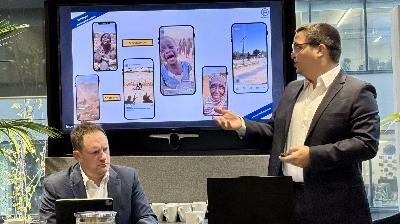
In this episode, recorded during BICOM briefing, Tal Hagin presents his VIST method for identifying AI generated misinformation, and discusses the use of AI in psychological operations and information warfare. Tal also outlines how AI-driven manipulation is reshaping conflict reporting and what can be done to counter deception with case studies from Gaza, Sudan, and Iran.
Tal Hagin is an Information Warfare Analyst and Media Literacy Lecturer with over a decade of experience in information warfare and strategic communication. He also works as research fellow for FakeReporter, an Israeli watchdog group focusing on combating fake news, online incitement, and foreign influence campaigns.

In this episode, Richard Pater speaks with Orna Mizrahi about where things stand a year after the ceasefire agreement between Israel and Hezbollah, examining Hezbollah’s military recovery, the evolving Iranian role, the state of Lebanon’s political leadership, and whether a renewed round of conflict is becoming more likely.
Orna Mizrahi served for 26 years in the IDF, including as an intelligence analyst and as a senior officer in the Strategic Planning Division. She later spent twelve years at Israel’s National Security Council, culminating in her role as Deputy National Security Adviser. She now focuses on Israel–Lebanon dynamics, Hezbollah, and regional strategy at the Institute for National Security Studies (INSS).
In this episode, Richard Pater speaks with Jonathan Harounoff Israel’s Spokesperson to the United Nations. They discuss relations with the UK and other missions, combatting anti-Israeli prejudice including the debate over recognition of Palestinian statehood, and the next steps for the international stabilisation effort in Gaza.
Jonathan was born in London, graduated with a degree in Arabic, Persian and Middle Eastern Studies at the University of Cambridge. He completed his graduate studies in international relations, journalism and diplomacy at Harvard and received his master's from Columbia. Prior to the UN he worked as a journalist. He is also the author of Unveiled: Inside Iran’s #WomanLifeFreedom Revolt.
In this episode, recorded live in London, Richard Pater speaks with Andrea Stricker and Behnam Ben Taleblu from the Foundation for Defense of Democracies (FDD) about Iran’s nuclear, missile, and regional threat landscape five months after the Twelve-Day War and the snapback sanctions.
Together, they discuss the whereabouts and condition of Iran’s highly enriched uranium stock, as well as Iran’s use of proxies across the region. Andrea Stricker is Deputy Director of FDD’s Non-proliferation and Biodefense Program, and Behnam Ben Taleblu is Senior Director of FDD’s Iran Program.
In this episode, recorded during a BICOM media briefing, Daniel J. Levy speaks with Dr Najah Alotaibi and Dr Efrat Sopher about the prospects for Saudi–Israeli normalisation following the Gaza War. They discuss how Saudi Arabia’s social and educational reforms are reshaping public attitudes toward Israel. They also relate to the growing empowerment of women and the importance of grassroots initiatives.
Dr Najah Alotaibi is a Saudi academic, journalist and board member of MENA 2050. Dr Efrat Sopher is an Iranian Israeli security analyst and chair of the Board of Advisors at the Ezri Center for Iran and Gulf States Research at the University of Haifa.
In this episode, recorded during a BICOM media briefing, Daniel J. Levy speaks with Jonathan W. Hackett about the global reach of Iran’s intelligence and covert operations. Jonathan explains how the IRGC’s external apparatus evolved after 2009, outlines the shift from professionalised intelligence structures to more erratic and decentralised operations, and assesses the risks posed by Iranian networks. He also discusses the limitations of sanctions and the implications of proscribing the IRGC under UK counter-terror legislation.
Jonathan W. Hackett is a former US Marine Corps intelligence officer with 20 years’ experience in signals, HUMINT and counterintelligence, and has served with the National Security Agency, the Defence Intelligence Agency, and Special Operations Command. He is the author of Iran’s Shadow Weapons: Covert Action, Intelligence Operations and Unconventional Warfare and The Theory of Irregular Warfare.

Comments

Download from Google Play

Download from App Store
 United States