


 Claim Ownership
Real Talk: Eosinophilic Diseases
Subscribed: 12Played: 393
Subscribe

© American Partnership for Eosinophilic Disorders (APFED)
Description
Eosinophils are a type of white blood cell that play a role in immune responses and help fight off infections. When these cells build up and cause inflammation in the digestive system, tissues, organs, and/or bloodstream, without a known cause, it may be the result of an eosinophil-associated disease. Join the American Partnership for Eosinophilic Disorders (APFED) for a series of conversations with researchers, clinicians, patients, and other community members as we discuss practical strategies for disease management and treatments, research, and other topics of interest.
54 Episodes
Reverse
Co-hosts Ryan Piansky, a graduate student and patient advocate living with eosinophilic esophagitis (EoE) and eosinophilic asthma, and Holly Knotowicz, a speech-language pathologist living with EoE who serves on APFED's Health Sciences Advisory Council, interview Jessica Grady, a patient advocate living with EoE. Disclaimer: The information provided in this podcast is designed to support, not replace, the relationship between listeners and their healthcare providers. Opinions, information, and recommendations shared in this podcast are not a substitute for medical advice. Decisions related to medical care should be made with your healthcare provider. Opinions and views of guests and co-hosts are their own. Key Takeaways: [:50] Co-host Ryan Piansky introduces this episode, brought to you thanks to the support of Education Partners GSK, Sanofi, Regeneron, and Takeda. Ryan introduces co-host Holly Knotowicz. [1:13] Holly introduces today's topic — eosinophilic esophagitis and life transitions — and today's guest, Jessica Grady, a patient advocate living with EoE. [1:35] Jessica is a mom who was diagnosed with EoE in her 20s, after years of unexplained symptoms: acid reflux, GERD, food impaction, and anxiety around food. For about six years, Jessica searched for answers while dealing with these issues. [2:00] Since then, Jessica has tried PPIs, steroids, and two clinical trials. She was always interested in the research, so being part of it has been valuable to her. There's a lot of work involved in clinical trials, and it's not easy. [2:29] Jessica is managing her condition and has hit her second endoscopy with remission, with dupilumab. That's exciting, after her long journey. It has taught her the importance of advocating for yourself and staying hopeful with a chronic condition. [3:01] After college, Jessica was going out with friends, and had pain almost like ulcers in her stomach. She thought maybe she was going out too much. [3:20] One day at lunch, water got stuck. Jessica says it was like gargling; it wouldn't go down. Finally, it went down, and she took a bite of food, and that got stuck. That was her first episode. After that, Jessica has had food impactions as her main symptom. [3:54] Jessica says it's quite a reality check when you're choking on water. How is that even possible? Once that happened, Jessica kicked herself into gear and had an endoscopy. [4:12] Food impaction is Jessica's number one symptom. She has been to dinners where it happened, and she calmly excused herself from the table until she could finally get the food to go down. [4:34] As Jessica aged, her food impactions started getting longer. That was terrifying, especially as a Mom needing to take care of her baby. [4:52] Holly shares how she had symptoms from infancy and all the way through her childhood, and it was diagnosed as anxiety, until she started working in an EoE clinic and recognized her symptoms. Getting an EoE diagnosis is often very challenging. [5:40] Jessica went to three different hospitals in her area. She didn't know what kind of doctor to look for. She went to a GI, got an endoscopy, and woke up with a fat lip. The doctor told her not to have caffeine and start on PPIs. [6:11] There was no mention of a biopsy or EoE. She was told she had bad acid reflux and ulcers. [6:35] The PPIs didn't help. She still had acid reflux and impactions. She was still uncomfortable. [6:47] Jessica switched to another healthcare system and got closer to the answer, with more endoscopies and testing, but there was no research with it. [7:02] Finally, Jessica switched to where she is today. There is a doctor and research. They run clinical trials. She gets the latest and greatest updates. She feels like it has helped her get to where she is today. [7:21] Jessica said the doctor knew what to look for. The moment she described her symptoms, the doctor said it would need to be confirmed with a biopsy, but she has EoE. Jessica asked what now? [7:34] Ryan says, we hear a lot of difficulty with diagnosis because not all doctors know what to look for. If they see ulcers or other common symptoms that people with EoE have, they can very easily misdiagnose. It's a tricky diagnosis to make. [8:03] Jessica says that before her EoE diagnosis, doctors told her she had GERD, acid reflux, ulcers, and anxiety around food. They asked what her food choices were and if she was taking too big bites. [8:12] Jessica asked the doctors why she always needs to have a bottle of water with her, and why she feels panic if there's something like a soft pretzel. They told her she was hyperactive and had anxiety. Jessica felt that that was not making sense. [8:40] That is why Jessica feels it is so important to advocate. There's a lot of time involved when you're misdiagnosed. You get your hopes up and have lots of highs and lows. It's exhausting. [8:53] Ryan says that when you do get diagnosed, you can start to treat the underlying condition properly, make progress, feel better, and feel like you're being listened to. [9:30] Jessica's current course of treatment is PPIs and dupilumab. She's learned her food triggers. Being on the biologic means she doesn't have to worry as much about her triggers, but they can still cause symptoms. She doesn't eat nuts or pineapple. [10:16] Jessica used to eat cottage cheese if she had acid reflux, but now she knows dairy is one of the worst things to have. She does her best to be mindful. She's really thankful that she's in remission now and can be like everyone else at the dinner table. [11:04] Holly mentions that there are many trigger foods. It's patient-dependent. Dairy is the number one trigger, but we all have different little triggers, like pineapple. Holly's EoE is triggered by any melon. Ryan's EoE is triggered by apples and rice. [11:48] Holly avoids all trigger foods for fear of an impaction or throwing up. [12:27] Jessica says, if she wants to have an ice cream cone and live her life like everyone else, she will, but then she has guilt and wonders if it will do something to her later. She limits the high-allergy foods. If she has ice cream, she won't have cheese. [13:06] Jessica monitors her food as much as possible. Her GI tells her that, since she's in remission, she doesn't need to be that careful. But she has anxiety because you never know if she will have a problem. [13:21] Since Jessica has been in remission, she has recently gone from weekly to bi-weekly injections. But she is now hyper-vigilant for symptoms and starts each day with a sip of water to see how it goes down and if there are any bumps in the road. [14:21] Jessica's GI had told her that she was only allergic to a few nuts and she could try other kinds of nuts. She tried cashews once and had a reaction. She reported it to her GI, and then he told her to avoid all nuts. [14:47] Jessica recently went to her allergist to be retested for common allergies. The tests came back negative for every allergy. She doesn't know if that was because of being on the biologic treatment. [16:01] Jessica's profession is clinical trial technology. That helped her to understand what a clinical trial is, how to enroll, and patient recruitment. When she went to a hospital with GI research, she asked about it. They had openings, and she enrolled. [16:33] Jessica was interested in clinical trials because she was desperate for options and answers. Also, the cost of endoscopies adds up. Clinical trials are free. Sometimes you get paid. That was a big win for Jessica. [17:09] When there was an option for a new treatment, she jumped at it both times. She participated in two trials. She didn't make it through them. [17:21] In the first trial, Jessica's biopsies had two out of three criteria the trial was looking for, although she had active EoE. [17:33] In the second trial, Jessica had a provision device she used to write a daily diary entry in. She was pretty far in, but then she had tech issues and emailed for help. That's not part of the protocol. If your diary is not logged correctly, you are out of the trial. [17:57] That trial was an oral medication. She doesn't know if she was on the placebo or not. Jessica is always open to trials. She thinks they are very beneficial. [18:46] After leaving the first trial, when Jessica's biopsies didn't meet the criteria, Jessica asked the clinical research nurse to keep her in mind for future trials, so she learned of the second trial. [19:07] Jessica says she put a lot of time and effort into the second trial, with check-ins and multiple endoscopies, until she was dropped from it. It was challenging and very disappointing when she was dropped from the second trial. She was hopeful. [19:40] At that point, Jessica changed course and started corticosteroid treatment. The inhaler didn't work. Then she did the slurry mix, and that didn't work, and then she did the injections. [20:09] Ryan notes that Real Talk has talked to many researchers who have run clinical trials. Every time, they say they are so grateful for the community volunteering their time. [20:21] They're very aware that some difficulties and challenges come up. Not all patients can make it to the end of the trial, whether that's on the research side or on the patient side. [20:34] Ryan says the eosinophilic-associated disorder community, in general, is so willing to volunteer their time and participate in these things, and further research for the overall community. Ryan says it's good to hear that Jesica tried to participate. [21:01] Jessica says she thinks it's valuable. She recommends that anyone who is interested should look into it, especially if you know you have something that's for the rest of your life. What do you have to lose? [21:12] Jessica says she has something that can't be cured, so what is she going to do? She wants to be the tester. She wants to find something to help h
Co-hosts Ryan Piansky, a graduate student and patient advocate living with eosinophilic esophagitis (EoE) and eosinophilic asthma, and Holly Knotowicz, a speech-language pathologist living with EoE who serves on APFED's Health Sciences Advisory Council, interview Beth Morgan, a medical billing advocate and consultant, on navigating your medical bills. Disclaimer: The information provided in this podcast is designed to support, not replace, the relationship between listeners and their healthcare providers. Opinions, information, and recommendations shared in this podcast are not a substitute for medical advice. Decisions related to medical care should be made with your healthcare provider. Opinions and views of guests and co-hosts are their own. Key Takeaways: [:51] Co-host Ryan Piansky introduces this episode, brought to you thanks to the support of Education Partners GSK, Sanofi, Regeneron, and Takeda. Ryan introduces co-host Holly Knotowicz. [1:12] Holly introduces today's topic, Medical Billing, and today's guest, Beth Morgan, a medical billing advocate and consultant. [1:31] Beth says a medical billing consultant is an individual who assists someone with medical bills to make sure that they are accurate and correct, and that they match the medical records, which are notes that the provider makes. [1:48] The medical billing consultant or advocate can make sure the bills are paid correctly and that the charges are within the reasonable prices for the treatment area. [2:19] Beth explains how medical insurance covers healthcare costs. It protects the patients and providers from very high expenses. It can also possibly help with the stress of navigating healthcare systems. [2:36] The goals of medical insurance are to help cover patient costs for treatments, preventive care, and prescriptions. It can also provide resources for telehealth visits or support visits, if needed. [2:48] With a telehealth visit, you, the patient, have to make sure that your insurance plan covers and allows it. Sometimes, the cost of a telehealth visit can be more than if you were to go to the office. [3:27] Beth says most people look at what insurance will cost them per month. They fail to look at their yearly deductible, per person or per family, their prescription costs, or what it will cost to see a specialist. They don't consider what therapies will cost them. [4:08] Beth had a client whose insurance company would only cover in-state providers. If she went out of state, she wouldn't be covered; even an emergency might not be covered. You have to look at the "nitty-gritty" of the policy. [4:32] Beth says the biggest things are the deductible and copay, or co-insurance. Don't just look at the cost. Most people will take out the $10,000 or $5,000 deductible plans, saying it only costs $75 for the entire family. What does it actually cover? [5:00] You don't want sudden surprises when you get to the emergency room. You want to know what your copay will be when you go into an emergency room. [5:11] Holly agrees with Beth and notes that Real Talk listeners have chronic illness. Some have multiple illnesses. When you're selecting insurance plans, those are the things you have to look into. [5:27] Patients with EoE often need endoscopies and other specialized procedures. Holly asks for tips on how someone can know what an endoscopy or other procedure will potentially cost. [5:41] Beth says to ask the doctor what the CPT code is. That's the code that describes the treatment. Then look up that CPT code on the insurance company website. They will show an estimated cost for that treatment, for a rough idea of the cost. [6:10] Keep in mind that it will not tell you what the providers will charge or what the hospital fee will be. [6:21] Holly says she has EoE and MS. She asks a social worker for the CPT code for every procedure so she has a record to double-check when the bill comes. The CPT code is the key. [6:50] Holly is a speech pathologist who does feeding therapy. She says to look at your plan to see if therapy is a copay or if it goes toward your deductible. If it goes toward your deductible, it will be very expensive until you meet that deductible. [7:10] People living with an eosinophilic disorder may find themselves in the ER for a variety of reasons. Holly was there this week with a food impaction. For others, it could be a pain flare or an asthma attack. [7:26] Holly asks how families can be prepared for medical bills related to emergency care. [7:40] Beth replies, You also have on that bill the ER doctor and the ambulance fee, including mileage, which must be accurate or rounded up to the next mile. Track the mileage in your car. [8:43] Who will be transporting you: volunteers from the fire department, a hospital ambulance, or an outside ambulance? Are you going under Basic Life Support or Advanced Life Support? [9:05] Once you get to the ER, have someone else with you who can advocate for you. Sometimes, staff will bring you forms to sign before they treat you. If you're in a lot of pain, you're not in your right mind to sign those forms; you're only thinking of your pain. [9:53] Ryan says a friend of his went to his doctor's office for a prescription refill. Typically, he pays a $25.00 copay per visit. This prescription refill visit was not covered in the same way as other visits, and he received a bill for over $200. The insurance company only covers maintenance appointments. [10:48] Beth says an Explanation of Benefits (EOB) comes from your insurance company. It shows what the doctor charged, what the insurance company paid, and what you owe. [11:07] A medical bill is what your provider sends you. Beth always asks the provider to send the bill after the insurance company has paid. That way, you know the insurance company has paid on the bill, and there are no surprises. [11:25] When the provider bills you, the insurance company may have paid something on it, or it may have applied the bill toward your deductible or copay. [11:44] When a patient receives a provider bill, Beth says they can go to a company called FAIR Health to see today's rates of what should be charged. Insurance companies negotiate rates with providers. [12:04] Beth says that an out-of-network provider of physical therapy can charge, for example, $160 a visit, and you have to pay out-of-pocket. They can send it to your insurance company, and the insurance company may only pay 30% of the charge. [12:20] Call the insurance company to ask questions about your insurance. Utilize the estimated costs feature on your insurance company's website. [12:32] Beth says she always keeps the page of her health insurance booklet that shows what a PCP office visit, or outpatient specialist visit, will cost. Most people get the book and toss it out, but that page is very helpful. [12:53] If you go into the emergency room, you might have a $300 copay just to be seen, but if you ask them to bill you after they bill your insurance company, most places should respect that. [13:11] Beth says that most of the time, the red flags that she looks for on medical bills are supply items. Most supply items are included in the cost of the hospital visit. She says a surgical hospital visit is like an oil change. [13:42] Beth compares a surgery to an oil and filter change. When you go in for surgery, the drape they put over you is included. You only pay for the supply items you walk out with. [15:15] Beth says, If there's something wrong on your medical bill, your insurance rep may not know the answer. Most insurance companies have outsourced their billing questions. Start with the billing department of the hospital. [15:35] Ask, "Why did you bill me for an X, Y, Z, when I didn't have an X, Y, Z? I had an A, B, C. Can we re-examine this, please?" Another thing is to go back to your provider. [15:52] The provider can request medical notes, which are part of your patient record, and you can look at them yourself. Beth says, for hospital stays, she always tells people to ask for a completely itemized bill. [16:12] Holly agrees. [16:20] Beth says you have to look at the itemized bill. Does something make sense to you? Does it look a little unreasonable? That's easy to see. [16:26] Ryan says when you call your insurance company, it can be time-consuming to reach the person who can answer your question, but it's important to do so, especially for expensive things like hospital stays. Doctor's office visits can also be expensive. [16:58] Something else that can be tricky is medications. Especially for those of us with chronic illnesses and the rare diseases that we work with here at APFED, costs can be quite high for some of the medications patients take. [17:20] Beth says, When you call the insurance company, ask for the name of the person you are talking to. Write down the name, date, and time that you spoke to the person. Ask them for a call reference number, where they are located, and what was discussed so you have record of that information. [18:04] For medications, you can look up prices through GoodRx or other prescription websites that might give you an estimate of what the possible cost could be. [18:20] If your provider states on the prescription, Do not substitute or give generics, you might be paying full price. Otherwise, most pharmacies will offer you the generics. [18:35] Holly asks, If someone feels overwhelmed by billing or insurance issues, where can they go for help? Are there resources that you recommend? [18:45] Beth says, There is a patient advocate group, with individuals across all 50 states, that will help you with medical bills and advise you on everything else. Your provider's office or the facility also might have someone who could help you. [19:11] Beth says she would look for patient advocates like social workers. Make sure whoever you work with has medical knowledge. [19:26]
Co-hosts Ryan Piansky, a graduate student and patient advocate living with eosinophilic esophagitis (EoE) and eosinophilic asthma, and Holly Knotowicz, a speech-language pathologist living with EoE who serves on APFED's Health Sciences Advisory Council, interview Fei Li Kuang, MD, PhD, an allergist and immunologist, at Northwestern Medicine, about receiving two APFED HOPE on the Horizon Grants. Disclaimer: The information provided in this podcast is designed to support, not replace, the relationship between listeners and their healthcare providers. Opinions, information, and recommendations shared in this podcast are not a substitute for medical advice. Decisions related to medical care should be made with your healthcare provider. Opinions and views of guests and co-hosts are their own. Key Takeaways: [:50] Co-host Ryan Piansky introduces this episode, brought to you thanks to the support of Education Partners GSK, Sanofi, Regeneron, and Takeda. Ryan introduces co-host Holly Knotowicz. [1:14] Holly introduces today's topic, two APFED HOPE on the Horizon Pilot Grant Projects and today's guest, Fei Li Kuang, MD, PhD, an Assistant Professor in the Division of Allergy and Immunology at Northwestern University Feinberg School of Medicine in Chicago, Illinois. [1:42] Dr. Kuang is a physician-scientist who takes care of patients with eosinophilic disorders and also performs laboratory research on these disorders in her lab, often using patient samples. Holly thanks Dr. Kuang for joining us. [2:05] As a child, Dr. Kuang always wanted to be a scientist. She is so grateful to live out her childhood dream, and it's because of the amazing people who have supported her, most importantly, her parents. [2:29] In graduate school, Dr. Kuang studied B cells. When she went on to do an allergy fellowship, she thought she would study B cells and care for patients with B cell problems. Instead, she fell in love with allergy and eosinophilic disorders. [2:50] Dr. Kuang is here, in part, because of the different mentors she has had, and in large part, because of the patients she has met along the way. [3:20] Dr. Kuang had the opportunity to work with Amy Klion at the NIH in a clinical trial to treat patients with a drug that gets rid of eosinophils. She says it was a dream come true after her training. [4:02] She says she learned so much about eosinophils, their unusual biology, and the mystery behind what they are here for. She got hooked. [4:15] Dr. Kuang thinks the patients you meet in a clinical trial in a special place like NIH occupy a space in your heart that makes you want to keep working on the subject area. [4:34] Patients in a clinical trial have given up a bunch of their time to travel to Bethesda, Maryland. For the trial Dr. Kuang participated in as a Fellow, it was a good year of their time to come out and do it. [4:47] Dr. Kuang felt there were so many interesting questions, from an intellectual point of view, but there was also a real need from patients with chronic conditions. It was a beautiful opportunity to marry scientists with physicians in training. [5:36] Dr. Kuang shares some knowledge about eosinophils. They are white blood cells that are in all of us. They have little pink packages or granules that "jumped out" in the light microscope almost 200 years ago, when we first identified them. [6:00] Dr. Kuang says that animals, dating back to reptiles, and different species of dolphins, all have eosinophils. A veterinary scientist, Dr. Nicole Stacy of the University of Florida, has taken photos of eosinophils from all these different species. [6:21] They've been around for a long time. What are they good for? What we know is that they are associated with disease conditions, such as asthma and others, including leukemia. Those were the classic first studies of eosinophils. [6:42] Now, we have a different mindset about eosinophils from work by the late James Lee at Mayo Clinic, Arizona. [6:58] Dr. Kuang credits Dr. Lee with suggesting that eosinophils not just cause us problems but also help treat parasitic infections, maintain tissue homeostasis, help wound healing, and tissue repair. That's a new area we are beginning to appreciate. [7:41] Dr. Kuang says we need to be open-minded that in some circumstances, eosinophils may be helpful or innocent. Now we have tools to start to understand some of that. We need to collect information from patients being treated with medicines. [8:10] Ryan tells of being diagnosed as a kid. Doctors explained to him that eosinophils fight parasites, but in some people, they get confused and attack the esophagus. That's EoE. That was easy to understand, but he knew that the researchers knew more. [8:53] Ryan is grateful to the patient population around eosinophilic esophagitis, and is proud of APFED's support of patients and caregivers with HOPE Grants. APFED has the HOPE on the Horizon Research Program, entirely funded by community donations. [9:13] To date, APFED has directed more than $2 million toward eosinophilic disease research initiatives through various grant programs. As a patient advocacy organization, APFED works with fantastic researchers who submit innovative research ideas. [9:32] These research ideas go through an extensive and competitive peer-review process, supported by researchers and clinicians in the APFED community. [9:42] Today, we're going to discuss two different projects supported by HOPE Pilot Grants with Dr. Kuang. [10:00] Dr. Kuang thinks there are two ways these grant programs are important to patients. One is advancing research by nurturing seedling investigators. Dr. Kuang got her first grant when she was a Fellow. It was an incredible opportunity. [10:25] These grant programs also nurture seedling ideas that don't have enough evidence yet to garner the larger NIH grants, and so forth. There are other sources for grants: pharmaceutical companies. The grant programs are for seeds. [10:49] Patients need to know that there are new things that are given some chance of being tested out. Research takes some time, and the FDA process of getting a drug approved is long. [11:04] For the newly diagnosed patient, it can feel overwhelming. It feels like there's a loss of control. Sometimes, participating in something like APFED, being part of a community, gives back a sense of control that is lost when you're handed a diagnosis. [11:45] For patients who have had it for a long time, when they participate in research and become engaged in organizations like APFED, they know they may not directly benefit today, they may benefit later, but they hope future patients will benefit. [12:21] That gives them a sense of control and hope that things will be better for the next generation. We all want that, especially in medicine, in something that we don't have a very deep understanding of. [12:58] Dr. Kuang received two HOPE Pilot Grants, one in 2018 and one in 2022. The first grant was awarded when she was a Fellow at the NIH. [13:05] That first grant explored some effects of eosinophilic depletion of pathogenic lymphocytes in hypereosinophilic syndrome and overlaps with EGIDs. Ryan asks for a broad overview of that research. [13:25] When Dr. Kuang was a Fellow at the NIH, they were doing a Phase 2 clinical trial, looking at "blowing up" eosinophils in patients who have a lot of them, hypereosinophilic syndrome patients. [13:39] They included patients who had eosinophilic GI disease, often beyond the esophagus. They may have esophageal involvement, but sometimes their stomach is impacted, sometimes their large bowel is impacted, with related symptoms. [13:57] What Dr. Kuang and the team noticed in the trial was that just within that little group of patients, there were people who did well, and people who did much better than before, but would have recurrent symptoms, and with no eosinophils in their GI tissues. [14:16] The researchers wanted to know what was causing these problems for the patient. If you take eosinophils away, what other factors will impact the immune system of the patient, semi-long-term? [14:32] Their focus was on these groups of patients who had different responses. They looked at the white blood cells that had been previously described as being the responsible, "bad" T cells that lead to eosinophils in the gut. [14:49] They found that the patients who had recurrent flares of the disease had more of the bad T cells, and the patients who responded well and never complained again about symptoms did not. [15:03] That allowed researchers to identify that there were subsets of patients with the disease that they were calling the same thing. [15:18] Dr. Kuang says that work also led them to find that those cells were being reported in patients who had food allergies for which they needed an epinephrine auto-injector. [15:27] The researchers were curious whether that was just a food allergy issue, or only applied if you had food allergies and eosinophilic GI disease. That HOPE project allowed them to do a pilot study to look at food allergy patients, too. They did, and published it. [15:45] They published that in patients who have a food allergy and have these T cells, the insides of those cells make different messages for the immune system than the ones that the researchers had previously described. [16:01] In looking for why there were differences in those responses, they accidentally found that there were differences inside these cells in a completely different disease, which also had these T cells. [16:21] Dr. Kuang says that the finding was kind of a surprise. If they had found anything in the eosinophilic GI disease patients, that would have been good. They also looked at the epithelial cells and the structure of the GI lining. [16:42] Even though there were no eosinophils in the GI lining in the patients who had been treated with a biologic that depleted eosinophils,
Co-hosts Ryan Piansky, a graduate student and patient advocate living with eosinophilic esophagitis (EoE) and eosinophilic asthma, and Holly Knotowicz, a speech-language pathologist living with EoE who serves on APFED's Health Sciences Advisory Council, interview Evan S. Dellon, MD, and Elizabeth T. Jensen, PhD, about a paper they published on predictors of patients receiving no medication for treatment of eosinophilic esophagitis. Disclaimer: The information provided in this podcast is designed to support, not replace, the relationship between listeners and their healthcare providers. Opinions, information, and recommendations shared in this podcast are not a substitute for medical advice. Decisions related to medical care should be made with your healthcare provider. Opinions and views of guests and co-hosts are their own. Key Takeaways: [:52] Co-host Ryan Piansky introduces the episode, brought to you thanks to the support of Education Partners GSK, Sanofi, Regeneron, and Takeda. Ryan introduces co-host Holly Knotowicz. [1:14] Holly introduces today's topic, predictors of not using medication for EoE, and today's guests, Dr. Evan Dellon and Dr. Elizabeth Jensen. [1:29] Dr. Dellon is an Adjunct Professor of Epidemiology at the University of North Carolina School of Medicine in Chapel Hill. He is also the Director of the UNC Center for Esophageal Diseases and Swallowing. [1:42] Dr. Dellon's main research interest is in the epidemiology, pathogenesis, diagnosis, treatment, and outcomes of eosinophilic esophagitis (EoE) and eosinophilic GI diseases (EGIDs). [1:55] Dr. Jensen is a Professor of Epidemiology with a specific expertise in reproductive, perinatal, and pediatric epidemiology. She has appointments at both Wake Forest University School of Medicine and the University of North Carolina at Chapel Hill. [2:07] Her research primarily focuses on etiologic factors in the development of pediatric immune-mediated chronic diseases, including understanding factors contributing to disparities in health outcomes. [2:19] Both Dr. Dellon and Dr. Jensen also serve on the Steering Committee for EGID Partners Registry. [2:24] Ryan thanks Dr. Dellon and Dr. Jensen for joining the podcast today. [2:29] Dr. Dellon was the first guest on this podcast. It is wonderful to have him back for the 50th episode! Dr. Dellon is one of Ryan's GI specialists. Ryan recently went to North Carolina to get a scope with him. [3:03] Dr. Dellon is an adult gastroenterologist at the University of North Carolina at Chapel Hill. He directs the Center for Esophageal Diseases and Swallowing. Clinically and research-wise, he is focused on EoE and other eosinophilic GI diseases. [3:19] His research interests span the entire field, from epidemiology, diagnosis, biomarkers, risk factors, outcomes, and a lot of work, more recently, on treatments. [3:33] Dr. Jensen has been on the podcast before, on Episode 27. Holly invites Dr. Jensen to tell the listeners more about herself and her work with eosinophilic diseases. [3:46] Dr. Jensen has been working on eosinophilic gastrointestinal diseases for about 15 years. She started some of the early work around understanding possible risk factors for the development of disease. [4:04] She has gone on to support lots of other research projects, including some with Dr. Dellon, where they're looking at gene-environment interactions in relation to developing EoE. [4:15] She is also looking at reproductive factors as they relate to EoE, disparities in diagnosis, and more. It's been an exciting research trajectory, starting with what we knew very little about and building to an increasing understanding of why EoE develops. [5:00] Dr. Dellon explains that EoE stands for eosinophilic esophagitis, a chronic allergic condition of the esophagus. [5:08] You can think of EoE as asthma of the esophagus or eczema of the esophagus, although in general, people don't grow out of EoE, like they might grow out of eczema or asthma. When people have EoE, it is a long-term condition. [5:24] Eosinophils are a type of white blood cell, specializing in allergy responses. Normally, they are not in the esophagus. When we see them there, we worry about an allergic process. When that happens, that's EoE. [5:40] Over time, the inflammation seen in EoE and other allergic cell activity causes swelling and irritation in the esophagus. Early on, this often leads to a range of upper GI symptoms — including poor growth or failure to thrive in young children, abdominal pain, nausea, and symptoms that can mimic reflux. [5:58] In older kids, symptoms are more about trouble swallowing. That's because the swelling that happens initially, over time, may turn into scar tissue. So the esophagus can narrow and cause swallowing symptoms like food impaction. [6:16] Ryan speaks of living with EoE for decades and trying the full range of treatment options: food elimination, PPIs, steroids, and, more recently, biologics. [6:36] Dr. Dellon says Ryan's history is a good overview of how EoE is treated. There are two general approaches to treating the underlying condition: using medicines and/or eliminating foods that we think may trigger EoE from the diet. [6:57] For a lot of people, EoE is a food-triggered allergic condition. [7:01] The other thing that has to happen in parallel is surveying for scar tissue in the esophagus. If that's present and people have trouble swallowing, sometimes stretching the esophagus is needed through esophageal dilation. [7:14] There are three categories of medicines used for treatment. Proton pump inhibitors are reflux meds, but they also have an anti-allergy effect in the esophagus. [7:29] Topical steroids are used to coat the esophagus and produce an anti-inflammatory effect. The FDA has approved a budesonide oral suspension for that. [7:39] Biologics, which are generally systemic medications, often injectable, can target different allergic factors. Dupilumab is approved now, and there are other biologics that are being researched as potential treatments. [7:51] Even though EoE is considered an allergic condition, we don't have a test to tell people what they are allergic to. If it's a food allergy, we do an empiric elimination diet because allergy tests aren't accurate enough to tell us what the EoE triggers are. [8:10] People will eliminate foods that we know are the most common triggers, like milk protein, dairy, wheat, egg, soy, and other top allergens. You can create a diet like that and then have a response to the diet elimination. [8:31] Dr. Jensen and Dr. Dellon recently published an abstract in the American Journal of Gastroenterology about people with EoE who are not taking any medicine for it. Dr. Jensen calls it a real-world data study, leveraging electronic health record patient data. [8:51] It gives you an impression of what is actually happening, in terms of treatments for patients, as opposed to a randomized control trial, which is a fairly selected patient population. This is everybody who has been diagnosed, and then what happens with them. [9:10] Because of that, it gives you a wide spectrum of patients. Some patients are going to be relatively asymptomatic. It may be that we arrived at their diagnosis while working them up for other potential diagnoses. [9:28] Other patients are going to have rather significant impacts from the disease. We wanted to get an idea of what is actually happening out there with the full breadth of the patient population that is getting diagnosed with EoE. [9:45] Dr. Jensen was not surprised to learn that there are patients who had no pharmacologic treatment. [9:58] Some patients are relatively asymptomatic, and others are not interested in pursuing medications initially or are early in their disease process and still exploring dietary treatment options. [10:28] Holly sees patients from infancy to geriatrics, and if they're not having symptoms, they wonder why bother treating it. [10:42] Dr. Jensen says it's a point of debate on the implications of somebody who has the disease and goes untreated. What does that look like long-term? Are they going to develop more of that fibrostenotic pattern in their esophagus without treatment? [11:07] This is a question we're still trying to answer. There is some suggestion that for some patients who don't manage their disease, we very well may be looking at a food impaction in the future. [11:19] Dr. Dellon says we know overall for the population of EoE patients, but it's hard to know for a specific patient. We have a bunch of studies now that look at how long people have symptoms before they're diagnosed. There's a wide range. [11:39] Some people get symptoms and get diagnosed right away. Others might have symptoms for 20 or 30 years that they ignore, or don't have access to healthcare, or the diagnosis is missed. [11:51] What we see consistently is that people who may be diagnosed within a year or two may only have a 10 or 20% chance of having that stricture and scar tissue in the esophagus, whereas people who go 20 years, it might be 80% or more. [12:06] It's not everybody who has EoE who might end up with that scar tissue, but certainly, it's suggested that it's a large majority. [12:16] That's before diagnosis. We have data that shows that after diagnosis, if people go a long time without treatment or without being seen in care, they also have an increasing rate of developing strictures. [12:29] In general, the idea is yes, you should treat EoE, because on average, people are going to develop scar tissue and more symptoms. For the patient in front of you with EoE but no symptoms, what are the chances it's going to get worse? You don't know. [13:04] There are two caveats with that. The first is what we mean by symptoms. Kids may have vomiting and growth problems. Adults can eat carefully, avoiding foods that hang up in the esophagus, like breads and over
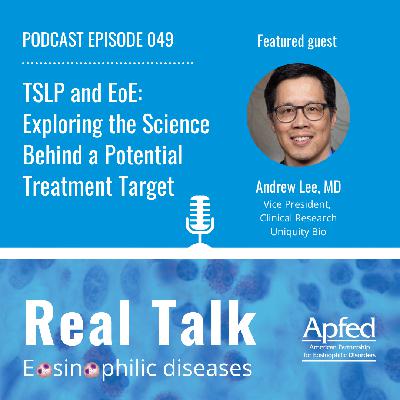
Co-hosts Ryan Piansky, a graduate student and patient advocate living with eosinophilic esophagitis (EoE) and eosinophilic asthma, and Holly Knotowicz, a speech-language pathologist living with EoE who serves on APFED's Health Sciences Advisory Council, interview Dr. Andrew Lee, Vice President, Clinical Research at Uniquity Bio, about Thymic Stromal Lymphopoietin (TSLP) and eosinophilic esophagitis (EOE). Disclaimer: The information provided in this podcast is designed to support, not replace, the relationship between listeners and their healthcare providers. Opinions, information, and recommendations shared in this podcast are not a substitute for medical advice. Decisions related to medical care should be made with your healthcare provider. Opinions and views of guests and co-hosts are their own. Key Takeaways: [:49] Co-host Ryan Piansky introduces the episode, brought to you thanks to the support of Education Partners Bristol Myers Squibb, GSK, Sanofi, Regeneron, and Takeda. Ryan introduces co-host Holly Knotowicz. [1:13] Holly introduces today's topic, Thymic Stromal Lymphopoietin (TSLP) and eosinophilic esophagitis (EOE), and today's guest, Dr. Andrew Lee, Vice President, Clinical Research at Uniquity Bio. [1:36] Dr. Lee has nearly 20 years of experience in the clinical development of new vaccines, biologics, and drugs. Holly welcomes Dr. Lee. [1:52] Dr. Lee trained in internal medicine and infectious diseases. [1:58] Dr. Lee has been fascinated by the immune system and how it can protect people against infections, what happens when immunity is damaged, as in HIV and AIDS, and how to apply that knowledge to boost immunity with vaccines to prevent infections. [2:16] Dr. Lee led the clinical development for a pediatric combination vaccine for infants and toddlers. It is approved in the U.S. and the EU. [2:29] Dr. Lee led the Phase 3 Program for a monoclonal antibody to prevent RSV, a serious infection in infants. That antibody was approved in June 2025 for use in the U.S. [2:44] In his current company, Dr. Lee leads research into approaches to counteract an overactive immune system. They're looking at anti-inflammatory approaches to diseases like asthma, EoE, and COPD. [2:58] Dr. Lee directs the ongoing Phase 2 studies that they are running in those areas. [3:28] Dr. Lee sees drug development as a chance to apply cutting-edge research to benefit people. He trained at Bellevue Hospital in New York City in the 1990s. [3:40] When Dr. Lee started as an intern, there were dedicated ICU wards for AIDS patients because many of the sickest patients were dying of AIDS and its complications. [3:52] Before the end of Dr. Lee's residency, they shut down those wards because the patients were on anti-retroviral medications and were doing so well that they were treated as outpatients. They didn't need dedicated ICUs for AIDS patients anymore. [4:09] For Dr. Lee, that was a powerful example of how pharmaceutical research and drug regimen can impact patients' lives for the better by following the science. That's what drove Dr. Lee to go in the direction of research. [4:48] Dr. Lee explains Thymic Stromal Lymphopoietin (TSLP). TSLP serves as an alarm signal for Type 2 or TH2 inflammation, a branch of the immune responses responsible for allergic responses and also immunity against parasites. [5:17] When the cells that line the GI tract and the cells that line the airways in our lungs receive an insult or an injury, they get a danger signal, then they make TSLP. [5:28] This signal activates other immune cells, like eosinophils and dendritic cells, which make other inflammatory signals or cytokines like IL-4, IL-13, and IL-5. [5:47] That cascade leads to inflammation, which is designed to protect the body in response to the danger signal, but in some diseases, when there's continued exposure to allergens or irritants, that inflammation goes from being protective to being harmful. [6:15] That continued inflammation, over the years, can lead to things like the thickened esophagus with EoE, or lungs that are less pliant and less able to expand, in respiratory diseases. [6:48] Dr. Lee says he thinks of TSLP as being a master switch for this branch of immune responses. If you turn on TSLP, that turns on a lot of steps that lead to generating an allergic type of response. [7:06] It's also the same type of immune response that can fight off parasite infections. It's the first step in a cascade of other steps generating that type of immune response. [7:30] Dr. Lee says people have natural genetic variation in the genes that incur TSLP. [7:38] Observational studies have found that some people with genetic variations that lead to higher levels of TSLP in their bodies had an increased risk for allergic inflammatory diseases like EoE, atopic dermatitis, and asthma. [8:13] Studies like the one just mentioned point to TSLP being important for increased risk of developing atopic types of diseases like EoE and others. There's been some work done in the laboratory that shows that TSLP is important for activating eosinophils. [8:38] There's accumulating evidence that TSLP activation leads to eosinophil activation, other immune cells, or white blood cells getting activated. [9:07] Like a cascade, those cells turn on T-cells and B-cells, which are like vector cells. They lead to direct responses to fight off infections, in case that's the signal that leads to the turning on TSLP. [9:48] Ryan refers to a paper published in the American Journal of Gastroenterology exploring the role of TSLP in an experimental mouse model of eosinophilic esophagitis. Ryan asks what the researchers were aiming to find. [10:00] Dr. Lee says the researchers were looking at the genetic studies we talked about, the observational studies that are beginning to link more TSLP with more risk for EoE and those types of diseases. [10:12] The other type of evidence that's accumulating is from in vitro (in glass) experiments or test tube experiments, where you take a couple of cells that you think are relevant to what's going on. [10:28] For example, you could get some esophageal cells and a couple of immune cells, and put TSLP into the mix, and you see that TSLP leads to activation of those immune cells and that leads to some effects on the esophageal cells. [10:42] Those are nice studies, but they're very simplified compared to what you can do in the body. These researchers were interested in extending those initial observations from other studies, but working in the more realistic situation of a mouse model. [11:00] You have the whole body of the mouse being involved. You can explore what TSLP is doing and model a disease that closely mimics what's happening with EoE in humans. [12:23] They recreated the situation of what seems to be happening in EoE in people. We haven't identified it specifically, but there's some sort of food allergen in patients with EoE that the immune system is set off by. [12:55] What researchers are observing in this paper is that in these mice that were treated with oxazolone, there is inflammation in the esophagus, an increase in TSLP levels, and eosinophils going into the esophageal tissues. [13:15] Dr. Lee says, that's one of the main ways we diagnose EoE; we take a biopsy of the esophagus and count how many eosinophils there are. Researchers saw similar findings. The eosinophil count in the esophageal tissues went way up in these mice. [13:34] Researchers also saw other findings in these mice that are very similar to EoE in humans, such as the esophageal cells lining the esophagus proliferating. They even saw that new blood vessels were being created in that tissue that's getting inflamed. [14:00] Dr. Lee thinks it's a very nice paper because it shows that correlation: Increase TSLP and you see these eosinophils going to the esophagus, and these changes that are very reminiscent of what we see in people with EoE. [14:51] In this paper, the mice made the TSLP, and researchers were able to measure the TSLP in the esophageal tissue. The researchers didn't introduce TSLP into the mice. The mice made the TSLP in response to being repeatedly exposed to oxazolone. [15:20] That's key to the importance of the laboratory work. The fact that the TSLP is made by the mice is important. It makes it a very realistic model for what we're seeing in people. [15:41] In science, we like to see correlation. The researchers showed a nice correlation. [15:46] When TSLP went up in these mice, and the mice were making more TSLP on their own, at the same time, they saw all these changes in the esophagus that look a lot like what EoE looks like in people. [16:01] They saw the eosinophils coming into the esophagus. They saw the inflammation go up in the esophagus. What Dr. Lee liked about this paper is that they continued the story. [16:15] The researchers took something that decreases TSLP levels, an antibody that binds to and blocks TSLP, and when they did that, they saw the TSLP levels come down to half the peak level. [16:35] Then they saw improvement in the inflammation in the esophagus. They saw that the amount of eosinophils decreased, and the multiplication of the esophageal cells went down. The number of new blood vessels went down after the TSLP was reduced. [16:53] Dr. Lee says, you see correlation. The second part is evidence for causation. When you take TSLP away, things get better. That gives us a lot of confidence that this is a real finding. It's not just observational. There is causation evidence here. [18:26] Ryan asks if cutting TSLP also help reduce other immune response cells. Dr. Lee says TSLP is the master regulator for this Type 2 inflammation. It definitely touches and influences other cells besides eosinophils. [18:44] TSLP affects dendritic cells, which are an important type of immune cell, like a coordinating cell that instructs other cells within
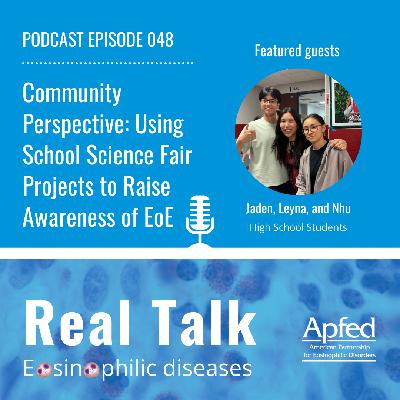
Co-hosts Ryan Piansky, a graduate student and patient advocate living with eosinophilic esophagitis (EoE) and eosinophilic asthma, and Holly Knotowicz, a speech-language pathologist living with EoE who serves on APFED's Health Sciences Advisory Council, interview three high school students who made less invasive EoE diagnostics the focus of a science fair project. Disclaimer: The information provided in this podcast is designed to support, not replace, the relationship that exists between listeners and their healthcare providers. Opinions, information, and recommendations shared in this podcast are not a substitute for medical advice. Decisions related to medical care should be made with your healthcare provider. Opinions and views of guests and co-hosts are their own. Key Takeaways: [:51] Co-host Ryan Piansky introduces the episode, brought to you thanks to the support of Education Partners Bristol Myers Squibb, GSK, Sanofi, Regeneron, and Takeda. Ryan introduces co-host Holly Knotowicz. [1:08] Holly introduces today's guests, three high school students from Texas who made EoE diagnostics the focus of a science fair project: Leyna, Nhu, and Jaden. [1:47] Leyna, Nhu, and Jaden are best friends. Nhu was diagnosed with EoE last summer. Leyna said Nhu told them it took a long time for the doctors to diagnose her because they thought it could be different conditions. [2:07] Nhu told them about her appointments and her endoscopy procedures. She had to miss school sometimes. Leyna and Jaden were concerned for her. [2:22] Leyna took AP Bio. Her teacher was a sponsor for the science fair. Leyna thought this would be a meaningful project for the three friends to learn more about Nhu's condition. [2:45] Holly shares that she wasn't diagnosed until her 20s, but she was sick for much of her childhood. [3:13] Ryan shares that he was diagnosed when he was two, after two years of his parents taking him to different doctors and undergoing different tests. [3:31] Nhu says it was hard to find a specialist. They found one and had to wait six months for an appointment. It was a long time, suffering from the effects of EoE with constant symptoms, a lot of heartburn, and painful vomiting. [4:00] Nhu was diagnosed with EoE in her sophomore year of high school. Her friends have seen her endure a lot, but she's strong. Nhu had to miss an orchestra concert where she had a big solo, because of her EoE. [4:32] Doctors thought Nhu could have something different, like H. Pylori or cyclic vomiting syndrome. They didn't have clear answers, which was confusing and frustrating for her family. [4:50] Holly talks about how difficult it was for her to get a diagnosis, and how she was told she was vomiting to get attention. She shared her reaction when diagnosed. She would like someone to do a research study about the pain tolerance of people with EoE. [5:41] Leyna says junior year is the hardest year of high school. She doesn't know how Nhu survived physics and AP classes with EoE on top of it, and making up late work. [6:14] Nhu takes a weekly injection. Her symptoms happen almost monthly. Sometimes she misses school for two weeks and has to catch up on work. Leyna and Jaden help her with her schoolwork. [6:47] Ryan shared how he missed a third of his senior year in high school. He's now on an injectable biologic that has helped him a lot. That treatment option wasn't available when he was in high school. Having supportive friends to send him his schoolwork and keep him up-to-date was very helpful. [7:11] Ryan explains the esophageal string test (EST). This is a tool that was developed to help monitor eosinophilic esophagitis (EoE). The test works by having the patient swallow a capsule about the size of a Tic Tac that has a string attached. [7:25] The capsule dissolves in the stomach while the string stays in place in the esophagus. After about an hour, it's gently removed. Along the way, the string collects samples from the lining of the esophagus, which are reviewed, similarly to a biopsy. [7:37] Holly adds that what makes the string test unique is that it doesn't require an endoscope, anesthesia, or recovery time, things that usually come with a traditional endoscopy and biopsy. [7:46] It's now being used with patients as young as four years old. While some people might feel some minor discomfort, it's generally much easier for regular monitoring than an endoscopy. [7:57] Holly explains that she was involved in testing the device and developing a swallowing protocol for it at Children's Hospital of Colorado. We will talk more about this later in the episode. [8:06] Ryan adds, to learn more about the development of the string test, listen to episode 26 of this podcast. [8:10] The string test is one of multiple, less-invasive monitoring tools for eosinophilic esophagitis. Others include the sponge test and unsedated trans-nasal endoscopy. [8:19] To learn more about unsedated transnasal endoscopy, listen to episodes 19 and 20, where we talk to clinicians and patients about this method. [8:27] During that episode, we talked to the developers of the EST. [8:38] Jaden tells how he, Leyna, and Nhu brainstormed ideas and decided to base their project specifically on how to diagnose EoE in a less invasive way than endoscopies. [9:12] Before this project, they were not familiar with the EST. Nhu says her only option for diagnosis was an endoscopy. [9:21] Holly says it's still like that in Maine. She came from an area of the country where the EST was researched, and it's interesting to her that she doesn't have access to it now. [9:37] What appealed to the group about the EST as an alternative to endoscopies is that it was so different. There are so many advanced technologies, and the EST is just a capsule taped to a string. It is simple but innovative. [10:13] Real Talk: Eosinophilic Diseases had Drs. Robin Shandas and Steven Ackerman, who were instrumental in the development of the esophageal string test, as guests on episode 26 of this podcast. Ryan encourages listeners to check out that episode at apfed.org/podcasts. [10:42] They searched for keywords and analyzed a variety of scholarly literature. They collected a lot of data from Dr. Ackerman's papers. [11:10] They also reached out to gastroenterologists on social media. A hard thing about science fair projects is coming up with an experiment. They didn't know what they could do just with compiled research, but they had a great sponsor who helped along the way. [11:56] Leyna says they trusted that the doctors they reached out to on social media were competent in their understanding of different diagnostic methods. She notes that different locations may have different resources and different biases. [12:14] Leyna says they talked to doctors in the U.S. and from different countries, including India and Mexico. She commented that communities in Mexico might not have the same resources as communities in the U.S. or India. That might change their understanding of the EST. [12:33] We might have different biases because we don't have the same technology to research and find the same things about the EST. [13:12] Leyna says they reached out to doctors on social media, but didn't get responses from that many doctors. Reaching out to patients would be a good thing if they want to continue the project. [14:00] Jaden says most of the data they found was from Dr. Ackerman, including a survey he did comparing the data of the EST and the biopsies. [14:10] They found that the EST and the biopsies were relatively similar in terms of discovering the eosinophilic count and determining whether the EoE is active or inactive. [15:30] They found differences between ESTs and biopsies in finding how much of a certain chemical is in the patient's cells. [14:43] Leyna comments that one of the doctors they reached out to told them about the sponge test, another less invasive method. They didn't research the sponge test, but it sounded interesting. [15:00] Ryan says there are a lot of cool new techniques that are being researched, like the transnasal endoscopy that goes in through the nose, the string test, and the sponge test. [15:13] Leyna says the cool thing was hearing about all these methods. They had hypothesized that there are less invasive methods that may be better than endoscopies. [15:27] They were not able to prove their hypothesis yet. They learned a lot of different things that could be beneficial. [15:42] Holly points out that the transnasal endoscopy is not scary. It's also known as the unsedated endoscopy. Holly has done both the EST and the unsedated endoscopy, and they each have pluses and minuses. [16:15] Nhu explains how the team would meet at one of their houses, usually Leyna's house. One day, they watched Interstellar together, and the "Eureka moment" scene motivated them. [16:41] They helped each other whenever necessary. When the project board was due, they all went to Leyna's house to work on the project board. They worked together as a team. [16:51] Jaden analyzed a lot of the data. Leyna reached out to professors. Nhu helped Jaden understand some terms. On the day they presented the project, Nhu was sick in the hospital, which made them sad. They included a photo of her on the project board. [17:28] Holly says that although Nhu wasn't there, it may have helped people know how sick EoE can make you feel. [18:28] Leyna says one of the doctors they reached through social media told them that endoscopies have lots of benefits. The biopsy samples give healthcare professionals a clear idea of how many eosinophils per high-powered field, a key indicator in diagnosing EoE. [18:57] The diagnosis gives a baseline for starting treatment for the patient, monitoring how effective the treatment is. You can't count the number of eosinophils per high-powered field using the string test. [19:11] The EST is a gela
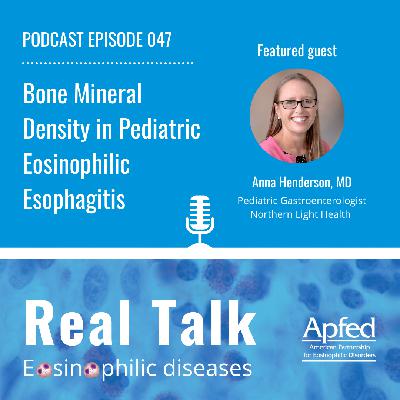
Description: Co-hosts Ryan Piansky, a graduate student and patient advocate living with eosinophilic esophagitis (EoE) and eosinophilic asthma, and Holly Knotowicz, a speech-language pathologist living with EoE who serves on APFED's Health Sciences Advisory Council, interview Anna Henderson, MD, a pediatric gastroenterologist at Northern Light Health in Maine, about bone mineral density in EoE patients. They discuss a paper she co-authored on the subject. Disclaimer: The information provided in this podcast is designed to support, not replace, the relationship that exists between listeners and their healthcare providers. Opinions, information, and recommendations shared in this podcast are not a substitute for medical advice. Decisions related to medical care should be made with your healthcare provider. Opinions and views of guests and co-hosts are their own. Key Takeaways: [:50] Co-host Ryan Piansky introduces the episode, brought to you thanks to the support of Education Partners Bristol Myers Squibb, Sanofi, Regeneron, and Takeda. Ryan introduces co-host Holly Knotowicz. [1:17] Holly introduces today's topic, eosinophilic esophagitis (EoE), and bone density. [1:22] Holly introduces today's guest, Dr. Anna Henderson, a pediatric gastroenterologist at Northern Light Health in Maine. [1:29] During her pediatric and pediatric gastroenterology training at Cincinnati Children's Hospital, she took a special interest in eosinophilic esophagitis. In 2019, Dr. Henderson received APFED's NASPGHAN Outstanding EGID Abstract Award. [1:45] Holly, a feeding therapist in Maine, has referred many patients to Dr. Henderson and is excited to have her on the show. [2:29] Dr. Henderson is a wife and mother. She loves to swim and loves the outdoors. She practices general pediatric GI in Bangor, Maine, at a community-based academic center. [2:52] Her patient population is the northern two-thirds of Maine. Dr. Henderson feels it is rewarding to bring her expertise from Cincinnati to a community that may not otherwise have access to specialized care. [3:13] Dr. Henderson's interest in EoE grew as a GI fellow at Cincinnati Children's. Her research focused on biomarkers for disease response to dietary therapies and EoE's relationship to bone health. [3:36] As a fellow, Dr. Henderson rotated through different specialized clinics. She saw there were many unanswered questions about the disease process, areas to improve treatment options, and quality of life for the patients suffering from these diseases. [4:00] Dr. Henderson saw many patients going through endoscopies. She saw the social barriers for patients following strict diets. She saw a huge need in EoE and jumped on it. [4:20] Ryan grew up with EoE. He remembers the struggles of constant scopes, different treatment options, and dietary therapy. Many people struggled to find what was best for them before there was a good approved treatment. [4:38] As part of Ryan's journey, he learned he has osteoporosis. He was diagnosed at age 18 or 19. His DEXA scan had such a low Z-score that they thought the machine was broken. He was retested. [5:12] Dr. Henderson explains that bone mineral density is a key measure of bone health and strength. Denser bones contain more minerals and are stronger. A low bone mineral density means weaker bones. Weaker bones increase the risk of fracture. [5:36] DEXA scan stands for Dual Energy X-ray Absorptiometry scan. It's a type of X-ray that takes 10 to 30 minutes. A machine scans over their bones. Typically, we're most interested in the lumbar spine and hip bones. [5:56] The results are standardized to the patient's height and weight, with 0 being the average. A negative number means weaker bones than average for that patient's height and weight. Anything positive means stronger bones for that patient's height and weight. [6:34] A lot of things can affect a patient's bone mineral density: genetics, dietary history, calcium and Vitamin D intake, and medications, including steroid use. Prednisone is a big risk factor for bone disease. [7:07] Other risk factors are medical and auto-immune conditions, like celiac disease, and age. Any patient will have their highest bone density in their 20s to 30s. Females typically have lower bone mineral density than males. [7:26] The last factor is lifestyle. Patients who are more active and do weight-bearing exercises will have higher bone mineral density than patients who have more of a sedentary lifestyle. [7:56] Ryan was told his bone mineral density issues were probably a side-effect of the long-term steroids he was on for his EoE. Ryan is now on benralizumab for eosinophilic asthma. He is off steroids. [8:36] Dr. Henderson says the research is needed to find causes of bone mineral density loss besides glucocorticoids. [8:45] EoE patients are on swallowed steroids, fluticasone, budesonide, etc. Other patients are on steroids for asthma, eczema, and allergic rhinitis. These may be intranasal steroids or topical steroids. [9:01] Dr. Henderson says we wondered whether or not all of those steroids and those combined risks put the EoE population at risk for low bone mineral density. There's not a lot published in that area. [9:14] We know that proton pump inhibitors can increase the risk of low bone mineral density. A lot of EoE patients are on proton pump inhibitors. [9:23] That was where Dr. Henderson's interest started. She didn't have a great way to screen for bone mineral density issues or even know if it was a problem in her patients more than was expected in a typical patient population. [9:57] Holly wasn't diagnosed with EoE until she was in her late 20s. She was undiagnosed but was given prednisone for her problems. Now she wonders if she should get a DEXA scan. [10:15] Holly hopes the listeners will learn something and advocate for themselves or for their children. [10:52] If a patient is concerned about their bone mineral density, talking to your PCP is a perfect place to start. They can discuss the risk factors and order a DEXA scan and interpret it, if needed. [11:11] If osteoporosis is diagnosed, you should see an endocrinologist, specifically to discuss therapy, including medications called bisphosphonates. [11:36] From an EoE perspective, patients can talk to their gastroenterologist about what bone mineral density risk factors may be and if multiple risk factors exist. Gastroenterologists are also more than capable of ordering DEXA scans and helping their patients along that journey. [11:53] A DEXA scan is typically the way to measure bone mineral density. It's low radiation, it's easy, it's fast, and relatively inexpensive. [12:10] It's also useful in following up over time in response to different interventions, whether or not that's stopping medications or starting medications. [12:30] Dr. Henderson co-authored a paper in the Journal of Pediatric Gastroenterology and Nutrition, called "Prevalence and Predictors of Compromised Bone Mineral Density in Pediatric Eosinophilic Esophagitis." The study looked at potential variables. [12:59] The researchers were looking at chronic systemic steroid use. They thought it was an issue in their patients, especially patients with multiple atopic diseases like asthma, eczema, and allergic rhinitis. That's where the study started. [13:22] Over the years, proton pump inhibitors have become more ubiquitous, and more research has come out. The study tried to find out if this was an issue or not. There weren't any guidelines for following these patients, as it was a retrospective study. [13:42] At the time, Dr. Henderson was at a large institution with a huge EoE population. She saw that she could do a study and gather a lot of information on a large population of patients. Studies like this are the start of figuring out the guidelines for the future. [14:34] Dr. Henderson wanted to determine whether pediatric patients with EoE had a lower-than-expected bone mineral density, compared to their peers. [14:44] Then, if there were deficits, she wanted to determine where they were more pronounced. Were they more pronounced in certain subgroups of patients with EoE? [14:59] Were they patients with an elemental diet? Patients with an elimination diet? Were they patients on steroids or PPIs? Were they patients with multiple atopic diseases? Is low bone mineral density just a manifestation of their disease processes? [15:14] Do patients with active EoE have a greater propensity to have low bone mineral density? The study was diving into see what the potential risk factors are for this patient population. [15:45] The study was a retrospective chart review. They looked at patients aged 3 to 21. You can't do a DEXA scan on a younger patient, and 21 is when people leave pediatrics. [16:03] These were all patients who had the diagnosis of EoE and were seen at Cincinnati Children's in the period between 2014 and 2017. That period enabled full ability for chart review. Then they looked at the patients who had DEXA scans. [16:20] They did a manual chart review of all of the patients and tried to tease out what the potential exposures were. They looked at demographics, age, sex, the age of the diagnosis of EoE, medications used, such as PPIs, and all different swallowed steroids. [16:44] They got as complete a dietary history as they could: whether or not patients were on an elemental diet, whether that was a full elemental diet, whether they were on a five-food, six-food, or cow's milk elimination diet. [16:58] They teased out as much as they could. One of the limitations of a retrospective chart review is that you can't get some of the details, compared to doing a prospective study. For example, they couldn't tease out the dosing or length of therapy, as they would have liked. [17:19] They classified those exposures as whether or not the patient was ever exposed to those medications, whether or not
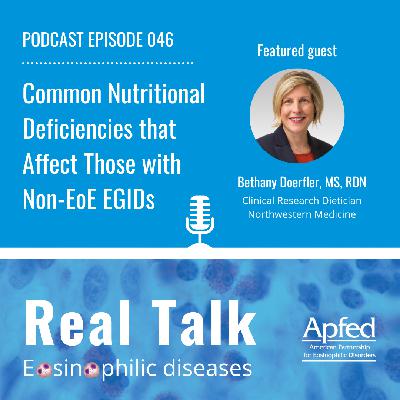
Description: Co-hosts Ryan Piansky, a graduate student and patient advocate living with eosinophilic esophagitis (EoE) and eosinophilic asthma, and Holly Knotowicz, a speech-language pathologist living with EoE who serves on APFED's Health Sciences Advisory Council, interview Bethany Doerfler, MS, RDN, a clinical research dietician specializing in lifestyle management of digestive diseases at Northwestern Medicine. Ryan and Holly discuss managing nutritional deficiencies in patients with non-EoE EGIDs and a study Bethany worked on. Disclaimer: The information provided in this podcast is designed to support, not replace the relationship that exists between listeners and their healthcare providers. Opinions, information, and recommendations shared in this podcast are not a substitute for medical advice. Decisions related to medical care should be made with your healthcare provider. Opinions and views of guests and co-hosts are their own. Key Takeaways: [:50] Co-host Ryan Piansky introduces the episode, brought to you thanks to the support of Education Partners Bristol Myers Squibb, Sanofi, Regeneron, and Takeda. Ryan introduces co-host Holly Knotowicz. [1:17] Holly introduces today's topic, common nutritional deficiencies that affect those with eosinophilic gastrointestinal diseases that occur in the GI tract lower than the esophagus (non-EoE EGIDs). [1:31] Holly introduces today's guest, Bethany Doerfler, a clinical research dietician specializing in lifestyle management of digestive diseases, including gastroesophageal reflux disease, motility disorders, and eosinophilic diseases. [1:45] Bethany currently practices as part of a multi-disciplinary team in a digestive health institute at Northwestern Medicine. [2:03] Bethany began working with this disorder almost 20 years ago. She worked with Dr. Gonsalves and Dr. Hirano at Northwestern. Dr. Gonsalves invited her to work with EoE patients. Bethany had not heard of EoE. [2:59] Bethany says the lens that we've used to look at food as the trigger and also a therapeutic agent in the esophagus, we're looking at in non-EoE EGIDs as well; at the same time, trying to make sure that we're honoring the other parts of our patient's lives. [3:27] Before Bethany started working in GI at Northwestern, she worked in the Wellness Institute, doing nutrition for patients at Northwestern. Bethany has a research background in epidemiology and she wanted to see better nutrition research in GI. [3:56] Through a friend, Bethany connected with the Chief of GI at that point. Northwestern had never had a dietician working in GI. [4:08] Bethany is pleased to see a trend in healthcare of thinking about the patient as a whole person, including diet, psychological wellness, physical health, exercise, sleep, and more. Bethany wanted to see more research on GI disorders. [4:38] Bethany says that eosinophils in the esophagus indicate that something is irritating the tissues, such as reflux, food triggers, aeroallergens, and other things. [4:58] Eosinophils do belong in the stomach, the small intestine, and the colon. The challenge for researchers has been, how many, where are they supposed to live, and what are they supposed to look like. [5:10] There is eosinophilic gastritis, where eosinophils can infiltrate the stomach, causing a lot of inflammatory responses that make patients sick. We see that in all parts of the small intestine and less commonly, in the colon, as well. [5:32] It's a good reminder for listeners that eosinophils are white blood cells. When they're in the tissues, they can swell things up and cause the body to have this inflammatory response in these lower GI tract organs. [5:49] The symptoms patients can experience are vomiting, diarrhea, and abdominal pain, among other things. [6:14] The nomenclature for this subset of eosinophil-associated diseases has changed and Bethany says to hang tight, there is lots of work underway to nail this down further in the next couple of months to a year. [6:29] The last guidelines were published by a Delphi Consensus in 2022. The experts in the field got together and voted on the scientific accuracy of certain statements to develop cut points for how to grade. [6:48] The experts are asking questions like: What counts as eosinophilic gastritis? What do we think are some of the symptoms and the clinical findings so that we all are looking at things through the same lens? [7:02] To get to these consensus statements, there's a lot of discussion, agreement, and good collegial discussions about making sure that we're looking at this accurately. [7:12] We're trying to give the right names to the right disorders and give clear diagnostic criteria, so that we're helping our patients get a diagnosis, and we're not labeling something incorrectly and sticking someone with an inaccurate diagnosis. [7:36] The proper terminology is eosinophilic gastritis in the stomach, eosinophilic enteritis in the small intestine, eosinophilic colitis in the colon, and eosinophilic gastroenteritis where the stomach and the small bowel are involved. [7:53] There's more to come on the clinical criteria of what makes that diagnosis but we're getting the names and the numbers right. [8:03] Holly agrees that having the symptoms given a named diagnosis is important to patients, knowing that researchers are looking into their illness. [9:00] Bethany notes that the diagnosis also means that there are opportunities for medical therapy, cut points for which medicines or therapies work or not, and billing codes. If we can't bill insurance companies, patients might not get certain services. [9:28] Ryan tells how beneficial it was for him to have access to multi-disciplinary teams and see specialists he might not have seen without the proper diagnosis and just thought it was a GI issue. He was fortunate to see a dietician and start dietary therapy. [9:53] Bethany says the dietician's priority is the patient's health and wellness. [10:13] These disorders carry clinical non-gastrointestinal manifestations: fatigue, concern over what to eat, food access issues, family support, and other food allergies. These are important things for a dietician to consider. [10:37] Are patients growing as they should? Do they feel like they have enough to eat? Do they feel excluded in social settings? There's a list of important things that we want to be looking at. That's why it's important to have a multi-disciplinary approach. [11:07] First, Bethany wants to see that her patients are physically and nutritionally well. That's a priority if we're going to try to get rid of some of the food triggers that could be exacerbating the disease. [11:20] Before Bethany takes anything out of someone's diet, she wants to make sure that they're getting enough of the good stuff to help them feel good and grow. [11:29] From a diet therapy perspective, Bethany is trying to apply a food removal or substitution protocol to other spots outside the esophagus. They're seeing that some of the triggers are very similar, both in the stomach and small intestine. [12:09] Dr. Gonsalves, Dr. Hirano, and Bethany did a study, The Elemental Study, where they wanted to uncover if food proteins carried the same trigger risk in the stomach and small intestine as they do in the esophagus. [12:35] They put their patients on a hypoallergenic elemental formula for a period, followed up, and looked at their biopsies of the stomach and small intestine. Fifteen wonderful patients made it through the trial. [12:56] One hundred percent of the patients achieved disease remission and felt better. There were some genetic alterations in the patients. Then they started the process of reintroducing foods over the year. [13:15] That was not part of the original grant but was the team's clinical interest to see what it is that people are allergic to. Some of the common suspects: wheat, dairy, eggs, soy, and nuts, were found to be very common triggers for EoG and EoN, as well. [13:47] The benefit of working with a dietician as part of your team is, first, we can remediate things the disease has caused nutritionally, and second, we can think about how diet can be a therapeutic tool to use with medications or instead of medication. [14:15] If you want to use nutrition therapeutically, you don't have to stay there if it's not the right time to be taking things out of your diet. We have some good, safe, medical therapies. You can find your food triggers but you don't have to pick that lane forever. [14:42] Holly and Ryan relate their experiences with traveling abroad and going on medical therapies when they can't stay on their diets. [15:57] Bethany says low levels of vitamins and minerals in the blood can be caused by a disorder or an elimination diet. In the U.S., dairy is the biggest source of protein for young kids. It's also the biggest source of calcium and vitamin D. [16:22] Dieticians often say, if we are going to use dietary therapy for EoE or non-EoE EGIDs, we have to think of this as a substitution diet. If we remove something, we have to replace it with something equally nutrient-dense. [16:39] Bethany and her group look at serum values of Vitamin D, B12, and iron they assess for patients. For kids, instead of drawing blood, they piece together what they're taking against what they need and see if there are gaps to fill with food or supplements. [17:32] In patients with non-EoE EGIDs, Bethany says we see the disease intersect with the food supply. When we take milk out, we're cutting the biggest source of calcium and Vitamin D. We have to replace calcium and Vitamin D. [17:55] In the 1950s, a public health law allowed wheat to be enriched with folic acid and other B vitamins and iron. When we cut out wheat, our patients aren't getting enough iron or B vitamins. We have to replace those. [18:16] For patients who have eosinophils in their stomach and small
Description: Co-hosts Ryan Piansky, a graduate student and patient advocate living with eosinophilic esophagitis (EoE) and eosinophilic asthma, and Holly Knotowicz, a speech-language pathologist living with EoE who serves on APFED's Health Sciences Advisory Council, interview Dr. Melanie Ruffner, an Attending Physician with the Division of Allergy and Immunology and the Center for Pediatric Eosinophilic Disorders at Children's Hospital of Philadelphia. Dr. Ruffner describes her work in clinic and the paper she co-authored about pediatric and adult eosinophilic esophagitis (EoE). She covers the questions they considered in the paper and the conclusions they reached. Disclaimer: The information provided in this podcast is designed to support, not replace the relationship that exists between listeners and their healthcare providers. Opinions, information, and recommendations shared in this podcast are not a substitute for medical advice. Decisions related to medical care should be made with your healthcare provider. Opinions and views of guests and co-hosts are their own. Key Takeaways: [:49] Co-host Ryan Piansky introduces the episode, brought to you thanks to the support of Education Partners Bristol Myers Squibb, GSK, Sanofi, Regeneron, and Takeda. Ryan introduces co-host Holly Knotowicz. [1:17] Holly introduces today's topic, pediatric and adult eosinophilic esophagitis (EoE), and introduces today's guest, Dr. Melanie Ruffner. [1:23] Dr. Melanie Ruffner is an attending physician with the Division of Allergy and Immunology in the Center for Pediatric Eosinophilic Disorders at Children's Hospital of Philadelphia. Holly welcomes Dr. Ruffner to Real Talk. [1:50] As an attending physician in the Center for Pediatric Eosinophilic Disorders at Children's Hospital of Philadelphia, Dr. Ruffner sees patients who have eosinophilic esophagitis and other eosinophilic disorders, including eosinophilic GI tract disorders. [2:09] Dr. Ruffner also leads a research group that studies how the immune system causes inflammation in response to certain foods, leading to EoE. [2:20] Inflammation in the esophagus is tied to other diseases like epithelial barrier dysfunction and fibrosis. [2:28] Our bodies use many different proteins that allow cells to communicate with one another. One type of signaling protein that causes inflammation is called cytokines. [2:41] Dr. Ruffner's group is interested in how these signaling proteins called cytokines interact with epithelial cells and how that impacts the oral function of the esophagus in patients with EoE. [3:02] In training, Dr. Ruffner became interested in eosinophilic esophagitis and other non-IgE-mediated food allergies because we don't have a lot of clear treatments or clear mechanisms that cause them. [3:21] Dr. Ruffner felt there was a lot of work to be done in that area. It was rewarding to be in clinical encounters with those patients. Often, patients had spent a long time trying to find out what was happening and to find a treatment plan that worked for them. [4:31] Dr. Ruffner's group sees some patients who have eosinophilic gastroenteritis and patients who are referred for hypereosinophilia with impacts of inflammation in other organ systems. [5:06] Dr. Ruffner co-authored a paper about pediatric and adult EoE published in the Journal of Allergy and Clinical Immunology. It explored if EoE in pediatric patients and adult patients is a spectrum or distinct diseases. [5:29] EoE is a chronic allergic condition that affects the esophagus. The esophagus carries food from the mouth to the stomach. In people with EoE, the immune system overreacts to foods and causes inflammation in the esophagus. [5:47] Eosinophils are a type of white blood cell. Eosinophils infiltrate the tissue in the esophagus of people with EoE. Doctors look for eosinophils in the tissue of the esophagus as a sign that inflammation in the esophagus is EoE. [6:04] The symptoms of EoE can vary in children and adults. That was one of the things the doctors were interested in when they were thinking about this paper. There are no blood or allergy tests that make it easy to diagnose EoE, which requires an endoscopy. [6:31] An endoscopy is performed by a gastroenterologist. The gastroenterologists look at the appearance of the esophagus and take biopsies. [6:49] A pathologist counts the eosinophils in the tissue to determine if there are eosinophils present. If there are more than 15 eosinophils in the high-powered field of the microscope and symptoms and clinical conditions are present, EoE is diagnosed. [7:25] One of the variables Dr. Ruffner considers is that symptoms can be different in children versus adults. In older adolescents and adults, the classic symptom is difficulty swallowing or dysphagia. That is often caused by fibrosis in the esophagus. [7:54] In younger children this is often not how EoE presents. They may vomit or refuse food. They may experience more weight loss. Symptoms vary over the lifespan. Pediatric EoE symptoms of nausea and abdominal pain can also show up in adults. [9:54] Atopy refers to allergic conditions. In the paper, a history of atopy means a history of allergic conditions, like atopic dermatitis, IgE-mediated food allergy, allergic rhinitis, or asthma. [10:37] These disorders tend to cluster together, over time, because they share many common genetic risks. They cluster in families because some of the genetic risks are the same. Not every family member will have the same atopic or allergic conditions. [11:07] In families, perhaps one person will have atopic dermatitis and allergic rhinitis while another will have atopic dermatitis, allergic rhinitis, asthma, and EoE. They may have inherited different genetics or had different environmental exposures. [11:50] Ryan says that describes his family. They each have different atopic conditions. Ryan got them all! Dr. Ruffner says it describes her family, as well. [12:26] Dr. Ruffner says it's understandable for families to stress about atopic conditions. Unfortunately, right now, there's no way to predict who will develop which atopic conditions. It's on the minds of the medical and research communities. [13:10] IgE is an antibody that binds to food allergens and mediates anaphylaxis, usually within 30 minutes, with hives, vomiting, and difficulty breathing. Not everyone with a diagnosed food allergy will be given an epinephrine auto-injector. [13:44] IgE-mediated food allergies are influenced by type 2 cytokines. Cytokines are immune system signaling proteins that have been labeled as groups. The group that is involved in allergy most heavily is under the label type 2. [14:15] These type 2 cytokines are responsible for influencing B cells to make IgE. In the tissue in EoE, we find that there is a large amount of these type 2 cytokines present. [14:37] This is quite relevant because dupilumab, the monoclonal antibody that has been approved to treat EoE, targets type 2 inflammation by blocking type 2 cytokines. [16:04] Dr. Ruffner says one of the biggest challenges in the field of EoE is we don't have a way to stratify who should get which treatment for EoE. Patients have to choose between diet and pharmacologic therapy. [16:48] We don't know enough about the inflammatory profiles to give any patient the specific guided information that one therapy would be better than another. [17:11] Pediatric and adult patients are given the same treatment options. Some dosing, such as proton pump inhibitors and dupilumab, is weight-based so different doses are needed. [17:36] Over time, people's needs change. From early school age to when people leave home, they may have very different needs. They may do well on diet therapy when their diet is controlled by parents, but, on their own, that may not be the best option for them. [18:20] Therapy may change over time to support each patient's individual goals. It can be challenging because therapies are imperfect. Each therapy has a percentage probability of success. Not every therapy is guaranteed to work for every individual. [19:01] There is some flexibility and possibility of switching between therapies to support people. Ryan shares one of his experiences in changing treatments. [20:03] Some patients are stable on a therapy for a time but then see symptoms creep back up. Dr. Ruffner strongly suggests they talk to their care team for an endoscopy and biopsy to see if they need to switch therapy and if their diet has changed. [21:31] In young children, Dr. Ruffner sees a much higher incidence of feeding refusal. The child may have a preferred food or a preferred texture like puree, long past when that would be appropriate for the age. [22:41] It can be very difficult to move past this learned behavior even if remission is achieved through therapy. The child may need feeding therapy to help with that. [22:59] Feeding behaviors in older individuals may be much more subtle. Talk about them with your care team. Needing water to eat, cutting food very small, and fearing to eat around people are common eating behaviors to discuss in older patients. [23:53] These eating behaviors affect people's well-being deeply because they affect how social they feel when they are around people. Ideally, you want to be around people and share in social times. [24:16] Holly has used these eating behaviors herself and notices them in other people. When adults come to her for therapy, she asks how many times they refill their water when they eat, and if food ever gets stuck. They are surprised that those are symptoms. [26:01] Dr. Ruffner says it's important to recognize the difference in symptoms in diagnosing EoE. The main risk factor of EoE is fibrosis, over time. The thought is that early in EoE there is an inflammatory phenotype, but later, there is a fibrotic phenotype. [26:51] The phenotype refers to the presentation or characteristic of di
Description: Co-hosts Ryan Piansky, a graduate student and patient advocate living with eosinophilic esophagitis (EoE) and eosinophilic asthma, and Holly Knotowicz, a speech-language pathologist living with EoE who serves on APFED's Health Sciences Advisory Council, interview Dr. John Accarino, an allergist and immunologist at Massachusetts General Hospital and Mass General for Children, on the topic of immunology support for eosinophilic esophagitis (EoE). Dr. Accarino shares his experiences as a person living with food allergies, allergic asthma, peanut allergy, and eosinophilic esophagitis. He tells how his experiences help him in his work with patients. Dr. Accarino shares some education on a variety of allergy mechanisms and the treatments that mitigate them. Disclaimer: The information provided in this podcast is designed to support, not replace the relationship that exists between listeners and their healthcare providers. Opinions, information, and recommendations shared in this podcast are not a substitute for medical advice. Decisions related to medical care should be made with your healthcare provider. Opinions and views of guests and co-hosts are their own. Key Takeaways: [:49] Co-host Ryan Piansky introduces the episode, brought to you thanks to the support of Education Partners Bristol Myers Squibb, GSK, Sanofi, and Regeneron. Ryan introduces co-host Holly Knotowicz. [1:14] Holly introduces today's topic, immunology support for eosinophilic esophagitis (EoE), and introduces today's guest, Dr. John Accarino, an allergist and immunologist at Massachusetts General Hospital. Holly welcomes Dr. Accarino to Real Talk. [1:49] Holly notes that Dr. Accarino is her allergist and immunologist. [2:03] Dr. Accarino works at Massachusetts General Hospital and Mass General for Children. Allergy and Immunology is a field where he can see pediatrics and adults. Originally trained in pediatrics, now Dr. Accarino sees patients of all ages. [2:23] Dr. Accarino grew up with allergies. He has experienced food allergies since he was young, along with allergic asthma, and some eczema, which he grew out of. Later in life, he was diagnosed with eosinophilic esophagitis. He talks with his patients about his experiences. [2:47] Dr. Accarino also does research on drug allergies in the context of certain drug interactions that involve eosinophils. [3:06] When Holly was referred to Dr. Accarino, it was for multiple sclerosis (MS). He told her, "It looks like you have EoE. I have EoE." It was a huge relief to Holly not to have to explain EoE to her doctor. [3:41] Some patients start to explain their EoE to Dr. Accarino, and he assures them he understands where they're coming from. Sometimes, he has to be careful not to think everyone has his symptoms, as there is a large spectrum of presentations. [4:26] Dr. Accarino wasn't diagnosed with EoE until he was in his allergy fellowship, after he suspected it when he had a food impaction at a steakhouse at a graduation party from his pediatric residency. He tried to manage the EoE with lifestyle changes. [5:39] Dr. Accarino didn't often go to see a doctor during residency, but he realized it was probably a good time to get an endoscopy. [5:52] Holly shares how she was also diagnosed as a clinical fellow. She was subbing for someone on the GEDP team at Children's Hospital in Colorado. Listening to all the patients, she realized, "This sounds a little bit like me … What is going on?" [6:23] Even with his medical background, it took Dr. Accarino some time to decide to get the endoscopy and biopsies. You or your doctor have to have a high level of suspicion to realize this isn't just reflux. Food doesn't get stuck in every person's throat. [7:01] Thinking back, Dr. Accarino remembers an instance as a child when a dry muffin got stuck in his throat. He stayed calm and waited for it to pass. He thought it was normal. [7:39] He drank a lot of water and chewed his food a lot. Those are markers of potential esophageal inflammation. [8:20] Different groups have different management strategies for EoE. Dietary management, topical steroids, biologics. A subgroup of people with EoE are responsive to proton pump inhibitors (PPIs). Finding the best management strategy is a work in progress. [8:53] With pediatric patients, the parents control the diet, and the children eat what is prepared. He notes that with adult patients, sometimes they let foods slip through. [9:10] If you want to do a single-food elimination diet with dairy, there's a lot of dairy in the American diet. Dr. Accarino tried eliminating dairy and wheat, but he still had persistent eosinophils with dietary elimination. [9:24] Dr. Accarino then tried PPIs. To know if you have PPI-responsive EoE, you might do twice-daily omeprazole at a significant dose. Have the endoscopy after a few weeks pass and see if the eosinophils are still present in the biopsy. [9:59] Dr. Accarino did that recently and still has the eosinophils. He plans to talk to his gastroenterologist about considering dupilumab, but he feels that he can mitigate his subjective day-to-day experience of symptoms with dietary elimination and PPIs. [10:24] If you still have the presence of eosinophils on biopsy, there's still inflammation happening. In the long term, you still have to worry about fibrosis and narrowing. [10:34] The last treatment Dr. Accarino tried was as a research participant in a study for dissolvable fluticasone. He received either the medication or a placebo; he doesn't know which. [11:01] To stay in the study, he had to journal and report his symptoms regularly. He didn't have enough symptoms to stay in the study. They were looking for a baseline to see how it changed with either the placebo or the medication. [11:20] In research, you have to have a baseline to start, and then you want to see improvement, plus or minus. With EoE, it's difficult. You have the biopsy and eosinophils, but there's a large spectrum of symptoms that people may experience. [12:40] Holly appreciates Dr. Accarino's unique perspective as a doctor with EoE who has experienced various treatments and diets. He understands the concerns of his patients. [12:43] Dr. Accarino says even taking a twice-daily PPI or other medication is difficult for a lot of people, and that's the most simple of these therapies. [13:06] Dr. Accarino wants to validate everyone's experience in terms of how difficult it is to treat this disorder, how it may present in different ways, and how there may be a delay in diagnosis. [13:16] This isn't IgE-mediated immediate food allergy, where you eat a food and may have swelling within minutes; you may have flushing or hives. That's very clear. With EoE, it's a different mechanism; in many cases, there is a delay. [14:37] Allergy, in general, is under the purview of clinical immunology. Dr. Accarino is allergic to peanuts and has an IgE-mediated immediate reaction to them. If he eats a peanut, he has symptoms within minutes. He could have anaphylaxis. As a result, he carries an epinephrine auto-injector. [15:01] If Dr. Accarino has a skin test, it will be positive for peanut. He has IgE antibodies to peanuts. He also has oral allergy syndrome where the body mistakes certain fruits, vegetables, or nuts with certain tree pollens or grass pollens. [15:23] Oral allergy syndrome is usually a lower-risk condition where it's a less-stable protein that once cooked might not produce any symptoms. If it's raw when you consume it, you may have oral itching, a bit of throat discomfort, or tongue itching. [15:54] Your stomach acid breaks it down so it doesn't get into your bloodstream and you shouldn't have a systemic reaction. [16:01] If Dr. Accarino eats a peanut, his stomach acid doesn't break down the high-risk, stable peanut protein, it gets into his bloodstream, and he can have a systemic anaphylactic reaction. [16:20] Chronic EoE symptoms can present with something like a food impaction, or bad reflux or belly pain, and nausea. The reaction may not be immediate. It may be progressive over days or weeks. [16:38] FIRE is an interesting condition that takes some time to narrow down. It's an immediate response of the esophagus, but we don't think it's histamine-mediated. [16:56] We don't know, exactly, the mechanism but it's in people with eosinophilic esophagitis. They feel differently, and there would be different specific food triggers. [17:11] It took some time to figure out what was going on. Dr. Accarino felt like he had a lump in his throat, then a lump in his chest, nausea, and belly pain. It felt like a slow progression of EoE symptoms, and it was from specific food triggers, in his case. [17:30] In some of the FIRE literature, they looked at banana and avocado. For Dr. Accarino, it took a couple of exposures to protein bars and milk protein whey isolate, specific to protein bars he had multiple times, until he figured out that was the trigger. [17:50] Another protein whey isolate that Dr. Accarino scooped as a powder and made into a shake also led to FIRE. [17:55] It took that event for Dr. Accarino to figure out it wasn't just a flareup of EoE or reflux but some trigger that caused this response that wasn't anaphylaxis but may be due to the recruitment of eosinophils or some immediate process not well understood. [18:18] FIRE is going to be very hard to research. How would we figure this out? Would we bring someone in and do an endoscopy immediately and see what happens? There's a lot of descriptive data and case series. [18:32] Dr. Accarino has had experiences when he knew it wasn't an immediate anaphylactic reaction, oral allergy, or reflux. He asked what else it could be in the context of EoE. When he looked at different case series, that's the presentation he had. [19:17] Dr. Accarino acknowledges that having personal experience with FIRE, oral allergies, and IgE-mediated
Description: Co-hosts Ryan Piansky, a graduate student and patient advocate living with eosinophilic esophagitis (EoE) and eosinophilic asthma, and Holly Knotowicz, a speech-language pathologist living with EoE who serves on APFED's Health Sciences Advisory Council, interview Dr. Wayne Shreffler, Chief of Pediatric Allergy and Immunology and Co-Director of The Food Allergy Center at Massachusetts General Hospital. Dr. Shreffler is also an investigator at The Center for Immunology and Inflammatory Disease and The Food Allergy Science Initiative. His research is focused on understanding how adaptive immunity to dietary antigens is both naturally regulated and modulated by therapy in the context of food allergy. This interview covers the results of a research paper on The Intersection of Food Allergy and Eosinophilic Esophagitis, co-authored by Dr. Shreffler. Disclaimer: The information provided in this podcast is designed to support, not replace the relationship that exists between listeners and their healthcare providers. Opinions, information, and recommendations shared in this podcast are not a substitute for medical advice. Decisions related to medical care should be made with your healthcare provider. Opinions and views of guests and co-hosts are their own. Key Takeaways: [:50] Co-host Ryan Piansky introduces the episode, brought to you thanks to the support of Education Partners Bristol Myers Squibb, GSK, Sanofi, and Regeneron. Ryan introduces co-host, Holly Knotowicz. [1:15] Holly introduces today's topic, the intersection of food allergy and eosinophilic esophagitis. [1:26] Holly introduces today's guest, Dr. Wayne Shreffler, Chief of Pediatric Allergy and Immunology and Co-Director of The Food Allergy Center at Massachusetts General Hospital and an investigator at The Center for Immunology and Inflammatory Disease and The Food Allergy Science Initiative. [1:43] Dr. Shreffler's research is focused on understanding how adaptive immunity to dietary antigens is both naturally regulated and modulated by therapy in the context of food allergy. [1:54] Holly welcomes Dr. Shreffler to Real Talk. When Holly moved to Maine, she sent her patients to Dr. Shreffler at Mass General. [2:25] Dr. Shreffler trained in New York on a Ph.D. track. He was interested in parasitic diseases and the Th2 immune response. Jane Curtis, a program director at Albert Einstein College of Medicine, encouraged him to consider MD/PhD programs. He did. [3:31] Jane Curtis connected him to Hugh Sampson, who was working with others to help understand the clinical prevalence of food allergy and allergens. [3:51] As a pediatric resident, Dr. Shreffler had seen the burden of allergic disease, caring for kids in the Bronx with asthma. His interest in Th2 immunity, the clear and compelling unmet clinical need, and the problem of food allergy guided his career. [4:31] Dr. Shreffler's wife has food allergies and they were concerned for their children. Fortunately, neither of them developed food allergies. [5:21] Dr. Shreffler thinks the food allergy field has a lot of people who gravitate toward it for personal reasons. [5:53] Food allergy is an adverse response to food that is immune-mediated. There is still uncertainty about this but Dr. Shreffler believes that a large percentage of patients with EoE have some triggers that are food antigens. [6:27] The broad definition of food allergy would include things like food protein-induced enterocolitis syndrome (FPIES). [6:47] The way we use the term food allergy in the clinic, there are two forms: IgE-mediated allergies and non-IgE-mediated allergies, including EoE. [7:40] Some patients have food-triggered eczema, some have FPIES. [8:04] In 2024, Dr. Shreffler and Dr. Caitlin Burk released a paper that looked at the triggers of EoE, particularly the intersection of IgE-mediated food allergy and EoE. [8:41] Dr. Caitlin Burk joined the group as they were publishing papers on IG food allergy and EoE. It was a moment where things unexpectedly came together. [9:17] Adaptive immunity to food proteins comes from antibodies that cause milk allergy, egg allergy, peanut allergy, or multiple allergies. The IgE has specificity. [9:40] T cells also are specific to proteins. They express a host of receptors that recognize almost anything the immune system might encounter. They have a long memory like B-cells. [10:09] The overlap in these two threads of research was regarding a population of T cells that are important for mediating chronic inflammation at epithelial sites, including the gut. [10:36] These T cells have been described in the airways in asthma, in the skin in eczema, and the GI tract. Researchers years ago had also described them as being associated with IgE food allergy. People with IgE food allergies avoid allergens. [11:13] T cells, being associated with chronic allergic inflammation, now being associated with food allergies which are not having chronic exposures to the allergen, was interesting and surprising. [11:30] Dr. Shreffler and his group found the T cell subset in patients who don't do well with Oral Immunotherapy (OIT) and patients who have EoE with immediate symptoms. [12:01] Dr. Shreffler notes differences. There are immediate symptoms of IgE food allergy. There is a subset of patients with EoE who have immediate symptoms that are not fully understood. Maybe IgE plays a role there. [12:28] There are different mechanisms for how symptoms are caused and so different ways of making a diagnosis. A food allergy with an IgE antibody can be measured through skin tests and blood tests. This can help identify which foods are the trigger. [12:57] This common T cell subset that we see in EoE and food allergy, helps to explain why IgE alone is not always a very specific marker for identifying people who will have immediate reactions when they're exposed to the food. [13:17] For patients who react at low levels, it's not just that they have more or better IgE but they also have an expansion of these T cells that are common between EoE and other chronic forms of allergy and IgE food allergy. [13:41] There's a lot to learn that might be relevant for patients about this T cell subset. [14:23] These T cells are a specific subset of the group of Th2 T cells, which are a subset of all CD4 T cells. Some CD4 T cells are important for responding to viruses and tumors. Others are important for responding to outside allergens. [15:01] In an allergy or a parasite infection, Th2 T cells are important. There is a subset of T cells that is driven by repetitive and chronic exposure to the triggering protein, antigen, or allergen. [15:47] Most antigens are proteins that trigger an immune response. An antigen that elicits an allergic response is an allergen. [16:30] A food trigger is a protein antigen that is an allergen. In IgE, food allergies, milk, and eggs are prevalent triggers early in life. For reasons not well understood, a lot of people outgrow them. In older patients, peanut and tree nut allergies are prevalent. [17:01] In EoE, milk is one of the most common dietary triggers into adulthood. Some patients with IgE allergy to milk can tolerate it if it's well cooked. Patients with EoE are less likely to be able to get away with regular and ongoing exposure to milk protein. [17:54] Milk, eggs, and nuts are common triggers in both conditions. There can also be rare food allergy triggers. That's part of the early evidence that the adaptive immune response was likely to be involved. It can be so specific for some people to rare things. [18:20] Hallmarks of something being immune-mediated are that it is reproducibly demonstrable as a trigger. It's going to be long-lived. It's going to be generally relatively small amounts. The immune system is good at detecting small exposures. [19:07] EoE is tricky because there's not that clear and easy temporal association between an offending allergen exposure for most people and their symptoms. People don't associate the symptoms with the triggers. [20:14] A history of having blood in the stools can be milk-allergen-driven and was associated with a diagnosis of EoE in those kids when they're older. [20:26] There are a lot of commonalities in the allergens but it's not always obvious clinically. [22:40] A challenge in diagnosing EoE is that providers have to be on guard against their biases. They have to give a patient good advice. In EoE there is no test to identify triggers, except rigorous introduction, elimination, reintroduction, and endoscopies. [24:18] For some of Dr, Shreffler's patients, it becomes less important to know their dietary triggers. They gravitate toward an approved form of treatment that may, if successful, allow them to have a more normal diet because of effective medication. [24:50] Dr. Shreffler thinks there are other triggers, including pollens. There is evidence of seasonality of active EoE in patients shown to have allergic sensitization to pollens. That's indirect evidence. If the body is making IgE, it's likely making other responses. [25:32] There are questions about how large the population of patients is who have EoE that may be more intrinsically than extrinsically driven because of genetic variations. [25:54] Dr. Shreffler believes that EoE in some patients is allergen-driven and in some patients EoE is food-driven. Food is a trigger for the majority of pediatric patients and a large percentage of adult patients but not necessarily the exclusive trigger. [27:04] If a patient is motivated to learn what dietary triggers may be at play, Dr. Shreffler often makes assessments outside of pollen season for allergens to which the patient has demonstrated positivity. [28:09] Looking at the epidemiology, both EoE and food allergy are atopic disorders. You see an increased prevalence of asthma, hay fever, eczema, and even allergic proctocolitis in infancy. You see an en
Co-hosts Ryan Piansky, a graduate student and patient advocate living with eosinophilic esophagitis (EoE) and eosinophilic asthma, and Holly Knotowicz, a speech-language pathologist living with EoE who serves on APFED's Health Sciences Advisory Council, interview Dr. Margaret Collins, a professor of pathology at the University of Cincinnati and a staff pathologist at Cincinnati Children's Hospital Medical Center. Dr. Collins was a member of the task force that produced the Guidelines on Childhood EGIDs Beyond EoE. In this interview, Dr. Collins discusses the guidelines and how they were created and shares some of the results, including an algorithm for diagnosing non-EoE EGIDs. She shares why she specialized in EGIDs and what her hopes are for the future development of the guidelines. Disclaimer: The information provided in this podcast is designed to support, not replace the relationship that exists between listeners and their healthcare providers. Opinions, information, and recommendations shared in this podcast are not a substitute for medical advice. Decisions related to medical care should be made with your healthcare provider. Opinions and views of guests and co-hosts are their own. Key Takeaways: [:49] Ryan Piansky introduces the episode, brought to you thanks to the support of Education Partners Bristol Myers Squibb, GSK, Sanofi, and Regeneron, and co-host, Holly Knotowicz. [1:13] Holly introduces today's topic, guidelines for childhood eosinophilic gastrointestinal disorders (EGIDs) beyond eosinophilic esophagitis (EoE). [1:27] Holly introduces today's guest, Dr. Margaret Collins, a professor of pathology at the University of Cincinnati and a staff pathologist at Cincinnati Children's Hospital Medical Center. [1:38] Dr. Collins specializes in the pathology of pediatric gastrointestinal disease, especially EGIDs, and is a central pathology reviewer for the Consortium of Eosinophilic Gastrointestinal Researchers (CEGIR), as well as a member of APFED's Health Sciences Advisory Council. [2:11] As a pathologist, Dr. Collins examines biopsies microscopically. For EGIDs, she determines the peak count of eosinophils per high-power field, or reports the numbers of eosinophils in multiple high-power fields, and analyzes the tissue for additional abnormalities. [2:33] Dr. Collins then issues a report that becomes part of the patient's medical record and is provided to the patient's doctor. [2:41] The biopsies Dr. Collins examines may be the first biopsies for a diagnosis, or follow-up biopsies to determine response to therapy, or as part of ongoing monitoring to determine if inflammation has returned even if the patient has no symptoms. [3:07] Dr. Collins was inspired to specialize in EGIDs after speaking with patients with EGIDs. She used to give tours of the pathology lab at Cincinnati Children's Hospital. She met affected children and their caregivers. Their courage and gratitude moved her. [3:43] Ryan mentions the wonderful patients and their families in the APFED community. Holly says that as a patient, it's fascinating to meet a pathologist. Pathologists are generally behind the scenes. [4:42] Dr. Collins specializes in GI pathology, including eosinophilic-related conditions in the GI tract. EoE, eosinophilic gastritis, eosinophilic enteritis, and eosinophilic colitis. [5:16] In January 2024, "Guidelines on Childhood EGIDs Beyond EoE" were published in the Journal of Pediatric Gastroenterology and Nutrition. Dr. Collins served on the task force that prepared the guidelines. [5:35] Non-EoE EGIDs affect all sites of the GI tract except the esophagus. All sites of the GI tract except the esophagus normally have eosinophils in the mucosa, which complicates the diagnosis. [6:03] Like EoE, the diagnosis of non-EoE EGIDs is made after known causes of tissue eosinophilia are excluded. [6:28] Consensus guidelines help bring attention to best practices and encourage uniformity of practices. [6:50] This is especially important for rare diseases and for centers that see fewer patients with rare diseases than the more specialized centers. Guidelines based on the best information available help these centers. [8:03] The best distribution of guidelines is to publish them in the medical literature and sometimes in multiple journals to target audiences of allergists, gastroenterologists, and pathologists. Guidelines may be presented at national meetings to increase awareness. [8:36] Several specialties are involved in the care of patients who have EGIDs. If patients or caregivers learn of published guidelines, they can also inform their providers. [9:23] Insurance is a big issue for so many patients. Getting coverage for both diagnostic and treatment options can be complex. [9:50] The guidelines may be helpful to insurance companies to accept that a certain drug is needed by a patient with a certain condition. However, if the sequence suggested in the guidelines is not followed, there may be difficulty getting coverage in the U.S. [11:11] Patients can advocate for themselves with insurance companies by explaining that the order of testing is not important but getting the recommended tests done is important. [11:55] The greatest challenge the task force faced was the lack of large clinical studies and quality research reports. We're making progress in this field but we're at the beginning. Dr. Collins is hopeful that progress will be made in the next two to three years. [12:24] When there were knowledge gaps, the task force filled them in with their published research and their own experiences. It's always reassuring to have a well-conducted clinical study that verifies that your thinking is correct. [13:29] How long did it take the task force to create these guidelines? Longer than they wanted it to take! The years they put into composing these guidelines were greater due to the interruption caused by the [COVID] pandemic. They all felt good when they finished. [14:18] The guidelines were written by 26 authors from five continents. These are international guidelines. [14:44] Dr. Collins highlights the pathology. The guidelines state that non-EoE EGIDs should be considered clinicopathologic diagnoses, as EoE is, meaning that biopsies from the affected site in the bowel must show excess eosinophils. [15:10] The guidelines, for the first time, recommend threshold eosinophil values for a diagnosis in the parts of the GI tract other than the esophagus. For a diagnosis of EoE, a threshold value of greater than or equal to 15 eosinophils per high-power field. [15:36] The guidelines now recommend that for a diagnosis of eosinophilic gastritis, a threshold value of greater than or equal to 30 eosinophils per high-power field is present. [15:48] For a diagnosis of eosinophilic duodenitis, a threshold value of greater than or equal to 50 eosinophils per high-power field. For a diagnosis of eosinophilic ileitis, a threshold value of greater than or equal to 60 eosinophils per high-power field. [16:03] For a diagnosis of eosinophilic colitis in the right colon, a threshold value of greater than or equal to 100 eosinophils per high-power field. For a diagnosis of eosinophilic colitis in the transverse and descending colon, a threshold value of greater than or equal to 80 eosinophils per high-power field. [16:12] For a diagnosis in the rectosigmoid, a threshold of greater than or equal to 60 eosinophils per high-power field. [16:18] These numbers may change over time. One or more thresholds will likely change as we gain more experience with these diseases. The pattern won't change. [16:29] Several studies have shown that the normal pattern of eosinophil presence in the mucosa in the GI tract is that the number increases from the stomach to the right colon and then decreases throughout the colon to the rectosigmoid. [17:40] When giving tours of the hospital, Dr. Collins found that people understood better when they knew the numbers and could see the slides of their biopsies. [18:48] Dr. Collins found literature reviews that suggested that the GI mucosa was often normal in non-EoE EGIDs. She believes that in the next few years, as we publish more and gain more experience, we will realize that is not the case. [19:14] There is already a method for scoring the mucosa in the stomach in eosinophilic gastritis (EoG) and there are abnormalities found in a majority of patients. We have to work on the rest of the GI tract. [19:35] Dr. Collins was surprised that there's not very good information about the use of proton pump inhibitors (PPIs) in eosinophilic gastritis and eosinophilic duodenitis. There haven't been studies about that. We need to work on that, too. [20:47] Dr. Collins isn't sure we can recognize misconceptions about non-EoE EGIDs at this point. It might be premature to label any belief as a misconception. We thought that eosinophils were responsible for all symptoms in EoE, but we know now that is not true. [21:10] Dr. Collins thinks we need to wait a bit before we decide that we know for sure all about non-EoE EGIDs. Ryan is excited to learn what the research will show us next. [21:44] Holly loved learning about the algorithm in the guidelines. [22:01] Dr. Collins says this is the first effort to create uniformity in the way in which non-EoE EGIDs are diagnosed. This algorithm can change over time. It provides signposts for the diagnosis, based on the information we have currently. [22:20] The diagnosis of non-EoE EGIDs should rest on symptoms and the detection of dense eosinophilic inflammation in the mucosa by biopsy and the absence of evidence of other diseases, such as parasitic and other diseases, that might cause dense eosinophilic inflammation in the GI tract. [22:46] The algorithm suggests that the particular anatomic site or sites in the GI tract responsible for the symptoms should be determined, for example, eosinophilic gastritis or e
Description: Co-hosts Ryan Piansky, a graduate student and patient advocate living with eosinophilic esophagitis (EoE) and eosinophilic asthma, and Holly Knotowicz, a speech-language pathologist living with EoE who serves on APFED's Health Sciences Advisory Council, interview Jason Ingraham, an adult living with eosinophilic fasciitis (EF), and Dr. Catherine Sims, a rheumatologist at Duke University and a Health Services Research Fellow at the Durham Veterans' Affairs Hospital. They discuss Jason's experiences living with EF and Dr. Sims's experience treating EF. They share Jason's journey to diagnosis and the importance of working with a group of specialists. They share tips on medication and physical therapy, how to communicate with your medical team, and manage your activity and mindset. Disclaimer: The information provided in this podcast is designed to support, not replace the relationship that exists between listeners and their healthcare providers. Opinions, information, and recommendations shared in this podcast are not a substitute for medical advice. Decisions related to medical care should be made with your healthcare provider. Opinions and views of guests and co-hosts are their own. Key Takeaways: [:50] Ryan Piansky introduces the episode, brought to you thanks to the support of Education Partners Bristol Myers Squibb, GSK, Sanofi, and Regeneron, and co-host, Holly Knotowicz. [1:14] Holly introduces today's topic, eosinophilic fasciitis, with guests, Jason Ingraham and Dr. Catherine Sims. [1:25] Jason is an adult living with eosinophilic fasciitis (EF). Dr. Sims is a rheumatologist at Duke University and a Health Services Research Fellow at the Durham Veterans' Affairs Hospital. [1:52] Dr. Sims explains what EF is. Patients may present with symptoms of large plaques on their skin, edema of arms and legs, Raynaud's Phenomenon, contractures of arms or legs, limited mobility, or loss of the ability to do tasks they used to do. [2:42] EF, as with most eosinophilic disorders, doesn't follow the textbook. Some people will present with one symptom and some with multiple symptoms. There is a disconnect between how we diagnose conditions like EF and how patients present. [3:01] There are major and minor criteria for the diagnosis. As in Jason's case, it takes time for the symptoms to present. Things develop over time. It took multiple specialists to diagnose Jason. [3:38] Eosinophilic conditions are incredibly different from each other. When Dr. Sims sees a patient with high eosinophils, she thinks of three major buckets: infection, autoimmune diseases, and cancer. [4:12] Patients will often see many different specialists. In Jason's case, they had done a skin biopsy that wasn't as helpful as they hoped. That led him to get a deep muscle biopsy to collect the lining of the muscle. [4:47] Fasciitis is the inflammation of the muscle lining or fascia. A sample of the fascia can demonstrate under the microscope if there is a thickening, swelling, or inflammation of the lining of the muscle. [5:24] Dr. Sims as a rheumatologist treats a number of rare diseases. Eosinophilic fasciitis is an ultra-rare disease. [5:43] Jason had a local primary care doctor and a rheumatologist who both did a really good job and referred him to Dr. Sims. She had the benefit of their hard work to guide her next steps. Because EF is so rare, she has pitched Jason's case twice in rheumatology grand rounds sessions. [6:18] During one of these sessions, Dr. Sims was advised to get the fascial biopsy that ultimately led to the diagnosis. She benefited from the intelligence and input of dozens of doctors. [6:59] In the Fall of 2022, while hiking on vacation with his wife, Jason was extremely fatigued, and his forearms and lower legs swelled. His socks left deep impressions. It was difficult to reach his feet to put socks on. He spent a lot of time uncharacteristically resting. [8:09] Jason's primary care doctor ran lots of blood tests. He thought it might be a tick bite. Jason started seeing specialists, having tests and hospital visits. [8:57] Jason worked with a rheumatologist in Wilmington, an infectious disease doctor, and a hematologist/oncologist who reached out to a Duke expert. He also saw a pulmonologist and a dermatologist. He got the referral to Dr. Sims for March of 2023. [9:57] The first diagnosis Jason received was after his first hospital stay in January of 2023, when he had bone marrow biopsies, CT scans, ultrasound, and other tests. He was deemed to have idiopathic hypereosinophilic syndrome (IHES). [10:30] It was only a few weeks before his local rheumatologist said his panels were back and one tipped it from an IHES diagnosis to eosinophilic granulomatosis with polyangiitis (EGPA). He joined the Vasculitis Foundation and researched EGPA. [11:03] Dr. Sims told Jason that EGPA was a working diagnosis but he didn't check all the boxes. There was the underlying thought that maybe it was something else. He had a second flare when he came off of prednisone in June of 2023. [11:48] Dr. Sims scheduled Jason for a muscle biopsy while he was off steroids. That's how he got the diagnosis of eosinophilic fasciitis (EF). Jason says the disorder is hard for him to pronounce and he can barely spell the words. [12:52] Jason's wife Michelle encouraged Jason to track his symptoms and medications and keep track of data. Going from specialist to specialist, the first thing he did was give the history. [13:31] Jason found it helpful to create a spreadsheet of data with blood test results, meds, how he was feeling each day, his weight, and even notes about when he had difficulty putting his socks on. Jason is an advocate of owning your continuity of care as you see different doctors. [14:42] Jason says the doctors at Duke talk very well between themselves. [14:49] Jason likes to look back at that spreadsheet and see how far he's come, looking at the dosage he was on during and after flares and the dosage he's on now, or zero, on some of the medications. That's a little bit of a victory. [15:16] Holly works at a private hospital without Epic or CareEverywhere so she gives physical notes to her patients to give to their doctors. She comments that a great PCP, like the one Jason had, can make all the difference in the world. [16:18] Jason's PCP, Dr. Cosgrove, referred Jason to Duke for a second opinion. That was where he met Dr. Sims. He's glad to have both Dr. Sims and his PCP accessible. [17:35] Jason says the number of questions you have with this type of thing is immense. When you look up EF, you find very little and the literature isn't easily digestible by patients. Being able to reach out to your doctors for a quick question is super helpful. [17:56] Jason has been able to do telehealth follow-ups and not always have to travel or take off work, which has been extremely helpful. He has been at Duke a good handful of times for various things but remote follow-ups are helpful. [18:52] Dr. Sims says people just don't know about EF as it is an ultra-rare diagnosis. Even physicians don't understand what causes it. It's lumped in with all other eosinophilic conditions but these disorders don't all present the same way. [19:19] EoE doesn't look like EF, even though they're both driven by the same immune cells. Dr. Sims says the first need is educating providers and patients on what the diagnosis is; awareness in general when a patient is having this swelling of extremities. [19:44] Dr. Sims says at his baseline, Jason is very active with multi-mile hikes. When Dr. Sims met him, he was off from the baseline of what he was able to do. Being aware of your baseline and changes from that is very informative for doctors. [20:07] Dr. Sims talks about the patient being a liaison between multiple specialists. Bringing data to your subspecialist always helps facilitate care and come up with a bigger picture of what's happening. [20:23] Jason first went to Dr. Sims with the diagnosis of EGPA. She said, let's treat the EGPA and see what happens but they kept an open mind. With ultra-rare diseases, sometimes it's difficult for patients not to have a label for their condition. [20:45] Dr. Sims explains to her patients that sometimes we live in the discomfort of not having a label. She keeps an open mind and doesn't limit herself to just one diagnosis. She seeks feedback from providers who have seen this before and know what works. [21:07] Just as Jason described, you will go through multiple diagnoses. Is this cancer? Is it a parasitic infection? Where did you travel? You will see many subspecialists. It's extremely anxiety-provoking. [21:31] When Dr. Sims did her grand rounds, she gave a third of the presentation, and the other two thirds were presented by an infectious disease doctor and a hematologist. In these cases, you need more than one subspecialist to complete the workup. [22:10] Dr. Sims says there are a lot of misconceptions that the patient will get the diagnosis right away and the right therapy and get better. There are multiple therapies, not just medications. There are lifestyle and work modifications; it's a gradual process. [22:22] One of Dr. Sims's goals for Jason and Michelle is to get back to doing the things that they enjoy, tennis and hiking. That's a measurement of the quality of life that a patient has. [22:34] Talking to your doctors about how you're feeling and how you're functioning is huge. It may be that this is your new normal, but it may also be that we can make adjustments to maximize your quality of life. [23:00] There are misconceptions about the journey of diagnosis and treatment. Have a close relationship with your subspecialist. PCPs have a high burden of expectations. As a rheumatologist who treats rare diseases, it's helpful to take on a part of that burden. [22:31] If you don't have good communication with your providers and they aren't list
Description: Co-hosts Ryan Piansky, a graduate student and patient advocate living with eosinophilic esophagitis (EoE) and eosinophilic asthma, and Holly Knotowicz, a speech-language pathologist living with EoE who serves on APFED's Health Sciences Advisory Council, interview Dr. Dan Atkins about Children's Hospital Colorado's multidisciplinary treatment program for eosinophilic gastrointestinal disorders (EGIDs). In this episode, Ryan and Holly interview their friend, Dr. Dan Atkins. Ryan was a long-time patient of Dr. Atkins and Holly worked as a feeding specialist with Dr. Atkins at Children's Hospital Colorado. Together, Dr. Atkins and Dr. Glen Furuta developed the Gastrointestinal Eosinophilic Disease Program at Children's Hospital Colorado as a multidisciplinary treatment center for pediatric patients impacted by eosinophilic gastrointestinal diseases. They discuss how treatments and medicines have developed over the years. The clinic started with local patients but now also receives referrals from around the United States. Listen in for tips on identifying EGIDs and using multidisciplinary treatment. Disclaimer: The information provided in this podcast is designed to support, not replace the relationship that exists between listeners and their healthcare providers. Opinions, information, and recommendations shared in this podcast are not a substitute for medical advice. Decisions related to medical care should be made with your healthcare provider. Opinions and views of guests and co-hosts are their own. Key Takeaways: [:50] Ryan Piansky introduces the episode, brought to you thanks to the support of Education Partners Bristol Myers Squibb, GSK, Sanofi, and Regeneron, and co-host, Holly Knotowicz. [1:19] Holly introduces today's topic, the evolution of eosinophilic gastrointestinal disorders, and the guest, Dr. Dan Atkins, a pediatric allergist at Children's Hospital Colorado. [1:32] With more than 40 years of experience as an allergist, Dr. Atkins has seen the evolution of eosinophilic disease patient care first-hand and helped establish the Gastrointestinal Eosinophilic Disease Program at Children's Hospital Colorado. [1:46] The Gastrointestinal Eosinophilic Disease Program is a multi-disciplinary program designed for the optimal evaluation and treatment of children with eosinophilic gastrointestinal disorders. [2:10] Dr. Atkins thanks Holly, Ryan, and APFED for programs like this podcast to help educate the population of patients with eosinophilic gastrointestinal diseases. [2:39] Dr. Atkins chose a pediatric residency. The last rotation was with an incredible allergist, Dr. Lenny Hoffman, in Houston. Dr. Atkins loved seeing patients with asthma, eczema, allergic rhinitis, food allergies, and anaphylaxis. [2:59] The thing Dr. Atkins liked about it was he could take kids who had potentially life-threatening conditions, work with them, and stabilize things, and they did really well. He could see a change in their quality of life. That got him started. [3:22] Dr. Atkins did an allergy and immunology fellowship in Buffalo, New York with Dr. Elliott Ellis and Dr. Elliott Middleton who had just written the Allergy: Principles and Practice text. They were incredible, brilliant mentors and wonderful people. [3:55] Dr. Atkins went to the National Institutes of Health to do basic science research after learning of a double-blind, placebo-controlled food challenge by Dr. Allan Bock and Dr. May in Denver. [4:27] Dr. Atkins did a clinical project on food allergy with Dr. Dean Metcalf, which was one of the first double-blind, placebo-controlled food challenges in adults. They published two papers on it. [4:47] Then Dr. Atkins went to work on the faculty of National Jewish Health. He was there for 25 years. [5:04] Dr. Atkins was invited to join the Children's Hospital of Colorado because they wanted to start an allergy program there. [5:21] Dr. Atkins got interested in eosinophilic gastrointestinal diseases in 2006 after he saw a patient who had had difficulty eating, eosinophils in his esophagus, and food allergies. In another state, a doctor had put him on an elimination diet and he got better. [5:42] The patient moved to Denver. Dr. Atkins saw him and found the case to be interesting. He looked in the literature and found an article on eosinophilic esophagitis by Dr. Alex Straumann. [5:53] A gastroenterologist, Dr. Glen Furuta, came to Children's Hospital, looking to work with an allergist. Dr. Atkins met with him and they hit it off. They saw the need for a multidisciplinary program to take care of these patients. [6:31] Dr. Atkins has always been interested in diseases that led to eosinophilia. Most of them were allergic diseases. Eosinophilic esophagitis and other eosinophilic gastrointestinal diseases came along with much more of a focus on eosinophils in the gut. [6:45] The first case of eosinophilic esophagitis that Dr. Atkins treated was a patient in 2006. He believes he probably missed earlier cases just by not asking the right question, which is, "Does your child eat slower than everybody else?" [7:18] Once Dr. Atkins started asking patients that question, it stunned him to find out how many patients said that was part of the issue. He followed up with testing and, sure enough, they had eosinophilic esophagitis. [7:45] Dr. Atkins says that, in general, eosinophils are present in allergic conditions. If you look at "allergic snot," and stain it up, it's full of eosinophils. If you have eosinophilic esophagitis and allergic rhinitis, if you swallow snot, it will impact your EoE. [8:40] Dr. Atkins tends to be more aggressive with using a topical nasal steroid spray with patients who have allergic rhinitis because that decreases the eosinophils in the nose. [8:50] Dr. Atkins says since eosinophils are on their way to areas that are involved in allergic inflammation, that's how Dr. Atkins got interested in eosinophils. It played out with the multidisciplinary group and eosinophilic esophagitis. [9:07] Ryan went to see Drs. Atkins and Furuta when he was eight. Ryan is so thankful he was able to go to their clinic and is grateful that the doctors helped to create one of the first programs dedicated to treating EGIDs in the U.S. [9:40] Dr. Atkins credits Dr. Furuta with the multidisciplinary program. They discussed who needed to be part of it. A gastroenterologist first but Dr. Atkins thought an allergist was also necessary. Treating other allergies helps the patient's eosinophilic condition. [10:51] They decided they needed excellent nurses who loved working with kids. A lot of the kids had trouble eating, so the group needed feeding therapists and dieticians because these kids have a limited diet. They also needed a pathologist to read the slides. [12:59] Because this is a burdensome disease, they needed psychologists for the child and the family. Learning coping mechanisms is a big part of the experience. [14:20] As the program progressed, they saw they needed an endocrinologist to look at the children who weren't growing as expected. In clinic, they needed a child health person who could play games with the kids and keep them engaged during the long visits. [14:44] That was how the program evolved. They had an idea but they had to show people it would be an active clinic that would grow and they had enough patients to warrant the program. It happened quickly. [14:54] The program is fortunate to have a wonderful group of people who get along well and check their egos at the door. There are lots of conversations. Everybody's willing to listen and put their heads together. They compare notes and histories. [15:46] Holly had been working as a feeding specialist at the hospital. Someone was on leave so Holly was put into the clinic. She had never heard of EoE; she didn't know she had it! Her first meeting was a roomful of professionals comparing notes on patients. [16:31] Holly was in disbelief that these medical professionals met together for an hour weekly to discuss their patients with each other. Later, Holly followed a patient with Dr. Atkins, then Dr. Furuta, then a dietician, and then a nurse. [17:01] As she followed the patient, Holly listened and recognized the symptoms. She thought that she might have EoE! She introduced herself to Dr. Atkins and asked for a referral for a diagnosis. She was diagnosed that year with EoE. [17:25] Holly sees many unique things about the program. She was impressed that they had the foresight to include a feeding specialist, not a common specialty at the time. Holly also thinks it's neat that the clinic sees patients from all over the country. [18:01] Dr. Atkins says the availability of care is improving across the country. When the program began, people had not heard of eosinophilic esophagitis, not even the local pediatricians. Allergists were just becoming aware of it. They had to be educated. [18:29] There were people in other communities who didn't have access to multidisciplinary care. Over time the word has spread. Pediatricians are referring patients to the clinic for diagnosis. Care availability has improved. [18:55] Not every patient needs a multidisciplinary program. If you have mild to moderate eosinophilic esophagitis and you're responding to a current therapy, are doing well, and are communicating well with your provider, that's great! [19:10] If you need a second opinion or if you have a complicated case, there are some benefits to multidisciplinary care. [19:33] The providers at the clinic listen to the children as well as to the parents. When a food is removed, a dietician can suggest an alternative the child might like. [20:07] The clinic wanted to treat local patients but go beyond that, as well. They learn a lot from seeing patients from all over the country with different exposures and being treated by different doctors. [20:17] When Ryan was young, he would go from his ho
Co-hosts Ryan Piansky, a graduate student and patient advocate living with eosinophilic esophagitis (EoE) and eosinophilic asthma, and Mary Jo Strobel, APFED's Executive Director, interview Kate Goncalves about her diagnosis and treatment journey with EoE. In this episode, Ryan and Mary Jo discuss with Kate Goncalves how she lived with her symptoms for years before finally bringing them to the attention of her primary care physician at age 16, and how she was connected with a gastroenterologist and diagnosed with EoE. Kate discusses her transition from pediatric to adult care, and how she and her care team prepared for her to travel to go to college. They talk about her treatment plan of eliminating milk and using medications, and how it is a challenge to navigate EoE during the long days on her college campus. Kate also talks about the EoE research project she is working on as part of her pre-med studies, and shares advice for people living with EoE and going away to college. Disclaimer: The information provided in this podcast is designed to support, not replace the relationship that exists between listeners and their healthcare providers. Opinions, information, and recommendations shared in this podcast are not a substitute for medical advice. Decisions related to medical care should be made with your healthcare provider. Opinions and views of guests and co-hosts are their own. Key Takeaways: [:49] Ryan Piansky introduces the episode, brought to you thanks to the support of education partners Bristol Myers Squibb, GSK, Sanofi, and Regeneron, and co-host, Mary Jo Strobel. [1:31] Mary Jo introduces Kate Goncalves, a 20-year-old living with EoE. Kate is the 2024 recipient of The APFED Abbott College Scholarship, thanks to a grant from Abbott, the makers of the EleCare® brand elemental formula. [2:05] Kate is from a small town in Connecticut. She is a junior at Vanderbilt University, studying biology and anthropology. She grew up with day-to-day symptoms of EoE but only expressed the symptoms to her doctor when she was 16 years old. [2:23] At that point, she underwent testing and was diagnosed. Since then she has been trying to find a treatment plan that works for her. She has navigated changes in her treatment plan while going away to college. She comments that, in college, you don't always have control over the food you eat. [2:42] It has been a challenge but she has a great support system and care team. [3:15] In middle and high school, Kate got a food impaction nearly every day at lunch. She thought it was normal. When she finally brought it up to her primary care physician, the doctor suspected EoE. She also had the symptoms of heartburn or acid reflux. [4:15] Kate immediately had an endoscopy scheduled and was then diagnosed with EoE. [4:22] Prior to a diagnosis, Kate coped with symptoms by drinking "a ton" of water with foods to help them go down her esophagus, which was narrowed from scarring. She also avoided bread and meats. She only recognized these as adaptive behaviors after she was diagnosed. [5:32] Kate was referred to a gastroenterologist. That doctor is still part of Kate's care team. She also saw a nutritionist when looking for a treatment plan that worked for her. [6:02] Kate avoids anything with dairy in it. Her elimination diet removed anything made with butter, milk, yogurt, and more. At her follow-up endoscopy, her eosinophils were way down so she didn't have to go through the six-food elimination diet. She was very grateful. [6:43] Mary Jo clarifies for listeners who may not be familiar with the six-food elimination diet, that the foods removed from the diet are typically milk, egg, wheat, soy, peanut/tree nut, and fish/shellfish. [7:05/] Kate says it was a tough transition because more foods than you might expect have milk in them. She is grateful she didn't have to cut out gluten or nuts. [7:32] Kate admits that sometimes she knows there is dairy in the food and eats it anyway. Then the symptoms are most often severe acid reflux and heartburn. She'll get a food impaction if she's been eating dairy for days or a lot of it at once. [8:35] At school, sometimes the dining hall workers aren't aware if a food has dairy in it. Some foods are mislabeled as vegan. So Kate often has dairy without knowing it until symptoms appear later. [9:12] Kate is on a proton pump inhibitor twice a day and a steroid medication. Her first treatment was the elimination of dairy. The summer before going to college, she was also put on these two medications, in case she was exposed to dairy. [10:50] Kate had to switch from one steroid medication to another because the first one wasn't working for her varying schedule. She asked her doctor for another medication that fit her schedule better. [11:31] Kate is very grateful to feel autonomy over her treatment plan. She feels her gastroenterologist is amazing. Kate is always free to give feedback about how she is feeling. [11:46] Kate feels a more present role in her medical appointments now, versus before she was diagnosed. Both with her gastroenterologist and her primary care physician, she has learned to be comfortable being forward and truthful with her doctors. [13:16] For patients who have not learned to speak up to their care team, Kate suggests being patient. It takes time to get used to the structure of appointments, follow-up appointments, and appointments with a new doctor. [13:25] When Kate transitioned from her pediatrician to her adult doctors it took her a while to become comfortable with her gastroenterologist and her primary care physician. Don't be afraid to pose questions and concerns, even questions about other treatment plans. [13:56] Your doctors are there to listen to you and to help you, and you can only gain from bringing something up to your doctor that you are afraid to bring up or that you aren't sure how the conversation is going to go. [14:47] Kate explains how she tells her friends about her EoE triggers and symptoms and what eosinophils do to her esophagus. Most of her friends study biology and the immune system, so they can understand her condition and needs. [16:12] EoE impacts Kate's social life. Kate sometimes sits out of activities involving dinners or events with food present. She doesn't want to be exposed to a trigger food. She has also missed events and activities due to hospital visits and appointments. [16:37] If Kate is having a flare-up of her symptoms, she will also miss activities. All these things lead to feelings of exclusion. No one she knows has EoE. [16:55] Because of her treatment plan and her medications, Kate's symptoms are somewhat limited so she can participate in activities as she chooses. [17:14] Kate's advice for people who know someone with EoE is to be open-minded. EoE is kind of an invisible disorder. People often think that being allergic to dairy is lactose intolerance, which it is not. Do some research about EoE and its effects. Offer support. [17:42] A patient has a care team whose job is to care for them. When family and friends include you and care for you, it's a very different feeling. As a friend, be patient and offer any support you can. [18:34] When Kate travels, her best tool is communication. Informing food service staff about your allergy is the easiest way to ensure that the food you eat is safe. Kate does lots of research when she travels. This includes looking on restaurants' websites for dietary restrictions. [20:43] Kate prepared for college by making sure she had a full semester supply of medications and ensuring that she was in close contact with her medical care team over the phone and through MyChart. [21:19] She made plans with her gastroenterologist to make sure that if anything did come up or if the treatment plan wasn't working in the college setting, they would talk it through when it was needed and not wait until she was home for Thanksgiving. [21:54] Kate is thankful she chose a school that was connected to a hospital. She feels more safe and prepared for a bad food impaction. She knows she can seek medical attention and have a team on-site very soon. [22:43] The quality of the dining at the college was a factor in Kate's choice of schools. Vanderbilt has a dining hall completely free of the eight main allergens. When she eats there, she knows that the food she is eating will be safe, without having to ask. [23:34] For people living with an eosinophilic disorder like EoE, Kate has two tips about preparing to go away to college. First, don't feel limited by your disorder. At first, Kate was afraid of being far away from her care team, but she couldn't be happier now. [23:56] At college, there are resources and counseling to help you. Being away from home has taught Kate to be responsible as an adult for the treatment of her disorder. So, second, use college as an opportunity to gain responsibility in treating your disorder. [25:11] Kate is working in a biomedical engineering lab at Vanderbilt University that is researching a way to diagnose and monitor EoE using saliva. They use Raman Spectroscopy to look for biomarkers in saliva from people with EoE, not found in the saliva of healthy people. [25:51] A successful test would be less costly and quicker than an endoscopy with anesthesia. It would provide a point-of-care diagnostic that would lower the cost and increase the efficiency for patients. [28:09] Raman Spectroscopy is a form of spectroscopy that measures the vibrational frequencies between chemical bonds. It reads the composition of biological samples. It can tell the amounts of lipids, proteins, or amino acids. [26:37] The lab is researching the differences in the saliva of people with EoE from the saliva of healthy people. If they can find a difference, and if that difference is universal, we might be able to diagnose EoE using Raman Spectroscopy. [26:55] Kate says that would be awesome
Description: Co-hosts Ryan Piansky, a graduate student and patient advocate living with eosinophilic esophagitis (EoE) and eosinophilic asthma, and Holly Knotowicz, a speech-language pathologist living with EoE who serves on APFED's Health Sciences Advisory Council, interview Dr. Priya Bansal about an allergist's role in treating EoE. In this episode, Ryan and Holly discuss with Dr. Priya Bansal her career in internal medicine, pediatrics, allergies, and immunology. She emphasizes the importance of patient advocacy and encourages parents to not accept the diagnosis that their child is a picky eater when the child is refusing food. Dr. Bansal talks about the process of reaching a diagnosis and EoE treatment options. Listen to this episode for more information about living with EoE and how an allergist can help. Disclaimer: The information provided in this podcast is designed to support, not replace the relationship that exists between listeners and their healthcare providers. Opinions, information, and recommendations shared in this podcast are not a substitute for medical advice. Decisions related to medical care should be made with your healthcare provider. Opinions and views of guests and co-hosts are their own. Key Takeaways: [:51] Ryan Piansky introduces the episode and co-host, Holly Knotowicz. Ryan and Holly will talk about eosinophilic esophagitis (EoE) and how an allergist can help. [1:25] Holly introduces Dr. Priya Bansal, an internist, pediatrician, and allergist, who is on the faculty of Northwestern Feinberg School of Medicine and practices at the Asthma and Allergy Wellness Center in Illinois. [2:06] Dr. Bansal does research and consulting and in a private practice. Throughout her 20-year career, she has enjoyed treating chronic and difficult-to-treat diseases. [3:06] Now, she enjoys patient advocacy, advocating for EoE, and working with the American College of Allergy, Asthma, and Immunology House of Delegates and the American Academy of Allergy, Asthma, and Immunology. [3:38] For new listeners, EoE is an allergic and immune disease of the esophagus. With EoE, eosinophils are found in the lining of the esophagus, causing inflammation, and inviting more eosinophils. EoE is a chronic inflammation of the esophagus. [4:30] A child might have symptoms of food refusal, regurgitation, and abdominal pain. Adults may feel food sticking. The standard for finding eosinophils is endoscopy with six biopsies; two proximal, two mid, and two distal. [5:24] It is a patchy disease, so the allergist will want to partner with a gastroenterologist who will do the biopsies at the three different levels. [6:10] Holly tells how she didn't get diagnosed until she was in her mid-twenties. Her doctors thought she was vomiting for attention. They were not familiar with EoE. She was diagnosed as an adult when working at a major hospital. [7:00] An allergist at a big academic center, working together with a team of doctors from multiple disciplines, may find it easier to diagnose EoE. Many allergists are not working on multi-disciplinary teams. [7:34] An allergist can look at the resources in the community. Dr. Bansal has several gastroenterology centers that refer patients to her. They partner with Dr. Bansal on the diagnosis and treatment. [8:02] In other clinics, it may be the gastroenterologist who takes the lead in treatment and refers to the allergist to manage the allergic disease that exists on top of the EoE. [8:21] As a patient, the diagnosis process depends on where you live. If you have symptoms, don't give up. When Dr. Bansal started, she had to ask pathologists to stain biopsies for eosinophils. Today, staining is done routinely; she doesn't need to ask for it. [9:07] You are your best advocate. If somebody doesn't believe you, that doesn't mean somebody else won't. [9:22] Holly is a feeding specialist in Maine. In the three years she has been there, more than 100 people whom she has referred have been diagnosed with EoE. [10:24] Dr. Bansal says that whether you see an allergist or a GI doctor, depends on which specialty takes the lead on EoE in your community. If you do not have a good rapport with your doctor, make a change. Partner with a doctor who advocates for you. [11:59] Dr. Bansal advises that when seeing a different doctor, to print out your biopsies to bring. If you are using a biologic therapy, print out the scope that you had right before your biologic therapy, too. That biopsy is your golden ticket if you switch insurance companies. [13:02] Dr. Bansal uses Care Everywhere, but she wants to see prints of your labs anyway. Not everyone opts into Care Everywhere. She likes the Patient Portal and she is looking forward to someday having a universal portal. [13:43] Dr. Bansal recommends patients sign up with the Portal for their allergist and GI doctor to facilitate communication. [15:14] Patients can scan their printed scope reports and share them with their care team, such as by putting them on a keychain USB drive, in a photo album on a phone, or a scanning app on a phone. There are different ways to store the data. [15:39] Ryan describes how his mother organized his medical history, including all prescriptions, every procedure he has had, and all the doctors he has seen. Ryan was diagnosed at two-and-a-half years old, after visits to six or seven doctors. [17:30] Dr. Bansal participated in an ACAAI video about the difficulty of diagnosing EoE. The video is linked in the show notes. [17:41] It is a challenge to diagnose EoE. Some children have milder forms of the disease. When it's familial, some patients think it's normal for the family. Food sticking is not normal for everyone. [20:08] The patient may live in an area with a lack of access to a knowledgeable specialist. Sometimes the patient just doesn't know who to see. When you make an appointment, call ahead and ask if they treat EoE at that office. Not all allergists do. [22:18] A podcast episode with Dr. Emily McGowan told of her research study on the prevalence of EoE in urban vs. rural areas. It's not about rural vs urban but about having access to a specialist. Rural patients couldn't find a specialist. [22:44] Ryan notes that you can use the Specialist Finder at APFED.org/specialist to see if there is a specialist in your area. [23:12] With younger patients, Dr. Bansal finds that food refusal is a sign of EoE; that, and abdominal pain. By age 10, patients can say they are having trouble swallowing or that food is getting stuck. [24:28] Holly finds that pediatricians are often not aware that picky eating and food aversion or food refusal are different situations. Food aversion comes from painful swallowing. Dr. Bansal is trying to create an understanding of EoE among pediatricians. [26:15] Another sign Dr. Bansal watches for is FIRE (Food-induced Immediate Response of the Esophagus), which is different from PFAS (Pollen Food Allergy Syndrome). FIRE is a narrowing of the esophagus; PFAS is an oral issue. [27:13] As we get more research and learn more about the disease state and the nuances, the hope is that we could educate pediatricians on how to differentiate a picky eater from a patient with food aversion, using compensation mechanisms to swallow. [28:15] Ryan compares this episode to a "greatest hits" episode, referring to FIRE and compensation mechanisms in the pediatric patient population. Those are great episodes for our listeners to go back and hear again. [29:01] When a patient has an EoE diagnosis, Dr. Bansal practices shared decision-making with the patient. She outlines four options for the patient. The first option is eliminating dairy and known food allergens from the diet. [31:01] With a food-elimination diet, ask your nutritionist what you need to eat more of because of the foods you are eliminating. If you're taking away dairy, you want to make sure you're getting calcium and Vitamin D. If you're taking away wheat, you need zinc. [31:20] The second option Dr. Bansal talks about with her patients is a high-dose proton pump inhibitor (PPI). The third option is topical budesonide, swallowed with honey. Budesonide is a 12-week prescription. Flovent can also be swallowed. [32:46] The fourth option is dupilumab. Insurance companies may require you to fail option 2, the PPI, for eight to 12 weeks before paying for this. [33:40] Dr. Bansal wants patients to understand that they can change between treatment options but she wants a patient to stay on an option for eight to 12 weeks and get a scope to see how it works before switching to another option. Follow-through is necessary. [34:42] Listeners can watch the video of Dr. Jonathan Spergel's presentation at EOS Connection 2024 to learn more about eliminating milk for EoE and PPI-responsive EoE patients. [35:14] Dr. Spergel also touched on nutritional deficiencies from some diet therapies. APFED just recorded a great podcast episode on that, as well. [35:31] Dr. Sara Bluestein made a presentation at EOS Connection on eosinophilic asthma which included an overview of biologic treatments, not just for EoE but for many eosinophilic disorders. [36:09] Holly loves Dr. Bansal's team approach with patients, where she acts as the coach, helping guide them toward the decision that will work best for their lives. [36:20] As a feeding specialist, Holly is excited about the dupilumab option for patients who are on feeding tubes for severe inflammation in the esophagus. [38:18] Budesonide oral is for 11 and up and dupilumab is for ages one and up. Any doctor who will give a patient the proper care may prescribe these to the patient. For dupilumab, the success rate goes up over time, starting at around 60% to around 80%. [39:27] You want to get the biologic prescribed and approved for EoE. If it is approved for atopic dermatitis, the dosing is too weak for EoE and it fails at two-week dosing. [39:56] Biolo
Description: Co-hosts Ryan Piansky, a graduate student and patient advocate living with eosinophilic esophagitis (EoE) and eosinophilic asthma, and co-host Holly Knotowicz, a speech-language pathologist living with EoE who serves on APFED's Health Sciences Advisory Council, have a conversation about the latest findings from the EGID Partners Registry. In this episode, Ryan and Holly discuss with Dr. Elizabeth Jensen two studies drawn from data obtained by EGID Partners Registry questionnaires. One study focuses on extraintestinal pain experienced by patients living with EoE and other eosinophilic gastrointestinal disorders (EGIDs). The second study considers vitamin and iron deficiencies reported by patients living with EoE and other EGIDs. Dr. Jensen hints at connected research she would like to pursue next. Listen for more information about extraintestinal pain, vitamin deficiencies, EoE, and EGIDs. Disclaimer: The information provided in this podcast is designed to support, not replace the relationship that exists between listeners and their healthcare providers. Opinions, information, and recommendations shared in this podcast are not a substitute for medical advice. Decisions related to medical care should be made with your healthcare provider. Opinions and views of guests and co-hosts are their own. Key Takeaways: [:58] Ryan Piansky introduces the episode. He and co-host Holly Knotowicz will talk about the latest findings from the EGID Partners Registry. [1:28] Holly introduces Dr. Elizabeth Jensen, an Associate Professor at the Wake Forest School of Medicine and an Adjunct Professor in the Department of Medicine at the University of North Carolina at Chapel Hill. [1:58] Dr. Jensen has been working on research related to eosinophilic gastrointestinal diseases since she was in graduate school. [2:11] Dr. Jensen's background is in maternal and child health. She was interested in how early life exposures alter colonization of the gut microbiome and how that can lead to immune dysregulation. [2:33] Dr. Jensen became interested in EoE and eosinophilic gastrointestinal diseases because her family members had been affected by these conditions and researchers knew next to nothing about the pathogenesis of these conditions. [2:52] Dr. Jensen's early research explored early life exposures that relate to the development of eosinophilic gastrointestinal diseases. [3:02] That research paved the way for a variety of ongoing research studies in Denmark, the U.S., and through the Consortium of Eosinophilic Gastrointestinal Disease Researchers (CEGIR). [3:30] The Eosinophilic Gastrointestinal Disorders (EGID) Partners Registry is a registry of individuals who have been diagnosed with any one of the eosinophilic gastrointestinal diseases or multiple ones. [4:21] The registry is also for individuals who haven't been diagnosed. The EGID Partners Registry gives a voice to individuals who are living with these conditions, in terms of directing where we go with research and asking patient-centered questions. [4:58] To participate in the registry, go to EGIDPartners.org and register. Once you have registered you will receive a link to a questionnaire. The questionnaire can seem long. [5:23] After the first questionnaire, the registry sometimes asks for updates to your baseline information and asks new questions that have been suggested by others. [5:45] The EGID Partners Registry has a Scientific Advisory Committee, and patient advocacy groups, including APFED, physicians, and researchers, who direct where to go with the rich data that has been collected. [6:07] Some of the questions are specific and asked by registry members with individual interests. Some of the questions are directed by input received by patient advocacy groups. [6:48] After collecting these data, EGID Partners analyzes them and disseminates them by presenting them at meetings to get information to providers and individuals affected by these conditions. [7:50] EGID Partners Registry did a study titled "Extraintestinal Symptoms of Pain in Eosinophilic Gastrointestinal Diseases" and published a poster on it. They explored joint pain, leg pain, and headaches, to see if they were related to an eosinophilic condition. [8:29] They studied pain severity and frequency as well as migraines. A high proportion of individuals reported pain. They studied those with EoE only and those with another EGID, including eosinophilic gastritis, eosinophilic enteritis, and eosinophilic colitis. [9:06] The second group included individuals with or without EoE. In general, patients who have one of these non-EoE EGIDS, with or without EoE, tend to experience more frequent pain and more severe pain. [9:30] They've also seen that result in looking at other comorbidities. It reinforces the idea that patients who have multi-segmental EGIDs, or one of these lower EGIDS, tend to experience, on average, more severe extraintestinal symptoms. [10:39] The three areas of pain highlighted on the poster were legs, joints, and headaches. This was based on feedback from patients saying, "This is what we're experiencing, is it something that you could look into?" [10:48] It doesn't preclude the possibility that there may be other types of extraintestinal manifestations that we should be looking at in the future. [11:27] This study by the EGID Partners Registry feels very impactful to Dr. Jensen. It brings awareness to some of the challenges that individuals with these conditions are experiencing. Holly points out it's a way for patients to get access to experts. [12:20] In this study, the EGID Partners Registry also looked at what proportion of individuals were taking either over-the-counter pain management medications or prescription medication. [12:39] About the migraine headache pain, most of it was over-the-counter use, although some reported prescription medication. [12:54] Ryan grew up experiencing leg pain all the time. He attributed it to his other chronic disorders. It wasn't until some years ago at an APFED conference that he heard a physician mention leg pain. Ryan had never considered it as an EoE symptom. [13:38] One of the challenges the EGID Partners Registry has is that they don't have enough individuals registered to start dividing the sample up further, by age. Roughly two-thirds of the respondents were adults. [14:12] It's also hard to get kids to report accurately what they are experiencing. It often comes down to the caregiver reporting it to the EGID Partners Registry, which brings its challenges. [14:34] Ryan calls all patients listening to sign up with the EGID Partners Registry to allow the registry to get to some of these deeper questions. [14:47] Dr. Jensen adds that people often want to understand why these pains are connected to EGIDs. EGID Partners Registry doesn't know why. [15:02] There are underlying biological processes that could potentially contribute to this observation of the increased prevalence of extraintestinal pain manifestations. In the EGID population, there is the enrichment of connective tissue disorders and more. [15:36] There is also evidence that there are increased comorbidities associated with a more inflammatory milieu. That could contribute to these extraintestinal manifestations of pain. [15:55] Dr. Jensen hopes to bring greater awareness to patients and providers, honoring what the patient is experiencing and digging a little deeper to understand what may be going on for this patient. [16:17] EGID Partners Registry also did a study on vitamin deficiency and supplement use among patients with EGIDs. They looked at those who had been diagnosed with EoE alone and those who had another EGID, with or without EoE. [16:47] In this study, unlike with the pain manifestation, they didn't see a statistically significant difference between EoE alone and the other EGIDs. There was some higher proportion in those with the lower EGIDs, but it didn't reach statistical significance. [17:16] They saw a high proportion reporting physician-diagnosed vitamin deficiency, mainly Vitamin D and a few others. That suggests the need to screen patients for vitamin deficiency with a new diagnosis and when monitoring response to therapy. [18:28] There are reasons why there could be vitamin deficiencies. You may have a restrictive diet or be avoiding certain foods because you know they are going to bother you, or for the lower EGIDs, it may be that you're experiencing malabsorption. [19:04] Holly plans to send this study to the people she is working with. She will ask them to read it, and then work to get a baseline. [19:56] A patient could ask for this test from any provider. Dr. Jensen says if it helps them to bring the evidence from these papers, that's great; she hopes this empowers patients when they talk with their providers about the care that makes sense for them. [20:41] EGID Partners Registry compared those reporting a deficiency between those with EoE alone and those without EoE. Eighty-two percent of those with EoE reported a Vitamin D deficiency. About a fourth of each group reported a B12 deficiency. [21:27] Iron was another deficiency reported by 55% in the EoE group and 69% in the Non-EoE EGID group. Vitamins D and B12, and Iron were the top deficiencies reported. Many of the respondents reported they were taking vitamins or dietary supplements. [22:32] Dr. Jensen thinks a nice follow-up study to this would be to learn the proportion of respondents taking vitamin injections or infusions because of malabsorption issues with oral supplements. [22:37] Dr. Jensen thinks this study likely reflects an under-ascertainment of vitamin deficiency. A lot of patients aren't getting screened. We don't have the data yet because it's not a universal recommendation to screen for vitamin deficiencies. [23:01] Dr. Jensen thinks awareness and increased screening will be key. Then we can star
Description: Co-hosts Ryan Piansky, a graduate student and patient advocate living with eosinophilic esophagitis (EoE) and eosinophilic asthma, and Mary Jo Strobel, APFED's Executive Director, have a conversation about EOS Connection 2024, live at the conference. In this episode, Ryan and Mary Jo discuss highlights of EOS Connection 2024 including Ryan receiving the Founder's Award with his friend Zach, meeting many new patients and their families, and speaking with the wonderful researchers and presenters. They discuss the status of EoE as a rare disease, and how the awareness of many eosinophilic disorders is spreading. Ryan shares some of his childhood memories of the EOS Connection conference and how great it is to see so many young patients participating in the kids and teen program. Ryan and Mary Jo discuss conference session highlights, including multidisciplinary care teams, the transition from pediatric to adult care, and coping with chronic illness. They invite you to register to watch recordings of the conferenc, which will be available until the end of 2024. Listen in for more information about the EOS Connection 2024 conference. Disclaimer: The information provided in this podcast is designed to support, not replace the relationship that exists between listeners and their healthcare providers. Opinions, information, and recommendations shared in this podcast are not a substitute for medical advice. Decisions related to medical care should be made with your healthcare provider. Opinions and views of guests and co-hosts are their own. Key Takeaways: [:50] Ryan Piansky introduces the episode. He and co-host Mary Jo Strobel are live from EOS Connection 2024, APFED's annual patient education conference. [1:14] Mary Jo Strobel is happy to join Ryan for a wrap-up of key highlights and congratulates Ryan on receiving the Founder's Award. It was a joy for Mary Jo to present the award to Ryan. [1:38] It was a nice surprise for Ryan. Beth, one of the founders, gave a lovely speech about Ryan and Zach, the other award recipient. Ryan has known Zach for 20-plus years and they are life-long friends. They've known Beth for just as long. It was perfect. [2:23] Ryan's highlights of this year's conference were going down memory lane looking at the photos in the award presentation, meeting a lot of new patients and families, talking about experiences, and speaking with the wonderful researchers and speakers. [3:13] Mary Jo appreciated how the speakers delivered their messages in a way that was easy to understand. It was great to have them involved in the conference. [3:27] Mary Jo found it interesting when Dr. Spergel said on Friday that EoE may not be considered a rare disease for much longer and he raised the question: Is prevalence rising or are more people being diagnosed from better awareness around EoE? [3:57] Ryan also says it's interesting to hear. APFED doesn't want to be necessary. Ideally, everyone can see their pediatrician, get the diagnosis early, and get treatment early, not only for EoE but for everything else. [4:16] So many children come to APFED now, diagnosed early and on treatment options. On the adult side, so many people are coming to APFED saying they've lived with symptoms for years, not knowing what it was, and now have a diagnosis. [4:51] While EoE is becoming more common, there are the rarer eosinophilic subsets to talk about, HES (hypereosinophilic syndrome), eosinophilic fasciitis, and EGPA (eosinophilic granulomatosis with polyangiitis). [5:50] Dr. Amy Klion joined the conference virtually but attended the reception onsite. She is crucial to some of the rare eosinophilic disease research projects. [5:59] Mary Jo found Friday's conversation with Drs. Sauer and McGowan about the management of EoE patients to be intriguing, in particular, when it was recognized that the GI and allergist might not always agree on approaches to treatment. [6:09] There was a lot of excitement around less-invasive diagnosistics. Mary Jo says it was fun to see the videos of Drs. Sauer and McGowan trying the string test. [6:25] Ryan has not yet tried the string test. It was fun for him to see that video of the two doctors trying it. The two doctors also shared their experience trying a six-food elimination diet. It was wonderful to have both doctors at the conference. [6:47] Holly Knotowicz could not join the podcast today but she and Ryan have talked before on the podcast about the importance of multidisciplinary care teams and how crucial they can be. [6:57] It was wonderful to hear from the doctors that they are working on multidisciplinary care teams on the pediatric side, through the transition process, and onto the adult side. Ryan hopes they can create a roadmap for other facilities to follow. [7:13] In the string test, the doctors both gagged at the end, but they made it through and both said their patients do a better job going through it with a straight face! The string test is now available at multiple U.S. sites. [7:42] For Mary Jo, it was fun to see so many kids and teens on site enjoying themselves in the activities and the mentorship they were having. A robotics team came on site. There was a fun Family Feud-style game. [8:11] Ryan says the activities were absolutely crucial for him growing up. It was one of his favorite parts of the conference, coming back year after year, being with his friends again in an environment where he was able to feel so normal and among peers. [8:29] Ryan says you can lead a pretty normal life with EoE or other eosinophilic disorders, but it's not something your school peers can relate to. Coming to the conference is so impactful. Ryan heard multiple kids say, "Wow, you're just like me!" [8:46] For Ryan, it's amazing that the conference can offer that environment for everybody. Ryan says it's wonderful to have the teen program with so many volunteers to help. Ryan met Zach in a kids and teen program and now he helps run them. [9:13] Many incredible volunteers came to help; Ryan mentions some by name. It's wonderful that the conferences have been able to create such a tight-knit community for these patients. [9:24] Mary Jo appreciated the volunteers doing the kids and teen programming this year for the conference and Amelia coming on-site as well. [9:38] Mary Jo liked the talk on coping with chronic illness and Dr. Kichline's advice that you may not be able to change the situation but you can change how you react to it. It's important for children to learn and adults to remember; you are not your disease. [10:06] Ryan remembers that point being emphasized when he was young. Thanks to APFED, we have a mentality here that you're a kid first and then you also have to deal with allergies, medicines, and doctors' appointments. [10:18] We want to make sure that you can enjoy school, enjoy your childhood, go out, hang out with friends, and be who you want to be without having to have EoE at the forefront of your identity. [10:32] That goes for all the other eosinophilic disorders and into adulthood. Those who were diagnosed 20 years ago are entering the workplace and figuring out how to be an adult with EoE. We have our lives first and part of that is managing this chronic illness. [10:55] Ryan says it was wonderful that they were able to talk to the disability lawyer. Part of the management of chronic illness is making sure that you can be an adult or a kid and have financial support through something like SSI or employer-based disability. [11:20] Mary Jo comments on the terrific presentations on the virtual day. It was great to hear from Dr. Fussner about EGPA. That tied in well with the new EGPA Toolkit that APFED launched this week in collaboration with the Vasculitis Foundation. [11:47] You can find the new EGPA Toolkit at APFED.org. [11:59] Ryan thinks it's exciting that the conference highlighted some of the more rare eosinophilic disease subsets. On the virtual day, presenters talked about EGPA, HES, eosinophilic asthma, and eosinophilic fasciitis. [12:12] Eosinophilic fasciitis is so rare. Two people were chatting in private messages beside a presentation that they had never talked to someone else with eosinophilic fasciitis. Ryan also saw there were multiple HES patients in person this year. [12:30] Ryan states that it is exciting to see patients even with these rare disease subsets being able to come together and hear about the latest research. [12:37] Mary Jo answers that's why we call it EOS Connection! Ryan agrees; we're making those patient connections even among these rare subsets. [12:47] Mary Jo had a fantastic time at the conference. She learned a lot and she hopes Ryan and everybody watching did, as well. [12:57] If you did not participate in the live events, Mary Jo and Ryan encourage you to visit APFED.org/conference and register to access the virtual conference to watch the recordings and explore the virtual poster hall and exhibit hall, through the end of 2024. [13:21] Ryan thanks our education partners for supporting this event. It was wonderful to have so many people here; he hopes everyone was able to enjoy the virtual event. Mentioned in This Episode: EOS Connection 2024 Conference APFED on YouTube, Twitter, Facebook, Pinterest, Instagram Real Talk: Eosinophilic Diseases Podcast apfed.org/egids apfed.org/specialist apfed.org/connections Tweetables: "It was so wonderful to hear from doctors working on multidisciplinary care teams on the pediatric side, through the whole transition process, and onto the adult side. I hope they can create a roadmap for other facilities." — Ryan Piansky "It was fun to see so many kids and teens on site enjoying themselves in the activities and the mentorship they were having." — Mary Jo Strobel "We have the new EGPA toolkit resource that we launched this week in collaboration with the Vasculitis Foundation. You can find that resource
Co-host Ryan Piansky, a graduate student and patient advocate living with eosinophilic esophagitis (EoE) and eosinophilic asthma, and co-host Holly Knotowicz, a speech-language pathologist living with EoE who serves on APFED's Health Sciences Advisory Council, have a conversation about artificial intelligence (AI) and patient education, with guest Dr. Corey Ketchem, a third-year Gastroenterology Fellow at the University of Pennsylvania. In this episode, Ryan, Holly, and Dr. Ketchem discuss Dr. Ketchem's interests, and his research into using an AI chatbot to provide patient education on eosinophilic gastrointestinal diseases. He shares, in broad terms, the methodology and conclusion of the research and what current and future research he is pursuing about using artificial intelligence to improve patient education and care. Listen to this episode to learn about the current limitations and potential future benefits of using AI to help patients. Disclaimer: The information provided in this podcast is designed to support, not replace the relationship that exists between listeners and their healthcare providers. Opinions, information, and recommendations shared in this podcast are not a substitute for medical advice. Decisions related to medical care should be made with your healthcare provider. Opinions and views of guests and co-hosts are their own. Key Takeaways: [1:17] Ryan Piansky and co-host Holly Knotowicz introduce the topic, artificial intelligence and patient education, and their guest, Dr. Corey Ketchem, a third-year Gastroenterology Fellow at the University of Pennsylvania. [1:30] Dr. Corey Ketchem has an interest in allergic inflammation of the gastrointestinal tract, particularly eosinophilic gastrointestinal diseases (EGIDs), as well as artificial intelligence and epidemiologic studies. [2:01] Dr. Ketchem did his residency at the University of Pennsylvania following medical school. There he met Dr. Evan Dellon, a world expert in EoE. Dr. Dellon became a mentor to Dr. Ketchem. [2:24] As Dr. Ketchem learned more about EoE, he was fascinated by the many unknowns and opportunities for discovery within the eosinophilic GI field. He wanted to make an impact on patient care. [2:51] Under Dr. Dellon's mentorship, he did epidemiologic studies. Seeking specialized training, he ended up at the University of Pennsylvania where he is getting rigorous training in epidemiology to study EGIDs. [3:18] As ChatGPT was gaining its buzz, Dr. Ketchem saw a lot of clinical applicability. He views AI as an asset in epidemiology and hopes to use it to accelerate his research. [4:30] AI usually references using computers to mimic human abilities, estimate decisions, or predict outcomes. An example is Natural Language Processing (NLP), to analyze and understand human language. Large Language Models (LLM) use NLP. [5:08] ChatGPT is based on a LLM. LLMs use NLP techniques to understand vast amounts of text that they are trained on and generate responses in a chat format. [5:25] Machine learning is another subset of AI that uses statistical techniques to give computers the ability to learn with the data and predict outcomes. [5:50] The hope is to use these AI techniques to speed up discovery and also minimize human expense or labor. [6:28] Dr. Ketchem co-authored a paper in Clinical Gastroenterology and Hepatology about an AI chatbot and EoE. He had been inspired by a cardiology paper on whether ChatGPT would create accurate, appropriate answers about cardiology disease health. [7:19] Dr. Ketchem wondered if ChatGPT could be applied to EoE education. He discussed it with Dr. Dellon and Dr. Krystle Lynch, Dr. Ketchem's mentor at the University of Pennsylvania, and with Dr. Joy Chang, at the University of Michigan. They came up with a study design. [8:06] The study asked ChatGPT questions about EoE, focusing on patient education and the therapeutics, and seeing if it gave accurate responses or not. [8:45] The four doctors developed 40 questions that they gave ChatGPT as prompts and evaluated the responses. They proposed the questions in two ways: each question in an individual chat and 40 questions in a single chat. [9:41] Analyzing the responses, the study demonstrated that ChatGPT responded with multiple inaccuracies to questions about EoE on general topics, complications, and management. Over half of the responses mixed correct and incorrect information. [10:09] To evaluate the readability of the responses, the doctors used the Flesch-Kincaid reading ease tool. To understand the output from ChatGPT one would need high school and two years of college. That poses a potential health literacy barrier. [11:40] The questions ranged from general: "What is eosinophilic esophagitis?", to complications: "What is a food impaction?", "What is a stricture?", to therapeutics: "What are steroids for eosinophilic esophagitis?", "Can I use a proton pump inhibitor for EoE?" [12:15] It was not clear where ChatGPT pulled data from to respond to the questions. The data it was trained on was known to be in texts over a year old. Newer data may not have been accessible to ChatGPT. [13:29] The doctors asked about things that were common knowledge in the eosinophilic GI realm, like dupilumab, and ChatGPT didn't know much about it because it was a newer treatment option for EoE at the time of the study. [13:42] The doctors scored the answers on their scientific accuracy and patient educational value. Simple questions got good responses. For questions about therapies and complications, "it wasn't doing well." They identified limitations to the study. [14:14] The doctors asked ChatGPT if EoE is associated with cancer. From their best epidemiologic knowledge, the doctors don't think that it is. ChatGPT falsely associated EoE with esophageal adenocarcinoma. [14:34] ChatGPT also associated EoE with Barrett's esophagus. To the doctors' best epidemiologic data, they are not sure that there's a connection. [15:02] When the doctors asked the questions in individual chats, they asked ChatGPT for medical literature references for the information. It didn't provide accurate references. Titles and authors were often incorrect and links often didn't work. [15:36] The incorrect references were a signal that ChatGPT wasn't ready to answer complex medical questions. In the more updated versions of ChatGPT, instead of giving references, it says you should consult your doctor, which is the right thing to do. [15:56] The researchers concluded that implementing this technology requires clinical oversight; it's a tool that should be used with caution for patients in educating themselves and also from the perspective of a physician who is not an expert in EoE. [16:29] Dr. Ketchem had been surprised by how long the responses were. He was expecting paragraphs but got pages and pages. He was also surprised by how quickly people were starting to use ChatGPT in other aspects of gastroenterology. [16:57] While Dr. Ketchem and his team were writing the paper, another study came out about gastroesophageal reflux (GERD) that was somewhat similar to what Dr. Ketchem proposed for EoE. There is rapidly much being published about ChatGPT. [17:14] Although the results were imperfect, there is potential applicability in patient-facing chats in the future for patient education but not yet there "for prime time." [18:33] These chats need to be transparent about where they're getting data, especially in the medical field. [18:41] There will always be a role for people in medicine. You can't replace a face-to-face connection with a nurse or a physician with a chat bot. [19:11] Dr. Ketchem says everyone needs to be careful about using AI tools. He advises patients to always discuss any medical questions with their physician. AI tools are not yet able to provide accurate medical information all the time. [19:50] Ryan reminds listeners that this podcast is for educational purposes. Always consult your physician before making any changes to your healthcare. If you ask ChatGPT, also consult with your doctor before making any changes to your healthcare. [20:31] One of the problems with large language models is the potential for inaccuracy. Dr. Ketchem's gold standard is the medical literature and you don't know where the large language models are getting their information. [21:04] Future benefits may include helping patients get answers quicker and becoming more educated. Dr. Ketchem hopes we will get to a point where we can trust these technologies and implement them safely. [21:37] Government organizations like the National Institutes of Health (NIH) and the U.S. Food & Drug Administration (FDA) are bringing together experts to think about large language models and create regulatory frameworks for their use in healthcare. Dr. Ketchem tells how HIPAA (Health Insurance Portability and Accountability Act) rules are followed to protect patients. [23:29] Dr. Ketchem sees potential in machine learning to predict which therapies an EoE patient will respond to. AI is also used in colonoscopies to identify hard-to-see polyps. It might be useful in endoscopies to see changes in the esophagus from EoE. [24:35] AI image recognition could also be applied in pathology. Dr. Ketchem is interested in trying to apply it to work he wants to do in the long term. People are working with pathology specimens to automate the counting of eosinophils. Dr. Ketchem discusses the potential use of AI for epidemiology in pathology. [25:43] Dr. Ketchem and Holly discuss the potential for using AI chatbots in medical screening questionnaires. There will always need to be a human element. [27:57] Dr Ketchem speaks to the potential future development of educational videos prepared by AI. It is a complex scenario that would require a lot of training. If a camera is added, AI could analyze where patients are having problems in taking medications. [29:55
Co-host Ryan Piansky, a graduate student and patient advocate living with eosinophilic esophagitis (EoE) and eosinophilic asthma, and co-host Holly Knotowicz, a speech-language pathologist living with EoE, who serves on APFED's Health Sciences Advisory Council, have a conversation about food-induced immediate response in eosinophilic esophagitis (EoE), with guest Dr. Nirmala Gonsalves, Professor of Medicine in the Division of Gastroenterology and Hepatology at Northwestern University, Feinberg School of Medicine, and Co-Director of the Northwestern Eosinophilic Gastrointestinal Disorders Program. In this episode, Ryan, Holly, and Dr. Nirmala Gonsalves discuss food-induced immediate response in EoE, recent and ongoing research into FIRE, and advice for providers. Listen to this episode to learn about food-induced immediate response (FIRE). Disclaimer: The information provided in this podcast is designed to support, not replace the relationship that exists between listeners and their healthcare providers. Opinions, information, and recommendations shared in this podcast are not a substitute for medical advice. Decisions related to medical care should be made with your healthcare provider. Opinions and views of guests and co-hosts are their own. Key Takeaways: [:50] Ryan Piansky and co-host Holly Knotowicz introduce the topic of today's episode, food-induced immediate response in eosinophilic esophagitis, and their guest, Dr. Nirmala Gonsalves, Professor of Medicine in the Division of Gastroenterology and Hepatology at Northwestern University, Feinberg School of Medicine. [1:38] Dr. Gonsalves is the Co-Director of the Northwestern Eosinophilic Gastrointestinal Disorders Program. Her research and clinical career are dedicated to improving the care of patients with eosinophilic gastrointestinal diseases, or EGIDs. [1:53] Dr. Gonsalves's extensive clinical experiences with EGIDs have shaped her research goals, which include identifying novel treatments and determining the best methods to measure disease activity. [2:20] Dr. Nirmala Gonsalves has been at Northwestern for 25 years and has been involved in the EGID and EoE space for the last 20 years. Dr. Gonsalves met Ryan during her first introduction to APFED when Ryan was "much, much younger," so she is pleased to see him co-hosting this podcast. [2:56] Within Northwestern Medicine, Dr. Gonsalves is part of the Esophageal Group. Within the Esophageal Group, she co-directs the Eosinophilic GI Disorders Program with Dr. Ikuo Hirano. Working in the EGID space for the last 20 years has been incredibly rewarding. [3:11] Dr. Gonsalves feels lucky to be a part of The International Gastrointestinal Eosinophil Researchers (TIGERS) and the Consortium of Eosinophilic and Gastrointestinal Disease Researchers (CEGIR). [3:26] Dr. Gonsalves has focused her clinical career on understanding eosinophilic GI disorders, helping to get better diagnoses, increased awareness, and better treatments, and improving the quality of life for patients with these conditions. [4:19] Dr. Gonsalves describes the study of food-induced immediate response in eosinophilic esophagitis (FIRE). In 2017, gastroenterologist Dr. Alex Straumann, and allergist Dr. Mark Holbreich, both very familiar with EGID, started a multi-center effort and project, working with many physicians and patients to define this condition of FIRE. [4:45] The symptoms of FIRE are very different from what we typically think about as EoE symptoms. The classic symptoms of EoE in adults are dysphagia (difficulty swallowing), or food impaction (a bolus of food stuck in the esophagus). [5:37] This team of researchers in Switzerland, Northwestern, Indiana, North Carolina, Colorado, and Mt. Sinai, to name a few centers, noticed patients describing different symptoms; a more immediate response that was happening in their esophagus when they were exposed to certain specific foods, like beer or wine and avocado or banana. [6:19] Patients described an immediate reaction in their esophagus, occurring any time from seconds to minutes after ingesting that food, as a painful, squeezing sensation, and a narrowing in their esophagus that was temporally related to these foods. [6:42] It started to increase the researchers' awareness that this symptom was different from the classic dysphagia that adults and older children typically present with. [7:12] In the study, they did a two-phased investigation. First, they sent a survey to physicians used to treating EoE, to understand what their experience was about these symptoms. Based on that knowledge, they convened twice to develop a questionnaire for patients, to understand how common this is in the patient population. [7:38] The response was 47 physicians (an 82% response rate). They sent the patient survey to the EoE Swiss cohort and the response was 239 patients (a 65% response rate.) [7:58] Of the physicians, 90% reported patients reporting these symptoms. The physicians estimated this to occur in 5 to 20% of EoE patients. Looking at the patients who had FIRE with EoE, vs. EoE without FIRE, the FIRE patients were younger and more likely to have other atopic conditions like rhinitis, asthma, and dermatitis. [8:42] Patients with FIRE were more likely to have had a prior food impaction, a longer duration of disease, and a longer time to symptom presentation. Those were the risk factors in the patients. [8:56] In the patient questionnaire, 40% of the EoE patients surveyed reported that they had symptoms of FIRE. [9:29] Most of the patients in the study were adult patients. Looking at the average age of the EoE cohort vs. the EoE with FIRE cohort, the EoE with FIRE patients tended to be younger. Dr. Gonsalves suspects that patients are experiencing FIRE earlier on, but they don't know what is occurring. [9:56] Dr. Gonsalves thinks that is where the investigation is going: to understand when FIRE is happening. The symptoms are quite different than the typical first EoE symptom when something is going down slower or getting caught in the esophagus. [10:27] As far as whether FIRE is experienced by other patients besides EoE patients, the survey team only noticed FIRE in EoE patients. A follow-up study could look at the control cohort or the regular reflux cohort. Patients don't express these types of symptoms, other than EoE patients, so it seems unique to EoE patients. [10:53] When the team talked about and tried to understand more about the background of FIRE, and the risk factors, they wondered if it was similar to oral pollen syndrome, with a more immediate reaction in the esophagus. [11:49] With adults, certain liquors, wines, beers, avocados, and bananas stand out among triggers. The symptoms are so significant that patients would say on a scale of one to ten, it's a seven intensity. It's fairly immediate, within seconds to minutes, with a duration of minutes to several hours. [12:18] A lot of times, patients compensate by not eating those specific foods because they don't want that condition to happen. For some patients, it's a profound spasm-type squeezing in their chest that will occur when this happens. [13:44] Dr. Gonsalves says many patients will confuse FIRE with an anaphylactic reaction; it's not clear what it is. The multidisciplinary group of physicians that worked on this study included allergists and gastroenterologists all tried to come up with the mechanism that causes FIRE. It does not appear to be an anaphylactic reaction. [14:13] When FIRE occurs, the doctors of the multidisciplinary group ask their patients to seek care from their allergist and discuss this with their allergist, to get more testing and understanding of what's occurring. They want to be mindful if there's any risk of anaphylaxis, but it does not appear that the FIRE condition is related to anaphylaxis. [14:55] Dr. Gonsalves says we're at the very early stages of understanding the mechanisms of why FIRE is occurring. The first step was to increase awareness, define FIRE, understand it, and separate it from both EoE symptoms and anaphylaxis. We don't yet understand the mechanisms. [15:18] At Northwestern, they are looking at a study to define FIRE better. They look to see if there is IgE sensitivity to these foods. If there are not, they look to see if there are any nanometric changes in the esophagus when these foods are in the esophagus. Are people having the esophageal spasms that equate to the symptoms they describe? [16:03] That study is to understand more about the mechanisms causing FIRE. What happens to the FIRE symptoms? Once a physician treats a patient with EoE, the FIRE gets better. Patients sometimes can reintroduce the foods when their EoE is quiet. There is a short window of time to identify FIRE in a patient before treatment. [16:43] Early identification and early treatment is the mantra. They don't want to delay treatment in any patient. When the EoE goes in remission from treatment, the FIRE symptoms tend to go into remission, also. [17:01] This is unpublished data and research they are working on. Hopefully, they will learn more and be able to share it with APFED. These are their speculations. [18:17] At Northwestern, they are known for dietary therapy. Their patients gravitate toward diet therapy. The foods involved in FIRE symptoms are not big EoE triggers. In dietary therapy, when foods are reintroduced, patients describe recurrent dysphagia, heartburn, and EoE-type symptoms. [18:56] Patients having foods reintroduced don't typically describe this immediate reaction where their esophagus is spasming, contracting, and feeling very tight right after. That's a very different symptom. [19:17] For the patients studied, the foods most consistently triggering FIRE symptoms were fruits, wines, vegetables, honey, beers, and vinegar. The foods driving FIRE tend to be the foods driving oral allergy but the symptoms are different; no mouth, t


Download from Google Play

Download from App Store
 United States
Choosing ExamsLeader for your CWM Level 2 preparation represents a strategic investment in your professional development and financial expertise. https://www.examsleader.com/CWM_LEVEL_2-exam.html