


 Claim Ownership
PLANET
Subscribed: 2Played: 6
Subscribe

© Pixcelpod
Description
Hey! you get space information on this podcast . So that you can improve your knowledge on space exploration and many more aspects .
7 Episodes
Reverse
For centuries, Mars has captured our imagination—first as a world of imagined canals and civilizations, and now as a laboratory for the search for extraterrestrial life. In this episode, we explore the compelling evidence for liquid water on Mars. We'll discuss:How a simple mistranslation sparked a century of Martian myths.The "Orbital Revolution" that revealed ancient river valleys and catastrophic floods.The high-stakes debate over "Recurring Slope Lineae" and subsurface lakes.What the Curiosity and Perseverance rovers have taught us about the planet's habitability.From "Seven Minutes of Terror" to the chemical building blocks of life, we examine why the search for water is ultimately a search for our place in the cosmos.
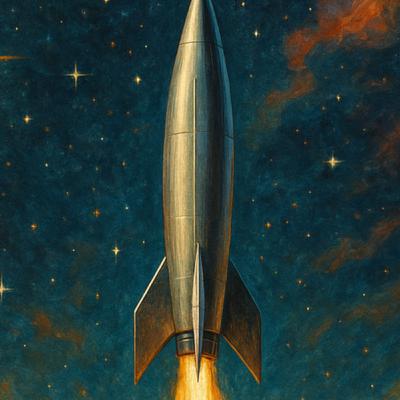
What does it take to build a machine powerful enough to escape Earth's gravity? In this episode, we dive deep into the extraordinary world of rockets—from their surprising origins in ancient China to the Space Race that captivated a generation, and the new commercial space age we're living in right now.We'll explore the science (in plain English), share unforgettable stories from Apollo 11 to the Challenger disaster, and discover why companies like SpaceX are making reusable rockets routine. Whether you're a space enthusiast or just curious about how we went from fire arrows to lunar landings, this episode will change how you see those streaks of light crossing the night sky.Topics covered: The pioneers of rocketry, Newton's laws in action, the tragedies and triumphs of space exploration, reusable rockets, Starship, and what rockets teach us about human ambition.
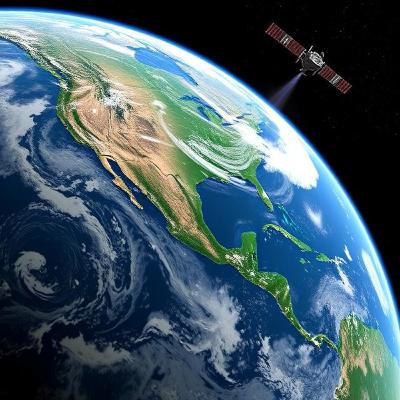
Ever wonder how satellites orbiting hundreds of miles above Earth help you decide whether to pack an umbrella? From Space to Forecast unpacks the fascinating journey of weather data—from space-based observations to the forecasts you check on your phone. Join us as we explore how cutting-edge technology, meteorology, and data science come together to turn satellite imagery into life-saving predictions. Featuring experts from NASA, NOAA, and beyond, this podcast brings you behind the scenes of the systems that watch our skies and shape our daily lives.
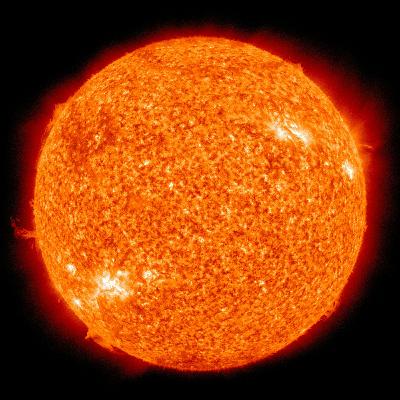
The sun, a dazzling celestial body at the heart of our solar system, is a luminous ball of hot, ionized gas that provides the primary source of light and energy for Earth. With a diameter of about 1.4 million kilometers (870,000 miles), the sun is approximately 109 times larger than Earth and boasts a mass that is about 333,000 times greater.
View other drafts
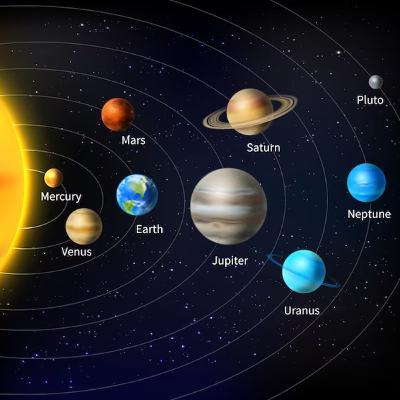
Our solar system is a dynamic and fascinating place, home to diverse worlds like the scorching Sun, the gas giants Jupiter and Saturn, and the icy dwarf planets Pluto and Ceres. It's a realm of extreme temperatures, breathtaking landscapes, and hidden mysteries waiting to be unraveled.
Time dilation is a phenomenon in physics that describes the slowing down of time for an object in motion relative to an observer. It is one of the two main predictions of special relativity, the other being mass–energy equivalence. Time dilation is caused by the increase in the object's mass as it approaches the speed of light. The effect is very small for speeds that are much slower than the speed of light, but it becomes increasingly significant as the object's speed approaches the speed of light.
Comments

Download from Google Play

Download from App Store
 United States