


 Claim Ownership
Self-Funded
Subscribed: 15Played: 1,231
Subscribe

© Spencer Smith
Description
Self-Funded, hosted by Spencer Smith, is the definitive resource for benefits consultants and employers who are ready to challenge the broken healthcare status quo. Each week, you'll get an insider's playbook of actionable strategies from industry leaders that help make healthcare better, together.
271 Episodes
Reverse
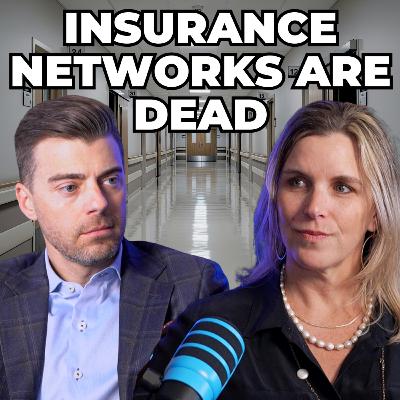
"I can't fathom a world where employers are expected to budget and create a plan for their future without understanding what the costs of their healthcare are. Everything needs to be grounded in fact and truth."Is the traditional insurance network obsolete?My guest this week is Amy Wykoff, Chief Product Officer at Nomi Health. After starting her career building foundational AI models at IBM Watson, Amy pivoted to healthcare with a massive new challenge: rebuilding the insurance network from scratch.In this episode, we explore Nomi’s radical approach to the "Network as a Product." Rather than negotiating opaque discounts off inflated Charge Master rates, Nomi negotiates fair, transparent cash rates with providers and guarantees them 100% payment. In return, self-funded employers can offer their employees a true $0 copay, $0 deductible health plan.We discuss the logistics of building a direct-contracted network across 40 major MSAs, how to overcome "point solution fatigue" by reassembling the vendor stack, and why the ultimate goal of healthcare innovation should be to stop using AI to fight over claims denials - and start using it to improve actual patient care.Tune in to this week’s Self-Funded to learn exactly how the free market is finally fighting back!Thank you to our 2026 sponsors!ParetoHealth: ParetoHealth empowers midsize employers with a long-term solution to reduce volatility and lower overall health benefits costs. Visit https://www.paretohealth.com/fully-insured-vs-self-funding-with-paretohealth-spencer-podcast/?utm_source=youtube&utm_medium=referral&utm_campaign=SelfFundedwSpencer to learn more.Samaritan Fund: A program that connects those who need help to the support they need. We are proud to offer the Samaritan Fund Program. Visit SamaritanFundProgram.com to learn more.Vālenz Health: We're Vālenz Health, your partner in improving health literacy, reducing plan spend, and delivering high-value healthcare. Visit ValenzHealth.com to learn more.Imagine360: Imagine360 helps self-funded employers save on healthcare with smarter health plans. Cut expenses by 20-30% with custom solutions. Contact us today at Imagine360.com.Chapters:(00:00:00) Intro: IBM Watson & The Origins of Healthcare AI(00:02:56) Leaving AI to Build "Network as a Product" at Nomi Health(00:05:07) The $0 Copay, $0 Deductible Health Plan(00:07:09) Scaling a Direct-Contracted Network to 40 MSAs(00:08:44) The Insanity of Traditional Carrier Reimbursement(00:13:08) Why Providers Actually Want Transparent Cash Pricing(00:15:10) The Economic Drain: How Bad Networks Hurt Local Economies(00:19:07) Why Employees Hate Their Health Insurance(00:23:44) Reassembling the Vendor Stack: Navigation & TPAs(00:28:13) Why Healthcare is Now a CFO Decision(00:32:02) "The Tears of Joy": Real Patient Stories(00:37:31) The AI War: Why "Bots Fighting Bots" is a Waste of Talent(00:43:51) Closing Thoughts: Unbundling the Health PlanKey Links for Social:@SelfFunded on YouTube for video versions of the podcast and much more - https://www.youtube.com/@SelfFundedListen/watch on Spotify - https://open.spotify.com/show/1TjmrMrkIj0qSmlwAIevKA?si=068a389925474f02Listen on Apple Podcasts - https://podcasts.apple.com/us/podcast/self-funded-with-spencer/id1566182286Follow Spencer on LinkedIn - https://www.linkedin.com/in/spencer-smith-self-funded/Follow Spencer on Instagram - https://www.instagram.com/selffundedwithspencer/

"There’s no bad risk, there’s just mispriced risk... we helped one carrier achieve a 29.1% improvement in their loss ratio just through better risk selection."How do stop-loss carriers and self-funded employers accurately predict which groups are going to run well and which ones are about to see skyrocketing claims?My guest this week is Ali Panjwani, Founder and CEO of Merit Medicine. Ali transitioned from a career in biotech and pharmaceutical public policy, where he helped price and launch complex, rare-disease drugs, to solving one of the biggest problems in self-funded healthcare: predicting catastrophic risk before it happens.In this episode, we dive into the evolution of predictive analytics and medical underwriting. Ali explains how Merit Medicine uses AI and access to a massive database (covering 95% of commercial claims in the US) to project a group's healthcare spend using just a simple census file. We discuss why a group that ran poorly last year might actually be a great risk this year, how to prevent underwriters from "playing on tilt," and the ongoing debate over how to finance multi-million-dollar cell and gene therapies.If you are a benefits consultant, an MGU, or a stop-loss carrier trying to understand how technology is fundamentally changing the way healthcare risk is predicted and priced, this episode is a must-listen.Thank you to our 2026 sponsors!ParetoHealth: ParetoHealth empowers midsize employers with a long-term solution to reduce volatility and lower overall health benefits costs. Visit ParetoHealth.com/spencer to learn more.Samaritan Fund: A program that connects those who need help to the support they need. We are proud to offer the Samaritan Fund Program. Visit SamaritanFundProgram.com to learn more.Vālenz Health: We're Vālenz Health, your partner in improving health literacy, reducing plan spend, and delivering high-value healthcare. Visit ValenzHealth.com to learn more.Imagine360: Imagine360 helps self-funded employers save on healthcare with smarter health plans. Cut expenses by 20-30% with custom solutions. Contact us today at Imagine360.com.Chapters:(00:00:00) Intro: The Evolving Landscape of Healthcare Risk(00:04:28) Ali's Background: From Biotech to Public Policy(00:09:47) The Complexity of Launching & Pricing New Drugs(00:13:30) Shifting Focus: Who Actually Pays for Healthcare?(00:16:34) The Data Access Problem for Self-Funded Employers(00:19:50) How Merit Medicine Predicts Risk with Just a Census File(00:23:24) Why Merit Looks Backwards to Predict the Future(00:26:27) How Stop-Loss Carriers & MGUs Use Predictive Analytics(00:29:41) "There Is No Bad Risk, Only Mispriced Risk"(00:33:04) The Danger of Underwriting "On Tilt" (Past vs. Future Claims)(00:37:37) Can Predictive AI Help Apply Specific Lasers?(00:40:10) The Evolution of Underwriting Tech(00:45:04) Proving the Model: A 29.1% Loss Ratio Improvement(00:49:10) The Cell & Gene Therapy Debate: Public Pools vs. Financing(00:55:14) Closing Thoughts: The Future of Predictable PremiumsKey Links for Social:@SelfFunded on YouTube for video versions of the podcast and much more - https://www.youtube.com/@SelfFundedListen/watch on Spotify - https://open.spotify.com/show/1TjmrMrkIj0qSmlwAIevKA?si=068a389925474f02Listen on Apple Podcasts - https://podcasts.apple.com/us/podcast/self-funded-with-spencer/id1566182286Follow Spencer on LinkedIn - https://www.linkedin.com/in/spencer-smith-self-funded/Follow Spencer on Instagram - https://www.instagram.com/selffundedwithspencer/
If you'd like your question answered on next month's episode, call/text 469-213-6381 and leave us a voicemail/text.Each month on Last Month In Healthcare, producer Nathaniel joins me to discuss the previous month's podcasts, headlines, and listener-submitted questions.This month, we're joined by Jeff Bak from Imagine360!Together, we react to the latest headlines from March, including the new CMS rule enforcing actual dollar amounts in hospital price transparency files. We also discuss Medicare expanding coverage for GLP-1s to treat obesity, Roche's massive $65M investment in NVIDIA AI chips for drug discovery, and the Department of Labor's new PBM fee disclosure rules. Plus, we react to the shocking story of two insurance executives sentenced to 20 years for a $233 million ACA enrollment fraud scheme.Then, Jeff and I play a game of "Blind Ranking" where we have to rank the worst practices in health insurance (like PBM spread pricing, ER upcoding, and surprise balance billing) without knowing what is coming next. Finally, we answer a listener question about the viability of ICHRAs (Individual Coverage HRAs) as an alternative to brutal fully-insured renewals in 2026.Thank you to our sponsor, Walk On Clinic! Visit walkonclinic.com to learn more about their on-site health clinics.Chapters:0:00 - Intro & Live Show Announcement3:08 - CMS Enforces Dollar-Amount Price Transparency6:54 - Medicare Expands GLP-1 Coverage to Obesity12:15- Roche Buys $65M in NVIDIA AI Chips for Drug Discovery15:45 - The DOL Proposes New PBM Fee Disclosure Rules19:40 - Insurance Execs Sentenced to 20 Years for $233M ACA Fraud22:20 - Game: Blind Ranking the Worst Practices in Health Insurance30:41 - Ask Spencer: Are ICRAs a Smart Option After Huge Renewals?
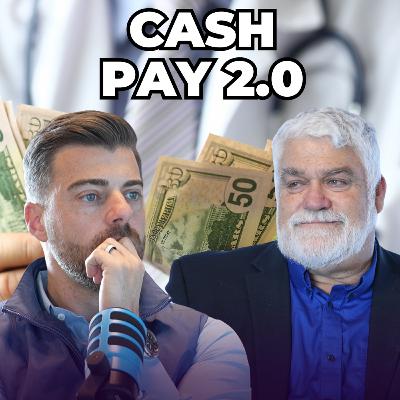
"We are in a $5 trillion US healthcare consumer market with no consumer in it... I basically decided we had been surgically removed from the US healthcare system."My guest this week is Mark Galvin, a serial entrepreneur who successfully funded his own company's healthcare by pairing a $10,000 High Deductible Health Plan with a fully funded HSA and HRA - saving his company 32% and his employees 50%. When he realized that brokers, carriers, and even the state insurance department were financially disincentivized from sharing this strategy, he decided to force transparency into the market himself.In this episode, Mark shares the incredible story of how he secured a DVD containing 100% of New Hampshire’s post-adjudicated claims data and built the first true shopping tool for medical procedures. We discuss his meetings at the White House that helped shape the Transparency in Coverage Rule, the absurdity of $68,000 knee replacements, and his new platform that calculates a "Universally Acceptable Payment Amount" (UAPA) for every provider in the country.If you are an employer, broker, or patient who is tired of flying blind and wants to understand how true cash prices are finally coming to healthcare, this episode is a must-listen.Thank you to our 2026 sponsors!ParetoHealth: ParetoHealth empowers midsize employers with a long-term solution to reduce volatility and lower overall health benefits costs. Visit ParetoHealth.com/Spencer to learn more.Samaritan Fund: A program that connects those who need help to the support they need. We are proud to offer the Samaritan Fund Program. Visit SamaritanFundProgram.com to learn more.Vālenz Health: We're Vālenz Health, your partner in improving health literacy, reducing plan spend, and delivering high-value healthcare. Visit ValenzHealth.com to learn more.Imagine360: Imagine360 helps self-funded employers save on healthcare with smarter health plans. Cut expenses by 20-30% with custom solutions. Contact us today at Imagine360.com.Chapters:(00:00:00) Intro: Aligning Financial Incentives in Healthcare (00:02:41) Mark's Background: Voice Over IP to Healthcare Tech (00:04:47) The Early Days of Direct Primary Care (DPC) (00:09:08) Hacking the HDHP: Saving 32% on Premiums (00:11:28) Why Brokers & Carriers Hate Cost-Saving Strategies (The MLR Problem) (00:18:33) Discovering the All-Payer Claims Database (APCD) (00:21:49) The $1,600 vs. $6,800 Nuclear Stress Test (00:26:00) Building a Commercial Solution to Fight Lobbyists (00:29:40) The "Proficiency Score": Why Price Does Not Equal Quality (00:31:48) Scraping EOBs to Build a National Price Database (00:33:27) The White House Meetings & The Transparency in Coverage Rule (00:43:03) Inventing "Transparency 2.0" and the UAPA (Cash Pay) (00:51:13) Shared Savings Rewards: Paying Employees to Shop (00:53:56) The Future: In-App Repricing and "Tap-to-Pay" at the Doctor (00:57:52) Can We Shop for 70% of Healthcare? (01:04:18) Using UAPA as a Full Network Replacement (01:11:19) The Path to an "Amazon-Like" Healthcare Market (01:15:19) Closing Thoughts: Why 12% of Shoppers Can Change the SystemKey Links for Social:@SelfFunded on YouTube for video versions of the podcast and much more - https://www.youtube.com/@SelfFundedListen/watch on Spotify - https://open.spotify.com/show/1TjmrMrkIj0qSmlwAIevKA?si=068a389925474f02Listen on Apple Podcasts - https://podcasts.apple.com/us/podcast/self-funded-with-spencer/id1566182286Follow Spencer on LinkedIn - https://www.linkedin.com/in/spencer-smith-self-funded/Follow Spencer on Instagram - https://www.instagram.com/selffundedwithspencer/

"I've got a patient in Washington state. He's traveling 100 miles every other week to receive an infusion. We moved this patient into the home and saved the plan $700,000 on this one patient...on gout treatment."Why are infusion drugs quietly destroying your health plan's budget?This week, my guest is Rob LaHayne, Co-Founder of Leap Health. We pull back the curtain on one of the most overlooked and expensive categories in healthcare: Specialty Infusion Care. Because these drugs are administered by a medical professional, they are billed through the medical plan under "J&Q Codes" - subjecting them to massive hospital markups and "buy-and-bill" margin games.In this episode, Rob explains how Leap Health is solving this by taking over the supply chain, procuring the drugs transparently without margin, and redirecting patients to their own homes or convenient infusion centers. We discuss how these J&Q codes are often the hidden culprit behind breached stop-loss deductibles and skyrocketing renewals, and why shifting the site of care is a win for both the employer's budget and the patient's quality of life.If you're a benefits consultant trying to figure out why your client's medical spend is out of control, or an employer tired of paying massive hospital markups for necessary medications, you need to understand J&Q codes.Thank you to our 2026 sponsors!ParetoHealth: ParetoHealth empowers midsize employers with a long-term solution to reduce volatility and lower overall health benefits costs. Visit ParetoHealth.com/Spencer to learn more.Samaritan Fund: A program that connects those who need help to the support they need. We are proud to offer the Samaritan Fund Program. Visit SamaritanFundProgram.com to learn more.Vālenz Health: We're Vālenz Health, your partner in improving health literacy, reducing plan spend, and delivering high-value healthcare. Visit ValenzHealth.com to learn more.Imagine360: Imagine360 helps self-funded employers save on healthcare with smarter health plans. Cut expenses by 20-30% with custom solutions. Contact us today at Imagine360.com.Chapters:(00:00:00) Intro: The Hidden Problem of J&Q Codes (00:04:13) Rob's Background & The Genesis of Leap Health (00:08:24) Why Hospital "Buy-and-Bill" Margins Drive Up Costs (00:13:22) How Leap Health Provides Transparent, Zero-Margin Pricing (00:16:31) Shifting Site of Care: The Power of Home Infusions (00:23:44) Overcoming Headwinds: Patient Engagement & Plan Design (00:27:01) Taking Over the Supply Chain to Bypass the "BUCA" PBMs (00:32:51) Stop-Loss Renewals: Why Identifying J&Q Codes is Critical (00:37:04) Saving $700,000 on a Single Gout Patient (00:41:39) The Future: Unbundling the Health Plan & "Point Solution Fatigue" (00:45:41) Closing Thoughts: Why Consultants Must Request J&Q Code DataKey Links for Social:@SelfFunded on YouTube for video versions of the podcast and much more - https://www.youtube.com/@SelfFundedListen/watch on Spotify - https://open.spotify.com/show/1TjmrMrkIj0qSmlwAIevKA?si=068a389925474f02Listen on Apple Podcasts - https://podcasts.apple.com/us/podcast/self-funded-with-spencer/id1566182286Follow Spencer on LinkedIn - https://www.linkedin.com/in/spencer-smith-self-funded/Follow Spencer on Instagram - https://www.instagram.com/selffundedwithspencer/
If you'd like your question answered on next month's episode, call/text 469-213-6381 and leave us a voicemail/text.Each month on Last Month In Healthcare, producer Nathaniel joins me to discuss the previous month's headlines and listener-submitted questions.This month, we are officially in the new studio! Nathaniel and I react to the latest headlines from February, including the FTC's landmark settlement with Express Scripts over insulin pricing and the new bipartisan bill aimed at breaking up the "Big Medicine" monopoly of insurers, PBMs, and providers. We also discuss the FDA's crackdown on compounded weight loss drugs (GLP-1s) and the privacy concerns surrounding OpenAI’s new ChatGPT Health feature.Plus, we play a new game called "Drug Cost or Car Payment?" where I try to guess whether a monthly prescription is more expensive than the lease payment on a luxury car (like a Porsche 911 Carrera or a Bugatti Chiron). Finally, we answer a listener question about the absolute minimum employee headcount required to go fully self-funded in 2026.Thank you to our sponsor, Walk On Clinic!Chapters:0:00 - Intro: Welcome to the New Studio!1:24 - "PBM Reform Comes To Washington"2:25 - FTC / Express Scripts Settlement5:19 - The Bill to "Break Up Big Medicine"6:34 - The FDA Cracks Down on Compounded GLP-1s7:55 - OpenAI Launches ChatGPT Health12:14 - Game: Drug Cost vs. Car Payment?18:33 - Ask Spencer: Minimum Headcount to Go Self-Funded?
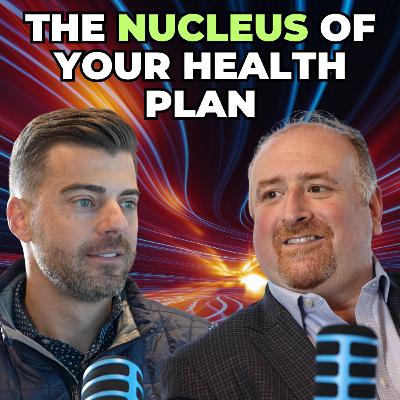
"We don't view ourselves as a TPA, we view ourselves more as a platform... our goal is to simplify and reduce the barriers of entry into the TPA space."The role of the Third-Party Administrator is undergoing a massive evolution. No longer just a back-office claims processor, the modern TPA is being asked to serve as the high-tech, high-touch "nucleus" of the entire health plan.My guest this week is Vinny Esposito, CEO of Reflect Health (formerly S&S Health). Drawing on a decade of experience in the hedge fund world, Vinny recognized a massive opportunity to bring scalable, asset-light infrastructure to the self-funded market. Today, Reflect Health acts almost like the "Intel Inside" of the industry, licensing its proprietary claims technology to other TPAs and health plans.In this episode, we explore exactly what it takes to build the TPA of the future. We discuss how to solve "point solution fatigue" through a centralized marketplace, the mechanics behind infusion drug carve-outs, and how to successfully deploy dynamic deductibles to incentivize better care routing. Vinny also shares his bold vision for "frictionless claims" paid instantly at the point of service, moving us closer to an Amazon-style shopping experience for healthcare.If you want to understand the technological and administrative innovations driving the self-funded market forward, this episode provides the blueprint.Thank you to our 2026 sponsors!ParetoHealth: ParetoHealth empowers midsize employers with a long-term solution to reduce volatility and lower overall health benefits costs. Visit ParetoHealth.com to learn more.Samaritan Fund: A program that connects those who need help to the support they need. We are proud to offer the Samaritan Fund Program. Visit SamaritanFundProgram.com to learn more.Vālenz Health: We're Vālenz Health, your partner in improving health literacy, reducing plan spend, and delivering high-value healthcare. Visit ValenzHealth.com to learn more.Imagine360: Imagine360 helps self-funded employers save on healthcare with smarter health plans. Cut expenses by 20-30% with custom solutions. Contact us today at Imagine360.com.Chapters:(00:00:00) Intro: Competing on Service in the TPA Market (00:01:56) Meet Vinny Esposito & Reflect Health (00:03:35) Rebranding from S&S Health (00:07:32) From Hedge Funds to Healthcare Disruption (00:11:05) The Platform Model: Licensing Tech to Other TPAs (00:15:05) The Marketplace & Infusion Drug Carve-Outs (00:19:14) How the TPA Role is Expanding (The "Nucleus") (00:24:12) Direct Contracting, RBP, and DPC Integration (00:29:15) Dynamic Deductibles & Tiered Networks (00:33:25) Curing "Point Solution Fatigue" (00:41:09) The Future of Stop-Loss and Preventative Care (00:45:44) The Fiduciary Breaking Point & 80% Renewals (00:50:26) Frictionless Claims & Amazon-Style HealthcareKey Links for Social:@SelfFunded on YouTube for video versions of the podcast and much more - https://www.youtube.com/@SelfFundedListen/watch on Spotify - https://open.spotify.com/show/1TjmrMrkIj0qSmlwAIevKA?si=068a389925474f02Listen on Apple Podcasts - https://podcasts.apple.com/us/podcast/self-funded-with-spencer/id1566182286Follow Spencer on LinkedIn - https://www.linkedin.com/in/spencer-smith-self-funded/Follow Spencer on Instagram - https://www.instagram.com/selffundedwithspencer/

“Show me an incentive structure and I'll show you human behavior... until employers realize they have more power than they give themselves credit for, this can't continue."My guest this week is Norm Volsky, Managing Partner at DRI and Founder of MVP Growth Partners. Norm has spent the last decade as one of the top executive recruiters in the digital health and employer benefits space - placing the commercial teams that helped build unicorns like Livongo and Hinge Health.In this episode, Norm explains why the next wave of healthcare innovation isn't about adding more "point solutions" to an already fatigued market. Instead, smart money is betting on companies that carve out high-margin, inefficient services directly from the major insurance carriers - like radiology, fertility, and specialty infusion.We discuss how Norm built an "army" of over 500 industry executives to crowdsource due diligence, why the traditional VC model fails in healthcare, and why employers and their benefits leaders are finally at a watershed moment where they must demand true fiduciary alignment from their vendors.If you want to know where the smart money is moving in employer healthcare, and why the "BUCA" carriers should be worried, this episode is a must-listen.Thank you to our 2026 sponsors!ParetoHealth: ParetoHealth empowers midsize employers with a long-term solution to reduce volatility and lower overall health benefits costs. Visit ParetoHealth.com to learn more.Samaritan Fund: A program that connects those who need help to the support they need. We are proud to offer the Samaritan Fund Program. Visit SamaritanFundProgram.com to learn more.Vālenz Health: We're Vālenz Health, your partner in improving health literacy, reducing plan spend, and delivering high-value healthcare. Visit ValenzHealth.com to learn more.Imagine360: Imagine360 helps self-funded employers save on healthcare with smarter health plans. Cut expenses by 20-30% with custom solutions. Contact us today at Imagine360.com.Chapters:[00:00:00] Intro: Recruiting in the Early Days of Digital Health[00:04:12] The Livongo Story: Selling Healthcare Direct to Employers[00:08:44] What Makes a Great Salesperson in Healthcare?[00:11:46] Spotting the Next Unicorn: The Hinge Health Experience[00:17:28] Private Equity vs. Venture Capital[00:20:00] Using Recruitment Data to Drive VC Investments[00:23:41] The "One Imaging" Pitch & Carving Out Radiology[00:30:40] Building an Army: Crowdsourcing VC Due Diligence[00:36:26] Why MVP Growth Partners Only Invests in "At-Risk" Pricing[00:41:40] Point Solution Fatigue & Identifying the "Good Actors"[00:46:17] Why Employers Must Demand Fiduciary Responsibility[00:50:41] The Future: The Erosion of the Big 3 PBMs and CarriersKey Links for Social:@SelfFunded on YouTube for video versions of the podcast and much more - https://www.youtube.com/@SelfFundedListen/watch on Spotify - https://open.spotify.com/show/1TjmrMrkIj0qSmlwAIevKA?si=068a389925474f02Listen on Apple Podcasts - https://podcasts.apple.com/us/podcast/self-funded-with-spencer/id1566182286Follow Spencer on LinkedIn - https://www.linkedin.com/in/spencer-smith-self-funded/Follow Spencer on Instagram - https://www.instagram.com/selffundedwithspencer/
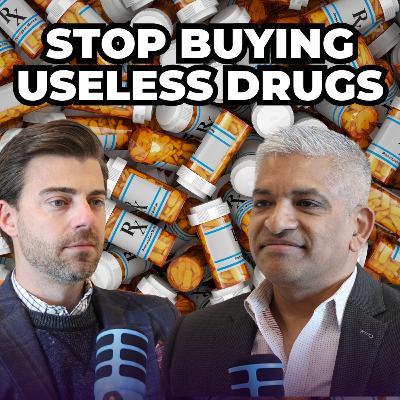
"Why are we paying $10,000 for a $30 drug?"My guest this week is Pramod John, a former Silicon Valley tech entrepreneur who entered the healthcare space to tackle the largest economic problem in the country: skyrocketing healthcare costs. Pramod quickly realized that healthcare's dysfunction is actually not a technology problem - it is a deeply ingrained problem with economic incentives.In this episode, we dive into the murky waters of Pharmacy Benefit Managers (PBMs) and why the traditional model is designed to drive up costs rather than lower them. We discuss the shocking statistics of drug spend (where 2% of people account for 55% of the costs), why FDA approval doesn't always mean a drug is effective (using the infamous Alzheimer's drug as an example), and the implications of recent fiduciary lawsuits like the one against J&J.Pramod explains how we can bring common sense back to healthcare by treating drugs like any other consumer purchase. By utilizing an "open market" drug management model, he argues that we can effectively replace traditional PBMs with transparent transaction processing software - saving plans 30% to 50% without relying on restrictive formularies or rebate games. Tune in this week for a clear roadmap for how to actually fix the irrational economics of our healthcare system.Thank you to our 2026 sponsors!ParetoHealth: ParetoHealth empowers midsize employers with a long-term solution to reduce volatility and lower overall health benefits costs. Visit ParetoHealth.com to learn more.Samaritan Fund: A program that connects those who need help to the support they need. We are proud to offer the Samaritan Fund Program. Visit SamaritanFundProgram.com to learn more.Vālenz Health: We're Vālenz Health, your partner in improving health literacy, reducing plan spend, and delivering high-value healthcare. Visit ValenzHealth.com to learn more.Imagine360: Imagine360 helps self-funded employers save on healthcare with smarter health plans. Cut expenses by 20-30% with custom solutions. Contact us today at Imagine360.com.Chapters:(00:00:00) Intro: Why We Talk About Cost Instead of Quality (00:02:42) From Silicon Valley & Defense Tech to McKesson (00:10:43) Why Healthcare is NOT a Technology Problem (00:15:53) Fiduciary Responsibility & The J&J Lawsuit (00:19:03) The Butter Knife vs. Pareto: The Math of Drug Spend (00:23:54) Building an "Open Market" Alternative to PBMs (00:29:40) Why Doctors Fly Blind on Drug Pricing & Formularies (00:35:42) FDA Approval vs. Real-World Efficacy (00:45:44) How to Actually Fix the Model: The Real-Time "Pause" (00:58:36) Why International Sourcing & PAPs Aren't the Fix (01:11:00) Replacing PBMs with Simple Transaction SoftwareKey Links for Social:@SelfFunded on YouTube for video versions of the podcast and much more - https://www.youtube.com/@SelfFundedListen/watch on Spotify - https://open.spotify.com/show/1TjmrMrkIj0qSmlwAIevKA?si=068a389925474f02Listen on Apple Podcasts - https://podcasts.apple.com/us/podcast/self-funded-with-spencer/id1566182286Follow Spencer on LinkedIn - https://www.linkedin.com/in/spencer-smith-self-funded/Follow Spencer on Instagram - https://www.instagram.com/selffundedwithspencer/
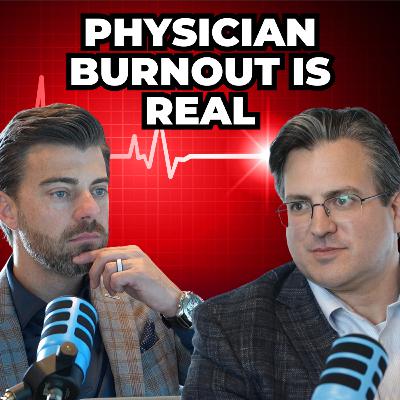
"My wife would come back to check on me late at night, asleep at the keyboard, and she would be like, 'Is he dead?' The burnout, what we call moral injury, is more real than anybody knows." - Will SteelmanThe American healthcare system is crushing its doctors. Faced with "assembly line" quotas of 25+ patients a day, hours of unpaid administrative work ("pajama time"), and a suicide rate higher than that of veterans, physicians are fleeing the profession in droves.My guest this week is Dr. Will Steelman, a board-certified internal medicine physician who lived through this crisis firsthand. After 12 years as a hospitalist, Dr. Steelman reached his breaking point during the pandemic and realized the only way to save his career, and his life, was to exit the system entirely.In this episode, we explore why Direct Primary Care (DPC) is the only viable path forward for the future of medicine. Will explains how DPC restores the doctor-patient relationship by reducing patient panels from 3,000 to 600, allowing for 90-minute visits, true price transparency, and a focus on root-cause resolution. We also discuss the clinical benefits of having time to care, including using ketogenic therapies to treat mental illness and reversing chronic metabolic disease, rather than just managing it with pills.If you want to understand why your doctor is exhausted, why your premiums are going up, and why DPC is the solution we can't afford to ignore, listen to this episode.Thank you to our 2026 sponsors!ParetoHealth: ParetoHealth empowers midsize employers with a long-term solution to reduce volatility and lower overall health benefits costs. Visit ParetoHealth.com to learn more.Samaritan Fund: A program that connects those who need help to the support they need. We are proud to offer the Samaritan Fund Program. Visit SamaritanFundProgram.com to learn more.Vālenz Health: We're Vālenz Health, your partner in improving health literacy, reducing plan spend, and delivering high-value healthcare. Visit ValenzHealth.com to learn more.Imagine360: Imagine360 helps self-funded employers save on healthcare with smarter health plans. Cut expenses by 20-30% with custom solutions. Contact us today at Imagine360.com.Chapters:(00:00:00) Intro: The Link Between Diet & Mental Clarity (00:04:18) The Road to Burnout: 12 Years as a Hospitalist (00:09:17) "Is He Dead?": The Reality of Physician Suicide & Moral Injury (00:11:08) The Way Forward: Concierge vs. Direct Primary Care (00:15:35) The Math of Failure: Why 2,500 Patients is Unsustainable (00:21:16) "Click Fatigue" and the Administrative Burden (00:23:58) Leaving the System: Launching Steelman Medical Group (00:32:06) Saving the Profession: Why DPC Offers Work-Life Balance (00:40:12) True Transparency: Why DPC Lab Costs Are Dropping (00:48:58) The Luxury of Time: Treating Mental Health with Ketogenic Diets (00:59:32) The Statin Controversy & Insulin ResistanceKey Links for Social:@SelfFunded on YouTube for video versions of the podcast and much more - https://www.youtube.com/@SelfFundedListen/watch on Spotify - https://open.spotify.com/show/1TjmrMrkIj0qSmlwAIevKA?si=068a389925474f02Listen on Apple Podcasts - https://podcasts.apple.com/us/podcast/self-funded-with-spencer/id1566182286Follow Spencer on LinkedIn - https://www.linkedin.com/in/spencer-smith-self-funded/Follow Spencer on Instagram - https://www.instagram.com/selffundedwithspencer/

If you'd like your question answered on next month's episode, call/text 469-213-6381 and leave us a voicemail/text.Each month on Last Month In Healthcare, producer Nathaniel joins me to discuss the previous month's podcasts, headlines, and listener-submitted questions.This month, we’re joined by John Kountz from Frost Insurance! We react to the record-breaking lobbying spend by drugmakers in 2025 and discuss the historic slump in Hospital M&A activity. We also cover the rising cost of medical real estate forcing doctors into co-working spaces, the critical decline in nursing home capacity, and the consolidation of federal lawsuits linking GLP-1s to vision loss.Plus, we play a game called "Real or Fake Medical Codes," where John and I try to guess if ICD-10 codes like "Struck by Turtle," "Sucked into a jet engine," or "Burned due to water skis on fire" are actually real. Finally, we answer a listener question about what a successful Q1 looks like for a new broker in the benefits industry.I'm also thrilled to announce that Last Month In Healthcare is now sponsored by Walk On Clinic! We are excited to partner with a team that is redefining primary care access.Chapters:0:00 - Intro0:37 - Drugmaker Lobbying Reaches Historic Highs4:30 - Hospital M&A Slump & Financial Distress7:39 - Doctors Moving to Co-Working Spaces10:05 - The Decline in Nursing Home Capacity11:57 - GLP-1 Vision Loss Lawsuits15:41 - Game: Real or Fake Medical Codes?21:41 - Ask Spencer: Successful Q1 for New Brokers

"If you ask the surgeon how much time they have to spend thinking about the business side of their practice, it's too high... Let's let doctors be doctors." - Ryan WellsMy guest this week is Ryan Wells, Founder and CEO of Health Here. Ryan joins me to explain why the key to fixing the broken doctor-patient relationship is getting providers out of the debt collection business.We explore how Episodic Care (bundled payments) can finally align the financial incentives of self-funded employers and high-value specialists. Ryan breaks down how his platform automates payments, getting surgeons paid in under 15 days while eliminating patient liability entirely.We dive deep into Ryan's background in the OR, the lessons learned from the "Metal on Metal" hip recall, and why we need to move from "open enrollment confusion" to real-time, event-driven patient navigation.If you are tired of administrative waste and want to see a model where doctors focus on care instead of claims, this episode is for you.Thank you to our 2026 sponsors!ParetoHealth: ParetoHealth empowers midsize employers with a long-term solution to reduce volatility and lower overall health benefits costs. Visit ParetoHealth.com to learn more.Samaritan Fund: A program that connects those who need help to the support they need. We are proud to offer the Samaritan Fund Program. Visit SamaritanFundProgram.com to learn more.Vālenz Health: We're Vālenz Health, your partner in improving health literacy, reducing plan spend, and delivering high-value healthcare. Visit ValenzHealth.com to learn more.Imagine360: Imagine360 helps self-funded employers save on healthcare with smarter health plans. Cut expenses by 20-30% with custom solutions. Contact us today at Imagine360.com.Chapters:(00:00:00) Let Doctors Be Doctors(00:03:04) Ryan's Journey: From Anthropology to the OR (00:07:00) Lessons from Medicare’s Acute Care Episode Demo (00:10:46) Defining the "Bundle" vs. Fee-for-Service (00:13:00) Value-Based Care = Outcome / Cost (00:16:14) Why Orthopedics is the Perfect Starting Point (00:18:32) Moving from "Elective" to "Discretionary" Care (00:21:38) The Navigation Problem: Open Enrollment Fails (00:31:48) Owning the Payment Rails: 15-Day Payments (00:37:38) Automating the "Outlier Workflow" (00:41:35) The "Metal on Metal" Hip Recall & Registries (00:48:30) Expanding to Cardiology and Bariatrics (00:53:03) The Moonshot: Removing the Business Burden from MDsKey Links for Social:@SelfFunded on YouTube for video versions of the podcast and much more - https://www.youtube.com/@SelfFundedListen/watch on Spotify - https://open.spotify.com/show/1TjmrMrkIj0qSmlwAIevKA?si=068a389925474f02Listen on Apple Podcasts - https://podcasts.apple.com/us/podcast/self-funded-with-spencer/id1566182286Follow Spencer on LinkedIn - https://www.linkedin.com/in/spencer-smith-self-funded/Follow Spencer on Instagram - https://www.instagram.com/selffundedwithspencer/

"If financial services and healthcare are 10 years behind everybody else from a technology adoption standpoint, insurance distribution is usually 10 years behind that." - Will JohnsonMy guest this week is Will Johnson, Founder and CEO of Gyde, who is building what he calls the first "AI-native" insurance brokerage. After spending a decade at Oscar Health, Will realized that while brokers are the critical "entry point to care," they are operating without the infrastructure needed to scale in the modern era.In this episode, we define exactly what "AI-native" means for an agency. It isn't just about buying software; it's a new holding company model that acquires agencies to deploy AI infrastructure - automating renewals and client service to effectively "triple the capacity" of the best brokers.We dive deep into the difference between the traditional "asset aggregation" model (roll-ups) and Gyde’s "partner activation" model. Will also shares why Gyde raised a Series A just 14 weeks after launching and his moonshot vision to converge health insurance and wealth management into a single advisory role.If you are an agency owner feeling the ceiling of growth, this episode maps out what the next generation of distribution looks like.Thank you to our 2026 sponsors!ParetoHealth: ParetoHealth empowers midsize employers with a long-term solution to reduce volatility and lower overall health benefits costs. Visit ParetoHealth.com to learn more.Samaritan Fund: A program that connects those who need help to the support they need. We are proud to offer the Samaritan Fund Program. Visit SamaritanFundProgram.com to learn more.Vālenz Health: We're Vālenz Health, your partner in improving health literacy, reducing plan spend, and delivering high-value healthcare. Visit ValenzHealth.com to learn more.Imagine360: Imagine360 helps self-funded employers save on healthcare with smarter health plans. Cut expenses by 20-30% with custom solutions. Contact us today at Imagine360.com.Chapters:(00:00:00) What is an "AI-Native" Brokerage? (00:03:11) Will’s Journey: 10 Years at Oscar Health (00:07:10) The Infrastructure Gap in Distribution (00:12:27) Why Acquisition? The Case for Economic Alignment (00:23:22) The Tech Stack: Automating Renewals & Service (00:27:32) AI as a "Capacity Amplifier" vs. Replacement (00:37:22) The Anti-Rollup: "Partner Activation" vs. "Asset Aggregation" (00:46:12) Branding: Powered by Guide vs. Becoming Guide (00:49:49) Raising a Series A in 14 Weeks Key Links for Social:@SelfFunded on YouTube for video versions of the podcast and much more - https://www.youtube.com/@SelfFundedListen/watch on Spotify - https://open.spotify.com/show/1TjmrMrkIj0qSmlwAIevKA?si=068a389925474f02Listen on Apple Podcasts - https://podcasts.apple.com/us/podcast/self-funded-with-spencer/id1566182286Follow Spencer on LinkedIn - https://www.linkedin.com/in/spencer-smith-self-funded/Follow Spencer on Instagram - https://www.instagram.com/selffundedwithspencer/

"I stopped doing what I didn't want to do anymore. It’s not hard to stop doing something you don't want to do... I didn't want to drink anymore." - Chris LeverettIn this incredibly vulnerable and powerful episode, we step away from the usual technical discussions of self-funding and insurance captives to tackle a pervasive, often silent issue in our industry: addiction and sobriety.My guest is Chris Leverett, Executive Vice President and Managing Director of Employee Benefits at TexCap Insurance. While Chris is a veteran in the benefits space, today he shares his personal testimony of battling high-functioning alcoholism while trying to maintain a career, a marriage, and a family.Chris opens up about the "boiling frog" effect of social drinking in the business world, the crushing weight of keeping up appearances, and the terrifying rock-bottom moments, including a lapse in insurance coverage during his daughter's premature birth, that finally led him to seek help.We discuss the freedom found in admitting powerlessness, how he replaced the "monster" of addiction with the discipline of Ironman triathlons, and how to navigate the alcohol-heavy social scene of insurance events without losing your edge.If you or someone you know is struggling in silence, this episode provides a blueprint for finding hope, help, and a better life on the other side.Thank you to our 2026 sponsors!ParetoHealth: ParetoHealth empowers midsize employers with a long-term solution to reduce volatility and lower overall health benefits costs. Visit ParetoHealth.com to learn more.Samaritan Fund: A program that connects those who need help to the support they need. We are proud to offer the Samaritan Fund Program. Visit SamaritanFundProgram.com to learn more.Vālenz Health: We're Vālenz Health, your partner in improving health literacy, reducing plan spend, and delivering high-value healthcare. Visit ValenzHealth.com to learn more.Imagine360: Imagine360 helps self-funded employers save on healthcare with smarter health plans. Cut expenses by 20-30% with custom solutions. Contact us today at Imagine360.com.Chapters:(00:00:00) Intro: TexCap Insurance & Going Up-Market (00:04:48) Sobriety: It Doesn't Have to Be a "Life Sentence" (00:09:26) The High-Functioning Trap & Social Lubricant (00:13:24) Rock Bottom #1: No Insurance During a Crisis (00:17:27) The Final Wake-Up Call & A Wife's Dream (00:19:21) The Power of Admitting "I Am an Alcoholic" (00:28:25) Trading Addiction for Ironman Triathlons (00:38:30) How to Navigate Happy Hours Sober (00:45:13) The Blueprint: Steps to Finding HelpKey Links for Social:@SelfFunded on YouTube for video versions of the podcast and much more - https://www.youtube.com/@SelfFundedListen/watch on Spotify - https://open.spotify.com/show/1TjmrMrkIj0qSmlwAIevKA?si=068a389925474f02Listen on Apple Podcasts - https://podcasts.apple.com/us/podcast/self-funded-with-spencer/id1566182286Follow Spencer on LinkedIn - https://www.linkedin.com/in/spencer-smith-self-funded/Follow Spencer on Instagram - https://www.instagram.com/selffundedwithspencer/
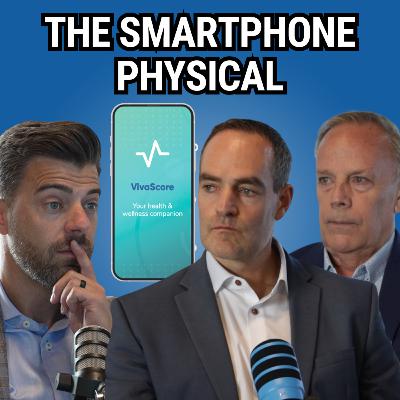
"Imagine getting a real-time snapshot of your health just by looking into your phone’s camera for 30 seconds." - SimonMy guests this week are Simon Spurr, Founder of VivaScore, and Chris Burns, a veteran benefits advisor with over 40 years of experience at firms like Mercer and Sequoia. They join the show to demonstrate a piece of technology that feels like science fiction but is actually here today: rPPG (Remote Photoplethysmography).We discuss how this technology turns a standard smartphone camera into a diagnostic tool capable of measuring blood pressure, heart rate variability (HRV), and stress levels with medical-grade accuracy, no wearables required.In this episode, we explore whether this "digital avatar" of employee health could become the new front door to primary care. We dive into how employers are using this data to spot "silent killers" like hypertension before they become claims, why engagement rates are hitting 50%+, and how this platform connects the "worried well" to actual care pathways.Tune in to see how we can finally move from "sick care" to true preventative maintenance, all through an iPhone lens.Thank you to our 2026 sponsors!ParetoHealth: ParetoHealth empowers midsize employers with a long-term solution to reduce volatility and lower overall health benefits costs. Visit ParetoHealth.com to learn more.Samaritan Fund: A program that connects those who need help to the support they need. We are proud to offer the Samaritan Fund Program. Visit SamaritanFundProgram.com to learn more.Vālenz Health: We're Vālenz Health, your partner in improving health literacy, reducing plan spend, and delivering high-value healthcare. Visit ValenzHealth.com to learn more.Imagine360: Imagine360 helps self-funded employers save on healthcare with smarter health plans. Cut expenses by 20-30% with custom solutions. Contact us today at Imagine360.com.Chapters:(00:00:00) Is This App the Future of Primary Care? (00:06:12) Global Healthcare: Why Costs Are Rising Everywhere (00:08:02) Chris Burns: From Mercer to Sequoia to Tech Advisor (00:12:45) Why Employers are Tired of "Point Solutions" (00:22:26) How rPPG Technology Works (The Face Scan) (00:30:18) The "What Next?" Strategy for Employers (00:39:06) Why Everyone is Talking About HRV (Heart Rate Variability) (00:44:37) Finding the "Silent Killers" in Your Population (00:51:46) Gamification: How to Get 50% EngagementKey Links for Social:@SelfFunded on YouTube for video versions of the podcast and much more - https://www.youtube.com/@SelfFundedListen/watch on Spotify - https://open.spotify.com/show/1TjmrMrkIj0qSmlwAIevKA?si=068a389925474f02Listen on Apple Podcasts - https://podcasts.apple.com/us/podcast/self-funded-with-spencer/id1566182286Follow Spencer on LinkedIn - https://www.linkedin.com/in/spencer-smith-self-funded/Follow Spencer on Instagram - https://www.instagram.com/selffundedwithspencer/

"I asked him, 'What is it that you're teaching undergraduate students about benefits?’’…Just two slides. That blew me away." - Kyle MinickMy guest this week is Kyle Minick, Vice President of Employee Benefits at Summit Financial Group. Kyle returns to the show to expose a massive systemic failure: Universities are not teaching HR professionals how to manage their second-largest expense.Kyle shares the shocking story of how he discovered that major university HR programs dedicate almost zero curriculum to healthcare strategy. Instead of complaining about it, he decided to fix it. We discuss the 6-week accredited college course he built from scratch to teach the next generation of buyers about Stop-Loss, PBMs, and TPA contracts before they enter the workforce.But before we dive into the classroom, we dissect the broken market they are inheriting. We debate why Reference-Based Pricing (RBP) is failing in hospital-dominated markets like Texas, why relating prices to Medicare might be backfiring, and whether the government should step in to establish a "median price" for care.Tune in to see how we can bridge the education gap and finally train buyers to demand better.Thank you to our 2026 sponsors!ParetoHealth: ParetoHealth empowers midsize employers with a long-term solution to reduce volatility and lower overall health benefits costs. Visit ParetoHealth.com to learn more.Samaritan Fund: A program that connects those who need help to the support they need. We are proud to offer the Samaritan Fund Program. Visit SamaritanFundProgram.com to learn more.Vālenz Health: We're Vālenz Health, your partner in improving health literacy, reducing plan spend, and delivering high-value healthcare. Visit ValenzHealth.com to learn more.Imagine360: Imagine360 helps self-funded employers save on healthcare with smarter health plans. Cut expenses by 20-30% with custom solutions. Contact us today at Imagine360.com.Chapters:(00:00:00) Why RBP Struggles in Texas Monopolies (00:03:30) The "Medicare Price" Fallacy (00:11:00) Should the Government Set a Median Price? (00:25:00) The Education Gap: How Universities Failed HR (00:29:25) The "Two Slide" Curriculum Problem (00:33:00) Kyle’s Solution: Building an Accredited Benefits Course (00:43:00) Teaching HR to Audit Their Consultants (00:54:30) The Syllabus: Stop-Loss, PBMs, and Contracts (01:07:00) How to Enroll & The Future of Benefits EducationKey Links for Social:@SelfFunded on YouTube for video versions of the podcast and much more - https://www.youtube.com/@SelfFundedListen/watch on Spotify - https://open.spotify.com/show/1TjmrMrkIj0qSmlwAIevKA?si=068a389925474f02Listen on Apple Podcasts - https://podcasts.apple.com/us/podcast/self-funded-with-spencer/id1566182286Follow Spencer on LinkedIn - https://www.linkedin.com/in/spencer-smith-self-funded/Follow Spencer on Instagram - https://www.instagram.com/selffundedwithspencer/
"Whoever makes patient care more convenient is likely to win." - Chris YarnMy guest this week is Chris Yarn, Founder of Walk On Clinic, who joins me to explain why convenience is the ultimate currency in healthcare. Chris shares his journey from insurance broker to building a direct primary care (DPC) model that brings care directly to the employee's doorstep - literally.Chris breaks down the "Walk On" model, which combines mobile on-site clinics, near-site access, and virtual care to achieve utilization rates that are double the industry average. We discuss why traditional "near-site" clinics often fail to engage employees, how nurse practitioners are the key to scaling primary care, and why the human connection is what truly drives ROI.We also dive into the hard numbers, discussing how to prove ROI with real claims data (not just fuzzy math), and Chris shares his personal battle with cancer in 2024 that reinforced his belief in the importance of early detection and primary care access.Tune in to the first episode of 2026 to learn why the future of healthcare is hyper-convenient.Thank you to our 2026 sponsors!ParetoHealth: ParetoHealth empowers midsize employers with a long-term solution to reduce volatility and lower overall health benefits costs. Visit ParetoHealth.com to learn more.Samaritan Fund: A program that connects those who need help to the support they need. We are proud to offer the Samaritan Fund Program. Visit SamaritanFundProgram.com to learn more.Vālenz Health: We're Vālenz Health, your partner in improving health literacy, reducing plan spend, and delivering high-value healthcare. Visit ValenzHealth.com to learn more.Imagine360: Imagine360 helps self-funded employers save on healthcare with smarter health plans. Cut expenses by 20-30% with custom solutions. Contact us today at Imagine360.com.Chapters:(00:00:00) Why Convenience is King in Healthcare (00:07:37) The Legend of "Frank Mic Dropper" (00:14:15) The "Walk On" Model Explained (00:19:38) Mobile vs. Near-Site: The Utilization Difference (00:26:24) Removing Barriers: No Build-Out Costs for Employers (00:32:06) Scaling DPC with Nurse Practitioners (00:39:27) How to Prove ROI with Real Data (00:47:53) A Personal Battle: Chris's Cancer Journey (00:53:09) The Future of Primary Care in AmericaKey Links for Social:@SelfFunded on YouTube for video versions of the podcast and much more - https://www.youtube.com/@SelfFundedListen/watch on Spotify - https://open.spotify.com/show/1TjmrMrkIj0qSmlwAIevKA?si=068a389925474f02Listen on Apple Podcasts - https://podcasts.apple.com/us/podcast/self-funded-with-spencer/id1566182286Follow Spencer on LinkedIn - https://www.linkedin.com/in/spencer-smith-self-funded/Follow Spencer on Instagram - https://www.instagram.com/selffundedwithspencer/
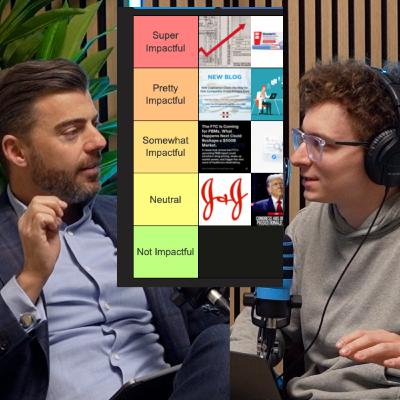
If you'd like your question answered on next month's episode, call/text 469-213-6381 and leave us a voicemail/text.Each month on Last Month In Healthcare, producer Nathaniel joins me to discuss the previous month's podcasts, headlines, and listener-submitted questions.This month, we’re doing something a little different to close out 2025. Instead of just looking back at December, we are ranking the biggest healthcare stories of the entire year on a Tier List, from "Not Impactful" to "Super Impactful." We cover everything from the FTC suing the Big 3 PBMs and the J&J fiduciary lawsuit dismissal to the "bloodbath" of 2026 renewals and the explosion of GLP-1 usage.Plus, we debut a new "Explain Like I'm 5" segment where I break down complex concepts like Reference-Based Pricing, Captives, and Stop-Loss using simple analogies involving candy shops and dirt bikes. Finally, we answer a listener question about building confidence as a young professional in the industry.Chapters:0:00 - Intro: Last Year in Healthcare0:51 - Tier List19:05 - Explaining Insurance To A 5-year-old24:24 - Ask Spencer Anything

“I think the next stage of American capitalism includes co-opetition." - Dutch RojasOn the last episode of Self-Funded with Spencer in 2025, Dutch Rojas joins the show to expose the financial "arbitrage" that he believes is destroying independent medical practices in America. Dutch explains how current CMS incentives allow hospitals to buy independent clinics and immediately charge 165% more for the exact same services, which is a practice that is crushing employers and patients alike.In this episode, Dutch lays out his bold vision for "Co-opetition”, a new playbook where independent practices, manufacturers, and even churches band together to leverage their collective buying power. We discuss why the traditional "HR-led" model of buying benefits is failing, why CFOs need to take the wheel, and his dream of creating a true "Healthcare Commodities Exchange" to normalize pricing.We also get personal about his journey from the Netherlands to the U.S., the importance of social media for building influence in DC, and why he believes the next 10 years will be defined by those who can master media.Tune in for a fascinating look at the future of independent medicine.Chapters:(00:00:00) What is "Co-opetition" in Healthcare? (00:01:00) How Hospital Arbitrage Kills Private Practices (00:06:40) Why Independent Doctors Don't Work Together (Yet) (00:14:00) The 165% Markup(00:29:40) The Dream of a Healthcare Commodities Exchange (00:41:00) Why HR Shouldn't Make Healthcare Decisions (00:49:00) Aggregating Buying Power: Churches & Manufacturers (00:57:00) The 4-Stage Plan to Fix HealthcareKey Links for Social:@SelfFunded on YouTube for video versions of the podcast and much more - https://www.youtube.com/@SelfFundedListen/watch on Spotify - https://open.spotify.com/show/1TjmrMrkIj0qSmlwAIevKA?si=068a389925474f02Listen on Apple Podcasts - https://podcasts.apple.com/us/podcast/self-funded-with-spencer/id1566182286Follow Spencer on LinkedIn - https://www.linkedin.com/in/spencer-smith-self-funded/Follow Spencer on Instagram - https://www.instagram.com/selffundedwithspencer/
"Healthcare has had no star score, there's been no reliable pricing. It's all been just a black box." - Will BruhnAn estimated 21% of all medical care in the U.S. is completely unnecessary. My guest this week is Will Bruhn, CEO and Co-Founder of GAM (Global Appropriateness Measures), and he joins the show to explain exactly where that waste comes from and how we can fix it.Will argues that we've been measuring quality wrong. Instead of just looking at outcomes (did the surgery go well?), we need to measure appropriateness (should the surgery have happened at all?). We discuss the perverse financial incentives driving this waste, using real-world examples like unnecessary spinal fusions and the statistical spike in C-sections on Friday afternoons.But this episode isn't just about the problem; it's about the fix. Will breaks down how GAM uses data to identify high-value providers and how employers can redesign plans to guide members away from wasteful care, potentially saving millions while protecting patients from unnecessary risks.Tune in for a blueprint on eliminating the 21% of healthcare spending that shouldn't exist.Chapters:(00:00:00) 21% Of Medical Care Is Wasteful. Here’s How We Prevent It.(00:00:34) Why 21% of Medical Care is Wasteful (00:01:57) The Missing Metric: Appropriateness of Care (00:08:29) How Financial Incentives Drive Bad Medicine (00:17:02) Case Study: Unnecessary Spine Surgeries (00:24:06) How We Fix It: Identifying the Right Doctors (00:31:22) Changing Plan Design to Stop the Waste (00:33:52) The ROI of Steering to High-Value Care (00:48:44) The Debate on Government Regulation & Drug Prices (00:53:31) The Future of Healthcare TransparencyKey Links for Social:@SelfFunded on YouTube for video versions of the podcast and much more - https://www.youtube.com/@SelfFundedListen/watch on Spotify - https://open.spotify.com/show/1TjmrMrkIj0qSmlwAIevKA?si=068a389925474f02Listen on Apple Podcasts - https://podcasts.apple.com/us/podcast/self-funded-with-spencer/id1566182286Follow Spencer on LinkedIn - https://www.linkedin.com/in/spencer-smith-self-funded/Follow Spencer on Instagram - https://www.instagram.com/selffundedwithspencer/

Comments

Download from Google Play

Download from App Store
 United States