


 Claim Ownership
The Itch: Allergies, Asthma, Eczema & Immunology
Subscribed: 131Played: 3,816
Subscribe

© Copyright 2018 All rights reserved.
Description
Itching to know more about environmental and food allergies, asthma or immunology? Leave Dr Google at home and tune in as Kortney (a real life food allergy girl) and Dr Gupta (allergist/immunologist) discuss all things allergies, asthma and immunology. They want to bring you the facts in an easily digestible manner. From deep dives to interviews they will cover the science and the lifestyle aspects of life with allergies, asthma or immunology.
147 Episodes
Reverse
We spend about 90% of our time indoors. But what's actually in that air we breathe, and why does it matter so much for people with asthma, allergies, and eczema?
This is part two of our series about indoor air quality. We discuss how you can improve your indoor air quality. Kortney shares her experience living in Germany, where ventilating your home isn't just a suggestion, it's practically a lifestyle. We also go room by room with practical tips you can actually use, from washing your sheets in hot water to why that scented candle might need to go.
Part one covered what causes bad indoor air quality and what causes health problems for people with asthma and allergic diseases.
What we cover in part two about indoor air quality
The art of Lüften, aka house burping: Fully opening your windows for 5 to 10 minutes is better than cracking them all day, but skip it during peak pollen season.
How to reduce dust mites in your bedroom: Hot water washes, dust mite covers, humidity control between 30 and 50 percent, and keeping stuffed animals off the bed.
What to know about air purifiers: HEPA filters catch particles, carbon filters catch chemicals, and size matters for your room.
Some cleaning products may make things worse: Choose fragrance-free products, avoid aerosols and scented candles, and wear a mask while cleaning.
Kitchen and bathroom tips: Run exhaust fans during and after cooking or showering, check for leaks, and watch your shower curtain for mold.
Advocating for better air at school and work: Ask about ventilation and MERV filters, and pay attention if your symptoms improve on weekends.
More resources
Allergy & Asthma Network: Healthy at Home
Allergy & Asthma Network: Healthy at Work
EPA Indoor Air Quality Tools for Schools
EPA Safer Choice Cleaning Products
EXHALE Resources
Listen: Ep. 144: What is Indoor Air Quality and Allergic Disease (Part 1 of 2)
This series is part of the EXHALE project, a set of six evidence-based strategies designed to help people with asthma achieve better health and improved quality of life. This series supports the last "E" in EXHALE by reducing asthma triggers in indoor environments.
This podcast is made in partnership with Allergy & Asthma Network

We spend about 90% of our time indoors. But what's actually in that air we breathe, and why does it matter so much for people with asthma, allergies, and eczema?
This is a two-part series about indoor air quality.
In the first part, we break down the three main categories of indoor air pollutants: particulate matter (PM2.5 and PM10), volatile organic compounds (VOCs), and biological allergens like dust mites and mold. Dr. G explains how each one affects the body differently and why people with allergic disease are especially vulnerable.
In part two, we discuss how you can improve your indoor air quality.
What we cover in part one about indoor air quality
What's actually in your indoor air: The three main categories are particulate matter (PM), VOCs, and biological allergens.
Why PM2.5 is more dangerous than PM10: PM2.5 is small enough to enter your lungs and bloodstream, while PM10 mostly irritates your nose and throat.
How we create particulate matter: PM2.5 comes from burning things like cooking, candles, and gas stoves. PM10 comes from dust, construction, and dirt tracked in on shoes.
The difference between particles and gases: PM2.5 is like tiny specks of dust or smoke. VOCs are invisible gases that cause smells, like that "new car" scent.
Indoor allergens: Dust mites, mold, pet dander, and cockroach allergens are biological triggers that can cause allergic reactions and worsen asthma.
More resources
Allergy & Asthma Network: Healthy at Home
Allergy & Asthma Network: Healthy at Work
EPA Indoor Air Quality Tools for Schools
EPA Safer Choice Cleaning Products
EXHALE Resources
This series is part of the EXHALE project, a set of six evidence-based strategies designed to help people with asthma achieve better health and improved quality of life. This series supports the last "E" in EXHALE by reducing asthma triggers in indoor environments.
This podcast is made in partnership with Allergy & Asthma Network
We continue our tradition of interviewing the incoming president of the American College of Allergy, Asthma & Immunology to learn what is top of mind for the field and what it means for patients and families.
Dr. Cherie Zachary joins us to share her personal journey into allergy and immunology as both a lifelong patient and clinician. She explains what the ACAAI does and why increasing representation in medicine is critical for improving allergy outcomes. The conversation also tackles the allergist shortage, how physicians are trained, and what is being done to expand fellowship opportunities and improve access to care.
What we cover in our episode about Dr. Zachary & ACAAI
What the ACAAI actually does for allergy care: How the College supports clinicians and provides patients with trusted, evidence-based education.
How lived experience shapes leadership: How Dr. Zachary’s own allergic diseases influenced her path into allergy and immunology.
Why representation matters for allergy outcomes: How culturally responsive care and physician diversity improve trust and health outcomes.
Why there are not enough allergists: How training bottlenecks contribute to long wait times and limited access to care.
Historically Black Colleges and Universities (HBCUs): Her focus on expanding exposure to allergy through HBCUs and the ACAAI SPARK program.
More resources about what we discussed
American College of Allergy, Asthma, and Immunology
Listen: Ep. 77: Food Allergy and Its Impact on the Black Community
Listen: Ep. 108: Interview with Dr. James Tracy
Listen: Ep. 66: Interview with Dr. Gailen D. Marshall, Jr.
--
Made in partnership with The Allergy & Asthma Network.
We thank the American College of Allergy, Asthma, and Immunology for their support of Allergy & Asthma Network and this podcast.
Allergy & Asthma Network has spent more than four decades helping people living with asthma, allergies, and related immune conditions navigate care, access trustworthy education, and make their voices heard.
In this episode, we talk with Lynda Mitchell, CEO of Allergy & Asthma Network. Lynda shares how becoming a food allergy and asthma mom in the early 1990s shaped her career and led her into patient advocacy work. We get into how Allergy & Asthma Network supports patients and families through four mission pillars: education, outreach, advocacy, and research.
What we cover in our episode about Allergy & Asthma Network
Trusted Messengers and culturally responsive education, and why information is more effective when it comes from people who reflect and understand the community
Free virtual asthma coaching, and how one-on-one self-management education helps people improve daily asthma control and reduce emergency care
Patient voice research, what it is, how it differs from clinical trials, and why diversity in clinical trial participation matters
Advocacy efforts like Capitol Hill Day and PALI, and how patient stories influence laws and policies that affect asthma and allergy care
Ways to get involved, including resources for patients, caregivers, and healthcare providers who want to support or participate in Allergy & Asthma Network’s work
More resources about Allergy & Asthma Network
Allergy & Asthma Network
Sign-up for the Allergy & Asthma Network’s Newsletter
Get involved with clinical trials and research
More about the PALI information session (February 18, 2026)
Advocacy information
Virtual asthma coaching program (free asthma self-management education)
***********
Made in partnership with The Allergy & Asthma Network.
Asthma is one of the most common long-term conditions in children. It is a leading cause of missed school and emergency room visits. Doctors use tools (validated questionnaires) to assess how well a child’s asthma is controlled and whether their medicine is helping. Some tools only ask about symptoms, which can miss children who are still at risk for asthma attacks.
The lead author, Dr. Kevin Murphy, joins us to talk about “Pediatric Asthma Impairment and Risk Questionnaire: A Control Assessment for Children Aged 5 to 11 Years,” published July 2025 in Journal of Allergy and Clinical Immunology: In Practice.
The Peds-AIRQ was designed to improve how doctors identify uncontrolled asthma in children by asking about both current symptoms and past asthma attacks. This approach helps avoid missing children who may seem okay day to day but are at higher risk for future flare-ups.
What we cover in this episode
Why asthma control in children can be hard to measure
What “controlled asthma” really means
Why past asthma attacks matter, even when symptoms seem mild
What the Peds-AIRQ is and how it works
How this tool may support better conversations between families and doctors
DOWNLOAD THE INFOGRAPHIC
More asthma in kids resources
Take the Peds-AIRQ questionnaire
What is asthma?
Asthma in Babies and Children
Childhood Asthma: A Complex Condition That Doesn’t Have to Be So Complicated - video
***********
The Itch Review, hosted by Dr. Gupta, Kortney, and Dr. Blaiss, explores allergy and immunology studies, breaking down complex research in conversations accessible to clinicians, patients, and caregivers. Each episode provides key insights from journal articles and includes a one-page infographic in the show notes for easy reference.
***********
Made in partnership with The Allergy & Asthma Network.
Thanks to AstraZeneca for sponsoring today’s episode.
This podcast is for informational purposes only and does not substitute professional medical advice. Always consult with your healthcare provider for any medical concerns.
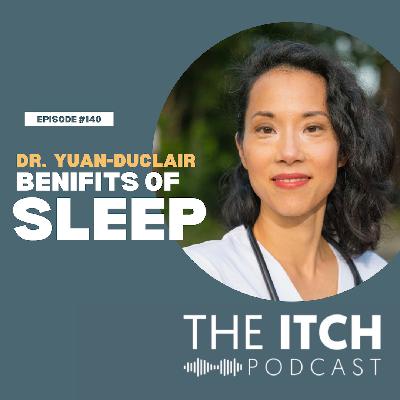
Sleep plays a critical role in managing allergies, asthma, and eczema, yet it is often overlooked in conversations about allergic disease.
Sleep affects mood, focus, immune function, and inflammation, all of which influence how allergic conditions show up day to day. Poor sleep can worsen asthma symptoms, increase allergy flares, and make eczema harder to control. At the same time, allergies and asthma can disrupt sleep, creating a cycle that is difficult to break.
Dr. Carol Yuan-Duclair, a sleep specialist, joins us to explore how sleep impacts allergic conditions and overall health. She breaks down what good sleep actually looks like, how to know if you are getting enough rest, and how sleep quality can directly affect allergies, asthma, and eczema.
This conversation focuses on practical guidance for patients and families, including environmental changes, medication considerations, and when it may be time to seek help from a sleep specialist.
What we cover in this episode about sleep and allergic disease
Why sleep is essential for health and immune function: How sleep affects inflammation, mood, and overall health, and why poor sleep can worsen allergic disease.
What good quality sleep actually looks like: The difference between sleep quality and sleep quantity, and how to tell if your sleep is truly restorative.
The two-way relationship between sleep and allergies: How allergies can disrupt sleep, and how poor sleep can worsen allergy symptoms, creating a difficult cycle.
Practical ways to improve sleep when you have allergies: Sleep hygiene basics, exercise timing, and creating a healthier bedroom environment.
When medications or symptoms mean it is time to see a specialist: How allergy medications can affect sleep, how eczema fits into the picture, and when ongoing sleep issues may signal the need for a sleep specialist.
Reading food labels can feel like a full-time job when you or your child has food allergies. Even when you know what to avoid, labels can still be confusing, especially when you run into “may contain” warnings.
Marion Groetch, a registered dietitian with decades of experience in food allergy care and education, joins us to unpack all things food labels. Together, we break down U.S. allergen labeling laws, what parts of the package actually matter, and why “may contain” statements are a much grayer area than most people realize. We also share practical tips for navigating so-called “mystery ingredients” like natural flavors and oils, when it is worth contacting a manufacturer, and how to avoid being more restrictive than necessary while still staying safe.
What we cover in our episode about food labels:
What U.S. labeling laws require: How FALCPA and the FASTER Act protect families by requiring clear disclosure of the Top 9 major allergens.
Where allergy information actually lives on a label: Why the ingredients list and “Contains” statement matter most, and why front-of-package claims should be ignored.
What “may contain” actually means: Why these statements are voluntary and unregulated, and what that means for real-world decision-making.
Foods that fall outside labeling laws: Common situations where allergen labeling is not required, including deli foods, restaurant meals, airline meals, and alcohol.
How to avoid over-restricting your diet: Practical guidance on mystery ingredients, higher-risk products, and when contacting a manufacturer actually makes sense.
___
Made in partnership with The Allergy & Asthma Network.
Thanks to Genentech for sponsoring today’s episode.
This podcast is for informational purposes only and does not substitute professional medical advice. Always consult with your healthcare provider for any medical concerns.
Clonal mast cell disease is often missed because symptoms vary from person to person, tryptase levels can be normal, and bone marrow biopsies are hard to get. For some people, unexplained or very severe anaphylaxis may be an early sign of a clonal mast cell disease.
In this episode, we review “Prevalence of KIT D816V in anaphylaxis or systemic mast cell activation,” published in October 2025 in the Journal of Allergy and Clinical Immunology. This paper, known as the PROSPECTOR trial, is looking at how often the KIT D816V mutation can be found using a blood test in adults who have had anaphylaxis or systemic mast cell activation symptoms.
We break down why KIT D816V matters, how it connects to systemic mastocytosis, why HaT needs to be considered, and how newer blood tests may help doctors catch clonal mast cell disease earlier.
What we cover in our episode about KIT D816V and anaphylaxis:
Setting the stage: Understanding mast cell activation and anaphylaxis.
Why KIT D816V matters: How this mutation fits into clonal mast cell disease, what blood testing can reveal, and when doctors still turn to a bone marrow biopsy.
Making sense of tryptase and hereditary alpha-tryptasemia (HaT): Why baseline tryptase, the “20% + 2” rule, and HaT can make screening more complicated than it seems.
What the PROSPECTOR trial uncovered: How often KIT D816V appeared in people with anaphylaxis, and other results on tryptase and HaT.
How this helps patients: What these findings mean for anyone with unexplained or severe anaphylaxis, and how doctors combine KIT testing, tryptase, HaT, and symptoms to decide on next steps.
Other podcast episodes about mast cell disease:
Ep. 127: Management of indolent mastocytosis - A clinical yardstick
Ep. 126: Management of mast cell activation syndrome - A clinical yardstick
Ep. 121: Avapritinib vs Placebo in Indolent Systemic Mastocytosis - PIONEER Trial
Ep. 118: The ISM Disconnect - Do Patients and Providers Agree on Symptom Control?
Ep. 70 How do stress and low histamine diets impact mast cell disease?
Ep. 63: Mast Cell Diseases & Systemic Mastocytosis: The Basic Science
Ep. 65: The Symptoms and Triggers of Mast Cell Disease
***********
The Itch Review, hosted by Dr. Gupta, Kortney, and Dr. Blaiss, explores allergy and immunology studies, breaking down complex research in conversations accessible to clinicians, patients, and caregivers. Each episode provides key insights from journal articles and includes a one-page infographic in the show notes for easy reference.
***********
Made in partnership with The Allergy & Asthma Network.
Thanks to Blueprint Medicines for sponsoring today’s episode.
This podcast is for informational purposes only and does not substitute professional medical advice. Always consult with your healthcare provider for any medical concerns.
Persistent congestion, pressure, or a reduced sense of smell often gets mistaken for allergies or a stubborn cold when it may be something more, like chronic rhinosinusitis with nasal polyps (CRSwNP). Getting the right diagnosis is the first step toward real relief.
Dr. Tonya Farmer, a board-certified ENT, joins Kortney and Dr. G to explain how chronic rhinosinusitis with nasal polyps (CRSwNP) is diagnosed. She walks us through the full evaluation: what symptoms matter, what a nasal endoscopy actually shows, when a CT scan is needed, and how type 2 inflammation fits into the picture.
What we cover about diagnosing CRSwNP:
Key symptoms: Persistent congestion, drainage, facial pressure, and especially loss of smell are major red flags for CRSwNP.
Why duration matters: Chronic means 12 weeks or longer. If symptoms keep coming back or never truly improve, it’s time to look deeper.
The physical exam: ENTs use nasal endoscopy to see swelling, mucus, or polyps that aren’t visible from the outside.
When CT scans are needed: Imaging helps confirm sinus inflammation and shows the extent of polyp growth.
Additional testing: Allergy testing, IgE levels, eosinophils, and other immune markers help identify type 2 inflammation and guide next steps.
When to see a specialist: If antibiotics, steroids, or over-the-counter treatments aren’t helping, ask for a referral to an allergist or ENT. Early diagnosis can prevent worsening symptoms and reduce the need for surgery.
Set the foundations: Ep. 133: What is Chronic Rhinosinusitis with Nasal Polyps (CRSwNP)?
___
Made in partnership with The Allergy & Asthma Network.
Thanks to Sanofi-Regeneron for sponsoring today’s episode.
This podcast is for informational purposes only and does not substitute professional medical advice. Always consult with your healthcare provider for any medical concerns.

Avoidance has long been the standard for managing food allergies. But new options, such as oral immunotherapy (OIT) and biologic medications like Xolair (omalizumab), are changing the landscape. With more choices available, many patients and parents are wondering how to start the conversation with their allergist and what questions to ask.
Kortney and Dr. Payel Gupta talk with Dr. Shahzad Mustafa, a board-certified allergist and immunologist, about how patients can navigate today’s food allergy treatments with confidence. Together, they explore what to consider before starting OIT or Xolair, how to set realistic expectations, and why strict avoidance is still the right choice for many families.
What we cover about food allergy treatment options:
Food Allergy Avoidance: Why it remains an effective and valid approach for many, and how to make it work in daily life, including the nuances that make every case unique.
Oral Immunotherapy (OIT): What it involves, who it’s best suited for, and what families should know about time, cost, and safety.
Xolair (omalizumab): How this injection therapy works to reduce reactions from accidental exposures and what it doesn’t do.
Setting expectations: How to talk with your allergist about your goals, quality of life, and what “success” really looks like.
More episodes about food allergies
Ep. 129: Omalizumab for Multiple Food Allergies – The OUtMATCH Trial
Ep. 98: Food Allergy Treatment and Management
More resources about food allergies
Food Allergy Treatment & Management
___
Made in partnership with The Allergy & Asthma Network.
Thanks to Genentech for sponsoring today’s episode.
This podcast is for informational purposes only and does not substitute professional medical advice. Always consult with your healthcare provider for any medical concerns.
When it comes to keeping kids with food allergies safe at school, school nurses are often the quiet heroes behind the scenes. From managing allergy action plans and emergency responses to training teachers and organizing care for hundreds of students, their role is essential, but often misunderstood.
Kortney and Dr. Payel Gupta sit down with Elizabeth Elliott, a school nurse and President of the Maryland Association of School Health Nurses. Liz shares what really happens inside the health room and how school nurses coordinate care for students with food allergies and asthma. Plus, why communication between families and school staff is key to keeping kids safe.
After this episode, you’ll have a whole new appreciation for your school nurse and a better understanding of how to partner with them to make every school day safer for kids with allergies.
What we cover about food allergy management at school:
The school nurse’s role: How nurses bridge communication between families, teachers, and doctors to keep children with food allergies safe and included during the school day.
Coordinating care: How school nurses use action plans and 504s to ensure everyone, from teachers to cafeteria staff, knows how to keep kids safe.
Training and emergency preparedness: How school nurses teach staff to recognize anaphylaxis, use epinephrine, and stay calm during an emergency.
Field trips, cafeterias, and bus safety: What goes into planning safe experiences beyond the classroom, and why “no-food on the bus” rules really matter.
Advocating for resources: How families can support their school nurses and advocate for better funding, staffing, and allergy awareness in schools.
___
Made in partnership with The Allergy & Asthma Network.
Thanks to Genentech for sponsoring today’s episode.
This podcast is for informational purposes only and does not substitute professional medical advice. Always consult with your healthcare provider for any medical concerns.
Mucus plugging is a challenge in asthma care. It’s thick, sticky mucus that blocks the airways and doesn’t respond to regular inhalers. Even when inflammation improves, these plugs can lower lung function, limit how well medicine works, and make asthma harder to control.
In this episode, we break down the study: “Effect of Dupilumab on Mucus Burden in Patients with Moderate-to-Severe Asthma,” published October 28, 2025. The analysis looks at whether dupilumab (Dupixent), a biologic that blocks IL-4 and IL-13, can lower mucus burden and improve lung function, especially in people who start with a high “mucus plug score.”
What we cover in our episode about dupilumab and mucus plugging
Why mucus plugging matters in asthma: Discover how thick, sticky mucus can block airways, make it harder to breathe, and why standard inhalers and steroids don’t clear these plugs.
How dupilumab may help: Learn how this biologic blocks IL-4 and IL-13, two key drivers of type 2 inflammation that increase mucus production and thickness.
Inside the VESTIGE study: Hear how researchers measured mucus burden using CT scans and “mucus plug scores” to see if dupilumab could reduce plugging in moderate-to-severe asthma.
What the results showed: Find out how dupilumab lowered mucus plug scores, reduced airway inflammation, and improved lung function (FEV₁), especially in people with high mucus burden.
What this means for patients: Learn why identifying and treating mucus plugging may help improve breathing, reduce flare-ups, and make asthma easier to manage day to day.
📌INFOGRAPHIC to follow along
RESOURCES:
What is asthma?
What is type 2 inflammation?
When Asthma Is More Than Just Asthma: Type 2 Inflammation
More about dupilumab (Dupixent)
The Itch Review, hosted by Dr. Gupta, Kortney, and Dr. Blaiss, explores allergy and immunology studies, breaking down complex research in conversations accessible to clinicians, patients, and caregivers. Each episode provides key insights from journal articles and includes a one-page infographic in the show notes for easy reference.
___
A special collaboration with the American Thoracic Society.
This podcast was made in partnership with Allergy & Asthma Network.
This podcast is for informational purposes only and does not substitute professional medical advice. Always consult with your healthcare provider for any medical concerns.

Living with constant congestion, facial pressure, or a loss of smell can make daily life exhausting. For many people, these symptoms are more than just allergies or a lingering cold. They may be signs of chronic rhinosinusitis with nasal polyps (CRSwNP).
Dr. Rohit Katial joins Kortney and Dr. G to unpack what CRSwNP really is, how it develops, and why type 2 inflammation plays such a key role. Together, they explain what’s happening inside the sinuses, what symptoms to look for, and when it’s time to see a specialist.
What we cover about CRSwNP:
What CRSwNP means: Chronic rhinosinusitis with nasal polyps is long-term inflammation of the nose and sinuses that lasts 12 weeks or more.
What nasal polyps are: Soft, fluid-filled sacs (often “grape” or “pea” sized) that block airflow and lead to congestion and smell loss.
Why it happens: Type 2 inflammation drives CRSwNP. Immune messengers like IL-4, IL-5, and IL-13 cause swelling and fluid buildup in the nasal lining.
Who it affects: CRSwNP often overlaps with asthma, allergies, or aspirin sensitivity (AERD or Samter’s Triad), making symptoms worse.
When to seek help: If congestion, pressure, or loss of smell lasts more than 12 weeks, see an allergist or an ENT specialist. Early care can prevent sinus damage and improve breathing and quality of life.
More episodes to support CRSwNP
Ep. 101: What is Type 2 Inflammation?
Ep. 102: Comorbidities of Type 2 Inflammation - Connecting the Dots Between Multiple Allergic Conditions
Ep. 109: Tezepelumab & Nasal Polyps - Inside the WAYPOINT Phase III Trial
___
Made in partnership with The Allergy & Asthma Network.
Thanks to AstraZeneca & Amgen for sponsoring today’s episode.
This podcast is for informational purposes only and does not substitute professional medical advice. Always consult with your healthcare provider for any medical concerns.
Navigating food allergies is tough enough, but adding family dynamics to the mix can make things even more complicated. When loved ones don’t understand you or your child’s allergies or dismiss the rules meant to keep them safe, it can lead to conflict, hurt feelings, and stress for everyone involved.
Kortney and Dr. Payel Gupta sit down with psychologist Dr. Amanda Whitehouse to talk about how families can find common ground when emotions run high. Together, they unpack what it means to stay regulated in difficult conversations, how to set healthy boundaries with family members, and why understanding different coping styles can help prevent conflict before it starts.
What we cover about communication and boundary-setting for food allergy families:
Coping styles and conflict: Learn how different stress responses, such as “fight” versus “flight,” shape how partners, parents, and relatives react to food allergy challenges.
Staying calm and regulated: Understand how your body reacts to stress and how recognizing those signals can help you stay grounded during tough conversations.
Setting and holding boundaries: Get practical tips for explaining what feels safe, keeping communication clear, and responding calmly when others push back.
Working together as a team: Whether it’s with your partner, kids, or extended family, learn how to support each other and stay united when emotions rise.
Bridging family differences: Explore ways to include children and siblings in allergy safety, and approach older relatives with patience and compassion when views or communication styles differ.
___
Made in partnership with The Allergy & Asthma Network.
Thanks to Genentech for sponsoring today’s episode.
This podcast is for informational purposes only and does not substitute professional medical advice. Always consult with your healthcare provider for any medical concerns.
For decades, allergists have focused on blocking what happens outside the mast cell: histamine, IgE, and interleukins. But now, there’s a new way to stop allergic inflammation before it even starts: by targeting what happens inside the cell with BTK Inhibitors.
Dr. Payel Gupta and Kortney are joined by Dr. Matthew Giannetti to unpack what BTK actually does and why inhibiting it represents an exciting breakthrough in allergy and immunology. Together, they explore how BTK inhibitors work, why this inside-the-cell approach is different from anything before, and what it could mean for people living with chronic spontaneous urticaria (CSU).
What the episode covers about BTK inhibitors:
BTK explained: Bruton’s tyrosine kinase is a pivotal “last step” before mast-cell degranulation.
How BTK inhibitors work: Blocking BTK can stop histamine release downstream of many outside triggers.
The science: Why BTK binding is irreversible for each molecule and how the body “re-makes” BTK over time.
Safety in brief: A look at petechiae (small pinpoint spots), what to monitor, and how shared decision-making guides treatment choices.
The future of BTK inhibitors: Exploring their potential role in other allergic conditions.
____
Made in partnership with The Allergy & Asthma Network.
Thanks to Novartis for sponsoring today’s episode.
This podcast is for informational purposes only and does not substitute professional medical advice. Always consult with your healthcare provider for any medical concerns.
Seeing your allergist on a screen instead of in the office might feel strange at first, but for many people with allergies, telehealth isn’t just convenient. it’s effective.
In this episode, we sit down with telemedicine pioneer Dr. Jay Portnoy to explore how virtual allergy care works, what it can and can’t do, and how it’s helping patients get the care they need without the wait or the long drive.
Dr. Portnoy shares over two decades of experience leading allergy telemedicine programs in rural areas and explains how remote care has grown from a fringe idea into a standard part of allergy care. He and Dr. G also discuss the benefits for both patients and clinicians.
So how do you know when telehealth is enough and when it’s not?
What we cover in our episode about virtual allergy care and telemedicine:
How does telemedicine work for allergy patients? Learn how video visits and asynchronous tools are making care faster and easier, especially in rural or underserved areas.
Telemendine limitations. We break down when in-person care is still needed, like for food challenges, skin tests, or urgent symptoms.
Privacy and safety in virtual care. From HIPAA-compliant platforms to quiet spaces at home or in schools, we talk about how to keep your virtual visit just as private as a clinic one.
How testing works with telemedicine. Telehealth doesn’t mean skipping tests. Many can be ordered remotely and done at a local lab or clinic near you.
The future of allergy care. Hear how virtual care is shifting toward patient choice, whether you want to video call, send a message, or still come in.
___
Made in partnership with The Allergy & Asthma Network.
Thanks to Genentech for sponsoring today’s episode.
This podcast is for informational purposes only and does not substitute professional medical advice. Always consult with your healthcare provider for any medical concerns.
Multiple food allergies are a daily stressor for millions of families. From avoiding social events to fearing accidental exposures, it can feel like living in a constant state of alert. Until recently, there were no FDA-approved treatments that targeted more than one allergen at a time.
In this episode, we break down the study: “Omalizumab for the Treatment of Multiple Food Allergies,” published in 2024 in the New England Journal of Medicine. Known as the OUtMATCH trial, it’s the first large-scale study to show that omalizumab (Xolair), a biologic already used for asthma and hives, may help people with multiple food allergies by raising the threshold for reactions.
We explain how omalizumab works by blocking IgE, the antibody that triggers allergic reactions, and how the study measured changes in reaction thresholds (the amount of an allergen a person can ingest before reacting). We also explore the trial design, results, safety profile, and what all of this means for the day-to-day management of food allergies.
What we cover in our episode about OUtMATCH trial
How omalizumab works to prevent allergic reactions: Learn how blocking IgE increases the amount of allergen needed to trigger symptoms, offering protection from small, accidental exposures.
Who qualified for the OUtMATCH trial and why: Find out which patients were included and how eligibility impacted outcomes.
What success looked like in this study: Understand how researchers defined protection across multiple allergens.
Why not everyone responded the same to omalizumab: Explore the variability in results and what it means for clinical care.
What else the study found beyond food challenges: Hear about safety findings, quality of life data, and the open-label extension.
📌 INFOGRAPHIC to follow along
The Itch Review, hosted by Dr. Gupta, Kortney, and Dr. Blaiss, explores allergy and immunology studies, breaking down complex research in conversations accessible to clinicians, patients, and caregivers. Each episode provides key insights from journal articles and includes a one-page infographic in the show notes for easy reference.
___
Made in partnership with The Allergy & Asthma Network.
Thanks to Genentech for sponsoring today’s episode.
This podcast is for informational purposes only and does not substitute professional medical advice. Always consult with your healthcare provider for any medical concerns.
When people get hives or swelling, they often think it’s caused by an allergy. But in the case of chronic spontaneous urticaria (CSU), the culprit is often your own immune system. CSU isn’t your typical allergic reaction, instead, it’s frequently an autoimmune condition, where the immune system misfires and activates mast cells without any external trigger.
In this episode, Dr. Payel Gupta and Kortney unpack what it means for CSU to be autoimmune and autoallergic. They explain how IgE and IgG antibodies can trigger histamine release, leading to hives and swelling. You’ll also learn why allergy testing isn’t useful for diagnosing CSU, and how tests like IgG food sensitivity panels can do more harm than good by leading to unnecessary food avoidance and confusion.
What we cover in our episode about autoimmune CSU and chronic hives:
Is CSU an allergy? Why CSU is often mistaken for an allergic reaction—and why standard allergy tests rarely provide helpful answers.
How the immune system works in CSU: What mast cells are, how they release histamine, and their central role in chronic spontaneous urticaria.
Understanding autoimmune CSU: Learn how the immune system can trigger hives from within, including the roles of IgE and IgG antibodies.
Autoimmune hives explained: We explore how CSU can be autoimmune, why the immune system may attack itself, and what Type I and Type IIb autoimmune CSU really mean.
____
Made in partnership with The Allergy & Asthma Network.
Thanks to Novartis for sponsoring today’s episode.
This podcast is for informational purposes only and does not substitute professional medical advice. Always consult with your healthcare provider for any medical concerns.
Indolent Systemic Mastocytosis (ISM) is a rare but often underrecognized clonal mast cell disorder. From random hives to gut pain and brain fog, ISM can feel like a medical mystery.
We continue our review of “Management of indolent mastocytosis and mast cell activation syndrome - A clinical yardstick,” published in June 2025 in The Annals of Allergy, Asthma & Immunology. This is Part 2 of our discussion, with a focus on indolent systemic mastocytosis. We look at what causes it, how it’s diagnosed, and how to manage symptoms and improve quality of life.
In this episode, we break down this complex mast cell disease and how doctors use baseline serum tryptase, KIT D816V testing, and HaT screening to find answers. Plus, we explain how treatments like antihistamines, mast cell stabilizers, and avapritinib can help people live better with ISM.
📌 INFOGRAPHIC to follow along
What we cover in our episode about indolent systemic mastocytosis (ISM):
Yardsticks explained: Why the ACAAI uses yardsticks as practical, interim guidelines before full consensus statements are available.
Understanding mast cell diseases: The difference between primary (clonal), secondary (allergic), and idiopathic mast cell disorders.
Diagnosing ISM: KIT D816V mutation, WHO/ICC criteria, baseline serum tryptase, and when to test for hereditary alpha-tryptasemia (HaT).
Symptoms of ISM: Why symptoms vary and how they can involve multiple systems, including skin, GI tract, cardiovascular, and even neuropsychiatric.
Management strategies: Trigger avoidance, antihistamines, leukotriene blockers, sodium cromolyn, aspirin therapy, and, when venom immunotherapy is appropriate.
Targeted treatment: How avapritinib works and what the PIONEER study shows about its role in ISM.
The Itch Review, hosted by Dr. Gupta, Kortney, and Dr. Blaiss, explores allergy and immunology studies, breaking down complex research in conversations accessible to clinicians, patients, and caregivers. Each episode provides key insights from journal articles and includes a one-page infographic in the show notes for easy reference.
___
Made in partnership with The Allergy & Asthma Network.
Thanks to Blueprint Medicines for sponsoring today’s episode.
This podcast is for informational purposes only and does not substitute professional medical advice. Always consult with your healthcare provider for any medical concerns.
Mast cell activation syndrome (MCAS) is a confusing and often misunderstood condition. If you’ve ever wondered about MCAS symptoms, serum tryptase testing, or how treatments like antihistamines, sodium cromolyn, and even omalizumab fit in, this episode is here to help.
We review the findings from “Management of indolent mastocytosis and mast cell activation syndrome - A clinical yardstick,” published in June 2025 in The Annals of Allergy, Asthma & Immunology. Because the paper covers both diseases, we’ve split it into two parts. This episode focuses on mast cell activation syndrome (MCAS).
GET THE INFOGRAPHIC - summary of this episode
What we cover in our episode about mast cell activation syndrome:
Yardsticks explained: Why the ACAAI uses yardsticks as practical, interim guidelines before full consensus statements are available.
Classifying mast cell disorders: Primary (clonal), secondary (allergy/autoimmune), and idiopathic (MCAS).
MCAS diagnosis criteria: Symptoms in 2 or more organ systems, objective evidence (serum tryptase or urinary metabolites tests), and positive response to therapy.
Treatment strategies: Include trigger avoidance, H1/H2 antihistamines, leukotriene blockers, mast cell stabilizers (such as cromolyn and aspirin), off-label biologics like omalizumab, and epinephrine.
Neuropsychiatric symptoms: Brain fog, anxiety, and depression are common and require multidisciplinary management.
The Itch Review, hosted by Dr. Gupta, Kortney, and Dr. Blaiss, explores allergy and immunology studies, breaking down complex research in conversations accessible to clinicians, patients, and caregivers. Each episode provides key insights from journal articles and includes a one-page infographic in the show notes for easy reference.
Made in partnership with The Allergy & Asthma Network.
Thanks to Blueprint Medicines for sponsoring today’s episode.
This podcast is for informational purposes only and does not substitute professional medical advice. Always consult with your healthcare provider for any medical concerns.


Download from Google Play

Download from App Store
 United States
Will you be doing a special episode just on immunotherapy? Thanks!