


 Claim Ownership
CCW Safe
Subscribed: 330Played: 12,108
Subscribe

© Copyright 2012-2018s. All rights reserved.
Description
CCW Safe features video and audio podcast series surrounding shooting sports, law of self defense, and concealed carry
239 Episodes
Reverse
Don West and Steve Moses join Shawn Vincent to talk about the concept of the “window of justification” and to explore the legal perils for armed defenders who shoot before the threat of great bodily harm or death is imminent.
In self-defense law, it’s not enough that you feared an attacher—what ultimately matters is whether a jury will decide that your belief in imminent great bodily harm or death was objectively and subjectively reasonable under the totality of the circumstances..
Criminal defense attorney Don West explains the core legal standard for the justifiable use of deadly force in self-defense, and firearms instructor Steve Moses provides a nuts-and-bolts tactical translation of the law to help inform armed defenders’ decision-making in a self-defense scenario.
Shawn Vincent talks with attorney Don West about the legal consequences of self-defense, including a discussion of the potential charges an armed defender could face in the wake of a self-defense shooting, and a candid exploration of the realities of enduring a criminal prosecution.
Steve Moses talks to Don West and Shawn Vincent about how proper self-defense training from qualified, credentialed instructors gives armed defenders the competence and confidence to make smart decisions in a dynamic self-defense scenario.
Lesson 1: The Goal of Self-Defense Is to Break Contact Breaking contact with an aggressor can mean using deadly force when justified, or simply walking away—with a range of actions in between, including verbal de-escalation techniques and less-lethal force options. By adopting a “break contact” self-defense mindset, armed defenders give themselves more tactical options while reducing the legal jeopardy resulting from a potential use-of-force event.
Firearms trainer Erick Gelhaus joins the podcast to talk about the tactical and legal benefits of a low-ready defensive display when a threat justifies the potential use of deadly force.
After more than 25 years in law enforcement, Doug Deaton became a consulting and testifying expert witness for defense attorneys and armed defenders in self-defense cases. True self-defense trials are relatively rare, and sometimes the prosecutor and judge – and especially the jury – aren't aware of all the nuances of self-defense law. That’s when having a good consulting expert like Doug Deaton can make the difference.
Retired police officer and firearms instructor Greg Ellifritz joins the podcast to talk about defensive display and brandishing incidents he responded to as a law enforcement officer. While brandishing a firearm is a crime, a justified defensive display of a firearm can be a viable alternative to using deadly force in a self-defense scenario.
A Wisconsin man came home to his apartment late at night and was surprised to find his home had been the target of burglars. He was even more surprised when one of those burglars returned to retrieve some valuables he had left behind. The occupant of the apartment shot and killed the intruder in a justified self-defense shooting. Don West and Steve Moses join Shawn Vincent to discuss the legal protections of the Castle Doctrine and the need for an armed defender to secure their home in the immediate aftermath of a break-in.
An armed defender in Lapeer, Michigan was convicted of murder for shooting a man who was attacking him with a crowbar. It turns out, the shooter actually left the scene of the initial confrontation and came back. Also, evidence suggests the defender drew his pistol before the attack, making him the first aggressor. Don West and Steve Moses join Shawn Vincent to explore the lessons for concealed carriers.
Don West and Steve Moses join Shawn Vincent to explore the case of Scott Hayes, a pro-Isreal demonstrator who was violently tackled by an unarmed pro-Palistineian demonstrator. Hayes fired a single, non-fatal shot, and prosecutors charged him with assault with a deadly weapon. Is Scott Hayes being wrongfully prosecuted, or did he use disproportional force agains an unarmed threat?
Law enforcement veteran and consulting expert Doug Deaton explains that when a concealed carrier fires in self-defense, they become the subject of a legal process that will dominate their lives until it is concluded – whether that is a decision not to file charges or a trial verdict. Once the process has begun, there is no turning back.
Akira Fletcher had an ongoing feud with another woman, Nyema Norton, culminating in a confrontation where Fletcher shot Norton after an initial altercation had seemingly ended. The case touches on themes of de-escalation, managing emotional responses, and the dangers of following an aggressor. Fletcher’s decision to exit her vehicle and re-engage Norton verbally, after the initial threat had seemingly subsided, complicated her self-defense claim. Her history of animosity with Norton raises doubts about her motives for using deadly force. Her decision to share incriminating evidence on social media further exacerbated her legal challenges. The case serves as a cautionary tale for how emotions, an ongoing grudge, and the failure to de-escalate can severely impact the outcome of a self-defense claim.
Steve Moses joins hosts Shawn Vincent and Don West to look at the lessons learned from this incident.
Law enforcement veteran and consulting expert Doug Deaton explains that when a concealed carrier fires in self-defense, they become the subject of a legal process that will dominate their lives until it is concluded – whether that is a decision not to file charges or a trial verdict. Once the process has begun, there is no turning back.
A man in Spokane took it upon himself to livestream a video of a homeless encampment. When he felt threatened by some of the vagrants, he retrieved a firearm from his car, proclaimed he was “constitutionally protected,” and reengaged with some of the individuals who surrounded him while asking for him to leave. Feeling threatened, he fired in self-defense. Just because you have the right to be somewhere or do something doesn’t mean it's a smart or appropriate thing to do.
The Daniel Penny case, while not involving a firearm, raises critical questions about the use of force in self-defense and the defense of others. Don West and Steve Moses join Shawn Vincent to discuss the legal and tactical intricacies of Daniel Penny’s use of force and his subsequent criminal defense.
Shawn Vincent and Don West look at how retired MMA fighter Shannon “The Cannon” Rich found himself in an argument over a parking space when the other guy attacked him with a knife. Rich retrieved a pistol from his vehicle and fired a lethal shot in self-defense. Eyewitness accounts and security footage matched Rich’s statement to police and he was not charged, but the experience provides lessons for concealed carriers about the value of de-escalation and some insight on how to navigate post shooting interactions with law enforcement.
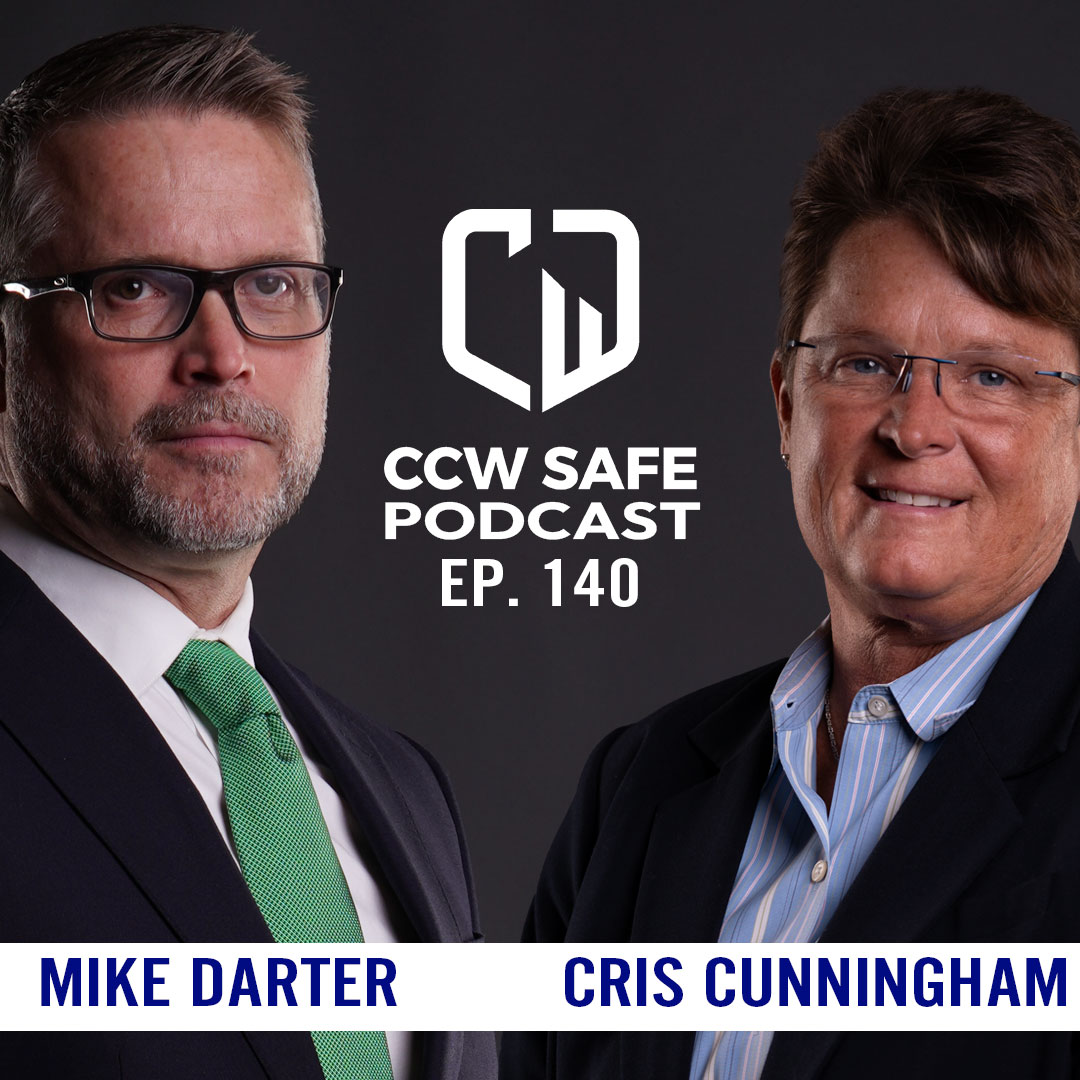
CCW Safe Co-Founder Mike Darter is joined by CCW Safe Critical Response Team member Cris Cunningham to discuss current events and trends in the justice system as well as the day to day realities of being a concealed carrier that may have to deal with that system if a worst case scenario were to occur.
A news story about a homeowner who shot a bear on his property raises questions about when armed defenders can use firearms against animals. Don West and Steve Moses join Shawn Vincent to discuss the legal and tactical liabilities armed defenders should consider before using deadly force against wildlife, feral dogs, or rogue neighborhood pets.


Download from Google Play

Download from App Store
 United States
Regarding passing the torch, I prefer listening to the lawyers speak. I'm done with this podcast.
at 10 min around what the fuck was that!!!!
Thanks guys!
Thanks for this
Great job guys