


 Claim Ownership
Witness to Yesterday (The Champlain Society Podcast on Canadian History)
Subscribed: 79Played: 3,647
Subscribe

© All rights reserved
Description
Immerse yourself in Canada’s history! Witness to Yesterday episodes take listeners on a journey to document a time in Canada’s past and explore the people behind it, its significance, and its relevance to today. If you like our work, please consider supporting it: https://bit.ly/support_WTY. To learn more about the Society and Canada’s history, subscribe to our newsletter at https://bit.ly/news_WTY.
366 Episodes
Reverse

Nicole O’Byrne speaks with Adam Dodek about his book Constitutional Challengers. Behind every great constitutional case, there is a person with a fascinating story.
The Supreme Court decides some of the biggest issues in Canadian society: Do Canadians have the right to assisted suicide? Should same-sex couples be allowed to marry? How far does freedom of religion or freedom of expression go?
In Constitutional Challengers, Adam Dodek has gathered together twenty-six of the most significant constitutional cases, including five major decisions concerning Indigenous rights. Behind every one of these cases is a person who had a problem to solve and ended up entangled in the Canadian judicial system.
Some of these people became crusaders — people who campaigned for a cause and set out to change other people’s views and create broader social change. These individuals, such as sex-workers' rights advocate Terri-Jean Bedford and abortion provider Dr. Henry Morgentaler, are villains to some and heroes to others. But most of the people behind the biggest legal decisions weren’t trying to champion a cause; they were just trying to achieve a result that became much bigger than themselves. They were along for the ride — often a long and convoluted one — in the Canadian justice system. It’s within their journeys, often overlooked by the media, that the true victories and life-altering costs of standing up for one’s beliefs can be found
Adam Dodek is a professor and the former dean of the University of Ottawa Common Law Section. He teaches and writes about the Canadian Constitution and the Supreme Court of Canada. He has worked at the supreme Courts of both Canada and Israel, as well as the US Court of Appeals. Adam lives in Ottawa.
If you like our work, please consider supporting it: bit.ly/support_WTY. Your support contributes to the Champlain Society’s mission of opening new windows to directly explore and experience Canada’s past.
Image Credit: Dundurn Press
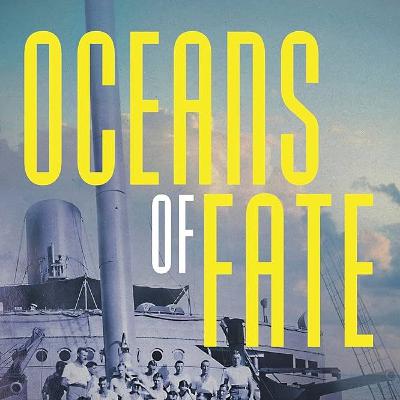
Larry Ostola speaks with Dan Black about his book Oceans of Fate. The remarkable story of how one ship — doomed by war — intersected lives and crossed into history.
Completed in 1913 for Canadian Pacific, the Empress of Asia plied the oceans for nearly 30 years. Built for long-haul ocean travel during peace-time, she saw wartime service as an armed merchant cruiser and troopship before Japanese dive-bombers destroyed her in 1942.
Through the Roaring Twenties and the Great Depression, she brought continents and people together, delivering mail and multimillion-dollar consignments of silk. As a luxurious passenger liner, she was a “Greyhound of the Pacific,” braving epic storms and smashing transpacific speed records. From stokehold to bridge, steerage to first-class staterooms, she steamed with a kaleidoscope of lives, including courageous and recalcitrant crew, immigrants and refugees seeking a better life or relief from disaster, drug smugglers, weapons dealers, and the idle and not-so-idle rich.
This is the dramatic story of how that one ship and the lives of those on board intersected during a tumultuous period of world history, culminating in her sinking off Singapore in the Second World War.
Dan Black is the former editor of Legion Magazine, and author or co-author of three previous books, including Harry Livingstone’s Forgotten Men: Canadians and the Chinese Labour Corps in the First World War, published 2019. He lives near Ottawa.
If you like our work, please consider supporting it: bit.ly/support_WTY. Your support contributes to the Champlain Society’s mission of opening new windows to directly explore and experience Canada’s past.
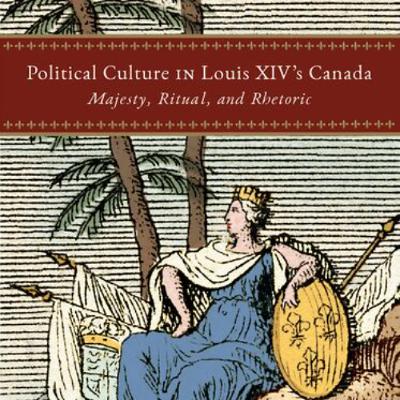
Nicole O’Byrne speaks with Colin Coates about his book, Political Culture in Louis XIV’s Canada. In Louis XIV’s New France, colonial authorities attempted to reproduce French regal authority in novel ways, often by performing typical metropolitan political rituals. When these practices were transposed into the St Lawrence Valley settlements, where a small French population lived alongside a substantial Indigenous presence, they took on new meanings.
The colony of Canada replicated many features of the developing French absolutist state. Yet while the king likely knew more about his colony than he did about most parts of metropolitan France, this transatlantic setting imposed new constraints on absolutist authority, from the challenges of distance to an Indigenous population that largely lived outside European norms. Political Culture in Louis XIV’s Canada examines royal power as it was represented in ritual (ceremonial entrances, Te Deums, processions), in rhetoric (political disputes over cabals and factions), and in objects (portraits, royal busts, currency, buildings, maps, and censuses).
Colin M. Coates is professor of Canadian studies and history at York University and author of The Metamorphoses of Landscape and Community in Early Quebec.
If you like our work, please consider supporting it: bit.ly/support_WTY. Your support contributes to the Champlain Society’s mission of opening new windows to directly explore and experience Canada’s past.
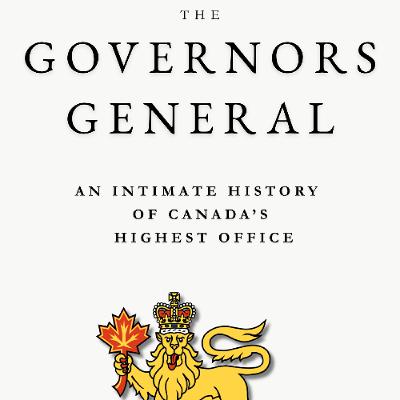
Often misunderstood or even unrecognized, Canada’s governors general are not merely heads of state; they are amongst the great constitutional curiosities of our age. In this delightful and often whimsical account of the Canadians who have held this post since 1952, journalist and author John Fraser explains the successful, if illogical, evolution of the institution and engages readers with the hilarious foibles, moving triumphs, and sombre tragedies of the men and women who have been chosen to represent the Sovereign in Canada.
John Fraser is a Canadian journalist, writer, and academic, and is the founding president of the Institute of the Study of the Crown in Canada. He was the editor of Saturday Night magazine, columnist, China correspondent, Ottawa bureau chief, and London correspondent for The Globe and Mail. He is the recipient of multiple national journalism awards and was chair of the Canadian Journalism Foundation until 2008. John served as Master of Massey College from 1995 until his retirement in 2014. He is the author of several best-selling books.
If you like our work, please consider supporting it: bit.ly/support_WTY. Your support contributes to the Champlain Society’s mission of opening new windows to directly explore and experience Canada’s past.
Image Credit: Sutherland House
James Stewart (J.D.M.) speaks with Andrew Coyne about his book, The Crisis of Canadian Democracy.
With characteristic wit, insight, and rigor, Coyne dismantles the comforting myths Canadians tell themselves about their political system, revealing a parliamentary structure eroded by unaccountable leaders, disempowered MPs, manipulated elections, and systemic dysfunction. The Crisis of Canadian Democracy is both a wake-up call and a call to action, offering compelling solutions to restore genuine self-government to Canadian politics. Essential reading for leaders, citizens, and anyone who cares about the future of democracy in Canada—or anywhere else.
Andrew Coyne is a columnist for The Globe and Mail. Raised in Winnipeg, Mr. Coyne holds degrees from the University of Toronto and the London School of Economics. He was written previously for The National Post, Maclean’s and Southam News, contributing as well to a wide range of other publications in Canada and abroad, including The New York Times, The Wall Street Journal, The National Review, and The Walrus. He is also a weekly panelist on CBC’s The National.
Image Credit: Sutherland House
If you like our work, please consider supporting it: bit.ly/support_WTY. Your support contributes to the Champlain Society’s mission of opening new windows to directly explore and experience Canada’s past.
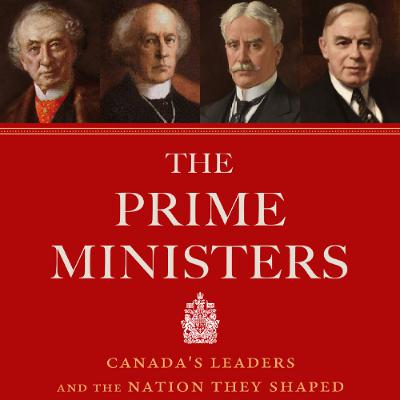
Larry Ostola speaks with J.D.M Stewart about his book The Prime Ministers: Canada’s Leaders and the Nation They Shaped. After a surprising conversation with young Canadians who didn’t recognize the name Lester B. Pearson – Nobel Peace Prize winner and Canada’s fourteenth prime minister — author J.D.M. Stewart set out to bring the country’s history to a new generation. The result is The Prime Ministers, a lively, accessible chronicle of Canada’s leaders, from Sir John A. Macdonald in 1867 to Mark Carney in 2025.
With engaging prose and fresh insights, Stewart captures the defining moments of each prime minister’s time in office, revealing how they managed relationships with Indigenous peoples, the environment, American presidents, and international powers. He also explores how their reputations have evolved – who has been forgotten, who remains controversial, and who has become a lasting part of Canada’s cultural fabric.
The Prime Ministers is a necessary and important book, intended both for newcomers to Canadian history and those who have loved it for a long time.
J.D.M. Stewart is a writer, historian, and one of the country’s foremost experts on Canadian prime ministers. His commentary regularly appears in the Globe & Mail, The Hub, and the Literary Review of Canada. His previous book, Being Prime Minister, was a Hill Times Top 100 pick. He has also inspired a generation of students during his thirty-year career teaching history to high school students in Toronto, Montreal, and Panama City. He lives in Toronto.
If you like our work, please consider supporting it: bit.ly/support_WTY. Your support contributes to the Champlain Society’s mission of opening new windows to directly explore and experience Canada’s past.
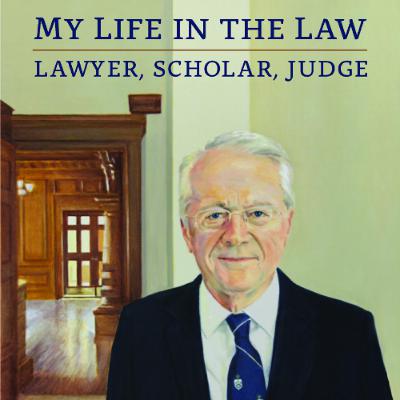
Nicole O’Byrne speaks with Robert J. Sharpe about his book My Life in the Law. My Life in the Law is a rich, personal reflection on Robert J. Sharpe’s long, varied, and influential career as a lawyer, scholar, and judge. After giving an account of his early life and education, Sharpe examines his time as a law student in the late 1960s, an era when great emphasis was put upon formalistic legal doctrine, heavily influenced by English law. As a legal academic in the 1970s up until the 1990s, Sharpe participated in Canadian law’s emergence from the shadow of its narrow past. He then dealt with that evolution from the very different perspective of a judge and a legal history scholar during his twenty-five years on the bench. Throughout the book, Sharpe writes about the people who influenced his trajectory: the exceptional lawyers with whom he practiced, his Oxford University professors, and his University of Toronto colleagues. He describes how these people and his three-year experience working as executive legal officer to Justice Brian Dickson at the Supreme Court of Canada prepared him for his twenty-five-year career as a judge. Written in an engaging and accessible style, this memoir tells the story of a man whose fascination with the law has led to an illustrious, decades-long career of great significance.
Robert J. Sharpe is judge of the Court of Appeal for Ontario. He taught at the Faculty of Law, University of Toronto from 1976 to 1988 and served under Chief Justice Brian Dickson as Executive Legal Officer at the Supreme Court of Canada from 1988 to 1990.
If you like our work, please consider supporting it: bit.ly/support_WTY. Your support contributes to the Champlain Society’s mission of opening new windows to directly explore and experience Canada’s past.
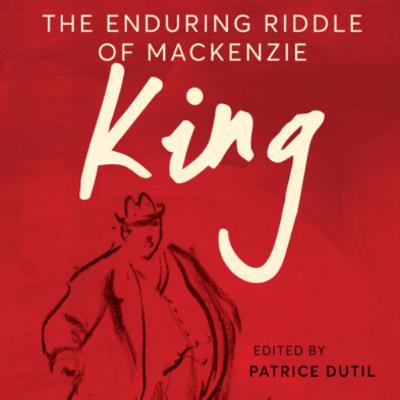
James Stewart (J.D.M.) speaks with Patrice Dutil about his book, The Enduring Riddle of Mackenzie King. In his lifetime, Canadians often dismissed William Lyon Mackenzie King as a meritless interloper, yet numerous scholars have since ranked him as the best prime minister ever. Patrice Dutil leads a who’s who of historians to discuss why King deserves that estimation – or why not. This fresh, full assessment forms a new take on how King may – or may not – be the greatest of all Canadian prime ministers. The Enduring Riddle of Mackenzie King unwraps an enigma for scholars, students, and general readers interested in political history, Canadian history, and the history of the Second World War.
Patrice Dutil is a professor in the Department of Politics and Public Administration at Toronto Metropolitan University, a senior fellow of the Bill Graham Centre for Contemporary International History at the University of Toronto, and a senior fellow of the Macdonald-Laurier Institute.
If you like our work, please consider supporting it: bit.ly/support_WTY. Your support contributes to the Champlain Society’s mission of opening new windows to directly explore and experience Canada’s past.
Image Credit: UBC Press
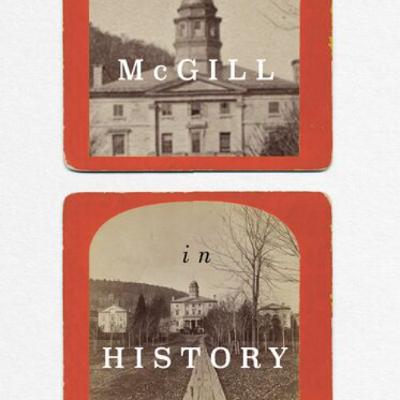
Donald Wright speaks with Don Nerbas and Tess Elsworthy about their book McGill in History. This book brings together diverse historiographies and perspectives to critically examine how McGill has been implicated in power structures and is the product of conflicting ideologies. James McGill, the university’s namesake, owned and profited from the sale of enslaved Black and Indigenous people, a legacy highlighted by the removal of his statue and ongoing debates over the racially charged Redman name used by the men’s sports teams. Imperialism, settler colonialism, slavery, sexism, and homophobia are elements of McGill’s story that must be fully integrated into a broader understanding of the university’s institutional history. Challenging siloed narratives with new research, the contributors in this volume highlight the important task of scholars to scrutinize and confront history that is unflattering and to rethink their institution’s own story – a reckoning happening across many institutions of higher education around the world.
Don Nerbas is associate professor of history and St Andrew’s Society/McEuen Scholarship Foundation Chair in Canadian-Scottish Studies at McGill University.
Tess Elsworthy completed an MA in History and Classical Studies at McGill University under the supervision of Laura Madokoro. She is currently a student in McGill's School of Information Studies.
If you like our work, please consider supporting it: bit.ly/support_WTY. Your support contributes to the Champlain Society’s mission of opening new windows to directly explore and experience Canada’s past.
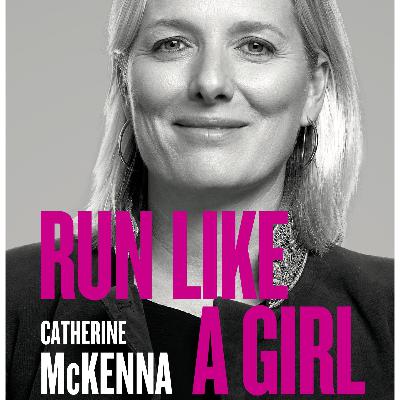
James Stewart (J.D.M.) speaks with Catherine McKenna about her book, Run Like A Girl. From Olympic dreams to the frontlines of politics and climate action, Run Like A Girl charts McKenna’s personal and political journey – from leading Canada’s climate plan to withstanding sexist attacks as “Climate Barbie.” Through a unique scrapbook-style format, McKenna blends candid personal stories, political insights, and reflections on motherhood, ambition, and activism. McKenna recounts her fight for climate policy, the ups and downs of public service, the tough decision to leave politics, and her mission to empower women in leadership. For readers of Becoming by Michelle Obama and No Logo by Naomi Klein, Run Like A Girl is a timely and deeply personal call to action – about finding your own path, breaking the rules, fighting for the future – on your own terms.
Catherine McKenna is the Founder and Chief Executive Officer of Climate and Nature Solutions. She is Canada's former minister of environment and climate change (2015-19) as well as minister of infrastructure (2019-21). The chair of the UN Secretary General’s Expert Group Net Zero, she is a frequent speaker on climate action and women empowerment.
If you like our work, please consider supporting it: bit.ly/support_WTY. Your support contributes to the Champlain Society’s mission of opening new windows to directly explore and experience Canada’s past.
Image Credit: Sutherland House
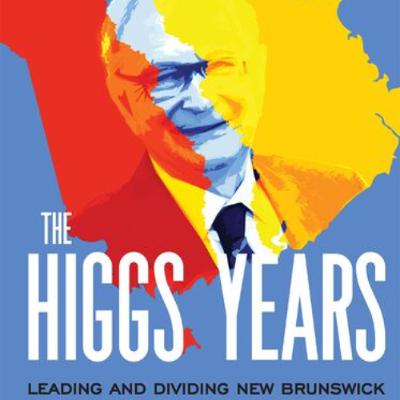
Nicole O’Byrne speaks with Gabriel Arsenault about his book The Higgs Years. Blaine Higgs was the premier of New Brunswick from 2018 to 2024. Leading his Progressive Conservative Party through six years of headline-making policy, in September 2024 he called an election, trying and failing to become the first premier since Liberal leader Frank McKenna to win three consecutive terms in that province.
The Higgs Years analyzes Higgs's premiership, particularly in terms of his party's electoral pledge fulfillment record. Contributors portray Higgs as both a unifier and a divider: he successfully reduced New Brunswick's public debt, implemented ambitious governance reforms, and managed the province's response to the COVID-19 pandemic in a bipartisan manner. Yet he also intensified ethnic and linguistic divisions, embraced an executive style of governance, and emphasized wedge issues, such as abortion restrictions and gender identity in schools. While Higgs largely avoided divisiveness in critical areas such as housing, health care, and the environment, he was nonetheless known to alternate between being a unifying and a polarizing leader. Drawing on original data from the Polimeter, a nonpartisan tool that measures whether politicians keep the promises they make, The Higgs Years raises vital questions about the integrity of the relationship between voters and their government in New Brunswick.
Gabriel Arsenault is associate professor of political science at the Université de Moncton and associate researcher at the Donald J. Savoie Institute.
If you like our work, please consider supporting it: bit.ly/support_WTY. Your support contributes to the Champlain Society’s mission of opening new windows to directly explore and experience Canada’s past.
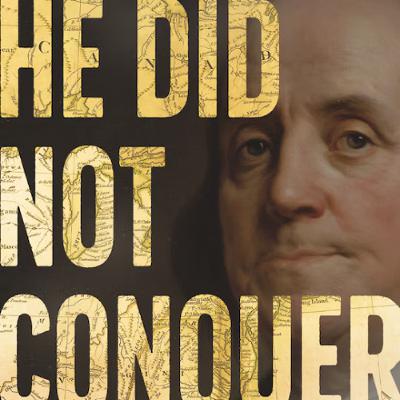
Larry Ostola speaks with Madelaine Drohan about her book He Did Not Conquer. Throughout his long and illustrious career, Benjamin Franklin nursed a not-so-secret desire to annex Canada and make it American. When he was not busy conducting scientific experiments or representing American interests at home and abroad, Benjamin Franklin hatched one plan after another to join Canada to the American colonies and then later to the United States. These were not solely intellectual efforts. He went to Montreal in 1776 to try to turn around the faltering occupation by American forces. As lead American negotiator at the 1782 peace negotiations with Britain in Paris, he held the fate of Canada in his hands. Ill health and other American priorities then forced him to abandon his decades-long campaign to possess Canada.
Franklin’s elevation to the status of an American icon has pushed this signal failure into the far reaches of collective memory in both Canada and the United States. Yet it shaped the future of North America and relations between the two neighbours over the next two and a half centuries.
Madelaine Drohan spent most of her journalistic career as a foreign correspondent, reporting on Europe for the Toronto-based Globe and Mail and then on Canada for the London-based Economist. She is a senior fellow at the Graduate School for Public and International Affairs, University of Ottawa. She lives in Ottawa.
If you like our work, please consider supporting it: bit.ly/support_WTY. Your support contributes to the Champlain Society’s mission of opening new windows to directly explore and experience Canada’s past.
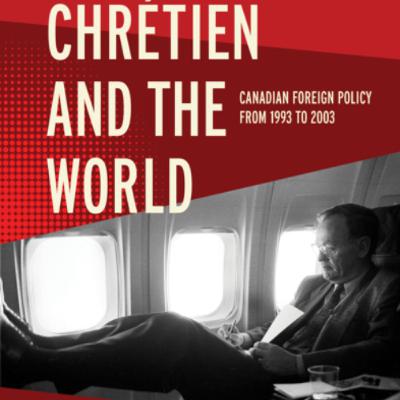
Donald Wright speaks with Jack Cunningham about his book Chrétien and the World. Conventional wisdom holds that foreign policy was not a priority for Jean Chrétien over his ten years as Canadian prime minister. In reality, he and his government pursued an often ambitious, activist policy to forward not only national interests but liberal ideals on the world stage.
Chrétien and the World combines the perspectives of key players of the time with analyses by leading scholars. They draw on personal recollections, interviews, and research to portray a foreign policy that was more coherent and engaged than previously believed. As arguably Canada’s first post–Cold War prime minister, Chrétien responded to events that reshaped the international landscape, notably the 9/11 attacks on the United States, the subsequent war on terror, the US-led invasion of Iraq, and Canadian involvement in Afghanistan. Working with trusted ministers, he emphasized trade liberalization, strong bilateral and multilateral relations, human security, and humanitarian intervention. Often characterized as purely pragmatic, Chrétien’s tenure in fact marked a high point of liberal internationalism through an agenda that emphasized Canadian values and leadership in global affairs.
Jack Cunningham is the program coordinator at the Bill Graham Centre for Contemporary International History at the University of Toronto, where he is also a fellow and assistant professor at Trinity College. He is a former editor of International Journal and co-editor of Australia and Canada in Afghanistan: Perspectives on a Mission (with William Maley) and Australia, Canada, and Iraq: Perspectives on an Invasion (with Ramesh Thakur).
If you like our work, please consider supporting it: bit.ly/support_WTY. Your support contributes to the Champlain Society’s mission of opening new windows to directly explore and experience Canada’s past.
Image Credit: UBC Press
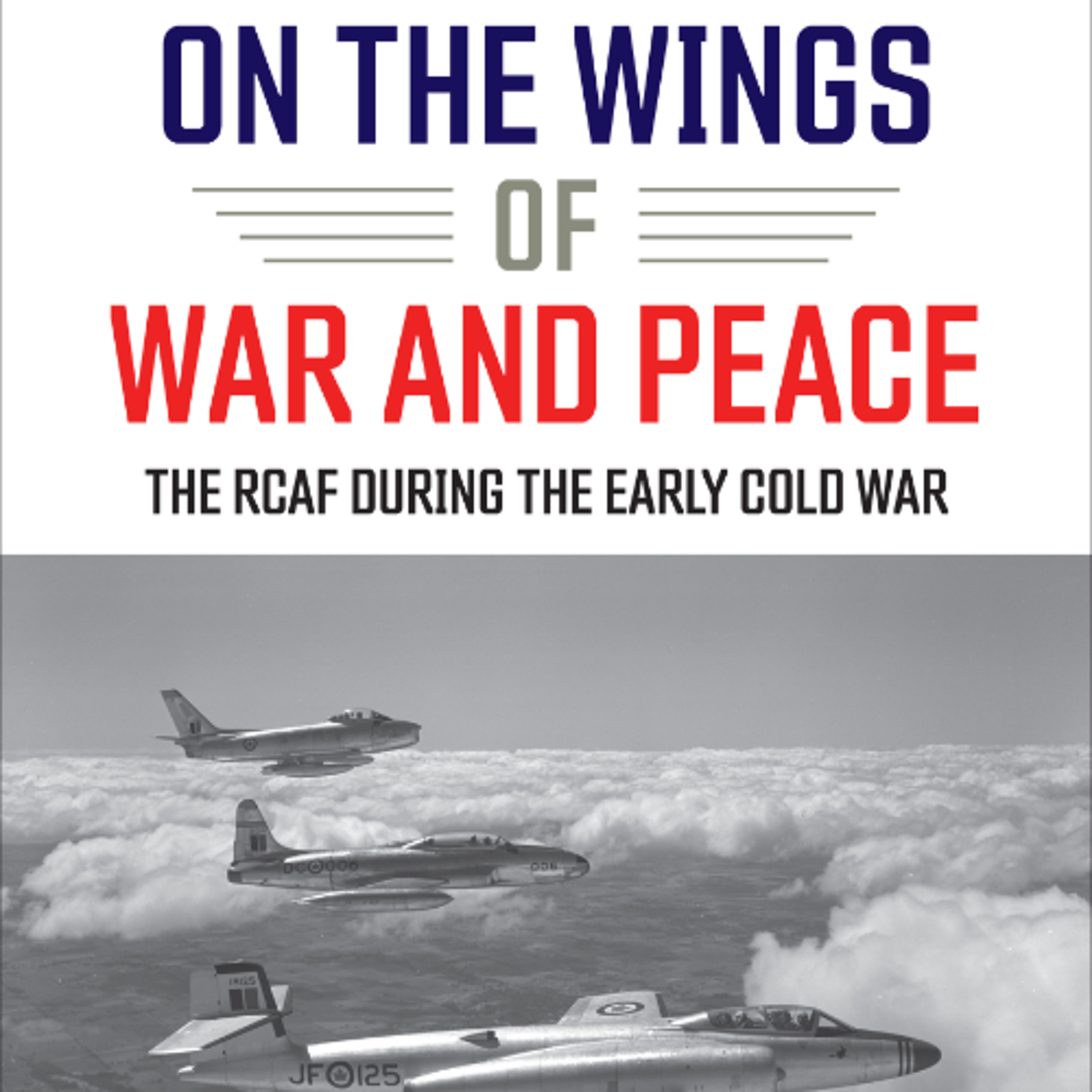
Larry Ostola speaks with Randall Wakelam and William March about their book On the Wings of War and Peace: The RCAF during the Early Cold War. Bringing together leading researchers on Canadian air power, On the Wings of War and Peace captures the history of the Royal Canadian Air Force (RCAF) during the first decades of the Cold War – a period which marked the zenith of air force accomplishments in peacetime Canada. The volume covers topics that go beyond straightforward flying operations, examining policies that drove operational needs and capabilities and the personnel, technical, and logistical functions that made those operations possible. With contributions written by former RCAF members who have both expert and personal knowledge of their topics, On the Wings of War and Peace brings new perspectives to the RCAF’s role in shaping the modern Canadian nation.
Randall Wakelam served in the Canadian Armed Forces (CAF) as a tactical helicopter pilot and educator for more than four decades; he has taught and written about air power and leadership for the past twenty-five years and is now an associate professor emeritus of the Department of History at Royal Military College.
William March is a freelance historian and writer focused on aerospace power history, Canadian military history, and leadership. He previously served as a maritime air navigator in the Canadian Armed Forces (CAF) and Royal Canadian Air Force (RCAF) for over forty years.
If you like our work, please consider supporting it: bit.ly/support_WTY. Your support contributes to the Champlain Society’s mission of opening new windows to directly explore and experience Canada’s past.
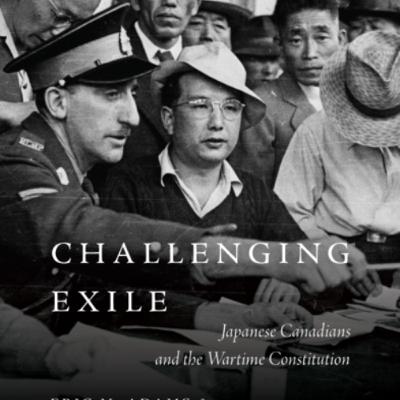
Donald Wright speaks with Eric Adams and Jordan Stanger-Ross about their book, Challenging Exile: Japanese Canadians and the Wartime Constitution. How did Japanese Canadians navigate the challenges arrayed against them? Eric M. Adams and Jordan Stanger-Ross detail the circumstances and personalities behind the proposed exile. They follow the lives of families facing government orders that forced them from their homes, stripped their livelihoods and possessions, and deprived them of fundamental rights. And they analyze the constitutional framework of the court case in which lawyers and judges grappled with the meaning of citizenship, race, and rights at a time of change in Canadian law and politics. Unfolding in a context of global conflict, sharpened borders, and racist suspicion, the story told in Challenging Exile has enduring relevance for our own troubled times.
Eric M. Adams is a professor in the Faculty of Law at the University of Alberta and has written widely on constitutional law, legal history, employment law, human rights, and legal education. He lives in Edmonton.
Jordan Stanger-Ross is a professor of history at the University of Victoria and is the author of numerous works on the history of migration and race in North America. He lives in Victoria. Together, they were awarded the John T. Saywell Prize for Canadian Constitutional Legal History for their joint scholarship with the Landscapes of Injustice partnership, examining the uprooting and dispossession of Japanese Canadians during the 1940s.
If you like our work, please consider supporting it: bit.ly/support_WTY. Your support contributes to the Champlain Society’s mission of opening new windows to directly explore and experience Canada’s past.
Nicole O’Byrne speaks with John W. Burchill and Richard Jochelson about their book Ancillary Police Powers in Canada: A Critical Reassessment. Police enforce the law, but they must also obey it. Statutes circumscribe how law enforcement officers conduct their work. Controls on police power are also embedded in the decisions written by judges, spawning a controversial area of legal debate — and of policing itself. The courts have handed police many powers to stop, search, and otherwise investigate people in the pursuit of public safety and crime prevention.
Ancillary Police Powers in Canada explains what these common-law police powers are; how they came to be; and, crucially, what the potential dangers are in their expanding scope. What is the difference between police duty and lawful authority? Should the Supreme Court revisit and possibly rescind powers when the police tactics they enable become controversial? This nuanced book surveys the evolution, application, and future development of judge-made police powers in Canada from various points of view. The authors, with backgrounds in law, policing, and criminal justice, bring historical perspective, critical legal theory, and empirical analysis to bear on an issue that is fundamental to constitutional protection from state interference with individual liberty. The result is a unique and thought-provoking journey into the changing practice of Canadian policing.
John W. Burchill is an instructor at the University of Manitoba, chief of staff with the Winnipeg Police Service, and president of the Winnipeg Police Museum and Historical Society.
Richard Jochelson is the Dean of Law at the University of Manitoba. A widely published scholar, he also spearheaded Robsoncrim.com, a leading research blog that undergirds the Criminal Law Edition of the Manitoba Law Journal.
If you like our work, please consider supporting it: bit.ly/support_WTY. Your support contributes to the Champlain Society’s mission of opening new windows to directly explore and experience Canada’s past.
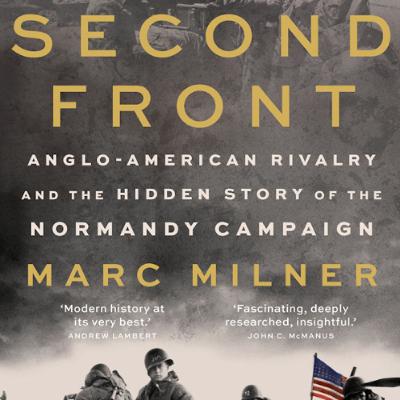
Larry Ostola speaks with Marc Milner about his book Second Front: Anglo-American Rivalry and the Hidden Story of the Normandy Campaign. In June 1944, an Allied army of British, American, and Canadian troops sought to open up a Second Front in Normandy. But they were not only fighting to bring the Second World War to an end. After decades of Anglo-American struggle for dominance, they were also contending with one another—to determine who would ascend to global hegemony once Hitler’s armies fell. Marc Milner traces this bitter rivalry as it emerged after the First World War and evolved during the fragile peace which led to the Second. American media and domestic politics dominated the Allied powers’ military strategy, overshadowing the contributions of Britain and the remarkably critical role played by Canada in establishing this Second Front. Culminating in the decisive Normandy campaign, Milner shows how the struggle for supremacy between Churchill and Roosevelt changed the course of the Second World War—and how their rivalry shaped our understanding of the Normandy campaign, and the war itself.
Marc Milner is emeritus professor of history at the University of New Brunswick and former director of the Gregg Centre for the Study of War and Society. He is the author of ten acclaimed books, including Stopping the Panzers and Battle of the Atlantic.
If you like our work, please consider supporting it: bit.ly/support_WTY. Your support contributes to the Champlain Society’s mission of opening new windows to directly explore and experience Canada’s past.
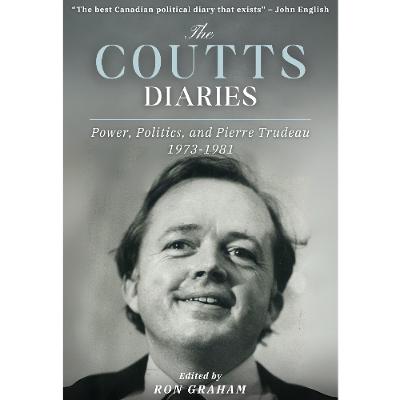
Greg Marchildon speaks with Ron Graham about his book, The Coutts Diaries: Power, Politics, and Pierre Trudeau 1973-1981. Jim Coutts, principal secretary to Prime Minister Pierre Elliott Trudeau from 1975 to 1981, was one of the most powerful men in Canada during those tumultuous years. Equally admired and attacked, respected and reviled, he was, in the words of one contemporary journalist, “a political phenomenon such as Canada has never known before: Machiavelli masquerading as a cherub.” The man who “exercised more backroom power than anyone else in modern Canadian political history,” Coutts not only knew everyone and saw everything at the centre of the action, he wrote it all down. Now, for the first time, his secret diaries have been edited into a single volume that offers an astonishing, behind-the-scenes look into public events and private lives during some of the most dramatic years in Canadian history.
Ron Graham is an author and journalist based in Toronto. He has written extensively over many decades on Canadian politics, history, religion, business, and culture.
If you like our work, please consider supporting it: bit.ly/support_WTY. Your support contributes to the Champlain Society’s mission of opening new windows to directly explore and experience Canada’s past.
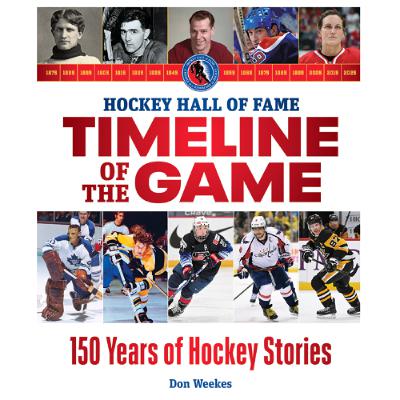
Larry Ostola speaks with Don Weekes about his book, Hockey Hall of Fame Timeline of the Game: 150 Years of Hockey Stories. The players. The builders. The moments and stories that define the game. Hockey Hall of Fame Timeline of the Game is a visual catalog of hockey's history -- from the early days of a modest ice game played on ponds to today's fast-paced, global, multi-billion-dollar sport. Hockey Hall of Fame Timeline of the Game is replete with facts, stories, headlines and stats that will satiate the appetites of even the most passionate fans. Hundreds of images, from iconic photographs to obscure illustrations and rare shots, bring the history to life -- all assembled in a colorful, attention-grabbing package. This indispensable reference guides you through eight hockey-defining eras.
Don Weekes is an award-winning television producer at CTV Montreal and the author of more than 20 hockey books, including Hockey Hall of Fame Book of Trivia and Picturing the Game: An Illustrated Story of Hockey.
If you like our work, please consider supporting it: bit.ly/support_WTY. Your support contributes to the Champlain Society’s mission of opening new windows to directly explore and experience Canada’s past.

James Stewart (J.D.M.) speaks with Alexandra Giancarlo, Janice Forsyth, and Braden Te Hiwi about their book, Beyond the Rink: Behind the Images of Residential School Hockey. In 1951, the Sioux Lookout Black Hawks from Pelican Lake Indian Residential School toured Ottawa and Toronto after winning the Thunder Bay district championship. Promoted as proof of the residential school system’s “success,” the tour masked the realities of abuse and forced assimilation. Beyond the Rink by Alexandra Giancarlo, Janice Forsyth, and Braden Te Hiwi—created with Survivors Kelly Bull, Chris Cromarty, and David Wesley—examines this legacy, celebrating the team’s achievements while exposing hockey’s role in colonial narratives and reclaiming their story to envision a more just future for Indigenous peoples and Canada.
If you like our work, please consider supporting it: bit.ly/support_WTY. Your support contributes to the Champlain Society’s mission of opening new windows to directly explore and experience Canada’s past.


Download from Google Play

Download from App Store
 United States
Wonderful episode!
great episode!
Great stuff! Look forward to hearing a podcast with Patrice Dutil on his Dorchester Review article "Not Guilty".