


 Claim Ownership
CBRL Sound
Subscribed: 7Played: 104
Subscribe

© All rights reserved
Description
CBRL is a learned society working with the countries, peoples and societies of the Levant to advance public education through promoting and disseminating research in the humanities, social sciences and related subjects.
CBRL is a non-profit organisation. Comments and queries are welcome to: info@cbrl.ac.uk
CBRL is a non-profit organisation. Comments and queries are welcome to: info@cbrl.ac.uk
97 Episodes
Reverse
LEARNING FROM THE LEVANT - Episode 7: Gerasimos Tsourapas and Imad El-Anis
In this episode of Learning from the Levant, Shatha Mubaideen speaks with Professor Gerasimos Tsourapas and Dr. Imad El-Anis about their work on “eco-humanitarian rentierism.” They explore how countries like Jordan and Egypt navigate the combined pressures of climate change and refugee influxes, and how these challenges shape policy, diplomacy, and daily life.
The discussion connects local realities to wider debates in international relations, highlighting what Jordan’s experience reveals about similar crises across the Global South.
Learn more about their research in the International Affairs journal: https://doi.org/10.1093/ia/iiaf185.
LEARNING FROM THE LEVANT - Episode 6: Jamie Fraser
In this episode of Learning from the Levant, Shatha Mubaideen speaks with Dr. Jamie Fraser, Director of the W. F. Albright Institute of Archaeological Research in East Jerusalem.
They explore the world of the Bronze Age Levant, Dr. Fraser’s discoveries at Khirbet Um al-Ghozlan, an Early Bronze Age olive oil factory in Jordan, and what these findings reveal about ancient economies and communities.
🎧 Tune in to hear how archaeology continues to shape our understanding of the past and its connection to the present.
LEARNING FROM THE LEVANT - Episode 5: Carmen Ting
In this episode of Learning from the Levant, Shatha Mubaideen speaks with Dr. Carmen Ting, an archaeologist specialising in materials analysis and ancient technologies. Dr. Ting directs several projects on the emergence and spread of medieval glazed tableware across the Levant, Islamic lands, and Central Asia. She also develops innovative non-invasive techniques to study medieval Persian ceramics, expanding the context and narratives of museum collections.
Dr. Ting is the Co-editor-in-Chief of the Journal of Open Archaeology Data and has held research and teaching positions at Cambridge, UCL, and internationally. Her work highlights the complex networks of production, trade, and consumption that shaped the medieval world.
Learning from the Levant
Episode 4: Yasir Suleiman
In this episode of Learning from the Levant, Shatha Mubaideen speaks with Professor Yasir Suleiman about the deep connections between language, identity, and place in the Arab world. They explore how Jerusalem’s street signs reveal stories of power and resistance, why Arabic holds such symbolic importance, and how cities ‘speak’ through their languages.
Professor Suleiman also shares insights for young researchers and reflects on a literary work that shaped his understanding of identity and language.
Learning from the Levant
Episode 3: Muhyi Majeed
In this episode of Learning from the Levant, Shatha Mubaideen speaks with Muhyi Majeed, a peer researcher in the Reconfiguring Heritage project. Muhyi discusses how participatory methods such as photovoice and embodied storytelling can help young people reclaim and reimagine their cultural heritage.
They reflect on the power of everyday memory, the importance of documenting unseen narratives, and what it means to leave a personal mark on a place. The episode offers a fresh look at how creative heritage methods are reshaping identity and community in Amman and beyond.
Learning from the Levant
Episode 2: Shaddin Almasri
In this episode of Learning from the Levant, host Shatha Mubaideen welcomes Dr. Shaddin, a Research Fellow at CBRL and postdoctoral researcher at Danube University Krems. Shaddin’s research focuses on inequalities between refugee and migrant groups, particularly in the SWANA and East Africa regions.
Together, they discuss the evolving refugee policies in Jordan and the Levant, the challenges of aid distribution, and the long-debated ‘durable solutions’ of resettlement, local integration, and return. With shifting political realities, questions arise about the future of Syrian refugees, international funding, and the broader implications for displaced communities in the region.
Learning from the Levant
Episode 1: Jane Humphris
In this first episode of Learning from the Levant, a Podcast Series by the Council for British Research in the Levant (CBRL), Shatha Mubaideen hosts Dr Jane Humphris, CBRL Director. Together, they discuss Dr Humphris' career in archaeology, her new role at CBRL, and the organisation’s mission to promote interdisciplinary research and cultural heritage preservation in the Levant region in 2025 and beyond.

Jerusalem: From Arab world metropolis to divided city
Dr Mansour Nasasra shares his insights into the complex history of Jerusalem. He looks back to the British occupation of the city by General Edmund Allenby in 1917 and the unstable years that followed, the division of the city in 1948 between Israel and Jordan and Israel’s capture of East Jerusalem in the 1967 Six Day war.
He recalls how Jerusalem was a hub for the Arab world with flights to all over the region from the former Jerusalem International Airport at Qalandia, now better known as the site of the Israeli checkpoint between the northern West Bank and Jerusalem. In a wide-ranging podcast he addresses the complexities and challenges of a two-state solution, the international community’s solution to the Middle East problem.
Speaker: Dr. Mansour Nasasra is a senior lecturer of Middle East politics and International Relations. He is the author of "The Naqab Bedouins : A century of Politics and Resistance, published by Columbia university press, 2017 ; co-editor of Routledge Handbook of Middle East cities , published by Routledge 2020. He is currently finishing a book about Jerusalem with Edinburgh university press.
Dr Nasasra was a CBRL research fellow at the Council’s Kenyon Institute in East Jerusalem, funded by the British Academy.
Moderator: Tom Thomson, CBRL Trustee and Honorary Secretary
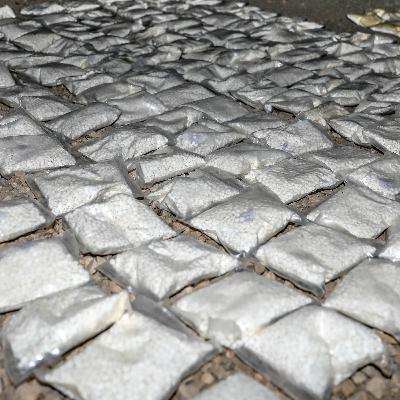
In recent years, the illicit amphetamine-like drug Captagon (Fenethylline) has become a major concern in the Middle East – both as a source of addiction and due to its connection with terrorism and the armed groups who produce and traffic it.
This presentation will provide an overview on the findings of a qualitative study about the impact of Captagon on Jordan by focusing on its relationship to organised crime, and on its role as a source of addiction. This project uniquely combines knowledge from social pharmacy; criminology and international relations to gain a comprehensive understanding of the many ways in which Captagon impacts on Jordanian public health and law enforcement institutions. The research project was funded by GCRF/UK and aimed to describe and analyse Captagon addiction in Jordan from the perspective of users and workers, to ascertain the extent of Captagon trafficking into Jordan, its sources and links to regional conflicts.
About the speakers
Prof. Mayyada Wazaify
Prof. Mayyada Wazaify is Professor of Pharmacy Practice at The School of Pharmacy at the University of Jordan and an Adjunct Professor in Social Pharmacy at The University of Helsinki, Finland. She obtained The Best Scientific Research Award by the Hamad Medical Corporation in Qatar in 2013, the Distinguished Researcher Award at University of Jordan in 2011 and 2012 and was an Advisor of the 41st Expert Committee on Drug Dependence (ECDD) of the World Health Organization (WHO), Geneva in 2018. She has consulted for Jordan Food and Drug Administration (JFDA) and Jordan Anti-Narcotics Department since 2004.
Dr Christina Steenkamp
Dr Christina Steenkamp is a Reader in Social and Political Change at Oxford Brookes University, where she teaches Peace and Conflict studies. She has published widely on topics related to conflict, peacebuilding and violence and has carried out extensive qualitative fieldwork in South Africa, Northern Ireland and the Middle East. She is currently writing her third book, this time on the relationship between organised crime and peacebuilding in the Middle East.
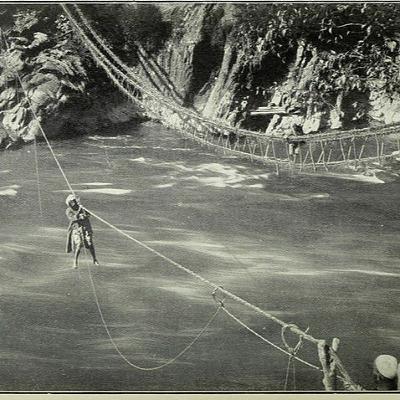
The fourth episode in the Kashmir Palestine Conversation Series addresses “Poetry and literature” and feature short presentations from Dalia Taha (poet and playwright) and Ather Zia (poet and writer, University of Colorado). The chair is Nadine El-Enany (Birkbeck, University of London)
About the speakers
Dalia Taha is a Palestinian poet and playwright living in Ramallah. Her first play Keffiyeh/Made in China was produced by the Flemish Royal Theatre and A.M. Qattan Foundation and premiered in Brussels. Her play Al’ab Nariya/Fireworks was developed under the Royal Court’s International Playwriting residency and was produced there (London) in 2015. Dalia graduated from Brown University with an MFA in Playwriting and has published two collections of poetry and one novel. She recently completed her third play There Is No One Between You and Me.
Ather Zia is a political anthropologist, poet and short-fiction writer. She is an assistant professor of anthropology and gender studies at the University of Northern Colorado, Greeley. Ather is the author of Resisting Disappearances: Military Occupation and Women’s Activism in Kashmir (June 2019) and co-editor of Resisting Occupation in Kashmir (UPenn 2018) and A Desolation called Peace (Harper Collins, May 2019). She has published a poetry collection The Frame (1999) and another collection is forthcoming. Ather’s ethnographic poetry on Kashmir has won an award from the Society for Humanistic Anthropology. She is the founder-editor of Kashmir Lit and is the co-founder of Critical Kashmir Studies Collective, an interdisciplinary network of scholars working on the Kashmir region. Ather is also the founder/editor of e-zine based on Kashmir titled Kashmir Lit at www.kashmirlit.org.
Nadine El-Enany is a Reader in Law at Birkbeck School of Law and Co-Director of the Centre for Research on Race and Law (@CentreRaceLaw). Nadine teaches and researches in the fields of migration and refugee law, European Union law, protest and criminal justice. Her current research projects, funded by the Leverhulme Trust, focus on questions of race and justice in death in custody cases, and the role of law in addressing health inequalities arising from environmental harm. Nadine has written for the Guardian, the LRB Blog, Pluto Blog, Verso Blog, Open Democracy, Media Diversified, Left Foot Forward and Critical Legal Thinking. Her book, (B)ordering Britain: law, race and empire (2020) is published by Manchester University Press.
The Kashmir-Palestine Conversations Series aims to create space for dialogue, networking and knowledge exchange between scholars of both Kashmir and Palestine. The series is organised by the Kashmir-Palestine Scholars Solidarity Network – an initiative conceived out of a British Academy Knowledge Frontiers Seed Grant awarded to scholars at the Council for British Research in the Levant (Dr Toufic Haddad) and the University of the West of England (UWE Bristol) (Dr Emma Brännlund) in early 2020.
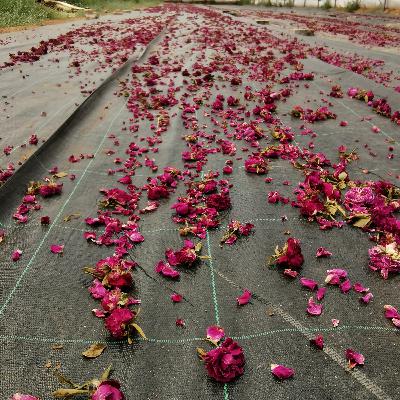
In this webinar, the project partners share insights from the 2021/22 FIELD SONGS project, an AHRC-funded collaboration of agricultural and social scientists at the University of Edinburgh and Douzan Art & Culture and Syrian Academic Expertise, two Syrian-run organisations based in Turkey. For this project, the partners documented refugees’ intangible agricultural heritage and present-day working conditions in Turkish farming and met with local governments and Syrian agricultural entrepreneurs to envision alternative futures for Syrian labour. In a region shaped by intersecting forms of displacement and dispossession, including through climate change, conflict, and globalisation, we argue for an integrated approach to strengthening refugees’ rights as workers and agricultural experts.
In the webinar, the project partners share best practices, such as municipal cooperatives for long-term refugee employment, how refugee farmers build new supply chains around traditional Syrian products, and how to link decent working conditions to climate-smart agriculture. Together, the findings on the continuing relevance of Syrian agricultural heritage and expertise can inform sustainable and collaborative policy-making in Turkey and other forced migration contexts.
About the project:
The One Health FIELD Network was launched in 2019 by Professor Lisa Boden at the University of Edinburgh. Through projects in Syria and across the Middle East, it collaborates with researchers, practitioners, and decision-makers to ensure a successful transition away from humanitarian provision of short-term food supplies and agricultural inputs towards long-term contingency planning for food security in conflict affected states.
Douzan Art and Culture is a Syrian cultural organization launched in Turkey in 2019, to enable Syrians to build their contemporary cultural identity, through: Preserving cultural memory, providing spaces for interaction, building capacities, and enhancing solidarity and cooperation to build our cultural future between the heritage and modernity.
Syrian Academic Expertise is a network of Syrian academics and experts in Syria and the diaspora. It implements sustainable projects and studies in various sectors to provide innovative solutions appropriate to crises and post-crisis contexts and contributes to experiences exchange to raise self-resilience and promote peacebuilding in Syria.
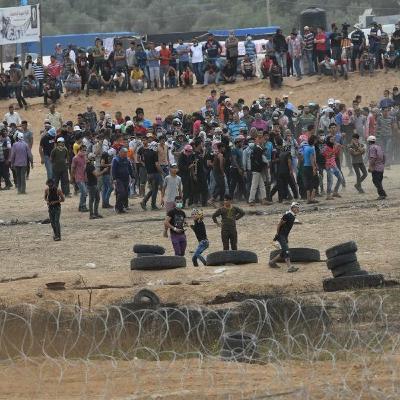
This is the third in our Kashmir Palestine Conversation Series which features short presentations from Ala Al Azzeh (Birzeit University) and Inshah Malik, and was be moderated by Virinder Kalra (University of Warwick).
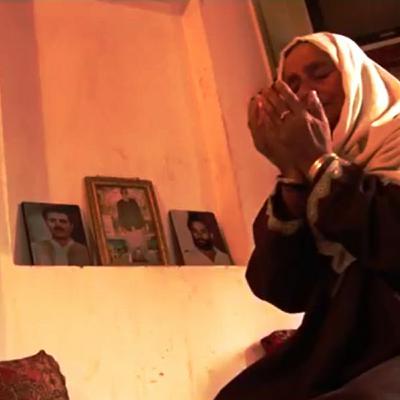
The first Kashmir-Palestine Conversation will feature a screening of the film “Bring Him Back” (dir. Fahad Shah, 2015), followed by a discussion with Palestinian academic Suhad Daher-Nashif and filmmaker Talat Bhat.
Bring him Back is a documentary film about the struggle of Maqbool Bhat’s mother to get her son’s mortal remains back from Tihar jail of India. It is directed by Kashmiri journalist and writer, Fahad Shah, and produced by Talat Bhat, under RåFILM Productions.
About the speakers
Suhad Daher-Nashif is a medical and cultural anthropologist, dedicated to study and analysis of the intersectionality between science, society, politics and bureaucracy throughout health and death practices in the MENA region. Originally trained as occupational therapist, she holds a Masters in Health Sciences, and PhD in sociology and anthropology. She worked in several academic and research institutions in the Middle East, most notably the College of Medicine at Qatar University-Qatar, and the School of Medicine at Keele University-UK, where she currently is a Lecturer in the Sociology of Health. Her most recent published works include In sickness and in health: The politics of public health and their implications during the COVID-19 pandemic (2022) and; Colonial management of death: To be or not to be dead in Palestine (2021).
Talat Bhat/Butt, producer and editor of Bring Him Back, is an activist, documentary filmmaker, Journalist and trade union campaigner based in Sweden. He has a Master’s degree in Media Production and researching on the impacts of new media technologies in conflict zones. He is also the project leader of RåFILM’s project Jammu Kashmir TV/JKTV Live Kashmir’s first WebTV to promote freedom of free speech and dialogue in all parts of the occupied areas under Pakistani and Indian occupation. Furthermore, Bhat’s trade union documentary project, Rocking the Birger Jarl, deals with his struggle for non-EU seamen workers in Sweden. www.birgferjarl.info
Palestine and Kashmir are two of the most longstanding unresolved geopolitical puzzles resulting from the end of the British Empire. They share an unenviable list of commonalities in their historical conditions: from the legacies and vestiges of British colonial partition, to the large refugee populations and extensive diasporas they produced. Their struggles for national self-determination are also repeatedly shaped by the prominent influence of regional actors. More recent history has witnessed even more linkages emerging as a product of the post-Cold war detente between India and Israel; their military, political and economic cooperation; ideological affinities between Hindutva and Zionism; aspirations to act as regional hegemons, and; influence from global institutions.
Despite the many commonalities between Kashmir and Palestine and the prolonged durations of their conditions, opportunities for dialogue, networking and knowledge exchange between scholars have been limited. This initiative aims to fill this gap by exploring possibilities for networking and cross-fertilisation between scholars working on Palestine and Kashmir respectively.
This network was initially conceived out of a British Academy Knowledge Frontiers Seed Grant awarded to scholars at the Council for British Research in the Levant (Dr Toufic Haddad) and the University of the West of England (UWE Bristol) (Dr Emma Brännlund) in early 2020.
After encountering significant delays due to the Covid-19 pandemic, the initiative finally seeks to publicly launch, creating a space where scholarly conversations on Kashmir and Palestine can take place.
The keynote lecture on “Scholar-activist Solidarity: Building Alliances” was given by Dr Goldie Osuri, author and editor of multiple articles and special journal editions that have addressed Kashmir and Palestine in tandem. She spoke in-house at CBRL’s Jerusalem Kenyon Institute.
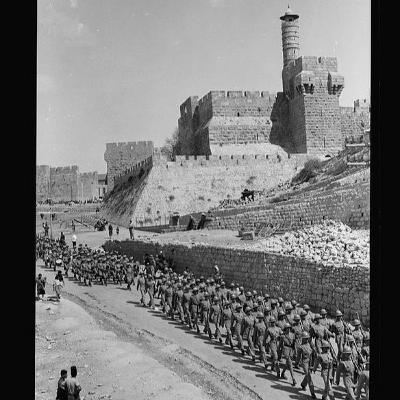
We are joined by Professor Hughes in the third event of our series of events to mark the centenary of the British Mandate in Palestine (1922-48).
Professor Hughes will use material from his recent book on Britain’s repression of the Arab revolt in the 1930s to detail Britain’s devastatingly effective methods against colonial rebellion. The British army had a long tradition of pacification that it drew upon to support operations against Palestinian rebels in 1936. An Emergency State of repressive colonial legislation underpinned and combined with military action to crush the Arab revolt. The British had established in the 1920s in Palestine a civil government that ruled by proclamation and it codified in law norms of collective punishment that British soldiers used in 1936. This was ‘lawfare’. It ground out the rebellion with legally bounded curfews, demolition, fining, detention, punitive searches, shootings, and reprisals. Such repressive legislation facilitated soldiers’ violent actions. Rebels were disorganised and unable to withstand such pacification measure, and so they lost.
About the speaker:
Matthew Hughes is Professor of History at Brunel University London. His 2019 Cambridge University Press book on Britain’s pacification of Palestine during the Arab revolt has been translated into Arabic by the Center for Arab Unity Studies. He is currently working on a book examining the British colonial state and British soldiers’ actions on Borneo in the 1960s during the Confrontation with Indonesia.
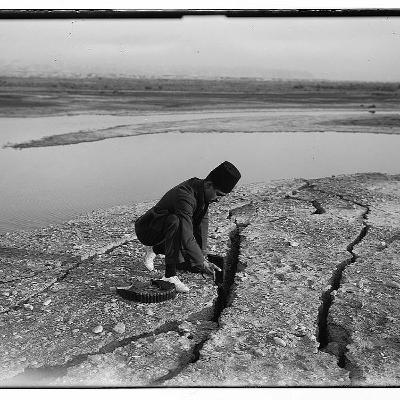
When an earthquake shook Palestine, Transjordan and the south of Lebanon and Syria in 1927, terms such as the Richter scale or plate tectonics which we now use to talk about seismic events were still a thing of the future. In global science, scholars were debating what caused earthquakes and were trying to work out how to measure their power and impacts. This lecture looks at how local scientists, journalists and government officials in the 1920s Levant thought about and reacted to earthquakes and how they fit into the broader cultural and political discourses of the day.
About the speaker:
Sarah Irving is Lecturer in International History at Staffordshire University in Britain and a Leverhulme Early Career Fellow researching the social and cultural history of the 1927 earthquake. Her recent publications include an edited volume, The Social and Cultural History of Palestine: Essays in Honour of Salim Tamari, due in January 2023 from Edinburgh University Press, and ‘The House of the Priest’: A Palestinian Life (1885-1954), an edition of the memoirs of the Palestinian Orthodox priest and nationalist Niqula Khoury, edited and introduced with Charbel Nassif and Karène Sanchez Summerer, and available in open access from Brill. She is also editor-in-chief of the CBRL journal Contemporary Levant.
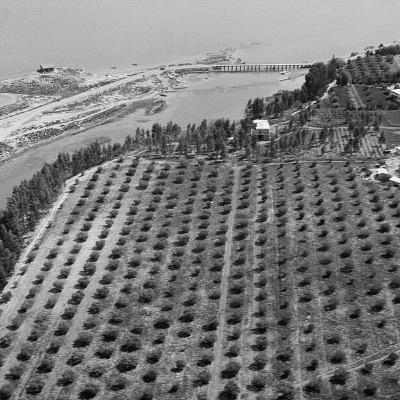
In this talk Dr Muna Dajani will look at how a unified watershed governance was devised by external powers, mainly the British and Americans, to construct the water resources of the Jordan River Basin as a unified, apolitical and ‘natural’ watershed. In their attempt to depoliticise the boundaries of the watershed, these forces reinforced a particular worldview that considered natural resources as sites of extractivism and exploitation in the quest for modernity and nation state-building. This resulted in a highly politicised, securitised and dehistoricised conceptualisation of water and its governance. The talk draws on examinations of technical and hydrogeological water availability and use, while also paying attention to ever-changing relations between humans and their environment. It examines how engineers and government representatives engage with water as a resource and sheds light on how ethnographic inquiry into watersheds could challenge the rigidity and banality of scientific conceptualizations and understandings about water and its flows.
About the speaker:
Dr Muna Dajani holds a PhD from the Department of Geography and Environment at the London School of Economics (LSE). Her research focuses on documenting water struggles in agricultural communities under settler colonialism. She is a Senior Research Associate at the Lancaster Environment Centre (LEC) where she works on the project entitled “Transformations to Groundwater Sustainability” (T2GS) which explores promising grassroots initiatives of holistic groundwater governance, shedding light on traditional and intergenerational skills and knowledges. She has contributed to numerous studies on the hydropolitics of the Jordan and Yarmouk River Basins. She also co-led a collaboration project documenting the untold story of the occupation of the Syrian Golan through developing an online knowledge portal that includes local resources and personal reflections on the collective imaginary of historical events and the popular struggle taking place there.
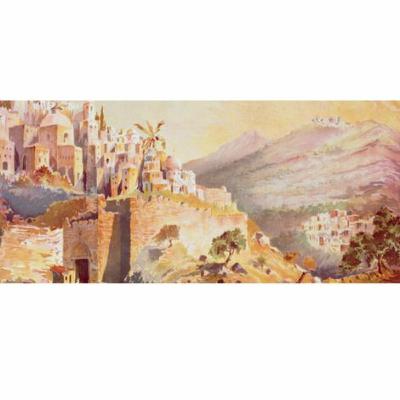
This talk considers British involvement in and attitudes towards Palestine during the so-called “Peaceful Crusade” of the nineteenth century. Polly presents aspects of his book Palestine in the Victorian Age, arguing that Britain’s occupation, and the Zionist movement’s settler-colonisation, were significantly prefigured by Victorian Britons. Drawing on Evangelical Christian discourses around the Holy Land and the Jewish people and the geopolitical rivalries of the Eastern Question, these individuals created expectations for Palestine’s future which were then put into practice from 1917 to 1948 and beyond.
Polley also undertakes a historiographical consideration of nineteenth-century Palestine. Narratives beginning in 1917 not only elide the longer role of Western imperialism in the Palestinian tragedy, but also fail to convey the social, economic and environmental conditions existing before colonisation, giving an impression – inadvertently or purposefully – of a land without a history, or as some would have us believe, without a people.
This webinar is the first in a series of events organised by the CBRL Kenyon Institute marking the centenary of the British Mandate in Palestine (1922-1948).
About the speaker:
Gabriel Polley completed his PhD in Palestine studies in the European Centre for Palestine Studies, University of Exeter, in 2020. He previously studied the history of art and literature at the University of East Anglia, and Palestine and Arabic studies at Birzeit University, and taught in the West Bank, Palestine. He currently works in London in the translation and international development sector.
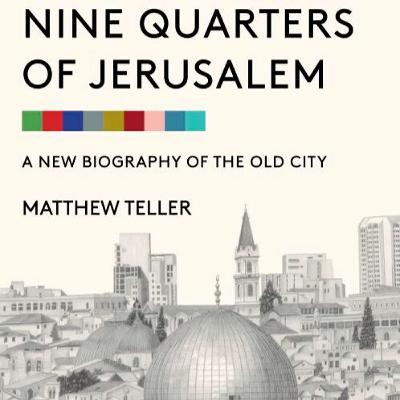
In Jerusalem, what you see and what is true are two different things. Maps divide the walled Old City into four quarters, yet that division doesn’t reflect the reality of mixed and diverse neighbourhoods. Beyond the crush and frenzy of its major religious sites, much of the Old City remains little known to visitors, its people overlooked and their stories untold.
This webinar highlights voices of the communities of the Old City by bringing into dialogue the writings of author/journalist Matthew Teller and artist/academic Bisan Abu Eisheh.
Teller’s latest book ‘Nine Quarters of Jerusalem’ is a highly original ‘biography’ of the Old City and its communities, evoking the city’s depth and cultural diversity, from its ancient past to its political present.
Abu Eisheh is a lifelong resident of the Old City, whose academic and artistic works investigate history, society and politics through the lost details of grand narratives.
This webinar takes place on the occasion of the US release of ‘Nine Quarters of Jerusalem’, and will feature a presentation on the book’s findings, followed by a discussion led by Abu Eisheh exploring insider/outsider dynamics that shape understandings, policies and communities of Jerusalem.
About the speakers:
Matthew Teller writes for the BBC, Guardian, Independent, Times, Financial Times and other global media. He has produced and presented documentaries for BBC Radio 4 and World Service, and has reported for ‘From Our Own Correspondent’ from around the Middle East and beyond. He is the author of several travel guides, including the Rough Guide to Jordan; his most recent book is Quite Alone: Journalism from the Middle East 2008–2019.
Bisan Abu Eisheh is an artist and academic born and raised in the Old City of Jerusalem. His creative practices feature video performances, installations and interventions within gallery spaces and the public sphere that aim to generate dialogue around national identity, mobility, migration and socio-political justice. He has also just submitted his PhD thesis to the University of Westminster, which looks at visual art practices as a form of Palestinian knowledge production and distribution in conjunction with the post-1993 realities. He is currently CBRL’s Jerusalem Research and Events Coordinator based at the Kenyon Institute.
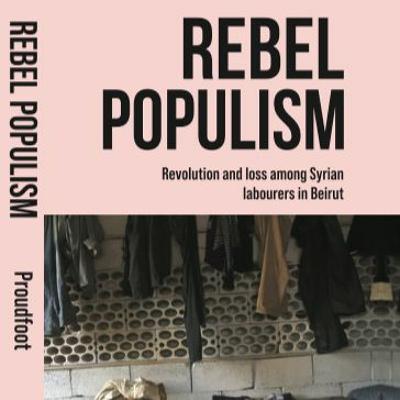
Rebel populism tells the story of the Syrian uprising through the eyes of migrant workers in Beirut. Workers from Syria have maintained a presence in Lebanon for decades. There was a time when their wages stretched further back home. However, from the mid-2000s, liberalising reforms saw accelerating levels of poverty. Migration shifted from an ‘opportunity’ to a survivalist strategy.
But in 2011, revolution came to Syria. Rural towns and villages – the birthplaces of this book’s principal characters – exploded in revolt. Several men returned, some later joining armed militias, but even those who remained abroad found means to protest at a distance. This political moment, which Proudfoot conceptualises as an example of ‘rebellious populism,’ also represents an increasingly common global contentious political formation. It is a form of mass politics which emerges not via a charismatic orator or longstanding ideological convictions, but through the weaving together of grievances aimed at the ruling class. Drawing on extensive ethnographic fieldwork, Rebel populism offers fresh and vital insight into Syrian uprising, war and ultimate crisis.
About the speaker:
Philip Proudfoot is an anthropologist based in the Power and Popular Politics Cluster at the Institute of Development Studies. He is also the former Assistant Director of CBRL Amman. Philip’s work explores the political economy of de-development, forced migration, gender and sexuality, humanitarianism, protracted conflict, and populist mass movements.
Follow Philip on Twitter @PhilipProudfoot

Comments

Download from Google Play

Download from App Store
 United States