


 Claim Ownership
Nach Daily
Subscribed: 37Played: 1,241
Subscribe

© All rights reserved
Description
NachDaily is a project of Yeshiva Ateres Shimon. A perek of day of Navi in 5 minutes or less. covering the entire Neviem Rishonim. Yeshoshua, Shoftim, Shmuel I, Shmuel II, Malchim I, Melachim II, Yeshaya, Yechezkel, Yirmiya, Hoshea, Yoel, Amos, ovadya, Yona, Micha, Nachum, Chabakuk, Tsfanya, Chaggai, Zechariah, Melachi.
Thank God, we finished Navi and now we're learning Tehilim.
The Shiurim are interlined with actual pesukim, classic meforshim, Drash and Chassidus to deliver practical lessons relevant to our everyday lives.
Note: NachDaily is just one among the many "Daily E-mail" programs created by Yeshiva Ateres Shimon. Other programs are: Emunah Daily, Think Hashem Daily, MIshna Daily, Praying with Fire Daily, Kitzur Daily and more...
By: Rabbi Shaya Sussman, LCSW
Thank God, we finished Navi and now we're learning Tehilim.
The Shiurim are interlined with actual pesukim, classic meforshim, Drash and Chassidus to deliver practical lessons relevant to our everyday lives.
Note: NachDaily is just one among the many "Daily E-mail" programs created by Yeshiva Ateres Shimon. Other programs are: Emunah Daily, Think Hashem Daily, MIshna Daily, Praying with Fire Daily, Kitzur Daily and more...
By: Rabbi Shaya Sussman, LCSW
765 Episodes
Reverse
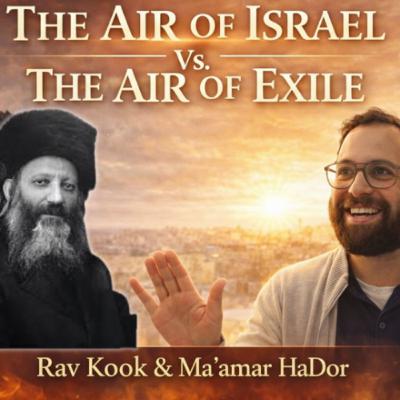
Why does Judaism feel so different in Israel? In this week’s class on Ma’amar HaDor, we look at the radical shift Rav Kook and the Vilna Gaon demand of our generation. We often think of Judaism as a set of ideas we carry with us, but Rav Kook teaches that it is actually an environment we breathe.
In the Diaspora, we live in a "vile atmosphere"—a spiritual graveyard where our institutions are destined to rot and our practice is driven by fear and guilt. But in Eretz Yisrael, we enter our natural habitat. Here, the "vile air" is replaced by a holiness that unites the Body and the Soul, making the Light and the Vessel one.
In this episode, we explore:
The Litmus Test: Why feeling "disgusted" by the Diaspora is actually a sign of your soul's health and Kedusha.
The Graveyard of Exile: Why the Vilna Gaon says the old models of Judaism must disintegrate to make room for the new.
The New Paradigm: Moving from "Defensive Judaism" (survival mode) to a Judaism of maturity, alignment, and joy.
No God in the Diaspora? Unpacking the shocking idea that true connection to the Divine requires the "Air of the Land."
Sources: Rav Kook (Ma’amar HaDor & Orot), The Vilna Gaon
Are you practicing a religion that feels like a collection of parts, or a unified whole?
In this session, we dive deep into Rav Kook’s "Meimor HaDor" to address the "spiritual claustrophobia" of the modern age. When we encounter a Judaism that is reduced to technicalities without a soul, our inner giant feels suffocated.
We explore the profound connection between Rav Kook’s national vision and the Internal Family Systems (IFS) model of psychology. Just as Rav Kook refused to "exile" the secular pioneers—insisting their energy was a vital part of the Divine whole—we often exile parts of our own emotional selves, leading to trauma and fragmentation.
In this class, you will learn:
The Law of Conservation: Why Rav Kook insists that "nothing is lost" and every "secular" spark has a holy root.
Healing the Fragmented Self: How Pnimiyut HaTorah (the Inner Torah) acts as the "connective tissue" that stops our parts from fighting each other.
Questions as a Portal: How to turn intellectual doubt and emotional contradiction into a deeper, more resilient Emunah.
The New Yishuv & The Old Soul: Why the merging of idealism and spirituality is the only way to bring God’s presence into the modern world.
Key Quote from the Class: "The soul isn't rebellious; it’s just too big for a small room. Don't make the person smaller—make the Torah bigger."
Are you serving Hashem because you have to, or because you want to?
In today’s class, we explore the profound transition from a modality of "conquering" and "forcing" ourselves to do Mitzvos, to a state of inner alignment. Just like in a healthy marriage, where we spend time with our spouse not out of a sense of duty, but out of a genuine desire to "hang out," our relationship with the Divine should be fueled by love and connection.
Key Topics Covered:
Survival Mode vs. Thriving: Why the "I have to" mindset is a symptom of survival mode, and how to reclaim your "want" by aligning with your deepest values.
Self-Worth & Service: Understanding that you show up for Hashem because you—and the light you bring to the world—are worth it.
Lessons from the Greats: We dive into powerful stories from the Arizal and the Rebbe Rayatz during his time in prison to see what true devotion looks like under pressure.
Rav Kook’s Vision: Why this restoration of "Serving with Love" is intrinsically tied to the Land of Israel and the spiritual healing of our generation.
The goal is simple: To stop "doing" Judaism and start "living" in a relationship with Hashem.
In this week’s shiur on Rav Kook’s seminal work, Ma’amar HaDor, we dive into one of the most challenging yet comforting concepts in Jewish thought: Yerida Letzorech Aliyah (The Descent for the Sake of Ascent).
Summary of Today’s Class: Rav Kook explains that before a higher, holier reality can be built, the old "vessels"—the infrastructures and frameworks of previous generations—must sometimes rot, disintegrate, and fall apart. Why? Because the old structures simply cannot contain the massive "New Light" being ushered into the world.
Key Themes Covered:
The Holy Rot: Understanding why what looks like destruction on the outside is actually Hashem’s way of clearing space for something greater.
The National Revival: As Am Yisrael returns to Eretz Yisrael, the old ways of the Exile (Galut) must give way to a New World Order of holiness.
Foundational Truth: Even "good" things like Mitzvos and Kedusha cannot stand if their foundation is distorted. Sometimes, the entire structure must fall so a healthier, purer foundation can be laid.
Personal Application: How this cycle of breaking and rebuilding applies to our nation, our families, and our own individual souls.
Join us as we learn to see the hand of Hashem within the chaos and find hope in the process of rebuilding.
In today’s class we continued Rav Kook’s Meimor HaDor and explored how Rav Kook looked beneath the surface of his generation and saw not simply behavior, but potential. Rav Kook teaches that every generation carries the spiritual DNA of its historical hour. Because we were born close to Geulah, we carry Geulah Neshamot — souls that are sensitive, idealistic, and spiritually complex.
Rav Kook shows us that this generation cannot be reached through behavioral models or cognitive compliance alone. These souls require Torah that is short, clear, deep and authentic — words that go straight to the inner world of the Neshama. We spoke about moving beyond CBNT-style education into a Torah of depth and dignity.
We also brought in Rebbe Nachman’s story of the Sad Tzaddik and the practice of Nekudot Tovot, learning how a true educator sees and draws out the hidden point of goodness inside each person. The work of this generation is to see beneath the surface, to validate the inner world, and to teach in a way that honors the soul rather than managing the behavior.
This is how Geulah unfolds — not by changing people from the outside in, but by awakening the light that is already present within them
In today’s shiur, we explored Rav Kook’s profound process of Aliyat HaDorot — the elevation of the generations — and the rise of collective consciousness.
Rav Kook explains that throughout most of history, spiritual greatness was concentrated in a small number of towering individuals: great tzaddikim and erudite souls who stood far above the general population. The broader public, the hamon am, remained relatively simple in spiritual awareness and intellectual depth.
As history progresses, however, something radical happens. The great souls no longer appear only as rare individuals. Instead, their light becomes diffused into the collective. The giants descend a level, while the masses rise a level. The result is a generation in which ordinary people carry greater inner depth, moral sensitivity, and spiritual capacity than ever before.
This shift creates both an aliyah and a yeridah at the same time:
An aliyah — because the collective soul of Am Yisrael has risen.
A yeridah — because the old spiritual models and leadership structures can no longer contain the expanded inner world of the people.
Rav Kook teaches that when the collective rises but is still taught by lower or outdated spiritual frameworks, the impact can be damaging. Fear-based authority, small ideas, and shallow teaching no longer work. A generation with a greater inner stature cannot be reached through fear — only through love, compassion, good words, and deep Torah.
We saw how Rav Kook insists that the only way to reach such a generation is by offering higher, deeper, and more expansive Torah — teachings that match the size of the soul and speak honestly to the mind and heart.
Rav Kook notes that in his own time this transformation was already underway, though it was largely imperceptible and had not yet fully come to fruition. Today, its effects are unmistakable.
This shiur reframes the crisis of our generation not as a failure of Torah, but as a sign that the souls have risen — and the vessels must now rise with them.
In this shiur, we continued Rav Kook’s Meimor HaDor and explored his deeply compassionate diagnosis of our generation.
Rav Kook teaches that this generation is not sinful or rebellious, but rather emotionally flooded — drowning in spiritual pain. The confusion, anger, distancing, and breakdown we see are not signs of moral failure, but of souls overwhelmed by intensity they cannot yet regulate or contain.
Rav Kook pleads with the leaders and rabbis of his time to respond not with fear, punishment, or scorn, but with empathy, good words, and deep, honest teaching. True leadership, he argues, begins with compassion — the ability to see even ideological opponents, including Zionist youth, as suffering souls in need of guidance and healing, not enemies to be crushed.
We also explored Rav Kook’s radical insight that the very cultural forces that damaged the generation must be transformed into tools of healing. In Rav Kook’s time, this meant redeeming literature and intellectual culture. In our generation, this applies directly to audio, video, social media, and digital culture — not rejecting them, but filling them with deeper inner content, meaning, and light.
We concluded with Rav Kook’s revolutionary teaching of Aliyat HaDorot — the elevation of the generations. The crisis of our time is not because Torah has failed, but because the souls have risen, while the old vessels can no longer contain their light. The task of our generation is not to suppress this light, but to guide it, refine it, and help it find its true place within Torah.
In this shiur, The Subconscious Sickness, we explored Rav Kook’s actual diagnosis of the core problem of our generation. A good diagnosis is half the cure — and Rav Kook offers one of the most penetrating psychological–spiritual readings of modern Jewish life.
He explains that a deep subconscious sickness has taken root within the generation, creating a breakdown in language, communication, and a person’s inner map of meaning. This fracture inside the self leads to loneliness, isolation, anxiety, and a sense that “no one understands me — not even myself.”
Rav Kook traces this crisis to two forces:
External influences — popular ideas, cultural trends, and “sifrus” that people give enormous emotional weight to, even though these ideas lack real content, truth, or spiritual grounding. They distort the inner compass.
Internal questioning — a person begins to examine their Jewish and religious upbringing and quietly wonders: What is it all worth? What does it mean for me? Why doesn’t it answer my deepest questions anymore?
The result is a generational disorientation — a subconscious ache that affects identity, belonging, and purpose.
We connected this with Chanukah, the ultimate “in-between generation”: a battle over worldview, culture, and the mind. Just as the Greeks fought to reshape consciousness, Rav Kook shows that our struggle today is also a war over meaning — and the healing lies in revealing deeper light.
In this fifth class on Meimor HaDor, we learned Rav Kook’s radical response to the spiritual vacuum of the modern generation. Instead of tightening rules or relying on behavioral expectations, Rav Kook tells us to show them the light — to reveal the deepest, brightest parts of Torah so the searching soul can finally recognize its home.
Rav Kook explains that the confusion and restlessness of the new generation come from too much light, not too little. Their questions are big because their souls are big. When old vessels crack, we don’t shrink the light — we expand the vessel. That means teaching Pnimius, uncovering the inner psychology of Torah, and guiding them to the entrance rather than forcing them through the door.
We connected this message to Chanukah and Yud-Tes Kislev, two moments when hidden light breaks through darkness, and saw how daring Rav Kook was in calling for this approach over 100 years ago — and how urgently we need it today.
In this fourth shiur on Meimor HaDor, we explored Rav Kook’s profound diagnosis of a generation in transition — a generation standing in a liminal space, suspended between worlds. Rav Kook describes his era, and ours, as strangely high yet deeply confused, overflowing with idealism while also wrestling with emptiness and collapse. As the neshamas of the generation rise, the old spiritual structures can no longer contain their light, leaving many — from teenagers at risk to those leaving their communities — searching for something they can’t yet name.
Rav Kook teaches that we cannot enter the Yerushalayim shel Ma’alah until we truly enter the Yerushalayim shel Matah — meaning that lofty souls must find grounding, integration, and a home in the real, concrete world of Torah and mitzvos. Our task is to illuminate a path for them: to offer deeper Torah, more inner light, and spiritual frameworks big enough to hold their greatness. Ultimately, what these souls are seeking has always been hidden within the broad and holy arc of Torah itself.
In this third class on Rav Kook’s Meimor HaDor, we continued exploring his breathtaking reading of our generation — a generation torn between greatness and confusion, light and darkness, trauma and renewal.
We began with Rav Kook’s raw validation of the pain of modern Jewish history: the silence, the shame, the collapse of dignity, and the deep psychic wounds carried by both parents and children. But in this class, we watched Rav Kook make a gentle, powerful turn — from acknowledging the trauma to showing us the first steps of healing.
Rav Kook describes a generation that is paradoxically very low and very high. A generation filled with humility and chutzpah, rebellion and idealism, spiritual thirst and moral frustration. Children embarrassing parents, norms dissolving, confusion everywhere — not because the generation has fallen, but because the souls have risen and the old vessels can no longer contain their light.
We learned how Rav Kook reframes this inner collision as the birth pangs of spiritual evolution, and how to begin moving forward with compassion, dignity, and vision. We also learned a beautiful supporting source in Orot HaTechiyah 39, which deepens this theme of a generation struggling to hold powerful lights in fragile vessels.
A shiur about trauma, healing, inner greatness, and the complex soul of Dor HaGeulah.
In this second shiur of the My Generation series, we continue exploring Rav Kook’s Meimor HaDor — his lament over the emotional collapse and inner defeat of the generation.
Rav Kook describes a world where individuals, families, and communities are wrapped in emotional pain and existential angst, leading to isolation, despair, and even psychosomatic suffering. Yet beneath the surface of this darkness, something sacred is taking shape — a new light beginning to emerge, and new-old souls descending into the world.
The old structures must decay for something more whole to be born. What appears on the outside as disintegration is, on the inside, the beginning of renewal.
We also learn a powerful piece from Orot Yisrael 5:13, where Rav Kook speaks of the birth of a “new Jew,” one who transcends outdated forms to embody a more complete spiritual consciousness.
All of this, he writes, unfolds specifically in Eretz Yisrael, the spiritual ground of transformation.
Topics:
The emotional pain of the generation
Isolation, despair, and psychosomatic suffering
Rebirth through decay and disintegration
“New-old souls” and spiritual evolution
Orot Yisrael 5:13 – The birth of a new Jew in Eretz Yisrael
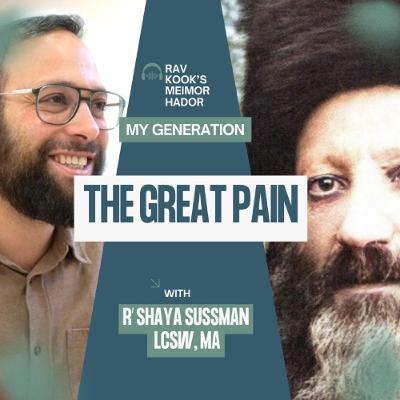
In this first shiur of the *My Generation* series, we begin exploring Rav Kook’s *Meimor HaDor*, found in *Ikvei HaTzon*.
We discuss the historical context in which Rav Kook was writing and how he saw light emerging from darkness — even in the spiritual confusion of his generation.
Together we learn the prologue to *Ikvei HaTzon*, uncovering why Rav Kook chose this name, and begin the essay with its opening theme: **the great, subconscious pain of the generation.**
Rav Kook teaches that this deep, unspoken pain is not only psychological but cosmic — a pain that transcends language, reaching toward redemption. He speaks to the struggle of our times and even hints to the inner turmoil that will surface near the end of days.
---
**Topics:**
* The meaning of *Ikvei HaTzon*
* The hidden light within darkness
* The subconscious pain of the generation
* Why we can’t yet articulate our deepest suffering
* Rav Kook’s vision for the end of days
---
#RavKook #MyGeneration #MeimorHaDor #IkveiHaTzon #Orot #SpiritualGrowth #JewishThought #Emunah #Chassidus #ShayaSussman #PnimiusHaTorah
For Those Struggling | Rav Kook on Teshuva and the Yamim Noraim by Rabbi Shaya Sussman, LCSW
YouTube Description
In this shiur on Orot HaTeshuva, Rav Kook teaches that the healthiest state of the soul is teshuva. Teshuva is not about becoming someone new—it’s about peeling back the extra, external layers and returning to who we already are at our core.
We’ll explore:
How teshuva is the most natural expression of the soul
Why the parts of ourselves that feel broken aren’t our true essence
The teaching that teshuva precedes the world
How there is a tikkun for every sin
Join us to rediscover teshuva as the simple, natural return to a healthy soul.
In this shiur, we explore Rav Kook’s profound teaching that true teshuva begins with self-knowledge. 🌱
We need to have a sense of self in order to draw close to Hashem.
When we bypass our personalities and souls, we fall into false teshuva.
Remember: at our core, we are truly a neshama.
Every person has a Nekudah Tova — a unique point of goodness that cannot be lost.
By discovering our true self, we uncover our soul’s light — and this is the foundation of real teshuva. Rav Kook teaches that when individuals return to themselves, the world is uplifted, paving the way toward geulah and Mashiach.
✨ Join us as we journey into Orot HaTeshuva and discover how finding yourself is the first step in finding God.
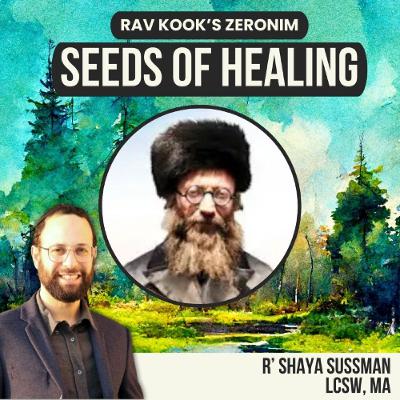
What does Rav Kook really think about nationalism? Is secular Zionism just an empty vessel—or part of the Divine plan?
In this shiur, we explore Rav Kook’s bold and nuanced vision: how nationalism without Hashem becomes distorted and dangerous, but religion without a national container becomes self-absorbed and disconnected from reality. Rav Kook challenges both camps and offers a powerful third path—where body and soul, land and light, vessels and spirit come together.
We also dive into how distorted expressions of nationalism still serve a holy purpose in the unfolding story of redemption. And I share a personal story about attending a settler festival with my wife—witnessing a type of Jew that hasn’t existed in 2,000 years.
This is not your typical take on Zionism or religion. It’s Rav Kook’s deep spiritual map for national revival, techiya, and Geulah in our homeland.
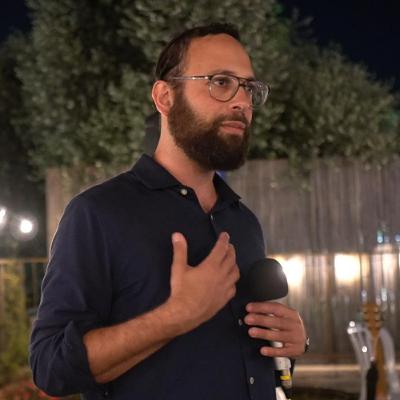
At the Nach Daily book launch, Shaya Sussman shared a personal and powerful message about failure, redemption, and the deep relevance of Navi in our lives. From failing through school—and even getting a 32 in Navi—to launching a sefer that brings Navi to life, Shaya reminded us that second chances aren’t the exception; they’re the rule.
This is the story of Am Yisrael: We were in our land. We lost it. And now—against all odds—we’re back. Living in Eretz Yisrael today is living inside a promise fulfilled, a living testament to Divine mercy and faithfulness.
Shaya spoke about how every Sefer in Navi is not just a historical document, but a spiritual stencil overlaying our current moment. Nevuah wasn’t just a past experience—it was the awareness that Hashem is with us. And one day, we’ll meet the Neviim again and recognize how each of us was part of the story of second chances—for ourselves, our people, and the world.
Hashem created the world with light and vessels—a delicate balance between spiritual ideals and the structures that hold them. But what happens when that balance is lost?
In this shiur, we explore how Hashem’s pristine light descends into the mire and muck of this world—enclothed in form, even in darkness—not by accident, but by design. The vessel may look broken, the light may seem hidden, but the descent is purposeful.
We unpack Rav Kook’s powerful warning: when nationalism is severed from its holy source, it becomes a destructive force. But when the nation becomes a vessel for Hashem’s light, nothing is more sacred. The ultimate vision is Am Yisrael as a "goy kadosh", a priestly nation that channels Divine presence into the world.
This class dives deep into the Kabbalistic and spiritual framework of light and form, ideal and reality, showing how nationalism can either reflect the highest holiness—or collapse into darkness, depending on whether the light is present within the vessel.
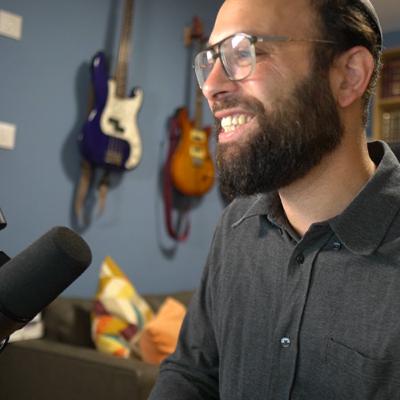
What do we do when life feels upside down—when nothing is k’seder, and the world within and around us feels like it's unraveling?
In this experiential shiur, we explore Rebbe Nachman’s teaching in Likutei Moharan Tinyana 82 on the battle between k’seder (order) and shelo k’seder (disorder), and how that inner war mirrors the emotional and spiritual chaos so many of us feel today. We then turn to Likutei Halachos, Hilchos Tefillin, for a deep perspective on chizuk, patience, and the hidden redemptive power of suffering.
Rav Kook’s Orot HaTeshuvah 15:10 reminds us that the soul is always whole. When we forget our deeper nature—individually or nationally—we descend into chaos. But remembering who we truly are realigns us with Hashem’s will and opens the gates of redemption.
The class concludes with a short, guided mindfulness practice to help us return to a state of inner k’seder, reconnect with the soul’s quiet strength, and walk forward with more clarity, calm, and Emunah.

Comments

Download from Google Play

Download from App Store
 United States