



Wharton FinTech Podcast
Subscribed: 1,603Played: 27,653
Subscribe

© All rights reserved
Description
Connecting you with the people, companies, and ideas revolutionizing global financial services. Our guests are the leading fintech founders, investors, and thinkers in the world.
Subscribe and follow us for more FinTech content by searching @whartonfintech on your preferred platform!
Subscribe and follow us for more FinTech content by searching @whartonfintech on your preferred platform!
545 Episodes
Reverse
In this episode of the Wharton FinTech Podcast, Jackson Ellis sits down with Mike Milotich, CEO of Marqeta, to explore the evolving landscape of modern payments and embedded finance. Mike shares insights from his leadership experience at a pioneering card issuing platform, discussing how fintech companies are reshaping the way businesses and consumers interact with money.
The conversation covers Marqeta’s role in enabling innovative payment solutions, the growing importance of real-time financial infrastructure, and how companies can scale responsibly in a rapidly changing regulatory and economic environment. Mike also reflects on the strategic priorities of a CEO in a high-growth fintech company, including capital allocation, risk management, and navigating public markets.
This episode offers a thoughtful look at the intersection of finance, technology, and strategy, highlighting key trends shaping the future of payments and the broader fintech ecosystem.

In this episode of the Wharton FinTech Podcast, host Vaibhav sits down with Christian Widhalm, CEO of Bloom Credit, to unpack how credit data actually moves through the financial system and why the infrastructure behind it has not meaningfully changed in decades. Christian shares his journey from Major League Baseball to fintech leadership, including his years at LendKey, and explains how Bloom is modernising credit reporting through a B2B, API-first platform built for accuracy, flexibility, and faster reporting cycles. We also dive into Bloom+, which enables consumers to build creditworthiness using consumer permissioned checking account and bill payment history, helping many establish credit profiles without taking on new debt.
We cover:
- Why legacy credit reporting standards were built for a different era
- How real-time, higher-quality data can reduce errors and improve decisioning
- What alternative data means for thin-file consumers and financial inclusion
- Why policy and regulator engagement matters in credit innovation
- A pragmatic view on AI in credit operations and reporting
- Leadership lessons on trust, transparency, and operating without ego
If you want a behind-the-scenes look at credit, alternative data, and the next evolution of creditworthiness, this conversation is for you.

In this episode, Cleo Fan sits down with Sandeep Patil, a Partner at QED Investors, about building and investing in fintech companies across global markets. They discuss Sandeep’s journey from operating roles at Capital One, Flipkart, and Truecaller to venture investing, how QED approaches fintech investing across Asia-Pacific, and his perspective on where the fintech ecosystem is headed, covering themes like stablecoins and AI at the application layer.
In this episode of the Wharton FinTech Podcast, Bobby Ma sits down with Kyle Mack, CEO & Co-Founder of Middesk, a Series B company.
Kyle shares his experience building Middesk, the leading business identify platform modernizing business verification, risk evaluation, and compliance. Its fast, frictionless APIs support KYB, credit assessment, and tax registration use cases, with data updated in days, not months. More than 500 customers trust Middesk to verify, underwrite, and grow with confidence. The company has raised over $70 million in funding and is backed by top-tier investors including Accel, Sequoia, and Insight Partners.
We discuss:
- Kyle’s journey building Middesk starting from developing proprietary data pipelines to creating a leading business identity platform
- The value proposition of KYB and how it is fundamentally more complex than KYC
- How Middesk serves and plugs into its customers’ decisioning workflows
-The future of business identity as it evolves with AI and other technology trends
In this episode, Jackson Ellis sits down with Ben Borodach, co-founder and CEO of april, the AI-powered tax platform that is fundamentally changing how Americans interact with the tax code. Taxes have long been a "once-a-year headache," isolated from the rest of our financial lives. Ben explains how april is shattering this status quo by embedding tax intelligence directly into the apps and platforms where consumers already manage their money, from banking and payroll to wealth management.
In this episode of the Wharton FinTech Podcast, Bobby Ma sits down with Dean Brauer, President & COO of Cybrid.
Dean shares his experience building Cybrid, who combines stablecoin, fiat, and compliance into a single API-first platform helping financial institutions, FinTechs, and enterprises integrate stablecoin infrastructure and launch end-to-end cross-border payment solutions to more than 150+ countries, at up to 90% lower cost, and with full transparency. The Company raised a $10 million Series A funding round led by BDC Capital and has grown 5x in the last 12 months.
We discuss:
- Dean’s journey building Cybrid and his deep entrepreneurship experience
- The solutions Cybrid offers in orchestrating stablecoin payments
- The Company’s bespoke thought partnership with customers in creating and executing their stablecoin strategy
- Recent regulatory & industry trends driving forward this rapidly growing space
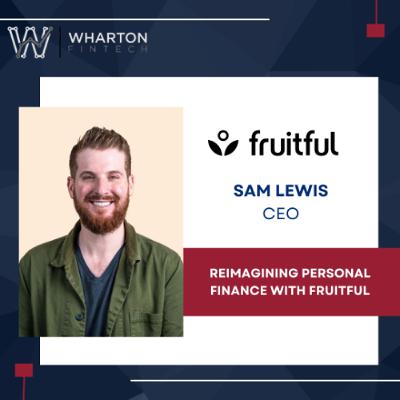
In this episode of the Wharton FinTech Podcast, Bobby Ma sits down with Sam Lewis, CEO of Fruitful.
Sam shares his experience building Fruitful and how the company is reimagining personal finance through a membership model that combines CFP® guidance with AI automation to transform every paycheck into progress. Fruitful has raised $37 million to date and serves thousands of members across all 50 states.
We discuss:
- Building Fruitful and scaling its membership model for personal finance
- Why income allocation matters more than asset allocation for most Americans
- Closing the execution gap between financial advice and real-world action
- The role of AI in scaling CFP® workflows
In this episode, Jackson Ellis speaks with Stripe’s first employee and the founder of Increase, Darragh Buckley, about building reliable, scalable banking infrastructure. We discuss lessons from Stripe’s earliest days, how Increase is modernizing access to payment rails, and why trust, uptime, and simplicity matter more than ever in today’s financial system.
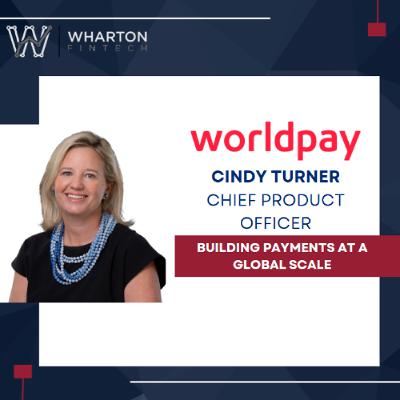
In this episode of the Wharton FinTech Podcast, Jackson Ellis sits down with Cindy Turner, Chief Product Officer at Worldpay, to explore what it takes to build and prioritize products at one of the world’s largest payment processors. Cindy shares her unconventional path into payments, lessons from leading product at companies like Visa, JP Morgan, PayPal, and Braintree, and how Worldpay operates across 185+ countries and trillions of dollars in annual volume. The conversation dives into AI’s growing role in payments, the rise of agentic commerce, shifting liability models, and how global processors compete and evolve in an increasingly complex fintech landscape.
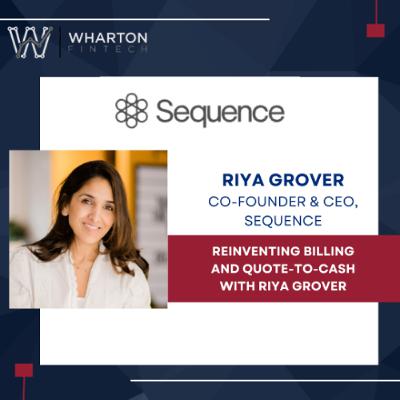
In this episode of the Wharton FinTech Podcast, host Vaibhav speaks with Riya Grover, co-founder and CEO of Sequence, an AI native revenue platform that unifies quoting, billing automation, and receivables so finance can finally run at the speed of sales.
Riya shares her journey from investment banking and Harvard Business School to exiting her first startup and then launching Sequence to fix one of the most neglected parts of the CFO stack, quote to cash and accounts receivable. She goes deep on what it really takes to find product market fit in a saturated software world, why AI native entrants can out execute incumbents, and how Sequence is using agents to automate complex finance workflows.
They also unpack Riya’s recent Series A fundraise, the story that resonated with investors, and her candid advice for founders building in a noisy, AI heavy, but more competitive than ever venture environment.
In this episode, we learn about:
- Why quote to cash and revenue operations have lagged behind AP and spend in automation
- How Sequence uses AI agents to read contracts, generate invoices, and support finance teams
- What investors really cared about in Sequence’s Series A, from logo quality to 190 % NRR
- How Riya stays close to customers while scaling a fast growing infra company
- Her advice for aspiring founders on standing out in today’s crowded AI landscape

In this episode of the Wharton FinTech Podcast, host Vaibhav sits down with Sarah Levy, CEO of Betterment and former executive at Disney, Viacom, and Nickelodeon. Sarah shares her insights on the evolution of financial services, why trust is the cornerstone of financial decision-making, how Betterment balances simplicity with expanding investor choice, and how AI is shaping the future of wealth management. Sarah emphasizes the significance of fiduciary responsibility and the role of simplicity in financial tools, while also providing advice for aspiring entrepreneurs in the wealth management space. She also shares key insights from Betterment’s latest Retirement Readiness Report, including why Gen Z is both confident and deeply anxious about the future. A wide-ranging conversation that blends behavioral finance, product strategy, and the future of wealth tech.

In this episode of the Wharton FinTech Podcast, host Meaghan McGowan sits down with Mike Yu, CEO and Co-founder of Vesta, to explore the modernization of the mortgage technology stack. Mike shares Vesta’s origin story and how he and his team are rebuilding the loan origination system to be flexible, automated, and API-first. The episode explores:
- How modern workflows, partner integrations, and recent developments, including Vesta’s partnership with Pennymac, are reshaping lender operations
- Macro trends, the growing role of AI, and how lenders are rethinking their technology stacks
- The future of “self-driving” origination, and
- Advice for founders building in regulated financial infrastructure

In this episode, Jackson sits down with Ximena, Co-Founder and Co-CEO of Prometeo, to discuss the future of financial infrastructure in Latin America. Ximena shares her journey from tech journalism to entrepreneurship, the inspiration behind building Prometeo, and how the company is creating a unified API layer across the Americas to power open banking, real-time payments, and next-generation financial innovation.
In this episode, you’ll learn:
- How Prometeo became one of LatAm’s leading open banking infrastructure platforms
- The challenges of building across highly fragmented regulatory and technical environments
- Why true financial inclusion requires more than just account access
- How real-time payments, cross-border rails, and agentic financial services are reshaping the region
- Prometeo’s philosophy on trust, cybersecurity, and building long-term infrastructure “legacy”

In this episode of the Wharton FinTech Podcast, host Ruhi Jain sits down with Aaron Kaplan, Co-CEO of Prometheum, Inc., for a deep dive into the digitization of capital markets and the future of fully regulated digital assets. Aaron shares his journey from securities attorney to fintech founder, why he believes U.S. federal securities laws offer the most resilient pathway for blockchain innovation and how Prometheum’s end-to-end infrastructure aims to reshape how digital assets are issued, traded, custodied, and settled.
Together, Ruhi and Aaron explore:
- Why the regulatory lens is essential in building blockchain-based financial infrastructure
- Efficiency gains blockchain can unlock across settlement, transparency, capital usage and market structure - and what this means for both institutions and retail investors
- A forward-looking view into the future of capital markets, the evolving role of intermediaries and the “wild-card” risks Aaron believes the industry is overlooking
A must-listen for anyone interested in the intersection of blockchain, securities regulation and the next decade of digital market infrastructure.
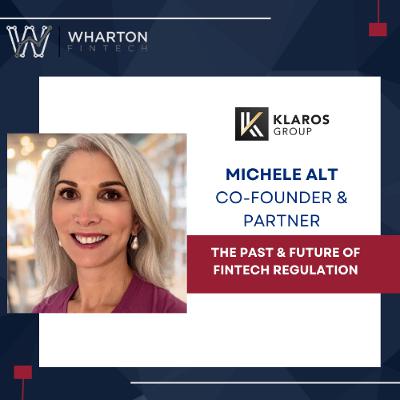
In this episode, Wharton FinTech’s Abhi Chadha sits down with Michele Alt, Co-Founder of The Klaros Group and former OCC regulator, to unpack the evolving relationship between fintechs and the U.S. banking system. Michele shares her insights from two decades at the Office of the Comptroller of the Currency (OCC) and her current work helping non-banks pursue bank charters. They discuss the shifting regulatory climate across administrations - from the OCC’s early fintech charter attempts, to the Biden-era freeze, and now a renewed openness under Trump 2.0. Michele explains the nuances of charter types like industrial loan companies (ILCs) and national trust banks.
The conversation explores:
- The history and future of fintech chartering
- Differences among OCC, FDIC, and Fed oversight
- How U.S. fintech regulation compares to Europe and the U.K.
- Challenges foreign fintechs face when entering the U.S. market
- How Michele’s OCC experience helps startups navigate complex regulatory processes
Michele also shares her perspective on the cyclical nature of financial regulation - from deregulatory “sugar highs” to inevitable crackdowns - and offers advice for those eager to build a career in fintech regulation and compliance.
In this episode of the Wharton Fintech Podcast, Jackson Ellis sits down with Sid Jayakumar, founder and CEO of FinsterAI. Sid shares his journey from a background in engineering to founding FinsterAI, a company redefining how financial professionals interact with data. The conversation dives into:
- The vision behind Finster: an intelligent platform that leverages AI to streamline financial analysis, automate research, and improve decision-making
- What differentiates Finster in a crowded AI and fintech landscape
- How Finster enhances workflows for analysts and investors
- The strategic challenges of scaling an AI-driven financial product
- How Finster navigates the evolving regulatory environment for AI in finance and what the future holds for intelligent financial systems
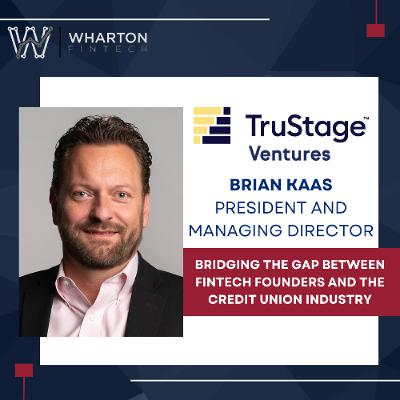
In this episode of the Wharton FinTech Podcast, Bobby Ma sits down with Brian Kaas, President and Managing Director of TruStage Ventures, the corporate venture capital arm of TruStage.
Brian shares his experience founding TruStage Ventures and the work he and his team have done in the past decade bridging the gap between FinTech founders, credit unions, and the broader financial services industry culminating in $400 million in investments since 2016.
We discuss:
- The 140+ million member-strong credit union movement and services they provide to the community
- The partnership and value add TruStage Ventures brings in working with its FinTech investments
- Investment criteria and role the group plays in the broader TruStage organization
- Outlook on how stablecoins and other emerging technologies are poised to disrupt the financial services industry
- The success they have had investing in early-stage FinTechs through their Discovery Fund

In this episode of the Wharton Fintech podcast, Djavaneh sits down with Robbie Figueroa, co-founder and former COO of Maza, now Chief Business Officer at Flex following Maza and Flex’s merger in late 2024.
Robbie shares how growing up in Queens with immigrant parents from Brazil and Ecuador inspired him to tackle financial exclusion. What started as a Spanish-first neobank for underbanked consumers evolved into a platform tailored to solopreneurs operating in the informal economy. From onboarding thousands of users to building ITIN application tools and automating entity formation, Maza met customers where they were, and grew alongside them.
We discuss:
How Maza identified and served Spanish-speaking solopreneurs
Why distribution often beats product innovation in fintech
The strategic fit between Maza and Flex and what’s next
Robbie also shares hard-won advice for early-stage founders and reflects on what it takes to build products that truly resonate with underserved users.
Whether you’re passionate about inclusive fintech, curious about startup pivots, or exploring founder-to-operator transitions, this episode is full of insight.
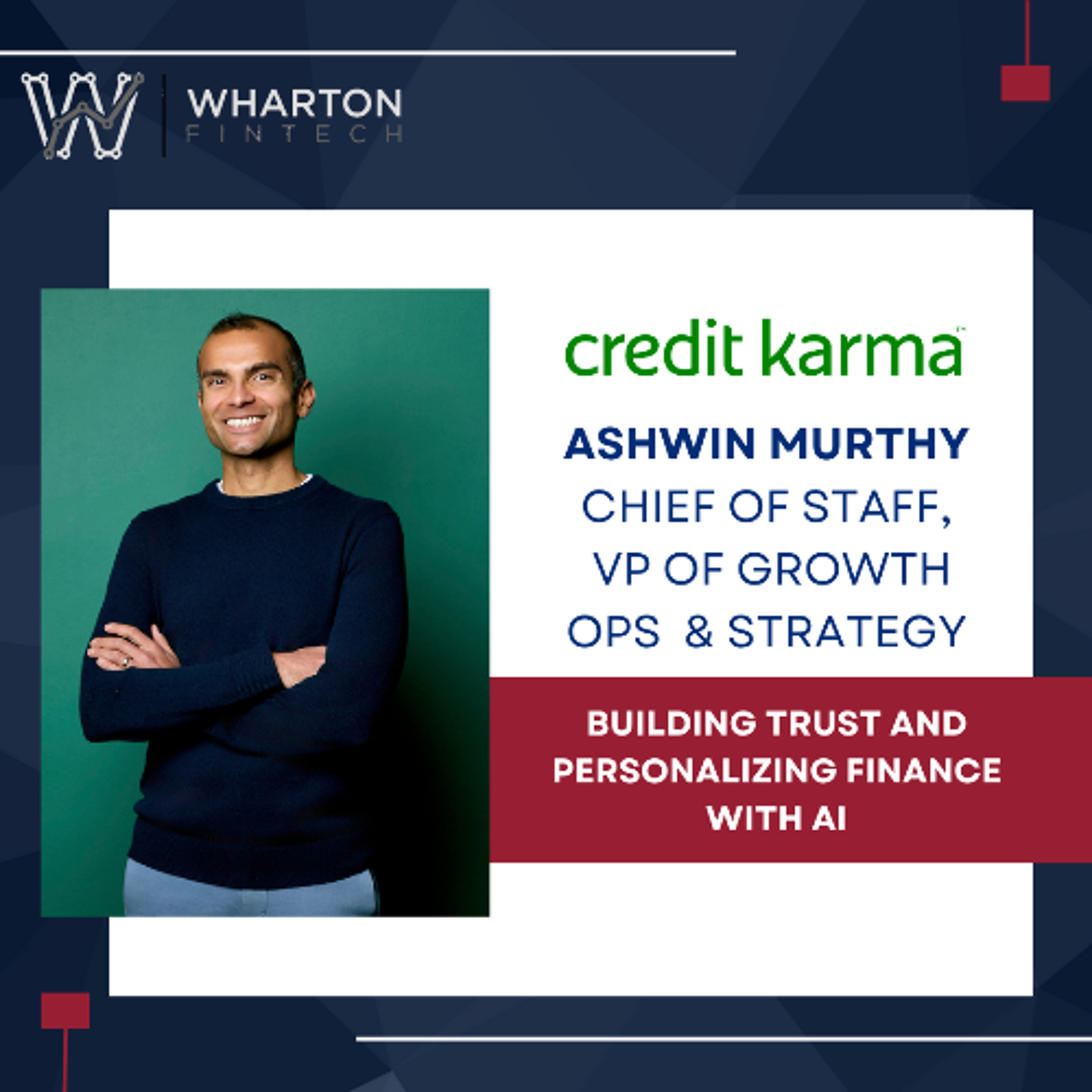
In this episode of the Wharton Fintech Podcast, host Sabrina Fathi speaks with Ashwin Murthy, Chief of Staff and VP of Growth Operations and Strategy at Credit Karma, about how one of the most recognizable names in consumer fintech continues to evolve.
Ashwin shares his journey from investment banking and consulting to leading strategy at Credit Karma. He discusses the company’s expansion from free credit scores to taxes, savings, and more, and how data, trust, and personalization have been critical to that journey. The conversation also dives deep into GenAI’s role in financial decision-making, Credit Karma’s evolving partnership with Intuit, and the future of financial access.
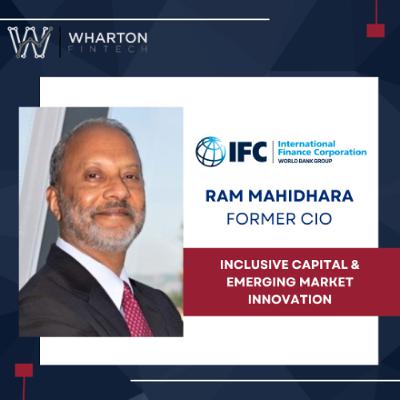
In today’s episode, Kimberly Zhang sits down with Ram Mahidhara, former Chief Investment Officer at the International Finance Corporation (IFC), part of the World Bank Group. Ram reflects on his decades of experience investing across emerging markets, driving inclusive growth through private capital, and championing the role of fintech in global development.
Tune in to hear about:
• How technology and private investment are reshaping financial inclusion in emerging economies
• Lessons from leading cross-border investment strategies at scale
• Ram’s perspective on the role of fintech in sustainable development and what’s next for innovation in underserved markets

Comments

Download from Google Play

Download from App Store
 United States