


 Claim Ownership
Farmerama
Subscribed: 635Played: 18,783
Subscribe

© All rights reserved
Description
Farmerama Radio is an award-winning podcast sharing the voices behind regenerative farming.
We are committed to positive ecological futures for the earth and its people, and we believe that farmers of the world will determine this.
Each month, we share the experiences of grass roots farmers instigating radical change for the future of our food, our health, and the planet. Tune in to hear how these producers are discovering a more ecological farming future and to learn how their decisions can have a positive impact on us all. This is regenerative farming in action.
We are committed to positive ecological futures for the earth and its people, and we believe that farmers of the world will determine this.
Each month, we share the experiences of grass roots farmers instigating radical change for the future of our food, our health, and the planet. Tune in to hear how these producers are discovering a more ecological farming future and to learn how their decisions can have a positive impact on us all. This is regenerative farming in action.
194 Episodes
Reverse
We are the bread system. If you eat bread – or any grains – you are part of it.
>>
This series was first released in Nov/Dec 2019. We are re-releasing it now 6 years later as we are digging back in to document the collective impact of the series and to celebrate the work of those continuing to build the new grains movement. As part of this project we are collecting voice notes from anyone who listened, inviting you to share a bit of how Cereal impacted you and whether the series sparked any change or action, big or small - maybe it made you think differently about something, or maybe you completely changed career - we want to hear both and all stories! The voice notes will form part of a new Farmerama episode and digital soundmap. We are collecting these stories now, so if you would like to send your story our way, then you can send us an audio message on:
WhatsApp +447466301300, or via our instagram messages.
Please let us know who you are, where you are based and then whatever part of your story you would like to share.
We are excited to hear from you!
>>
So how can we all get involved, and what can we do to usher in the new grains movement to build joy, nutrition and resilience in all of our communities?
In this final episode, we explore what a more efficient, nutritious, regenerative and joyful bread system might look like. We hear some of the ways people are coming together and building networks to strengthen the movement in the UK and further afield.
It’s clear that in this beautifully complex, entangled system, even just a conversation can spark much wider change. This is a story of hope and a blueprint that has the potential to cause reverberations far beyond bread. It turns out that bread is political – and you, too, can take a stand for the world you want to live in.
This might be our final episode of Cereal, but it isn’t the end – it’s just the beginning! Join the new grains movement. Talk to your local bakers, seek out local millers, thank your farmers, be open-minded, be curious.
A huge thank you to everyone who’s contributed to Cereal. As well as the voices you hear in this episode, many more conversations have helped to shape the series.
Thanks to Andrew Whitley (Scotland the Bread), Kim Bell (Small Food Bakery and UK Grain Lab), Mark Lea (Greenacres Farm), Fred Price (Gothelney Farmer), Steven Jacobs (Organic Farmers & Growers), Ben MacKinnon (E5 Bakehouse), Anne Parry (Felin Ganol), Rupert Dunn (Torth y Tir), Josiah Meldrum (Hodmedods), Tomaso Ferrando (University of Antwerp) and Fintan Keenan. Thanks also to the Lost Revellers and everyone who came to the Nottingham Cereal launch harvest party and lent their voices to make the Flour Ambassador's Pledge.
This series was made possible thanks to the generosity of the Roddick Foundation. Please listen, share, review and subscribe, and support the farmers instigating change. All six episodes can be found on Soundcloud and all podcasting platforms. And if you’d like to support Farmerama, visit patreon.com/farmerama.
Cereal is produced and edited by Katie Revell, with support from Abby Rose and Jo Barratt. Suzie MacCarthy and Hanna Söderlund also worked on the series. Our theme music is by Owen Barratt.
Voices:
Andrew Whitley, co-founder of the Real Bread Campaign, and Scotland the Bread
Kimberley Bell, founder Small Food Bakery, Nottingham
Steven Jacobs, Business Development Manager, Organic Farmers and Growers
Ben MacKinnon, founder E5 Bakehouse, London
Anne Parry, Felin Ganol Watermill, Wales, and Welsh Grain Forum
Rupert Dunn, Torth y Tir Community-Supported Peasant Bakery, Wales
Josiah Meldrum, co-founder Hodmedods
Mark Lea, Greenacres Farm, Shropshire
Fred Price, Gothelney Farm, Somerset
Tomaso Ferrando, Bread as a Commons
Fintan Keenan, farmer, miller and engineer, Denmark/Ireland
>>
This series was first released in Nov/Dec 2019. We are re-releasing it now 6 years later as we are digging back in to document the collective impact of the series and to celebrate the work of those continuing to build the new grains movement. As part of this project we are collecting voice notes from anyone who listened, inviting you to share a bit of how Cereal impacted you and whether the series sparked any change or action, big or small - maybe it made you think differently about something, or maybe you completely changed career - we want to hear both and all stories! The voice notes will form part of a new Farmerama episode and digital soundmap. We are collecting these stories now, so if you would like to send your story our way, then you can send us an audio message on:
WhatsApp +447466301300, or via our instagram messages.
Please let us know who you are, where you are based and then whatever part of your story you would like to share.
We are excited to hear from you!
>>
The UK is the fifth largest economy and has some of the cheapest bread in the world - is that something to be proud of, or is it a convenient outcome of a system that prioritises shareholder profit, fobs off economically deprived people with poor quality food, and throws away a third of what it produces?
It’s so ingrained in us that cheap food is better for everyone, but in this episode we ask you to stop and really think - are we supporting a system that is efficient for lining the pockets of a few, whilst impoverishing everyone else?
What if the real cost is our collective health, and the health of the planet?
Bread is not just money, bread is nourishment, deliciousness, companionship, connectedness, pride, politics.
In this episode we hear from bakers up and down the UK who are redefining the value of bread. Bakers who are making a stand for their communities and the planet.
Bakers from some of the most economically deprived areas who are bringing meaning, intention and joy to their baking. Bakers who are being recognised for their craft and sharing the benefits with their local communities.
This is about food networks, not food chains -- this is about reaching true efficiency that takes into account the whole system (health, environment, waste, community, joy), not just the financial balance sheet.
The radical changes that bread has undergone are revealing of much wider truths about our relationships with food, to farmers, with the land, the environment, and with each other. If you eat food, you have a stake in this story.
Voices:
Chris MacCormack, Govanhill bread man
Theo Laffargue, Riverside Bakery, Stirling, Scotland
Ben MacKinnon, E5 Bakehouse, London
Catriona Milligan, High Rise Bakers,The Gorbals, Glasgow
Rupert Dunn, Torth y Tir, Wales
Kimberley Bell, Small Food Bakery, Nottingham
>>
This series was first released in Nov/Dec 2019. We are re-releasing it now 6 years later as we are digging back in to document the collective impact of the series and to celebrate the work of those continuing to build the new grains movement. As part of this project we are collecting voice notes from anyone who listened, inviting you to share a bit of how Cereal impacted you and whether the series sparked any change or action, big or small - maybe it made you think differently about something, or maybe you completely changed career - we want to hear both and all stories! The voice notes will form part of a new Farmerama episode and digital soundmap. We are collecting these stories now, so if you would like to send your story our way, then you can send us an audio message on:
WhatsApp +447466301300, or via our instagram messages.
Please let us know who you are, where you are based and then whatever part of your story you would like to share.
We are excited to hear from you!
>>
Last year the majority of wheat grown in the UK went to feed animals. And of the wheat that did become flour in our homes and bakeries, most of that flour had to have nutrients added back into it - by law - because it was almost nutritionless by the time it came out of the mill.
In episode 4 we ask how did the milling process lead us to producing flour with almost no nutritional value? And why would the majority of the wheat grown in the UK go to animal feed?
We meet millers around the UK who are doing things differently, providing flour with terroir, flour that is fresh and filled with nutrition, using locally grown heritage varieties that are benefiting people and planet.
The radical changes that bread has undergone are revealing of much wider truths about our relationships with food, to farmers, with the land, the environment, and with each other. If you eat food, you have a stake in this story.
>>
This series was first released in Nov/Dec 2019. We are re-releasing it now 6 years later as we are digging back in to document the collective impact of the series and to celebrate the work of those continuing to build the new grains movement. As part of this project we are collecting voice notes from anyone who listened, inviting you to share a bit of how Cereal impacted you and whether the series sparked any change or action, big or small - maybe it made you think differently about something, or maybe you completely changed career - we want to hear both and all stories! The voice notes will form part of a new Farmerama episode and digital soundmap. We are collecting these stories now, so if you would like to send your story our way, then you can send us an audio message on:
WhatsApp +447466301300, or via our instagram messages.
Please let us know who you are, where you are based and then whatever part of your story you would like to share.
We are excited to hear from you!
>>
Intensive chemical (or conventional) farming systems can be incredibly efficient in perfect conditions, but in a global climate emergency this method of farming is out of date. We hear how soil health, biodiversity and regenerative farming are enabling farmers to move to a new system of farming that is nutritious for humans and the land. What is the experience of farmers growing the wheat, that’s ground to flour, that makes our bread? We explore why farmers are moving away from intensive chemical systems to more ecological approaches, why farmers are reclaiming their autonomy, detaching themselves from exploitative commodity markets, re-building connections with seed breeders, millers, bakers, and consumers – and once again finding reasons to celebrate diversity and distinctiveness.
The radical changes that bread has undergone are revealing of much wider truths about our relationships with food, to farmers, with the land, the environment, and with each other. If you eat food, you have a stake in this story.
>>
This series was first released in Nov/Dec 2019. We are re-releasing it now 6 years later as we are digging back in to document the collective impact of the series and to celebrate the work of those continuing to build the new grains movement. As part of this project we are collecting voice notes from anyone who listened, inviting you to share a bit of how Cereal impacted you and whether the series sparked any change or action, big or small - maybe it made you think differently about something, or maybe you completely changed career - we want to hear both and all stories! The voice notes will form part of a new Farmerama episode and digital soundmap. We are collecting these stories now, so if you would like to send your story our way, then you can send us an audio message on:
WhatsApp +447466301300, or via our instagram messages.
Please let us know who you are, where you are based and then whatever part of your story you would like to share.
We are excited to hear from you!
>>
Today, wheat covers an estimated 218 million hectares of the planet – more than any other food crop. The quality of a loaf starts with the wheat. Most bread we eat today is made using modern varieties of wheat that were bred for yield at the expense of everything else. These seeds produce a monoculture of plants that can yield a lot in a good year, but are reliant on chemical inputs and extremely vulnerable in the face of climatic extremes. Most shockingly international legislation dictates that trading any wheat seeds that don’t fit the modern wheat breeding criteria is essentially illegal.
We hear from a top scientist about new findings showing we need to dramatically rethink the seeds we sow if we want to feed the planet in years to come, re-focusing on diversity and quality.
And there’s real hope – stories of people all over the UK who are finding ways around these oppressive laws, building up a seedbank that supports diversity, low-input ecological farming and nutritious grains to feed people.
This is just the beginning. The radical changes that bread has undergone are revealing of wider truths about our relationships with food, to farmers, with the land, the environment, and with each other.
This if the second episode in a 6 part series, Cereal, uncovering the hidden truths behind our bread and the people who are building a new grains movement.
Cereal is written and produced by Katie Revell and made possible by the generous support of the Roddick Foundation.
Featured in this episode:
Andrew Whitley, Bread Matters, Chairman of Scotland the Bread, currently based at Bowhouse Fife
Rupert Dunn, Torth y Tir, community supported peasant bakery, Wales
John Letts, Heritage Harvest
Martin Wolfe, Wakelyn’s Agroforestry (previously Professor of Plant Pathology at Cambridge)
Mark Lea, Green Acres Farm, Shropshire
Kimberley Bell, Small Food Bakery, Nottingham
Josiah Meldrum, Hodmedods
Bread. How did something so basic, so fundamental, get so complicated – and even start making us ill?
>>
This series was first released in Nov/Dec 2019. We are re-releasing it now 6 years later as we are digging back in to document the collective impact of the series and to celebrate the work of those continuing to build the new grains movement. As part of this project we are collecting voice notes from anyone who listened, inviting you to share a bit of how Cereal impacted you and whether the series sparked any change or action, big or small - maybe it made you think differently about something, or maybe you completely changed career - we want to hear both and all stories! The voice notes will form part of a new Farmerama episode and digital soundmap. We are collecting these stories now, so if you would like to send your story our way, then you can send us an audio message on:
WhatsApp +447466301300, or via our instagram messages.
Please let us know who you are, where you are based and then whatever part of your story you would like to share.
We are excited to hear from you and hope you enjoy listening again, or for the first time, it is a treat!
>>
How have the needs of industrial production come to dictate the way that seeds are bred, grain is grown, flour is milled, and bread is baked and eaten? And why are more and more people cutting this age-old staple out of their diets? In this episode, we hear from bakers and researchers who reveal the hidden truths about what goes into our bread, and explain how that’s impacting our health. And we’re introduced to the Real Bread Campaign, a movement promoting bread that’s nourishing, tasty and environmentally sound.
The radical changes that our bread has undergone are revealing of much wider truths about our relationships with food, farmers, the land, the environment, and each other. If you eat food, you have a stake in this story.
This if the first episode in a 6 part series, Cereal, uncovering the hidden truths behind our bread and the people who are building a new grains movement.
Cereal is made possible by the generous support of the Roddick Foundation.
This episode features:
Chris MacCormack, a home baker (Govanhill Bread Man)
Kimberley Bell, founder of Small Food Bakery, Nottingham
Chelsea Marshall, Trustee of Scotland the Bread
Andrew Whitley, Bread Matters, co-founder of the Real Bread Campaign, and Scotland the Bread
Theo Laffargue, Riverside Bakery, Stirling
This month we hear from a farmer in the Chinampa region outside Mexico City, we then get the lowdown on the recent Nyéléni forum in Sri Lanka, and finally we talk to The Missing Miller who helps run the newly-founded Nottingham Mill co-op.
Plus, we want to hear from you as we gather stories from anyone who listened to the Cereal series - please send Farmerama a voice note on +447466301300 telling us who you are, where you are based, and whether the series sparked any change or action, big or small.
In this final episode of our Autumn series, we start by speaking to Cassandra Gardano about life farming in the Chinampas in Mexico. The Chinampas – sometimes known as floating farms – are one of the most productive and biodiverse agroecological systems in the world, dating back over 1,500 years. Cassandra tells us about local efforts to preserve traditional farming knowledge through the Etiqueta Chinampera certification, and the vital work Chinampa farmers are doing is to preserve and reintroduce the indigenous species of the area like the axolotl.
Next, we speak to Paula Gioia of La Via Campesina, who gives us the low-down on the Nyéléni Forum held earlier this year in Sri Lanka – a global gathering of food sovereignty movements. Paula explains how the forum builds on decades of organising to strengthen solidarity among peasants, fisherfolk, indigenous and pastoralist communities, and how this year’s Kandy Declaration sets out an ambitious shared political agenda for systemic transformation “now and forever.”
Finally, we catch up with Emma Shires, who runs The Missing Miller and co-founded the Nottingham Mill Co-op. Emma tells us about how the Nottingham Mill Co-op grew from a shared corner of a bakery into a thriving community grain hub. She also reflects on her business name, The Missing Miller (inspired by our Cereal series) and why rebuilding local milling infrastructure is so important in the UK.
We have been totally blown away at how many people have gotten in touch over the last 6 years to share a bit of your story after listening to Cereal, and now we want to hear from you again and see where things are now. Please send Farmerama a voice note on +447466301300 telling us who you are, where you are based, and whether the series sparked any change or action, big or small. The team will also be at ORFC in January. If you're planning on attending and have a Cereal related memory or story to share, let us know and we’ll track you down with a microphone. You can email us on farmeramaradio@gmail.com or DM us on Instagram.
This month we hear from an industrial designer who has created a ‘farm tool ecosystem’, next up is a farmer with a fresh approach to farming on peatland and finally we tune into a Pitch Up competition winner who has started their egg business at a multi-enterprise farm in Hampshire. Plus, a reminder for any Cereal fans out there about how to get involved with a new project six years on from the original series.
----
We start with CropKit – a modular open-source customisable farm tool ecosystem tailored for small farms and recently shortlisted for the Dyson Award. Its inventor, David Soche, tells us how it works and why he’s committed to keeping farmers in control by ensuring they can repair and adapt the tool themselves. This was all part of his Industrial Design Masters, you can read much more about the tool ecosystem and his research here.
Next, we speak to Cameron Edwards at Goose Meadow Farm in Lancashire about his decision to start growing bulrushes, in collaboration with the Lancashire Wildlife Trust. The farm sits on lowland peatland that had previously been drained and is now being re-wetted. Cameron is working with PONDA, a clothing company who use bulrushes to make insulation in their coats and jackets. When they’ve processed the bullrush fibres, they give the leftover seeds back to farmers to plant more of the crop.
We end with an insight into one of the Pitch Up! Program winners, Rodrigo Navarro. He and his wife Kirsten have been running their chicken business, Wandering Feathers, for just six months.
The Pitch Up! scheme at Kingsclere Estates paved the way for him to break into the unfamiliar world of rural life. Pitch Up! is a farmer-led movement connecting businesses with forward-thinking farms to spark new ideas and enterprises. A number of farms across the UK are involved so you can head to the website and see where you might want to pitch your land based business idea with the application season running the month of November.
Did you listen to our series Cereal? We want to hear from you!
We’re collecting voices and stories from the movement, to feature in a show about Cereal 6 years on.
Send us a voicenote on our Farmerama Radio whatsapp ( +447466301300 ), letting us know who you are, how you came across the series, and whether it sparked any change or action, big or small. If you don’t want your voice shared on the episode, that’s fine, we’d still love to hear your thoughts, just let us know you don’t want it shared.
We want to understand the collective impact of the series and celebrate the work of those continuing to build the new grains movement. We are also interested to understand the impact that storytelling can have within the regenerative farming world.
The Whatsapp account will be live from the 1 Nov, you can reach us on +447466301300 - the Farmerama Radio Whatsapp and then send us an audio note up to 5 minutes long.
This month, we start with the Regen Food Systems Prize and a chance to win £20k to support your business. Next, we hear about an artist-founded wool business in the Lake District and speak with landowners backing the Right to Roam across England. We end with a look at the growing British sustainable flower movement, plus a special call-out about a new project exploring the impact of our Cereal series, six years on.
Regen Food Systems Prize Details
https://www.regen-gathering.com/food-system-prize
https://lakedistricttweed.com/pages/about
https://thewoollibrary.uk/pages/about-us
https://woodlandvalley.co.uk/beavers/
https://www.righttoroam.org.uk/
https://www.schoolofsustainablefloristry.co.uk
https://www.flowersfromthefarm.co.uk
https://farmerama.co/about/cereal/
We have just started researching for a long episode and report reflecting on the impact of the Cereal series and where the new grains movement is at 6 years on. We would love to hear from anyone who listened to the series and felt like it impacted their life in some way. We want to share your stories and celebrate all the work that is happening! Please do email us on farmeramaradio@gmail.com or look out for the announcement of our crowd-sourcing of short audio notes for our soundmap of the impact - we would love to have your voice shared on there!
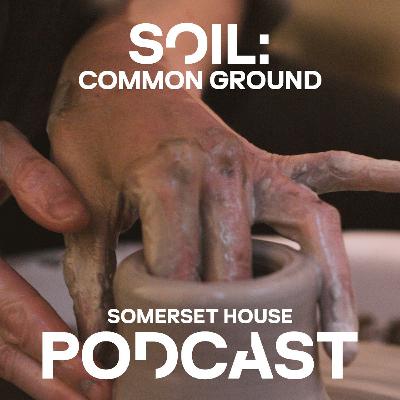
SOIL: Common Ground is a three-part podcast series produced by Somerset House exploring what soil can teach us about being human, through the lens of art.
Much of the history of human making springs from the soil. Cuneiform, the earliest form of writing, was engraved into clay; paint pigments come from minerals in the soil; and much of our material history is held in ceramics. But soil is not neutral; it is deeply entangled with politics of ownership embedded in the land.
In this episode Shenece Oretha probes the ways the soil and clay are inspiring artists today, looking at the stories soil can tell about our past and our potential future. Ceramicist and writer Jennifer Lucy Allan reflects on the ways clay connects us to the earliest forms of making. Artists Annalee Davis and Lauren Gault look at the ways soil bears witness to our histories, from the trauma of the plantation to the deep time of paleontology.
We create art from soil, but through our extraction and interaction, it is also changed. How can we heal our relationship with the soil and in so doing, transform our relationship with the planet? Farmer and food justice advocate Leah Penniman unpacks how indigenous practices of soil care can reverse some of the most egregious effects of climate change.
The series launches off from the Somerset House exhibition SOIL: The World at Our Feet.
Presented by Shenece Oretha
Produced by Jo Barratt and Alannah Chance
Exec produced by Alannah Chance and Eleanor Ritter-Scott.
The series is mixed by Mike Woolley
Original music by Andrew Pekler.
This series is part of the Somerset House Podcast.
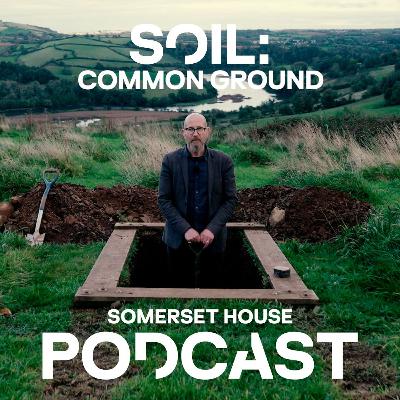
SOIL: Common Ground is a three-part podcast series produced by Somerset House exploring what soil can teach us about being human, through the lens of art.
Our Future is tied to the future of our soil. Our decisions as to how we care for and use it matter. Soil teaches us that cycles are ongoing, and even in decline every day offers us opportunities for new beginnings. In this final episode Shenece Oretha explores the regenerative qualities of soil and composting as a model for personal redemption.
We hear from Palestinian grower Mohammed Saleh whose life story offers a personal story of hope, looking at how permaculture and art can help to heal the destructive impacts of war. Somerset Studios artist Harun Morrision’s singing compost invites us to see decay in a new light and Fin Jordâo lays out how composting can be a radical action for rethinking our relationships with each other and the planet.
Does the future hold a closer, more natural relationship with the soil by rethinking our relationship to burial? Radical undertaker Ru Callander reconsiders our attitude to death.
The series launches off from the Somerset House exhibition SOIL: The World at Our Feet.
Presented by Shenece Oretha
Produced by Jo Barratt and Alannah Chance
Exec produced by Alannah Chance and Eleanor Ritter-Scott.
The series is mixed by Mike Woolley
Original music by Andrew Pekler.
This series is part of the Somerset House Podcast.
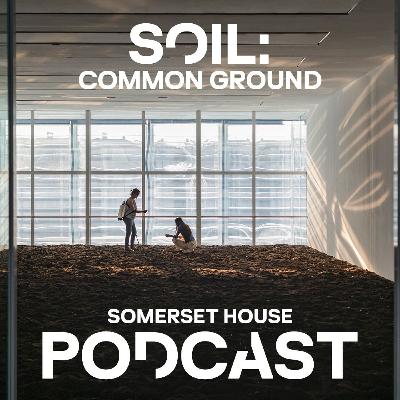
SOIL: Common Ground is a three-part podcast series produced by Somerset House exploring what soil can teach us about being human, through the lens of art.
Our entire existence is dependent on our relationship with soil. As awareness builds of the enormity of the ecological crisis that we are facing, a growing number of artists are engaging with soil as a material in their work. This three part series responds to the Somerset House exhibition ‘Soil: The World at Our Feet’, unearthing soil's role in our future through the work of artists and thinkers working with it.
Soil is the basis of many creation stories around the world. It is our beginning, and it is what we will return to. In Episode 1 of Common Ground we look at soil as the matter from which life emerges. Exploring growth, beginnings and the ways soil as a material offers unique opportunities for exploration.
We hear from artist Asad Raza who makes ‘neo-soil’ from scratch and covers the floor of galleries with it. Artist Eve Tagny’s work examines the cultivation of the Rose as a way to ask questions about the ways we interact with the world. Agroecologist Nicole Masters and farmer Abby Rose, lay out what soil is and why it holds the key to our survival.
The episode is set within the garden of our presenter Shenece Oretha. Working with soil has shaped her relationship to the place where she lives and informed her art practice.
The series launches off from the Somerset House exhibition SOIL: The World at Our Feet.
Presented by Shenece Oretha
Produced by Jo Barratt and Alannah Chance
Exec produced by Alannah Chance and Eleanor Ritter-Scott.
The series is mixed by Mike Woolley
Original music by Andrew Pekler
Episode Image: Asad Raza: Plot feat. BB (Fabrizio Ballabio, Alessandro Bava) + Lydia Ourahmane e Moriah Evans, Curated by Leonie Radine, Museion Bozen/Bolzano, 25.03.2023 – 03.09.2023, Photo: Lineematiche – L. Guadagnini, © Museion
This series is part of the Somerset House Podcast.

This month we start at Folx Farm in Sussex with new entrant farmers Chrissy, Rae and Dunia. Next, we learn about the power of a composting network with Thomas Daniell and catch up with food activist and grower Jo Kamal about attending La Via Campesina’s international conference last year in Brazil, as part of the Landworkers’ Alliance. To finish, we ask Marco Carbonara about his experience learning to grow olives in Italy.

This month we start in Hawaii hearing about the importance of native plants to Hawaian culture, then we head to Portugal to learn more about the value of C4 grasses in mediterranean silvopasture systems, we dive into the Basic Income for farmers campaign in the UK, and we end with an excerpt from a podcast series about what it takes to run a Farm Hack.

What do we do about meat? With this urgent question as its starting point, this series seeks to move beyond polarised debate and identify key questions and shared values to help us build a better meat future for all.
In this final episode, co-hosts Katie Revell and Olivia Oldham reflect on everything they’ve heard over the course of the series, thinking about what they personally have learned and considering what common ground has been found amongst the values and priorities of everyone they’ve spoken to.

What do we do about meat? With this urgent question as its starting point, this series seeks to move beyond polarised debate and identify key questions and shared values to help us build a better meat future for all.
In this episode, co-hosts Olivia Oldham and Katie Revell look into the question: can it ever be morally right to farm animals? They speak to farmers, researchers, meat eaters and abstainers, to discuss various cultural and personal ways of relating to animals, and explore if and how it's possible to square caring for animals with eating them.

What do we do about meat? With this urgent question as its starting point, this series seeks to move beyond polarised debate and identify key questions and shared values to help us build a better meat future for all.
In episode 6, co-hosts Olivia Oldham and Katie Revell explore questions of food justice as they relate to less and better meat. By speaking to food producers, researchers and eaters, they explore whether less and better meat risks entrenching existing injustices, or could support a transition to a fairer, more equitable food system.
What do we do about meat? With this urgent question as its starting point, this series seeks to move beyond polarised debate and identify key questions and shared values to help us build a better meat future for all.
In episode 5, co-hosts Katie Revell and Olivia Oldham ask: does a future of 'less and better' meat also mean a healthier future? They speak to researchers, farmers and those who follow meat-free diets, to explore how what we eat interacts with the physical, mental, spiritual, and collective health of both consumers and food producers.
What do we do about meat? With this urgent question as its starting point, this series seeks to move beyond polarised debate and identify key questions and shared values to help us build a better meat future for all.
In episode 4, co-hosts Katie Revell and Olivia Oldham ask: why do we use land the way we do, and how should we use it in the future? They meet with farmers, academics and land management advisors, to delve into the history of land use in the UK, reflecting on the cultural and political factors that continue to shape it, and looking for common ground between advocates of different approaches.

What do we do about meat? With this urgent question as its starting point, this series seeks to move beyond polarised debate and identify key questions and shared values to help us build a better meat future for all.
In episode 3, co-hosts Katie Revell and Olivia Oldham explore the question: if we decide to eat less and better meat, what do we eat instead? They speak with a legumes specialist and a cellular agriculture entrepreneur, and ask whether we should see “alternative” proteins as “alternatives” at all. In doing so, they reflect on what we value in our food system once we do away with the meat/non-meat binary.


Download from Google Play

Download from App Store
 United States
Superb episode. Have already made contact with UK Grain Lab and Hodmedod's. Thank you.