


 Claim Ownership
Överlevarna
Subscribed: 1,563Played: 12,302
Subscribe

© All rights reserved
Description
One podcast - four themes: survivors of the Holocaust, the Palestinian Nakba, the second generation and Jewish Högalid. The podcast’s various projects have been funded by, among others Statens Kulturråd, Palmefonden, Victoria AB, Kungl. Patriotiska Sällskapet, Helge Ax:son Johnson Stiftelse, Annika och Gabriel Urwitz ´´Stiftelse, Samfundet S:t Erik, Lind & Co, Ordfront and private donors.
316 Episodes
Reverse
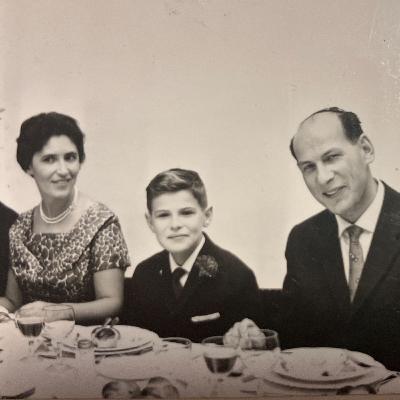
En bandinspelning som min pappa, Arthur Hermele, gjorde från min bror, Kenneths z"l, bar mitzvah-fest, 1961. Som jag minns det var det på Hollandersalen, Judiska Centret, Nybrogatan 19.
Under kvällen blandas jiddisch med svenska och hebreiska. De flesta talarna skålar med ett ”lechaim”. Pappa väljer dock ”ett svenskt fyrfaldig leve”.
Fotograferade gjorde Anna Riwkin, först familjen i studion, sedan på festen.
Personerna i den ordning de hörs på bandet:
00.00 Jacques Fränkel, ”vicevärd”
02.00 Arthur Hermele
Musik
07.20 Zeev Tapoohi, rabbin i Söder-shul
21.00 A. Schönkopf
23.00 Sång o musik
25.00 August Orve, rektor på Hillelskolan
39.40 Herman Nissalowitz
50:50 Heinz Säbel
59:05 Bertil Schönkopf
1.02:50 Sång och musik
1.05:45 Jacques Fränkel
1.11.25 Ingvar Haskel läser upp telegram
1.16.35 Kenneth håller tal först på hebreiska, sedan på svenska
1.25.15 Sång
1.26.40 Theo Soback tackar för maten
1.33.50 Kenneth leder bordsbönen
1.44.35 Piano
***
1.45.00 Inspelning av Kenneth när han läser upp sin haftara.
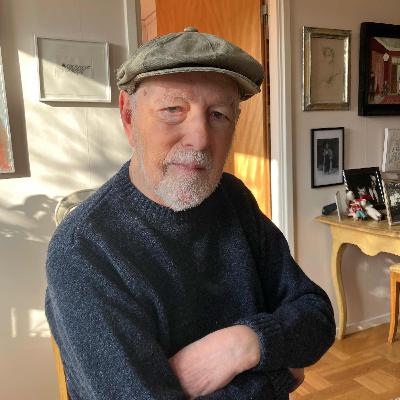
- Jag är född Leif Zernjaffsky 1939 på sommaren, vilket jag också hette när jag började i Sofia Folkskola på söder. Men sen förkortade familjen namnet på ett ganska typiskt sätt. Det blev alltid fel när folk skulle skriva ner vad man hette. Det blev Tjarnovski och allt möjligt konstigt, säger Leif Zern.
- När jag var fem år minns jag att mamma hade tagit med mig ut till Vitabergsparken. Hon stod och pratade med en massa tanter där. Då hörde jag att de pratade om att Hitler var död. Och de var så glada, säger Leif Zern.
Vid 1800-talets slut hade cirka 400 öst-judar invandrat till Sverige. Många bosatte sig på Söder, där det fanns många nedgångna och därmed billiga hyreslägenheter. Fattigt folk bytte ofta bostad, ibland två gånger per år. Ibland flyttade man innan sista hyran hade betalats.
- Fastighetsägarna inrättade därför en ”Svart bok” över oönskade hyresgäster. Oftast handlade det om obetalda hyror, men ibland antecknades det att personen var ”jude”, ”schackrare” eller ”polsk jude”. Det kunde räcka för att hamna i Svarta boken, säger Håkan Forsell, professor i stadshistoria vid Stockholms universitet.
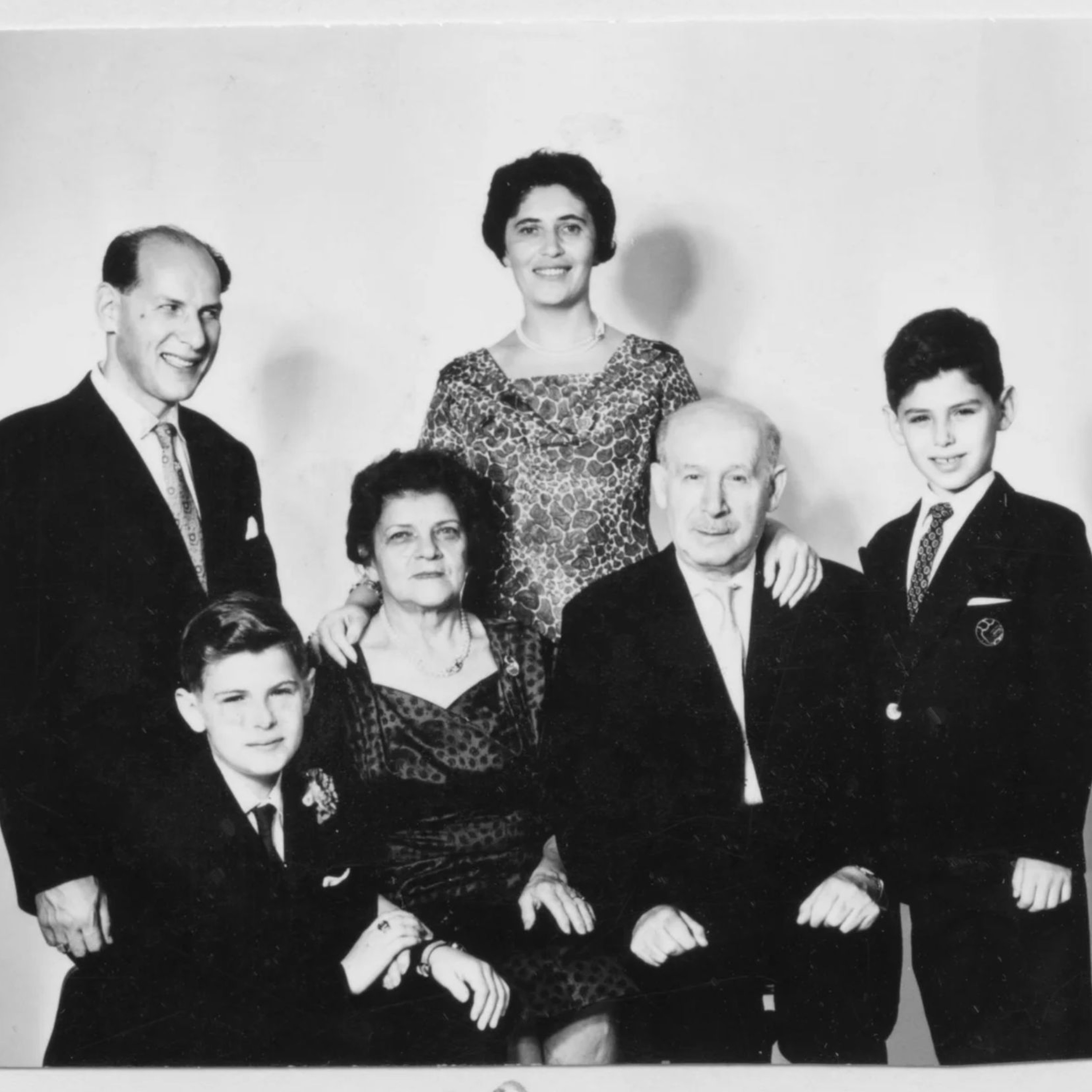
Apropå förra veckans avsnitt med Leif Freilich har jag grävt fram en av min pappas gamla bandinspelningar. Pappa hade köpt en Grundig bandspelare, med ett grönt magiskt inspelningsöga, någon gång 1956. Han gillade att göra inspelningar med oss i den övriga familjen, gärna i hemlighet för att få till spontana samtal.
Här testar han att, mer eller mindre i smyg, spela in mina farföräldrar, Josef och Sabina Hermele och Leif Freilichs föräldrar, Ala och Jakob Freilich. Freilich. Vi bodde grannar och mamma och Ala var bästisar.
Under samtalet blandas röster, språk och dialekter; mammas litvish jiddisch med de övrigas poylish samt pappas tyska, uppblandat med lite svenska här och där. Inspelningen är gjord i vår lägenhet på Lindvallsplan 4.
Personerna, i ordningsföljd:
Pappa Arthur Hermele, född i Berlin, Tyskland
Farfar Josef Hermele, född i Mielec, Polen
Mamma Perla Hermele, född i Suwalki, Polen
Farmor Sabina Hermele, född i Sędziszów, Polen
Ala Freilich, född i Lowicz, Polen
Jakob Freilich, född i Sawina, Polen
00.00-02.00
Innan inspelningen börjar har pappa, spelat upp en tidigare inspelning som han gjort med Kenneth och mig. Han frågar nu ut farfar om han kunde känna igen våra röster. (Kom ihåg att 1956 var bandspelaren en nymodighet!) Farfar svara jakande, men lägger till att en kappa till mamma hade varit bättre, än att lägga pengarna på en bandspelare. Mamma instämmer i detta.
02.00–03.50
Farmor kommer in i samtalet och blandar jiddisch med lite svenska; ”ordning!”. Mamma lägger upp taktiken för hur inspelningen ska hemlighållas för grannarna Freilich, som är i antågande.
03.50-04.40
Ala och Jakob Freilich anländer och samtalet böljar fram och tillbaka.
04.40-05.50
Ala upptäcker bandspelaren och mamma förklarar att det är ”unzer bandinspelare”. Ala tar ordet, Jakob och farfar flikar in.
05-50-07.40
Mot slutet av inspelningen berättar Jakob Freilich följande historia till övrigas hörbara förtjusning:
”Ger Chasid (en rabbin från en känd, ultraortodox dynasti, min anm.) kom till Lodz. Polisen stoppade trafiken. Flera tusen ville röra vid honom. Det gick ju inte, så de stod i en rad. Den som var närmast Chasiden rörde vid honom. Alla andra stod bakom varandra i en rad och vidrörde den person som stod närmast. På så vis kunde alla säga att de vidrört Chasiden.”
07.40-08.00
Farmor: - (på svenska) Nej, nej, jag ska inte tala.
Ala: brister ut i sång.
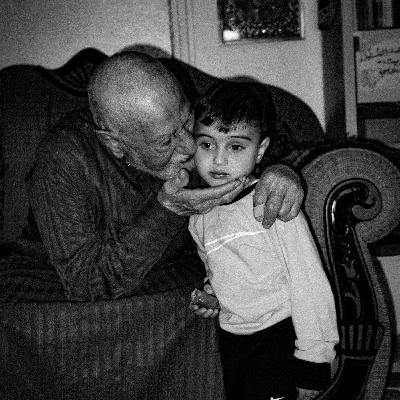
In 1946 I was working at the King David Hotel in al-Quds when the Irgun carried out a bombing against the southern wing. The British military had its headquarters there. I was in the hotel dining room, far from the explosion, and was unharmed. After the attack, all the guests disappeared and those of us who worked at the hotel were dismissed.
I then joined Abd al-Qadir al-Husayni’s resistance movement, Jaysh al-Inqadh al-‘Arabi. They sent me to a training camp in Syria. I was given a uniform and weapons. I took part in the fighting around the Palestinian village of al-Qastal and was standing beside our leader when he was killed. We took his body to al-Quds, where he was buried next to his father in the mausoleum of the Khatuniyya Madrasa. It is located by the al-Aqsa Mosque. There was a large crowd at the funeral.
When the British withdrew from Palestine, they left all the weapons and equipment to the Jews. After that, the Jewish Zionists carried out the massacre in Dayr Yasin.
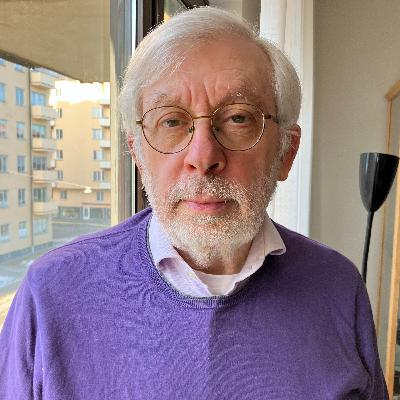
- Pappa fick en stroke och blev delvis förlamad när han var 73. Till slut blev det för tungt för mamma. Pappa kom till Rosenlunds sjukhus, där han låg länge innan han gick bort, säger Leif Freilich.
Hade pappa kvar talet?
- På sjukhuset sa han ett ord som jag fattade: aheim. Han ville hem därifrån.
Vad svarade du?
- Vad skulle jag säga? Det var jobbigt.
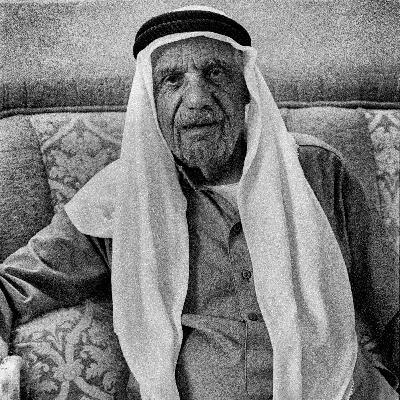
1948
“My father had binoculars that I was allowed to borrow. Through them I could see how the Zionists burned down the Bedouins’ tents on the outskirts of Ṭabariyya (Tiberias). Some of the Bedouins died, others fled. Then the Zionists advanced into Ṭabariyya.
They fired at our house. We had only old pistols and knives and a single automatic weapon to defend ourselves against their modern weapons. Fifteen soldiers from al-Urdunn (Jordan) came to our aid. But the Zionists blew up their headquarters and the soldiers fled. The next day I went out to see what was left. Everything lay in ruins. I discovered a body in the rubble. It was George, who had been guarding the headquarters. The following day his family came asking for him.
The situation became too dangerous. We fled and took shelter in a classroom in a girls’ school. Mother gave us potatoes to eat. Then a bullet went through the window and hit the wall on the other side of the classroom. Luckily, everyone was safe because we were sitting on the floor eating.
Gradually the Zionists began shelling Ṭabariyya with artillery; the entire school shook. On one occasion a teapot filled with boiling tea fell to the floor and burned my foot. I still carry the scar today.
My parents decided that we should leave the school and make our way to the town center, 1.5 km away. My older brother carried me on his shoulders. British soldiers and some priests offered to evacuate everyone to al-Nasira (Nazareth). They brought buses.
Samcha, a Jewish settler from Kiryat Gat, came riding his horse to our village. He told us that we could stay in the village and that we would continue living together in peace. The villagers told him that this was our land and that the Jews should leave Palestine. Samcha insisted, but he was attacked and forced to flee.
Shortly afterwards Haganah began shelling us, especially at night. It was impossible to sleep. The Jews also received help from British soldiers. Eventually we were forced to leave the village. We took what we could on a horse, a camel, and a donkey. It was my grandfather, my father, my two uncles, and me. In total we were 20 family members who were forced to flee.
We went to Thkrein, a neighboring village seven kilometers to the east. Then we continued to Bayt Jibrin, at the foot of Jabal al-Khalil (the Hebron hills). It was already overcrowded with refugees sitting on the ground under the olive trees. We had only been in Bayt Jibrin for ten days when the Jews began attacking us. We moved further up to the next village, Idhna, higher up in Jabal al-Khalil. There we and many other families had to live in a barn together with cows. It was terribly cramped; there was no water, no toilets. We lived in the barn for three months. Then we were attacked by the Israelis. It had begun to snow and we did not even have shoes when we fled higher up to the village of Taffuh. There were old underground caves where we could take shelter. After three months in the caves, we went to the UN camp Fawwar. It took us a day to get there.
In the camp we lived in tents. When it rained, water leaked in. When it snowed, the tents collapsed under the weight. We had no firewood. It was a very hard life.”
Israel allowed us to visit our village Summayl. We rented a bus and went there. The houses were still standing. We sat down in front of our house and cried. Later the Israelis destroyed our house.”
2022
“UNRWA helps us with food and firewood here in the camp. But many are unemployed; we have no money.”
Reflection
“I pray to God that we will defeat the Israelis and the Americans. We have been killed by American weapons.”
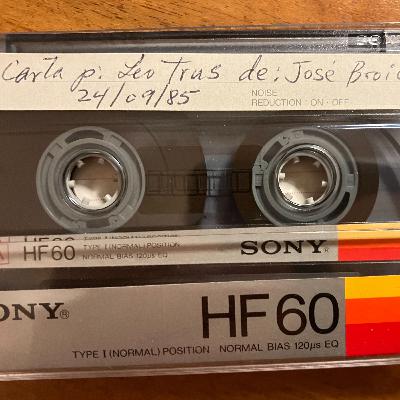
I avsnitt #31 av Det judiska Högalid berättade Herbert Trus att hans far, Lejb Trus, anslöt sig till partisanerna i skogarna utanför Bransk, efter den tyska ockupationen av delar av Polen, 1939.
Historien fortsätter så här:
Där lärde Lejb känna en annan partisan, Josel Broide. De blev vänner för livet.
Efter kriget utvandrade Josel till Buenos Aires, Argentina. Lejb och Josel fortsatte att hålla kontakten brevledes. När Josel blev blind skickade han i stället den här kassetten på jiddisch till Lejb, någon gång i början av 1980-talet.
I veckans avsnitt får du lyssna till Josels kassettbrev på jiddisch, till Lejb Trus.
Mina kunskaper i jiddisch är rudimentära, men jag älskar att lyssna till Josels röst.
Varför?
Orden talar till hjärnan, rösten till hjärtat. Rösten är personlig, den har sitt tonläge, sina pauseringar, darrningar, osäkerheter och sin rytm. Kort sagt, vi kan höra Josels känslor av sorg, stolthet, tvekan och glädje, genom tid och rum.
Josel och Lejb lever inte längre, men de har levat, vilket denna inspelning är en påminnelse om.
Lite bakgrund:
Lejbs far, Alter Trus, skrev ner sina minnen i Bransk Yizkor Book, där han bland annat beskriver partisanernas motståndskamp:
”The first order of business which the Bransk group consists of destroying the telephone connections which were located on the Bransk Tchekhenoftse road. This was the direct line to the front at Warsaw. In one night the telephone wires on this road were cut in several places. The poles for a distance of 2 kilometers were torn down. The entire Bransk group of partians participated in this. At the same time a combat unit is set up as well as family camp.
At a meeting it is decided to hand down the death sentence to Koshak, a Pole and the betrayer and Jew murderer.. The armed men are given the job of carrying out this order. Among them Mulje Kleinot an Josel Broide.”
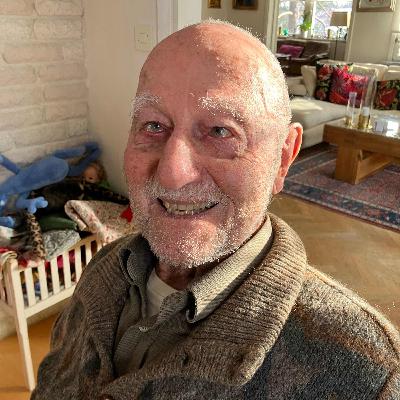
- Mina föräldrars äktenskap var inte lyckligt. Mamma fick tre barn med tre olika män, säger Peter Haas.
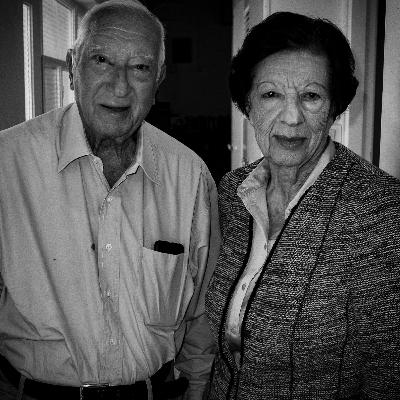
George Baramki Khury (GBK):
“My sister Laura and I lived in al-Quds, near the Mandelbaum Gate. We had two houses,
one on each side of St. George Street. I attended St. George’s School. It was a boys’
school, with both Jews and Arabs.”
Laura Khury (LK):
“Our father rented out the upper floor of our house to some Jews. He heard strange
noises—something was going on up there. It turned out they were printing counterfeit
banknotes! They were later arrested by the British.”
GBK:
“The neighborhood was mixed, and shooting between Jews and Arabs on the streets
became more and more frequent. In 1947 the situation worsened, and we were forced
to leave our house. It was no longer safe to stay. My mother had a cousin in Talbiya,
in al-Quds, a very beautiful and quiet Arab area. We moved there without bringing
any of our furniture.”
LK:
“Talbiya was a very elegant neighborhood—like Fifth Avenue in New York. One day
there was a terrible storm; it was pouring rain and hailing. We heard an awful noise
that we thought came from the storm. But it turned out to be a bomb attack on the
Semiramis Hotel in Qatamon. Entire families were killed.”
GBK:
“After we had stayed with our cousin for three or four months, a Jewish soldier was
killed in the area. Just a couple of hours later, an armored vehicle arrived with a
loudspeaker on its roof, announcing:
‘Residents of Talbiya! You must leave your homes immediately!’”
LK:
“The vehicle was a monster, with its headlights taped so that only a narrow beam of
light showed.”
GBK:
“We were alone in the house. We were terrified. When our parents came home, we
told them what had happened.”
LK:
“We couldn’t stay. It was already dark, it was raining, the weather was awful. We left
as quickly as we could. The streets were in chaos.”
GBK:
“We fled to Baqa‘a, in southern al-Quds, to our uncle’s house. Only Arabs lived there.
That was the second time we were forced to flee.”
LK:
“One evening, as I was on my way home, something brushed past my head. At first I
thought it was a bird—but it was a bullet. If I had been wearing shoes with higher
heels, I would have been killed. The shooting continued when I got home; bullets
ricocheted into our house.”
GBK:
“At the end of April 1948, after only a few weeks at our uncle’s place, we fled to
Birzeit. That was the third move. We rented a small house there, where we lived with
our grandmother and our parents. Our mother contacted our neighbor in al-Quds,
who was a British policeman. Our house was still untouched. He arranged the
necessary permits to move our furniture from Mandelbaum to Birzeit. A few weeks
later, the British Mandate ended.”
“After the war of 1948, the border was drawn straight between our two houses at the
Mandelbaum Gate. The houses stood on opposite sides of the street, and barbed wire
was stretched between them. One house ended up in Israel, the other in al-Diffa
al-Gharbia, which had been annexed by al-Urdunn (Jordan). Our house on the Israeli
side became an army post. All the windows were boarded up, and through the gaps
they fired at the other side.”
“After a few months in Birzeit, our grandmother wanted to visit two of our aunts in
Ghazza. Our father rented a car and we went along. We traveled via al-Khalil and Bir
al-Sab‘a. It was a long journey, since the shortest route along the coast was now in
Jewish hands.”
LK:
“I didn’t want to go to Ghazza. I cried to avoid it, but it didn’t help. I have never liked
Ghazza.”
GBK:
“We stayed with my aunts for a couple of weeks. Then the Israelis took over
al-Majdal, which had previously been occupied by the Egyptian army. We became
trapped in Ghazza and could not return to al-Quds. That was the fourth displacement.
We were lucky to be able to rent a new house in Rimal, a sandy area near the forest.
We shared the house with an Armenian family. We had only one suitcase with us—no
furniture, nothing. We used wooden crates and built tables, beds, and wardrobes.”
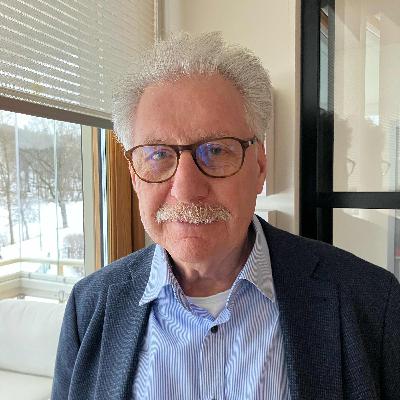
- Min farmor, Sarah Trus, mördades 1942 i förintelselägret Treblinka. Jag hade velat träffa henne, säger Herbert Trus.
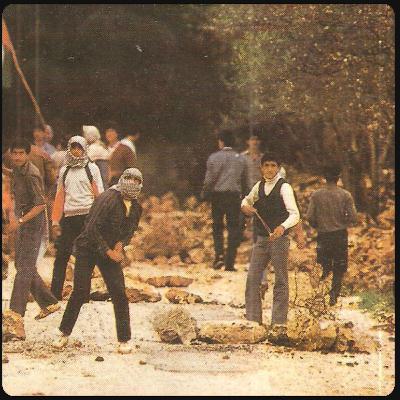
Samia Nasir Khury recounts:
“In 1993, during the First Intifada, my son produced a song and had it copied onto cassette tapes. I paid for the copying, and he borrowed my car to deliver the cassettes.
‘I’ll be back after lunch,’ he said.
But he did not return. He was arrested by the police and taken in for interrogation at the Moscobiyeh detention center in al-Quds (Jerusalem). He was accused of distributing music that glorified the Intifada. The prosecutor repeated a line from the cassette — ‘The voice of the Intifada is stronger than the occupation’ — in order to incite the judge so that my son would receive a harsher sentence.
He was imprisoned for six months. First he was held in Ayalon Prison in al-Ramla. He went through hell there. We were allowed to visit him, but I was not allowed to touch him; he sat behind a wire mesh. Later he was transferred to Prison Six, outside Atlit. It was an open prison, and there we were allowed to sit across from him at a table.
We never got the cassettes or the car back. My son’s lawyer gave one cassette to my husband. After his death, we found it in his safe.
The time in prison made my son more enthusiastic and determined than before. He continues to make music.”
The lyrics that cost him six months in jail:
My life and my honor are the most precious,
and from the blood that has been shed,
the voice of the Intifada is louder than the occupation.
The voice of the Intifada is high and will not be silenced;
nothing can mute this voice
except for the sake of precious justice.
Who longs for death?
The goal is not the death of human beings;
the goal is love of the homeland.
A people that has struggled for a long time
seeks independence.
We went down to the streets
with stones in our hands.
We rose like whirlwinds,
our flame blazing like fire.
With our chests we face the bullets;
we resolved upon liberation.
Justice must reach
the criminal and the occupier.
Our people’s rights are denied,
yet they do not sleep on their rights.
The principles of the enemy are empty,
its essence does not endure.
O world, look at us:
camp, village, and city.
Look at the Palestinian army—
flowers and lion cubs.
They want to storm our village;
we stayed awake all night
to defend our dignity,
no matter how long the night.
The massive army advanced,
a mountain armed with fire.
We filled the road with stones
and set the tires ablaze.
From the mosque loudspeakers
we called out to the people.
The awake roused the sleeper,
telling him: take up the axe.
We spread out along the fronts,
revolutionaries skilled in maneuver.
And the Zionist, however powerful,
kneels before children.
من حياتي شرفي أغلى، ومن دمي اللي سال
صوت الإنتفاضة أعلى من الإحتلال
صوت الإنتفاضة عالي، وما بيخرس هالصوت
غير لأجل الحق الغالي، مين بيهوى الموت
مش هدف موت الإنسان، الغاية حب الأوطان
شعب يناضل من زمان، بدو الإستقلال
نزلنا على الشوارع، وبأيدينا حجار
هبينا مثل الزوابع، لهلبنا كالنار
بالصدر نصد الرصاص، صممنا على الخلاص
لازم ينول القصاص المجرم والمحتل
شعبنا حقوقه مهضومة، وعن حقه ما ينام
مبادئ خصمه معدومة، عنصره ما دام
يا كل الدنيا شوفيني، مخيم قرية ومدينة
شوفي الجيش الفلسطيني، زهرات وأشبال
بدهم يقتحموا قريتنا، سهرنا طول الليل
ت ندافع عن كرامتنا، مهما الليل طويل
أقبل الجيش الجرّار، جبل مسلح بالنار
ملّينا الطريق حجار، وولعنا العجال
من سمّاعات الجوامع نادينا عالناس
والغافي نبهه السامع، قللو إحمل فاس
وتوزعنا عالمحاور، ثوار بنعرف نناور
والصهيوني إله خاطر، يركع للأطفال
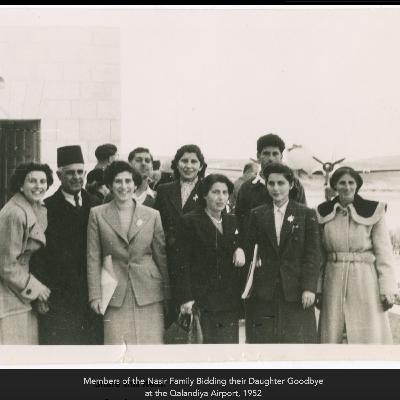
“My father worked as a governor for the British government, and the rest of the family followed him. He was later transferred to Safad. There we had good relations with our Jewish neighbors. That was normal. Women exchanged baked goods with one another during different holidays and celebrations.
In 1946 it finally became clear to him what the British were doing—that they were
preparing the way for the Jews to take over. His job became impossible, and he
decided to resign. He went to the King David Hotel to submit his letter of resignation.
As he stepped over the threshold of the hotel, he looked at his watch and realized
he was early. He decided to visit a friend in Mamilla in the meantime.
Shortly after he left the hotel, it was blown to pieces. The man my father was going
to visit was not as lucky. He had gone to the hotel and was killed by the bomb. This
was in 1946. Irgun was responsible for the attack, but the various Zionist
organizations constantly blamed one another. This was only the beginning.
Then came the bombing of the Semiramis Hotel and the massacre in Dayr Yasin.
That was when people began to feel real fear.
After my father resigned, he began teaching physics. We remained in al-Quds. I was
a happy teenager. I went to parties, and my aunts and cousins lived there. It was a
wonderful time. We used to go to the YMCA, where we were members. They had
leadership courses, tennis courts, a gym, and a swimming pool. It was a fantastic
place.
In 1948, the family moved to Birzeit, where my father taught and where I attended a boarding school—it felt like my second home.
Suddenly, rumors spread that something was wrong. People began pouring in from
al-Ramla and Lydda. They were fleeing and had been walking for two or three days.
I will never forget that sight. Everything was so sad; people were utterly exhausted.
Someone told us they had lost a son. One man was confused and rambling; he did
not understand what was happening. I especially remember a woman who had lost
all her belongings. Despite that, she was grateful to have survived. She said:
“Furniture can be replaced, but not people.”
My aunt told my cousins and me to cook food for the refugees. We boiled eggs and
potatoes, sliced tomatoes and cucumbers—everything we could get hold of. My
aunt also helped prepare a school building where some of the refugees could find
shelter.
My aunts and cousins had come to Birzeit to escape the unrest in al-Quds. Everyone believed this would be over in a few weeks, and that we would be able to return. But in October, we began to understand that this was no picnic.
After the war in 1967, East al-Quds was annexed by Jordan. It then
became possible again for my mother and me to visit our house. The house had
become a daycare center, so it was easy to enter. My mother began explaining to a
woman sitting in the office that it had once been her bedroom. It was painful to see
our house again. I had hoped, for as long as possible, that we would be allowed to
return. We never went back again.
The Nakba is still ongoing; the displacement is still ongoing. Everything here is so hard to predict under the Israeli occupation. When you get up in the morning and put your right foot down, you do not know whether your left foot will follow.
In 1993, during the first intifada, my son produced a song and made cassette copies
of it. He was arrested by the police and taken for interrogation at Moscobiyeh in al-Quds.
He was accused of spreading music that glorified the intifada. He was imprisoned for six months. First he was held in Ayalon prison in al-Ramla. He went through hell there. We were allowed to visit him, but I was not allowed to touch him. He sat behind a net. Later he was transferred to Prison Six, outside Atlit. The time in prison made my son more enthusiastic and determined than before. He continues to make music.
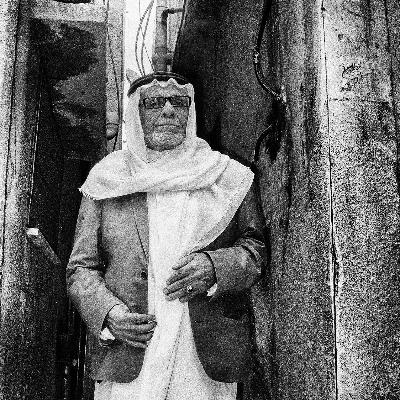
1946
“I used to help my father out in the fields. We grew tomatoes, cucumbers, and
watermelons. We took the vegetables on our donkeys to the markets in Yafa
and Mulabbis. When I had time off, I played football with my friends. I did not
have a real football, so I made one out of cloth and string. My mother helped
me.”
1948
“We loaded furniture and mattresses onto a donkey and walked the whole way.
My father had to carry my grandfather on his back; he was one hundred years
old. We left the village in the afternoon and walked for two days, without food
or water. Along the way we picked oranges and apples. The first night we rested
for only a couple of hours. We reached al-Tira the following night. We had barely
settled in when the Israeli military attacked from three directions. We fled, but
my father decided to try to return to al-Tira to fetch wheat and food for us.
Meanwhile we reached a village between Taiba and Tulkarm. There were caves
there where we spent the night. My father returned with wheat flour. There was
plenty of water, and my mother baked bread over an open fire. We stayed in the
caves for three weeks before continuing to Qalqilya, in al-Diffa al-Gharbia.
Eventually our relatives found us. They came with donkeys and took us to their
village, Mas-ha. My father began looking for work.”
1967
“I was still serving in the Jordanian army. We had weapons, but I never saw any
Israeli soldiers. They attacked us only from the air, with planes, constantly.
Many soldiers in the Jordanian army were killed. I was lucky to survive. We
retreated to Mount Nebo Mousa, where we were trapped without food or water.
We were terribly thirsty. I set off on my own down the mountain to my family in
the Akbat Jaber refugee camp.
When I arrived at the camp it was almost empty; the houses were abandoned,
the doors left open. After Israel’s occupation, most of the camp’s 30,000
inhabitants had fled to al-Urdunn (Jordan). Only 5,000 people remained in the
camp, including my family. They could not afford to flee. I had brought my radio
equipment with me and heard that the military leadership ordered all Palestinians
to cross east of the Jordan River, to al-Urdunn. But I refused. My family was in
the camp, and I decided to stay in al-Diffa al-Gharbia.”
2002
“During a clash with the Israeli military here in the Balata refugee camp, my son
Khalil was killed. Another of my sons, Jihad, attempted to carry out a suicide
bombing together with a companion. They were supposed to pass the border
crossing in Qalqilya, but the Israeli army knew of their plans and was waiting for
them. Jihad and his companion blew themselves up.
I am still waiting to get his body back. It remains in Israel. I have Jihad’s portrait
here on the wall, together with his two other brothers. I have paid a high price;
in total I have lost three sons. But I am not upset or angry. There are martyrs in
the Qur’an, the Torah, and the Bible. God chose my sons to be martyrs. For that
I am grateful, not angry.”
Interpreter: ‘Abd Yusuf.
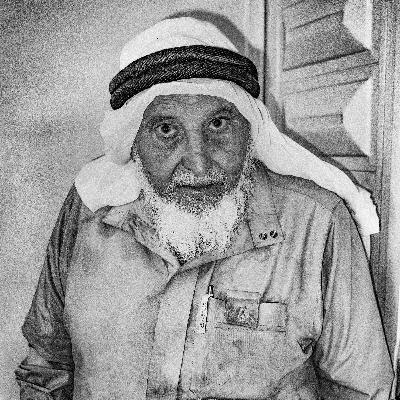
Nakba #54 - ‘Abd al-Munim Fayiz Sa‘ad by Överlevarna
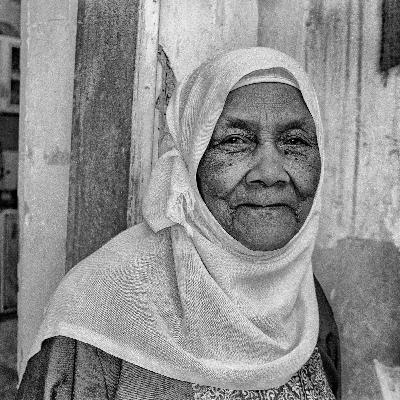
1939
“My father was a farmer and we had cows. He sold the milk. My mother was from the city, from Jaffa, so she never milked the cows—neither did I. My father died when I was three years old. At that time my mother had just given birth to my little brother, Khalil.
When I was a girl, Mahmud, my older brother, did not allow me to go very far from our house. He was a difficult person. The only time I was allowed to leave the house was when I accompanied my mother to visit her brother.
In the village there was a school for boys. Teaching took place in a tent. One of my brothers suggested that I should also attend school, but I refused to go to a boys’ school. Besides, I had become the tallest in the class, and I did not want that. Most of the time I stayed at home, helped my mother, cooked, and washed dishes.”
1948
“We heard gunfire between Jews and Palestinians in Sarona, a nearby village. I later heard that the Jews took some young men and shot them out in the fields.
Our mukhtar explained that we had to leave Salama, but that we would be able to return after a week or so. Mother decided that we should leave. It was me, my sister—who was pregnant—and my two brothers. We walked on foot through several villages: Sakija, Kafr Ana, Cheirija, Bayt Dajan, Kibja, and Shabtin.
We were hungry. We had only a small piece of bread to eat each day. We took water from wells. The water was full of red insects, which my mother strained out between her fingers.
We walked for maybe a month—I don’t know. In the end we reached Ramallah. From there we were transported by trucks to Nablus, where we stayed for two months. We slept under the open sky; we had no tent, nothing. Sometimes it rained.
Then we were taken to a guesthouse in Askar. They arranged a tent for us in the Askar refugee camp. Later they built a room for us. It was so cramped that my mother slept leaning against the front door.
My sister and her husband took over the tent. There she gave birth to a son. He died shortly afterward.”
1954
“When I was 18, I married a man who was 43. He asked my mother and my brother for permission to marry me. We had never met before we got married. It wasn’t like today (laughs).”
1977
“During Ramadan, my son Jihad had the task of walking around the Askar refugee camp to wake people up well before dawn. The Israeli army had been searching for someone in the camp but had not found him. Instead, they spotted Jihad. First they shot him in the leg. Then they killed him. According to the hospital report, he was shot 82 times. When I heard the first shots, I began to scream. He was 23 years old.
I visited his grave every day for two months. One night I was sitting on the edge of my bed when Jihad suddenly appeared. I saw him coming toward me together with another man. We embraced and kissed.
I said, ‘My son, my love, my son, my love.’ He said nothing. Then he disappeared again.
He appeared once more. That time he was riding a white horse in the fields of paradise. After I told others about his second appearance, he stopped appearing to me.”
Reflection
– Who bears responsibility for your situation?
“I don’t know.”
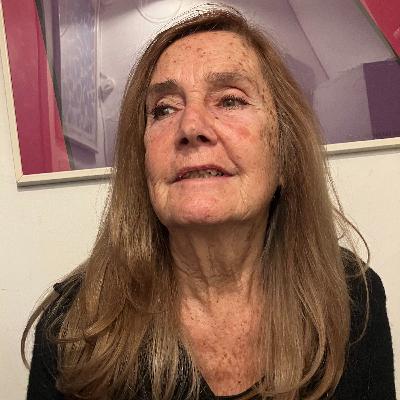
- Mamma fick inte gifta sig med någon som inte var jude. Det var en omöjlighet. Men hon blev aldrig kär i någon av de judiska killarna. När hon var 40 år träffade hon Valter Jansson. De gifte sig och jag föddes något år senare. Men de var inte gifta så länge, säger Yvonne Leff.
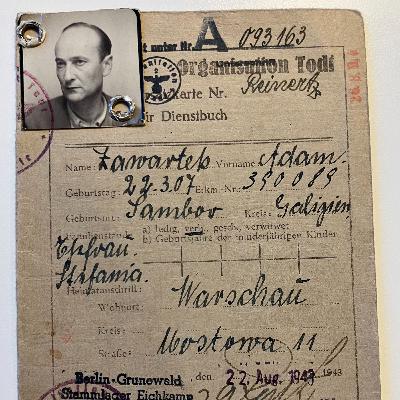
Inspelning med Rikard Folkmans förälddrar, Arek och Eva Folkman. Arek berättar som sina upplevelser under andra världskriget. Han bevittnade de tyska truppernas intåg i Lwów (Lemberg), levde under sovjetiskt styre och senare arbetade som tvångsarbetare för den tyska Organisation Todt i Norge.
Från Norge lyckades Folkman fly till Sverige 1943. Vid ankomsten ansågs han vara en av de sista judiska flyktingarna som lyckats ta sig ut från det ockuperade Polen.
Intervjun med Arek och Eva gjordes 1975 av Judit Horwat-Lindberg.
I boken “Den siste juden från Polen” (Bonniers, 1944) berättar Folkman sin historia för den svensk-ungerska författaren och journalisten Stefan Szende. Boken var en av de första böckerna i Sverige som gav en detaljerad ögonvittnesskildring av Förintelsen och det systematiska mördandet av miljontals judar i Polen.
Boken har också översatts till tyska och engelska.
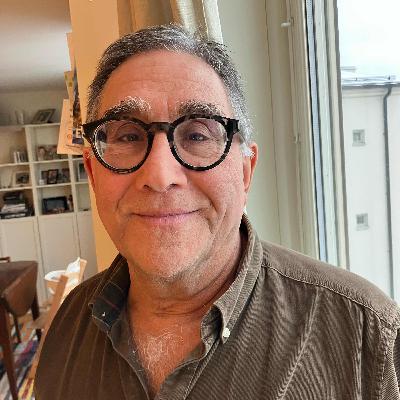
- Jag började Hillelskolan för att bli mer judisk, men jag kände mig ensam. Jag åt skinka hemma. Det berättade jag aldrig. Jag kände mig ensam ända fram till högstadiet, då jag bytte skola, säger Rikard Folkman.
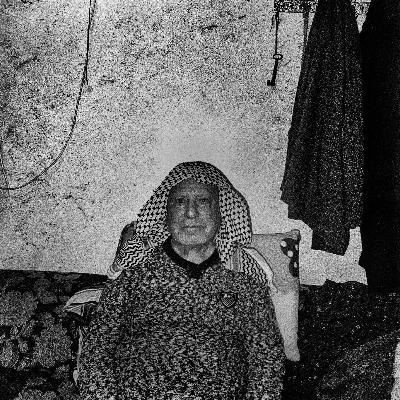
1948
“The Egyptian army came to our aid. They were 6,000 men. Our house was located on high ground, and we had a clear view of the Jewish settlement of Gat. The Egyptian commander demanded to take over our house because of its strategic location. We had to move to another house.
One day the Jews attacked our village with three airplanes. The Egyptians did nothing because they believed the planes belonged to the Egyptian army. After the air raid, my brother and I went out to look for our sisters. They were nine and three years old. But of my sisters, only a few small body parts remained. My parents buried the remains (begins to cry).
Fourteen members of our family were killed in the air raid. Everyone was in shock. I remember a dead woman lying in the middle of the village. She had just gotten married and was wearing a beautiful wedding dress, richly adorned with gold jewelry. Her throat had been cut by shrapnel.
The Egyptian army forced my father and all the men of the village to stay behind. Women, children, and the elderly—300 people in total—left the village. We set out on foot. We crossed the mountains and arrived in Beit Jibrin, my mother’s birthplace. We were supposed to spend the night there, but the Israeli airplanes appeared again and we were forced to continue.
I had no shoes, and my mother had nothing to cover her hair with. We walked almost the entire night. We had neither food nor water. Some children died along the way. We kept walking until we reached the outskirts of Idhna late the following evening. In Idhna, which lies in al-Diffa al-Gharbia (the West Bank), my grandmother lived, but we were too exhausted to look for her house.
My mother found a cemetery with an empty grave. My brother and I lay down and slept in the grave, while my mother sat and watched over us. In the morning, we met a man who showed us the way to my grandmother’s house.
In the meantime, the Israelis had occupied Fallujah. My father fled together with the other villagers. After a few kilometers, a woman discovered that she was carrying a pillow instead of her baby. She began to scream and cry. My father told the woman to keep going while he turned back. He managed to retrieve the baby in Fallujah and brought it back to the mother (begins to cry). Only after a year and a half were we reunited with my father.”
1949
“The Red Cross built a refugee camp outside Idhna. My father did not want to stay with my grandmother, so we moved into the camp. The Israelis claimed that the camp was too close to their border, and after some time they attacked us. The Jordanian authorities cooperated with the Israelis, and in 1952 they moved us to the Fawwar refugee camp, which is farther from the Israeli border. We have lived here ever since.
At first, we were supposed to return to Fallujah after a couple of weeks. Those two weeks turned into 75 years.”


Download from Google Play

Download from App Store
 United States
hej, jag tror att Bertil har fel på ett ställe. Han pratade om att min pappa, Abram Jakubowicz, lärde honom läsa men vad jag visste så kunde inte min pappa läsa eller skriva svenska. Hebreisk. och Yiddish kunde han men svenska fick min mamma läsa och skriva. Jag kan naturligtvist också ha fel men så kommer jag ihåg min far