


 Claim Ownership
Club Solutions Magazine
Subscribed: 2Played: 68
Subscribe

© All rights reserved
Description
Podcast by Club Solutions Magazine
191 Episodes
Reverse

The perfect candidate, the flawless interview, the confident hire — and then, just a few months in, the sinking realization that something went wrong.
Laura Clark, the vice president of Corporate Health Unlimited, joined Club Solutions Magazine editor and podcast host Taylor Gabhart to discuss what she calls "the false positive interview," a hiring phenomenon in which a candidate appears perfect on paper and through the interview process, only to fall short once on the job. After noticing an uptick in turnover at the company — after maintaining a 94% employee retention rate for decades — Clark and her team spent 90 days auditing their review and onboarding system to identify where things were breaking down.
The conversation covers the warning signs operators should watch for, the structural changes Corporate Health Unlimited made to its interview panels and question strategy, and how a more intentional onboarding process can be with the difference between a new hire thriving or walking out the door. For operators struggling with staffing, this episode offers a practical framework for getting hiring right the first time.
A new study puts hard numbers behind a question fitness operators have long debated and the findings make a compelling case for the value of personal training.
In Episode 10 of The Research Debrief, hosts Rachel Chonko and Luke Carlso break down a recently published randomized controlled trial comparing the outcomes of exercising alone, with a training partner and a personal trainer — and what those results mean for clubs looking to grow their personal training programs.
This Episode Explores:
- Why exercising with a personal trainer produces statistically greater gains in strength, lean muscle and fat loss than training alone or with a partner.
- How the "supervision effect" challenges long-held assumptions about what makes personal training valuable beyond just programming.
- How global fitness trend data exposes a U.S. perception gap around the value of personal training — and what may be driving it.
- Why the same workout program yields different results depending on who is in the room — and what that means for how trainers sell their services.
The science now offers a concrete answer to a question operators and trainers face: what exactly does a personal trainer provide that a workout buddy cannot? The answer — more strength, more muscle, less fat — is measurable, transferable and marketable. Clubs that help their training staff lead with that message are better positioned to convert curious members into consistent personal training clients.
📚 Access the show notes page for links to the research papers discussed: https://clubsolutionsmagazine.com/2026/03/combatting-the-false-positive-interview-with-laura-clark-of-corporate-health-unlimited/
🎧 Listen on Apple Podcasts, Spotify or SoundCloud
📺 Watch right here on YouTube
👉 Stay ahead of fitness, leadership and research
Subscribe to the Club Solutions newsletter to receive industry insights, trends and research-driven strategies delivered straight to your inbox: clubsolutionsmagazine.com/newsletter/

As wearable technology continues to trend in the fitness industry and data overload pushes members to disengage, fitness operators are confronting a harder question: Is more measurement actually driving more motivation — or is it driving people away?
Jay Worthy, the CEO of Myzone, joined Club Solutions Magazine editor and podcast host Taylor Gabhart to discuss the company's pivot from fit-tech to what they call "motech" — motivation technology — and how behavioral science, gamification and community are becoming the new levers for long-term retention. Worthy draws on his background as a former operator and personal trainer to make the case that the industry is solving the wrong problem
Worthy explains how simplifying performance into a single, effort-based metric creates an inclusive, level playing field for every type of mover and why that approach is more relevant than ever as smartwatch adoption accelerates globally. He also talks about the launch of Myzone Go, which removes hardware barriers by allowing members to use any compatible smartwatch to utilize Myzone features.
Listen to the full conversation here.
Millions of Americans are currently taking GLP-1 medications and new research is make the case that resistance training isn't just complementary to the medication. It's essential to it.
In Episode 9 of The Research Debrief, hosts Rachel Chonko and Luke Carlson examine what the latest science says about muscle loss during GLP-1 treatment — and why health clubs are uniquely positioned to serve their members who use the medication.
This Episode Covers:
- How much muscle mass is lost during GLP-1 drug therapy and what clinical trial data reveals about the scope of that loss.
- The two key factors critical to preserving lean muscle during weight reduction — and why one of them falls squarely within the scope of what health clubs provide.
- What the science says about the long-term consequences of stopping GLP-1 therapy, including which outcomes exercise has been shown to mitigate.
- How the profile of a GLP-1 drug user compares to the profile of a typical health club member — and what that overlap means for operators.
- Why physicians prescribing GLP-1 medications are increasingly looking to fitness facilities as partners in patient care, and how clubs can position themselves to meet that demand
GLP-1 drugs are reshaping the healthcare landscape at scale, and the fitness industry has a scientifically validated role to play. Clubs that build programming, messaging and referral relationships around this now will be best positioned to grow their member base and their influence within the healthcare continuum.
📚 Access the show notes page for links to the research papers discussed:
🎧 Listen on Apple Podcasts, Spotify or SoundCloud
📺 Watch right here on YouTube
👉 Stay ahead of fitness, leadership and research
Subscribe to the Club Solutions newsletter to receive industry insights, trends and research-driven strategies delivered straight to your inbox: clubsolutionsmagazine.com/newsletter/
New research challenges the industry's long-held belief that more volume drives better results, showing shorter, high-effort sessions may deliver better results for trained members.
In Episode 8 of the Research Debrief, hosts Rachel Chonko and Luke Carlson look at a controlled study that examines the effect of doing on set of an exercise to failure or close to failure when strength training. The conversation turns to how strength training can be more time efficient when only doing one set.
This Episode Covers:
- A breakdown of a new randomized controlled trial comparing one set to muscle failure versus one set with reps in reserve
- How proximity to failure impacts muscle hypertrophy, strength, endurance and power
- Why trained individuals saw significant improvements with just two 30-minute sessions per week
- What the findings suggest about reducing volume without sacrificing results
- How time-efficient, high-effort strength training models can reshape club programming and member engagement
Only 28% of the population engages in strength training and lack of time remains one of the largest barriers for people to do so. This research provides operators with a science-backed framework for delivering efficient, effective programming.
📚 Access the show notes page for links to the research papers discussed: https://clubsolutionsmagazine.com/2026/03/one-set-to-failure-rethinking-strength-training-efficiency/
🎧 Listen on Apple Podcasts, Spotify or SoundCloud
📺 Watch right here on YouTube
👉 Stay ahead of fitness, leadership and research
Subscribe to the Club Solutions newsletter to receive industry insights, trends and research-driven strategies delivered straight to your inbox: clubsolutionsmagazine.com/newsletter/
Clive Chesser, the CEO of PureGym, shares the evolution of the brand from its start in the UK to its global expansion across Europe, the Middle East and the U.S.
The conversation highlights the brand's success, Chesser's background, global fitness trends and the future of PureGym as it continues to expand.
Personal training is a common service in the fitness industry, but the reasoning behind why men and women choose personal training can be very different.
In Episode 7 of The Research Debrief, hosts Rachel Chonko and Luke Carlson look at an article written by Carlson and his colleagues at Discover Strength that surveyed the difference in men and women's choice to have a personal trainer. The conversation talks about the why and how club operators can use that towards the personal training experiences offered at their facilities.
This Episode Explores:
- A breakdown of new research on how men and women perceive the value of supervised strength training
- The six key elements of supervision: technical coaching, effort, motivation, program design, safety and accountability
- Where male and female perceptions align — and where meaningful differences emerge
- Why confidence and perceived self-sufficiency differ between men and women
- How these insights can help operators refine personal training messaging and positioning
This episode provides operators with research-backed clarity on what clients actually value in supervised strength training — and how those perceptions should shape marketing and service delivery.
📚 Access the show notes page for links to the research papers discussed:
🎧 Listen on Apple Podcasts, Spotify or SoundCloud
📺 Watch right here on YouTube
👉 Stay ahead of fitness, leadership and research
Subscribe to the Club Solutions newsletter to receive industry insights, trends and research-driven strategies delivered straight to your inbox: clubsolutionsmagazine.com/newsletter/
As recruitment challenges intensify and last minute coverage disrupts operations, fitness leaders are confronting a bigger question: Is people management built to scale — or are outdated systems hurting the member experience?
Rosanna Tucker, the CEO and co-founder of CoverMe, sat down with Club Solutions Magazine podcast host Rachel Chonko to discuss the creation of CoverMe and how it offers a digital platform that streamlines talent management, reduce chaos and enhances team communication.
Tucker shares the importance of addressing both operator and fitness professional pain points to create an effective solution. She highlights the need for digital infrastructure to streamline operations and how CoverMe allows for operators to focus on revenue-generating activities and member experience.
Listen to the full conversation here.
Exercise during pregnancy has long been encouraged, but clear guidance on what actually drives measurable physiological benefits has often been inconsistent.
Episode 6 of The Research Debrief unpacks a newly published systematic review and meta-analysis from the American Journal of Obstetrics and Gynecology examining how structured exercise training during pregnancy impacts maternal biomarkers. The conversation moves beyond general outcomes and dives into what the latest science says about inflamation, metabolism, hormones and immune function — and what that means for fitness operators serving pregnant members.
This Episode Explores:
- A new systematic review and meta-analysis examining how exercise training during pregnancy impacts maternal biomarkers
- Why combining aerobic and resistance training produces the strongest physiological benefits
- How moderate to vigorous intensity exercise influences inflammatory, metabolic and hormonal markers
- The importance of program duration — and why interventions longer than 12 weeks matter
- Practical guidelines for structuring prenatal programs in health club settings
This episode provides operators with evidence-based clarity on how to confidently program for pregnant members, highlighting that structured, longer-duration aerobic and strength training can positively influence key maternal health markers — creating opportunities for safe, strategic and science-backed prenatal offerings within clubs.
As fitness guidance continues to evolve, some of the most widely accepted ideas deserve a second look.
In Episode 5 of The Research Debrief, Rachel Chonko and Luke Carlson examine new research published in the Journal of Physiology that challenges widely shared advice about timing strength training around the menstrual cycle. The conversation breaks down what the science actually shows — and the much of the guidance circulating on social media may be unnecessarily complicated.
This Episode Explores:
- New research examining whether menstrual cycle phase impacts strength training effectiveness
- How muscle protein synthesis responds to resistance training across different cycle phases
- Why popular cycle-based strength training advice has gained traction — and what the data actually shows
- The implications of this research for coaching women in health club settings
- How simplifying strength training guidance can improve consistency and participation
This episode provides operators with evidence-based clarity, confirming that strength training is effective regardless of menstrual cycle phase — allowing clubs to coach women toward consistency, confidence and long-term engagement without unnecessary complexity.
📚 Access the show notes page for links to the research papers discussed: https://clubsolutionsmagazine.com/2026/02/why-women-dont-need-to-time-strength-training-around-their-cycle/
🎧 Listen on Apple Podcasts, Spotify or SoundCloud
📺 Watch right here on YouTube
👉 Stay ahead of fitness, leadership and research
Subscribe to the Club Solutions newsletter to receive industry insights, trends and research-driven strategies delivered straight to your inbox: https://clubsolutionsmagazine.com/newsletter/
What if the most popular cardio advice is actually slowing member progress — instead of accelerating it?
In Episode 4 of The Research Debrief, Rachel Chonko, our hosts examine new scientific research questioning the effectiveness of “Zone 2” cardio training for the general population — and what it means for health clubs, operators and fitness leaders.
This episode explores:
-Why Zone 2 training became so popular in media and podcasts
-The difference between endurance athlete training and everyday member needs
-What current research says about low-intensity vs. high-intensity cardio
-How short, higher-intensity workouts can outperform long steady sessions
-Why time efficiency is one of the biggest opportunities for clubs
-What this science means for programming, coaching and cardio messaging
If you operate, lead or work in a health club, this episode will challenge how you design cardio offerings — and help you better communicate results-driven guidance to members.
📚 Access the show notes page for links to the research papers discussed:
https://clubsolutionsmagazine.com/2026/02/rethinking-zone-2-how-clubs-should-coach-cardio-now/
🎧 Listen on Apple Podcasts, Spotify or SoundCloud
📺 Watch on YouTube: https://www.youtube.com/watch?v=BdTzDt3DUmM
👉 Stay ahead of fitness, leadership and research
Subscribe to the Club Solutions newsletter to receive industry insights, trends and research-driven strategies delivered straight to your inbox:
https://clubsolutionsmagazine.com/newsletter/
What if one of the most confusing parts of strength training… is also one of the simplest?
In Episode 3 of The Research Debrief, our hosts break down a recent high-impact study that challenges one of the most persistent beliefs in fitness: that lifting heavier weights leads to greater muscle growth.
Drawing from research published in The Journal of Physiology by scientists at McMaster University, this episode explores what actually drives muscle hypertrophy — and why genetics, not load selection, plays a much larger role than the industry has long suggested.
This episode explores:
-Why “heavy vs. light” training doesn’t determine muscle growth
-What the research actually says about reps, load and training to failure
-Why genetics drive hypertrophy more than programming tweaks
-How perceived complexity keeps people out of the weight room
-Why clubs need to stop marketing offerings as “toning” vs. “muscle building”
-What this means for coaching, programming and strength training messaging
If you operate, lead or work in a health club, this episode will challenge how you think about strength training — and how you communicate its value to members.
📚 Access the show notes page for links to the research discussed: https://clubsolutionsmagazine.com/2026/01/how-to-talk-about-strength-training-without-confusing-members/
🎧 Listen on Apple Podcasts, Spotify or SoundCloud
📺 Watch on YouTube: https://youtu.be/Es0iFGeEOBI
👉 Stay ahead of fitness, leadership and research
Subscribe to the Club Solutions newsletter to get industry insights, trends and research-driven strategies delivered straight to your inbox:
https://clubsolutionsmagazine.com/newsletter/

Sam Bernstein, COO of Chelsea Piers, sat down with Club Solutions Magazine podcast host Rachel Chonko to discuss the brand's growth and new locations.
Could healthy aging be the fitness industry's biggest opportunity?
In Episode 2 of The Research Debrief, Rachel Chonko, Editor-in-Chief of Club Solutions, and Luke Carlson, founder and CEO of Discover Strength, examine the scientific consensus on how exercise directly impacts healthy aging — and what that means for fitness operators.
This episode explores:
-Why healthy aging is the fitness industry’s biggest opportunity
-The “exercise phenotype” and why it matters
-The two types of exercise that matter most
-Using exercise to prevent and manage chronic disease
-Why the medical system falls short — and where clubs fit in
📚 Access the show notes page for links to the research papers discussed: https://clubsolutionsmagazine.com/2026/01/the-research-that-redefines-exercise-programming-for-older-adults/
🎧 Listen on Apple Podcasts, Spotify, or SoundCloud
📺 Watch on YouTube: https://youtu.be/wBlCQ61ZD34
👉 Subscribe to the Club Solutions newsletter to get industry insights, trends, and research-driven strategies delivered straight to your inbox: https://clubsolutionsmagazine.com/newsletter/
What if strength training is one of the most powerful — and underused — tools for improving mental health?
In Episode 1 of The Research Debrief, Rachel Chonko, Editor-in-Chief of Club Solutions, and Luke Carlson, founder and CEO of Discover Strength, break down the latest scientific research on how resistance training impacts anxiety and depression — and what it means for health clubs, operators, and fitness leaders.
This episode explores:
-Why anxiety and depression are rising across all age groups
-How strength training works as a proven, non-pharmaceutical intervention
-Why supervised resistance training matters more than intensity or volume
-How clubs can reposition strength training beyond weight loss and aesthetics
-What this research means for programming, marketing, and healthcare credibility
If you operate, lead or work in a health club, this episode will change how you think about the role of strength training in your business — and in people’s lives.
📚 Access the show notes page for links to the research papers discussed: https://clubsolutionsmagazine.com/202...
🎧 Listen on Apple Podcasts, Spotify, or SoundCloud
📺 Watch on YouTube: https://www.youtube.com/watch?v=tXplJG2g69A
👉 Stay ahead of fitness, leadership, and research
Subscribe to the Club Solutions newsletter to get industry insights, trends, and research-driven strategies delivered straight to your inbox: https://clubsolutionsmagazine.com/newsletter/

Josh Rider, president and COO of YouFit, sat down with Club Solutions Magazine podcast host Rachel Chonko to discuss the transformation of the brand since his start in his role and where he see the future of the company headed.

Matt Goebel, CEO and founder of Woven, sat down with Club Solutions Podcast host Rachel Chonko to discuss the platform’s creation to streamline operations for multi-location fitness businesses.
Goebel shares how simplifying operational processes can help improvement, engagement and consistency. He also touches on technology, how it should be used and the challenges that come with it. Lastly, he advises that it’s never too early to scale your business.
Listen to the conversation below.
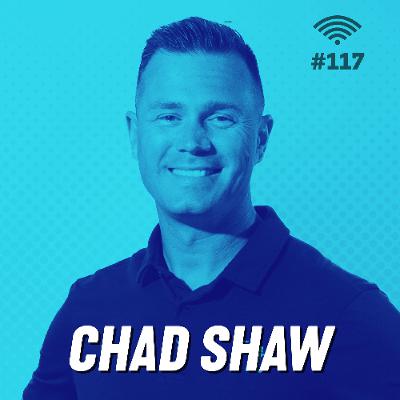
Chad Shaw, COO of Fit Athletic Club in San Diego, sat down with Club Solutions Magazine podcast host Rachel Chonko to discuss community, recovery and wellness in the fitness industry.
Shaw discusses the luxury fitness brand's signature events, its wellness day-club concept Fit Social and the integration of recovery amenities directly into membership. He also touches on rising trends such as strength training and the influence of wellness podcasts. And lastly, he focuses on Fit's number one priority — community.
Listen to the conversation here.
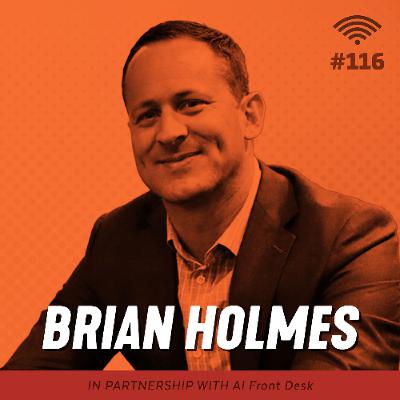
With the ongoing AI-craze, there’s newfound potential for clubs to bridge gaps in service quality and sales execution for lasting improvement. That’s why companies like AI Front Desk are stepping up to offer promising results amid this national trend.
Taylor Gabhart, the editor of Club Solutions Magazine, recently sat down with Brian Holmes, the CEO of AI Front Desk, to discuss how the company was created, how it’s helping the club industry and what Holmes believes the next years of AI will look like.
He also discusses how challenges with staffing and customer communication inspired the creation of AI-powered front desk tools that drastically reduce response times and improve sales follow-up, resulting in better member engagement and operational efficiency.
Listen to the conversation below.

Every health club leader should understand the importance of their most valuable participants. They stay and visit longer at clubs and are often your loudest advocators.
Taylor Gabhart, the editor of Club Solutions Magazine, recently sat down with Mario Tarquinio, the head of key accounts/verticals at Les Mills U.S., to discuss how to best build a loyal, engaged membership base.
Recently, Les Mills completed their most valuable participants (MVPs) report, which analyzed 2.6 million members to understand club growth dynamics. The key findings reveal Les Mills group training participants visit the gym 59% more and stay 39% longer than average members.
Tarquinio emphasizes the importance of motivation, group training, and creating an inclusive environment where instructors and members build a supportive community.
Listen to the conversation here.

Comments

Download from Google Play

Download from App Store
 United States