


 Claim Ownership
RETHINK RETAIL
Subscribed: 109Played: 4,699
Subscribe

© All rights reserved
Description
RETHINK Retail - the evolution of retail in today’s connected world.
Join us as we explore the most recent trends and innovations in commerce.
Join us as we explore the most recent trends and innovations in commerce.
553 Episodes
Reverse
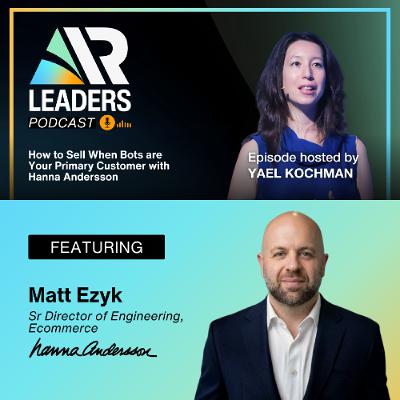
Most retailers are still optimizing for a world where a human types a keyword into a bar. But at Hanna Andersson, Matt Ezyk is architecting for a reality where AI agents browse and filter on behalf of the consumer.
In this episode, we discuss the architectural survival of brand identity in a decentralized world.
- The Bilingual Storefront: LLMs crave data density (fit, texture, origin) that ruins human UX. Use "Accordion" Architecture to hide technical metadata from the human "dopamine hit" while keeping it readable for the bots that control discovery.
- LLMO (Large Language Model Optimization): Your brand identity is being reconstructed by AI using Reddit and training data. To stay relevant, return to the basics of structured data to ensure the machine treats your quality as a fact, not a slogan.
- The Intuition Guardrail: AI is a rearview mirror. It fails at "newness." Human merchandising "hunches" are the only way to signal relevance for new collections that lack historical data.
The Bottom Line: In 2026, building for the click is a legacy strategy. To survive the Agent Era, you must build for the conversation. If your site doesn't speak "bot," your human customers will never find your story.

What if the real problem with AI in retail isn’t intelligence—but expertise?
Recorded live at Shoptalk Spring in Las Vegas, this conversation breaks down how Boot Barn is tackling one of retail’s hardest challenges: scaling deep, technical product knowledge across 500+ stores—without losing credibility on the floor.
Instead of relying on generic chatbots, Boot Barn built a custom AI “associate” designed to know the difference between looking right and being right—especially when safety, compliance, and performance matter.
Key Insights:
- AI is only as good as what it knows. Boot Barn uses Retrieval-Augmented Generation (RAG) to ground AI in real product specs, safety standards, and brand knowledge—reducing hallucinations and increasing trust where it matters most.
- The real unlock isn’t AI—it’s humans training it.
Professional copywriters aren’t being replaced—they’re evolving into AI trainers, shaping how the system communicates and ensuring the brand voice stays authentic to the Western and workwear customer.
- Expertise, on demand. In a high-turnover retail environment, AI becomes a “digital co-worker”—giving store associates instant access to complex product knowledge they might otherwise take years to learn.
- Search is no longer the battleground. As discovery shifts toward AI-driven answers, Boot Barn is preparing for a world where visibility depends on how well your knowledge is structured for machines—not just humans.
Listen to the full conversation to see what retail AI actually looks like when it works.
Moving Beyond the Buzzwords
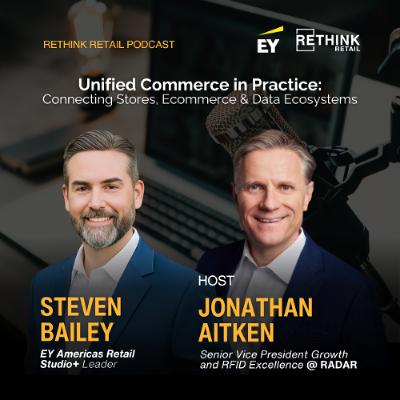
Unified Commerce isn't a new term, but true execution remains the "Holy Grail" for enterprise retailers. In this episode, Steven Bailey, Partner at EY and Jonathan Aitken, SVP at RADAR, discuss why the gap between vision and reality is still so wide, and how to close it.
The Foundation of Real-Time Retail
From the friction of in-store returns to the high cost of order cancellations, the duo explores how fragmented data ruins the customer experience. They break down why "throwing AI at the problem" isn't a fix for a broken architectural foundation.
Key Insights include:
- Journey vs. Channel: Why structural alignment matters more than technology.
- The Smart Store: Transitioning physical locations from "sales points" to "intelligence hubs."
- Inventory Truth: Why 99%+ accuracy is the non-negotiable starting point for 2026.

The “Connected Store” has moved from concept to operational priority. In this episode, Pauline Monin (Vusion) breaks down how digital shelf technology is transforming physical stores into responsive, data-driven environments.
Operational Excellence & Local E-Commerce
Automated pricing removes manual processes and reduces errors at scale, allowing store teams to focus on higher-value tasks. At the same time, stores become more effective local fulfilment hubs. With “Flash-to-Pick” LED guidance, associates can follow optimized picking routes, improving speed and consistency for online order fulfilment.
The AI & Retail Media Opportunity
Through EdgeSense, fragmented in-store data is unified into a single intelligence layer. This enables AI-driven recommendations across pricing and assortment, while also opening the door to in-store Retail Media. Digital displays can measure engagement such as dwell time, giving brands clearer visibility into performance at the shelf.
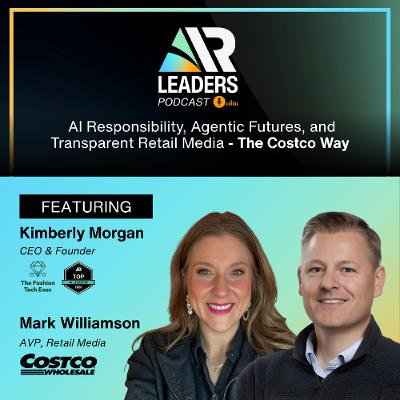
Recorded live at Shoptalk Spring, this episode of the AiR Podcast tackles the shift from AI experimentation to real-world accountability. Mark Williamson, AVP of Retail Media at Costco Wholesale, joins Kimberly Morgan, CEO of The Fashion Tech Exec and a Top AI Leader, to discuss why Costco is building its technology ecosystem "from the studs up."
The Path of Most Resistance While many retailers opt for "plug-and-play" black-box solutions, Williamson explains why Costco is intentionally choosing a more complex, transparent path. By keeping member data behind its own firewall and inviting partners to work natively inside the Costco data cloud, the company eliminates signal loss while upholding its core code of ethics: respect for the member and respect for the supplier.
No AI Strategy Without a Data Strategy The conversation centers on the necessity of a modular, interoperable tech stack. Morgan and Williamson explore how this foundation prepares Costco for the era of agentic commerce. By organizing data properly today, Costco ensures it can provide relevant value wherever members shop in the future—whether via an LLM, a search engine, or the warehouse floor.

This podcast features Darko Pavic, CEO at Fiscal Solutions and Michael Zakkour from 5 New Digital, discussing a critical yet overlooked pillar of global expansion: fiscalization.
Why Compliance is Your Transaction Architecture: Fiscalization is more than bureaucracy. It is the technical foundation of every global transaction. Darko introduces his new book,
The Fiscalization Compliance Maturity Model: To help retailers move from "firefighting" emergencies to a structured, strategic advantage.
The 4 Levels of Compliance Maturity:
- Level 1 (Reactive): Ad hoc responses and constant emergencies.
- Level 2 (Fragmented): Siloed regional teams and high double work costs.
- Level 3 (Connected): Shared tools and unified data architectures.
- Level 4 (Strategic): Compliance as a high speed growth engine.
Whether you are expanding into 5 countries or 50, this session provides a checklist for turning legal risks into a competitive edge.
Watch the full interview to future proof your global retail operations.

Most AI projects die in the boardroom because they ignore the person holding the handheld scanner. In this episode, Sharon Gai, Matt Redwood, and Paula Angelucci move past the hype to discuss what actually works on the shop floor.
The Pivot from Shiny to Useful Stop starting with the technology. Matt Redwood argues that the most successful AI implementations begin with a specific human frustration. Whether it is identifying non-barcoded produce or managing "dark" areas of the store, the tech must serve the journey. One pilot even saw a 75 percent reduction in shrink, but the real win was the store staff lobbying to keep the tools because they made their jobs easier.
Empowering the Artist Paula Angelucci views AI as the ultimate tool for the frontline. By automating the "laundry" of the industry, retailers can finally return to being entertainers and experts. From AI-driven leadership coaching to real-time product insights, the goal is to give associates their time back.
Watch the full interview to see how Diebold Nixdorf and WHSmith are turning data into a genuine competitive advantage.

Your product data wasn't built for AI agents. Here's why that's a problem.
In the latest episode of RETHINK Retail's award-winning AiR (AI in Retail) podcast series, host Jamie Tenser sits down with @Anne-Claire Baschet, Chief Data & AI Officer at @Mirakl and a Top AI Leader recognized by RETHINK Retail, to explore the seismic shift happening in retail discovery right now.
Anne-Claire brings a rare combination of deep technical expertise and strategic vision, from her roots as a Data Scientist at AXA to leading e-commerce platforms at Aramis Group, and now driving AI innovation at Mirakl. As a recognized leader in the AI retail space, she's at the forefront of what she calls the "agentic era" in commerce.
The reality check:
• 53 million shopping queries happen daily on ChatGPT alone
• 60% of shoppers now use AI in their shopping journey
• Traditional keyword optimization? It's no longer enough
What retailers must do now:
✓ Product data & API infrastructure – Make your catalog AI-responsive, not just mobile-responsive
✓ Brand content & social proof – Build trust signals that AI agents recognize
✓ Pricing transparency – Show the real price (product + promo + tax + shipping)
✓ Fulfillment capabilities – Accurate stock and delivery promises matter more than ever
✓ Performance tracking – Test, learn, and optimize for agentic channels
Anne-Claire's advice for 2026? "Experiment. The ones who win are going to be those whose products AI can actually find, understand, and recommend."

In this episode of the RETHINK Retail podcast, Julia Rogers Vargas, VP and GM, Identification Solutions at Avery Dennison and Sasha Wallinger, contributor at Forbes move past the buzzwords to find the "magic" in the retail grind.
The End of the Visible Transaction
We are rapidly approaching a "post-transactional" world. As AI bots begin to automate our daily chores, from replenishing diapers to choosing grocery brands, the traditional checkout experience is fading. Sasha and Julia explore why this shift forces a total pivot in marketing: if a bot is making the purchase, a brand’s only survival strategy is a deep, emotional relationship with the human behind the machine.
Data as the Non-Negotiable Floor
You can't build "magic" on a broken foundation. Julia highlights that while everyone is chasing AI, the real winners are those perfecting their data accuracy through RFID and sensor technology. If the information feeding your digital models is inaccurate, the entire ecosystem collapses. Accurate "track and trace" is what allows the logistics to become invisible, leaving room for the human touch.
Freeing the "Hardy" Retailers
Retail has always been about "humans serving humans." By automating the tedious, manual processes, what Julia calls the "laundry" of the industry, we aren't replacing the workforce. Instead, we are re-empowering retailers to be the entertainers and artists they were meant to be, bringing intimacy and delight back to the physical space.
Watch the full interview to see how Avery Dennison is bridging the gap between digital intelligence and physical artistry.
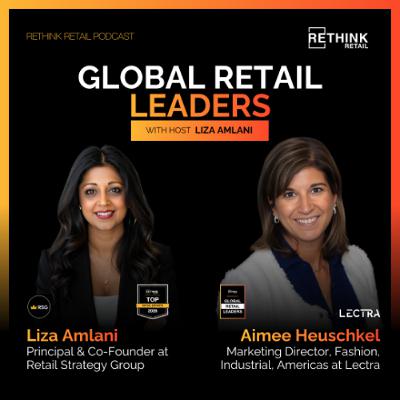
Liza Amlani (Retail Strategy Group) and Aimee Heuschkel (Lectra) joined RETHINK Retail at NRF to discuss why the industry is currently making too much of the wrong product.
The Overdevelopment Crisis Right now, brands are throwing supply at consumers and hoping demand follows. With 81% of retailers struggling to keep up, the result is massive waste and shrinking margins. The fix requires moving from reactive systems to predictive, data-led models.
Breaking Down Retail Silos Teams are often "rowing in different directions." Success in 2026 requires bringing design, sourcing, and materials together at the very start of the process. When everyone aligns on business goals rather than siloed targets, efficiency skyrockets.
Materials as a Strategic Unlock Instead of fabric being a "service" to design, it should be the starting point. Elevating materials teams reduces waste and simplifies calendars, ensuring your brand is ready for upcoming transparency regulations like Digital Product Passports (DPP).
Listen the full podcast to future-proof your product journey.
Marie Schwartz caught up with MaryLeigh Bliss from Ypulse at NRF to talk Gen Z in 2026. The old marketing playbooks? They’re history.
The 20-year trend cycle is over. MaryLeigh explains how social media has created a "firehose" of fragmented trends where Gen Z is nostalgic for everything at once. Whether it’s a 90s reboot or a meme from two weeks ago, the pace is moving faster than most retailers can keep up with.
We’re also seeing the rise of the "AI Detective." Gen Z is hunting for glitches and demanding that AI-generated content be clearly labeled. Transparency is now a requirement for trust, which is why brands like Aerie are winning by doubling down on human authenticity.
Finally, the "post-social" era has arrived. Follower counts don't guarantee reach anymore, the algorithm is the new gatekeeper. From the "social closet" (dressing up for TikTok but living in sweatpants) to the surprising return of cinema-going, this episode covers exactly how to reach the next generation in 2026.
Watch the full interview for the complete Gen Z playbook.

In this episode, RETHINK Retail host Marie Schwartz sits down with Jake Randolph and Adel Cruz from LINKED Permanent Jewelry to discuss the explosive growth of experiential retail.
Key Highlights:
- Experiential Sales: Why "permanent" products are winning on social media.
- The AI Advantage: How solo owners use AI to scale marketing and operations.
- Future of Retail: A first look at LINKED’s new "no-welding" model for traditional stores.
Building 2026 Entrepreneurs From Air Force pilots to estheticians, the permanent jewelry business model is empowering a new wave of retail owners. Discover how simple tech and a "community-first" mindset are redefining the gig economy.
Retailers often chase AI for its own sake instead of solving specific operational problems.
In this session of Retailer Tech Tips, Thaddeus Segura from VusionGroup and Guy Courtin from Tecsys discuss how to move past "irrational exuberance" to build an operating model that survives the current industry bifurcation.
Key Discussion Points:
- The Hardware Flywheel: Intelligence starts at the shelf, using battery-powered cameras to gather necessary AI signals.
- Managing Expectations: The industry must move away from "magic beans" toward transparent conversations about AI capabilities.
- The Future of Discovery: AI tools are changing how consumers find brands, shifting loyalty from ads to personalized recommendations.
- The Omnichannel Hurdle: Traditional safety stock is no longer viable as modern retail demands real-time inventory precisio
Are you ready to "bite the bullet" on tech costs now, or will you wait for another budget cycle?
As Shoptalk Spring 2026 approaches, one theme is shaping the conversation across the retail industry: AI is moving from experimentation to real-world application.
In this episode of the RETHINK Retail Podcast, Fritz Finlay speaks with Joe Laszlo, Head of Content & Insights at Shoptalk, about the ideas and trends expected to define this year’s event.
Their discussion explores several themes emerging across AI in retail today:
- Human-Centric AI
As automation expands across retail operations, successful brands are focusing on how technology can enhance, not replace, the human elements of service, connection, and experience.
- AI as a Multiplier
Rather than asking what roles AI replaces, retailers are increasingly exploring how AI can expand what teams are capable of accomplishing.
- From AI Hype to Retail Impact
The most valuable AI applications are solving long-standing retail challenges, from merchandising decisions and demand planning to customer engagement and discovery.
Joe also shares how these themes are reflected in the Shoptalk Spring 2026 agenda, where leaders from companies such as New Balance, Victoria’s Secret, and Reddit will discuss how AI is shaping the next phase of retail innovation.
In this episode of the RETHINK Retail Podcast, Digital Shelf Institute Executive Director Lauren Livak joins Paul Murphy to discuss what’s shaping the next phase of ecommerce, from changing shopper behavior to the growing gap between browsing and buying.
They discuss why many digital experiences still struggle to help shoppers make decisions, and what retailers can do differently to better capture attention and support the path to purchase.
Key discussion points include:
- The Conversion Gap: Why rising site traffic doesn’t always translate into completed purchases.
- The “Imagination Gap” in Ecommerce: How visualization and contextual experiences help shoppers understand products in their own environment.
Explore the insights shaping the next phase of ecommerce.

Is Your Store Ready for What's Next?
Modern retail is about more than just selling products. It’s about being fast, reliable, and smart right when the customer needs it most. In our latest podcast, Intelligence at the Edge: Powering the Store of Tomorrow, we’re breaking down how the world's leading retailers are using edge computing to transform the shopping experience.
Why Listen?
Host Michael Klein talks with Mariya Zorotovich, General Manager at Intel and Frank Baur, COO at Diebold Nixdorf about the tech that keeps stores running at peak performance. Forget the buzzwords. We’re talking about real solutions for real-time retail.
What You’ll Discover:
- Speed That Matters: Why processing data in the store (not the cloud) is the key to zero-friction checkouts.
- Reliability at Scale: How to keep thousands of locations synced and surging without system failures.
- Smart Growth: How to build a modular foundation that supports AI, computer vision, and personalization today.
Don't let your infrastructure hold you back. Tune in to find out how to build a store that is truly future-ready.

Luxury Retail: High-Tech Meets High-Touch
In a market saturated with options, true luxury is defined by the depth of the experience.
In this episode, Barney Stacher and Shunda D. Lynch of Bloomingdale’s, explore how leading retailers stay relevant in a digital-first world.They break down the necessity of storytelling and why the most advanced AI should serve the sales associate, not replace them.
What we explore in this session:
- The secret to turning one-time shoppers into lifelong clients through rapport.
- Leveraging AI to pinpoint manufacturing defects and minimize return rates.
- How different age groups are adapting to new retail tools and follow-up strategies.
Discover how to blend predictive data with authentic human connection to keep your brand at the top of the luxury market.
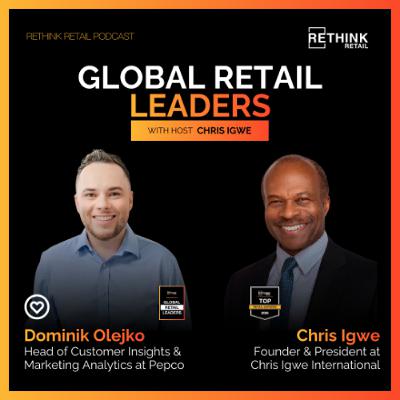
The Human Heart of Retail Innovation
The message from NRF 2026: Retail's Big Show was clear: Technology is the tool, but humanity is the strategy.
In this episode, Chris Igwe and Dominik Olejko, Head of Customer Insights at Pepco, debrief on the "thousands of years of experience" that met in New York this year.
They dive into how global leaders are integrating AI to empower staff and why the "User First" mantra is more critical than ever.
Why Tune In:
- Beyond AI: How to shift from "AI everywhere" to "AI integrated."
- Dark Social & Community: Why the best customer insights are moving to private spaces.
- Authenticity: The secret to building trust in an automated world.
Get the boots-on-the-ground insights you need to stay future-ready.

Is your AI strategy solving problems or just building more dashboards?
Retailers are drowning in data, yet most still struggle to move the needle on store performance. In this episode of the AI in Retail podcast series, Top AI Leader David Polinchock sits down with Corey Spencer, GM & GVP of AI at UKG, to dismantle the "ivory tower" theories failing the frontline.
They explore why the industry must shift from static lagging indicators to real-time orchestration. By making AI an "invisible assistant," managers can stop "scheduling" and start coaching, effectively cooling down frontline burnout before it hits the breaking point.
Strategic Takeaways:
- From Reports to Orchestration: Moving beyond Monday morning dashboards to real-time "AI angels" that flag compliance and staffing gaps as they happen.
- The Semantic Layer: Why unifying payroll, HR, and workforce data is the non-negotiable first step to avoiding AI "hallucinations."
- The Wisdom Luxury: How AI handles the "knowledge" (facts) so humans can provide the "wisdom" (connection) that defines high-end retail.
Stop chasing "shiny objects" that end up as shelfware. Tune in to learn how to build an AI strategy that empowers your people and drives operational excellence.
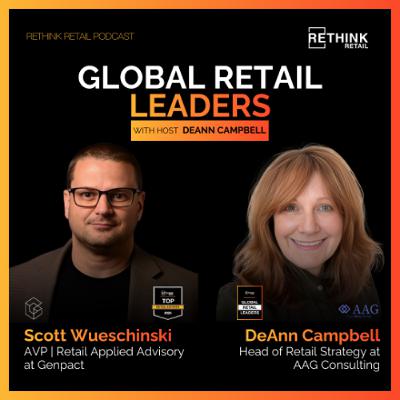
At a time when "agents" and AI dominate every conversation, it is easy to forget that the ultimate channel is the consumer.
In this RETHINK Retail episode, host DeAnn Campbell, Head of Retail Strategy at AAG Consulting and Scott Wueschinski, AVP of Retail Applied Advisory at Genpact, cut through the noise to explain why the human experience is the only real competitive advantage left.
They dive into the friction points technology alone cannot fix, from punitive return fees to the "magic" of a store associate who actually knows their craft.
Strategic Takeaways:
- Cooperative Returns: Moving away from punitive fees by giving customers better tools to get the fit right the first time.
- Associate-First Design: Shifting toward frontline tools that employees actually want to use, rather than systems they are penalized for ignoring.
- The Data Reality: Why AI agents won't save a business if the foundational data is "crap in, crap out".
- The Multiplier Effect: How fixing low-hanging fruit in the store, like removing outdated kiosks, at the same time you deploy AI drives immediate results.
Stop chasing "shelfware." Tune in to learn how to balance high-tech agents with the human touch that builds true brand stickiness.

Comments

Download from Google Play

Download from App Store
 United States