


 Claim Ownership
Q+A with Jack Tame
Subscribed: 160Played: 6,753
Subscribe

© All rights reserved
Description
NZ's leading politics programme.
#nzqanda is made with the support of NZ On Air.
#nzqanda is made with the support of NZ On Air.
324 Episodes
Reverse
Iranian ambassador: New Zealand no longer stands up for peace
The representative of the Iranian government in New Zealand says the small Pacific nation is now seen as a country that supports unilateral military action, having refused to condemn the United States' actions on the world stage.
After weeks of fighting, and days after ceasefire negotiations began, Jack sat down with Iranian ambassador Reza Nazar Ahari to discuss when the Strait of Hormuz will re-open and how Iran defends calling upon international law after perpetrating independently-verified human rights abuses in its own country.
This interview was recorded on Friday 10 April.
Anna Breman: How the Iran war will affect inflation
When Anna Breman became New Zealand's Reserve Bank Governor in December of 2025, she promised greater transparency in how the bank makes monetary policy decisions.
Formerly First Deputy Gobernor at Sweden's Riksbank, Breman took over the reins of New Zealand's central bank after a year of high-profile resignations and criticism from central government.
After holding the OCR at 2.25 percent this week, she expands on what the global uncertainty caused by the Iran war means for New Zealand's economic future.
This interview was recorded on Friday 10 April.
Join Jack Tame and the Q+A team and find the answers to the questions that matter. Made with the support of NZ on Air.
The representative of the Iranian government in New Zealand says the small Pacific nation is now seen as a country that supports unilateral military action, having refused to condemn the United States' actions on the world stage.
After weeks of fighting, and days after ceasefire negotiations began, Jack sat down with Iranian ambassador Reza Nazar Ahari to discuss when the Strait of Hormuz will re-open and how Iran defends calling upon international law after perpetrating independently-verified human rights abuses in its own country.
This interview was recorded on Friday 10 April.
Join Jack Tame and the Q+A team and find the answers to the questions that matter. Made with the support of NZ on Air.
When Anna Breman became New Zealand's Reserve Bank Governor in December of 2025, she promised greater transparency in how the bank makes monetary policy decisions.
Formerly First Deputy Governor at Sweden's Riksbank, Breman took over the reins of New Zealand's central bank after a year of high-profile resignations and criticism from central government.
After holding the OCR at 2.25 percent this week, she expands on what the global uncertainty caused by the Iran war means for New Zealand's economic future.
This interview was recorded on Friday 10 April.
Join Jack Tame and the Q+A team and find the answers to the questions that matter. Made with the support of NZ on Air.
NZ’s foreign policy response to Iran falling short: Labour
The government is breaking with long-held norms in foreign affairs in how it is approaching the Iran crisis, says Labour’s new foreign affairs spokesperson Vanushi Walters.
She tells Q+A that the government must be stronger in standing up for human rights and international law, and sets out what she’d do differently.
The AI startup that could radically change legal profession
Amid the disruption being caused by AI, the legal profession could see massive changes in the next few years. Leading the charge is Ivo, whose founder Min-Kyu Jung spoke to Q+A about the potential for AI to take a much greater role how lawyers operate. The Kiwi former lawyer also talked about why getting massive scale in tech isn’t possible in New Zealand, forcing a move to Silicon Valley.
Will fuel price blowouts push us toward electrification?
ReWiring Aotearoa CEO Mike Casey joins Q+A to talk about what the fuel crisis means for the future of energy, and why attention is increasingly turning towards electrification, rather than relying on precarious fossil fuel supply chains.
The tiny nation caught in middle of geopolitical tussles
Tuvalu is one of the world’s smallest countries, facing some of the world’s most challenging crises. The low-lying atoll nation faces huge threats from climate change, particularly rising sea levels, and many of its citizens are considering taking up the option of leaving. At the same time, Tuvalu’s diplomatic relationship with Taiwan leaves it increasingly isolated among its neighbours.
Join Jack Tame and the Q+A team and find the answers to the questions that matter. Made with the support of NZ on Air.
Tuvalu is one of the world’s smallest countries, facing some of the world’s most challenging crises. The low-lying atoll nation faces huge threats from climate change, particularly rising sea levels, and many of its citizens are considering taking up the option of leaving. At the same time, Tuvalu’s diplomatic relationship with Taiwan leaves it increasingly isolated among its neighbours.
Join Jack Tame and the Q+A team and find the answers to the questions that matter. Made with the support of NZ on Air.
Amid the disruption being caused by AI, the legal profession could see massive changes in the next few years. Leading the charge is Ivo, whose founder Min-Kyu Jung spoke to Q+A about the potential for AI to take a much greater role how lawyers operate. The Kiwi former lawyer also talked about why getting massive scale in tech isn’t possible in New Zealand, forcing a move to Silicon Valley.
Join Jack Tame and the Q+A team and find the answers to the questions that matter. Made with the support of NZ on Air.
ReWiring Aotearoa CEO Mike Casey joins Q+A to talk about what the fuel crisis means for the future of energy, and why attention is increasingly turning towards electrification, rather than relying on precarious fossil fuel supply chains.
Join Jack Tame and the Q+A team and find the answers to the questions that matter. Made with the support of NZ on Air.
The government is breaking with long-held norms in foreign affairs in how it is approaching the Iran crisis, says Labour’s new foreign affairs spokesperson Vanushi Walters.
She tells Q+A that the government must be stronger in standing up for human rights and international law, and sets out what she’d do differently.
Join Jack Tame and the Q+A team and find the answers to the questions that matter. Made with the support of NZ on Air.
“Extreme risk”. How Iran war exposes NZ’s national security vulnerabilities
The world has fundamentally changed, and New Zealand is not yet grappling with what that means for our national security, says Retired Major-General John Howard.
After a distinguished 40 year career in the military, Howard is now speaking out about what the war in Iran represents, the limits of New Zealand’s military capabilities, and the lack of strategic thinking around our military and economic vulnerabilities.
In particular, Howard highlights the potential for fuel shortages, and that it is unclear how fuel will be allocated between the population at large and critical industries if necessary.
Mayors speak out against road funding changes
They’re lifelines for small communities, but special purpose roads are about to lose their full government funding. Whena Owen meets a group of regional mayors who are raising the alarm.
Meet the urban planner who wants less planning
World leading urban planner Alain Bertaud speaks to Q+A about his vision for how cities should be allowed to develop through organic choices and markets, rather than central planning.
Bertaud is renowned for his work in cities around the world, and famous for long walking tours of cities to get a sense for them. He has been in Auckland as a guest of the NZ Initiative, and intends to walk as much of Auckland as he can.
Changes proposed to euthanasia regime
Act MP Todd Stephenson presents his member’s bill, which would expand access to the End of Life Choice assisted dying regime.
Join Jack Tame and the Q+A team and find the answers to the questions that matter.
Made with the support of NZ on Air.
World leading urban planner Alain Bertaud speaks to Q+A about his vision for how cities should be allowed to develop through organic choices and markets, rather than central planning.
Bertaud is renowned for his work in cities around the world, and famous for long walking tours of cities to get a sense for them. He has been in Auckland as a guest of the NZ Initiative, and intends to walk as much of Auckland as he can.
Join Jack Tame and the Q+A team and find the answers to the questions that matter. Made with the support of NZ on Air.
The world has fundamentally changed, and New Zealand is not yet grappling with what that means for our national security, says Retired Major-General John Howard.
After a distinguished 40 year career in the military, Howard is now speaking out about what the war in Iran represents, the limits of New Zealand’s military capabilities, and the lack of strategic thinking around our military and economic vulnerabilities.
In particular, Howard highlights the potential for fuel shortages, and that it is unclear how fuel will be allocated between the population at large and critical industries if necessary.
Join Jack Tame and the Q+A team and find the answers to the questions that matter.
Made with the support of NZ on Air.
Nicola Willis: How petrol will be prioritised in worst-case scenarios
Finance minister Nicola Willis spoke to Q+A about how the war in Iran and unfolding fuel crisis could affect New Zealand in worst case scenarios, including if there are widespread cancellations of deliveries on force majeure grounds. She discussed how the government is considering prioritisation if that happens.
She also discussed other scenarios in which there’s a much longer term issue with higher prices, and what that will mean for the wider economic position for the country.
How CEOs are preparing for Iran war fallout
Q+A canvassed a group of CEOs for a business insight into how they’re preparing their companies in case the fallout from the Iran war gets worse. We spoke to Port of Auckland CEO Roger Gray, Mainfreight Managing Director Don Braid, and Ballance Agri-Nutrients CEO Kelvin Wickham.
The district with nowhere for elderly to go
Q+A reporter Whena Owen goes to Wairoa where the district is facing an acute shortage of rest home places, after the last facility closed due to damage from Cyclone Gabrielle. But is help now on the way?
How drones have taken over the “kill zone” in Ukraine
Drones and other unmanned weapons systems have never been more effective on the battlefields of Ukraine, making the concept of front lines non-existent. Instead, a kilometres-wide area now sits between the two armies, where humans are constantly at risk of being targeted.
Brigadier Stuart Nasse describes it as being like “the opening scene of Terminator 2”, and says the way war is waged has changed radically. He leads the multinational coalition on drones supporting Ukraine, and was in New Zealand to speak at the Centre for Strategic Studies.
Join Jack Tame and the Q+A team and find the answers to the questions that matter. Made with the support of NZ on Air.
Nuclear risk rises: Why Iran war is so dangerous for the world
With the United States and Israel claiming their attack on Iran is to prevent the Islamic Republic getting their hands on a nuclear weapon, can war be used to stop countries getting nukes? And why has Iran been attacked while North Korea – a nuclear armed state – has been left alone? Amid the world descending into conflict, more countries are arming themselves more heavily with the weapons of mass destruction.
Tim Wright is the Treaty Coordinator for the International Campaign to Abolish Nuclear Weapons. He tells Jack Tame why his organisation is pushing for a treaty that will require all states to reduce and eventually eliminate their nuclear arsenals.
Iran war: Concerns for critical Hormuz Strait supply route
Auckland University professor Ismail Golgeci is an expert on international supply chains and the Gulf region. He tells Q+A why the Strait of Hormuz is so critical, and why commodities like fertiliser, food, and fuel are now in trouble.
New Zealand’s economic weak points as Iran crisis deepens
It’s not just the price of petrol. New Zealand is highly dependant on the wider global economy, and the Iran war is putting pressure in unexpected and uncomfortable places. Business Desk senior correspondent Dileepa Fonseka and 1News business correspondent Jason Walls go through where some of New Zealand’s weak points are, why this is likely to lead to a quicker than expected rise in interest rates, and the unknown factors that could spell further trouble.
Pursuing justice despite Trump backlash: ICC Judge Kimberly Prost
International Criminal Court judge Kimberly Prost talks to Q+A with Jack Tame about the costs she’s faced since being sanctioned by the Trump administration for attempting to investigate allegations of war crimes, and why the mission of the ICC is so important. She also responds to criticism of the ICC, including about who prosecutions are brought against, and whether the court oversteps its bounds.
Join Jack Tame and the Q+A team and find the answers to the questions that matter. Made with the support of NZ on Air.
Q+A covers the dramatic developments in the Middle East overnight, with claims that Iran’s supreme leader Ayatollah Ali Khamenei has been killed in American and Israeli airstrikes.
What are the chances this leads to regime change in Iran? And were the strikes legal? Q+A speaks to Otago University professor Robert Patman, and 1News US correspondent Logan Church.
Gary Stevenson: Harsh warning for future if inequality worsens
Economist, author, and former Citibank trader Gary Stevenson from Gary’s Economics joins Q+A to warn against sharply rising inequality, wealth and asset concentration among the super-rich, and what the world of the future could look like. Jack Tame puts his arguments to the test, and asks whether Stevenson’s personal story of being Citibank’s most profitable trader in 2011 is true, ahead of Stevenson’s speaking tour of New Zealand.
Being in Iran during brutal regime crackdown
When protests erupted in Iran in January, Iranian New Zealander Irene was trapped. She tells 1News In Depth reporter Mava Moayyed what she heard and saw during the brutal regime crackdown, and recounts how difficult it was to escape.
What makes a good political heckle? We ask a serial heckler
For some politicians a heckler is an obstacle, but for others an opportunity. Whena Owen meets serial political heckler Karl Mokaraka and finds out what makes a good heckle, before turning the tables on Karl.
Join Jack Tame and the Q+A team and find the answers to the questions that matter. Made with the support of NZ on Air.
Infrastructure: How we need to change our choices
Te Waihanga Infrastructure Commission CEO Geoff Cooper joins Q+A to lay out the details of a sweeping new report into how New Zealand chooses to build and maintain infrastructure, with major recommendations that could make politicians uncomfortable.
Human rights expert: Putting pressure on Israel, Iran, China
Former executive director of Human Rights Watch Kenneth Roth speaks to Q+A about his decades of work protecting human rights, and how different types of pressure can be applied to governments that violate them.
Professor Margaret Mutu: What democracy can learn from Māori decision-making
More than a decade after it was first published, Auckland University Professor Margaret Mutu has released an updated edition of The State of Māori Rights. In an extended interview, she discusses the current political moment, and how consensus-based democracy could be a greater influence on how politics is practiced in New Zealand.
Join Jack Tame and the Q+A team and find the answers to the questions that matter. Made with the support of NZ on Air.
Will government get India trade deal in the bag?
Trade minister Todd McClay joins Q+A for an in-depth discussion of the free trade agreement with India, as Labour releases a letter outlining their conditions on what might be needed for them to consider voting for it. It comes amid tensions in the government over the deal, with NZ First leader Winston Peters raising concerns about what the deal will mean for migration.
LNG or solar? What solves NZ’s energy crisis debated
Andrew Eagles from the New Zealand Green Building Council joins Q+A with an exclusive new analysis that outlines why his organisation believes the Liquefied Natural Gas import terminal plan is a mistake, and why a different plan for massive uptake of solar and heat pump hot water systems would work better.
Insurance retreat: Where’s the safest bet for cover?
With insurance companies starting to pull out from offering new policies in severely flood or seismic vulnerable areas, which area has the lowest risk? And should the government step in when insurance companies step back?
Rent controls, eviction protections: MP wants to change tenant rights
Green MP Tamatha Paul explains her Member’s Bill, which would impose rent controls, and make it harder to evict tenants.
Join Jack Tame and the Q+A team and find the answers to the questions that matter. Made with the support of NZ on Air.
Former foreign minister Phil Goff tells Q+A that he thinks New Zealand has failed to adequately stand up for this country’s values in the face of Donald Trump, in particular taking aim at foreign minister Winston Peters, who sacked him as ambassador to the UK.
Join Jack Tame and the Q+A team and find the answers to the questions that matter. Made with the support of NZ on Air.
Will economy struggling or surging change the election?
With the state of the economic recovery looming as a crucial election issue, Q+A is joined by NZIER’s Christina Leung, and Brad Olsen from Infometrics, to discuss whether the economy will recover before November.
Join Jack Tame and the Q+A team and find the answers to the questions that matter. Made with the support of NZ on Air.
Adrian Rurawhe: TPM “not the party Tariana Turia started”
Departing Labour MP Adrian Rurawhe joins Q+A to reflect on his achievements and regrets in politics, what Labour could have done better in government, and his concerns about the direction of Te Pāti Māori, which he was involved in the initial formation of.
He also reflects on his time as Speaker, and the desire he had to always be fair to both government and opposition.
Join Jack Tame and the Q+A team and find the answers to the questions that matter. Made with the support of NZ on Air.
How mediation services should be changed
Q+A dives into the Members Bill ballot to hear from National MP Carl Bates, who wants to change how mediation services work, and establish a register of mediators the public can access.
Join Jack Tame and the Q+A team and find the answers to the questions that matter. Made with the support of NZ on Air.
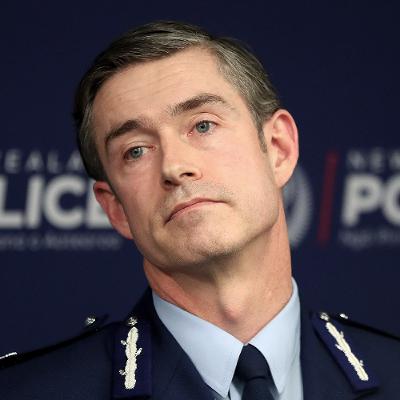
Exclusive interview: Former Police Commissioner Andrew Coster resigned as the head of the Social Investment Agency this week, after a scathing report from the Independent Police Conduct Authority.
.
Coster and several other former senior officers were singled out for mishandling sexual misconduct complaints regarding former Deputy Commissioner Jevon McSkimming, who was subsequently found to be accessing child exploitation and bestiality images on his work computer.
.
Coster told Q+A's Jack Tame he was wrong to trust Jevon McSkimming but he always acted honestly and in good faith. He claims senior figures knew more about the McSkimming case than they have said publicly — something these parties dispute.
.
Join Jack Tame and the Q+A team and find the answers to the questions that matter. Made with the support of NZ on Air.
With Labour's finance spokesperson Barbara Edmonds, defence expert Sam Roggeveen, and ACT list MP Simon Court.
Next Sunday is Q+A's last episode of the year.

A visiting defence and foreign policy expert is urging New Zealand to rethink how we prioritise defence spending, arguing we should draw inspiration from the Australian echidna – a small but spiky animal.
.
Sam Roggeveen, a programme director at the Lowy Institute in Australia, came to New Zealand as a guest of Victoria University’s Centre for Strategic Studies.
.
He says the future of defence of Australia and New Zealand relies on making use of the vast distances any attacker would have to cover, and to purchase equipment designed to sink ships and shoot down aircraft.
.
Join Jack Tame and the Q+A team and find the answers to the questions that matter. Made with the support of NZ on Air.

Comments

Download from Google Play

Download from App Store
 United States