


 Claim Ownership
A Canadian Investing in the U.S. with Glen Sutherland
Subscribed: 67Played: 4,878
Subscribe

© All rights reserved
Description
Helping anyone invest in the U.S. real estate market from anywhere!
405 Episodes
Reverse

In this episode of Canadian Investing in the US, Glen Sutherland interviews Chris Lento, a full-time real estate investor and operator of EM Capital Group, who focuses on acquiring and managing multifamily properties in the U.S. Southeast. Chris shares his journey from starting with small “three-decker” properties in Boston to scaling into large 100+ unit apartment complexes. He emphasizes how early hands-on experience with tenant management and maintenance provided a strong foundation for understanding costs, operations, and decision-making at scale, even though larger properties require teams, systems, and professional management structures.
The conversation highlights the importance of systems, processes, and strong property management when scaling a real estate portfolio. Chris explains how his business uses structured acquisition criteria, standardized operating procedures, and tools like project management software to streamline operations and decision-making. A major focus is placed on selecting and managing property managers, including identifying red flags, asking detailed operational questions, and acting quickly when issues arise. He also discusses his current role in sourcing deals, raising capital, and overseeing asset management, while noting that despite recent market slowdowns, improving deal conditions and more realistic pricing are creating new opportunities for investors.

In this episode of Canadian Investing in the US, host Glen Sutherland sits down with real estate entrepreneur Jagger Bablin to discuss the realities of wholesaling, wholetailing, flipping, and creative financing in today’s shifting U.S. real estate market. Originally from British Columbia and now living in Medellín, Colombia, Jagger shares how he built a fully remote real estate business operating across multiple U.S. states while managing teams around the world. The conversation dives deep into direct-to-seller lead generation, how market conditions have forced investors to pivot strategies, and why understanding deal structure is more important than ever.
Glen and Jagger also unpack the challenges Canadians face when investing in U.S. real estate, including financing hurdles, corporate structuring mistakes, contractor management, and remote property operations. They share real-world stories about squatters, problematic contractors, property management failures, and the lessons learned from costly mistakes. The episode is packed with practical insights on underwriting conservatively, building systems, leveraging creative financing strategies like subject-to and seller financing, and why mentorship can dramatically shorten the learning curve for new investors entering the U.S. market.
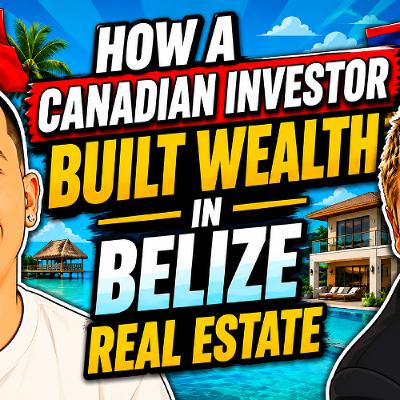
In this episode, Glen reconnects with returning guest Shawn Rea to explore his real estate journey since relocating from Canada to Belize. Shawn shares how his initial strategy of buying single parcels of land evolved into a long-term land banking approach after experiencing significant appreciation, with some lots increasing from roughly $15,000 to as much as $75,000 USD. He also experimented with Airbnb condos but found land investments to be more profitable overall. Through negotiation skills, local networking, and strategic acquisitions—including deeply discounted houses and multiple properties—Shawn built a diversified Belize portfolio focused on appreciation and selective cash flow opportunities.
The conversation highlights Shawn’s shift toward large-scale development, including completing his first subdivision project after 2.5 years of work, now partially sold and offering entry-level investment opportunities. He discusses the importance of aligning investment strategy with lifestyle goals, navigating financing options as a foreign investor, and building strong local connections in a market without a centralized MLS. The episode provides practical insights into international investing, development timelines, negotiation tactics, and balancing lifestyle design with long-term wealth creation through global real estate opportunities.

In this episode of Canadian Investing in the US, host Glen Sutherland sits down with financial expert David Morgan to explore the growing risks within the global financial system and what it means for everyday investors. Drawing on over four decades of experience, Morgan outlines how excessive debt, currency devaluation, and structural weaknesses in the banking system could lead to significant economic disruption. He explains the concept of callable loans, potential bank failures, and the fragility of trust in financial institutions—emphasizing that even insured systems may not be as secure as people assume.
The conversation then shifts to practical strategies for protecting wealth in uncertain times. Morgan advocates for reducing personal debt, living within one’s means, and gradually building savings in hard assets like gold and silver outside the traditional banking system. He also highlights the importance of understanding financial contracts and preparing for worst-case scenarios without succumbing to fear. For real estate investors, the episode offers a unique lens on leverage, risk management, and financial resilience—encouraging listeners to think critically about how the broader economic system impacts their investment strategies.
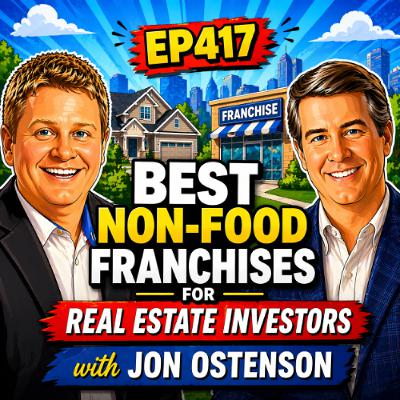
In this episode of Canadian Investing in the US, Glen Sutherland interviews franchise consultant Jon Ostenson to explore how franchising can be a powerful wealth-building strategy — especially for real estate investors and Canadians looking to expand into the U.S. market. John shares how he transitioned from the corporate world to franchising, became President of ShelfGenie, and now helps investors identify non-food franchise opportunities across North America. The conversation breaks down common misconceptions about franchising, the benefits of leveraging established systems, and why “non-sexy” service businesses (like paving, line striping, and mobility retrofitting) can often outperform trendier ventures.
Glen and John also discuss how franchising can complement real estate portfolios, provide alternative income streams during high interest rate cycles, and even serve as a pathway for E-2 visa applicants. They dive into semi-passive ownership models, the importance of hiring strong general managers, and why niche home service businesses are attracting high-level professionals — including physicians and Harvard MBAs. Whether you’re looking to diversify beyond rental properties, create a vertically integrated service business, or explore U.S. residency options, this episode opens the door to opportunities most investors never consider.

In this episode of Canadian Investing in the U.S., Glen Sutherland interviews Ruslan Benko, a Canadian investor who transitioned from buying duplexes in Ontario and Alberta to scaling his portfolio in the United States. Ruslan explains how rising Canadian property prices and stagnant rents pushed him to seek better cash flow and scalability opportunities south of the border. After discovering asset-based lending options like DSCR loans, he completed his first U.S. deal—a Detroit flip purchased for $75,000, renovated, and sold for a solid profit within just a few months.
The conversation dives into lessons learned from that first deal, including managing contractors remotely, refining renovation strategies for flips versus rentals, and overcoming unexpected challenges like property break-ins. Ruslan also shares his current project in Dallas, where he’s executing a garage conversion to increase property value and expand exit strategies. Throughout the episode, he emphasizes the importance of building a strong local team, maintaining flexibility with multiple investment exits, and taking action while learning from experienced investors—highlighting a clear path for Canadians looking to scale into the U.S. market.
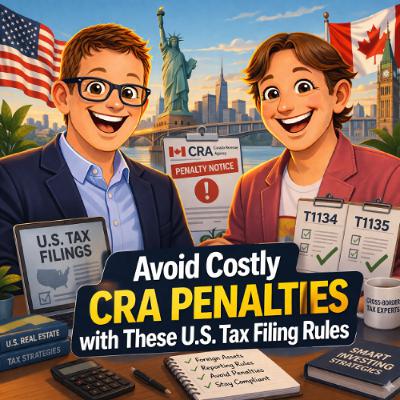
In this episode of Canadian Investing in the US, Glen Sutherland sits down with returning guest Tim Miron, a CPA specializing in cross-border taxation, to uncover two commonly overlooked filing requirements for Canadians investing in U.S. real estate. They break down the importance of filing the T1134 and T1135 forms—often referred to as “Big Brother forms”—which are required to disclose foreign entities and assets to the Canada Revenue Agency (CRA). While these forms don’t typically result in additional taxes, failing to file them can lead to significant penalties, making awareness critical for investors operating across borders.
The conversation highlights how easily investors can fall into non-compliance, especially when setting up U.S. entities, holding foreign bank accounts, or crossing the $100,000 threshold in foreign investments. Tim explains how the CRA’s Voluntary Disclosure Program can help investors correct past mistakes and potentially avoid penalties if they act before being contacted by the government. The episode emphasizes the value of working with experienced professionals to ensure compliance, avoid costly errors, and properly structure cross-border investments from the start.
In this episode of Canadian Investing in the US, Glen Sutherland interviews Russ Morgan, founder of Wealth Without Wall Street, who shares his journey from financial advisor to advocating for financial independence through passive income. After the 2008 financial crisis exposed flaws in traditional investing advice, Russ shifted his focus to helping individuals take control of their financial future. He emphasizes that true financial freedom comes from building passive income that exceeds monthly expenses, rather than relying on traditional markets or advisors who may not actively manage individual portfolios.
The conversation centers on the importance of understanding your “investor DNA” — aligning investment strategies with your personality, strengths, and preferences. Russ explains that many people fail to invest because of fear, confusion, or lack of clarity, and encourages listeners to simplify their approach by identifying their goals, access to capital, and preferred level of involvement. He introduces practical frameworks, such as measuring progress toward financial freedom and leveraging resources like time, relationships, or expertise to get started. Ultimately, he stresses that success comes from taking action, building systems, and consistently evaluating opportunities that align with your personal investment style.

In this episode of Canadian Investing in the US, Glen Sutherland interviews Angelina Cannelli, CEO and founder of RAI, an AI-driven real estate solutions company. Angelina explains how her background in banking, consulting, technology, and personal investing led her to create Mondo, an app designed to automate property management from beginning to end. Unlike traditional platforms that handle only specific tasks, her system integrates tenant communication, vendor coordination, financial tracking, documentation storage, and operational oversight into one centralized dashboard accessible in real time by owners, managers, and tenants.
The conversation explores how AI can address common investor challenges such as inflated vendor invoices, delayed maintenance responses, and limited transparency in building operations. Angelina outlines features like automated maintenance triaging, real-time invoice analysis, faster tenant screening, and “white-glove” vendor coordination for large projects. She positions AI-driven automation as a way to increase efficiency, lower costs, and potentially reduce reliance on traditional property managers, particularly for investors managing properties remotely or at scale.

Marti Jo Watts shares a raw, emotional turning point: before COVID she was a high-earning medical consultant managing large territories in Indiana and Kentucky, until her company terminated hundreds of consultants during the vaccine-era mandate period. As a single mom already carrying years of stress around her son’s long medical journey (18 head surgeries from infancy to adulthood), losing her job collapsed her finances and stability—house gone, car gone, cramped apartment life, and the humbling moment of her kids helping pay bills. A defining scene hits when she nearly takes the vaccine out of fear of losing everything, but a traffic accident makes her miss the appointment; her son’s quiet disappointment (“I thought you would fight harder”) becomes the catalyst that anchors her back to her principles and faith.
At her lowest, Marty stumbles into a coaching program on YouTube and realizes real estate isn’t reserved for the wealthy—then invests her last resources to join the community and learn creative finance. Momentum follows: a first deal flipping 40 acres with an easement issue (moving fast before competitors), then a “relationship deal” where her best friend asks her to sell a medical clinic in exchange for a Hawaii trip—leading to a partnership purchase and plans to open a medical spa instead of flipping. The conversation turns practical: Marty emphasizes telling people what you do, solving the seller’s “pain,” keeping deals win-win, and using creative terms (seller financing / payment structures) to benefit sellers—especially with tax and “mailbox money” advantages. She closes with a motivational call: regardless of where you’re starting, have conversations, don’t fear big numbers, and build your path deal by deal.

In this episode of Canadian Investing in the US, Glen Sutherland sits down with returning guest Tim Miron, founder and president of Pursuit CPA, to discuss what investors should do when they receive an unexpected tax bill. Tim explains that the most important step is to file your taxes on time, even if you cannot immediately pay the balance. Filing late can trigger significant penalties—such as Canada’s 5% late filing penalty plus additional monthly interest—which can quickly increase the amount owed. Instead of avoiding the issue, Tim encourages investors to determine the exact amount owed as early as possible so they can create a plan to deal with it.
The conversation also explores practical strategies for managing a surprise tax bill, including using lower-interest financing (such as a line of credit or refinancing), negotiating payment arrangements with tax authorities, and exploring taxpayer relief programs if extraordinary circumstances caused the issue. Tim emphasizes the importance of proactive tax planning, recommending that investors review their tax strategy in mid-year so there’s still time to make adjustments before year-end. Glen and Tim also highlight the value of communicating with your accountant before making major financial decisions—like buying vehicles or structuring business expenses—so that investors can deploy their money in the most tax-efficient way possible.
Glen Sutherland interviews Bobby Casey, an American international tax lawyer and “slowmad” who splits his time between North Carolina, Mexico, and Latvia. Bobby explains how his residency lifestyle works in practice, and why Americans are “unicorns” globally: the U.S. taxes citizens on a citizenship basis, meaning Americans still file (and may owe) U.S. taxes even when living abroad—though tools like the Foreign Earned Income Exclusion and foreign tax credits can reduce the hit.
The conversation then shifts to Canadians and cross-border tax/residency strategy. Bobby outlines how Canadians can more easily exit Canadian tax residency by minimizing key residential ties (e.g., primary home, spouse, dependent children) and properly filing their departure return—while noting there can be exit-tax considerations and changed tax treatment of property kept behind. He also shares practical notes on living abroad (including why he disliked Belize) and digs into real estate rules for foreigners (e.g., Mexico’s restricted zones and use of a fideicomiso). Finally, Bobby explains why a U.S. LLC can be a powerful structure for non-U.S. digital nomads/remote entrepreneurs (depending on “effectively connected income” and where work is performed), and closes by describing his company formation/compliance platform, BusinessAnywhere.io.

Brandon Cobb returns to the show to break down how he went from medical device sales to building a real estate business focused on land development and land entitlements. After getting fired unexpectedly, Brandon learned a hard truth: nobody is going to protect your financial future but you. That turning point led him through a few failed ventures before he discovered real estate—starting with flipping and building homes, then scaling into larger land deals after national builders began offering to buy his parcels.
In this episode, Brandon explains a simplified, lower-risk approach to land development investing: identify the right parcels, put land under contract with a 90–120 day due diligence period, hire a civil engineer for a concept plan, get early buy-in from the city, and secure an end buyer (often national home builders) before moving through approvals. He also shares where deals can break down—traffic studies, municipal requirements, unexpected costs—and how they mitigate risk with non-refundable buyer deposits to cover entitlement expenses. If you’re an experienced investor looking to level up from single deals into bigger land opportunities, this is a step-by-step look at how the entitlement and development game really works.
Glen brings back Joe Evangelliti to share his “5 Bottlenecks” framework—a universal set of constraints that keep entrepreneurs (especially real estate investors) stuck.
The 5 bottlenecks framework
1) Mindset / limiting beliefs
You don’t get what you “conceive”—you get what you believe you can achieve.
“Rational lies” = the stories we tell ourselves to avoid action (not smart enough, not ready, what will people think, etc.).
Fastest unlock question: “What do I want?” (not what spouse/parents/friends want).
2) Clarity + reverse engineering (Point B → Point A)
People plan vacations with precision but plan their lives in vague “wish” language.
Define Point B clearly, assess Point A honestly, then close the gap.
3) Toolkit audit (simplify your tools/systems)
Too much tech can create complexity and distraction.
Quote-worthy idea: if you can’t do it with notepad + pen + phone, software won’t save you.
Build consistent deal flow first; avoid shiny-object “easy button” chasing.
4) Rule of 168 (time control)
Everyone has 168 hours/week—top performers just allocate it differently.
Focus on:
High-income activities (directly produce revenue now)
High-gain activities (life/relationships/health that matter long-term)
Track what moves the needle (e.g., offers made). Many people feel busy but do zero needle-moving actions.
Calendar discipline = presence. “Show me your calendar and I can almost tell you your net worth.”
5) The trifecta (the “bow”)
Execution (do the work, ship the offer, take the shot)
Course correction (pivot around obstacles instead of quitting or forcing a broken plan)
Radical accountability (someone outside your inner circle who won’t let you off the hook)
In this episode, Glen Sutherland sits down with Ontario landlord advocate Kayla Andre to unpack what Bill 60 really means for landlords navigating the challenges of the Ontario Landlord and Tenant Board. Kayla explains how the bill shortens the timeline for filing non-payment applications, limits last-minute maintenance complaints used to delay hearings, and aims to standardize what qualifies as persistently late rent. She also highlights efforts to improve enforcement through additional sheriffs, clearer rules around set-aside orders, and better visibility of LTB decisions to help landlords identify repeat offenders.
Beyond the legal changes, the conversation explores the bigger picture: landlords leaving the Ontario market, municipal renoviction bylaws conflicting with provincial authority, and how policy missteps may be driving rental prices higher and discouraging investment. Kayla shares real examples of serial non-payment cases that escalated to fraud charges and emphasizes why both landlords and taxpayers should be paying attention. For many listeners, this episode explains why Ontario investors have increasingly looked to U.S. real estate—and whether reforms like Bill 60 could begin to restore confidence at home.
In this episode of A Canadian Investing in the U.S., Glen sits down with Ali Rostamee to discuss his journey from immigrating to Canada in 2010 to ultimately becoming financially free through real estate. Ali shares how reading Rich Dad Poor Dad shaped his mindset early on, leading him to pursue cash-flowing duplexes in Edmonton before hitting lending limits. That forced him to expand his education through BiggerPockets and explore new strategies like BRRRR, multifamily, and flipping. After realizing Alberta’s long recession wasn’t supporting appreciation, Ali relocated to Toronto, caught the COVID appreciation wave with successful flips, and reinvested the profits into Hamilton triplexes and fourplexes—ultimately reaching financial independence.
Ali then explains why he moved from Canada to the U.S.: access to DSCR asset-based loans, dramatically lower prices, superior data transparency, and a more efficient permitting system. He highlights Cleveland, Charlotte, and Phoenix as his top markets for Canadians—Cleveland for cash flow and Charlotte/Phoenix for appreciation. Glen and Ali dive into the importance of diversification across markets (and countries), different strategies working better in different cities, and how balancing multiple markets helped Ali smooth out downturns. Ali also shares challenges of moving to the U.S. as an Iranian-Canadian—border issues, difficulty getting a phone number or bank account without an SSN, and long-distance property management. He now lives in Washington, D.C., placing him within a day’s drive of his key U.S. markets. Ali can be reached on Instagram at @AliRostamee (with two E’s).
Raheem Madjavi from Knightsbridge FX joins Glen Sutherland to unpack what’s driving the Canadian dollar vs. U.S. dollar and what Canadians should watch in 2026. They discuss key macro factors that move currency markets—interest rate differentials, jobs/GDP, oil and commodities, and trade-policy uncertainty—plus why the USD/CAD rate can stay volatile when policy shifts and headlines change fast. Raheem shares practical scenarios for how the loonie could strengthen modestly if U.S. rates come down, and why Canada’s outlook also depends on broader economic resilience and trade outcomes.
They also get tactical for Canadians investing in U.S. real estate: why bank FX spreads and wire mistakes can quietly cost hundreds (or thousands), and how to avoid getting “hosed” on exchange rates when moving large sums. Raheem explains how Knightsbridge works and walks through the common ways to move money cross-border—bill payment (CAD only), wire transfers (fast, often same/next day), and debit/credit between accounts (slower but convenient)—including when each method makes sense. The big takeaway: don’t obsess over perfectly timing the currency market; focus on the underlying investment, reduce friction and fees, and execute a clean transfer strategy when you’re ready.
In this episode, Glen Sutherland reflects on eight years of releasing a podcast episode every single week and breaks down how long-term consistency has played a major role in his success. He explains that his results didn’t come from viral moments or overnight wins, but from showing up week after week—even when it was boring, unsexy, and felt like nothing was happening. Glen highlights why most people quit too early, often confusing activity with progress or expecting momentum before they’ve earned it, and emphasizes that consistency compounds in business, real estate, and life.
However, Glen makes a critical distinction: consistency alone is not enough. Success comes from consistent, correct actions, not just staying busy. Using real estate as an example, he explains why education without execution keeps investors stuck in a “comfort zone trap” and outlines the actions that actually move the needle—deal analysis, building teams, making offers, tracking KPIs, and creating systems that outperform motivation. He closes by reminding listeners that results take time, lag is normal, and real growth comes from doing the right things long enough for them to compound, while challenging listeners to reflect on where they may be consistent but not effective.
Lancelot Lennard is a Florida realtor, investor, contractor, and non-profit founder who focuses on the Daytona / Volusia County area. He explains why he left Miami for Daytona: Miami’s become a “billionaire playground” with weak ROI for small investors, while Daytona still has mom-and-pop landlords, realistic prices, and solid opportunities for both buy-and-hold and flips. He breaks down where he sees opportunity in Florida right now, noting that the market is still somewhat buyer-leaning, allowing strong negotiation on both price and repairs. He also walks through the short-term rental landscape around Daytona Beach, Daytona Beach Shores, Port Orange, and parts of Ponce Inlet—stressing the importance of zoning, municipal rules, and HOA bylaws to ensure Airbnb/STR is actually permitted.
A big part of the discussion is around the recent changes to realtor commissions in the U.S. After the NAR settlement, buyer-agent commissions are no longer automatically offered in the MLS, and agents must now have buyers sign an exclusive agreement before showings. Lancelot explains how this impacts first-time buyers, lower-income buyers, and Canadian investors who are used to the old “seller pays both sides” model. He also touches on Florida’s proposed elimination of property tax on primary residences, current homestead rules, and what that could mean for dual citizens or retirees relocating from high-tax states. The episode closes with practical tips on how Canadians should vet investor-friendly agents (ask about zoning maps, NOI and cap rates) and how to clearly define scope in buyer-broker agreements so you don’t accidentally commit yourself to multiple agents at once.
In this episode of A Canadian Investing in the U.S., Glen Sutherland sits down with Dave Seymour to unpack his incredible journey from blue-collar firefighter to nationally recognized real estate investor and educator. Dave shares how financial illiteracy, predatory lending, and the 2008 financial crisis nearly cost him everything—and how a pivotal decision to invest in education and take massive action changed the trajectory of his life. From learning real estate fundamentals during the crash to completing his first deal and eventually leaving the fire department, Dave’s story is a raw and honest look at what’s possible when preparation meets opportunity.
The conversation dives deep into the importance of execution, relationships, and coaching in real estate investing. Dave explains why real estate is fundamentally “5th-grade math,” why mentorship is worth every dollar, and how buying access to other people’s mistakes can save investors hundreds of thousands—or more. He also breaks down his current focus on larger multifamily opportunities (25+ units), market selection, underwriting discipline, and capital alignment, offering valuable insight for investors ready to move beyond single-family deals.

Comments

Download from Google Play

Download from App Store
 United States