


 Claim Ownership
FBCWest
Subscribed: 0Played: 24
Subscribe

© All rights reserved
Description
FBCWest is a place where church means family. As a family that follows the Lord, we are commanded to love one another as we love ourselves. We hope that this site and our church can be an effective place for your family, and life, so that we can show the affect God has had on us to the world.
438 Episodes
Reverse

God’s people face another crisis: no water, renewed complaints, and rising pressure on Moses. After Miriam dies, the congregation contends with Moses and Aaron, blaming them and accusing them of bringing the people into a “wretched place.” Instead of solving anything, their complaining produces nothing. Moses and Aaron do what God’s people should have done from the beginning: they fall before the Lord and seek His instruction.
Sermon Notes
Numbers 20:1 Miriam dies and is buried
Numbers 20:2 – 5 No water and the people complain
Numbers 20:6 Moses seeks God’s instructions
Numbers 20:7 – 10 Moses told to take Aaron’s rod and the people, then he is to speak to the rock
Numbers 20:11 Moses strikes the rock twice
Numbers 20:12 & 13 Moses told because he did not treat the Lord as holy, Moses will not be able to enter the promise land
Exodus 17:5 & 6 Moses struck the rock once the first time
1 Corinthians 10:4 That rock was Jesus
Matthew 16:13 – 18 Upon this rock
1 Peter 2:4 – 10 Jesus is the cornerstone and we are living stones being built together

Miracles did not stop Israel’s unbelief or grumbling. To demonstrate His sovereignty, God gave His people a clear sign, confirming His chosen priesthood and silencing their rebellion. On our own, we are prone to spiritual rebellion as well. But God sent Jesus so the Law could be fulfilled, and through Him we can live in alignment with God.
Sermon Notes
Numbers 17:1 – 4 Collecting 12 rods with names inscribed on them and placed in the Tabernacle
Numbers 17:5 One rod will sprout so that the grumbling stops
Numbers 17:6 & 7 Moses does what God instructs
Numbers 17:8 & 9 Aaron’s rod sprouts buds, blossoms and ripe almonds. Moses brings out all of the rods
Numbers 17:10 & 11 Moses told to put Aaron’s rod in the Tabernacle as a sign and Moses does so

Very few people are willing to stand in the gap, and even fewer are willing to do so for people who complain about them, blame them, or even hate them. Aaron step into that very place. After rebellion and judgment, the people continue to grumble against Moses and Aaron. God’s wrath begins, and a plague spreads through the camp. At Moses’ instruction, Aaron takes his censer, runs into the midst of the congregation, and stands between the living and the dead. He risks his own life to make atonement for the very people accusing him.
This sermon challenges us to ask:
Are we willing to stand in the gap for others?
Will we intercede for those who misunderstand or mistreat us?
Are we living in gratitude for the One who stood in the gap on the cross for us?
The gospel is not about what we have done, it is about what Christ has done. We were dead. He made us alive. And now, as His workmanship, we are called to reflect His heart by standing in the gap for others.
Sermon Notes
Numbers 16:41 & 42 The people grumbled and blamed Moses and Aaron for yesterday
Numbers 16:43 – 45 God tells Moses to get away from the people
Numbers 16:46 & 47 Moses tells Aaron to make atonement for the people and he does so
Numbers 16:48 Aaron by standing between the living and the dead stooped the plague
Numbers 16:49 & 50 The results of the plague
Ephesians 2:1 – 10 We were dead, but now alive because of Jesus

A direct rebellion against God’s appointed leadership, and a judgment so dramatic it leaves no doubt who the Lord has chosen. Korah, along with 250 leaders of renown, rises up against Moses and Aaron, claiming that “all the congregation is holy” and accusing Moses of exalting himself. The issue isn’t Moses’ ego. It’s the people’s refusal to accept God’s authority and God’s choices.
Sermon Notes
Numbers 16:1 – 3 Korah & 250 others rebel against Moses and Aaron
Numbers 16:4 – 7 Moses tells Korah God will make His choice of them
Numbers 16:8 - 11 Moses tells Korah wasn’t enough that God was using them
Numbers 16:12 – 14 Moses summons those who were apart of the rebellion but had not come to him, but they refuse
Numbers 16:15 Moses asks God not to regard Korah
Numbers 16:16 –19 Moses tells Korah how the test of God’s choosing will take place
Numbers 16:20 & 21 God tells Moses to separate from the people because He is going to destroy them
Numbers 16:22 Moses intercedes for the people
Numbers 16:23 – 30 God tells Moses to tell the people to separate themselves from those who rebelled
Numbers 16:31 – 35 God judges the rebellious by the ground opening up and shallowing them alive
Numbers 16:36 – 40 God tells Moses to use the censors of the rebellious, which is holy for a different holy purpose, but also used as a reminder
This message is both a warning and a call to faithfulness:
- Don’t challenge what God has established.
- Don’t despise the ministry God has given you.
- Serve with full commitment, regardless of the “size” of your role—because God assigned it.

Israel makes the same mistake twice. First, they say, “we can’t,” then they say, “we can,” and they are wrong both times. Because the deciding factor was never their ability but weather God was with them.
After God’s judgment that the older generation would die in the wilderness, the people mourn and then attempt to take the Promised Land anyway. Moses gives them a clear warning that they will not succeed, because the Lord is not among them. The Ark and Moses remain in the camp, but the people presume they can move forward without God. They go their own way and are defeated exactly as Moses said.
Sermon Notes
Numbers 14:39 & 40 The people mourn the pronouncement, but attempt to take the promise land anyway
Numbers 14:41 – 43 Moses warns the people that they will not succeed without the Lord
Numbers 14:44 & 14 They went anyway and lost
Psalm 140:6 – 8 God covers you in battle
Psalm 144:1 – 8 God is our shield and stronghold
Romans 8:28 – 38 Because of God we are overwhelming conquerors

When things don’t go according to our plans, we often ask God to fix the situation. But then try to tell Him how to do it. We see why that approach can be spiritually dangerous and why Scripture warns us to be careful what we ask for.
Sermon Notes
Numbers 14:1 – 4 The people say it would have been better if they had died in Egypt or the wilderness. They appoint another leader
Numbers 14:5 – 10 Moses, Aaron, Joshua and Caleb attempt to keep the people form rebelling against God
Numbers 14:11 & 12 God tells Moses He is going to kill all of them and start over with Moses
Numbers 14:13 – 19 Moses becomes an advocate for the people and the glory of God
Numbers 14:20 – 25 God tells Moses He will pardon the people, but there are still consequences
Numbers 14:26 – 35 God tells Moses He will do what the people want and “They’ll died in the wilderness”
Numbers 14:36 – 38 The 10 who gave the bad report died of a plague

At the moment Israel stood on the edge of the Promised Land, and faced a decision shaped by two conflicting reports. After God delivered them from Egypt, provided for them in the wilderness, and brought them to Canaan’s border, the Lord told Moses to send spies into the land. The spies returned after 40 days confirming exactly what God had promised: the land truly was “flowing with milk and honey.”
But then came the divide.
The majority report focused on the strength of the people and the fortified cities, and it turned into a bad report fueled by fear. The minority report urged the people to go forward. The real question was not whether the land was good, but whether Israel would trust God.
Sermon Notes
Numbers 13:1 – 3 The Lord tells Moses to send people to spy out the land and he does so
Numbers 13:17 – 20 Moses tells the spies how to go and what to look for
Numbers 13:21 – 26 The spies come back after 40 days and confirm that the land is and how God described it – it’s a land flowing with milk and honey
Numbers 13:28 & 29 Majority report is that the people in the land are too strong
Numbers 13:30 Minority report we can take the land
Numbers 13:31 – 33 Majority report a bad report that they are too strong
Exodus 14:31 & 14 The Lord will fight for you
Ephesians 6:10 – 17 Our struggles are spiritual so arm ourselves spiritually

Most of us struggle with one of two extremes: thinking too highly of ourselves or too lowly of ourselves. Scripture calls us to something better: an accurate, God-centered understanding of who we are. In Numbers 12, God teaches a painful but necessary lesson in humility when Miriam and Aaron criticize Moses.
God confronts their arrogance directly, defends His servant, and Miriam is struck with leprosy. Yet even in discipline, God shows mercy. Aaron confesses their sin, and Moses responds with humility and compassion by interceding for Miriam. This sermon also connects the lesson to 1 Peter, showing how believers should respond when they are criticized for serving Christ:
Serve with the strength God supplies (1 Peter 4:10–11)
Don’t be surprised by trials or insults—if you are reviled for Christ, you are blessed (1 Peter 4:12–14)
Humble yourself under God’s mighty hand, and He will exalt you at the proper time (1 Peter 5:6)
If you’re facing criticism—especially from people close to you—this message will help you keep your eyes on God, walk in humility, and trust the Lord to deal with His servants in His way and timing.
Sermon Notes
Numbers 12:1 & 2 Moses’ relationship with the Lord criticized due to his second marriage
Numbers 12:3 Moses is a humble man
Numbers 12:4 – 8 God tells Aaron and Miriam His relationship with Moses is different and they should have been afraid to speak against him
Numbers 12:9 & 10 God was angry with them and struck Miriam with leprosy
Numbers 12:11 & 12 Aaron confesses their sin to Moses
Numbers 12:13 Moses intercedes for Miriam
Numbers 12:14 & 15 The Lord’s response is that she must bear her shame for 7 days
1 Peter 4:10 – 14 If you are reviled for Christ you are blessed
1 Peter 5:6 Humble yourself before God and He will exalt you

After generations of slavery, God delivered Israel from Egypt with undeniable power. Yet shortly after gaining freedom, the people began to complain and even longed to return to slavery for the comfort of familiar food. Israel’s complaints about manna are met with a merciful response from God. God delivers His people.
• Israel’s willingness to exchange freedom for comfort
• How complaining reveals misplaced trust
• God’s provision of manna and meat—and the consequences of rejecting it
• Moses’ burden and God’s merciful provision of help
• The danger of assuming God’s power is limited
• The connection between Israel’s wilderness struggle and Christian freedom today
• Why believers are warned not to return to a yoke of slavery
Sermon Notes
Numbers 11:1 The people complain of adversity and the Lord consumed some of them with fire
Numbers 11:2 & 3 Moses prayed and the fire stopped
Numbers 11:4 – 6 People complained that in Egypt they could eat fish, cucumbers and other things
Numbers 11:7 – 9 Manna described and how it was harvested
Numbers 11:10 – 15 Moses wants to die because of the people and the burden he is carrying
Numbers11:16 & 17 To lift the burden God initiates the Sanhedrin
Numbers 11:18 – 20 The Lord says that the people are to consecrate themselves and they will be given meat to eat
Numbers11:21 & 22 Moses doubts God’s power
Numbers 11:23 The Lord says “Is His power limited?”
Numbers 11:24 – 30 God places His Spirit upon the elders
Numbers 11:31 –33 The Lord gives them meat, but while they are chewing it the Lord struck them with a plague
Galatians 5:1 Christ set us free, do not becomes slaves again

People search for answers in books, advice, and personal experiences to discover God’s purpose for their lives. But Scripture is clear: God has already revealed His will. God’s will is not guesswork. The Scriptures show that His will is expressed in how we live, who we become, what we value, and how we respond to Him.
God’s will is not hidden, complicated, or reserved for a select few. It is clear, practical, and available to every believer. The real question is not whether we know God’s will, but whether we are willing to do it.
This teaching covers:
• What Scripture explicitly says is God’s will
• Why holiness and sanctification matter
• Living with joy regardless of circumstances
• Praying continually as ongoing relationship, not ritual
• Giving thanks even in hardship
• Why God cares more about who you are than what you do
• Faithfulness in small things as preparation for greater responsibility
Sermon Notes
1 Thessalonians 4:3 – 8 Your body sanctified
1 Thessalonians 5:16 – 18 Rejoice, pray & give thanks
Matthew 6:9 –13 Pray that His will be done here
Romans 12:1 & 2 Prove God’s will by presenting our bodies as a living sacrifice, not being conformed to this world and renew our minds
Psalm 40:8 Delight in doing God’s will
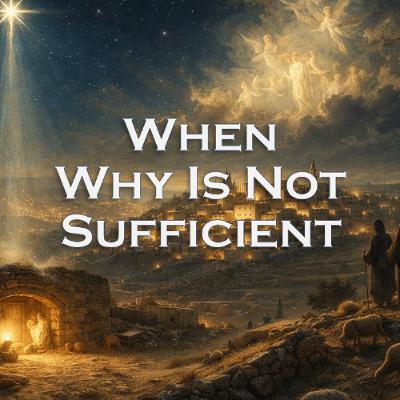
When evil happens, one of the first questions we ask is why. Scripture provides reasons, prophecies, and context. But rarely the kind of answers that bring immediate comfort. Even the celebration of Christmas includes the atrocity of Herod’s massacre of the children in Bethlehem. Advent is not only about peace and joy; it is also about a Savior entering a broken and hostile world. We are called to trust God’s sovereignty, even when we do not understand His ways, and to look beyond present suffering to eternal glory.
Sermon Notes
• Why evil followed immediately after the birth of Jesus
• Herod’s actions and the slaughter of the innocent
• God’s foreknowledge and prophetic fulfillment
• Why asking “why” often brings no comfort
• God’s response to suffering in the book of Job
• How God remains in control even when evil seems to win
• The hope of eternity for those who suffer for God’s purposes
• Whether believers are willing to trust God—even in suffering
Matthew 2:13 – 15 An angel warns Joseph about Herod and tells him to take Jesus to Egypt
Matthew 2:16 Herod having been tricked by the Magi had all the male children 2 and under killed
Matthew 2:17 & 18 Jeremiah’s prophesy was fulfilled, but there was no comfort
Job 38:1 – 4 Where were you when God created
Job 40:1 – 9 Are you going to annul God’s judgments
Romans 8:28 God causes all things to become good for those who love Him and are called by Him
Revelation 7:9 – 17 Great Tribulation martyrs
Revelation 22:20 Even so, Come Jesus

the Scripture reveal that the birth of Christ was announced as good news for all people, regardless of status, background, ethnicity, or past. Jesus did not come for a select group. He came for the world. His invitation is open to all, and the path is clearly revealed.
Sermon Notes
Luke 2:4 – 20 Good news for everyone, a Savior has been born
Romans 1:16 &17 Salvation for everyone who believes
Romans 10:8 - 13 Whoever calls upon the Lord will be saved
What is your purpose? Culture, self-help books, and institutions promise to help you find your purpose, but the Bible tells us something very different. The Scripture explains what your purpose truly is and why it applies to every person, at every stage of life, in every circumstance. Our purpose is not self-fulfillment or personal greatness, but the glory of God. God’s plan has always been about displaying His grace, mercy, and power through people who often don’t deserve it.
Sermon Notes
Ephesians 1:3 –14 To the praise of His glory
Ephesians 2:4 –10 In the ages to come He might share the surpassing riches of His grace
Romans 9:9 – 18 God’s purpose in Esau, Jacob and Pharaoh
Isaiah 45:23 Every knee will bow and eve3ry tongue confess allegiance
Philippians 2:9 – 11 Every knee will bow and every tongue confess Jesus as Lord to the glory of God the Father
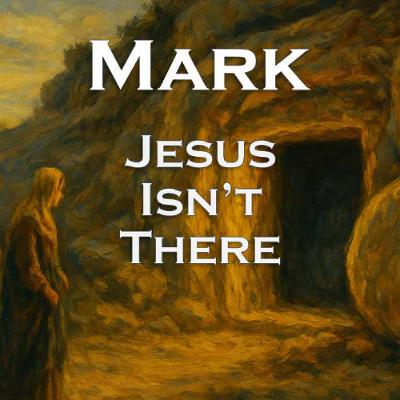
The event that confirms Jesus is exactly who He claimed to be: the Messiah, the Son of God. After His burial, the women came to the tomb expecting decay, but the Scriptures had already declared that the Holy One would not see corruption. Instead, they found the stone rolled away, an empty tomb, and an angel announcing the truth: “He has risen; He is not here.”
Sermon Notes
Mark 16:1 – 4 Women go to the tomb with spices to prepare Jesus’ body and wondering how they will get the stone rolled away from the tomb
Mark 16:5 & 6 They enter the tomb and see a young man wearing a white robe (an angel) who tells them Jesus who had been crucified is risen and He is not here
Mark 16:7 Angel tells them to tell Jesus’ disciples and Peter Jesus will meet them in Galilee
Mark 16:8 The women left afraid
1 Corinthians 15:3 – 11 Jesus died, buried and rose according to the Scriptures
A part of the gospel story that is often treated as a simple transition between the crucifixion and the resurrection. Scripture shows it is far more significant. The burial of Jesus fulfills prophecy, demonstrates God’s control over timing and events, and provides evidence that He is the promised Messiah.
Sermon Notes
Mark 15:42 Crucifixion happens on Day of Preparation before the Sabbath – that Sabbath was not Saturday
Mark 15:43 Joseph of Arimathea gets enough courage to ask for the body of Jesus
Mark 15:44 & 45 Making sure Jesus was dead, Pilate grants Joseph’s request
Mark 15:46 Joseph bought a linen sheet, wrapped Jesus’ body in it and placed Him in a hewn out rock for a tomb and a stone was placed at the entrance
Mark 15:47 Women observed where Jesus was buried so they could come back and properly bury Him
Isaiah 53:9 Prophecy concerning the burial of the Messiah
The way someone dies does not usually prove who they are. But in Jesus’ case, His crucifixion fulfills the very scriptures that foretold the Messiah’s suffering, death, burial, and resurrection. Jesus’ crucifixion is not a story of defeat. It is the ultimate proof that He is the Messiah, the Son of God, the Lamb who takes away the sin of the world.
Sermon Notes
Mark 15:22 – 27 Jesus crucified on a hill called Golgotha. He refused the offer of dulling His pain. His garments were divided and 2 others were also crucified
Mark 15:29 – 32 Many were insulting Him and said he saved others but could not save Himself What if He had come down?
Mark 15:33 – 37 Crucifixion started at 9:00 am, at noon darkness fell and at 3 He breathed His last
Mark 15:40 & 41 Results of His death – the veil in the Temple was torn top to bottom and the Centurion said “Truly this was the Son of God” Women ministered to Him during His life were looking from afar
This sermon walks step-by-step through the events of the crucifixion:
• Jesus’ physical suffering and the prophetic reasons behind it
• Why He refused the pain-numbing wine
• The meaning of being crucified at Golgotha, the place of the skull
• How Roman soldiers unknowingly fulfilled Old Testament prophecy
• The darkness that covered the land and Jesus’ cry, “My God, My God, why have You forsaken Me?”
• The powerful significance of Psalm 22 and Isaiah’s prophecies
• The tearing of the temple veil and what it means for our access to God
• The centurion’s confession, “Truly this man was the Son of God”
• The women who faithfully stayed near the cross
• What Jesus’ death tells us about the love, timing, sovereignty, and faithfulness of God

Ever since Adam and Eve’s children, humanity has shown cruelty toward one another. There’s even an expression: man’s inhumanity to man. But today, we’re going deeper—into man’s inhumanity to God.
Sermon Notes
Mark 15:16 – 21 Soldiers mock Jesus and lead Him to be crucified
Probers 14:9 Fools mock at sin
Galatians 6:7 – 10 God is not mocked

Pontius Pilate faced a moral crossroads when choosing between justice and public pressure. As Jesus stands silent before His accusers, we witness the ultimate example of strength, humility, and divine love.
Sermon Notes
Mark 15:1 Religious leaders bind Jesus and deliver Him to Pilate (The Roman Governor)
Mark 15:2 – 5 Pilate questions Jesus
Mark 15:6 – 11 Pilate tries to release Jesus. The crowd instead wants a murder released. (the son of the father rather than (The Son of God the Father)
Mark 15:12 – 14 The crowd influenced by the Chief Priests, want Jesus crucified
Mark 15:15 To satisfy the crowd Pilate has Jesus scrouged and authorized His crucifixion

While Jesus stands firm in truth, Peter falters under pressure, denying his Lord three times.
Sermon Notes
Mark 14:66 – 70 Three times people accuse Peter of being with Jesus. The first two times he denies it and moves away from the accuser
Mark 14:71 The third response to the accuser was to curse and swear
Mark 14:72 After the third denial Peter hears the cock crow the second time and weeps
What would you do if silence could grant your deepest prayer? Jesus's has been arrested in the Garden of Gethsemane and the profound choice to speak the truth, even when silence could have spared Him suffering.
Sermon Notes
Mark 14:43 – 45 Judas betrays Jesus
Mark 14:46 – 50 Jesus arrested; someone tries to stop the arrest, but Jesus intervenes, then Hiss disciples fled
Mark 14:51 & 52 A young man wearing only a linen sheet flees naked
Mark 14:53 Jesus taken to the High Priest and Council
Mark 14:54 Peter follows at a distance
Mark 14:55 – 60 During the first trial only false and inconsistent testimony is given
Mark 61 & 62 Jesus thus far remains silent and if He remained so He would have to be released. So Chief Priest asks Jesus why He does not respond and if He is the Christ. Jesus responds “I am”
Mark 14:63 – 66 High Priest acts as if he is mourning. The Council condemns Jesus as worthy of death due to blasphemy and begin to mistreat Him

Comments

Download from Google Play

Download from App Store
 United States