


 Claim Ownership
City Road Podcast
Subscribed: 229Played: 1,835
Subscribe

© All rights reserved
Description
Informed stories about cities and urban life. Listen live on the Community Radio Network. Podcast on Spotify.
123 Episodes
Reverse
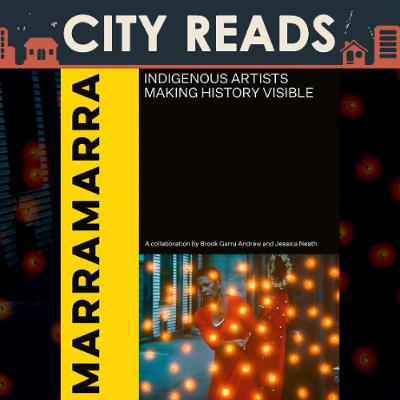
How are ancient Indigenous stories and knowledge told through art? What is a Dhomala and what does it represent in Indigenous histories? How are Indigenous artists creating their own forms of monuments in settler colonial societies?
This first City Reads episode, which is part of the City Road podcast, is themed around Indigenous public art and placemaking in the broader context of colonial and Indigenous histories.
In this episode, host Jacqueline Tyrrell speaks with internationally renowned artist and curator Brook Andrew and art historian and researcher Jessica Neath about their recently published book Marramarra: Indigenous Artists making History Visible. Marramarra is a powerful collection of Indigenous artworks, stories and poems from across the planet. We find out how Indigenous artists are finding pathways to visibility and healing through a broad range of artistic mediums, along with some deeper insights into global narratives from Indigenous perspectives.
Listen out for more City Reads episodes in the coming months!

A renewable energy transition is top of the list when it comes to Australia's race to net zero carbon emissions. But take the temperature around Australia, and not everyone is on board. Bill Code speaks with Associate Professor Bec Colvin about the importance of taking different concerns seriously and the narrative of regional communities 'standing up' to the powerful actors sweeping in with unwanted change from the outside.
Is there really a rift between the city and the country on this issue as is often made out? And what does the latest research have to tell us about renewables and farming communities, coal producing regions, regional Indigenous groups and 'just transitions'?
Bill Code speaks with Associate Professor Bec Colvin from the Australian National University's Crawford School of Public Policy.
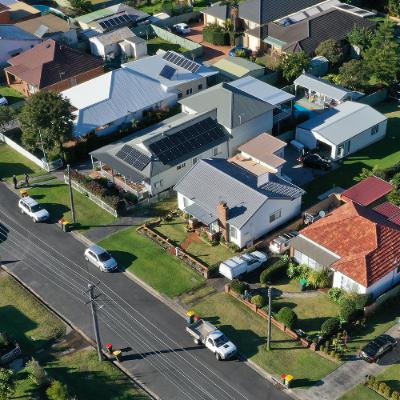
Governments of different stripes tend to believe that the way to deal with the housing crisis is to build more houses. If there were an 'abundance' of houses, we'd be able to easily tackle the lack of *access* to secure housing. But is abundance – as popular as that term has become in the last year – the key to the issue? (Let alone the key to a nice 3-bedder in the suburbs). In this funny and boisterous Festival of Regenerative Urbanism event, held by the Henry Halloran Urban and Regional Research Initiative at the University of Sydney, a panel of experts with a bee in their collective bonnet go head to head.
Starting with a spirited critique of 'Abundance' by Ezra Klein and Derek Thompson from Professor Nicole Gurran, the debate features:
Jess Scully, Author, City-maker & Curator;
Tina Perinotto, Publisher and Managing Editor, the Fifth Estate;
Patrick Fensham, National Leader for Urban Policy & Governance, SGS Economics & Planning; Planning Institute of Australia Victorian President;
Professor Steven Rowley, Director, Australian Housing and Urban Research Institute, Curtin Research Centre;
Ben Hendriks, Founder & Executive Chair, Mecone;
Mehnaaz Hossain, Editor, Honi Soit, The University of Sydney.
Photo: Wedge-Tail Pictures

How do we regenerate civics , in an era of AI, Social Media and Post Truth? Is civil participation going through as big an upheaval as other areas of life? And what do the Brisbane Olympics have to do with a renowned board game?
Originally hailed for democratising access to information, the rise of Artificial Intelligence (AI) and pervasive social media platforms are increasingly associated with a fragmentation of public discourse and distrust of ‘mainstream’ politics. In this panel, NSW Housing Minister Rose Jackson, QUT's Professor Marcus Foth, Christine El-Khoury of newDemocracy Foundation and Dr Justine Humphry of the University of Sydney discuss the implications of new technologies for civic engagement and urban life.
This recording from the 2025 Festival of Regenerative Urbanism was held by the Henry Halloran Urban and Regional Research Initiative and chaired by Dr Luke Hespanhol.
Photo: Luke Hespanhol
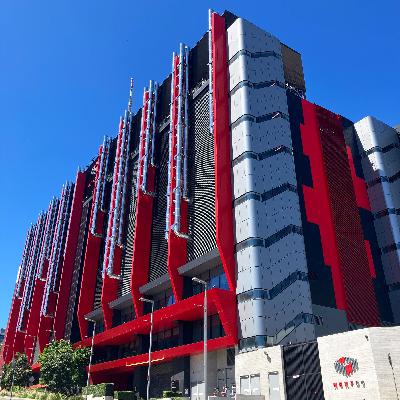
The rapid growth of data centres in Australia and the role of AI in contributing to their proliferation is a hot topic in both planning and 'mainstream' debate.
The Australian Energy Market Operator reports energy use by data centres in FY 2025 was around 2% of National Energy Market use, predicted to rise to around 6% by 2029/30*
Dr Bronwyn Cumbo of UTS's Transdisciplinary School and Johanna Lim from the US Studies Centre join host Bill Code to talk about some of the environmental, social and strategic considerations around planning for data centres, the so-called 'nerve centres' of our digital economy.
*An earlier version of this podcast claimed a widely-reported 5% figure was cited in a recent report from Mandala Partners. This was incorrect and has been changed.
Photo: Jacqueline Tyrrell

Is the growing trend in e-bike and e-scooter use the key to reducing congestion on our roads - or a menace for unsuspecting pedestrians, drivers, and riders themselves? Reports of accidents are filling the airwaves as experts question how governments can best manage the rapid growth in sales of electric bikes and scooters. So, how best to regulate the confusing landscape of e-micromobility? City Road's Bill Code welcomes Dr Yuting Zhang of the University of Sydney and president of Better Streets, cycling advocate Sara Stace.
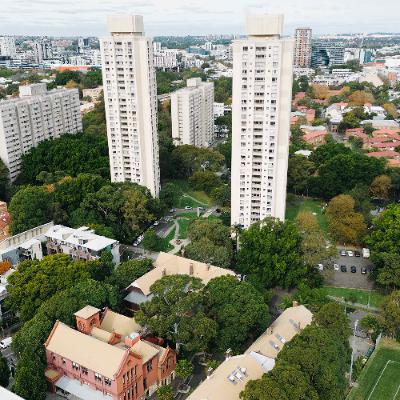
Australia is in the midst of a housing crisis. But amidst the political and media debate about the fixes to our housing woes, public housing has slipped from view. There's concern that funding commitments are a far cry from the broad based approach to public rental housing which has supported so many Australians in the past, including Prime Minister Anthony Albanese. So where does Australia go from here? Join Rebecca Pinkstone, Chief Executive of Homes NSW, Alistair Sisson of Macquarie University, City of Sydney Councillor Sylvie Ellsmore, plus public housing tenants Norrie May-Welby and Karyn Brown at this Festival of Urbanism event recorded in late 2024. Photo: Wedge-Tail Pictures
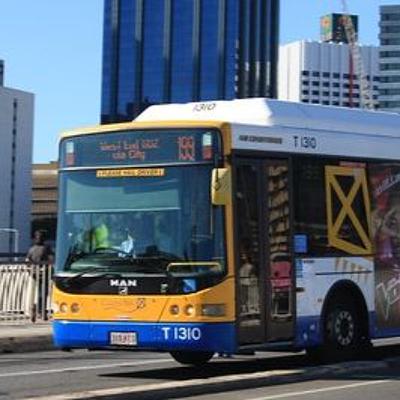
What is ‘public’ about our urban and regional transport systems - and how public should they be? Are our leaders actually serving public interests and values around public transport? Should a stick in the ground really count as a bus stop? And what the heck is a 'beg button'? In this episode of City Road a rich panel of speakers delve into the big questions surrounding public transport at the recent Festival of Urbanism, including Dr Ian Woodcock, Emma Bacon, Neill Miller, David Babineau, Dr Rebecca Clements and Dr Crystal Legacy. Photo: Andrew Thomas/Flickr
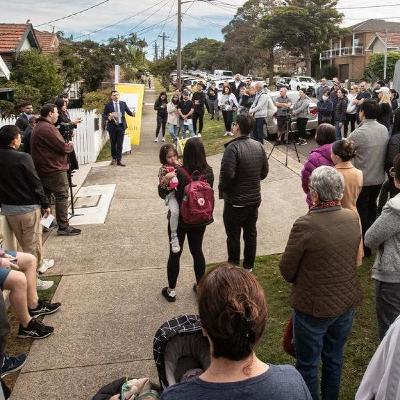
With housing *the* hot topic this election, a panel of experts at the recent Festival of Urbanism battled to convince a live audience that the private market could (or could not) solve Australia's housing crisis.
This debate features:
- The Hon Doug Cameron, Former Senator
- Sharath Mahendran, Urban Planner and creator of YouTube channel Building Beautifully
- Emily Sims, Uralla Shire Council
- Stephanie Barker, Executive Director, Strategy and Engagement, Willowtree Planning
- Luke Cass, editor, Honi Soit Newspaper 2023
- Emeritus Professor Peter Phibbs, Henry Halloran Research Trust, the University of Sydney
Commentary
This debate also features commentary from Michael Koziol, Sydney editor, The Sydney Morning Herald and is chaired by Professor Nicole Gurran, Director, Henry Halloran Research Trust.
Thanks for listening.
See you next time on City Road.
Host: Bill Code
Editor: Mikayla McGuirk-Scolaro
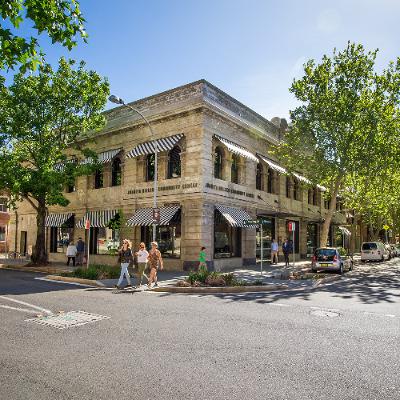
Welcome back to City Road. In this episode, we reflect on 2024's Festival of 'Public' Urbanism and its panel discussion on how the public life of great cities takes place in our cultural buildings and civic spaces – from libraries to museums, town halls, streets, parks and playgrounds.
This special Denis Winston memorial lecture, delivered by Dr Caroline Butler-Bowdon, State Librarian and award-winning author and curator, celebrates our crucial public infrastructure as the cornerstone of public and democratic life.
The keynote address is followed by an eminent panel conversation between Dr Rob Stokes, former Minister for Planning and Public Spaces, and Professor Jennifer Barrett, Professor in Museum Studies and Pro-Vice Chancellor Indigenous at the University of Sydney.
The annual Festival of Urbanism is brought to you by the Henry Halloran Research Trust with the assistance of the University of Sydney School of Architecture Design and Planning.
Thanks for listening.
See you next time on City Road.
Host: Bill Code
Editor: Mikayla McGuirk-Scolaro

This final episode of the Infrastructure Governance Incubator series focuses on a plenary discussion centred around the findings of the ‘Infrastructure Governance Incubator’ - a multidisciplinary collaborative research project across three universities – which took place at the State of Australasian Cities conference in December 2023.
This discussion sought to contribute to a renewed research agenda for Australasian infrastructure governance, considering the current state of governance challenges and potential future directions. It draws on findings from the Incubator’s case study of the Western Sydney Parkland City in New South Wales, Australia, across multiple critical issues discussed across this podcast series: planning on unceded First Nations land, accountability and social legitimacy, collaborative governance and integration, and power and politics.
Panel members:
A/Prof. Tooran Alizadeh, Dr. Rebecca Clements, A/Prof. Glen Searle, A/prof Dallas Rogers, Elle Davidson (University of Sydney), Crystal Legacy (University of Melbourne), Liton Kamruzzaman (Monash University).
Discussant: Jago Dodson (RMIT)
This podcast series is sponsored by the Infrastructure Governance Incubator, a three-year (2020-2023) collaborative research platform—funded by the Henry Halloran Research Trust—across three universities (The University of Sydney, The University of Melbourne and Monash University) and in partnership with Planning Institute of Australia (PIA) NSW & Victoria.
Audio recording and editing by Mikayla McGuirk-Scolaro.

Infrastructure planning is intrinsically political – but are there significant differences between how we expect infrastructure planning to occur and the reality of how it plays out? Are our current approaches to the relationship between planning and power working?
In this fifth episode, we build on learnings from Victoria and consider the politics behind infrastructure decisions with Dr James Murphy, drawing on the latest book, ‘The Making and Unmaking of East-West Link’. We consider the roles of electoral strategy, the making of political rationale, and community resistance to ask how we might better unpack the way we think about infrastructure politics.
Informed by: Murphy, J. C. (2022). The making and unmaking of East-West Link. Melbourne Univ. Publishing.
Host: Dallas Rogers (University of Sydney)
Guest: James Murphy, Crystal Legacy (University of Melbourne)
This podcast series is sponsored by the Infrastructure Governance Incubator, a three-year (2020-2023) collaborative research platform—funded by the Henry Halloran Research Trust—across three universities (The University of Sydney, The University of Melbourne, and Monash University), and in partnership with Planning Institute of Australia (PIA) NSW & Victoria.
Audio recording and editing by Mikayla McGuirk-Scolaro and Dallas Rogers.
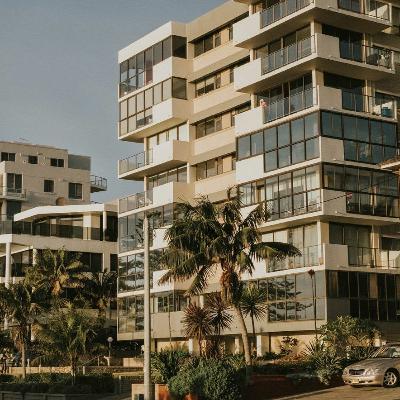
The evidence shows that increasing new housing production alone won’t solve the affordability crisis. At this special event, the NSW Minister for Housing and Homelessness, the Hon. Rose Jackson MLC and a panel of experts from industry, academia, and community sectors, will outline strategies for unlocking affordable supply, from social housing to the ‘missing middle’.
KEYNOTE ADDRESS
The Hon. Rose Jackson MLC, Minister for Housing, Homelessness, Mental Health, Youth, the North Coast, and Water
PANEL
Katie Stevenson, Executive Director Property Council of Australia NSW
Mark Degotardi, Chief Executive Officer, Community Housing Industry Association NSW
Dr Catherine Gilbert, the University of Sydney
Emma Greenhalgh, CEO National Shelter
CHAIRED BY
Professor Nicole Gurran, Director, Henry Halloran Research Trust
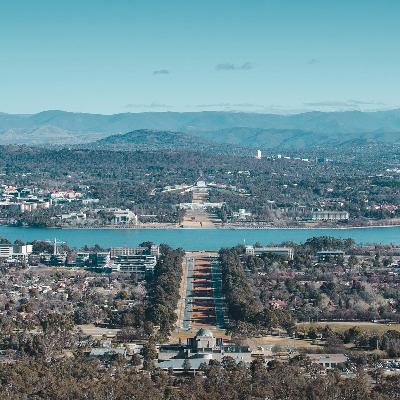
Water security is one of the most contested issues facing urban and regional communities across Australia. For growing inland cities like Canberra, conventional assumptions and approaches to water supply, catchment management, and urban planning must be reimagined in the context of climate change. This special event hosted in partnership with the Planning Institute of Australia examines the increasingly complex debates surrounding water security and asks whether and how inland cities can ever achieve true urban resilience.
This event is co-hosted with the Planning Institute of Australia.
SPEAKERS
Professor Barbara Norman, Foundation Chair of Urban and Regional Planning and Director of Canberra Urban and Regional Futures (CURF), the University of Canberra
Danielle Francis, Manager Policy and Strategy, Water Services Australia
Dr Jason Alexandra, Research Fellow, Transformational Climate Adaptation and Water, ANU Institute for Climate, Energy & Disaster Solutions, ANU Institute for Water Futures.
Dr Danswell Starrs, Water Science, Monitoring and Modelling Manager at ACT Government
CHAIRED BY
Dr Maxine Cooper FPIA, FEIANZ, Adjunct Prof UC, Chair ACT & Region Catchment Management Coordination Group, Chair Landcare ACT, and Deputy Chair National Landcare Network.

We know we must end sprawl and densify our cities, but are tall towers the answer? Can the skyscraper solve our affordable housing problem? Does high density necessarily mean high-rise, and do such developments stack up environmentally – or do they exacerbate issues such as urban heat? What are the wider benefits or disbenefits of hyper-density in terms of urban design, street making, community cohesion or accessibility? Join Saving Sydney author Dr Elizabeth Farrelly and a panel of experts for a robust discussion on whether Sydney should ‘go up or go out’, and whether this is even the right question.
PANEL
Dr Fiona Foo, Cardiologist
Professor Cathy Sherry, Law School and Smart Green Cities, Macquarie University
Tim Sneesby, Manager Strategic Planning, Waverley Council
Professor Michael Chapman, Chair of Architecture and Design, University of Western Sydney
CHAIRED BY
Dr Elizabeth Farrelly, author, journalist and Henry Halloran Research Trust Writer in Residence
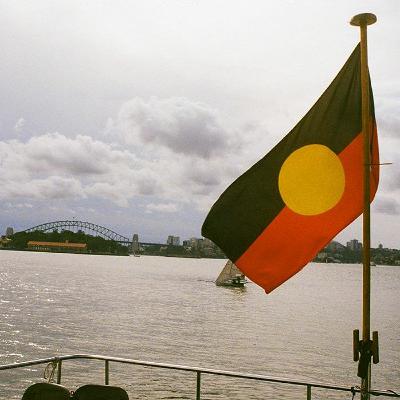
How are Australia’s Indigenous and settler histories recognised and confronted in cultural heritage conservation and urban planning practice, alongside wider struggles for native title, land rights, and spatial justice? Join this conversation with a panel of experts across Indigenous history, archaeology, heritage conservation, urban planning and design.
SPEAKERS
Professor Bronwyn Carlson, Head of Department of Indigenous Studies, Macquarie University
Stephen Gapps, Senior Associate Historian, Artefact Heritage Services
Seth Dias, PHD Candidate at the USYD school of Architecture, Design and Planning
Innez Haua
Jess Herder, Senior Associate, Thirriwirri
CHAIRED BY
Professor Michael Mossman, Associate Dean Indigenous Strategy and Services, the University of Sydney
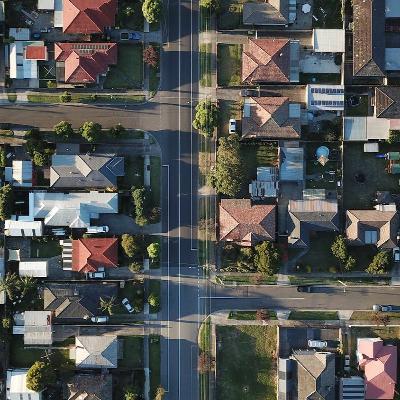
In recent years a new movement known as ‘YIMBY’ (‘Yes In My Backyard’) has emerged. ‘YIMBIES’ argue that planning and regulatory barriers serving local ‘NIMBY’ (‘Not In My Backyard’ property owners) block new and higher density housing, causing affordability pressures across the market. By contrast, many so called ‘NIMBIES’ reject the proposition that ‘supply’ is the only solution to high cost housing. In this session, housing advocates and experts debate the proposition that supply side barriers are to blame for Australia’s housing crisis and recommend strategies to fix the housing system.
SPEAKERS
Eamon Waterford, CEO, Committee for Sydney
Max Holleran, Lecturer in Social Policy, the University of Melbourne
Melissa Neighbour, Principal Planner, Sky Planning
Michael Koziol, Sydney editor, The Sydney Morning Herald
CHAIRED BY
Professor Nicole Gurran, Director Henry Halloran Research Trust, the University of Sydney

Episode 3: Innovating urban governance: the Creative Bureaucrat
Does creativity have a place in City Hall? The idea that bureaucracy should or can be creative certainly runs counter to common ideas we have of city government. But recently, that has begun to change. Innovation in city governance is being recast as ‘creative problem solving’. Drawing on stories from city governments around the world, in this third episode of ‘Innovating Cities’, Tom Baker and Pauline McGuirk discuss what it takes to build creative capacity within bureaucracies.
Tom Baker is Associate Professor in the School of Environment, University of Auckland. His research focuses on how public policies are made and implemented, addressing social, institutional, ideological and spatial dimensions.
Pauline McGuirk is Senior Professor of urban geography and Director of the Australian Centre for Culture, Environment, Society and Space, University of Wollongong. Her work revolves around critical studies of urban governance, its changing geographies, material practices and politics, and the differential implications for urban places, communities, subjectivities and power.
For more information about our podcast series, including transcripts, go to: https://uow.info/innovating-cities
Find out more about our research project Innovating urban governance: practices for enhanced urban futures at:
https://www.uow.edu.au/the-arts-social-sciences-humanities/research/access/research/rce/
Special guests
Anne-Marie Croce, Program Lead, Customer Experience Transformation and Innovation, City of Toronto
Brad Badelt, Director of Sustainability, City of Vancouver, CityStudio Vancouver.
James Corless, Executive Director, Sacramento Area Council of Governments
Eliza Erickson, former Director of Innovation and Strategy, Office of Innovation and Technology, City of Philadelphia
James Wagner, Chief Financial Officer, Office of Performance, Strategy and Innovation, City of Tulsa
Arna Ýr Sævarsdóttir, Service and Digital Transformation Manager, Department of Services & Innovation, City of Reykjavik
Michele D’Alena, Director, Civic Imagination Office, City of Bologna
Kris Carter, former Co-Chair, Boston Mayor's Office of New Urban Mechanics
Terrance Smith, Former Director of the Innovation Unit, City of Mobile
This podcast episode was supported by the Australian Research Council under Grant ARCDP200100176 Innovating urban governance: practices for enhanced urban futures, a joint project by the University of Wollongong, the University of Sydney and the University of Auckland.
Audio recording and editing by Jennifer Macey. Additional editing by Emily Perkins. Coordination by Laura Goh. Special thanks to Brian Dwyer.

With rising recognition of the health and environmental benefits of active transport, there are increasing struggles between users of footpaths, roads and curbs. Not only are streets important transportation routes, as demonstrated over the Pandemic period, they have also become recognised as important public spaces for social activities, from dining to market stalls or food production. This session interrogates the emerging struggles over street spaces still dominated by roads and parking.
SPEAKERS
Tegan Mitchell, Manager Major Transport Projects, City of Sydney
Dr Rebecca Clements, Postdoctoral Research Fellow, the University of Sydney
Benjamin Carr, Co-founder, Lug+Carrie e-bike hire
CHAIRED BY
Dr Jennifer Kent, Senior Research Fellow in Urbanism, the University of Sydney
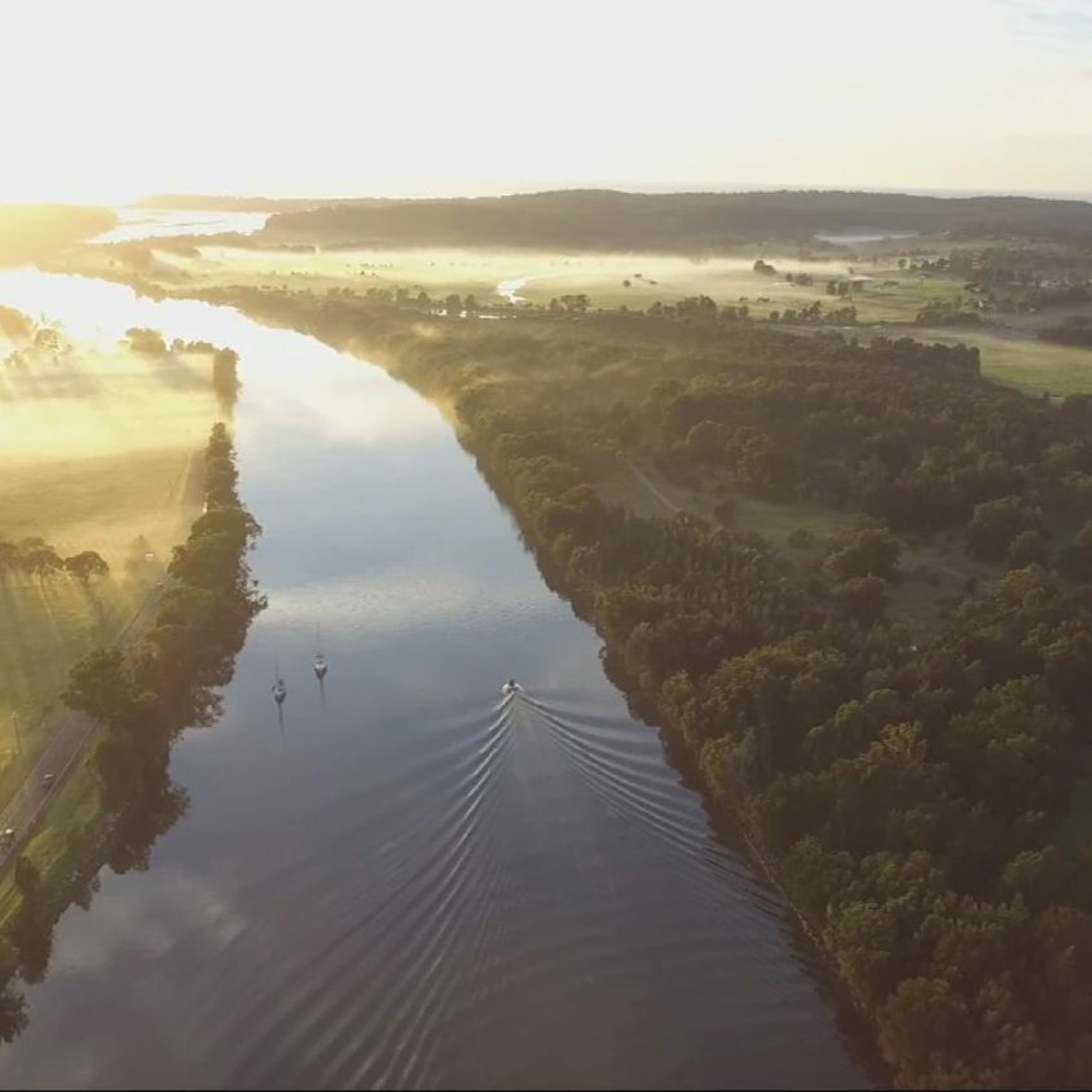
Australia’s legal frameworks for biodiversity conservation and environmental protection are intended to preserve and enhance the nation’s natural and cultural heritage while enabling appropriate forms of urban development and infrastructure. Yet Commonwealth Environmental Protection & Biodiversity Conservation law has been deemed unfit for purpose, while the states pledge ongoing reforms to make land use systems faster and more responsive to enable residential development and major projects. Key issues include certification and offsetting processes for biodiversity or heritage and whether alternative approaches, from avoiding development altogether to better protecting and enhancing conservation outcomes are possible.
PANEL
Rachel Walmsley, Head of Policy & Law Reform, Environmental Defenders Office
Rowena Welsh-Jarrett, Indigenous Heritage Expert, Bila Group
Associate Professor Ed Couzens, Law School, the University of Sydney
CHAIRED BY
Professor Rosemary Lyster, Climate and Environmental Law, the University of Sydney
Hosted in partnership with the Sydney Environment Institute.

Comments

Download from Google Play

Download from App Store
 United States