


 Claim Ownership
NYU McSilver Podcasts
Subscribed: 32Played: 196
Subscribe

© All rights reserved
Description
The McSilver Institute for Poverty Policy and Research at New York University is committed to creating new knowledge about the root causes of poverty, developing evidence-based interventions to address its consequences, and rapidly translating research findings into action through policy and best practices. Poverty is about more than lacking the resources to meet basic needs, such as food, clothing and shelter. We recognize the interrelatedness of race, gender and poverty.
NYU McSilver is dedicated to spreading awareness about social issues impacting vulnerable communities individuals, as well as evidence-based solutions. Since 2018, the McSilver Institute has launched two seasons of ”Black Boys and Men: Changing the Narrative,” as well as collaborated with the Danya Institute and Central East MHTTC to produce “Saving Young Black Lives: Reversing Suicide Trends.” In 2023, the McSilver Institute introduced “People, Perspectives, and Policy,” a series of conversations exploring a variety of mental health topics and their intersection with social services and public health policy.
NYU McSilver is dedicated to spreading awareness about social issues impacting vulnerable communities individuals, as well as evidence-based solutions. Since 2018, the McSilver Institute has launched two seasons of ”Black Boys and Men: Changing the Narrative,” as well as collaborated with the Danya Institute and Central East MHTTC to produce “Saving Young Black Lives: Reversing Suicide Trends.” In 2023, the McSilver Institute introduced “People, Perspectives, and Policy,” a series of conversations exploring a variety of mental health topics and their intersection with social services and public health policy.
32 Episodes
Reverse
“Power Play: Soft Power Unpacked” explores the subtle yet powerful ways nations, organizations, and individuals shape opinions, drive change, and wield influence—without coercion. McSilver Fellow-in-Residence Penny Abeywardena dives into the strategies that define soft power both locally and globally, from cultural diplomacy and media narratives to corporate branding and grassroots activism. Amina J. Mohammed, Deputy Secretary-General of the United Nations as well as Chair of the UN Sustainable Development Group, is the second guest to sit down with Abeywardena and explore how soft power can be instrumental to uplifting women and girls, navigating delicate international relations, or advancing development goals that in traditional perspectives seem out of reach.

“Power Play: Soft Power Unpacked” explores the subtle yet powerful ways nations, organizations, and individuals shape opinions, drive change, and wield influence—without coercion. McSilver Fellow-in-Residence Penny Abeywardena dives into the strategies that define soft power both locally and globally, from cultural diplomacy and media narratives to corporate branding and grassroots activism. Diane von Furstenberg, fashion icon, feminist, and philanthropist, is the first guest to unpack how she has wielded soft power across a storied career.

How do we embrace two-generational health (child and caregiver) during the complete perinatal period — from pregnancy into early childhood? And how does the two-generation approach create better outcomes for families and prepare children for a lifetime of well-being? NYU McSilver partnered with the NYC Perinatal and Early Childhood Mental Health Network Training and Technical Assistance Center (TTAC) to produce a unique podcast episode drawing on the knowledge of experts working on multiple facets of perinatal health, from public health policy to pediatrics and reproductive care. TTAC leader Evelyn Blanck interviews Dr. Susan Chinitz, April Hamilton, Dr. Catherine Monk, and Dr. Cynthia Osborne in this information-rich showcase. Find additional resources and learn more about TTAC and McSilver at https://bit.ly/2-gen-pod
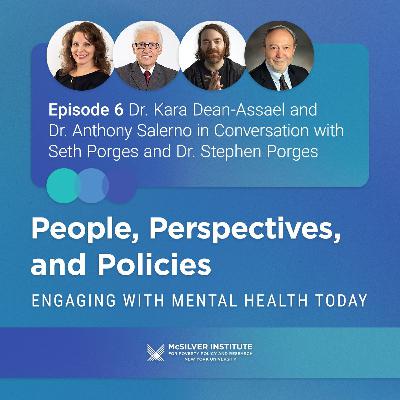
Polyvagal theory emphasizes the role the autonomic nervous system — especially the vagus nerve — plays in regulating health and behavior. Created and developed by Dr. Stephen Porges, the theory describes the physiological and psychological states underlying mental health challenges and everyday behavior. With his son, director and producer Seth Porges, Dr. Porges co-wrote Our Polyvagal World: How Safety and Trauma Change Us, the latest book in an expansive bibliography exploring polyvagal theory. They sat down with two of McSilver's visionary researchers, Dr. Kara Dean-Assael and Dr. Anthony Salerno, to discuss potential impacts of polyvagal theory for health practitioners, systems of care, and society in general.
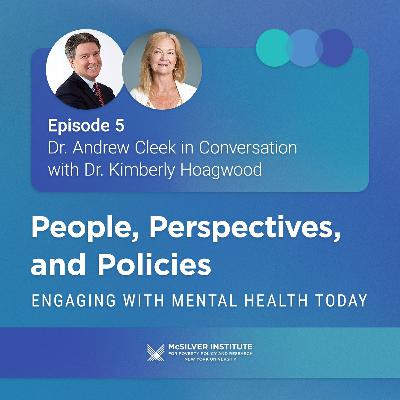
Dr. Andrew F. Cleek, McSilver’s Deputy Executive Director, speaks with Dr. Kimberly E. Hoagwood, the Cathy and Stephen Graham Professor of Child and Adolescent Psychiatry in the Department of Child and Adolescent Psychiatry at NYU Grossman School of Medicine, about how to make improvements to large and complex health systems.
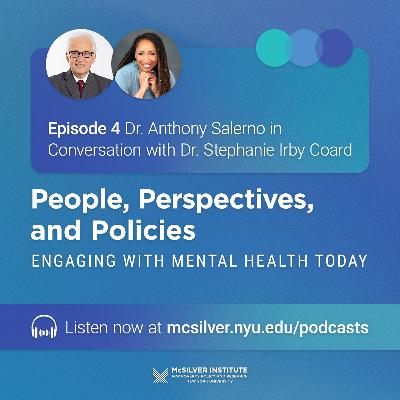
Dr. Anthony Salerno, NYU McSilver’s Innovation and Implementation Officer, speaks with Dr. Stephanie Irby Coard of UNC–Greensboro about the important and often under-appreciated role of resilience in addressing mental health issues — especially in communities of color and among young people.
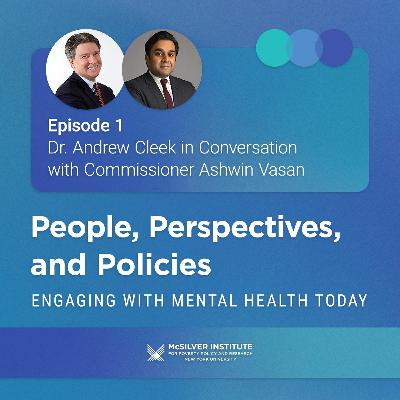
Dr. Andrew Cleek in Conversation with Commissioner Ashwin Vasan by McSilver Institute for Poverty Policy and Research
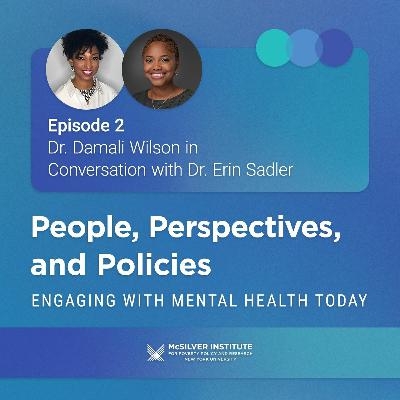
Dr. Damali Wilson in Conversation with Dr. Erin Sadler by McSilver Institute for Poverty Policy and Research
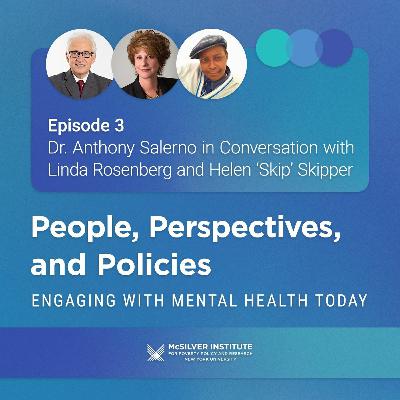
Dr. Anthony Salerno in Conversation with Linda Rosenberg and Helen ‘Skip’ Skipper by McSilver Institute for Poverty Policy and Research
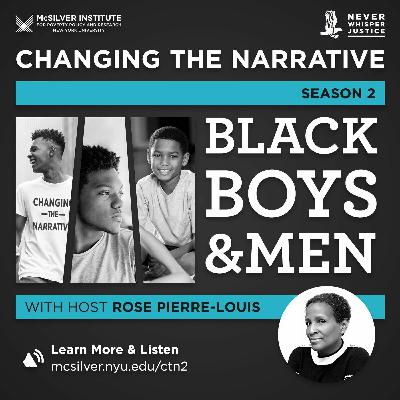
The Black Boys and Men: Changing the Narrative podcast series brings together thought leaders to analyze stereotypes and dispel myths concerning Black boys and men, to explore their strengths and achievements, and to discuss the many ways in which all of us can support their progress and well-being.
Mackey is an educator and artist who understands the power of images and social media on the narratives built around Black men and boys. He is the Director of the Ethics and the Arts Program at the Emory University Center for Ethics, and the Creator of Black Men Smile, a platform to celebrate the way Black men see themselves. He shares the origins of his artistic movement, exploring images of Black men, masculinity and how we can change the narrative.
The Black Boys and Men: Changing the Narrative podcast series brings together thought leaders to analyze stereotypes and dispel myths concerning Black boys and men, to explore their strengths and achievements, and to discuss the many ways in which all of us can support their progress and well-being.
Reverend Anderson has a strategic and collaborative role at Winthrop Rockefeller Foundation, a private grant-making foundation focused on dismantling inequity and poverty in Arkansas. He discusses the role of philanthropy in improving outcomes for Black boys and men, and how our communities can be better connected to policy discussions.
The Black Boys and Men: Changing the Narrative podcast series brings together thought leaders to analyze stereotypes and dispel myths concerning Black boys and men, to explore their strengths and achievements, and to discuss the many ways in which all of us can support their progress and well-being.
A social scientist focused on addressing the effects of criminalization and mass incarceration, Dr. Pryor is the former executive director of the Center for NuLeadership on Urban Solutions in Brooklyn, New York. He discusses his journey from incarceration to higher education; the mass incarceration and over-policing of Black men, women, boys and girls; and what it takes for diversion and reentry programs to work.
The Black Boys and Men: Changing the Narrative podcast series brings together thought leaders to analyze stereotypes and dispel myths concerning Black boys and men, to explore their strengths and achievements, and to discuss the many ways in which all of us can support their progress and well-being.
The leader of a social justice institute at historically-Black Philander Smith College in Little Rock, Arkansas discusses her work, how to make services for students more trauma-informed and how to create safe spaces for transgender and LGBQ students at HBCUs.
The Black Boys and Men: Changing the Narrative podcast series brings together thought leaders to analyze stereotypes and dispel myths concerning Black boys and men, to explore their strengths and achievements, and to discuss the many ways in which all of us can support their progress and well-being.
London is an internationally-recognized Chicago poet, activist, educator and musician. He runs the largest youth open mic in Chicago alongside his friend Chance the Rapper. In this episode he explores toxic masculinity and his own journey through a restorative justice process relating to sexual assault against a woman. He also delves into how we can create safe spaces for conversations and reimagine masculine identities in positive ways.
The Black Boys and Men: Changing the Narrative podcast series brings together thought leaders to analyze stereotypes and dispel myths concerning Black boys and men, to explore their strengths and achievements, and to discuss the many ways in which all of us can support their progress and well-being.
An educator who was the principal of Mastery Charter School–Shoemaker Campus in Philadelphia, El-Mekki discusses the importance of having more Black teachers in the classroom, and what it will take to get there. He explains “windows and mirrors” theory, by which White children see themselves reflected in the education experience and those who teach them; while Black children don’t, and are left looking through a window at the world.
The Black Boys and Men: Changing the Narrative podcast series brings together thought leaders to analyze stereotypes and dispel myths concerning Black boys and men, to explore their strengths and achievements, and to discuss the many ways in which all of us can support their progress and well-being.
Dove leads a national membership organization committed to improving the life outcomes for Black men and boys. He discusses the roots of the narrative change movement around Black boys and men, to which his organization has been instrumental. He shares how we can change the way the narrative is framed, from being deficit-based to being asset-based; what it takes to nurture leadership within Black men and boys; and how important it is for Black men to get beyond the stigma around seeking help for mental health concerns.
The Black Boys and Men: Changing the Narrative podcast series brings together thought leaders to analyze stereotypes and dispel myths concerning Black boys and men, to explore their strengths and achievements, and to discuss the many ways in which all of us can support their progress and well-being.
Mayor Scott shares what it is like to be the first Black elected mayor of an iconic city in civil rights history: Little Rock Arkansas. He also discusses the growing vanguard of Black Millennial mayors in the South, what it means to be an effective role model to young Black boys, his plans for promoting equity in his city, and how being an associate pastor at Little Rock’s Greater Second Baptist Church has influenced his journey.
Resilience is the capacity to recover quickly from difficulties. It is the characteristic or trait that allows people to thrive despite inconceivable hardship and experiences of trauma. This podcast discusses how we are all resilience and the importance of support throughout your journey.
Following incarceration, black men who are seeking employment are met by several challenges that are detrimental to their success and increase recidivism. However, there are best practices that can be taken to ensure successful integration.This podcast focuses on the challenges that black men often face when reintegrating into the workforce following incarceration and what we can do to help.
Incarceration has many impacts during and after sentencing. This podcast highlights the challenges that Black men often face with regards to reentry and removing the stigma of incarceration.

Comments

Download from Google Play

Download from App Store
 United States