


 Claim Ownership
Hagley History Hangout
Subscribed: 5Played: 106
Subscribe

© All rights reserved
Description
Podcast by Hagley Museum and Library
217 Episodes
Reverse
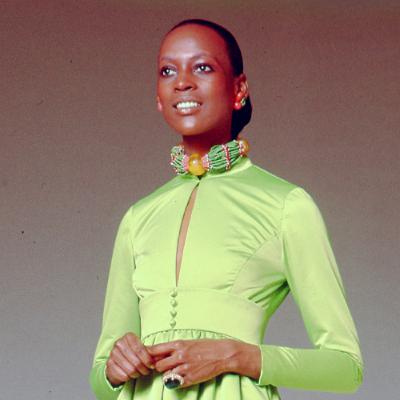
The mid-twentieth century emergence of the black middle class in the United States reshaped American society, consumer markets, and even the bodies of African Americans.
In her dissertation project, Melina Haberl, PhD candidate at Florida International University, is researching the health and diet culture of African American women in the 1970s and ‘80s. Using several Hagley Library collections, including the BBD&O and Ernst Dichter archives, Haberl charts shifts in foodways, consumer habits, and cultural values around health.
In support of her work Haberl received funding from the Center for the History of Business, Technology, and Society at the Hagley Museum and Library. For more information, and more Hagley History Hangouts, visit hagley.org.
To make a donation underwriting this program and others like it please visit our Eventbrite page: https://www.eventbrite.com/e/underwriting-donation-tickets-1470779985529?aff=oddtdtcreator
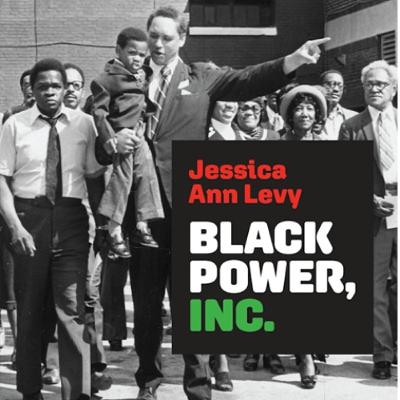
In her new book, Black Power Inc.: Corporate America and the Rise of Multinational Empowerment Politics Jessica Ann Levy traces Black empowerment’s rise in 20th century American politics and its contradictions as a form of African American political activity. By closely following minister Leon Sullivan in his influential and varied career, Levi shows how white and Black businesspeople and government officials championed Black empowerment as a means to simultaneously offer meaningful opportunities for African Americans and to blunt the more radical aspects of the Black Power movement.
Black empowerment politics similarly found application overseas in Cold War efforts to promote American-style free enterprise in Africa. In South Africa US corporate executives and government officials wielded Black empowerment politics to oppose apartheid and divestment even as they sought greater opportunities for Africans. By the early twenty-first century, the notion that private enterprise should play a leading role in combating racial inequality and empowering African Americans was widely accepted. By tracing Black empowerment politics’ evolution, Black Power, Inc. explains its popularity, championed by leaders from Bill Clinton to Nelson Mandela, while also revealing its role in expanding US corporate power, locally and globally.
For more information on the Center for the History of Business, Technology, and Society at the Hagley Museum and Library, and more Hagley History Hangouts, visit us online at hagley.org.
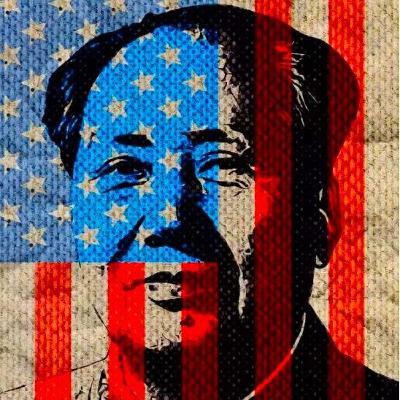
Americans had established schools, hospitals, and businesses in China prior to the 1949 triumph of the Communists under Mao. What would be the fate of these institutions and their staff under the new dispensation?
In his latest research, Dr. Sanjiao Tang, fellow at the National Library of Australia, explores the actions and reactions of Americans facing the advent of the People’s Republic of China. Using the DuPont firm as a representative American business of the period, Sanjiao finds that most Americans had a “wait and see” attitude toward Mao’s initial triumph. DuPont China only shut down its Shanghai headquarters a year after the Communist victory, doing so shortly before a wave of Anti-American sentiment expropriated the remaining American institutions in China.
In support of his research, Dr. Sanjiao received funding from the Center for the History of Business, Technology, and Society at the Hagley Museum and Library. For more information, and more Hagley History Hangouts, visit us online at hagley.org.
To make a donation underwriting this program and others like it please visit our Eventbrite page: https://www.eventbrite.com/e/underwriting-donation-tickets-1470779985529?aff=oddtdtcreator
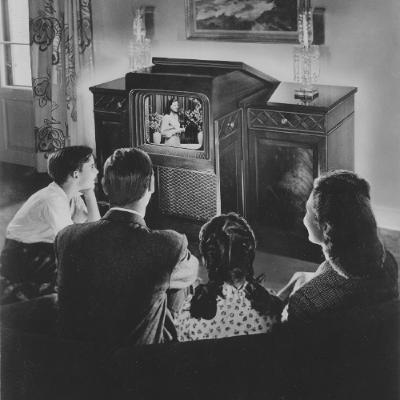
New York City was the focus of the early American television industry. In TV’s early years NYC had the highest concentration of television sets, viewers, broadcasters, and infrastructure. In NYC many Americans had their first encounter with TV.
In his latest book project, Dr. Richard Popp, associate professor at the University of Wisconsin at Milwaukee, tunes into the tangled relationship between televisions and the urban fabric and lived experience of NYC. Using several collections held in the Hagley Library, including those of RCA, David Sarnoff, and Ernest Dichter, Popp explores the history of television screens in public spaces, and the many misadventures of the television repair industry.
In support of his research, Dr. Popp received funding from the Hagley Center for the History of Business, Technology, and Society at the Hagley Museum and Library. For more information, and more Hagley History Hangouts, visit us online at hagley.org.
To make a donation underwriting this program and others like it please visit our Eventbrite page: https://www.eventbrite.com/e/underwriting-donation-tickets-1470779985529?aff=oddtdtcreator
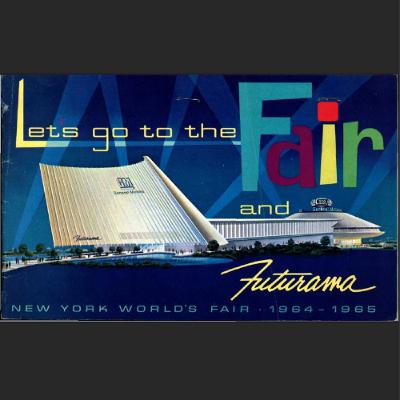
Film has played a role in America’s world’s fairs since the 1893 Chicago exhibition where a horse galloping was the big cinematic draw.
In her latest book project, Dr. Dominique Bregent-Heald, professor at the Memorial University of Newfoundland, explores the history of film at American world’s fairs, such as the educational and industrial films shown by corporate sponsors. These spectacles were conceived of as a means to make industrial products and processes entertaining, and to induce fair goers to identify with the film subjects.
In support of her work Dr. Bregent-Heald received finding from the Center for the History of Business, Technology, and Society at the Hagley Museum and Library. For more information, and more Hagley History Hangouts, visit us online at hagley.org.
To make a donation underwriting this program and others like it please visit our Eventbrite page: https://www.eventbrite.com/e/underwriting-donation-tickets-1470779985529?aff=oddtdtcreator
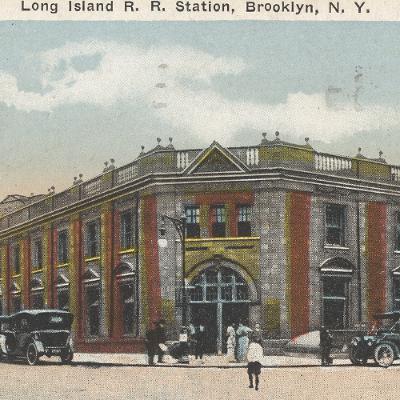
Infrastructure projects have frequently generated controversies in American history, and railroads in particular have been the cause of many a political fracas.
In her latest project, journalist and independent scholar Elizabeth Moore is uncovering the history of controversies over the Long Island Railroad. The politics are complex and multi-layered. From hyper-local concerns about noise, safety, and property values, to community-wide concerns about development and accessibility, to state-level concerns for tax revenue, popular approbation, and power. Every train, every rail, every station, and every commuter is bound up in these problems.
In support of her work Moore received funding from the Center for the History of Business, Technology, and Society at the Hagley Museum and Library. For more information, and more Hagley History Hangouts, visit us online at hagley.org.
To make a donation underwriting this program and others like it please visit our Eventbrite page: https://www.eventbrite.com/e/underwriting-donation-tickets-1470779985529?aff=oddtdtcreator

Nitrogen feeds both war and peace, represents both fecundity and strength, and accordingly, nitrogen capture technology gained a symbolic potency in the ideologically charged atmosphere of fascist Italy.
In her latest research, Dr. Rebecca Falkoff, assistant professor at the University of Texas at Austin, is uncovering the story of nitrogen capture in fascist Italy and considering what it can tell us about the atmosphere, literal and figurative, in which fascism and right-wing extremism operate.
In support of her work Dr. Falkoff received funding from the Center for the History of Business, Technology, and Society at the Hagley Museum and Library. For more information, and more Hagley History Hangouts, visit us online at hagley.org.
To make a donation underwriting this program and others like it please visit our Eventbrite page: https://www.eventbrite.com/e/underwriting-donation-tickets-1470779985529?aff=oddtdtcreator
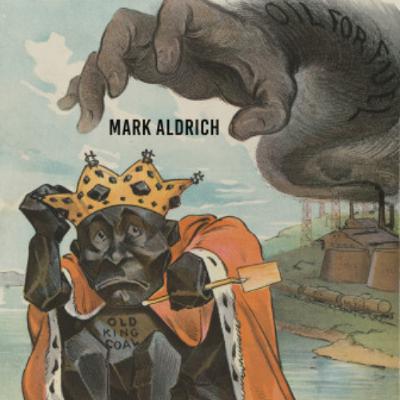
In this episode we interview Mark Aldrich about his new book, The Rise and Fall of King Coal: American Energy Transitions in an Age of Markets, 1800-1940.
From the publisher: “A history of the dynamic role of coal in the energy landscape of the United States during the nineteenth and twentieth centuries.
In The Rise and Fall of King Coal, Mark Aldrich explores the pivotal role of coal in the historical energy landscape of the United States. Meticulously researched and clearly written, this analysis of the rise, dominance, and eventual decline of coal as a primary fuel source traces its evolution from the late eighteenth century to the mid-twentieth century.
Aldrich explains the factors that contributed to coal's ascendancy and decline, including efficiency, marketing, and the technological advancements that facilitated both its widespread adoption and later languishing. A complex interplay among market forces, government policies, and societal attitudes profoundly shaped the coal industry's trajectory. Challenges and controversies have surrounded the production of coal since its inception, including labor issues, environmental concerns, and resource scarcity. Aldrich's comprehensive approach—which combines historical analysis, economic perspectives, and a deep appreciation for the technological and scientific advancements that transformed the energy landscape—also emphasizes the role of innovation and entrepreneurship in driving energy transitions.
By providing a bottom-up history that underscores the pivotal role of individual choices and market dynamics, The Rise and Fall of King Coal offers valuable insights into the dynamic nature of energy transitions. In lively discussions of domestic cooking and heating, Aldrich emphasizes the importance of women in shaping households' energy choices, and he gives voice to individual women and men as they describe how these decisions raised their standard of living. This book represents a seminal contribution to the field of energy history and highlights the complex interplay of factors that have shaped the evolution of energy use in the United States.”
To make a donation underwriting this program and others like it please visit our Eventbrite page: https://www.eventbrite.com/e/underwriting-donation-tickets-1470779985529?aff=oddtdtcreator.
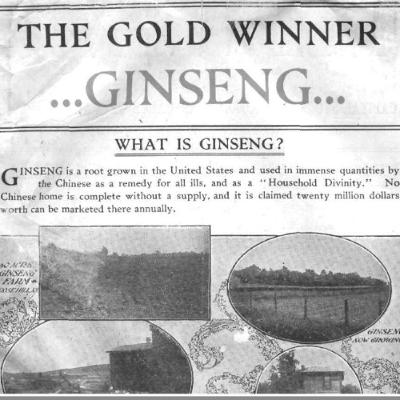
Ginseng is the “emperor of plants,” celebrated in traditional Chinese medicine as a sovereign remedy for diverse ailments and promoter of longevity. The introduction of American ginseng to the Chinese market in the late-eighteenth century found a vast market of eager consumers.
In her dissertation project, Audrey Ke Zhao, PhD candidate at the University of California – Santa Cruz, is exploring the history of American ginseng in China. Using multiple collections held in the Hagley Library, such as the Lanman & Kemp drug company records, Zhao uncovers the development of an American export industry in ginseng with global connections and an orientation to the Chinese market. Ginseng imported through Canton challenged the imperial monopoly on the coveted commodity, triggering changes across the political economy of China.
In support of her work, Zhao received funding from the Center for the History of Business, Technology, and Society at the Hagley Museum and Library. For more information, and more Hagley History Hangouts, visit us online at hagley.org.
To make a donation underwriting this program and others like it please visit our Eventbrite page: https://www.eventbrite.com/e/underwriting-donation-tickets-1470779985529?aff=oddtdtcreator

From the eighteenth-century Moravians singing hymns on communal farms, to twentieth-century steelworkers laboring in blazing furnaces, to twenty-first century healthcare and warehouse workers cutting loose at Musikfest, Bethlehem, Pennsylvania has moved to many beats.
In her latest project, Dr. Kimberly Andrews, associate professor at the University of Ottawa, investigates the history of Bethlehem as a creative writing challenge. Learning about the past through archival materials, oral histories, and living landscapes, Andrews seeks to make meaning of the many changes and challenges faced by the people and places of Bethlehem.
In support of her work, Dr. Andrews received funding from the Center for the History of Business, Techology, and Society at that Hagley Musuem and Library. For more information, and more Hagley History Hangouts, visit us online at hagley.org.
To make a donation underwriting this program and others like it please visit our Eventbrite page: https://www.eventbrite.com/e/underwriting-donation-tickets-1470779985529?aff=oddtdtcreator

Working parents rely on childcare infrastructure, and as working parent became an ever-larger proportion of the American workforce from the 1960s onward, the lack of accessible, affordable, quality childcare became a major political and cultural issue.
In her dissertation research, Julia Fournier, PhD candidate at the University of North Carolina at Chapel Hill, traces the history of childcare in the United States from the late-1960s to the mid-1990s. Among Fournier’s sources is the archive of Catalyst, Inc., an advocacy group promoting women’s interest in the workplace, held in the Hagley Library. Her findings suggest that a confluence of public and private pressures has prevented the development of a coherent federal childcare policy, much less a universal childcare infrastructure.
In support of her work, Fournier received finding from the Center for the History of Business, Technology, and Society at the Hagley Museum and Library. For more information, and more Hagley History Hangouts, visit us online at hagley.org.
To make a donation underwriting this program and others like it please visit our Eventbrite page: https://www.eventbrite.com/e/underwriting-donation-tickets-1470779985529?aff=oddtdtcreator
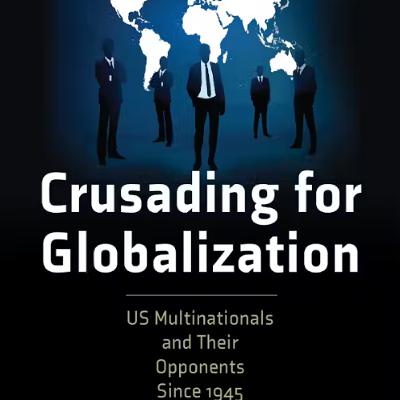
In this episode we interview Janick Marina Schaufelbuehl about her new book Crusading for Globalization: US Multinationals and Their Opponents Since 1945.
From the publisher: “The first book to shed light on what caused corporate executives to pursue a pro-globalization agenda over the last eight decades.
Crusading for Globalization tells the story of an extraordinarily influential group of business executives at the helms of the largest US multinational corporations and their quest to drive globalization forward over the last eight decades. Janick Marina Schaufelbuehl argues that the spectacular expansion of international investment, trade, and production after 1945 cannot be understood without considering the role played by these corporate globalizers and the organization they created, the US Council (today’s United States Council for International Business). By shaping governmental policy through their congressional lobbying and close connections to successive presidential administrations, US Council members, including executives from General Electric, Coca Cola, and IBM, among others, consistently fought for ever more market deregulation, culminating in the creation of the World Trade Organization in 1995.
Crusading for Globalization is also a book about those who opposed the growing might of multinationals. In the years immediately after World War II, resistance came from business protectionists, before labor and policymakers from the Global South joined the effort in the early 1970s. Schaufelbuehl breaks new ground by offering a panorama of this early anti-globalization movement, and by showing how the leaders of multinationals organized to limit its political influence. She also examines continuities between this early movement and the opposition to globalization that emerged at the beginning of the twenty-first century from the left and the populist right and discusses how business responded by promoting corporate social responsibility and voluntary guidelines.
The first book to shed light on what caused corporate executives to pursue a pro-globalization agenda and to examine their methods for dealing with their opponents, Crusading for Globalization reveals the historical roots of today’s disparities in wealth and income distribution.”

The United States drug tests its citizens more than any other country and ties the rights one enjoys, rights to keep one’s baby, to do one’s job, or to vote or move freely, to the results of a given drug test. While Americans lead the world in drug consumption, they also lead the world in drug testing.
In her latest book project, Dr. Laura Browder, professor at the University of Richmond, uncovers the history of drug testing in the United States. From 1930s concerns about drunk drivers and heroin addled horses, to 21st century legacies of the War on Drugs that link child custody and job security to drug test results, Browder shows how American citizenship became tied to the chemical composition of one’s blood.
In support of her work, Dr. Browder received funding from the Center for the History of Business, Technology, and Society at the Hagley Museum and Library. For more information, and more Hagley History Hangouts, visit us online at hagley.org.
To make a donation underwriting this program and others like it please visit our Eventbrite page: https://www.eventbrite.com/e/underwriting-donation-tickets-1470779985529?aff=oddtdtcreator

Innovation plays a role in the beauty and fashion industry as it does in any line of business. New products, new techniques, and new markets animate the industry, and punctuate its history.
In her latest book project, Dr. Denise Sutton, associate professor at the City University of New York, examines several case studies in fashion and beauty innovation. From ready-to-wear apparel for pregnant women, to beauty products for people of color, to Kevlar attire in hazardous workplaces, each case demonstrates the centrality of innovation to the business of fashion.
In support of her work Dr. Sutton received funding from the Center for the History of Business, Technology, and Society at the Hagley Museum and Library. For more information, and more Hagley History Hangouts, visit us online at hagley.org.
To make a donation underwriting this program and others like it please visit our Eventbrite page: https://www.eventbrite.com/e/underwriting-donation-tickets-1470779985529?aff=oddtdtcreator.
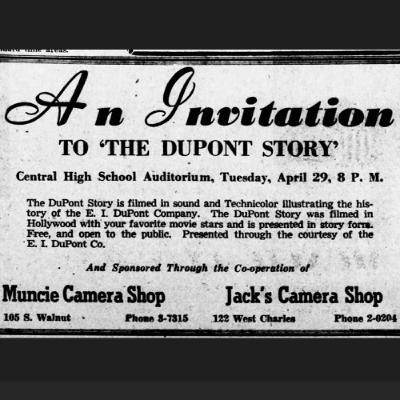
Businesses tell stories about themselves, in their advertising, in their marketing, and in their corporate biographies. Official or authorized histories of corporations form a distinctive thread in the literature in business history.
In his latest book project, Dr. Lee McGuigan, assistant professor at the University of North Carolina, is researching the official corporate history as a distinctive form of media and mode of communication. His initial findings suggest that corporations used their official histories for various purposes; to reify their identity, to promote their accomplishments, or to define their internal culture, depending on the intended audience.
In support of his work, Dr. McGuigan received funding from the Center for the History of Business, Technology, and Society at the Hagley Museum and Library. For more information, and more Hagley History Hangouts, visit us online at hagley.org.
To make a donation underwriting this program and others like it please visit our Eventbrite page: https://www.eventbrite.com/e/underwriting-donation-tickets-1470779985529?aff=oddtdtcreator.

American labor unions struggled to adjust to the changing dynamics of the world economy during the mid-to-late twentieth century. Charting this complex process is Dr. Melanie Sheehan, assistant professor of history at Hartwick College and recent Hagley-NEH postdoctoral fellow.
Sheehan has discovered that during the post-WWII moment, union economists supported trade liberalization as a means of multiplying the comparative advantages enjoyed by U.S. producers and exporters so long as it was accompanied by aid to impacted industries and displaced workers. However, while trade liberalization proceeded apace, and foreign competition rapidly gained ground against American made goods, the planned and hoped-for aid failed to materialize. This forced unions to reassess their commitment to liberal trade policies, as their industries, first textiles, then steel, and finally automotives, faced the implications of increasingly efficient foreign competition.
In support of her work Dr. Sheehan received funding from the Center for the History of Business, Technology, and Society at the Hagley Museum and Library, and the National Endowment for the Humanities. For more information, and more Hagley History Hangouts, visit us online at hagley.org.
To make a donation underwriting this program and others like it please visit our Eventbrite page: https://www.eventbrite.com/e/underwriting-donation-tickets-1470779985529?aff=oddtdtcreator.

Building international cooperation is a slow, painstaking process, one made more difficult when some people don’t see the need for it. To businesses, however, international cooperation is positively necessary as a means to secure intellectual property rights, market share, and profit opportunities.
In his dissertation research, Joël Praz, PhD student at the École Polytechnique Fédérale de Lausanne, is uncovering the significance of the Paris Convention for the Protection of Industrial Property, an international patents union today administered by the World Intellectual Property Organization in Geneva, Switzerland. Using numerous collections held in the Hagley Library, Praz has found that private businesses in the United States began to value international cooperation around patent law increasingly after the Second World War.
In support of his work Praz received funding from the Center for the History of Business, Technology, and Society at the Hagley Museum and Library. For more information and more Hagley History Hangouts visit us online at hagley.org.
To make a donation underwriting this program and others like it please visit our Eventbrite page: https://www.eventbrite.com/e/underwriting-donation-tickets-1470779985529?aff=oddtdtcreator

Our previously scheduled episode featuring Alessandra La Rocca Link has been postponed. In lieu of which, we present this recording made during the Hagley Author Talk featuring David Suisman hosted on February 27th, 2025 by the Hagley Museum and Library.
Suisman discusses his latest book, "Instrument of War: Music and the Making of America's Soldiers."
From the publisher: "Since the Civil War, music has coursed through the United States military. Soldiers have sung while marching, listened to phonographs and armed forces radio, and packed the seats at large-scale USO shows. “Reveille” has roused soldiers in the morning and “Taps” has marked the end of a long day. Whether the sounds came from brass instruments, weary and homesick singers, or a pair of heavily used earbuds, where there was war, there was music, too.
Instrument of War is a first-of-its-kind study of music in the lives of American soldiers. Although musical activity has been part of war since time immemorial, the significance of the US military as a musical institution has generally gone unnoticed. Historian David Suisman traces how the US military used—and continues to use—music to train soldiers and regulate military life, and how soldiers themselves have turned to music to cope with war’s emotional and psychological realities. Opening our ears to these practices, Suisman reveals how music has enabled more than a century and a half of American war-making. Instrument of War unsettles assumptions about music as a force of uplift and beauty, demonstrating how it has also been entangled in large-scale state violence.
Whether it involves chanting “Sound off!” in basic training, switching on a phonograph or radio, or cueing up an iPod playlist while out on patrol, the sound of music has long resonated in soldiers’ wartime experiences. Now we all can finally hear it."
For more information on the Center for the History of Business, Technology, and Society at the Hagley Museum and Library, and for more Hagley History Hangouts, visit us online at hagley.org.
To make a donation underwriting this program and others like it please visit our Eventbrite page: https://www.eventbrite.com/e/underwriting-donation-tickets-1470779985529?aff=oddtdtcreator
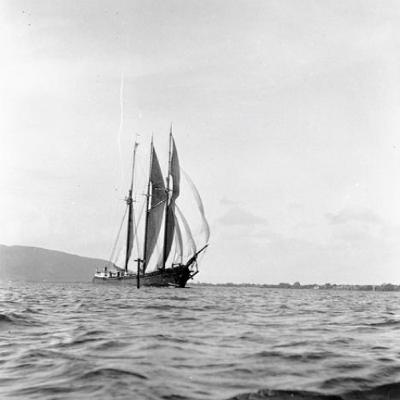
While popular memory may have forgotten them, about half of the sailors, soldiers, missionaries, tradesmen, and colonists that made up the Spanish Empire were black, people who were part of the African diaspora. Studying their history allows scholars new ways to research and interpret Spanish colonialism, perhaps especially in the Pacific context.
Dr. Leo Garofalo, Virginia Eason Weinmann 1951 Professor of History at Connecticut College, is laying the foundation for generations of new research on the Black Pacific. In his work on Afro-Andeans he has illuminated the central role played by the black people of Spanish Peru in the expansion of Iberian power across the Pacific Ocean. As skilled sailors and shipbuilders they built and operated the ships, charted the routes, and advanced the missions that formed the very marrow of imperial might. Focus on the African diaspora as it emanated across the Atlantic and Indian oceans accompanying and staffing Iberian imperial projects, underscores the intersection of the two streams in the Pacific and the creation of a Black Pacific world.
In support of his work Garofalo received funding from the Center for the History of Business, Technology, and Society at the Hagley Museum and Library. For more information, and more Hagley History Hangouts, visit us online at hagley.org.
To make a donation underwriting this program and others like it please visit our Eventbrite page: https://www.eventbrite.com/e/underwriting-donation-tickets-1470779985529?aff=oddtdtcreator
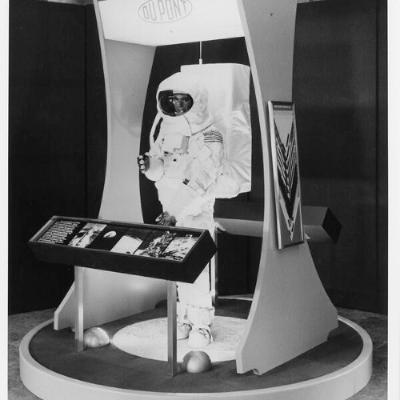
During the Cold War, rival superpowers the USA and the USSR vied with one another for world dominion in many arenas: military, diplomatic, and even haute coture. In the latter connection, French designers played arbiter, judging the synthetic textiles developed under capitalist and communist systems for their value in fashion.
In her dissertation project, Monica Geraffo, PhD candidate at the University of California at Los Angeles, discovers why synthetic textiles played such a central role in the Cold War rivalry between political blocs. Using the extensive DuPont company records held in the Hagley Library, Geraffo highlights the shared interests of chemical firms, fashion houses, and political leaders, which aligned around synthetic textiles in the Cold War context.
In support of her research, Geraffo received funding from the Center for the History of Business, Technology, and Society at the Hagley Museum and Library. For more information and more Hagley History Hangouts, visit us online at hagley.org.
To make a donation underwriting this program and others like it please visit our Eventbrite page: https://www.eventbrite.com/e/underwriting-donation-tickets-1470779985529?aff=oddtdtcreator

Comments

Download from Google Play

Download from App Store
 United States