


 Claim Ownership
Everyday Emergency
Subscribed: 925Played: 8,967
Subscribe

© All rights reserved
Description
Welcome to Everyday Emergency, a podcast by Médecins Sans Frontières / Doctors Without Borders (MSF).
We bring you true stories and expert insight from people on the frontline of humanitarian events. From the conflicts that hit the headlines to underreported crises, we’ll be talking to our medical, logistical and humanitarian staff about working to save lives in some of the world's most challenging places.
If you would like to support our life-saving medical work around the world, please visit msf.org.uk to make a donation or get involved.
Hosted on Acast. See acast.com/privacy for more information.
70 Episodes
Reverse
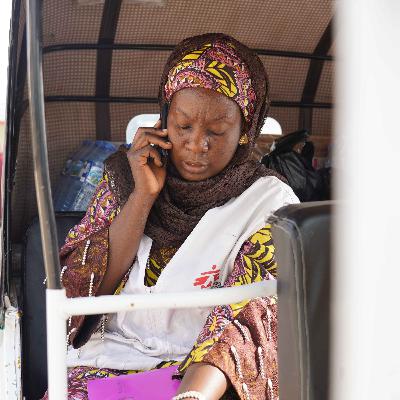
In Northern Nigeria, the conflict between government forces and armed groups is hitting communities hard. Vast numbers have been forced to flee, grabbing what they can, leaving behind their homes and livelihoods.Amid the fear, kidnapping and violence, another crisis is unfolding: the number of women dying in pregnancy or childbirth is among the highest in the world, with one woman dying of these complications every seven minutes according to figures from the UN.In this episode of Everyday Emergency, we're joined by Hauwa Tanko Audu, a health promotion supervisor, who tells us how the MSF team in the city of Maiduguri are working to ensure women and newborns have access to life-saving care.Presented by Amber DowellEdited by Sandy McKeePhoto: Eugene Osidiana / MSF Hosted on Acast. See acast.com/privacy for more information.
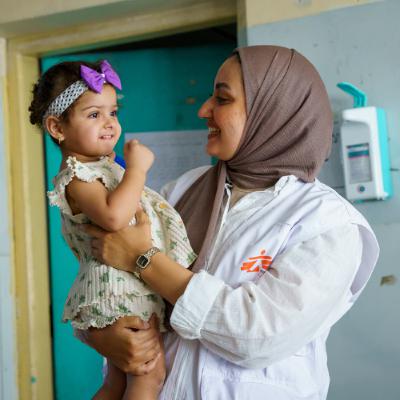
For this special episode of Everyday Emergency, we’re taking a look back at MSF’s work over the last 12 months.This year, MSF teams were on the ground during some of the world's biggest crises. We provided essential medical care as the wars in Gaza and Ukraine continued, violence escalated in Sudan, and millions of people across the globe were caught up in crises that didn’t always make the headlines - from deadly disease outbreaks and natural disasters, to growing malnutrition.If you would like to support our life-saving medical work around the world, please visit msf.org.uk to make a donation. Thank you.Presented by Amber DowellSound production and editing by Sandy McKeeWritten and produced by Kate LeeSeries production by Mark LankesterPhoto: MSF Hosted on Acast. See acast.com/privacy for more information.
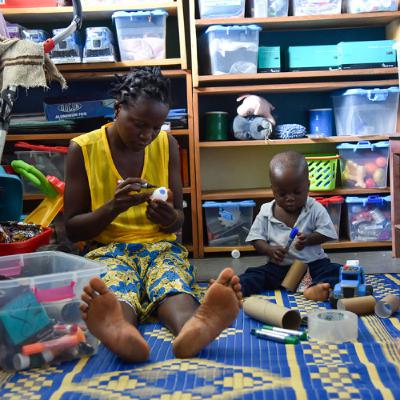
In almost any humanitarian crisis – from disease outbreaks to conflict zones – children are among the most vulnerable. Last year alone, almost half of all patients admitted to MSF hospitals around the world were children under the age of five. But, while access to medical care is absolutely essential, for our youngest patients, there is something else that improves their health, promotes recovery and helps them develop: play. In this episode of Everyday Emergency, we speak to Katherine Haciömeroğlu. She is a child life specialist who has been working with MSF teams around the world to harness the power of play and help children living through healthcare crises to access the benefits of this perhaps unexpected humanitarian work. If you would like to support our life-saving medical work around the world, please visit msf.org.uk to make a donation. Thank you. Presented by Amber Dowell Edited by Sandy McKee Photo: MSF Hosted on Acast. See acast.com/privacy for more information.
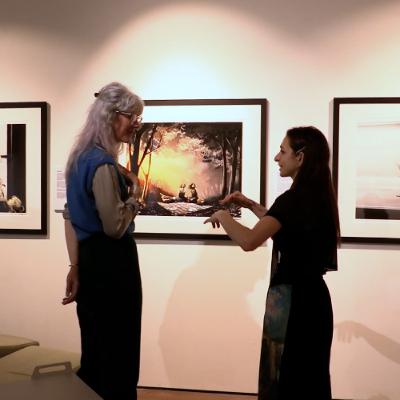
The artist and political cartoonist Ella Baron has recently returned from Ukraine, where she worked with Médecins Sans Frontières / Doctors Without Borders (MSF) patients to create a series of drawings and interviews about their experiences. The patients ranged from young men injured in drone attacks to grandmothers who have lost their homes and loved ones. The images go beyond simple portraits to explore the physical and emotional impact of the war. With the works now on display in a public exhibition at Kings College in London, Ella joins us for a special episode. Ella was in Ukraine on assignment for the Guardian, where her drawings were originally published. MSF teams were already working in Ukraine at the time of the full-scale invasion in 2022. Since then we have expanded our operations to cover mobile clinics, surgery, and mental health support. If you would like to support our life-saving medical work around the world, please visit msf.org.uk to make a donation. Thank you.Presented by Amber DowellSound production and editing by Sandy McKee Hosted on Acast. See acast.com/privacy for more information.
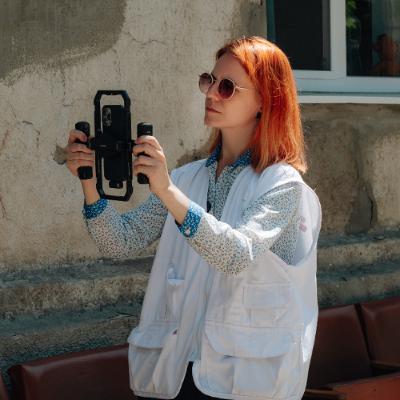
In February 2022, Yuliia Trofimova was a journalist living in Eastern Ukraine, where she’s from. With the violent escalation of the conflict with Russia, Yuliia and her colleagues in local media became war correspondents overnight.Today, Yuliia works as a field communications officer for MSF, travelling throughout the region to raise awareness of the health impacts of the war and the work of MSF’s medical, surgical and mental health teams as they provide essential care to people caught in the conflict.On this episode of Everyday Emergency, hear Yuliia share what it's like to bear witness to the war's impact on people's health, and its impact on her.If you would like to support our life-saving medical work around the world, please visit msf.org.uk to make a donation. Thank you.Presented by Amber DowellSound production and editing by Sandy McKee Hosted on Acast. See acast.com/privacy for more information.
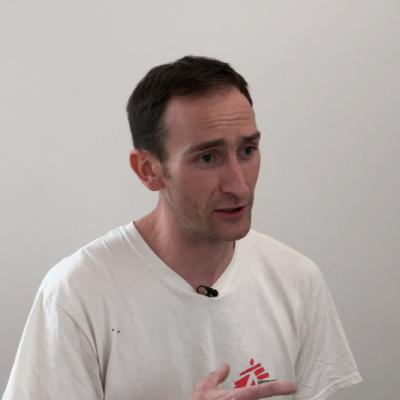
War has taken a heavy toll on the people of Syria. Since 2011, 14 million Syrians have had to flee the violence that wracked the country. They left behind their homes and livelihoods. Essential infrastructure has been destroyed, and many Syrians have been plunged into poverty, with very limited access to essential services like medical care. But late last year, the situation shifted, and MSF teams were able to travel to areas that had previously been inaccessible. Dr Ryan McHenry is an emergency medicine doctor who recently returned from the Syria. He joins us today to share his experiences in a country emerging from the shadows of war. If you would like to support our life-saving medical work around the world, please visit msf.org.uk to make a donation. Thank you. Presented by Amber Dowell Edited by Sandy McKee Produced by Mark Lankester Photo: MSF Hosted on Acast. See acast.com/privacy for more information.
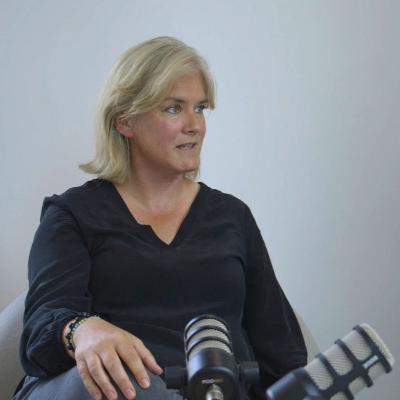
When a crisis hits, our emergency specialists - known as the E-Team - launch into life-saving action to coordinate the response. In this episode of Everyday Emergency, we speak to Dr Natalie Roberts. Now Executive Director of Médecins Sans Frontières / Doctors Without Borders (MSF) UK, she is an experienced emergency doctor and former Head of Emergencies with our Paris-based 'Emergency Desk'. We speak to her about the work of the E-Team, how they react to emerging conflicts and disasters, and reflect on the humanitarian events she worked through, including typhoons and civil wars. If you would like to support our life-saving medical work around the world, please visit msf.org.uk to make a donation. Thank you. Presented by Amber Dowell Edited by Sandy McKee Produced by Mark Lankester Photo: MSF Hosted on Acast. See acast.com/privacy for more information.
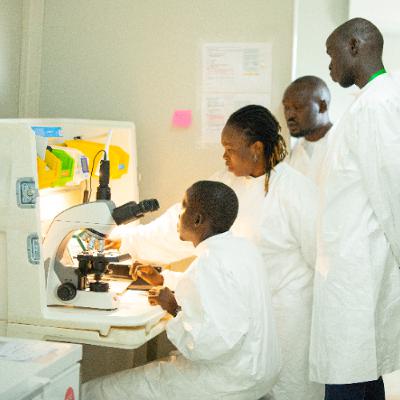
In places where MSF operates, getting access to the right antibiotics is a matter of life or death - but what happens when they stop working? In this episode of Everyday Emergency, we find out about antimicrobial resistance (AMR).Antibiotics are the cornerstone of modern medicine, treating a vast range of infections. But, over the last few years we've been seeing a troubling phenomenon where the standard antibiotics used to treat some diseases have simply stopped working.This is known as AMR, which is when some of the bugs which cause disease mutate and find ways to avoid the effective elements of antibiotic medicines.What can be done when this happens and what steps is MSF taking to tackle AMR more broadly? We speak to AMR expert Mohamad Khalife.Presented by Laura McCullough Edited by Kate Lee and Sandy McKee Produced by Mark Lankester Photo: MSF Hosted on Acast. See acast.com/privacy for more information.
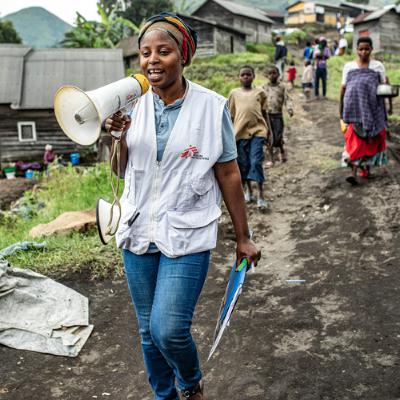
In the latest episode of Everyday Emergency, we’re looking at the humanitarian crisis in the east of the Democratic Republic of Congo, or DRC – a huge country in Central Africa that’s home to around one hundred and eleven million people. The northeast of the country has endured decades of insecurity since the fallout of the 1994 genocide in the neighbouring country of Rwanda. Driven by ethnic tensions and a fight for resources, the conflict involves more than one hundred armed groups, such as the widely-known M23, as well as Congolese government forces and UN peacekeepers. The most recent phase of the conflict has been rapidly evolving, and intensified since December 2024. It has displaced hundreds of thousands of people, and resulted in many casualties and violent injuries across the provinces of North and South Kivu. Tragically, MSF staff members have also lost their lives. To learn more about what’s been happening, and how MSF has responded, we spoke to Juliette Seguin, MSF’s Emergency Coordinator in Goma, DRC's capital city in the east of the country. If you would like to support our life-saving medical work around the world, please visit msf.org.uk to donate. Thank you. Presented by Kate Lee Edited by Sandy McKee Produced by Mark Lankester Photo: MSF Hosted on Acast. See acast.com/privacy for more information.
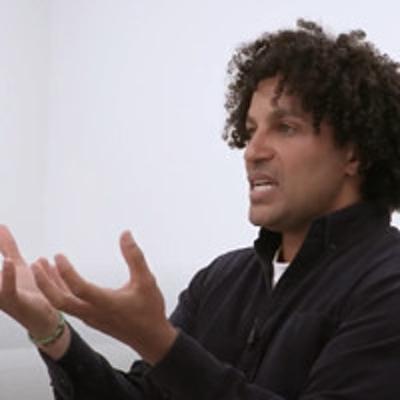
Two years ago, MSF doctor Javid Abdelmoneim received a cryptic message from his cousin in Khartoum that said "Your dad is safe". But safe from what? On 15 April 2023, a brutal civil war broke out in Sudan between the Sudanese Armed Forces and the Rapid Support Forces. From early attacks around the capital Khartoum, the fighting quickly escalated and spread to other parts of Sudan. Almost overnight, millions of people found themselves trapped in a conflict. Now, two years on, the situation is both shocking and complex. Sudan has become the world’s largest displacement crisis, with more than 12 million people forced from their homes. Many are without access to essential healthcare, and there have been widespread outbreaks of diseases like cholera and measles. Meanwhile, the number of people suffering from malnutrition, or women and children dying is truly alarming. Throughout all of this, people – civilians – have been subjected to horrific violence. The United Nations recently described this situation in Sudan as “the world’s worst humanitarian crisis”. In this episode of Everyday Emergency, we speak to Dr Javid Abdelmoneim who recently returned from an assignment in the crisis-hit country. He is an emergency medicine specialist, and an extremely experienced MSF doctor who also spent the first eight years of his life growing up in Sudan. His story is deeply personal, at times upsetting, but incredibly powerful. If you would like to support our life-saving medical work around the world, please visit msf.org.uk to donate. Thank you. Presented by Cece Leadon Edited by Sandy McKee Produced by Mark Lankester Photo: MSF Hosted on Acast. See acast.com/privacy for more information.
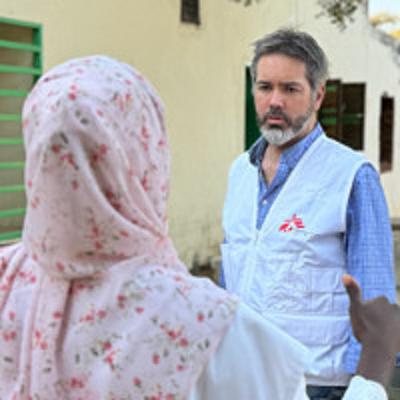
In crisis zones across the world, hospitals have been attacked, supply trucks blockaded and funding cut. So, what is the state of humanitarian aid today? In this episode of Everyday Emergency, we’re speaking to Chris Lockyear – the Secretary General of Médecins Sans Frontières / Doctors Without Borders (MSF). He’s one of the leading voices in MSF, and an expert on humanitarian aid and the crises we currently face. We sat down with Chris after a recent visit to Sudan, where MSF teams are operating in what has been dubbed a ‘humanitarian void’ despite more than 11 million people being forced from their homes by the civil war. We also spoke about the situation in Gaza following the desperately needed ceasefire, and about the dangerous and far-reaching consequences of the aid cuts recently announced by governments including the UK and USA. If you would like to support our life-saving medical work around the world, please visit msf.org.uk to donate. Thank you. Presented by Nick Owen Edited by Sandy McKee Produced by Mark Lankester Photo: MSF Hosted on Acast. See acast.com/privacy for more information.

At a groundbreaking hospital in the Jordanian capital Amman, a dedicated team from Médecins Sans Frontières / Doctors Without Borders (MSF) work to treat and rehabilitate war-wounded people from conflict zones across the Middle East and North Africa. Rula Marafeh, an experienced physiotherapist, shares her story from a unique project that has been saving and transforming lives since 2006. In places such as Gaza, Sudan, Yemen and Syria, as violence pushes healthcare systems to breaking point, MSF works to evacuate patients in need of the most specialist care. Once in Amman, a spectrum of expert teams work to surgically reconstruct limbs, treat aggressive infections, teach patients to use their new bodies, and crucially, heal the unseen trauma each new arrival carries with them. If you would like to support our life-saving medical work around the world, please visit msf.org.uk to donate. Thank you. Presented by Amber Dowell Edited by Sandy McKee Produced by Mark Lankester Photo: MSF/Peter Bräunig Hosted on Acast. See acast.com/privacy for more information.
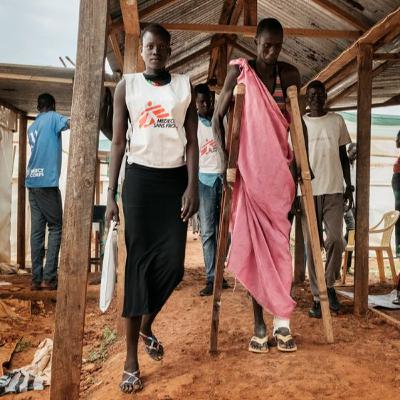
On 9 July 2021, the Republic of South Sudan marked its 10th birthday. This significant milestone is also marred by the bloody legacy of its first decade, including a five-year civil war.At independence, South Sudan was grappling with at least 30 humanitarian emergencies. Parts of the country were engulfed in increasingly fierce intercommunal clashes, and there was renewed conflict in border areas with Sudan. Despite the challenges, the first years in the post-independence period were a time of anticipation and optimism and, for most of the country, it was a period of relative peace.However, by December 2013 – less than two years after independence – the country had rapidly imploded into civil war, quickly exposing the fragility of the emerging young state.In this episode of Everyday Emergency, we’ll be hearing the personal stories of four of our South Sudanese staff – all of whom now work in a displacement camp near the town of Bentiu. We hear about the impact of the conflict on their lives over the last 10 years, and what brought them to the country's largest camp. Hosted on Acast. See acast.com/privacy for more information.

It’s 100 years since the discovery of insulin, the life-saving drug for people living with diabetes.But today, more than half of those who need this marvellous medicine still can’t access it – either because it’s too expensive or unavailable. This means millions of people are risking serious complications and even death.In this episode of Everyday Emergency, Amber Dowell reports on the challenges facing those diagnosed with Type 1 diabetes living through crises such as conflict, displacement or disaster.We hear from Farah Haris, who was working to treat diabetic patients in the fallout of last year’s devastating Beirut explosion. We also speak to chronic disease expert Amulya Reddy on how MSF is finding innovative new ways to help patients and challenge the three “Big Pharma” corporations controlling the insulin market. Hosted on Acast. See acast.com/privacy for more information.
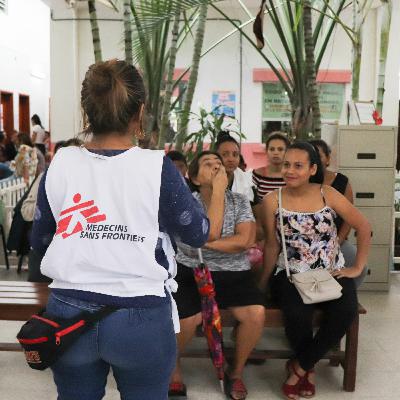
Our producer Jess Brown looks into the potentially catastrophic secondary impacts of COVID-19 on the lives and health of women and girls.Sexual and reproductive health services are difficult to access in normal times and the secondary impacts of COVID-19 have made them even more elusiveThis episode includes voices from our projects in Honduras and South Africa, discussing the impacts of losing access to essential sexual and reproductive health services, particularly safe abortion care and contraception care.*Correction: Since publication it's been established that some ambulance services are running in proximity to our Honduras project. Hosted on Acast. See acast.com/privacy for more information.
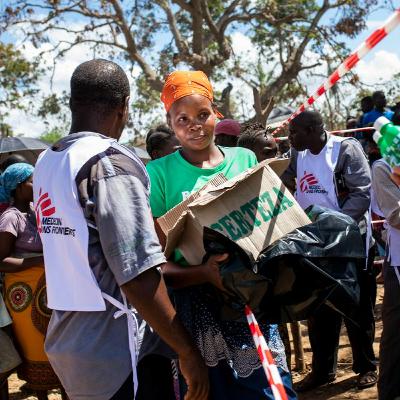
In this episode of Everyday Emergency, Nick Owen hears from MSF staff who have been working with some of the populations most vulnerable to changing weather patterns and environmental degredation.Our guests detail the steps MSF is taking to better prepare for future climate crises. We'll also be looking at the ways in which these increasingly significant climate shifts can have a knock-on effect in terms of conflict and displacement.---Subscribe through iTunes or your favourite podcast provider, and find out more at msf.org.uk/podcastsPlease leave comments on our Facebook page, or on Twitter. Hosted on Acast. See acast.com/privacy for more information.
In this episode of Everyday Emergency, host Nick Owen takes you through some of the most pivotal MSF moments from the past decade, with firsthand accounts from our staff on the ground.You'll hear about our response to the sheer devastation of the Haiti earthquake, the Ebola outbreak gripping West Africa and how in recent months we've restarted our search and rescue operations in the central Mediterranean as the European migration crisis continues.To learn more about the topics discussed in this episode, please visit: msf.orgProduction Credit: @alicewhitehouse / MSF UKPhoto Credit: @Hannah__Bowman / MSF Hosted on Acast. See acast.com/privacy for more information.
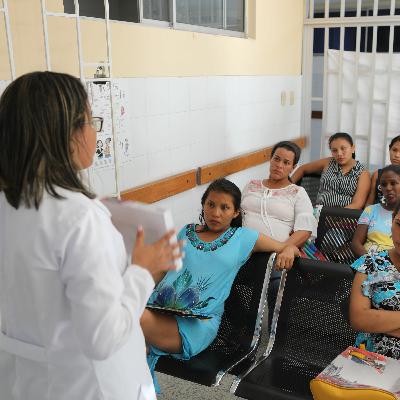
In this episode of Everyday Emergency we hear about the lived experience of Venezuelan women bearing the brunt of their country's healthcare crisis and the difficulties they continue to face in Colombia.An estimated four million Venezuelans have left their country since the collapse of its political and economic systems, and at least 1.4 million have come to neighbouring Colombia. They are coming from a country where, over the last few years, most people had no access to medicines and essential health services were entirely out of reach. Now in Colombia, they often face the same problem. Legally entitled to receive emergency medical care from the Colombian health system, those services are limited to vaccinations, immediate lifesaving treatment, and deliveries — and many migrants report being turned away from receiving these.MSF producer Mandy White reports from our clinics in the La Guajira region of Colombia.---Subscribe through iTunes or your favourite podcast provider, and find out more at msf.org.uk/podcastsPlease leave comments on our Facebook page, or on Twitter. Hosted on Acast. See acast.com/privacy for more information.
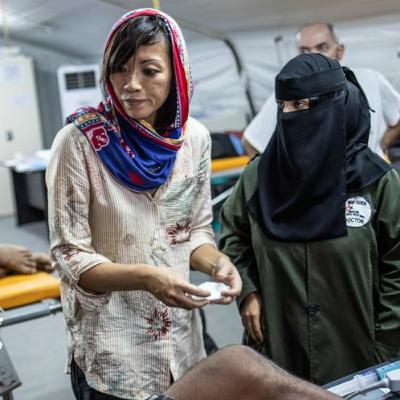
Yemen is in the grip of war. It is also one of the poorest countries in the world.British anaesthetist Dr Elma Wong has recently returned from her fourth assignment working in the country with MSF.In this episode of Everyday Emergency, we talk to Elma about her time in Mocha, a town on the west coast of Yemen. It sits around halfway between the port cities of Hodeidah to the north and Aden to the south, and our emergency medical centre is the only one of its kind in the area.To support our teams working in Yemen, visit: msf.me/yemenpodcastTo find out more about the crisis, visit: stories.msf.org.uk/yemen-explained/ Hosted on Acast. See acast.com/privacy for more information.
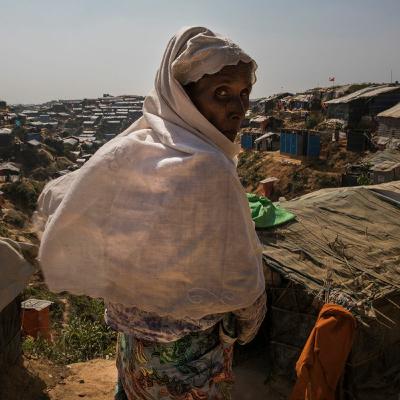
The Rohingya are a group of people who have lived for centuries in Myanmar. Due to their ethnicity, they are denied citizenship and are one of the most persecuted minorities in the world. Violence and oppression has forced hundreds of thousands of Rohingya to flee to countries neighbouring Myanmar, either by land or sea, over the course of many decades. But in August 2017, a brutal campaign of violence by the Myanmar government killed more than 6,500 Rohingya, including at least 430 children under five years old. More than 700,000 Rohingya have fled to neighbouring Bangladesh joining more than 200,000 who have been living in the squalid camps, some for many years.In this episode, we hear from three MSF staff who have been working in the Rohingya megacamp in the Cox’s Bazar area of southeast Bangladesh over the past year. Nurse Chrissie McVeigh describes her experience running a campaign to vaccinate more than 350,000 Rohingya children against diphtheria. Water and sanitation specialist Ryan Bellingham describes his work as part of MSF’s emergency team setting up clean water sources in the complex camp. And nurse Sunny La Valle describes her first assignment with MSF running health posts to provide much needed care for the Rohingya. If you would like to help our work providing vital medical care for the Rohingya, please consider giving to our Rohingya appeal: msf.me/2rnffXT Hosted on Acast. See acast.com/privacy for more information.


Download from Google Play

Download from App Store
 United States
why no new episodes?
Inspiring pod cast
Amazing podcast! Keep up the good work! Beginning medical studies this autumn.
Agree!
Fantastic!