


 Claim Ownership
Grace Church Indiana Sermons
Subscribed: 29Played: 135
Subscribe

© All rights reserved
Description
Podcast by Grace Church
305 Episodes
Reverse

As the tension between Jesus and the religious leaders reaches a boiling point, Jesus gives one of the most intense and incendiary teachings about their failure to live up to their role. He repeatedly calls the religious leaders of Israel “hypocrites” and points out their lack of integrity – placing unbearable religious demands on the people while ignoring their own sin and wickedness. Within these teachings is a vital look at the difference between legalism and grace which is a message the Church of today needs to hear.

After coming to Jerusalem and beginning his final week before the crucifixion, Jesus teaches daily in the temple. Here, his teachings reveal not just his expert subversion of the religious leaders of Israel, but the profound beauty of his kingdom message. When they are trying to trip him up about the “most important commandment,” Jesus quotes from two Old Testament laws which encapsulate the entire Spirit of God’s desires. Although the basic formulation, “Love God, love others,” is familiar to many of us, the two laws he quotes gain even more significance when seen in their original context. One is from a passage about wholehearted dedication to the teaching of God. The other is from a series of laws promoting true justice, mercy, and equality among the people. Jesus is not just cleverly answering a trick question; he is inviting his followers into a profound and whole-life commitment to the desires and teachings of God.
When the mother of two of Jesus’ disciples asks for them to be given roles of great importance and power in his kingdom, Jesus reveals a surprising truth: that those desiring greatest influence should seek the humblest position of a slave. As we see many times throughout the gospel of Matthew, Jesus upends the ordinary expectations of humanity by
introducing an “upside down” kingdom. In his kingdom, the key to true greatness lies not in human power but in self-giving love.
One of the most overlooked aspects of the Holy Spirit in our world is the overwhelming life that is made possible by his presence. Although this absolutely applies to the new, resurrection life we can experience in the New Creation thanks to the sacrifice of Jesus,
the Spirit of Life goes even deeper in our world, now. Throughout Scripture we see God’s Spirit as the vivifying source of all life in Creation, we see the Spirit drawing humanity away from our violent and warlike tendencies and into life-sustaining peace, and we see the Spirit shaping Christ-followers into fountains of God’s life and abundance in a still broken world. The Spirit helps us champion the life of the downtrodden, protect the life of the vulnerable, and even nurture the life of our physical world.
In a time filled with decay, pain, violence, and death, it is vital to remember that the Spirit within us is working to transform us into sources of life in our world now, not just in the resurrection. What might it look like to delve deeply into the life-giving richness of the Holy Spirit this year, allowing New Creation to spring up everywhere we go, and thus bringing the life of our Creator into our broken world?
One of the primary challenges for the health of the Church is that it’s made up of… well, people. We are prone to division and easily fall into traps of “othering” those not like ourselves. The good news is that God’s Spirit is constantly working to overcome those divisions to make us one. It is God’s Holy Spirit who allows a diverse community of faith, made up of different cultures, perspectives, and backgrounds, into a single, unified body.
In a time filled with political rage, cultural tribalism, and divisive rhetoric, ideas of unity, even within the Church, can sometimes seem like wishful thinking. However, if we allow the Spirit of Unity to transform us, we can overcome the hatred of our time and demonstrate to the world that an entirely different kind of community is possible. What might it look like to invite the Holy Spirit to give us hearts of unity this year, as we allow our lives to be shaped by the others-focused, self-giving love of Jesus?
One of the surprising outcomes of God’s Spirit taking up residence in the hearts of Christ-followers is that otherwise ordinary people began developing extraordinary power – power to heal, to serve, to teach, and to speak truth about the very heart of God. This power, otherwise known as the “spiritual gifts” given to believers, is one of the primary ways that God grows, supports, and guides his Church. As we use our Spirit-given gifts to serve, His power shapes the community of faith around us in unexpected ways.
In a time when the brokenness of our world seems insurmountable and the Church struggles with division, it can be tempting to allow our faith to become little more than an individualistic relationship between us and God. However, with the Spirit empowering us, we can recover the vision of the Church as the body of Christ in our world and recapture the self-giving love we were created to demonstrate as a community. What might it look like to explore and live into our spiritual giftings in new ways this year as the Spirit empowers us to become the Church God desires?
January 23 & 24 | Christmas at Grace | Barry Rodriguez by Grace Church
As Jesus prepared for his death, resurrection, and ultimate ascension, his followers were understandably worried. What would they do without Jesus by their side? Who was going to teach them? How would they know what was true? Jesus’ promise in response to these worries was that God would give them “another Advocate,” the Holy Spirit, to be with them forever. This promise, which remains true for all Christ-followers even today, is a profound one: that the very presence of Christ would dwell within his followers, guiding them into the truth.
In a time like ours, filled with untruths, misinformation, and teachers with hidden motives, it can sometimes feel like “Truth stumbles in the streets, and honesty has been outlawed” (Isaiah 59:14). But with God’s Spirit guiding us, we can find truth through Scripture, through teaching, through the voice of God in our hearts, and through the words of other believers. What might it look like to invite the Spirit of Truth to dwell more richly in us this year than ever before?
------------------------------------------
As we have seen throughout our study of the book of Matthew, the gospel writer frequently writes on multiple levels. In the case of the magi from the east, Matthew is not just looking back to the Hebrew Bible and the fulfillment of God’s ancient promises. He is also offering stark commentary on the current realities faced by his readers in the late 1st century. Matthew’s readers faced cultural pressure from the all-powerful Roman Empire as well as persecution from wealthy local elites. They undoubtedly wondered, “How will the Church survive in the face of such mighty opposition?” To respond to such pressure, Matthew’s depiction of the magi visiting Jesus makes a mockery of Roman propaganda about the Caesars (e.g. Frankincense! Magi from the east! The star!) and hints at the boundless blessings to be had not at the top of the social ladder, but at the foot of the cross. As Jesus himself says later in the gospel, “those who are last now will be first then, and those who are first will be last” (Matthew 20:6). This layer of meaning will offer us a stark reminder this Christmas of those who are truly blessed in the kingdom of God!
December 7 | A Story Fulfilled | Follow Me Part III | Barry Rodriguez by Grace Church
In this final message of “Follow Me: Part II,” we will explore the famous passage of the rich man who “went away sad” when invited by Jesus to sell his possessions and follow him. The story is a stark reminder that we are invited to surrender our lives to Jesus, not just go through the religious motions. The words of the martyred missionary Jim Elliot ring true here. “He is no fool who gives what he cannot keep to gain what he cannot lose.” What are we willing to surrender to Christ in our trust that he will renew our lives for eternity?
November 23 | Who Is The Greatest In The Kingdom? | Follow Me Part II | Barry Rodriguez by Grace Church
In the final week of our Peter miniseries, we see this rash, eager, and imperfect disciple witnessing the true nature of Jesus as the son of God during the transfiguration. In this sacred moment, Jesus takes three of his disciples away to a high mountain where he is transformed into a being of radiant light, pouring the glory of God into the world. Peter’s reaction is predictably bumbling but reflects his faith in Jesus. This moment, especially with Peter’s impending denial of Jesus at his trial looming in the not-too-distant future, is an invitation to consider our own faith and willingness to allow the light of Christ to transform our understanding of reality.
In this second part of our Peter trilogy, we will explore some of the highest and lowest moments of Peter’s relationship with Jesus (until the crucifixion and resurrection, of course). First, Peter’s declaration of Jesus’ identity as the Messiah is met by Jesus with a declaration of his own: it is upon the “rock” of Peter’s faith that Christ will build his Church. Second, however, this is followed almost immediately by Peter reprimanding Jesus for saying he would be killed. To this, Jesus says, “Get away from me, Satan!” Matthew’s juxtaposition of these two moments is undoubtedly intentional. It gives us a glimpse at the need for us all to continuously set our own perspectives aside to be shaped by those of our savior’s.
Part II begins with a prayer of thanksgiving by Jesus, as well as one of his most famous invitations to the weary and burdened. Through his prayer and invitation, Jesus is continuing to set up a sharp contrast between himself and the religious leaders of Israel. Where they offer strict religious restrictions for the people and favor the wealthy, educated, and elite, Jesus offers an “easy yoke” and favors the “childlike.” It is a reminder of both the “upside-down” nature of Christ’s kingdom, as well as an invitation to set aside our sin and shame and take up the gracious love of Jesus instead. Are we willing to accept the yoke of Jesus
In the final week of the series, we will get very practical about how we as individuals can respond to God’s call during this divisive time. As we will see, Paul sets a high bar for his readers in Colossae. First, to “set your minds on things above” – to live in such a way that our minds are laser focused on the things God cares about. Second, to “put to death the sinful, earthly things lurking within you,” to be deeply intentional about the sin and idolatry within each of us which seeks to corrupt our trust in Christ. Finally, to “clothe yourself” in things like compassion, kindness, humility, and, most of all, love. Put simply, we each have a choice of how we respond in this cultural moment. We can choose what we think about, what we reject, and what we “wear” as we live out our faith. Let us all keep our eyes focused on Christ and his powerful resurrection. May we become people of love and mercy as we take his hand and follow him into the kingdom of God.
Possible Response Element: Give everyone time to write some kind of commitment on a card based on the invitations from the passage. Perhaps they could bring them to the front, to be prayed over by the pastors, and then to be passed out to the congregation as people leave to pray over the commitments of others
As we continue exploring Colossians, we will dig deeper into the mixing (a.k.a. “syncretism”) which is happening in the church today between the gospel of Jesus and the powers of this world. We will specifically explore the god of Domination and the god of Self, which have so infected our body with “empty philosophies” and “high-sounding nonsense.” To untangle their influence over us, we will explore what it means for Christ to have “disarmed the rulers and authorities” of our world, and what it looks like for us to reject their influence in our own lives. By repenting of our syncretism and re-focusing on Christ above all, we may yet find a way to live in this broken world set free from the powers seeking to corrupt the gospel.
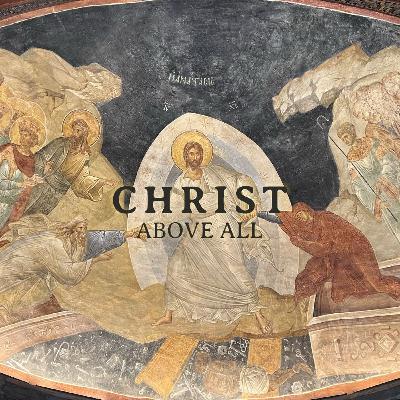
Paul wrote his letter to the church in Colossae because they were mixing pagan elements into their Christian faith (i.e. worshipping Jesus as well as some of the elemental powers of this world). His aim in the letter was to help them understand that Christ is supreme over the powers, and that their mixing is not only muddying the gospel, but downright dangerous to their faith.
In the American Church today we are also prone to mixing our faith with the powers of this world, combining our love for Jesus with the powers of domination, hatred, violence, and selfishness. Our algorithms have herded us into vitriolic tribes and turned our “enemies” into vile, subhuman monsters in our minds. Like in Colossae, this mixing is not only muddying the gospel, but downright dangerous to our faith. As Paul says in Colossians 2:20, “You have died with Christ, and he has set you free from the spiritual powers of this world. So why do you keep on following the rules of the world?”
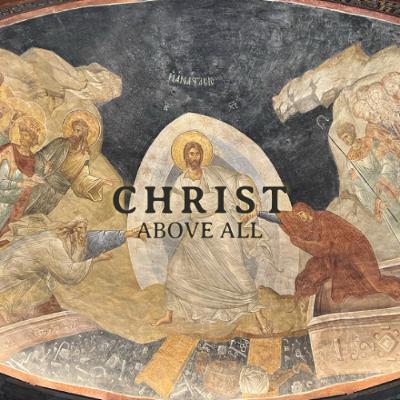
To begin crawling out of this hate-filled pit, we are going to start by mediating on Paul’s transcendent Christological hymn in Colossians 1:15-20, using a piece of contemplative art – the Anastasis Fresco from Chora Church in Constantinople – as a guide. As we will see, Christ is supreme over the powers of this world, and we can find common ground in our combined helplessness to overcome the power of death ourselves. Let us all experience the power of Christ’s incredible sacrifice and the unbelievable love he has for each of us as we are ripped from the grave by his victory over the powers. If we do, perhaps we can begin to see our “enemies” as broken, helpless image-bearers of God just like ourselves, and find ourselves unified in the love God has for us all.
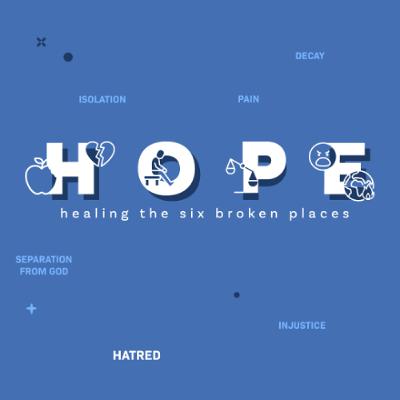
Our world is burdened by the broken place of hatred. We see discrimination, racism, genocide, dehumanization, and segregation along so many different lines (gender, age, race, nationality, ability, etc.). Most of the time when we try to fix these problems, however, we don’t acknowledge the fact that these are outcomes of a much longer path of hatred which starts anytime we see ourselves as better than the “other” we are encountering. To heal the broken place of hatred, we must walk an entirely different path: the path of self-giving love.
In Philippians 2:1-11, Paul pleads with the church in Philippi to “love one another” and “work together with one mind and purpose.” To do this, he suggests we must have “the same attitude that Christ Jesus had.” And how did Jesus live? He walked the path of self-giving love. Even though he had all power in the universe, he “gave up his divine privileges,” lowered himself in humility, and lifted broken humanity up through his self-sacrificial love on the cross. As Christ’s church, we can show the world an alternative to the hatred we see around us. When we encounter “others,” we must follow our savior down the humble path he chose to walk.
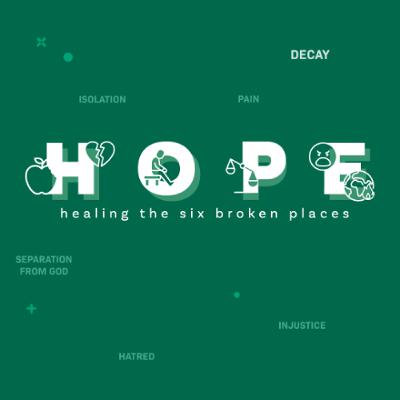
With so many other issues swirling around us in this broken world, it can be very easy to think that caring for the planet falls pretty low on our priority list. Why worry about climate change or species extinction when there seem to be so many more pressing matters? The answer is simple: because God cares about his Creation and we should too. In this message we will explore how God’s love and sustaining Spirit extend even to the physical world, including the plants and creatures who live here, and how our role from the very beginning was as caretakers of the Creation he sustains.
We will also consider how the poor and marginalized of humanity (whom God also dearly loves) are threatened when our physical world is neglected and how the broken place of decay influences all the other broken places. By meditating on this thread from Scripture we will begin to see how our best possible life includes living in harmony and peace with the Earth and joining God in his sustaining work over Creation.

Comments

Download from Google Play

Download from App Store
 United States