


 Claim Ownership
The Nietzsche Podcast
Subscribed: 543Played: 18,413
Subscribe

© Untimely Reflections
Description
A podcast about Nietzsche's ideas, his influences, and those he influenced. Philosophy and cultural commentary through a Nietzschean lens.
Support the show at Patreon: https://www.patreon.com/untimelyreflections
A few collected essays and thoughts: https://untimely-reflections.blogspot.com/
Support the show at Patreon: https://www.patreon.com/untimelyreflections
A few collected essays and thoughts: https://untimely-reflections.blogspot.com/
254 Episodes
Reverse
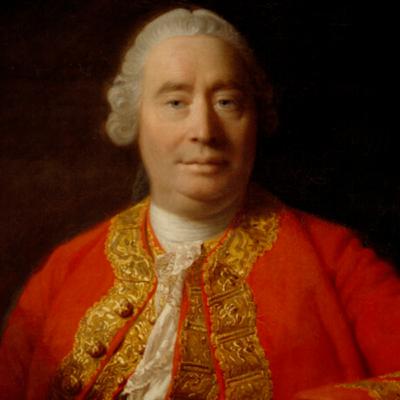
Today we're going to become Humean, All Too Humean. This is an introduction to David Hume's life and works, brief consideration of his influences, and deep dive into Enquiry Concerning Human Understanding - the work that woke Kant from his dogmatic slumber. In our analysis we discuss: Hume's 'two species of philosophy'; Hume's distinction between ideas & impressions, and between relations of ideas & matters of fact; his critique of causality; his explanation of habit, or custom as a 'guide to human life'; a brief look at his comments on probability, on free will, on miracles; and Hume's moderate skepticism versus what he calls, Pyrrhonism.

Gnostic Informant on Youtube: https://www.youtube.com/@UCtdweFMJ5DGj7_q5IcpQhPQNeal and I do a deep dive into the origins of the term "demon"/"demonic". What was the original meaning of the term "daimones" in Ancient Greece? How does the understanding of the term change, from the Hellenic to the Hellenistic to the Christian eras? We also discuss the imagery associated with the demonic, deriving from Pan, and discuss the anecdote from the ancient world, from which we get the phrase, "the Great God Pan is dead!"
A conversation with Prof. Moeller (Carefree Wandering). We discuss the political implications of Daoist philosophy, the Daoist critique of Confucian family roles and anthropocentrism, the comparison to Nietzsche's critique of modernist theories of truth, the differences between the two regarding their respective past and future orientations in philosophy, the difference in "vibe", and the parallel between the two as focused on achieving "great health". Butcher Ding Story: https://www.youtube.com/watch?v=vGtgGz5SsY0Happy Fish Story: https://www.youtube.com/watch?v=9nMCrj3soDUProf. Moeller's new book: https://cup.columbia.edu/book/the-enigma-of-gender/9780231221276/
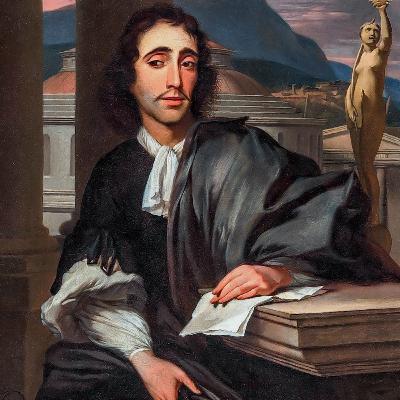
There was much ado about Spinoza, at least amongst the German rationalists and romantics. In this episode, we're going beyond the metaphysics to talk about the entire purpose of Spinoza's Ethics: the path to human freedom, in which a human being can become liberated from domination of the affects. The way to achieve this, according to Spinoza, is purely through understanding. No willpower or effort is needed: with knowledge alone, one can understand the necessity of all things, and connect the idea of God to all things. This is the intellectual love of God, through which God infinitely loves himself. In this episode, we will also examine the topics of: Spinoza's three types of knowledge; the meaning of "sub species aeternitatis"; Spinoza's difference from Descartes & the Stoics.
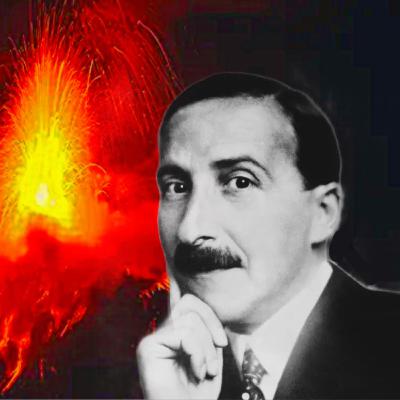
In the conclusion to the daemonic series, we're looking at Stefan Zweig's Struggle with the Daemon - specifically, the section on Nietzsche. Particularly helpful for our analysis will be Zweig's comparison and contrast of Nietzsche with Goethe: both men contain the daemoniacal drive, but whereas Goethe holds it at a distance, Nietzsche gives himself over to it. By following Zweig's interpretation of Nietzsche's life and work, we can move from the abstract conception of it to a particular manifestation, and get a sense of the daemonic as it appears in an individual.
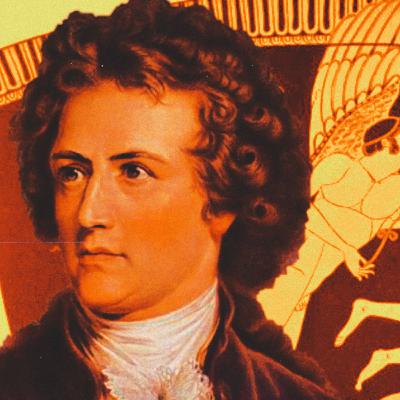
In the second part of this series, we'll examine how it is that Goethe came to his conception of the Daemonic, involved as it is with Spinoza's pantheism. Goethe's introduction to Spinoza was largely through Herder, and his friendship with Herder he described as one of the most important in his entire life. We'll consider Herder's personality and some of the most important aspects of Herder's worldview, as well as the use of the term "daemonic" as Herder received it from his mentor, the "Magus of the North", Hamann. In the latter half of the episode, we'll look at the specifics of how Goethe describes the Daemonic in Dichtung und Wahrheit and in Conversations with Goethe, in which he describes it as a force that pushes against all limits and manifests in prodigious human beings. We'll relate the idea to Werther, Faust, and consider some of Goethe's real-world examples of it.
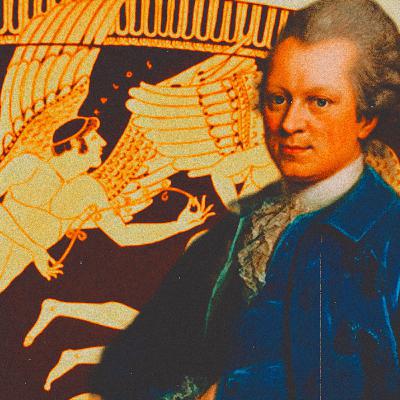
Part one of three. Johann Wolfgang von Goethe often spoke of a dangerous but invigorating life-force that he christened "the daemonic". In his conversations with Eckermann, and in his autobiography Dichtung und Wahrheit, he describes the daemonic by direct reference to Spinoza, and his pantheist philosophy. In this first episode of our series on Goethe's Daemonic, we're going to look at Goethe's statement of the idea, then go back in time to consider: Plato's Symposium, the daemonion of Socrates, the writings of Philo of Alexandria, Justin Martyr and St. Augustine, and finally, the alleged Spinozism of the playwright Gotthold Lessing and the "pantheism controversy" that emerged over Lessing's legacy, argued by Friedrich Heinrich Jacobi and Moses Mendelssohn.Next week (part two) will involve a closer reading of Goethe's concept of the daemonic and the influence of Herder on Goethe's reception of Spinoza. Episode art: Lessing, pictured in front of some Greek daimones.
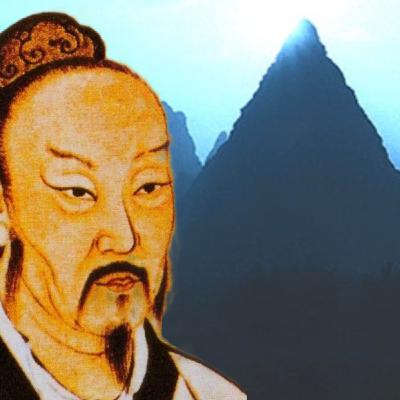
Today we're considering Ge Ling Shang's book, Liberation as Affirmation, comparing Zhuangzi and Nietzsche. Shang sees both thinkers as putting forward a "religiosity" of life-affirmation. Major points of comparison: use of language (goblet words/zhiyan & Dionysian dithyramb), whether one can relativize all views or should affirm illusion, how to respond to morality (revaluation v/s devaluation), using a single principle to describe multiplicity (ziran/dao & will to power), and the competing views of the superior person (sage v/s ubermensch) and the methods for reaching such a state.
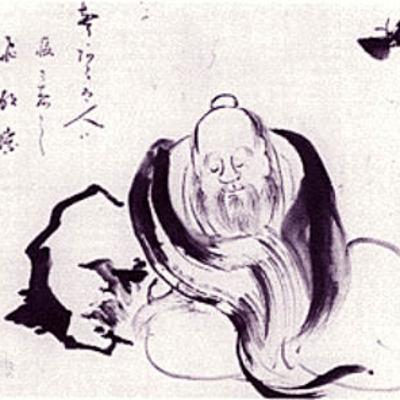
Exploring the indeterminate nature of truth in the Zhuangzi, the usefulness of uselessness, the foolishness of seeking office, and the advantages of xiaoyaoyou. Mixing translations from Watson, Palmer, Giles & informed by readings/commentary from Ziporyn, Ge Ling Shang & Wing Tsit Chan. For a general introduction to Spring and Autumn period Chinese philosophy, see the previous regular episode, #127.
I still live, I still think. I still have to live, for I still have to think. Sum ergo cogito, cogito ergo sum. Updates on the future of the podcast and plans for the New Year. Brief reflections on the past. Official announcement for my course at Acid Horizon Research Commons. Sign up here: https://www.acidhorizonpodcast.com/2026-classes/p/nietzsches-experiment-with-truth
CONTRIBUTORS:Andrei Georgescu (Artexius)Website: https://andreigeorgescu.ca/WeltgeistCraig (Acid Horizon/Lepht Hand)Website: https://www.acidhorizonpodcast.com SIGN UP FOR MY CLASS ON NIETZSCHE (Limited Seating): https://www.acidhorizonpodcast.com/2026-classes/p/nietzsches-experiment-with-truthKarl NordNeil (Gnostic Informant)PF Jung Tony (1Dime)VivienneMynaa Miesnowan
Introducing "dao" as a concept in Chinese philosophy. We'll explore the the social & historical context of the Spring and Autumn period. We'll follow A.C. Graham's assertion that the basic question of Chinese philosophy is "where is the way?", and consider the answers given by Confucius, Laozi, Mencius & XunziSources: Wing Tsit Chan - A Sourcebook in Chinese PhilosophyA.C. Graham - Disputers of the TaoRobin Wang - Yin Yang: The Way of Heaven and Earth in Chinese Thought and CultureGe Ling Shang - Liberation as Affirmation: The Religiosity of Zhuangzi and NietzscheHolmes Welch - Taoism: The Parting of the Way

Goethe's novel, The Sorrows of Young Werther, was Napoleon Bonaparte's favorite novel. In recent years it has become the subject of memes, and the "sensitive young man" archetype. How are we to understand this puzzling development? What is the connection between the Caesarist strongman and the hopeless lover? In this episode, we'll consider the historical background of the work: its inspiration in the story of Karl Wilhelm Jerusalem, the "fever" that swept Europe following its publication, and its controversies. We'll analyze the novel and try to understand Goethe's character as something more than simply a victim of unrequited love. And we'll consider Napoleon's meeting with Goethe and their conversation about the story, as well as some of Goethe's comments about it in conversations with Eckermann.
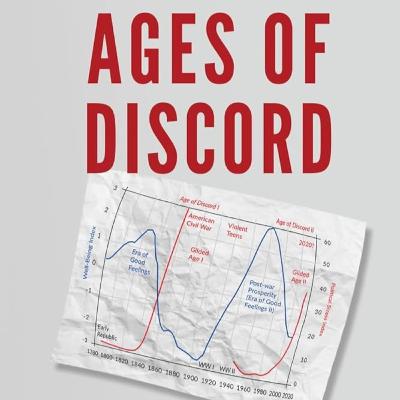
The first of a series of lectures examining Turchin's work in Ages of Discord, a structural-demographic analysis of American history.Topics in this episode- Imperiopathosis: the current situation, its underlying dynamics- Basics of secular cycles- Population-elites-state as fundamental factors- Political Stress Index (PSI) = Mass Mobilization Potential x Elite Mobilization Potential x State Fiscal Distress- Symptoms of political instability- Examining symptoms in a past "age of discord": The Gilded Age - The Violent Teens-Examining symptoms in our own "age of discord": The Turbulent 2020s
Weltgeist's Channel: https://www.youtube.com/@WeltgeistYTIn Untimely Reflections #39, we discuss Schopenhauer's view of history, love of fate, and the meaning of life.

My review of Kaag's book about Nietzsche, the Swiss Alps, and the many other philosophers who have spent time in Sils Maria. Overall a good experience, but more of a beginner read. John Kaag provides a relatively faithful analysis of Nietzsche's philosophy in his book, which will not contain many new insights for the advanced Nietzsche reader. There are some interesting parallels he provides between thinkers, however, and some more obscure anecdotes from Nietzsche's life discussed. The work is primarily valuable as a character study of John Kaag himself, as a man who wishes to live dangerously, while married to a Kantian modern world.
The Will to Joy podcast: https://open.spotify.com/show/0iWF6YMMEriFZ0cE0xhnFN?si=e7ee705bb1814f89Jimmy's linktree: https://linktr.ee/willtojoyJimmy Burke just gave a presentation this past September at the Nietzschean Society, which met this year in Belfast. We discussed his lecture, entitled, "An Economy of Bodies", as well as his work in evidence-based behavior change. According to Burke, Nietzsche's insights have proven incredibly valuable in this field, and by drawing on Nietzsche's conceptions of drive, we can improve our chances in making transformative life changes. At the end of the episode we discussed his expansive, ontological view of will to power. Great conversation! I really enjoyed this one.
 1
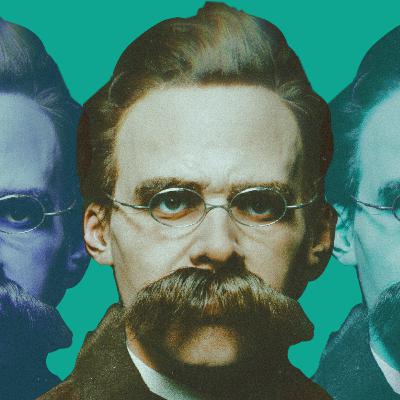
1Our series on Pierre Klossowski concludes with a look at some of the later chapters concerning Nietzsche's state of mind leading up to his breakdown in Turin, what Nietzsche's juvenalia reveals about him, and what insights we can glean from his family history. Above all, in this episode, I wanted to reverse our focus, and instead of understanding Nietzsche's valetudinary states as a window into his philosophy, here we will consider how Nietzsche's philosophy is a window into his madness.
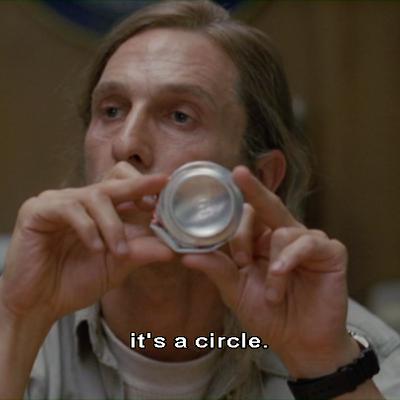
"Time is a flat circle." This famous quote from the series immediately calls to mind Nietzsche's Eternal Return, but it's an unusual connection to say the least, because it isn't clear that we have a "Nietzschean" plot in True Detective, nor are any of the characters of the show Nietzschean. So, what then is the philosophical content of the show? In this video, I analyze Rust, Marty & the beliefs of the cult of the Yellow King.
The Rectification of Names is a Confucian reinterpretation of the function of language. Confucius is usually portrayed as a stuffy moralist, but there is an intriguing notion implicit in his use of language that borders on the postmodern. Confucius does not merely give definitions of things, but seizes for the philosopher the power to redefine names according to a moral end. Michael Puett, The Path (Talks at Google): https://www.youtube.com/watch?v=MfnSTr6-1g4Hans Georg Moeller's Channel: https://www.youtube.com/@carefreewandering


Download from Google Play

Download from App Store
 United States
This about nietzche Buddhism is wild. Sorry but super idiotic. This was the first episode I played and unsubscribed already. The first Western philosopher to deeply dive into Eastern philosophy was Arthur Schopenhauer. Nietzsche started as his disciple, then spent his mature career attacking and overcoming Schopenhauer’s Eastern-inspired pessimism. Nietzsche once wrote that Schopenhauer was “my great teacher,” even though he defined himself against him. Me critique to you is that you are bias.
is there any service I can find the transcripts for this podcast?
very informative ! thank you !