


 Claim Ownership
WHY? Philosophical Discussions About Everyday Life
Subscribed: 2,759Played: 8,125
Subscribe

Description
Join us each month as we engage in philosophical discussions about the most common-place topics with host Jack Russell Weinstein, professor in the Department of Philosophy and Religion at the University of North Dakota. He is the director of The Institute for Philosophy in Public Life.
79 Episodes
Reverse
Drawing from Jennifer Morton’s work on the ethical dilemmas faced by first-generation and low-income students, this episode examines the personal costs of pursuing higher education—fractured family ties, difficult tradeoffs, and the quiet loss of identity that can accompany social mobility. Together, they reflect on why we sometimes deny uncomfortable realities and what those choices reveal about who we are and who we hope to become.
How do we place a value on the things we keep and pass down? Objects can be timeless and multi-generational or they can be a burden to bear. Jack Russell Weinstein and his guest, Wellesley philosophy professor Erich Hatala Matthes explore the question, why should we save for posterity?
Jack sits down with philosopher Adrian Bardon to unpack The Truth About Denial and our strange habit of rejecting what’s right in front of us. Together, they discuss why people deny obvious facts, how self-deception takes hold, and what denial reveals about our fear, identity, and the stories we tell ourselves to get through the world.
Jack sits down with scholar Lowry Pressly to discuss the provocative ideas behind his book The Right to Oblivion: Privacy and the Good Life. They explore what it means to protect our inner worlds in an age of constant exposure, why forgetting can be just as crucial as remembering, and how reclaiming privacy might be the key to living well.
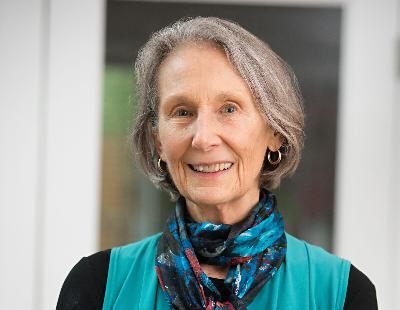
Jack sits down with Elizabeth Minnich, moral philosopher and author, to explore a haunting and urgent question: How is it that ordinary people can commit extraordinary evil? Together, they unpack Minnich’s idea of the evil of banality, a subtle, everyday corruption of thought and conscience that allows atrocities to unfold, and consider what it means for our moral lives today.
Jack sits down with philosophers Jason Hill and Elizabeth S. Anderson to tackle a timely and urgent question: How do we do philosophy during difficult times? From the rise of AI and shifting political landscapes to debates over censorship, diverse student bodies, and evolving educational models, this conversation explores how philosophy can and must adapt.
Jack sits down with Brian Burkhart, Indigenous philosopher and scholar, to explore a radical and timely idea: What if Indigenous thought isn’t just tradition or spirituality, but a powerful philosophical framework—one that challenges Western systems and offers a deeply relational way of understanding nature and community in our time?
Jack interviews Vanessa Wills, philosopher, professor, and author of Marx’s Ethical Vision, to explore a radical and timely idea: What if Marx wasn’t just a political economist, but a moral thinker, one whose ethical critique of capitalism speaks urgently to the injustices of our time?
Host Jack Russell Weinstein visits with peace activist Kathy Kelly
Jack interviews Justin Garson, writer, philosopher, and professor, to explore an unsettling and illuminating idea: What if madness isn't just a disorder, but a signal, expressing something deeply out of sync in our lives or society?

 1
1Jack sits down with David Chalmers, renowned philosopher of mind, to explore the provocative question: Is virtual reality real? They explore the blurred boundaries between the virtual and the physical, consciousness, and presence. Together, they consider whether digital worlds can hold the same ontological weight as the "real" world, and what that means for the future of how we live, think, and perceive.
Jack announces his new book, Israel, Palestine, and the Trolley Problem.
Jack sits down with Gwenda-lin Grewal, philosopher and writer, to explore the unexpected intersections between philosophy and fashion. They explore how style reflects deeper questions about identity, perception, and the human condition, and consider the ways in which clothing can serve as both personal expression and philosophical inquiry.
In this episode of the WHY Podcast, Jack sits down with Mark C. Taylor, Professor of Religion at Columbia University, to discuss how the humanities and the natural world intersect. They talk about how literature, philosophy, and art can provide new insights into our connection with nature and offer paths toward a more sustainable and harmonious relationship with the environment.
In this episode of the WHY Podcast, Jack sits down with Krista Thomason, Associate Professor of Philosophy at Swarthmore College, to explore the intriguing idea of finding value in negative emotions. Krista, author of Dancing with the Devil: Why Bad Feelings Make Life Good, delves into how emotions like shame, guilt, and anger can, paradoxically, lead to personal growth and a deeper moral life. Drawing from her expertise in philosophy of emotion and moral philosophy, Krista offers thought-provoking insights on how negative feelings can be an essential part of a meaningful life. Tune in for a conversation that challenges conventional views and reimagines the role of uncomfortable emotions in our pursuit of well-being.
In this episode of the WHY Podcast, Jack sits down with Avram Alpert, author of The Good-Enough Life, to explore the philosophical question: "When is life good enough?" Alpert, a writer, teacher, and Co-Director of the Interdisciplinary Art and Theory Program in NYC, discusses the themes of the book, which challenges the notion of perfectionism and advocates for a more realistic, fulfilling approach to life. Drawing from experience, history, and his academic background, Alpert offers insights on how we can live well without striving for unattainable ideals.
In this episode of WHY: Philosophical Discussions About Everyday Life, host Jack Russell Weinstein speaks with Richard Kearney, a distinguished philosopher and author of Touch: Recovering Our Most Vital Sense.
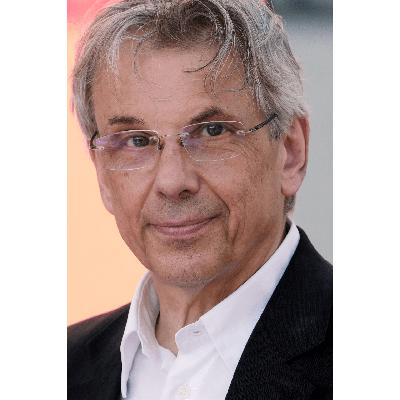
Host Jack Russell Weinstein interviews Michael Rosen, a distinguished professor of Ethics and Politics at Harvard University and author of Dignity: Its History and Meaning. Their conversation explores the multifaceted nature of dignity, tracing its historical evolution and examining its significance in contemporary discourse. Rosen, who specializes in political theory and the history of ideas, shares his insights on how dignity shapes our understanding of ethics, rights, and social justice. Throughout the discussion, Jack and Michael engage with various philosophical traditions, emphasizing the importance of dignity in both individual lives and collective society.
Host Jack Russell Weinstein visits with Marina McCoy, professor of philosophy at Boston College. She is the author of the books Plato on the Rhetoric of Philosophers and Sophists (Cambridge University Press, 2007) , Wounded Heroes: Vulnerability as a Virtue in Ancient Greek Literature and Philosophy (Oxford U Press, 2013), and Image and Argument in Plato’s Republic (SUNY, 2020). Her interests range from ancient philosophy to ethics and the philosophy of mass incarceration and environmental ethics.
Host Jack Russell Weinstein visits with Cecile Fabre, political philosopher, and Senior Research Fellow at All Souls College, Oxford. She is also Professor of Political Philosophy at the University of Oxford, and affiliated with the Faculty of Philosophy, the Department of Politics and International Relations, and Nuffield College, Oxford. Her research interests are in theories of distributive justice; the philosophy of democracy; just war theory; the ethics of foreign policy, with particular focus on the ethics of economic statecraft and the ethics of espionage.

Comments

Download from Google Play

Download from App Store
 United States